• 검색 결과가 없습니다.

무증상 세균뇨

N/A
N/A
Protected

Academic year: 2021

Share "무증상 세균뇨"

Copied!
10
0
0

로드 중.... (전체 텍스트 보기)

전체 글

(1)

119

•교신저자:한창희, 가톨릭대학교 의정부성모병원 비뇨기과 경기 의정부시 금오동 65-1 480-717 Tel: 031-820-3546, Fax: 031-847-6133 E-mail: [email protected] Received: September 1, 2010

Accepted: September 30, 2010

무증상 세균뇨

가톨릭대학교 의과대학 비뇨기과학교실 한창희∙조용현

[Abstract]

Asymptomatic Bacteriuria Chang-Hee Han, Yong-Hyun Cho

From the Department of Urology, College of Medicine, The Catholic University of Korea, Seoul, Korea

Asymptomatic bacteriuria is common. Among healthy adults, bacteriuria increases with age, and occurs more frequently in women than men. Individuals with underlying genitourinary abnormalities, such as spinal cord injuries or with indwelling catheters also have a very high prevalence of bacteriuria.

Bacteriuria per se in most population is benign. It has been shown to have adverse outcomes in pregnant women, in whom it is associated with pyelonephritis, low-birth weight and premature birth, and in patients undergoing traumatic genitourinary procedures associated with mucosal bleeding, in whom there is a high risk of bacteremia and sepsis. In other populations, clinical trials have consistently shown no benefits of screen for or treatment of asymptomatic bacteriuria. For some immunocompromised persons, such as those with neutropenia or post-renal transplant, further evaluation to describe the natural history and impact of bacteriuria is required. (Korean J UTII 2010;5:119-128)

Key Words: Bacteriuria, Urinary tract infections

서 론

무증상 세균뇨란 아무런 요로생식기계의 증상 없 이 소변에 일정량 이상의 세균이 존재하는 상태를 말한다. 무증상 세균뇨는 매우 흔하며 정상 성인의

경우 나이가 많아질수록, 남자보다는 여자에서 더

흔하다. 특히 요로생식기계의 이상이 있거나 도뇨

관을 가지고 있는 환자의 경우 유병률은 매우 높

다. 일반적으로 무증상 세균뇨는 별다른 문제를 일

으키지 않는다. 그러나 임산부의 경우 신우신염 이

나 조산의 위험성이 높고, 요로계의 손상을 주는

처치를 받는 환자에서는 패혈증의 위험이 높아질

수 있다. 본 장에서는 이러한 무증상 세균뇨의 진

단과 치료에 대해 알아보고자 한다.

(2)

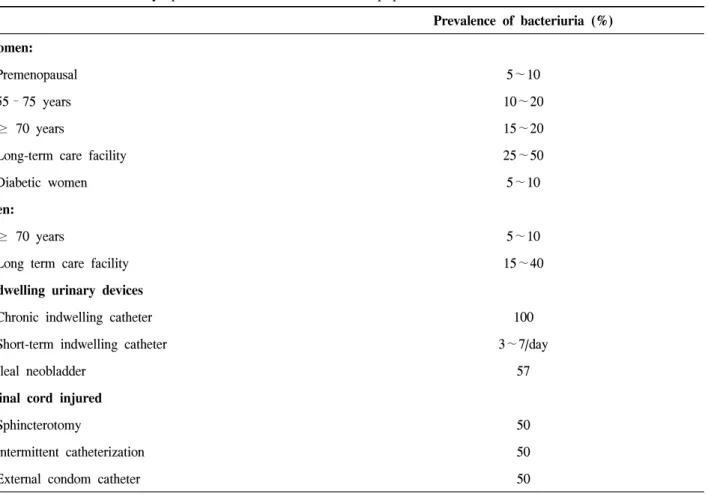
Table 1. Prevalence of asymptomatic bacteriuria in selected populations

Prevalence of bacteriuria (%) Women:

Premenopausal 5∼10

55–75 years 10∼20

≥ 70 years 15∼20

Long-term care facility 25∼50

Diabetic women 5∼10

Men:

≥ 70 years 5∼10

Long term care facility 15∼40

Indwelling urinary devices

Chronic indwelling catheter 100

Short-term indwelling catheter 3∼7/day

Ileal neobladder 57

Spinal cord injured

Sphincterotomy 50

Intermittent catheterization 50

External condom catheter 50

본 론

1. 역학

무증상 세균뇨는 모든 연령대에서 여자에 더 흔 하며 나이가 많아질수록 빈도가 증가 한다 (Table 1).

1

젊은 남자에서는 드물지만 65세 이상의 건강한 남성에서는 전립선비대증으로 인해 그 빈도가 증가 한다. 최근 스웨덴의 지역사회 인구 기반 조사 연구 에서 80세 이상 노인 인구의 무증상 세균뇨의 유병 률은 여성이 20%, 남성이 5∼10%라고 보고하였다.

2

특히 요양원에 거주하는 노인의 경우 그 빈도가 더 욱 높아 여성의 경우 25∼50%, 남성의 경우 15∼

40% 정도로 보고된다.

3

또한 요로생식기계의 기능 적 혹은 구조적 이상이 있는 사람의 경우에도 세균

뇨의 빈도가 높다. 척수손상 환자의 경우 배뇨 방법 에 관계없이 약 50%에서 세균뇨가 있으며,

1

30일 이상 장기적으로 도뇨관을 가지고 있는 환자의 경 우에는 100% 세균뇨가 있다. 반면 단기간 요도 카 테터를 유치하는 경우 세균뇨의 빈도는 매일 3∼

7%씩 증가한다.

4

그 밖에 신루관이나 요관 부목 또 한 유치 중에는 세균뇨의 발생 빈도를 증가시킨다.

2. 위험요소

폐경 전 여성의 경우 무증상 세균뇨의 위험 인자

로는 재발성 요로감염의 경우와 마찬가지로 성관

계나 피임 목적의 살정제 사용 등이 있다. 반면 폐

경 후 여성의 경우에는 과거 요로감염의 병력이 있

는 nonsecretor blood group과 관련이 깊다.

5,6

또한

폐경 후 질내 pH를 산성으로 유지시키는 유산균이

(3)

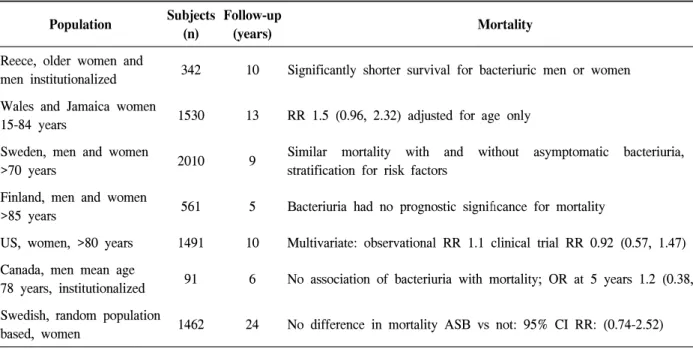
Table 2. Asymptomatic bacteriuria and mortality

Population Subjects

(n)

Follow-up

(years) Mortality

Reece, older women and

men institutionalized 342 10 Significantly shorter survival for bacteriuric men or women Wales and Jamaica women

15-84 years 1530 13 RR 1.5 (0.96, 2.32) adjusted for age only Sweden, men and women

>70 years 2010 9 Similar mortality with and without asymptomatic bacteriuria, with stratification for risk factors

Finland, men and women

>85 years 561 5 Bacteriuria had no prognostic significance for mortality

US, women, >80 years 1491 10 Multivariate: observational RR 1.1 clinical trial RR 0.92 (0.57, 1.47) Canada, men mean age

78 years, institutionalized 91 6 No association of bacteriuria with mortality; OR at 5 years 1.2 (0.38, 3.9) Swedish, random population

based, women 1462 24 No difference in mortality ASB vs not: 95% CI RR: (0.74-2.52) ASB: asymptomatic bacteriuria

감소하고 E. coli나 group B streptoccocci가 증가하 게 된다.

7

이러한 변화는 에스트로겐 감소에 기인 하며 에스트로겐 보충요법으로 유산균의 재증식 및 질내 산성화를 이룰 수 있다. 따라서 에스트로 겐 결핍은 노화로 인한 세균뇨의 증가와 밀접한 관 계가 있다고 할 수 있다. 그러나 여러 임상 시험들 의 결과는 논란이 있다. Raz 등

8

은 에스트로겐 국 소도포 치료에 대한 전향적, 무작위 임상실험에서 지역사회와 장기 요양시설 거주 노인 여성 모두에 서 증상성 뿐만 아니라 무증상성 요로감염도 감소 시킨다고 보고하였다. 반면 Ouslander 등

9

은 요양원 에 거주하는 여성에게 전신적 에스트로겐 보충요 법을 시행한 전향적, 위약 대조 연구에서 질내 산 도는 감소하였으나 무증상 세균뇨는 감소시키지 못하였다고 보고하였다.

잔뇨량의 증가 또한 노화에 따른 세균뇨 증가에 관여할 것으로 여겨지는 요소이다. 그러나 아직까 지 그 인과관계를 명확히 규명한 임상 연구는 없 다.

6,10

요실금 또한 여성에서 무증상 세균뇨와 관련 이 있으나 그 자체가 원인요소는 아니다.

1,3

그밖에 만성 신경계 질환으로 인한 배뇨 장애, 요로생식기

계의 기능적 혹은 구조적 이상으로 인한 배뇨 장애 및 그에 따른 도뇨관 유치 등도 세균뇨와 깊은 관 련이 있다.

3. 발생률 및 사망률

임산부의 경우 무증상 세균뇨가 문제를 일으킬

수 있다.

1

또한 세균뇨가 있는 경우 요로계의 손상

을 유발하는 조작이 균혈증과 패혈증을 유발할 수

있다.

1

그 이외의 경우 무증상 세균뇨는 별다른 문

제를 야기하지 않는다. 무증상 세균뇨가 발견된 사

람은 추후 증상성 요로감염이 발생할 위험이 높

다.

1

그러나 무증상 세균뇨 자체가 원인은 아닌 것

으로 생각한다. 건강한 젊은 여성에서 세균뇨가 새

롭게 발생한 후 1주일 이내에 8%에서 증상성 요로

감염이 발생한다.

11

따라서 이러한 여성들의 경우

증상이 발현되기 바로 전 약간의 세균뇨 기간이 선

행된다고 할 수 있다. 그러나 요로 폐색이나 손상

등과 같은 위험 요소가 없다면 지속적인 무증상 세

균뇨가 동일한 균에 의한 증상성 요로감염을 일으

키지는 않는다. 일부 환자에서는 무증상 세균뇨가

(4)

증상성 요로감염의 위험을 감소시키기도 하는데 이는 방광내 감염을 유발하는 다른 세균의 증식을 방해하기 때문으로 생각된다.

12

무증상 세균뇨가 사 망률을 증가시키지는 않는다 (Table 2).

13-19

무증상 세균뇨가 생존율을 감소시킨다는 일부 보고가 있 지만 세균뇨 발생과 사망률 증가 모두와 관련이 있 는 동반 질환의 존재 여부나 신체 장기의 기능 상 태 등을 고려하지 않았다.

13,14

노인에서는 무증상 세균뇨가 기능장애와 관련이 있는데 이러한 기능 장애는 그 자체만으로도 사망의 독립적인 위험요 소이다.

20

이와 같은 가능성 있는 바이어스 (bias)를 보정한 연구들 중 무증상 세균뇨가 사망률을 증가 시킨다는 보고는 없다.

14-19

4. 미생물학

무증상 세균뇨가 있는 여성에서 가장 흔히 동정 되는 균주는 E. coli이다.

1

또한 동일 세균에 의한 지속적 세균뇨의 경우에도 E. coli가 가장 흔한 원

인이다.

21,22

Hooton 등

11

은 젊은 여성을 대상으로 한

전향적 연구에서 증상의 유무에 관계없이 동정된 E. coli의 독성에는 차이가 없다고 보고하였다. 그 러나 증상이 없는 여성에서 동정된 균주가 증상이 있는 여성에서의 균주보다 세균 독성이 더 낮다는 일부 다른 연구들도 있다.

23

Group B streptococcus, enterococcus 및 coagulase negative staphylococci (Staphylococcus saprophyticus 제외) 등과 같은 그람 양성 균주들은 무증상 세균뇨 여성에서 더 흔히 발 견된다. 남성의 경우에도 무증상 세균뇨의 가장 흔 한 균주는 E. coli, enterococcus 및 coagulase neg- ative staphylococci 등이다.

24

비뇨기계의 이상이 동 반되어 있는 경우에는 일반적으로 더 광범위하게 여러 균주들이 동정된다. 비록 E. coli가 가장 흔한 균이지만 치료를 위해 반복적으로 항생제를 투여 하게 되면 Pseudomonas aeruginosa, Citrobacter종 및 Proteus mirabilis, Providencia stuartii와 같은 요소분 해효소 생산 균과 같이 내성이 더 강한 세균에 의 한 감염 위험이 높아진다.

5. 진단

1) 미생물학적 기준

여성의 무증상 세균뇨 진단 기준은 2회 연속으로 채취한 소변에서 ≥10

5

cfu/mL의 세균이 검출될 때이 다.

25

처음 검사에서 세균뇨가 발견된 여성의 약 10∼

15%에서 재검사시 세균뇨 음성 소견을 보인다. 이와 같은 결과는 첫번째 검사 시 채취한 검체가 오염되었 기 때문일 가능성이 높으나 젊은 여성의 경우에는 일 시적 세균뇨도 흔하다.

2,11,26

따라서 일차 검체 채취 후 이차 검체 채취까지의 시간 간격이 길어질수록 세균뇨 의 자연 소실로 인해 이차 검사에서 음성 소견을 보일 가능성이 높아진다. 반면 남성의 경우에는 한번의 배뇨 검체에서 ≥10

5

cfu/mL의 세균이 검출되더라도 세균뇨를 진단할 수 있다.

27

콘돔카테터로 채취한 경우

28,29

나 유 치 도뇨관을 통해 채취한 경우에도 모두 ≥10

5

cfu/mL의 세균이 검출될 때 진단할 수 있다. 그러나 일회 도뇨로 채취한 소변의 경우 ≥10

2

cfu/mL의 세균만 검출되어도 남녀 모두에서 세균뇨로 진단할 수 있다.

30,31

2) 농뇨

농뇨는 비뇨기계에 염증이 있음을 나타내는 소 견으로 무증상 세균뇨가 있는 경우 흔히 나타난

다.

3,11,32-34

무증상 세균뇨가 있을 때 농뇨가 동반될

가능성은 젊은 여성의 경우 약 30% 내외,

13

임산부 는 30∼70%,

33,34

당뇨병이 있는 여성은 70%,

32

양로 원에 있는 노인은 90%,

3

혈액투석 환자는 90%, 장 기 도뇨관 유치 환자는 50∼100%

35

이다. 또한 농뇨 는 요 배양 검사에서 음성인 환자에서 다른 요로 생식기계의 염증성 질환, 예를 들어 요로결핵이나 성병과 같은 감염성 질환이나 간질성 신장염과 같 은 비감염성 질환 등과 동반되어 나타날 수 있다.

따라서 농뇨가 있다는 그 자체만으로 세균뇨를 진 단할 수 없으며, 농뇨의 유무로 증상성 요로감염이 냐 무증상 요로감염이냐를 구별할 수도 없다.

6. 치료

1) 폐경 전 여성

폐경 전 여성에서 세균뇨에 대한 항생제 치료는 무

(5)

Table 3. Findings of comparative clinical trials of antimicrobial therapy for the treatment of asymptomatic bacteriuria in pregnancy

Clinical trial Design Antimicrobial therapy

No. of patients with

pyelonephritis/total no. of patients (%) Initially

negative result

a

Initially positive result

a

Treated

patients

Nontreated patients LeBlanc and

McGanity

55

Randomized, not blinded

Sulfonamide and mandelamine, nitrofurantoin, or mandelamine alone;

mandelamine to term

22/1143 (1.9) 3/69 (4.3) 8/41 (20)

Brumfit and Condie et al

57

Randomized,

placebo-controlled Sulfonamides 3/150 (2) 4/67 (6.0) 55/179 (31)

Wren

58

Alternating between antibiotics and no antibiotics

Nitrofurantoin, ampicillin, sulfonamide, and nalidixic acid to term

- NS 33/90 (37)

Elder et al

59

Alternating, placebo

-controlled Tetracycline for 6 weeks 6/279 (2) 4/133 (3.0) 27/148 (18) Savage et al

52

Alternating, placebo

-controlled Sulfonamide to term 7/496 (1.4) 1/93 (1.1) 26/98 (26)

Kincaid-Smith

and Bullen

26

Cohort, sequential Various - 2/61 (3.3) 20/53 (37)

Little

54

Randomized, not blinded Sulfonamide to term 19/4735 (0.4) 4/124 (3.2) 35/141 (25) NS: not specified

a: microbiologic results from initial screening urine culture in pregnancy (Adopted from Smaill F.

51

)

증상 세균뇨의 단기 유병률은 감소시키지만, 차후의 증상 발현을 감소시키지는 못한다.

1,36

수십 년 동안의 장기간 코호트 연구를 통해서도 처음에 세균뇨가 있 는지 혹은 없는지 여부가 다른 결과를 나타내지는 않

았다.

37-40

사실 무증상 세균뇨에 대한 항생제 치료는

치료 직후에 발생 가능한 증상성 감염의 위험성을 높 이는 것과도 관련이 있을 것이다.

41

이는 항생제 치료 에 의해 질의 세균 집락이 변화하기 때문이라고 설명 할 수 있으며, 또 다른 가능성은 세균뇨가 항생제 치 료에 의해서 사라지게 되면 세균간의 간섭작용이 없 어지기 때문이라고 하겠다. 따라서 폐경 전 여성에서 무증상 세균뇨는 치료하지 말 것이 권장된다.

2) 임산부

임신 초기에 무증상 세균뇨가 있는 경우 세균뇨

가 없는 경우에 비해 임신 중에 신우신염에 이환될 위험이 20∼30배 높으며,

34,42-50

조산이나 저체중아 출산의 위험이 높다. 여러 전향적 비교 임상 시험 에서 임신 중 무증상 세균뇨의 항생제 치료가 신우 신염의 위험을 20∼35%에서 1∼4%로 낮출 수 있 음을 보고하였다 (Table 3).

51

또한 여러 코호트 연 구와 무작위 임상 시험들에 대한 메타 분석 결과는 무증상 세균뇨에 대한 항생제 치료가 저체중아 출 산과 조산의 빈도를 의미 있게 낮춘다는 결론을 뒷 바침 한다.

52,53

치료기간에 대해서는 논란이 있다.

최근 발표된 Cochrane systemic review에서는 임산

부에서 항생제 치료 기간에 대해 1회, 3일, 4일 및

7일 요법 중 어떤 방법을 권장 할지에 대한 충분한

근거가 아직 없다고 결론 내리고 있다.

54

(6)

3) 폐경 후 여성

건강한 폐경 후 여성에서 무증상 세균뇨에 대한 전향적인 무작위 비교 연구들과 전향적인 코호트 연구들에 따르면 치료의 이득과 치료하지 않았을 때의 해로움 모두 확인할 수 없었다.

13,38-40

특히 무 증상 세균뇨 치료 후에 증상성 요로감염의 발생이 감소하지는 않았다.

36

4) 당뇨병 여성

무증상 세균뇨를 보이는 당뇨병을 가진 모든 연 령의 여성에 대한 전향적이고 무작위적인 이중맹 검 연구를 통해서 항생제 치료가 무증상 세균뇨에 있어서 이득이 없음이 밝혀졌다.

26

요로감염에 의 한, 혹은 다른 원인에 의한 방광염이나 신우신염 그리고 입원 등도 세균뇨에 대해 항생제 치료를 시 행한다고 해서 그 빈도가 감소하지 않았다. 그러나 이 세균뇨를 치료한 환자들은 상당한 항생제의 노 출을 보였다. 제2형 당뇨 여성에 대한 전향적인 코 호트 연구에 따르면 무증상 세균뇨 때문에 신기능 의 감소가 가속화된다는 증거는 없었다.

55

다른 코 호트 연구에서도 당뇨병을 가진 여성에서 세균뇨 여부에 따라 사망률이나 당뇨병 합병증의 진행에 있어서 차이를 보이지 않았다.

56

따라서 당뇨병 여 성의 무증상 세균뇨에 대해 특별히 선별검사를 하 거나 치료할 필요는 없을 것이다.

5) 무증상 세균뇨를 가진 남성

무증상 세균뇨를 가진 건강한 남성의 치료에 대 한 전향적인 무작위 연구는 아직 없다. 하지만 세 균뇨를 가진 남성에 대한 전향적인 코호트 연구에 서 이후 증상성 감염의 발생 위험성은 낮고 항생제 치료를 하지 않더라도 대부분의 경우 자연적인 세 균뇨의 소실이 있다고 보고하였다.

57

6) 장기간 요양시설에 있는 노인

무증상 세균뇨를 보이면서 장기간 요양시설에 있는 환자들에 대한 전향적인 무작위 연구를 통해 항생제 치료가 증상성 요로감염의 발생을 줄이지 못하고 만성 비뇨생식기계의 증상을 감소시킬 수 없으며, 생존율에 영향을 미치지 않음이 밝혀졌다.

1

그러나 이런 치료를 통해서 항생제의 부작용이나 내성 증가로 인한 다른 세균의 재감염, 비용 증가 등과 같은 부작용을 보이기도 했다.

7) 도뇨관 유치 환자

만성적으로 도뇨관을 가지고 있는 환자들에 대한 세균뇨 치료가 증상성 감염을 줄이지 못한다.

58,59

오 히려 치료로 짧은 기간 세균뇨가 없어진 동안 항생 제 내성이 증가된 다른 세균들에 의해 재감염이 발 생하기도 한다. 도뇨관 삽입 후 3∼4일 동안 혹은 단기간 유치했던 도뇨관의 제거 직후에 항생제를 투여하면 무증상 세균뇨의 유병률을 줄일 수 있다.

1

그러나 항생제 사용으로 인한 내성 증가를 고려한 다면 도뇨관을 가진 환자에 있어서 무증상 세균뇨 일 때 항생제 사용은 피할 것이 권고된다.

8) 척수 손상 환자

척수 손상 환자의 무증상 세균뇨에 대한 치료는 세균뇨 혹은 증상성 감염의 유병율을 감소시키지

않는다.

60-62

재감염이 빠르게 발생하므로 어떤 항생

제 치료의 효과도 제한적이다. 따라서 무증상 세균 뇨에 대한 치료 시도는 내성균에 의한 재감염의 위 험성을 높이므로 권장되지 않는다.

9) 비뇨기과적 시술

세균뇨가 있는 경우에 요로생식기계의 손상은

균혈증이나 패혈증을 일으킬 위험성이 높다.

63

시술

직전에 무증상 세균뇨에 대해 항생제 치료를 시작

하는 것이 이러한 합병증 들을 예방할 수 있다. 따

라서 요로계의 손상이 가능한 남성 방광경이나 방

광 점막 생검, 스텐트 삽입술, 경요도적 전립선절제

술과 같은 침습적인 시술 전에는 반드시 항생제를

사용해야 한다.

63-67

이상적으로 항생제 치료는 감염

을 일으키는 균주를 그 표적으로 삼아야 한다. 수

많은 임상 연구에서 경요도적 전립선절제술 후 패

혈증을 막기 위해 예방적 항생제가 효과적이라고

밝히고 있지만 다른 비뇨기과적 시술에 대한 연구

는 제한적이다.

1

그러나 패혈증의 위험성은 점막

출혈을 유발할 수 있는 모든 시술들에서 있으며 항

생제 치료는 이러한 모든 술기에 있어서 비슷한 유

(7)

용성을 가질 것으로 생각한다.

10) 기타 환자

신이식 환자: 전향적인 임상연구를 통해서도 무 증상 세균뇨를 가진 신이식 환자에 있어서 항생제 치료가 유병률이나 사망률을 감소시키고 이식신의 생존을 향상시키는지에 대한 명쾌한 답은 얻지 못 했다. 보통 이식 후 6개월 동안 환자들은 주로 tri- methoprim/sulfamethoxazole을 사용하는 예방적 항생 제 요법을 받게 된다.

1

이는 증상성 혹은 무증상성 요로감염이나 다른 감염의 예방에 있어서 효과적이 다. 6개월 후, 코호트 연구에 따르면 무증상 세균뇨 와 이식신의 생존의 상관관계는 확실하지 않다. 물 론 무증상 세균뇨가 흔하지만 이는 반복적인 요로 감염을 경험한 환자의 경우에서 그렇다.

68,69

따라서 이러한 환자들은 증상성 요로감염에 준해서 치료를 해야 하며 무증상 세균뇨에 대해 선별검사 또는 치 료는 추가적인 이득이 없는 것으로 생각한다. 이러 한 대상군에 대한 추가적인 연구가 필요할 것이다.

11) 캔디다뇨증

무증상성 캔디다뇨증을 보이는 입원 환자를 대 상으로 한 전향적인 무작위 비교연구에 따르면 flu- conazole 치료만이 캔디다뇨증에 대해 단기간의 효 과가 있지만 치료 대상군에 있어서 임상적인 효과 는 없는 것으로 밝혀졌다.

70

또한 이식신 환자에 있 어서 무증상 캔디다뇨증의 치료는 이득이 없을 것 이라는 연구 결과를 보이기도 하였다.

71

7. 향후 연구

아직도 풀리지 않은 숙제들은 신이식 환자나 다 른 면역 억제 환자들에 있어서 무증상 세균뇨에 있 어서의 치료이다. 게다가 앞으로의 연구는 노인 요 양 보호시설 등에 있는 환자들을 대상으로 한 연구 가 필요할 것이다.

결 론

무증상 세균뇨는 여성에서 흔하고, 나이가 들수

록 증가하며 남성에 있어서는 노인에서 흔하다. 무 증상 세균뇨에 대한 선별검사나 치료는 임산부나 비뇨기과 시술 전에 이루어져야 한다. 이외의 집단 에서는 선별검사나 치료의 이득이 없음이 밝혀졌 다. 따라서 건강한 남성이나 여성에 있어서 무증상 세균뇨에 대한 선별검사는 필요치 않으며, 진단이 되었더라도 치료할 필요는 없다.

REFEENCES

1. Nicolle LE, Bradley S, Colgan R, Rice JC, Schaeffer A, Hooton TM. Infectious Diseases Society of America guidelines for the diagnosis and treatment of asymptomatic bacteriuria in adults. Clin Infect Dis 2005;40(5):643-54 2. Rodhe N, Molstad S, Englund L, Svardsudd K.

Asymptomatic bacteriuria in a population of elderly resi- dents living in a community setting: prevalence, character- istics and associated factors. Fam Pract 2006;23(3):303-7 3. Nicolle LE. Asymptomatic bacteriuria in the elderly.

Infect Dis Clin North Am 1997;11(3):647-62

4. Warren JW. Catheter-associated urinary tract infections.

Infect Dis Clin North Am 1997:11(3):609-22

5. Jackson SL, Boyko EJ, Scholes D, Abraham L, Gupta K, Fihn SD. Predictors of urinary tract infection after meno- pause: a prospective study. Am J Med 2004;117(12):903-11 6. Raz R, Gennesin Y, Wasser J, Stoler Z, Rosenfeld S, Rottensterich E, et al. Recurrent urinary tract infections in postmenopausal women. Clin Infect Dis 2000;30(1):152-6 7. Pabich WL, Fihn SD, Stamm WE, Scholes D, Boyko

EJ, Gupta K. Prevalence and determinants of vaginal flora alterations postmenopausal women. J Infect Dis 2003;188(7):1054-8

8. Raz R, Stamm WE. A controlled trial of intravaginal estriol in postmenopausal women with recurrent urinary tract infections. N Engl J Med 1993;329(11):753-6 9. Ouslander JG, Greendale GA, Uman G, Lee C, Paul

W, Schnelle J. Effects of oral estrogen and progestin on the lower urinary tract among female nursing home residents. J Am Geriatr Soc 2001;49(6):803-7

10. Barabas G, Molstad S. No association between elevated

post-void residual volume and bacteriuria in residents of

nursing homes Scand J Prim Health Care 2005;23(1):52-6

11. Hooton TM, Scholes D, Stapleton AE, Roberts PL,

(8)

Winter C, Gupta K, et al. A prospective study of asymptomatic bacteriuria in sexually active young women. N Engl J Med 2000;343(14):992-7

12. Trautner BW, Hull RA, Thornby JI, Darouiche RO.

Coating urinary catheters with an avirulent strain of Escherichia coli as a means to establish asymptomatic colonization. Infect Control Hosp Epidemiol 2007;28(1):

92-4

13. Dontas AS, Tzonou A, Kasviki-Charvati P, Georgiades GL, Christakis G, Trichopoulos D. Survival in a resi- dential home: an eleven-year longitudinal study. J Am Geriatr Soc 1991;39(7):641-9

14. Evans DA, Kass EH, Hennekens CH, Rosner B, Miao L, Kendrick MI, et al. Bacteriuria and subsequent mor- tality in women. Lancet 1982;1(8264):156-8

15. Nordenstam GR, Brandberg CA, Odén AS, Svanborg Edén CM, Svanborg A. Bacteriuria and mortality in an elderly population. N Engl J Med 1986;314(18):1152-6 16. Heinämäki P, Haavisto M, Hakulinen T, Mattila K, Rajala S. Mortality in relation to urinary characteristics in the very aged. Gerontology 1986;32(3):167-71 17. Abrutyn E, Mossey J, Berlin JA, Boscia J, Levison

M, Pitsakis P, et al. Does asymptomatic bacteriuria predict mortality and does antimicrobial treatment re- duce mortality in elderly ambulatory women? Ann Intern Med 1994;120(10):827-33

18. Nicolle LE, Henderson E, Bjornson J, McIntyre M, Harding GK, MacDonell JA. The association of bacter- iuria with resident characteristics and survival in elderly institutionalized men. Ann Intern Med 1987;106(5):682-6 19. Bengtsson C, Bengtsson U, Bjorkelund C, Lincoln K, Sigurdsson JA. Bacteriuria in a population sample of women: 24-year follow-up study. Results from the pro- spective population-based study of women in Gothenburg, Sweden. Scand J Urol Nephrol 1998;32(4):284-9

20. High KP, Bradley S, Loeb M, Palmer R, Quagliarello V, Yoshikawa T. A new paradigm for clinical inves- tigation of infectious syndromes in older adults: assess- ment of functional status as a risk factor and outcome measure.Clin Infect Dis 2005;40(1):114-22

21. LiPuma JJ, Stull TL, Dasen SE, Pidcock KA, Kaye D, Korzeniowski OM. DNA polymorphisms among Escherichia coli isolated from bacteriuric women. J Infect Dis 1989;159(3):526-32

22. Nicolle LE, Zhanel GG, Harding GK. Microbiological outcomes in women with diabetes and untreated asymptomatic bacteriuria. World J Urol 2006;24(1):61-5 23. Svanborg C, Godaly G. Bacterial virulence in urinary tract

infection. Infect Dis Clin North Am 1997;11(3):513-29 24. Cornia PB, Takahashi TA, Lipsky BA. The micro-

biology of bacteriuria in men: a 5-year study at a Veterans’ Affairs hospital. Diagn Microbiol Infect Dis 2006;56(1):25-30

25. Rubin RH, Shapiro ED, Andriole VT, Davis RJ, Stamm WE. Evaluation of new anti-infective drugs for the treat- ment of urinary tract infection. Infectious Diseases Society of America and the Food and Drug Admini- stration. Clin Infect Dis 1992;15(Suppl 1):S216-27 26. Harding GK, Zhanel GG, Nicolle LE, Cheang M.

Antimicrobial treatment in diabetic women with asympto- matic bacteriuria. N Engl J Med 2002;347(20):1576-83 27. Gleckman R, Esposito A, Crowley M, Natsios GA.

Reliability of a single urine culture in establishing di- agnosis of asymptomatic bacteriuria in adult males. J Clin Microbiol 1979;9(5):596-7

28. Ouslander JG, Greengold BA, Silverblatt FJ, Garcia JP. An accurate method to obtain urine for culture in men with external catheters. Arch Intern Med. 1987;147(2):286-8 29. Nicolle LE, Harding GK, Kennedy J, McIntyre M,

Aoki F, Murray D. Urine specimen collection with ex- ternal devices for diagnosis of bacteriuria in elderly in- continent men. J Clin Microbiol 1988;26(6):1115-9 30. Saint S, Chenoweth CE. Biofilms and catheter-associated

urinary tract infections. Infect Dis Clin North Am 2003;17:411-32

31. Warren JW, Tenney JH, Hoopes JM, Muncie HL, Anthony WC. A prospective microbiologic study of bacteriuria in patients with chronic indwelling urethral catheters. J Infect Dis 1982;146:719-23

32. Zhanel GG, Nicolle LE, Harding GK. Prevalence of asymptomatic bacteriuria and associated host factors in women with diabetes mellitus. The Manitoba Diabetic Urinary Infection Study Group. Clin Infect Dis 1995;

21:316-22

33. Bachman JW, Heise RH, Naessons JM, Timmerman MG. A study of various tests to detect asymptomatic urinary tract infections in an obstetric population.

JAMA 1993;270:1971-4

(9)

34. Kincaid-Smith P, Bullen M. Bacteriuria in pregnancy.

Lancet 1965;1:395-9

35. Steward DK, Wood GL, Cohen RL, Smith JW, Mackowiak PA. Failure of the urinalysis and quantita- tive urine culture in diagnosing symptomatic urinary tract infections in patients with long-term urinary catheters. Am J Infect Control 1985;13:154-60

36. Asscher AW, Sussman M, Waters WE, Evans JA, Campbell H, Evans KT, et al. Asymptomatic significant bacteriuria in the non-pregnant woman. II. Response to treatment and follow-up. Br Med J 1969;1(5647):804-6 37. Waites KB, Canupp KC, DeVivo MJ. Eradication of

urinary tract infection following spinal cord injury.

Paraplegia 1993;31(10):645-52

38. Freedman LR. Natural history of urinary infection in adults. Kidney Int Suppl 1975;4:S96-100

39. Tencer J. Asymptomatic bacteriuria - a long-term study.

Scand J Urol Nephrol 1988;22(1):31-4

40. Alwall N. On controversial and open questions about the course and complications of non-obstructive urinary tract infection in adult women. Follow-up for up to 80 months of 707 participants in a population study and evaluation of a clinical series of 36 selected women with a history of urinary tract infection for up to 40 years. Acta Med Scand 1978;203(5):369-77

41. Smith HS, Hughes JP, Hooton TM, Roberts P, Scholes D, Stergaehis A, et al. Antecedent antimicrobial use in- creases the risk of uncomplicated cystitis in young women. Clin Infect Dis 1997;25:63-8

42. Nicolle LE. Screening for asymptomatic bacteriuria in pregnancy. In: The Canadian guide to clinical pre- ventive health care. The Canadian Task Force on the Periodic Health Examination, ed. Ottawa: Canada Communication Group, 1994:P100-6

43. Savage WE, Hajj SN, Kass EH. Demographic and prognostic characteristics of bacteriuria in pregnancy.

Medicine 1967;46:385-407

44. Gilstrap LC, Leveno KJ, Cunningham FG, Whalley PJ, Roark ML. Renal infection and pregnancy outcome.

Am J Obstet Gynecol 1981;141:709-16

45. Little PJ. The incidence of urinary infection in 5000 pregnant women. Lancet 1966;2:925-8

46. LeBlanc AL, McGanity WJ. The impact of bacteriuria in pregnancy; a survey of 1300 pregnant patients. Biol

Med (Paris) 1964;22:336-47

47. Brumfitt W. The effects of bacteriuria in pregnancy on maternal and fetal health. Kidney Int Suppl 1975;4:

S113-9

48. Condie AP, Williams JD, Reeves DS, Brumfitt W.

Complications of bacteriuria in pregnancy. In: O’Grady FW, Brumfitt W, eds. Urinary tract infection. London:

Oxford University Press, 1968:148

49. Wren BG. Subclinical renal infection and prematurity.

Med J Aust 1969;2:596-600

50. Elder HA, Santamarina BA, Smith S, Kass EH. The natural history of asymptomatic bacteriuria during preg- nancy: the effect of tetracycline on the clinical course and the outcome of pregnancy. Am J Obstet Gynecol 1971;111:441-62

51. Smaill F. Antibiotics for asymptomatic bacteriuria in pregnancy. Cochrane Database Syst Rev 2001;2:

CD000490

52. Mittendorf R, Williams MA, Kass EH. Prevention of preterm delivery and low birth weight associated with asymptomatic bacteriuria. Clin Infect Dis 1992;14:927-32 53. Romero R, Oyarzun E, Mazor M, Sirtori M, Hobbins

JC, Bracken M. Meta-analysis of the relationship be- tween asymptomatic bacteriuria and preterm deliv- ery/low birth weight. Obstet Gynecol 1989;73:576-82 54. Villar J, Lydon-Rochelle MT, Gulmezoglu AM, Roganti

A. Duration of treatment for asymptomatic bacteriuria during pregnancy. Cochrane Database Syst Rev 2000;

2:CD000491

55. Meiland R, Geerlings SE, Stolk RP, Netten PM, Schneeberger PM, Hoepelman AI. Asymptomatic bac- teriuria in women with diabetes mellitus: effect on re- nal function after 6 years of follow-up. Arch Intern Med 2006;166(20):2222-7

56. Semetkowska-Jurkiewicz E, Horoszek-Maziarz S, Galinski J, Manitius A, Krupa-Wojciechowska B. The clinical course of untreated asymptomatic bacteriuria in diabetic patients - 14-year follow-up. Mater Med Pol 1995;27(3):

91-5

57. Mims AD, Norman DC, Yamamura RH, Yoshikawa TT.

Clinically inapparent (asymptomatic) bacteriuria in am- bulatory elderly men: epidemiological, clinical, and mi- crobiological findings. J Am Geriatr Soc 1990;38(11):

1209-14

(10)

58. Warren JW, Anthony WC, Hoopes JM, Muncie HL, Jr.

Cephalexin for susceptible bacteriuria in afebrile, long-term catheterized patients. JAMA 1982;248(4):

454-8

59. Leone M, Perrin AS, Granier I, Visintini P, Blasco V, Antonini F, et al. A randomized trial of catheter change and short course of antibiotics for asymptomatic bacteriuria in catheterized ICU patients. Intensive Care Med 2007;33(4):726-9

60. Lewis RI, Carrion HM, Lockhart JL, Politano VA.

Significance of asymptomatic bacteriuria in neurogenic bladder disease. Urology 1984;23(4):343-7

61. Mohler JL, Cowen DL, Flanigan RC. Suppression and treatment of urinary tract infection in patients with an intermittently catheterized neurogenic bladder.

J Urol 1987;138(2):336-40

62. Maynard FM, Diokno AC. Urinary infection and com- plications during clean intermittent catheterization fol- lowing spinal cord injury. J Urol 1984;132(5):943-6 63. Cafferkey MT, Falkiner FR, Gillespie WA, Murphy

DM. Antibiotics for the prevention of septicaemia in urology J Antimicrob Chemother 1982;9(6):471-7 64. Grabe M, Forsgren A, Bjork T, Hellsten S. Controlled

trial of a short and a prolonged course with ciproflox- acin in patients undergoing transurethral prostatic surgery. Eur J Clin Microbiol 1987;6(1):11-7

65. Olsen JH, Friis-Moller A, Jensen SK, Korner B, Hvidt

V. Cefotaxime for prevention of infectious complica- tions in bacteriuric men undergoing transurethral pro- static resection. A controlled comparison with methena- mine. Scand J Urol Nephrol 1983;17(3):299-301 66. Grabe M, Forsgren A, Hellsten S. The effect of a short

antibiotic course in transurethral prostatic resection.

Scand J Urol Nephrol 1984;18(1):37-42

67. Allan WR, Kumar A. Prophylactic mezlocillin for tran- surethral prostatectomy. Br J Urol 1985;57(1):46-9 68. Takai K, Tollemar J, Wilczek HE, Groth CG. Urinary

tract infections following renal transplantation. Clin Transplant 1998;12(1):19-23

69. Lyerova L, Lacha J, Skibova J, Teplan V, Vitko S, Schuck O. Urinary tract infection in patients with uro- logical complications after renal transplantation with re- spect to long-term function and allograft survival. Ann Transplant 2001;6(2):19-20

70. Sobel JD, Kauffman CA, McKinsey D, Zervos M, Vazquez JA, Karchmer AW, et al. Candiduria: a randomized, double-blind study of treatment with fluco- nazole and placebo. The National Institute of Allergy and Infectious Diseases (NIAID) Mycoses Study Group.

Clin Infect Dis 2000;30(1):19-24

71. Safdar N, Slattery WR, Knasinski V, Gangnon RE, Li

Z, Pirsch JD, et al. Predictors and outcomes of candi-

duria in renal transplant recipients. Clin Infect Dis

2005;40(10):1413-21

수치

Table  1.  Prevalence  of  asymptomatic  bacteriuria  in  selected  populations Prevalence  of  bacteriuria  (%) Women:  Premenopausal  5∼10  55–75  years 10∼20  ≥ 70  years    15∼20
Table  2.  Asymptomatic  bacteriuria  and  mortality
Table  3.  Findings  of  comparative  clinical  trials  of  antimicrobial  therapy  for  the  treatment  of  asymptomatic  bacteriuria  in  pregnancy

참조

관련 문서

• 이명의 치료에 대한 매커니즘과 디지털 음향 기술에 대한 상업적으로의 급속한 발전으로 인해 치료 옵션은 증가했 지만, 선택 가이드 라인은 거의 없음.. •

After choosing the type of bike, the next step is the right bike size. the right size for you from

44 글의 첫 번째 문장인 The most important thing in the Boat Race is harmony and teamwork.을 통해 Boat Race에서 가장 중요한 것은 조 화와 팀워크임을

Now that you have the right bike for you, it is important to learn the right riding position.. A poor riding position can lead to injuries

44 글의 첫 번째 문장인 The most important thing in the Boat Race is harmony and teamwork.을 통해 Boat Race에서 가장 중요한 것은 조 화와 팀워크임을

12 that절 내의 주어를 문장의 주어로 쓰고 that절 내의 동사를 to부정사로 써 서 수동태 문장을 만들 수 있다... 13 반복되는 the reason을 관계대명사 which로 바꿔주고

Now that you have the right bike for you, it is important to learn the right riding position.. A poor riding position can lead to

웹 표준을 지원하는 플랫폼에서 큰 수정없이 실행 가능함 패키징을 통해 다양한 기기를 위한 앱을 작성할 수 있음 네이티브 앱과