Vol. 26, No. 4 (2016)
194
Properties of Dye Sensitized Solar Cells with Porous TiO
2Layers Using Polymethyl-Methacrylate Nano Beads
Minkyoung Choi, Yunyoung Noh, Kwangbae Kim and Ohsung Song
†Department of Materials Science and Engineering, University of Seoul, 163 Seoulsiripdae-ro, Dongdaemun-gu, Seoul 02504, Republic of Korea
(Received January 5, 2016 : Revised February 29, 2016 : Accepted February 29, 2016)
Abstract
We prepared polymethyl methacrylate (PMMA) beads with a particle size of 80 nm to improve the energy conversion efficiency (ECE) by increasing the effective surface area and the dye absorption ability of the working electrodes (WEs) in a dye sensitized solar cell (DSSC). We prepared the TiO2 layer with PMMA beads of 0.0~1.0 wt%; then, finally, a DSSC with 0.45 cm2 active area was obtained. Optical microscopy, transmission electron microscopy, field emission scanning electron microscopy, and atomic force microscopy were used to characterize the microstructure of the TiO2 layer with PMMA.UV-VIS-NIR was used to determine the optical absorbance of the WEs with PMMA. A solar simulator and a potentiostat were used to determine the photovoltaic properties of the PMMA-added DSSC. Analysis of the microstructure showed that pores of 200 nm were formed by the decomposition of PMMA. Also, root mean square values linearly increased as more PMMA was added. The absorbance in the visible light regime was found to increase as the degree of PMMA dispersion increased.
The ECE increased from 4.91 % to 5.35 % when the amount of PMMA beads added was increased from 0.0 to 0.4 wt%.
However, the ECE decreased when more than 0.6 wt% of PMMA was added. Thus, adding a proper amount of PMMA to the TiO2 layer was determined to be an effective method for improving the ECE of a DSSC.
Key words
polymethyl methacrylate, nano beads, TiO2 layer, energy conversion efficiency, dye sensitized solar cell.1. Introduction
A dye-sensitized solar cell(DSSC), as one of the third- generation solar cells, has benefits including the low cost, the applicability on flexible substrates, and the capability for large-scale production than silicon-based solar cells that are most widely used today. Thus, it has high potential for commercialization in the future.
1-3)However, the energy conversion efficiency(ECE) of DSSC has only reached around 11 % and many researches are currently ongoing to improve the photoelectric efficiency.
4)In order to improve the ECE of a DSSC, components such as dye, electrolyte, and working electrode(WE) have been actively investigated.
5)So far, the research on WE has been reported to be the most effective.
A WE of a DSSC is consisted of fluorine-doped tin oxide(FTO) electrode, blocking layer(BL), TiO
2layer, and dye, and investigations on improved performance of TiO
2layer are highly popular.
6-7)TiO
2layer largely func-
tions as an electron movement path that transports electron formed at dye to the electrode and as a porous structure providing a space for dye absorption. Studies to enhance each function are taking place as followings.
First, the band gap can be tuned to improve the performance of TiO
2layer as an electron movement path.
S. Lee et al.
8)injected Nd in the TiO
2layer to change the band gap, and reported that the increase in ECE from 6.6 % to 7.3 %. Y. Yao et al.
9)employed carbon nano tube into the TiO
2layer to yield a narrower band gap than that of pure TiO
2layer and obtained an improved ECE.
Secondly, techniques such as making a thicker TiO
2layer and coating TiO
2in multi-layers to provide an additional space for dye adsorption exist to modify the mesoporous structure for enhanced dye absorption.
10)However, the diffusion length of the electron at dye is limited to approximately 12 μm.
11)If TiO
2layer is formed to have a greater than proper thickness, the electron fails
†Corresponding author
E-Mail : [email protected] (O. Song, Univ. of Seoul)
©Materials Research Society of Korea, All rights reserved.
This is an Open-Access article distributed under the terms of the Creative Commons Attribution Non-Commercial License (http://creative- commons.org/licenses/by-nc/3.0) which permits unrestricted non-commercial use, distribution, and reproduction in any medium, provided the original work is properly cited.
to reach the electrode and gets lost, resulting in lower ECE. Therefore, it is desirable to increase dye absorption without charge recombination at the optimum layer thickness of TiO
2. Recently, researchers are exploring ways to engineer shape and micro structure of TiO
2particles.
H. Xu et al.
12)reported an increased surface area and ECE by employing nano tube-shaped TiO
2particles instead of sphere TiO
2. S. Agarwala et al.
13)controlled the size of TiO
2particles to decrease the porosity size.
The surface area increased, and thus dye absorption improved. Also, a study employing PVC-g-PNVCL, which can be selectively decomposed, was done to form highly porous TiO
2layer and improve dye adsorption.
14)Polymethyl methacrylate(PMMA), one of plastic ma- terials, is made by polymerization of methyl methacrylate (MMA) monomer and has characteristics of clarity and coloring ability. It is widely used as various parts and construction materials. Also, molecular chains are easily broken at the 300~400
oC and are decomposed to MMA monomers. Because decomposed monomers are volatile, PMMA, along with poly styrene, is used as a pore- forming agent to form nano-sized pores.
15-16)If PMMA is employed into the TiO
2layer of the WE in DSSC, nano scale porosity can be formed in the TiO
2layer by annealing process at 500
oC. The surface area will in- crease, and consequently, improved ECE of DSSC is expected. In this study, we made nano-scale PMMA and added 0.0~1.0 wt% PMMA into the TiO
2layer in DSSC to confirm an improved ECE.
2. Experimental Procedure
The BL of WE was made by mixing titanium(IV)bis (ethyl aceto acetato)-diisopropoxide and 1-butanol into a solution, followed by spin-coating at conditions of 500 rpm-10 sec and 2000 rpm-40 sec and heat treatment at 500
oC for 15 min.
To observe the changes in photoelectric properties of DSSCs in response to PMMA addition, we fabricated the semiconducting TiO
2layer by dispersing PMMA of 0.0~1.0 wt% into the TiO
2paste(20 nm, DSL 18NR-T of 10, Dyesol) with a glass rod for 30 minutes.
Nano-scale PMMA was synthesized with MMA mono- mers. 0.81 M of MMA was added into a sealed glass with 10.9 mM of ammonium persulfate, 50 mL of acetone, and 50 mL of deionized water. Mixed solution was stirred at 75
oC for 3 hrs. Synthesized PMMA dispersion was dried at 65
oC for 2 days in a dry oven. To analyze the microstructure of synthesized PMMA, transmission electron microscopy(TEM, HF-3300, Hitachi) was used.
PMMA was dispersed in ethanol by using ultrasonic agitator to prepare the sample.
To coat the semiconducting TiO
2layer on top of the
previously fabricated BL, TiO
2film was formed by coating the TiO
2paste with 0.0~1.0 wt% PMMA via doctor blade method and by treating under heat at 500
oC for 30 min. Then, we obtained the glass/BL/TiO
2+ PMMA structure.
We analyzed the surface and cross-sectional micro- structure of the TiO
2layer with PMMA by using field emission scanning electron microscope(FE-SEM, S-4800, Hitachi) at an accelerating voltage of 15 kV.
Also, to check for an increase in specific areas of TiO
2layer as a result of PMMA addition, an area of 4 × 4 μm
2was scanned in non-contact mode by using an atomic force microscope(AFM, SPM25DRM, Park Scientific In- struments) and surface roughnesses were checked by measuring root mean square(RMS). Here, the samples were prepared by coating the TiO
2film with 0.0~1.0 wt% of PMMA on a flat glass substrate.
We adsorbed 0.5 mM cis-vis bis-ruthenium(II) bistetra- butylammonium(N719) on a TiO
2and completed the WE consisted of glass/FTO/BL/TiO
2+PMMA/dye(N719).
Absorbance of the prepared WE was analyzed by UV- VIS-NIR(UV3105PC, Shimadzu) with an absorption-mode apparatus under medium scan speed. Average absorbance in the visible-light region of 400~800 nm was obtained by adding absorbances at each wavelength and dividing it by the number of added times.
The counter electrode(CE) was prepared by RF sputter (MHS-1500, Moohan, 300 W, 13.56 MHz) to form a 100 nm-Pt film on a glass substrate using 99.99 % Pt as a target. A flow of 40 sccm Ar at pressure of 5 mtorr at room temperature was used for the process.
The prepared WE and CE were combined at position and were filled with electrolyte, finalizing DSSC device con- sisted of glass/FTO/BL/TiO
2+ PMMA/dye(N719)/electrolyte /100 nm Pt/glass with active area of 0.45 cm
2.
Impedance of DSSC was determined by solar simulator (PEC-L11, Peccell) and potentiostat(Iviumstat, Ivium) to verify interfacial resistance. The analysis was carried out in the frequency range of 10 mHz ~ 1 MHz applying AC voltage and the current responses were collected. The Nyquist plot for the impedance was determined to be the resistance from charge transfer at the R
sand TCO/TiO
2(R
h), charge transfer at the electrolyte/CE and TCO/TiO
2(R
1), charge transfer at the TiO
2/electrolyte and electron mobility(R
2), and the Warburg impedance for redox diffusion in an electrolyte(R
3).
I-V(current-voltage) characteristic of DSSC was mea-
sured by the same instruments under a setup using a 100
W Xenon lamp as the illumination source at 1 sun(100
mW/cm
2) condition. From the I-V curves, short-circuit
current density(J
sc), open-circuit voltage(V
oc), fill factor
(FF), and ECE were determined.
3. Result and Discussion
Fig. 1 is a TEM image of synthesized nano size PMMA observed at 25,000 times magnification. The result of TEM analysis shows that PMMA particles have sphere form with the average size being approximately 80 nm. Therefore, we confirmed that PMMA was suc- cessfully synthesized in nano-scale. However, we observed agglomeration of nano-particles and the average size of agglomeration was 300 nm. When constructing a PMMA- employed TiO
2layer, the size of formed agglomerate can be larger compared to that of individual PMMA particles.
Fig. 2 shows FESEM images of the TiO
2layer with 0.0, and 1.0 wt% of PMMA at 20,000 magnifications.
Insets at the upper-right corner are images of cross- sectional image of 5,000 magnifications.
According to Fig. 2(a), which is the surface image of TiO
2layer without PMMA, TiO
2layer was coated relatively uniformly without any macro-size pore and was composed by 20 nm TiO
2particles. Meanwhile, inset at the upper-right corner shows the cross-sectional image of Fig. 2(a), indicating that the TiO
2layer is 8 μm thick and is structurally uniform without any pore-like surface image. Fig. 2(b) shows the surface image of TiO
2layer with 1.0 wt% PMMA. As with Fig. 2(a), it is consisted of 20 nm TiO
2particles, but sphere pores with the density of 0.28 ea/ μm
2were formed as indicated by the white dotted-line. Considering that the thermal decom- position temperature of PMMA is about 300
oC, sphere pores are formed after sintering at 500
oC by thermal decomposition of added PMMA. Also, the average size
of pores is about 200 nm and the average size of PMMA agglomerate is about 300 nm as shown in the TEM result of Fig. 1. Based on these observations, pores shown in FESEM image must have been formed by the thermal deposition of PMMA agglomerates. Meanwhile, inset at the upper-right corner shows that the TiO
2layer was deposited to have about 8 μm thickness. As in the sur- face image, the pores are formed by thermal decom- position of PMMA in the part marked with dotted-line.
Therefore, we confirmed that the nanoscale pores can be successfully formed in the TiO
2layer by adding PMMA of 0.0~1.0 wt%.
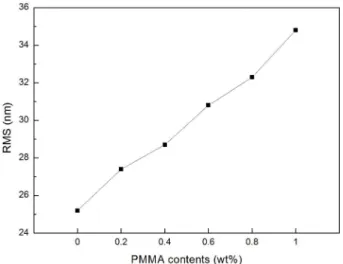
Fig. 3 shows the rms values of PMMA-added TiO
2layer measured with AFM. When PMMA is added up to 1.0 wt%, the average rms values of TiO
2layer were measured to be 25.2 nm, 27.4 nm, 28.7 nm, 30.8 nm, 32.3 nm and 34.8 nm. This observation concurs with the previous FESEM analysis result in that the linear in- crease in the surface roughness is caused by the increase in the surface area, which is due to the pore formation after the PMMA thermal decomposition. As a result, we
Fig. 1. TEM image of PMMA.Fig. 2. FESEM images of surface section of TiO2 layers with PMMA of : (a) 0.0 wt%, and (b) 1.0 wt%. Insets are cross-sectional FESEM images of TiO2 layers.
indirectly confirmed that the surface area of TiO
2layer can be increased effectively by employing PMMA, which is a thermoplastic polymer.
Fig. 4 shows absorbance curves of the WE with PMMA at the visible-light range of 400~800 nm. The average absorbance of WE without PMMA is 0.177 %, while they are 0.191 %, 0.191 %, 0.191 %, 0.198 %, and 0.209 % with the addition of PMMA of 0.2, 0.4, 0.6, 0.8, 1.0 wt% of PMMA respectively. This increase of absor- bance with the addition of PMMA is attributed to the increased dye adsorption on the porous TiO
2layer, which results from the increased surface area after the pore formation. The increase in specific surface area of the TiO
2layer with PMMA agrees with microstructure and rms result discussed before. Therefore, dye absorbance can be enhanced by adding PMMA and forming pores.
Fig. 5 is the nyquist plot consisted of real and imaginary terms for DSSC structured as glass/FTO/blocking layer/
TiO
2+PMMA/dye(N719)/electrolyte/100 nm Pt/glass with PMMA under applied frequency. It is evident that the curves show three half-circles(R
1, R
2, R
3) like an internal resistance curve of conventional DSSC.
R
1value represents interfacial resistance at the CE/
electrolyte in the frequency region of 10
3-10
5Hz, and it is about 1.3 Ω for all cases since the CE and electrolyte are the same for all DSSCs.
In the case of R
2value, which represents electron transport resistance of TiO
2layer in the frequency region of 1-10
3Hz, it was 7.9 Ω without PMMA. However, adding PMMA of 0.2, 0.4, 0.6, 0.8, and 1.0 wt% yielded R
2values of 7.9, 7.5, 7.3, 7.3, and 7.1 Ω respectively, showing a decreasing trend. This is attributed to PMMA addition that makes the TiO
2layer porous, which yields increased specific surface area for dye absorption.
R
3value at a frequency higher than 10
6Hz is related to diffusing redox species within the electrolyte. R
3values
Fig. 6. Current-voltage (I-V) characteristic of DSSCs employing PMMA of 0.0~1.0 wt%.Fig. 5. Nyquist plots of DSSCs employing PMMA of 0.0~1.0 wt%.
Fig. 4. Absorbance data of DSSCs employing TiO2 layer with PMMA of addition.
Fig. 3. The rms values of TiO2 layers with PMMA of 0.0~1.0 wt%.
are all about 2.8 Ω, since the electrolyte is the same.
Thus, we confirmed that the addition of PMMA increased dye adsorption for electron generation and that the increased electrons ultimately reduce resistance.
Fig. 6 is I-V data of DSSC with PMMA. We confirm that adding PMMA results in a higher J
sccompared to the case without PMMA, and this result is related to the electron generation. PMMA added device has higher J
scthan the one without PMMA. As with the change in R
2value of impedance, this observation can be explained by increased dye absorption with the addition of PMMA and thus increased electron generation. Also for the FF, which is related to the surface resistance of DSSC device as a whole, the FF of PMMA added device was observed to be greater than the device without PMMA.
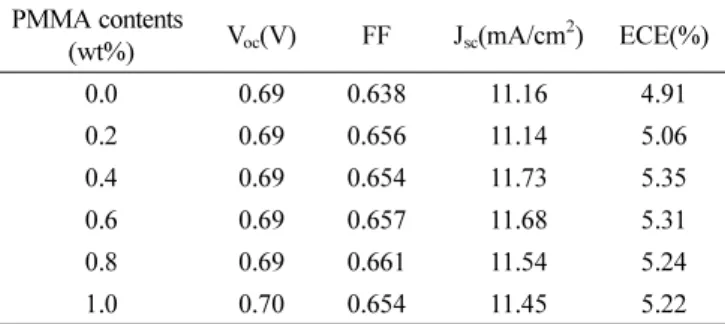
Table 1 shows the values used for I-V curves of Fig. 6.
V
ocdepends on both redox level of electrolyte and fermi level of TiO
2electrode. Since we used the same electrolyte and TiO
2electrode, the V
ocwas measured to have the same values within the margin of error regardless of the amount of PMMA addition.
FF with PMMA of 0.0, 0.2, 0.4, 0.6, 0.8, 1.0 wt% was 0.638, 0.656, 0.659, 0.657, 0.661, 0.654, respectively. It indicates a clear increasing trend as the amount of added PMMA increases.
J
scof the device with 0.4 wt% PMMA was 11.73 mA/
cm
2. Compared to that of the device without PMMA, which was 11.16 mA/cm
2, it showed the improvement of approximately 5 %. This can be explained by the in- creased electron generation. During the thermal process for sintering of PMMA added TiO
2layer, PMMA thermally decomposes and form pores. The pores enhances dye absorption, which results in more generation of electrons. Later when the amount of PMMA addition was greater than 0.6 wt%, the J
scrather decreased. It was considered to be the result of a relative reduction in the fraction of TiO
2layer as an electron transport material as the amount of pores increased.
The final ECE of the DSSC without PMMA was 4.91 %, while the efficiency of device with 0.4 wt%
PMMA was 5.35 %. However excessive PMMA more
than 0.6 wt% ECE was decreased, this result depend on J
scchange. Yet, adding more than 0.6 wt% of PMMA resulted in decreased ECE, which coincides with the change in J
sc.
Therefore, we successfully fabricated DSSC devices of enhanced ECE by adding proper amount of PMMA into the TiO
2layer to increase specific surface area.
4. Conclusion
We observed the change in properties of a DSSC with WEs employing nano-sized PMMA beads. We suc- cessfully manufactured PMMA beads of 80 nm and employed 0.0~1.0 wt% PMMA on TiO
2layer. Micro- structure analysis confirmed the increase in surface area when PMMA is added to form porous TiO
2. According to the absorption analysis, the degree of absorption increased as the amount of PMMA added increased. The final ECE of the manufactured DSSC was 5.35 %, which was 8 % improvement compared to the one without PMMA. This improvement was due to the increase in J
scand FF. Thus, we improved the ECE of DSSC by adding proper amount of PMMA on TiO
2layer.
Acknowledgment
This work was supported by the University of Seoul 2015 Research Fund.
References
1. B. O’Regan and M. Gratzel, Nature, 353, 737 (1991).
2. K. Wongcharee, V. Meeyoo and S. Chavadej, Sol. Energy Mater. Sol. Cells, 91, 566 (2007).
3. M. Gratzel, J. Photochem. Photobiol. C, 4, 145 (2003).
4. M. A. Green, K. Emery, Y. Hishikawa, W. Warta and E.
D. Dunlop, Prog. Photovolt. Res. Appl., 22, 701 (2014).
5. A. Hagfeldt, G. Boshloo, L. Sun, L. Koo and H.
Pettersson, Chem. Rev., 110, 6595 (2010).
6. L. Li, S. Chen, C. Zu, Y. Zhao, N. G. Rudawski and K.
J. Ziegler, ACS Appl. Mater. Interfaces, 6, 20978 (2014).
7. M. Gratzel, Inorg. Chem., 44, 6841 (2005).
8. S. Lee, J. H. Noh, H. S. Han, D. H. Kim, J. K. Lee, J.
Y. Kim, H. S, Jung and K. S. Hong, J. Phys. Chem. C, 113, 7443 (2009).
9. Y. Yao, G. Li, S. Ciston, R. M. Lueptow and K. A. Gray, Environ. Sci. Technol., 42, 4952 (2008).
10. N. G. Park, J. V. Lagemaat and A. J. Frank, J. Phys.
Chem. B, 104, 8989 (2000).
11. J. Bisquert, F. F. Santiago, I. M. Sero, G. G. Belmonte and S. Kimenez, J. Phys. Chem. C, 113, 17278 (2009).
12. H. Xu, X. Tao, D. T. Wang, Y. Z. Zheng and J. F. Chen, Electrochim. Acta, 55, 2280 (2010).
13. A. Agarwala, M. Kevin, A. S. W. Wong, C. K. N. P, V.
Table 1. Photovoltaic properties and energy conversion efficiency of DSSCs with PMMA of 0.0~1.0 wt%.
PMMA contents
(wt%) Voc(V) FF Jsc(mA/cm2) ECE(%)
0.0 0.69 0.638 11.16 4.91
0.2 0.69 0.656 11.14 5.06
0.4 0.69 0.654 11.73 5.35
0.6 0.69 0.657 11.68 5.31
0.8 0.69 0.661 11.54 5.24
1.0 0.70 0.654 11.45 5.22
Thavasi and G. W. Ho, ACS Appl. Mater. Interfaces, 2, 1844 (2010).
14. R. Pater, S. H. Ahn, W. S. Chi and J. H. Kin, Ionics, 18, 395 (2012).
15. M. Ferriol, A. Gentilhomme, M. Cochez, N. Oget and J.
L. Mieloszunski, Polym. Degrad. Stabil., 79, 271 (2003).
16. S. T. Camli, F. Buyukserin, O. Balci and G. G. Budak, J.
Colloid Interface Sci., 344, 528 (2010).