44
Gefitinib-induced Acute Fatal Respiratory Failure in a Woman who Never Smoked and had Adenocarinoma of the Lung with EGFR Mutation
Department of Internal Medicine, College of Medicine, Inha University, Incheon, Korea
Sang-Gu Kim, M.D., Jeong-Seon Ryu, M.D., Jee-Young Han, M.D., Hyun-Jung Kim, M.D., Jae-Hwa Cho, M.D., Seung-Min Kwak, M.D., Hong-Lyeol Lee, M.D.
EGFR 유전자 돌연변이를 보였던 비흡연 여성 선암 환자에서 Gefitinib 투여 후 발생한 급성호흡부전
김상구, 류정선, 한지영, 김현정, 조재화, 곽승민, 이홍렬
인하대학교 의과대학 내과학교실
Gefitinib를 사용할 경우 발생할 수 있는 급성호흡부전은 주로 남성, 흡연자, 편평상피세포암 혹은 사이성 폐질환 등에서 발생하는 것으로 알려져 있다. 따라서 이와 같은 임상적 요인이 없는 경우 이 약제를 안전하게 사용할 수 있을 것이다.
연구자 등은 흡연한 적이 없고, EGFR 유전자의 19번 엑손 돌연변이를 보였던 47세 여성 선암 환자에서 gefitinib 투여 후 발생한 급성호흡부전을 보고하며, 부작용의 발생기전이 밝혀지지 않은 시점에서, 이들 임상적 특성을 보이는 환자에 서도 호흡기계 부작용의 발생 가능성에 대한 임상의사의 주의를 촉구하는 바이다.
(Tuberc Respir Dis 2008;64:44-47) Key Words: Acute respiratory failure, Gefitinib, Lung cancerThis study was supported by INHA University Research Grant (INHA).
Address for correspondence: Jeong Seon Ryu, M.D.
Division of Pulmonary, Department of Internal Medicine, Inha University Hospital, 7-206, Sinheung-dong 3-ga, Jung-gu, Incheon 400-103, Korea
Phone: 82-32-890-3738, Fax: 82-32-882-6578 E-mail: [email protected]
Received: Dec. 7, 2007 Accepted: Jan. 14, 2008
Introduction
Gefitinib is an oral selective inhibitor that targets on tyrosine kinase of the epidermal growth factor receptor.
The prevalence of interstitial lung disease as a adverse consequence of gefitinib therapy is 2% in the Japanese and 0.3% in Americans1,2; one third of these patients are fatalities. The clinical characteristics that predict adverse pulmonary effects are known to be being a male patient and the presence of a smoking history1,3. Those patients with a low probability of EGFR mutation have a low possibility of achieving a beneficial effect from gefitinib.
In accord with this, none of the patients in a retro- spective study who harbored EGFR mutation were
shown to develop any pulmonary complications4. Several series5-13 have reported on fatal respiratory com- plications related to gefitinib in patients with non-small cell lung cancer, but any information on EGFR mutation in these patients was not available.
We described here a woman who never smoked and who suffered with adenocarcinoma of the lung and she had EGFR mutation. She developed acute fatal respira- tory failure after treatment with gefitinib.
Case Report
A 47-year-old woman was admitted with complains of cough, sputum and progressive dyspnea. She was di- agnosed with adenocarcinoma of the lung on biopsy of a supraclavicular lymph node and the sputum cytology.
On her chest CT scan, a 4×2.6 cm sized mass was not- ed at the superior segment of the left lower lobe and there were multiple nodules scattered in both lung (Figure 1). In addition, bone metastasis to the ileum and acetabulum was found on positron emission tomo- graphy. She was finally staged as cT4N3M1.
Tuberculosis and Respiratory Diseases Vol. 64. No. 1, Jan. 2008
45
Figure 1. At the time of diagnosis, bilateral multiple lung nodules, right pleural effusion and a mass at the superior segment of the left lower lobe were observed on chest PA (A) and chest CT scans (B, C). At the 17th day after gefitinib was administered, the multiple lung nodules, pleural effusion and lung mass were shown to be decreased in size on the chest AP (D) and on similar slices from the pulmonary embolus protocol CT scan (E, F) while diffuse ground glass opacities were newly developed in both lungs.She was a never-smoker and she denied a history of medical disease, including cardiovascular, allergic, rheu- matologic or respiratory diseases. Her ECOG perform- ance status was four because of her severe respiratory distress (Borg scale 8). At the time of admission, her body temperature was 36.8oC and the blood pressure was 140/70 mmHg. Rhonchi were audible in both lungs. With administering oxygen supplementation via a nasal cannula at a flow rate of 5 L/min, the arterial blood gas study revealed a pH of 7.44, a PaO2 of 74.0
mmHg and a PaCO2 of 35.1 mmHg. The laboratory find- ings showed a leukocyte count of 6,200/mm3 (78.4%
neutrophils, 13.7% lymphocytes, 3.7% monocytes, 1.7%
eosinophils, and 1.1% basophils), a hemoglobin level of 14.5 g/dl and a hematocrit of 45.3%. The serum lac- tate dehydrogenase level was 361 IU/L, and the C-re- active protein level was 5.56 mg/dl. The results of the hepatic and renal function testing were normal. Azithro- mycin and 2nd generation cephalosporin was given em- pirically until the histologic diagnosis was finally made.
SG Kim et al: Respiratory failure in woman having good clinical factors for gefitinib
46
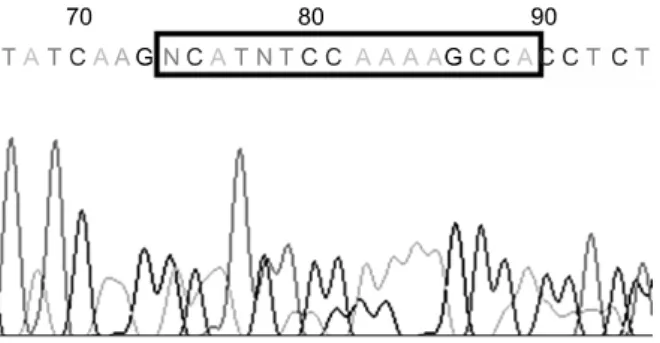
Figure 2. The in-frame deletion mutation in codon 746-750 of exon 19 was noted on the EGFR mutation analysis.
Her respiratory distress was not improved in spite of ad- ministering oral bronchodilators, β-2 agoninst nebu- lization and nasal oxygen. EGFR mutation was analyzed on the biopsy specimen of the lymph node by perform- ing DNA sequencing of exons 18∼21 in the EGFR ty- rosine kinase domain, and the in-frame deletion muta- tion in codon 746∼750 of exon 19 was demonstrated (Figure 2).
Oral gefitinib (IRESSAⓇ), 250 mg once daily was given as the first line treatment on September, 24th 2006. Her dyspnea began to significantly improve to four on the Borg scale on the 3rd day of gefitinib administration, along with improvement being noted on the chest radiography. She was taken off nasal oxygen supple- mentation on day 7. On day 16, severe dyspnea sud- denly developed along with a high fever (38.8oC).
Diffuse bilateral ground-glass opacities were noted on the chest CT scan, while the multiple lung nodules and a lung mass at the superior segment of the left lower lobe were all decreased in size. The antibody test for
Mycoplasma pneumoniae
or antigen tests forLegionella
andPneumococus
were negative. No bacterial patho- gens, fungus or virus were identified in the cultures from the sputum or blood. Although high dose cortico- steroid was immediately administrated under a strong clinical suspicion of drug-induced, acute interstitial pneumonitis, she rapidly deteriorated; sadly, she died of respiratory failure on day 17. Her family did not want a postmortem examination.Discussion
We report here on a case of acute fatal respiratory failure in a lung cancer patient who had the character- istics favoring a good response to gefitinib: a woman, a never-smoker and she had adenocarcinoma and EGFR mutation. It could be suggested that clinicians should use gefitinib with caution even if the patient displays this favorable phenotype for which gefitinib is regarded as safe to use. Although this case has a caveat because no postmortem examination was performed to differ- entiate between the other diagnoses, the only way to confirm the diagnosis of drug induced lung injury is to rechallenge with the suspected drug, and that is not possible for lung cancer patients.
Ethnic differences in the genetic susceptibility and the role of the EGFR gene have been suggested as hypo- thetical mechanisms of gefitinib-induced lung disease.
As for the role of EGFR in gefitinib-induced lung injury, a study conducted with a murine model showed that gefitinib augmented the pulmonary fibrosis induced by bleomycin, and the effect of gefitinib was demonstrated to occur through inhibiting EGFR phosphorylation14. This could be supportive evidence for our present case.
On the contrary, another study that had a similar design, but it used three differential doses of gefitinib, showed its preventive effect on pulmonary fibrosis15. In addi- tion, a recent retrospective analysis by Fujiwara et al4 showed that all eleven patients with EGFR mutation didn’t demonstrate any pulmonary toxicity with receiv- ing gefitinib therapy. Although the results from clinical studies1,3 have classified males, never-smokers and non-adenocarcinoma patients as the risk group for de- veloping adverse respiratory effects, how the somatic or genomic mutation of the EGFR gene affects the mecha- nism of gefitinib induced lung injury is still unknown, and this will require future study.
References
1. Ando M, Okamoto I, Yamamoto N, Takeda K, Tamura
Tuberculosis and Respiratory Diseases Vol. 64. No. 1, Jan. 2008
47
K, Seto T, et al. Predictive factors for interstitial lungdisease, antitumor response, and survival in non-small- cell lung cancer patients treated with gefitinib. J Clin Oncol 2006;24:2549-56.
2. Cohen MH, Williams GA, Sridhara R, Chen G, McGuinn WD Jr, Morse D, et al. United States Food and Drug Administration Drug Approval summary: Gefitinib (ZD1839; Iressa) tablets. Clin Cancer Res 2004;10:
1212-8.
3. Takano T, Ohe Y, Kusumoto M, Tateishi U, Yamamoto S, Nokihara H, et al. Risk factors for interstitial lung disease and predictive factors for tumor response in patients with advanced non-small cell lung cancer treated with gefitinib. Lung Cancer 2004;45:93-104.
4. Fujiwara Y, Kiura K, Toyooka S, Takigawa N, Tokumo M, Hotta K, et al. Relationship between epidermal growth factor receptor gene mutations and the severity of adverse events by gefitinib in patients with ad- vanced non-small cell lung cancer. Lung Cancer 2006;
52:99-103.
5. Seto T, Seki N, Uematsu K, Tanigaki T, Shioya S, Koboyashi T, et al. Gefitinib-induced lung injury suc- cessfully treated with high-dose corticosteroids. Respi- rology 2006;11:113-6.
6. Ohyanagi F, Ando Y, Nagashima F, Narabayashi M, Sasaki Y. Acute gefitinib-induced pneumonitis. Int J Clin Oncol 2004;9:406-9.
7. Inoue A, Saijo Y, Maemondo M, Gomi K, Tokue Y, Kimura Y, et al. Severe acute interstitial pneumonia and gefitinib. Lancet 2003;361:137-9.
8. Rabinowits G, Herchenhorn D, Rabinowits M, Weatge D, Torres W. Fatal pulmonary toxicity in a patient treated with gefitinib for non-small cell lung cancer af- ter previous hemolytic-uremic syndrome due to gem- citabine. Anticancer Drugs 2003;14:665-8.
9. Ieki R, Saitoh E, Shibuya M. Acute lung injury as a pos- sible adverse drug reaction related to gefitinib. Eur Respir J 2003;22:179-81.
10. Okamoto I, Fujii K, Matsumoto M, Terasaki Y, Kihara N, Kohrogi H, et al. Diffuse alveolar damage after ZD1839 therapy in a patient with non-small cell lung cancer. Lung Cancer 2003;40:339-42.
11. Inomata S, Takahashi H, Nagata M, Yamada G, Shira- tori M, Tanaka H, et al. Acute lung injury as an adverse event of gefitinib. Anticancer Drugs 2004;15:461-7.
12. Nagaria NC, Cogswell J, Choe JK, Kasimis B. Side ef- fects and good effects from new chemotherapeutic agents. Case 1. Gefitinib-induced interstitial fibrosis. J Clin Oncol 2005;23:2423-4.
13. Sumpter K, Harper-Wynne C, O'Brien M, Congleton J.
Severe acute interstitial pnuemonia and gefitinib. Lung Cancer 2004;43:367-8.
14. Suzuki H, Aoshiba K, Yokohori N, Nagai A. Epidermal growth factor receptor tyrosine kinase inhibition aug- ments a murine model of pulmonary fibrosis. Cancer Res 2003;63:5054-9.
15. Ishii Y, Fujimoto S, Fukuda T. Gefitinib prevents bleo- mycin-induced lung fibrosis in mice. Am J Respir Crit Care Med 2006;174:550-6.