225 책임저자:정종희, 133-791, 서울시 성동구 행당동 산 17번지
한양대학교 생활과학대학 식품영양학과 Tel: 02-2220-1203, Fax: 02-2292-1226 E-mail: [email protected]
접수일:2007년 7월 14일, 게재승인일:2007년 8월 20일
Correspondence to:Jong-Hee Jeong
Department of Food and Nutrition, College of Human Ecology, Hanyang University, San 17, Haengdang-dong, Seongdong-gu, Seoul 133-791, Korea Tel: +82-2-2220-1203, Fax: +82-2-2292-1226
E-mail: [email protected]
Bamboo Salts Have Antioxidant Activity and Inhibit ROS Formation in Human Astrocyte U373MG Cells
Ae-Son Om and Jong-Hee Jeong
Department of Food and Nutrition, College of Human Ecology, Hanyang University, Seoul 133-791, Korea Bamboo salt (BS) has been used for the purpose of prevention and treatment of various diseases in Korea for a long time. It is a specially processed salt that is made of special ingredients including normal salt, bamboo, pine tree firewood, pine resin, yellow soil, and high level of fire handling technology. We investigated the protective effects of BS on ROS production against the oxidative stress in U373MG cells.
We further examined the SOD activity of BS as an antioxidant to determine the effectiveness of BS in regard of inhibition of ROS formation. BS inhibited ROS formation by 2.2 to 2.9 times compared with NaCl and even by 23 to 45% higher than Vitamin E. The SOD activity of BS-treated cells, as an antioxidant, was 4.5∼7.2 times higher than that of NaCl and even 3.3∼7.1 times higher than that of vitamin E. BS is considered to be a potent antioxidant to inhibit and even eliminate ROS. (Cancer Prev Res 12, 225-230, 2007)
Key Words: Bamboo salt, U373MG cell, ROS, SOD
INTRODUCTION
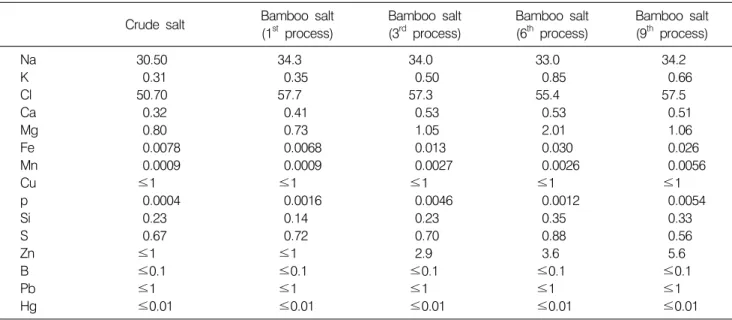
Bamboo salt (BS) has been used as a folk medicine for the purpose of prevention and treatment of various diseases in Korea for a long time. It is known to have various therapeutic effects on viral diseases such as inflammations, dental plaque, gastritis, diabetes, circulation organ disorder and cancers, allergies etc.1∼5) Although salt is generally known to be harmful for human health, bamboo salt (BS) is a distinctive one that actually treats human diseases. BS is a specially processed salt according to the traditional recipe using normal salt, bamboo, pine tree firewood, pine resin, and yellow soil with high level of fire handling technology. As shown in Table 1, BS can be called as treasury of mineral containing abundant minerals and an essential microelement to maintain the human body.6) For these reasons, it is positive to make a hypothesis that BS is a strong antioxidant that inhibits or eliminates oxidative stress. But the study of BS effect on oxidative stress has not been published yet.
Oxidative stress is an outcome of the over-production of reactive oxygen species (ROS) that overwhelms the antioxidant capacities of the cells.7) The cells under aerobic conditions are threatened with the insult of ROS, which however are efficiently taken care of by the highly powerful antioxidant system of the cells without any untoward effects. When the balance between ROS production and antioxidant defense is lost, oxidative stress, through a series of events, deregulates the cellular functions, leading to various pathological conditions including cardiovascular dysfunction, neuro-degenerative diseases, immunosuppression, gastro duodenal pathogenesis, cancer, premature aging and metabolic dysfunction of almost all vital organs.8) Free radical induced oxidative damage to cells has been implicated in the pathogenesis of a wide variety of clinical disorders and their broad range of effects on biological systems has drawn attention of many experimental studies.9) ROS are highly reactive molecules that include free radicals, such as superoxide (O2.) and hydroxyl (.OH), as well as compounds such as hydrogen peroxide (H2O2) that are not free radicals. H2O2 mediated cell death has been studied as a model
Table 1. Quantitative analysis according to process from crude salt to bamboo salt (Kim et al, 1998) (Units: ppm)
Bamboo salt Bamboo salt Bamboo salt Bamboo salt
Crude salt
(1st process) (3rd process) (6th process) (9th process)
Na 30.50 34.3 34.0 33.0 34.2
K 0.31 0.35 0.50 0.85 0.66
Cl 50.70 57.7 57.3 55.4 57.5
Ca 0.32 0.41 0.53 0.53 0.51
Mg 0.80 0.73 1.05 2.01 1.06
Fe 0.0078 0.0068 0.013 0.030 0.026
Mn 0.0009 0.0009 0.0027 0.0026 0.0056
Cu ≤1 ≤1 ≤1 ≤1 ≤1
p 0.0004 0.0016 0.0046 0.0012 0.0054
Si 0.23 0.14 0.23 0.35 0.33
S 0.67 0.72 0.70 0.88 0.56
Zn ≤1 ≤1 2.9 3.6 5.6
B ≤0.1 ≤0.1 ≤0.1 ≤0.1 ≤0.1
Pb ≤1 ≤1 ≤1 ≤1 ≤1
Hg ≤0.01 ≤0.01 ≤0.01 ≤0.01 ≤0.01
for the ROS induced apoptosis in several experimental situations in order to elucidate the pathways involved in this process.10∼14) H2O2 is stable and can easily penetrate lipid membrane.15) Apart from its direct effect on intracellular redox status, H2O2 also acts by generating hydroxyl radicals leading to DNA damage.16) The diffusion capacity of most ROS is limited due to their lipid insolubility, and therefore their actions are generally confined to the intracellular compartment of production. ROS are known to play multiple roles in physiological and pathological states, and are constantly produced in living organisms.17,18) Endogenous sources of ROS in aerobic mammalian cells are the mitochondrial electron carriers and enzymes. Representative external sources include redox cycling drugs, radiation, and various lifestyle and envi- ronmental influences, such as smoking, drinking alcohol, excessive exercise, pollution, and overexposure to the sun.19,20) The highly reactive superoxide radical and hydrogen peroxide may be toxic to cells by a direct attack at the molecular level or indirectly by generating secondary reactive species such as the hydroxyl radical.21) Lipids, especially polyunsaturated fatty acid, are preferential targets for such oxidative damage.22) If the reactions of unsaturated fatty acid with ROS occur in living cells, the resulting defects in membrane functions may cause cell death.23)
Furthermore, excessive generation of ROS has been suggested as a causal factor in various neurodegenerative disorders, such as Parkinson's disease and Alzheimer's disease.24∼26) Also, ROS
are formed as by-products of various cellular processes involving interactions with oxygen, ROS damage macromolecules, and contribute to the development of various human diseases, including ischemia, cancers, radiation injury and inflammation immune injury.27)
Despite the destructive potential of ROS, cells have developed defense mechanisms to prevent or limit oxidative injury. These mechanisms include several enzyme systems and antioxidants such as vitamin E and carotenoid, which prevent lipid peroxidation either independently, co-operatively, or even synergistically.28,29)
In today’s life due to the change in life styles, a great degree of stress is being experienced for people. In order to cope with increased ROS in the body, external supplementation of antioxidants is recommended by medical practitioners, the most common antioxidants being vitamin C, vitamin E, and beta-carotene. Antioxidants and antioxidant enzymes have been evolved to limit the rate of production of the free radical damage occurring in cells and tissues.30)
Antioxidant systems developed in cells to protect cell death from damaging effects of free radicals and toxic products of their metabolism. These antioxidant systems include superoxide dismutase (SOD), glutathione (GSH), glutathione peroxidase (GPx), glutathione reductase (GR), vitamin E, vitamin C, and vitamin A. Among those antioxidants, SOD is responsible for the prevention and restriction of free radical formation because it catalyses dismutation of superoxide radicals (O2.) to
molecular oxygen and hydrogen peroxide.31) It also resolves and eventually turns superoxide radical into H2O2. This H2O2 are excreted as H2O with the function of GPx and catalase, working as the best enzyme for protection of living body from oxygen toxin.32)
Even though there are many cases that BS is known to be so effective to treat various diseases such as inflammations, it has not yet been studied the effects of BS on oxidative stress.
In this study, we examine the protective effects of BS against the oxidative stress. We also investigate the SOD activity of BS, as an antioxidant, in U373MG cells to determine the effectiveness of BS in regard of inhibition of ROS formation.
MATERIALS AND METHODS 1. Reagents
RPMI 1640, ampicillin, streptomycin and fetal bovine serum (FBS) were purchased from GIBCO-BRL (Grand Island, NY, USA). 2’,7’-dichlorofluorescein diacetate (DCFH-DA) were from Molecular Probes (Eugene, OR, USA). Other chemicals were of the highest quality available.
2. U373MG cell culture
The human brain astrocyte U373MG cells were purchased from American Type Culture Collection (Rockville, MD, USA).
Cells were grown in RPMI medium 1640, supplemented with 10% fetal bovine serum (FBS), penicillin (200 unitsml1), and streptomycin (100 gml1). The Cells were maintained at 37oC in a humidified 5% CO2 incubator. U373MG cells (2.5×10⁵ cells) were seeded on plastic 100-mm-diameter dishes in RPMI 1640, supplemented with 10% FBS. After 24 h culturing, the feeding medium was aspirated and renewed twice a week.
3. Preparation of BS
Bamboo salt was provided from Tae Sung Food Inc.
(Jeonbuk, South Korea) and Hye Won Jookyum (Kangwondo, South Korea). It was processed by special technique; nine times processing at extremely high temperature reaching 1,800∼
2,500oC with bay salt, bamboo, pine tree firewood, pine resin, and yellow soil etc. Powdered bamboo salt and NaCl were melted in distilled water to reach appropriate concentrations, filtered through 0.45μm filter, and kept at 4oC.
4. Measurement of intracellular ROS
The DCFH-DA method was used to detect the intracellular hydrogen peroxide levels.33) DCFH-DA diffuses into cells, where it is hydrolyzed by intracellular esterase to polar 2’, 7’-dichlorodihydrofluorescein. This non-fluorescent fluorescein analog gets trapped in the cells and is oxidized by intracellular oxidants to the highly fluorescent 2’,7’-dichlorodihydro- fluorescein.34) The U373MG cells were seeded in a 96-well plate at 2.5×10⁵ cellsml1. After overnight culture, the cells were treated with various concentrations of the NaCl, BS, and vitamin E for 24 h at 37oC. Then 24 h later 88.2μM H2O2
was added into the plate. The cells were incubated for an additional 30 min at 37oC. Then, 20μM of DCFH-DA solution dissolved in ethanol was added and after 30 min the fluorescence of 2’,7’-dichlorofluorescein was detected at 485 nm on excitation and at 535 nm on emission, using a Cytofluor 2350 Plate Reader (Millipore Bedford, MA, USA).
5. Superoxide dismutase (SOD) activity
The U373MG cells were seeded at 2×10⁶ cellsml1. After twenty-four hours on plating, the cells were treated with various concentrations of BS, NaCl, and vitamin E and incubated at 37oC for 24 h. Then the cells were washed with cold sodium phosphate buffer (pH 7.4), scraped, and homogenized in 50 mM sodium phosphate buffer (pH 7.4) in ice-cold. The lysates were separated by centrifugation at 5000 rpm for 5 min at 4oC to remove the cellular debris. The protein content of the supernatant was determined using the Bradford method with bovine serum albumin at the standard. The SOD activity in the supernatant was measured using the BIO- XYTECH SOD-525 Kit (OXIS Health Products, Inc., USA) using ULTRASPEC 2100 Pro UV/visible spectrophotometer in kinetic mode. The rate of inhibition was monitored at 525 nm and one unit of enzyme activity was defined as the amount of enzyme required to produce 50% inhibition. The SOD activity is expressed as units/mg protein.
6. Statistical analysis
All data were presented as means±S.E. Statistical analyses were performed by statistical package SPSS (Version 12.0, SPSS Inc., CA, USA) software, and significance of each group was verified with one-way analysis of variance followed by Duncan’s multiple range test with significance set at p<0.05.
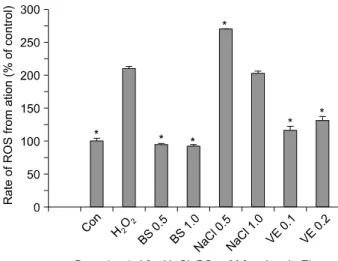
Fig. 1. Rate of ROS formation (% of control). The intracellular ROS scavenging effect by the BS was detected using the DCFH-DA method. Control refers to the untreated cells.
Vertical error bars=S.E. *p<0.05: significantly different from the H2O2 value.
Fig. 2. Determination of SOD activity (U/ 2×10⁶ cells). SOD activity in human astrocyte U373MG cells is significantly higher than as cells were treated NaCl or vitamin E. This graph indicates SOD activities in human brain astrocyte after treatment of BS, NaCl, vitamin E. Results were expressed as the mean±S.E.M. *p<0.05: significantly different from the BS value.
RESULTS 1. Effects of BS on ROS formation
We measured the rate of ROS formation in the U373MG cells by using the specific fluorescent dyes DCFH and DHE to detect H2O2 and superoxide anion radical (O2.
), respec- tively, to identify whether BS can inhibit ROS generated by H2O2 stress. Concentrations of H2O2 were defined by the inhibition rate of increase of cell apoptosis by 50%. As for the inhibitory effects of a comparison control, NaCl and vitamin E on the ROS production in U373MG cells were also examined. As shown in Fig. 1, ROS formation of only H2O2- induced stress was about 2.1 times higher than that of untreated control cells. After pretreatment of cells by NaCl and vitamin E, ROS formations were increased about 2 to 2.7 folds and 16 to 32% compared with untreated cells. However, ROS formation of BS-pretreated cell was inhibited 2.3 folds compared with only H2O2 stimulation and even slightly decreased compared with untreated control. Also, NaCl and vitamin E produced ROS 2.2 to 2.9 times and 23 to 45% more compared with BS, respectively. It means that pretreatment of cells with BS significantly inhibited the ROS generation, while vitamin E had rather little effect and NaCl increase ROS formation much higher than BS. It is conceivable that BS might suppress ROS formation and enhanced the cell viability under H2O2 and SNP-induced cytotoxicity by inhibition of enzymes in free radical production and scavenge ROS.35)
2. Effects of BS on SOD activity
SOD (superoxide dismutase) activity is metalloenzyme that plays an important role in protecting brain cells against oxygen toxicity. SOD is the endogenous antioxidant enzyme that can effectively scavenge superoxide radicals.35,36) We next investigated antioxidative effects of BS with respect to SOD activity in human brain astrocyte cells. As a comparison control, NaCl and vitamin E were also examined. When pretreatment of cells with NaCl, vitamin E, SOD activity was 0.8 to 1.5, 0.8 to 2.1, depending on concentrations. But in BS-treated SOD activity was 6.2 to 7.1. In Fig. 2, the activity of SOD in pretreatment of cells with BS was remarkable as 4.5 to 7.2 times and 3.3 to 7.1 times as much as that of the NaCl and vitamin E, respectively, depending on concentrations. These results suggested that BS in human brain astrocyte cell plays a crucial
role in preventive antioxidants as well as inhibition of ROS formation and also seems to be more obvious than the other antioxidants such as vitamin E.
DISCUSSION
The present study was carried out to investigate the effects
of bamboo salt (BS) on ROS inhibition in U373MG cells against oxidative stress. To identify it, NaCl as chemical salt and vitamin E which is known to be one of the most important antioxidant existing in biological membrane system and to reduce oxidative damage of cells37,38) were used as drugs for comparison of antioxidant activity.
This experiment showed that BS inhibited ROS formation 2.2 to 2.9 times more than NaCl did. BS also showed more restraint on ROS by 23 to 45% than vitamin E did. Compared with control, vitamin E increased ROS formation by 16 to 32%
and NaCl aggravated by 2.0 to 2.7 times. But BS rather somewhat inhibited ROS formation than the untreated control group. This demonstrates that BS restrains the occurrence of free radical itself in human brain cell through strengthening antioxidant system, eliminates ROS, and, consequently, restores human brain cells from oxidative stress damage.
We also studied the antioxidative effect of BS with respect to the superoxide dismutase (SOD) activity. SOD is a major endogenous antioxidant that could effectively scavenge super- oxide radicals in cells and plays an important role in protecting brain tissues from oxidative stress.35) ROS can be inhibited by SOD activity.39) In this experiment, the SOD activities of U373MG cells treated with BS were significantly high in comparison to the cells treated with NaCl or vitamin E. The SOD activities in BS pre-treated cells were 4.5 to 7.2 times more active than that in NaCl pre-treatment and 3.3 to 7.1 times as much activity as vitamin E. This result indicates that BS is a distinctive antioxidant, protecting cells from damaging effects of free radicals and toxic products of their metabolism.
In this experiment, the pretreatment of BS on cells was clearly shown as effective toward oxidative stress. It provides evidence that BS is a preventive antioxidant restraining formation reaction itself of free radical. Even though both BS and NaCl are regarded as similar kind of salt, from the results, BS is qualitatively different from NaCl or ordinary salt typically found on household table in terms of antioxidant effect on human body. As BS is proven to be the material that can eliminate or restrain ROS and strengthen antioxidant system, various studies about whether BS is effective in preventing and curing of each disease in vivo are necessary.
In conclusion, the ability of BS to inhibit oxidative stress and to reduce ROS level in U373MG cells suggests that BS might be a protective substance for free radical generating compound.
Further study is encouraged to understand pharmacological
mechanism of ROS inhibition by analyzing main components of BS.
REFERENCES
1) Kim JB, Paik DI, Moon HS, Jin BH, Park DY. A study on the effects of cetylpyridinim chloride and bamboo salt containing mouth rinse on the number of streptococcus mutants and plaque index. J Korean Academic Dental Health 17:
176-186, 1993.
2) Min BS, Choi HY, Choi YJ, Hong JP, Chun YH, Kang NH.
The reducing effects on dental plaque formation and gingiritis of toothpastes containing bamboo salt and several herb medicines. J Korean Dental Assessment 33, 65-71, 1995.
3) Yang JS, Kim OH, Chung SY, Yoo TM, Roh YN, Yi SY, Chung MW, Ahn MR, Choi HJ, Rheu HM. Pharmacological evaluation of bamboo salt. J Appl Pharmacol 7, 178-184, 1999.
4) Huh K, Kim YH, Jin DQ. Protective effect of an aged garlic- bamboo salt mixture on the rat with the alcohol-salicylate induced gastropathy. Yakhak Hoeji 45, 258-268, 2001.
5) Shin HY, Na HJ, Moon PD, Shin T, Shin TY, Kim SH, Hong SH, Kim HM. Inhibition of mast cell-dependent im- mediate-type hypersensitivity reactions by purple bamboo salt.
J Ethnopharmacol 91, 153-157, 2004.
6) Kim SH, Kang SY, Jung KK, Kim TG, Han HM, Rheu HM, Moon A. Characterization and anti-gastric ulcer activity of bamboo salt. J Fd Hyg Safety 13, 252-257, 1998.
7) Meydani SN, Wu D, Santos MS, Hayek MG. Antioxidants and immune status in aged person overview of present evidence. American J Clinical Nutrition 62, 1462-1476, 1995.
8) Flores SC. Oxygen radicals and disease process. In: eds, by Thomas CE and Kalyanaraman B, Netherlands, Hardwood Academic Publishers, pp 157-164, 1997.
9) Gutteridge JM, Halliwell B. Free radicals and antioxidants in the year 2000. A historical look to the future. Ann N Y Acad Sci 899, 136-147, 2000.
10) Li PF, Dietz R, Harsdorf V. Differential effect of hydrogen peroxide and superoxide anion on apoptosis and proliferation of vascular smooth muscle cells. Circulation 96, 3602-3609, 1997.
11) Vile GF. Active oxygen species mediate the solar ultraviolet radiation-dependent increase in the tumor suppressor protein p53 in human skin fibroblasts. FEBS Lett 412, 70-74, 1997.
12) Stridh H, Kimland M, Jones DP, Orrenius S, Hampton MB.
Cytochrome c release and caspase activation in hydrogen peroxide- and tributyltin-induced apoptosis. FEBS Lett 429, 351-355, 1998.
13) Dumont, A., Hehner SP, Hofmann, TG, Ueffing M, Droge W, Schmitz ML. Hydrogen peroxide-induced apoptosis is CK95-independent, requires the release of mitochondria- derived reactive oxygen species and the activation of NF-KB.
Oncogene 18, 747-757, 1999.
14) Jiang MC, Liang HJ, Liao CF, Lu FJ. Methyl methane- sulfonate and hydrogen peroxide differentially regulate p53 accumulation in hepatoblastoma cells. Toxicol Lett 106, 201- 208, 1999.
15) Nakamura H, Nakamura J, Yodoi J. Redox regulation of cellular activation. Annu Rev Immunol 15, 351-369, 1997.
16) Imlay LA, Linn S. DNA damage and oxygen radical toxicity.
Science 240, 1302-1309, 1988.
17) Yarr M, Gilchrest BA. Cellular and molecular mechanisms of cutaneous aging. J Dermatol Surg Oncol 16, 915-922, 1990.
18) Darr D, Fridovich I. Free radicals in cutaneous biology. J Invest Dermatol 102, 671-675, 1994.
19) Machlin LJ, Bendich A. Free radical tissue damage: protective role of antioxidant nutrients. FASEB J 1, 441-445, 1987.
20) Dizdaroglu M. Chemistry of free radical damage to DNA and nucleoproteins. In: eds, by Halliwell B and Aruoma OI, DNA and Free Radical, New York, Ellis Horwood, pp 20-39, 1993.
21) Brenneisen P, Briviba K, Wlaschek M, Wenk J, Kochanek KS. Hydrogen peroxide increases the steady-state mRNA levels of collagenase/KKP-1 in human dermal fibroblasts. Free Radic Biol Med 22, 515-524, 1997.
22) Douillet C, Chancerelle Y, Cruz C, Maroncles C, Kergonou JF, Renaud S, Ciavatti M. High dosage vitamin E effect on oxidative status and serum lipids distribution in streptozoto- cin-induced diabetic rats. Biochem Med Metab Biol 50, 265-276, 1993.
23) Yobimoto K, Matsumoto K, Huong N, Kasai R, Yamasaki K, Watanabe H. Suppressive effects of vietnamese ginseng saponin and majonoside-R2 on psychological stress induced enhanacement of lipid peroxidation in the mouse. Phamacol Biochem Behavior 66, 661-665, 2000.
24) Kehrer JP, Smith CV. Free radicals in biology sources, reactivities, and roles in the etiology of human diseases. In:
ed, by Frei B, Natural Antioxidants in Human Health and Disease, San Diego, Academic Press, pp 25-66, 1994.
25) Keller JN, Hanni KB, Gabbita SP, Friebe V, Mattson MP, Kindy MS. Oxidized lipoproteins increase reactive oxygen species formation in microglia and astrocytic cell lines. Brain Res 110, 85-91, 1999.
26) Wang H, Joseph JA. Quantifying cellular oxidative stress by dichlorofluorescein assay using microplate reader. Free Radic Biol Med 27, 612-616, 1999.
27) Floyd RA. Role of oxygen free radicals in carcinogenesis and brain ischemia. FASEB J 4, 2587-2597, 1990.
28) Diplock AT. Antioxidants and disease prevention. Mol Aspects Med 15, 293-376, 1994.
29) Sobajic SS, Mihailovic MB, Miric MO. The effects of selenium deficiency, dietary selenium and vitamin E supplementation on the oxidative status of pig liver. J Environ Pathol Toxicol Oncol 17, 265-270, 1998.
30) Halliwell B. Role of free radicals in the neurodegenerative diseases: therapeutic implications for antioxidant treatment.
Drugs Aging 18, 685-716, 2001.
31) Kim EJ, Park YG, Baik EJ, Jung SJ, Won R, Nahm, TS, Lee BH. Dehydroascorbic acid prevents oxidative cell death through a glutathione pathway in primary astrocytes. J Neurosci Res 79, 670-679, 2005.
32) Samuni A, Chevion M, Czapski G. Unusual copper-induced sensitization of the biological damage due to superoxide radicals. J Biol Chem 256, 12632-12635, 1981.
33) Rosenkranz AR, Schmaldienst S, Stuhlmeier KM, Chen W, Knapp W, Zlabinger GJ. A microplate assay for the detection of oxidative products using 2',7'-dichlorofluorescin-diacetate. J Immunol Methods 156, 39-45, 1992.
34) Kang KA, Chae SW, Koh YS, Kin JS, Lee JH, You HJ, Hyun JW. Protective effect of puerariae radix on oxidative stress induced by hydrogen peroxide and streptozotocin. J Pharm Sci 28, 1154-1160, 2005.
35) Yu D, Duan Y, Bao Y, Wei C, An L. Islflavonoids from Astragalus mongholicus protect PC12 cells from toxicity induced by L-glutamate. J Ethnophamacol 98, 89-94, 2005.
36) Chan P, Cheng JT, Tsai JC, Lien GS, Chen FC, Kao PF, Liu JC, Chen YJ, Hsieh MH. Effect of catechin on the activity and gene expression of superoxide dismutase in cultured rat brain astrocytes. Neurosci Lett 328, 281-284, 2002.
37) Thomas JP, Maiorino M, Ursini F, Girotti AW. Protective action of phospholipid hydroperoxide glutathione peroxidase against membrane-damaging lipid peroxidation. In situ reduction of phospholipid and cholesterol hydroperoxides. J Biol Chem 265, 454-461, 1990.
38) Trueba GP. Oxygen free radical and antioxidant defense mechanism in cancer. Front Biosci 1, 2029-2044, 2004.
39) Yoshikawa T, Naito Y, Kondo M. Antioxidants therapy in digestive diseases. J Nutr Sci Vitaminol 39, 35-41, 1993.