Evidence-Based Treatments of Attention Deficit Hyperactivity Disorder
Sun-Mi Cho
†Department of Psychiatry & Behavioral Science, Ajou University School of Medicine, Suwon, Korea
Attention-deficit/hyperactivity disorder (ADHD) is a common and impairing disorder affecting children, adolescents, and adults. Due to the increasing range of available options, selection and prioritization of treatments is becoming harder for cli- nicians. This review aims to provide a review of the literature on evidence-based psychotherapy treatments for ADHD sup- plemented by expert opinion on plausibility of symptoms improvement. In this paper, several meta-studies, which were con- ducted mainly in the United State and Korea were reviewed. As a result, behavioral parental training, behavioral classroom management, behavioral peer relationship intervention, and a combination of behavioral techniques were suggested as psy- chological treatment techniques. These techniques have been repeatedly proven to be effective in well-designed studies. In Korean studies, the effectiveness of non-behavioral techniques such as play therapy or art therapy has been demonstrated.
These findings of this review are likely to be influenced by a number of factors such as research design, use of a control group, and measurement selection. Better designed follow-up studies are needed.
Keywords: ADHD, behavioral parent training, behavioral classroom management, behavioral peer interventions
주의력 결핍 과잉행동 장애(ADHD)의 진단과 특성
ADHD의 증상
ADHD는 초기 아동기부터 시작되어 성인기까지 생애 전반에 걸쳐 지속되는 신경정신 의학적 장애이며, 삶의 다양한 영역(학업, 또래 관계, 가족 관계, 취업, 결혼, 건강, 금전관리, 운전 등)에 심각한 어 려움과 손상을 초래할 수 있다. ADHD의 주요 증상은 부주의, 과 잉행동, 충동성을 들 수 있다(Hales, 2008).
구체적으로 살펴보면 부주의(inattention)는 수행 중인 과제나 주변 상황에 충분히 주의를 기울이지 못하고, 사소한 자극에도 쉽 게 주의가 산만해지며, 계획을 세우거나 과제를 지속하는 데 어려 움을 초래하고, 해야 할 일을 잊어버리는 것과 같은 증상들을 포함 한다. 주의유지능력이 상황에 따라 극적으로 달라지기도 한다. 예 를 들면 ADHD증상을 보이는 아동은 새로운 상황이나 일대일 대
면상황, 피드백을 자주 받는 상황과 그렇지 않은 상황에서 주의를 기울이는 정도가 상당히 다를 수 있다. 과잉행동(hyperactivity)은 신체활동이 과도하게 많고, 모터가 달린 듯 끊임 없이 움직이며, 이 리저리 뛰어다니거나 착석이 요구되는 상황에서 가만히 앉아있지 못하는 것과 같은 행동을 의미한다. 충동성(impulsivity)은 심사숙 고하지 않은 채 의사결정을 하고, 참을성이 부족하거나 타인을 방 해하고, 지시가 끝나기도 전에 대답을 하는 행동으로 나타난다. 충 동성은 장기적인 결과를 고려하지 않은 채 단기적인 보상에 따라 반응하게 만들어 결과적으로 손해를 겪을 수 있다.
초기에는 ADHD증상이 아동 청소년기에 국한되어 나타난다고 알려졌으나 3,199명의 성인을 대상으로 이루어진 연구에 따르면 4.4%가 ADHD 진단 준거를 충족시키는 것으로 나타나 성인기까 지 치료가 필요하다는 근거가 증가하고 있다(Kessler et al., 2006).
ADHD의 진단은 부모와 아동을 대상으로 하는 면담, 부모와 교 사에 의한 보고된 표준화된 검사 등을 통해 이루어진다. 일차적으 로는 ADHD에 대한 평가척도가 가장 좋은 도구이며, 다른 다른 장 애를 광범위하게 확인하는 추가적인 평가도 도움이 된다. 감별진단 을 요하는 장애는 품행장애(Conduct Disorder)와 적대적 반항성
© 2018 Korean Clinical Psychology Association
2018. Vol. 37, No. 4, 621-636
eISSN 2733-4538
†Correspondence to Sun-Mi Cho, Department of Psychiatry & Behavioral Science, Ajou University school of Medicine, 164 World cup-ro, Yeongtong- gu, Suwon, Korea; E-mail: [email protected]
Received Sep 27, 2018; Revised Nov 15, 2018; Accepted Nov 21, 2018
https://doi.org/10.15842/kjcp.2018.37.4.013
장애(Oppositional Defiant Disorder), 간헐적 폭발성 장애(Inter- mittent Explosive Disorder), 반응성 애착장애(Reactive Attach- ment Disorder), 학습 장애(Learning Disorder) 등 다양한 장애의 진단 가능성을 고려해야 한다(Jensen, Martin, & Cantwell, 1997).
ADHD의 하위유형
DSM-IV에서는 ADHD를 부주의, 과잉행동-충동성, 혼합형 등 세 가지 하위유형(subtype)으로 나누었다. 그렇지만 DSM-5에서는 범 주적 접근보다는 차원적 접근방식을 반영해서 하위유형 대신 표현 유형(presentation type)이라는 용어를 사용하였다. ADHD와 파탄 적 행동장애(Disruptive Behavior Disorder)가 신경발달장애(Neu- rodevelopmental Disorder)로 바뀐 것도 DSM-IV-TR이 DSM-5로 개정되는 과정에서 보인 큰 변화이다(Pelham et al., 2005). 각 하위 유형은 치료에 대한 반응과 공존질환, 유전형에서 차이를 보인다 는 보고가 많아 하위유형이 서로 다른 질환일 가능성이 높다는 주 장이 반복해서 제시되고 있다(Grizenko, Paci, & Joober, 2010; Gri- zenko, Shayan, Polotskaia, Ter-Stepanian, & Joober, 2008; Price et al., 2005).
ADHD의 경과
DSM-IV에서 DSM-V로 바뀌는 과정에서 성인 ADHD의 진단기준 을 여섯 개에서 다섯 개로 줄인 것은 ADHD 아동이 성인이 되면 겉 으로 드러나는 뚜렷한 증상은 감소된다는 점을 시사한다. 연구에 따르면 ADHD로 진단을 받은 아동 중 44–80%는 성인기까지 증상 이 지속되며(Barkley & Fischer, 2010; Barkley, Murphy, & Fischer, 2010), 이들 중 소수는 반사회적 행동과 약물남용과 같은 심각한 문 제를 보인다(Mannuzza & Klein, 2000; Rasmussen & Gillberg, 2000). ADHD로 진단받은 아동은 성인이 되면서 1/3 정도는 증상 이 없어지지만(Faraone, Biederman, & Mick, 2006), 나머지는 여전 히 증상이 지속되며, 이들 중 정신자극제치료(psycho-stimulation medication)나 개인인지행동치료, 집단인지행동치료를 받은 집단 은 증상이 줄어드는 것으로 나타났다(Knouse, Cooper-Vince, Sprich, & Safren, 2008; Prince, 2006).
ADHD의 유병률
DSM-5에 따르면 ADHD의 유병률은 아동의 경우 약 5%, 성인은 약 2.5%로 보고하고 있다. 남녀 발생 비율의 차이는 아동의 경우 약 2:1, 성인은 1.6:1로 남자의 발생률이 높고, 부주의 증상은 남자보다 여자에게서 더 많이 나타난다(American Psychiatry Association,
2013).
ADHD 유병률은 연구에 따라 다른 결과를 보이지만 연구방법 론의 차이를 보정하였을 때 유병률의 차이는 크지 않았다(Polanc- zyk, Willcutt, Salum, Kieling, & Rohde, 2014). 86개의 연구를 메타 분석한 결과에 따르면 DSM-IV의 진단기준을 충족시키는 비율은 5.9–7.1%이었다(Willcutt, 2012). 또한 미국과 아프리카, 중동, 유럽 등 전 세계에서 출판된 303개의 연구를 메타회귀분석한 결과에서 ADHD의 유병률은 5.29%로 나타났는데 방법론의 영향을 배제하 면 지역 간 차이는 확인되지 않았다. 이런 결과는 ADHD의 유병률 이 세계적으로 유사한 수준이라는 점을 반영하는 것이다(Polanc- zyk, Lima, Horta, Biederman, & Rohdey, 2007).
ADHD 유병률에 관한 연구는 국내에서도 다수 이루어졌다. 그 결과 초등학생은 1.99%부터 13%까지로 유병률의 편차가 컸고, 중 고등학생은 7% 정도의 유병률을 보였으며, 남녀 비율은 약 1.5–2:1 로 나타났다(Kim, Park, & Choi, 2004). 국내 ADHD의 유병률은 DSM-V에서 제시한 내용과 유사하지만 지역이나 도구에 따라 큰 차이를 보이고 있어 이를 보정한 연구가 필요하다는 주장이 제기되 고 있다.
ADHD의 근거기반치료: 해외 ADHD의 일반적 치료지침
ADHD는 약물치료에 대한 반응이 좋은 질환으로 알려져 있으며, 약물치료와 비약물 치료가 상호보완적인 역할을 한다. 적응문제가 뚜렷한 경우라면 치료 초기부터 약물치료가 필요하며, 대부분의 경우 약물치료와 심리치료가 병합되었을 때 효과는 가장 뚜렷한 것으로 알려져 있다.
약물치료가 행동치료에 비해 ADHD 증상호전에 효과적이라는 사실이 알려진 이후 약물치료를 일차적인 치료로 권고하는 것이 일 반적인 추세이다(Froehlich et al., 2007; Hunt, Arnsten, & Asbell, 1995). 그렇지만 ADHD의 증상이 학령기 초반에 나타나면서 교육 이나 일상생활, 대인관계에 미치는 장기적인 영향이 크고, 부모를 비롯한 가족의 부담 등을 고려할 때 약물치료만으로는 충분하지 못한 경우가 많아 발달단계에 맞는 심리치료의 병행은 상당히 중요 하다(Harpin, 2005). 또한 흔하지는 않지만 약물치료가 식욕저하 및 수면장해와 같은 부작용을 초래할 수도 있고(Correll & Carl- son, 2006; Graham et al., 2011), 부모들이 약물사용을 꺼리거나 단 음식과 같은 식이문제가 증상을 유발한다는 잘못된 믿음 때문에 (Dosreis et al., 2003) 약물치료 적용이 어려운 상황도 있다.
ADHD 치료에서 흥미로운 점은 약물치료와 심리치료 외의 다
른 개입방법을 찾으려는 시도가 꾸준히 있어왔다는 것이다. 약물치 료에 대한 심적 부담과 심리치료에 드는 비용 혹은 정신적 문제가 있는 아이라는 낙인에 대한 두려움으로 기존의 전통의학을 보완하 고 통합하려는 대체의학에 대한 관심이 끊어지지 않고 있다. 현재 까지 밝혀진 바에 따르면 ADHD 증상에 영향을 미치는 것으로 알 려진 페인골드 식이나 설탕, 아연, 철은 증상과의 관련이 확인되지 않았고(Akhondzadeh, Mohammadi, & Khademi, 2004; Kanarek, 1994; Konofal et al., 2008), 오메가 3의 경우에만 약하지만 의미 있 는 효과가 입증되었다(Johnson, Östlund, Fransson, Kadesjö, &
Gillberg, 2009). 그렇지만 식이요법은 단일치료방법으로는 적합하 지 않으며, 약물치료나 심리치료를 일차치료로 선택한 뒤 추가적으 로 사용해볼 수 있다. 식이요법 외에도 작업기억력을 증진시키는 인 지훈련, 뉴로피드백과 같은 방식이 대안으로 제시되고 있으며, 대한 소아청소년 정신의학회에서도 이에 근거해 비약물치료의 권고안으 로 제시한 바 있다(Shin et al., 2017). 그렇지만 어떤 메타연구에서 도 심리적 개입의 효과성이 가장 높은 것으로 나타나고 있으며 (Sonuga-Barke et al., 2013), 단독 약물치료와 비교했을 때 약물치 료와 심리치료를 병행하는 것이 더욱 효과적이라는 사실은 오래 전 에 입증되었다(Jensen, 1999).
심리치료의 효과성에 대한 메타분석
ADHD의 심리치료에 대한 연구는 2000년 무렵부터 광범위하게 이루어져 왔으며, 효과성을 입증하기 위한 다수의 메타분석이 시행 되었다(Chambless & Ollendick, 2001; Nigg, Lewis, Edinger, &
Falk, 2012; Pelham & Fabiano, 2008). 대상자나 회기 수, 측정도구 등이 통일되지 않았던 초기 단계의 연구들은 주로 개입절차와 측 정도구의 표준화에 초점을 맞추었던 반면 최근에는 다수의 연구가 치료의 효과성을 입증하는 데 집중하고 있다.
광범위한 문헌을 대상으로 이루어진 대표적인 메타연구는 Evan 등(2014)에 의해 2007–2013년 동안 출판된 4,669개의 연구를 분석 한 것이다(Evans, Owens, & Bunford, 2014). APA 53분과 아동청소 년 임상심리학회(Society of Clinical Child & Adolescent Psycholo- gy)는 이 분석결과를 근거로 ADHD 치료 권고안으로 행동적 접근 방식(Behavioral approaches)과 조직화 개입(organizational inter- ventions) 방식을 제시하였다. 여기에는 행동적 부모훈련(Behav- ioral parent training, BPT), 행동적 교실관리(Behavioral class- room management, BCM), 행동적 또래관계 개입(Behavioral peer interventions, BPI), 행동적 기법의 조합(Combined behavior man- agement interventions), 조직화 훈련(Organization training)이 포 함되어 있는데 ‘행동적’이라는 말은 행동수정의 원리에 기반한다
는 의미이다.
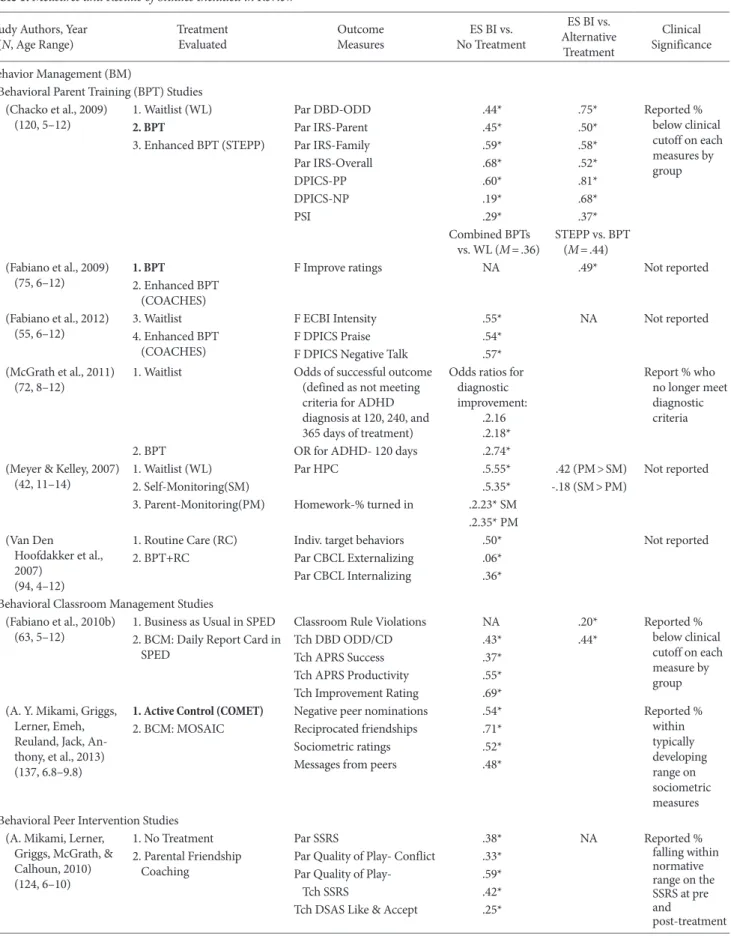
Evans 등(2014)은 각 연구의 피험자 수와 연령범위, 인종, 성차에 대한 자료와 진단 및 측정도구에 대한 정보를 정리하였으며, Na- than과 Gorman(2002)이 제시한 기준에 따라 연구 질의 수준을 결 정했다. Evans를 포함한 오하이오 대학 심리학과의 연구팀은 최근 까지도 ADHD 치료효과를 검증한 연구를 지속해서 업데이트하고 있으며, 2014년 발표된 논문에서 제시된 근거수준은 Table 1과 같 다(Evans et al., 2014).
ADHD 심리적 개입 및 치료기법 행동적 부모훈련(BPT)
행동적 부모훈련(BPT)은 부모관리훈련(parent management train- ing)으로 부르기도 하며, 행동주의 및 사회학습이론의 개념인 조작 적 조건형성과 기능적 행동분석에 토대를 둔 프로그램이다. 이 프 로그램의 목적은 ADHD 증상을 보이는 학령전기 혹은 학령기 아 동의 부모에게 행동수정의 기본 개념을 가르침으로써 양육행동을 효과적으로 변화시키고자 하는 것이다(Barkley, 1987).
ADHD 아동은 가정생활에 있어서 일반 아동에 비해 규칙 지키 기나 과제 완수에 어려움을 겪기 때문에 아동을 양육하고 관리해 야 하는 부모 입장에서는 감정을 조절하며, 태도의 일관성을 유지 하는 데 어려움을 겪는다. 그렇지만 부모가 아동에게 비일관적인 태도를 보이고, 지도감독을 소홀하게 할 경우 아동의 문제행동이 나 정서문제는 증가할 수 있기 때문에 적절한 양육기술의 활용은 일반 아동에 비해서도 훨씬 중요하다고 할 수 있다. Table 2에서 볼 수 있듯이 행동적 부모훈련은 효과성이 입증된 방식이다.
게다가 한부모 가정, 어머니가 ADHD 또는 우울장애를 겪는 경 우, 치료에 대한 접근성이 떨어지는 등 특수한 상황에서는 부모훈 련의 중요성이 더욱 커진다. 따라서 최근에는 특수한 상황에 놓인 부모훈련의 효과를 검증하는 연구가 다수 이루어지고 있다(Ra- jwan, Chacko, Wymbs, & Wymbs, 2014).
부모훈련은 ADHD에 수반되는 증상뿐만 아니라 아니라 이와 관련된 외현화 증상과 적대적 반항장애, 품행장애 등을 목표로 하 여 수행되기도 한다(Mabe, Turner, & Josephson, 2001). 2016년 수 행된 메타분석 결과, 부모훈련은 0.51의 효과크기(effect size)가 확 인되었고, 변인 간의 독립적 관계를 분석했을 때 부정적 양육방식 과 통계적으로 의미 있는 상관관계를 보였다(Rimestad, Lambek, Zacher Christiansen, & Hougaard, 2016). 행동적 부모교육의 핵심 은 긍정적 강화를 통해 아동의 행동을 변화시키는 것이다. 2017년 대한 소아청소년 정신의학회에서는 <주의력결핍 과잉행동장애 한국형 치료 권고안> 을 제시하면서 행동적 부모교육의 예시를 제
Table 1. Measures and Results of Studies Included in Review Study Authors, Year
(N, Age Range) Treatment
Evaluated Outcome
Measures ES BI vs.
No Treatment
ES BI vs.
Alternative Treatment
Clinical Significance Behavior Management (BM)
Behavioral Parent Training (BPT) Studies (Chacko et al., 2009)
(120, 5–12) 1. Waitlist (WL) Par DBD-ODD .44* .75* Reported %
below clinical cutoff on each measures by group
2. BPT Par IRS-Parent .45* .50*
3. Enhanced BPT (STEPP) Par IRS-Family .59* .58*
Par IRS-Overall .68* .52*
DPICS-PP .60* .81*
DPICS-NP .19* .68*
PSI .29* .37*
Combined BPTs
vs. WL (M=.36) STEPP vs. BPT (M=.44) (Fabiano et al., 2009)
(75, 6–12) 1. BPT F Improve ratings NA .49* Not reported
2. Enhanced BPT (COACHES) (Fabiano et al., 2012)
(55, 6–12) 3. Waitlist F ECBI Intensity .55* NA Not reported
4. Enhanced BPT
(COACHES) F DPICS Praise .54*
F DPICS Negative Talk .57*
(McGrath et al., 2011)
(72, 8–12) 1. Waitlist Odds of successful outcome
(defined as not meeting criteria for ADHD diagnosis at 120, 240, and 365 days of treatment)
Odds ratios for diagnostic improvement:
.2.16 .2.18*
Report % who no longer meet diagnostic criteria
2. BPT OR for ADHD- 120 days .2.74*
(Meyer & Kelley, 2007)
(42, 11–14) 1. Waitlist (WL) Par HPC .5.55* .42 (PM>SM) Not reported
2. Self-Monitoring(SM) .5.35* -.18 (SM>PM)
3. Parent-Monitoring(PM) Homework-% turned in .2.23* SM .2.35* PM (Van Den
Hoofdakker et al., 2007)
(94, 4–12)
1. Routine Care (RC) Indiv. target behaviors .50* Not reported
2. BPT+RC Par CBCL Externalizing .06*
Par CBCL Internalizing .36*
Behavioral Classroom Management Studies (Fabiano et al., 2010b)
(63, 5–12) 1. Business as Usual in SPED Classroom Rule Violations NA .20* Reported % below clinical cutoff on each measure by group 2. BCM: Daily Report Card in
SPED Tch DBD ODD/CD .43* .44*
Tch APRS Success .37*
Tch APRS Productivity .55*
Tch Improvement Rating .69*
(A. Y. Mikami, Griggs, Lerner, Emeh, Reuland, Jack, An- thony, et al., 2013) (137, 6.8–9.8)
1. Active Control (COMET) Negative peer nominations .54* Reported %
within typically developing range on sociometric measures
2. BCM: MOSAIC Reciprocated friendships .71*
Sociometric ratings .52*
Messages from peers .48*
Behavioral Peer Intervention Studies (A. Mikami, Lerner,
Griggs, McGrath, &
Calhoun, 2010) (124, 6–10)
1. No Treatment Par SSRS .38* NA Reported %
falling within normative range on the SSRS at pre and
post-treatment 2. Parental Friendship
Coaching Par Quality of Play- Conflict .33*
Par Quality of Play- .59*
Tch SSRS .42*
Tch DSAS Like & Accept .25*
(Continued to the next page)
Table 1. Continued Study Authors, Year
(N, Age Range) Treatment
Evaluated Outcome
Measures ES BI vs.
No Treatment
ES BI vs.
Alternative Treatment
Clinical Significance Combined BM Treatment Studies
(Abikoff et al., 2013)
(158, 8–11) 1. Waitlist Control Tch COSS .1.21* NA Report % no
longer meeting criteria for organization, time management, and planning impairment
2. PATHKO Par COSS .2.13*
Tch APRS .82*
Tch HPCL .1.51*
Tch FES .54*
Tch COSS Conflict .1.03*
(Langberg et al., 2010) 1. Community Control (CC) Par HPC-Inattention .39* -.02 Not reported
2. MED Par HPC-Total .39* .05*
3. BPT+BCM+Peer (BEH) (Pfiffner et al., 2007)
(69, 7–11) 1. No treatment Control Par/Tch Inattention Count .18* NA Reported %
within the normative range for selective rating scales 2. BPT+BCM+Peer (CLAS) Par/Tch Inattention Severity .19*
Par/Tch SCT Scale .22*
Par/Tch SSRS .11*
Par/Tch COSS .17*
Par/Tch Life Skills
Knowledge .64*
(Power et al., 2012)
(199, 2nd–6th grade) 1. Active control (CARE) Parent as Educator Scale NA .37* Not reported
2. BPT+BCM (FSS) Par PTIQ .29*
Par HPC-Inattention .52*
Par HPQ .34*
Par PCRQ-Negative
Discipline .59*
(Webster-Stratton, Reid, Beauchaine, &
Psychology, 2011) (94, 4–6)
1. Waitlist M CBCL Externalizing .06* NA Not reported
2. BPT (Incredible Years)+Child group (Dinosaur School)
M CBCL Aggression .04*
M CBCL Attention .04*
M CPRS-R ODD .11*
M CPRS-R Inatten .07*
M CPRS-R Hyper .13*
M ECBI Intensity .22*
M ECBI Problem .24*
M Emotion Reg .22*
M Social Comp .17*
F CBCL Externalizing .06*
F CRPS-R ODD .05*
F CRPS-R Inatten .06*
F CRPS-R Hyper .06*
F ECBI Intensity .16*
F ECBI Problem .16*
F Emotion Reg .24*
F Social Comp .12*
Tch TRF Externalizing .04*
Free Play
DPICS Praise .12*
DPICS Coaching .15*
Task Time
DPICS Negative Statements .06*
DPICS Child Deviance .06*
School Peer Observations
COCA social Contact .08*
(Continued to the next page)
Table 1. Continued Study Authors, Year
(N, Age Range) Treatment
Evaluated Outcome
Measures ES BI vs.
No Treatment
ES BI vs.
Alternative Treatment
Clinical Significance Training Interventions Cognitive Training Studies
(Beck, Hanson, Puffenberger, Benninger, &
Benninger, 2010) (52, 7–17)
1. Waitlist control Par conners’ ADHD index .76* NA Reported %
meeting CS change and RCI on all measures 2. Working Memory Training Par Conners’ Inattention .79*
Par Conners’ Hyperactivity .36*
Par Conners’ DSM-IV
Inatten. .1.49*
Par BRIEF Metacognition .91*
Par BRIEF Working
Memory .85*
Par BRIEF Initiate .94*
Par BRIEF Planning .92*
Tch BRIEF Initiate .42*
(Van der Oord, Ponsioen, Geurts, Brink, & Prins, 2014) (40, 8–12)
1. Waitlist Par Inattention .25* NA Not reported
2. Executive Functioning
Training Par Hyp/Imp .22*
Par BRIEF Metacot .16*
Par BRIEF Total .16*
Neurofeedback Training Studies (Gevensleben et al.,
2009) (102, 8–12) 3. Attention Skills Training Par ADHD Total NA .60* Not reported
4. Neurofeedback Trianing Par Inattention .57*
Par Hyperactive/Impulsive .45*
Par ODD .38*
Par Delinquent/Aggression .37*
Par SDQ Total .51*
Par SDQ Hyperactivity .60*
Tch ADHD Total .64*
Tch Inattention .50*
Tch SDQ Hyperactivity .48*
(Abikoff et al., 2013)
(158, 8–11) 1. Waitlist Control Tch COSS .1.18* OST -.02 Report % no
longer meeting criteria for impairment in organization, time management and planning
2. PATHKO Par COSS .2.77* OST .63* (OST>
PATHKO)
3. OST Child COSS .69* OST .22
Tch APRS .76* OST -.08
Tch APS .42* OST .23
Par HPCL .1.37* OST -.14
Par FES .47* OST .07
Par COSS Conflict .1.26* OST .22
(Langberg et al., 2012)
(47, 11–14) 1. Waitlist Control Par COSS Planning .1.05* NA Not reported
2. HOPS Program Par COSS Organization .88*
Par COSS Materials Mgt .63*
Par COSS Life Interference .69*
Par COSS Family Conflict .79*
Par HPC Homework
Complete .85*
Par HPC Materials Mgt .82*
Par VADPRS Inattention .52*
Combined Training Studies (Evans, Schultz,
DeMars, & Davis, 2011) (49, 10–13)
1. Community Care Par DBD – Hyp/Imp .90* NA Not reported
2. Challenging Horizons
Programs Tch IRS – Academic .25*
(Continued to the next page)
Study Authors, Year
(N, Age Range) Treatment
Evaluated Outcome
Measures ES BI vs.
No Treatment
ES BI vs.
Alternative Treatment
Clinical Significance (Molina et al., 2008)
(23, 6th–8th grade) 1. Community Care Par BASC Internalizing .47* NA Not reported
2. Challenging Horizons
Programs Adol BASC Delinquency .57*
Adol BASC School
Maldadjust .79*
Note. APRS=Academic Performance Rating Scale; BASC=Behavior Assessment Scale for Children; BCM=Behavioral Classroom Management;
BDI=Beck Depression Inventory; BPT=Behavioral Parenting Training; Bracken=Bracken Basic Concepts Scale - Revised; CBT=Cognitive Behav- ioral Treatment; COSS=Children’s Organizational Skills Scale; CPRS-R:S=Conners Parent Rating Scale-Revised: Short Form; CPRS-R-L=Conners Parent Rating Scales - Revised Long Form; CPS=Class-Classroom Performance Survey; CS=Clinically Significant; CTRS-R-L=Conners Teacher Rating Scales - Revised Long Form; DBD=Disruptive Behavior Disorders Rating Scale; DIBELS=Dy-Dynamic Indicators of Basic Early Literacy Skills; DPICS =Dyadic Parent-Child Interaction System; DPICSPP =Dyadic Parent-Child Interaction Coding System – Positive Parenting;
DPICSNP=Dyadic Parent-Child Interaction Coding System – Negative Parenting; DSAS=Dishion Social Acceptance Scale; ECBI=Eyberg Child Be- havior Inventory; ES=Effect sizes as reported by the study’s authors; Cohen’s d unless otherwise noted by a superscript; and positive ES indicates that the primary treatment being tested is superior; F=Father ratings; HPC=Ho-Homework Problem Checklist; HPQ=Homework Performance Ques- tionnaire; IRS=Impairment Rating Scale; LA=Language Arts; M=Mother ratings; NS=Nonsignificant with insufficient data to calculate an effect size;
OR=Odds ratio; Par=Parent; PCRQ=Parent–Child Relationship Questionnaire; PSI=Parenting Stress Index; PTIQ=Parent–Teacher Involvement Questionnaire; RCI=Reliable Change Index; SNAP=Swanson, Nolan, and Pelham ADHD Rating Scale; SPED=Special Education; SSRS=Social Skills Rating System; STP=Summer Treatment Program; Tch=Teacher; VADPRS=Vanderbilt ADHD Diagnostic Parent Rating Scale.
Bold indicates that comparison is well-established treatment.
Table 1. Continued
시하였으며, 구체적인 내용은 권고안에서 제시하였다(Shin et al., 2017; Yun Mi Shin, 2017).
ADHD에 대한 부모교육은 다양한 모드를 활용했을 때 효과가 더 큰 것으로 나타났다(Jans et al., 2015). ADHD는 생물학적 취약 성을 가진 질환이기 때문에 증상을 가진 아동의 부모 역시 ADHD 증상을 보일 수 있다. 이같은 경우 부모의 양육은 더욱 부적응적이 며, 치료에 대한 아동은 반응은 그렇지 않은 집단에 비해 낮은 것으 로 나타났다(Babinski, Waxmonsky, Waschbusch, & Pelham Jr, 2015). 부모가 ADHD 증상을 보일 경우 행동적 부모훈련과 어머니 에 대한 약물치료를 함께 실시했을 때 더욱 효과적이라는 연구보 고가 있다(Chronis-Tuscano, Wang, Strickland, Almirall, & Stein, 2016). 또한 부모의 반사회적 특성이 부모훈련의 효과를 감소시킬 수도 있기 때문에 행동적 부모훈련과 사회기술 훈련이나 작업기억 력 훈련 등 다른 행동적 치료기법을 병행하는 것도 도움이 된다는 제안도 있다(Steeger, Gondoli, Gibson, & Morrissey, 2016). 이 연구 에서는 부모훈련과 작업기억력훈련을 함께 시행했을 때, 각각의 치 료를 단독으로 시행했을 때에 비해 ADHD 증상의 감소가 더 컸던 것으로 보고하였다(Maleki, Mashhadi, Soltanifar, Moharreri, &
Ghamanabad, 2014).
최근에는 비디오 시청을 통해 이루어진 훈련이 면대면 형태의 교 육만큼 효과적이라는 연구결과가 발표되었다(Xie et al., 2013). 부 모는 비디오 테이프를 시청하면서 행동적 기법들을 습득하였고, 이 에 기반해 아동을 훈육한 결과는 직접 교육을 통해 훈련한 집단과 차이를 보이지 않았다. ADHD의 유병률이 전체 아동의 5% 정도에
이르는 반면 다수의 부모들이 맞벌이로 바쁜 점을 감안하면 비디 오를 통한 훈련은 효율성을 높이는 데 일조할 수 있다.
훈련 내용을 다양한 형태로 수정해서 적용한 연구도 증가하고 있 다(Abikoff et al., 2013). 적대적이고 거부적인 아동을 자녀로 둔 부 모를 대상으로 기존 방식과 New Forest Parenting Program(NEFF) 을 적용한 집단과 통제집단의 결과를 비교하였다. NEFF는 ADHD 증상 이면에 있는 과정에 초점을 맞춘 것이다(Thompson et al., 2009). 연구자들은 기존 훈련방식에서는 다루지 않았던 자기조절, 주의집중, 충동조절, 작업기억에 주의를 기울였다. 또한 그동안 치 료효과 측정에 개입하지 않았던 교사의 평정척도도 포함시켰으며, 욕구충족의 보류 및 과제 집중 정도를 실험적 기법으로 확인하였 다. 치료가 끝난 후 ADHD 및 ODD 증상에 대한 부모의 평정치는 치료 전에 비해 유의미하게 감소하였으나 교사의 평정 및 실험적 결 과에서는 차이가 확인되지 않았다. 따라서 증상 이면의 기전을 다 루는 방식은 뚜렷한 효과가 입증되지 않아 Barkely 등에 의해 제안 된 고전적인 기법은 현재까지도 가장 효과가 뚜렷한 개입방법이라 고 하겠다(Anastopoulos, DuPaul, & Barkley, 1991; Barkley, 2013).
행동적 교실관리(BCM)
학교장면에서 행동수정의 원리를 적용해 ADHD 아동에 대해 개 입하였을 경우 다른 방식에 비해 가장 효과가 큰 것으로 알려졌다.
교실관리 방법에 대해 다양한 권고안이 제시되었으며, 일반적으로 다음과 같은 원칙들이 중요한 것으로 밝혀졌다: 1) ADHD 아동들 에게 규칙이나 지시를 전달할 때 보통의 아이들에 비해 명확하고
간단하고, 눈으로 볼 수 있는 형태로 제시되어야 한다. 2) ADHD 아 동들은 보통의 아이들에 비해 빠르게 결과를 제시해주어야 한다.
3) 특정행동에 대한 동기를 강화하기 위해 행동의 결과는 보통 아 이들에 비해 자주 제공해야 한다. 4) 행동에 대한 결과는 보통 아이 들보다 강도가 강하고, 강력해야 한다(Pfiffner, Barkley, & DuPaul, 2006).
행동적 교실관리는 치료효과에 대한 근거가 잘 확립된 방식이다 (Pelham & Fabiano, 2008). Fabiano 등(2010a)은 초등학교 특수교 육 교실에서 행동적 교실관리 프로그램의 효과를 평가하였다. 이 들은 교사들에 대한 자문(Daily Report Card Consultation)을 지 속하면서 일일보고 카드의 효과를 측정하였다. 그 결과 교실 내에 서 아동들이 규칙을 어기는 경우가 줄어들었고, 적대적 반항성 장 애와 품행장애 증상이 줄어들었으며, 학업성취도가 향상되었다.
다만 ADHD 아동의 행동을 변화시키기 위해서는 교실 내에서 프 로그램을 시행하는 교사를 따로 고용하는 것이 필요하다는 사실
이 추가적으로 확인되었다.
행동적 교실관리에 대한 다른 연구에서는 교실 내 아동-교사의 상호작용에 새로운 요인을 추가하였다(Mikami, Griggs, Lerner, Emeh, Reuland, Jack, & Anthony, 2013). 연구자들은 유사한 교실 상황에서 두 가지 방식의 교실관리 기법을 비교하였다. 두 가지 방 법 모두 가장 흔한 방식의 방법에 칭찬과 개인적 관심, 수용의 표현 과 같은 기법을 추가하였다. 연구자들은 이 방법을 Making Social- ly Accepting Inclusive Classrooms(MOSAIC) 기법이라고 불렀으 며, 프로그램의 효과는 분명한 것으로 나타났다. MOSAIC 기법의 목표는 교사들의 노력으로 ADHD 아동이 또래집단 내에서 겪을 수 있는 거절과 사회적 비난, 배제 등을 감소시키는 것이다. 2주일 동안 훈련을 시행한 뒤 ADHD 아동의 행동문제는 뚜렷한 감소를 보이지 않았다. 그렇지만 또래관계에서 겪는 거절은 줄어들었고, 친 구들과의 상호작용이 증진되었으며, 이런 효과는 남자아이들에게 더 큰 것으로 나타났다. 이런 연구를 통해 ADHD 연구자들은 아동 Table 2. Effect Size of Target Outcome Variables according to ADHD Intervention (N=362)
Intervention types Target outcome categories n d±SD Q (ρ) U (ρ) 95% CI NFS
Overall Overall 362 1.32±0.02 1,953.87 (<.001) 542.93 (<.001) 1.21–1.43 2,027
Attention problems 72 1.59±0.05 433.71 (<.001) 140.01 (<.001) 1.33–1.86 501 Cognitive & behavior problems 148 1.30±0.04 814.55 (<.001) 208.81 (<.001) 1.12–1.47 813 Social skills problems 125 1.15±0.04 542.47 (<.001) 176.79 (<.001) 0.98–1.32 595 Ego & emotional problems 10 2.31±0.15 121.38 (<.001) 14.29 (<.001) 1.11–3.50 105
Parenting problem 7 1.04±0.16 2.39 (.881) 42.20 (<.001) 0.72–1.35 29
Cognitive & behavioral
control training Overall 161 1.79±0.04 1,498.21 (<.001) 267.86 (<.001) 1.57–2.00 1,276 Attention problems 39 1.92±0.07 377.12 (<.001) 75.59 (<.001) 1.48–2.35 335 Cognitive & behavior problems 75 1.63±0.05 605.00 (<.001) 114.80 (<.001) 1.33–1.93 537 Social skills problems 43 1.89±0.09 429.81 (<.001) 69.27 (<.001) 1.44–2.33 362 Ego & emotional problems 2 4.28±0.27 55.22 (<.001) 2.30 (.129) -1.25–9.81 41
Parenting problems 2 0.93±0.26 0.65 (.420) 12.65 (<.001) 0.42–1.44 7
Social skills training Overall 98 0.97±0.05 151.60 (<.001) 292.23 (<.001) 0.86–1.08 377
Attention problems 18 1.27±0.11 30.43 (.023) 68.96 (<.001) 0.97–1.56 96
Cognitive & behavior problems 24 1.13±0.09 51.47 (.001) 62.77 (<.001) 0.85–1.41 111 Social skills problems 52 0.83±0.06 52.02 (.434) 192.46 (<.001) 0.72–0.95 165 Ego & emotional problems 4 0.53±0.22 0.88 (.830) 5.72 (.017) 0.10–0.96 7
Parents training Overall 50 0.66±0.06 75.94 (.008) 67.98 (<.001) 0.51–0.82 116
Attention problems 9 0.91±0.16 8.19 (.415) 33.06 (<.001) 0.60–1.22 32
Cognitive & behavior problems 23 0.55±0.09 51.02 (<.001) 15.51 (<.001) 0.28–0.83 40 Social skills problems 12 0.52±0.14 4.32 (.960) 14.32 (<.001) 0.25–0.79 19
Ego & emotional problems 1 - - - - -
Parenting problems 5 1.10±0.20 1.46 (.834) 29.83 (<.001) 0.71–1.50 23
Art therapy Overall 53 1.29±0.07 143.84 (<.001) 111.83 (<.001) 1.05–1.53 289
Attention problems 6 1.52±0.24 6.43 (.267) 30.13 (<.001) 0.98–2.06 39
Cognitive & behavior problems 26 1.22±0.10 59.45 (<.001) 67.26 (<.001) 0.93–1.52 133 Social skills problems 18 1.15±0.13 37.38 (.003) 37.01 (<.001) 0.78–1.52 85 Ego & emotional problems 3 5.87±0.47 37.72 (<.001) 2.97 (.085) -0.80–12.55 85
과 교사의 행동을 새롭게 조명하기 시작하였다.
행동적 교실관리 기법은 1990년대 초반에 이미 근거가 분명한 것 으로 확인되었지만 연구는 초등학교에서만 이루어졌다는 제한점 이 있다. 따라서 청소년기와 초기 성인기로 성장해가면서 효과가 지 속되는지 여부는 잘 알려지지 않은 상태이다. 또한 행동적 교실관 리를 하는 경우 약물치료 없이 증상이 완화되었지만 약물치료와 같은 일반적인 개입을 받거나 불안장애가 공존하는 집단과 큰 차 이를 보이지 않는다는 연구도 있었다(Olfson, Marcus, Weissman,
& Jensen, 2002). 결론적으로 ADHD 아동은 심리사회적 개입과 약 물치료를 함께 받을 때 가장 치료효과가 높다고 할 수 있다(New- corn et al., 2001; Swanson et al., 2001).
행동적 또래관계 개입(BPI)
ADHD 아동들은 또래 집단에 비해 규칙을 따르기 어렵고, 차례를 지키지 못하며, 다른 아동을 방해하며, 결과를 생각하지 않은 채 행 동하는 경향 때문에 또래관계 문제를 보이는 경우가 잦다. 또래평 정에 따르면 활동량이 과도하게 많거나 지시에 따르지 않는 행동, 공격적인 행동은 부정적인 평가를 받으며, 거부당하는 경우가 많 다(Erhardt & Hinshaw, 1994). 따라서 행동수정 이론에 기반한 또 래관계 개입방법이 개발되었으며, 효과성이 입증되었다.
또래관계 개입은 고전적인 방식의 사회기술 훈련과 Summer Treatment Programs(STP)(Pelham et al., 2010)와 같은 레크리에이 션 활동에서의 행동적 개입 등 두 가지 범주로 나눌 수 있다. 행동 적 또래관계 개입은 의사소통, 협동, 참여, 동의와 같은 기술을 적절 히 사용했을 때 강화를 주는 방식으로 이루어진다. 대규모의 연구 에서 집단 간 비교를 한 결과 STP는 효과가 분명한 것으로 나타났 다(Pelham & Fabiano, 2008). 훈련기간 동안 훈련자는 행동의 수반 성(contingency) 관리를 통해 특정상황에서의 사회적 기능을 향상 시킨다.
부모 보고에 따르면 훈련 이후 아동의 사회 기술과 놀이의 질은 향상되었으며, 교사들은 훈련에 참여한 아이들이 이전에 비해 또 래들에게 좀 더 호감을 받고, 수용받는 정도도 상승했다고 하였다.
또한 연구자들은 교사들이 프로그램에 개입했다는 사실을 알리지 않은 채 부모에게 질문지를 체크하도록 했는데 그 결과 또래 간 상 호작용을 지켜보는 동안 긍정적인 행동에 대한 촉진과, 부정적인 행동에 대한 교정행동이 증가하였고, 비난은 감소하였다.
행동적 기법의 조합(Combined behavior management interventions)
Pelham과 Fabiano(2008)는 연구를 통해 행동적 부모 훈련과 행동
적 교실관리 기법이 단독으로도 효과가 있지만 이들을 조합해서 사용해도 어느 정도 효과를 보인다고 하였다. 이런 주장에 대한 근 거가 축적되면서 행동수정의 조합은 ADHD의 심리치료 중 네 번 째 범주로 포함되었다.
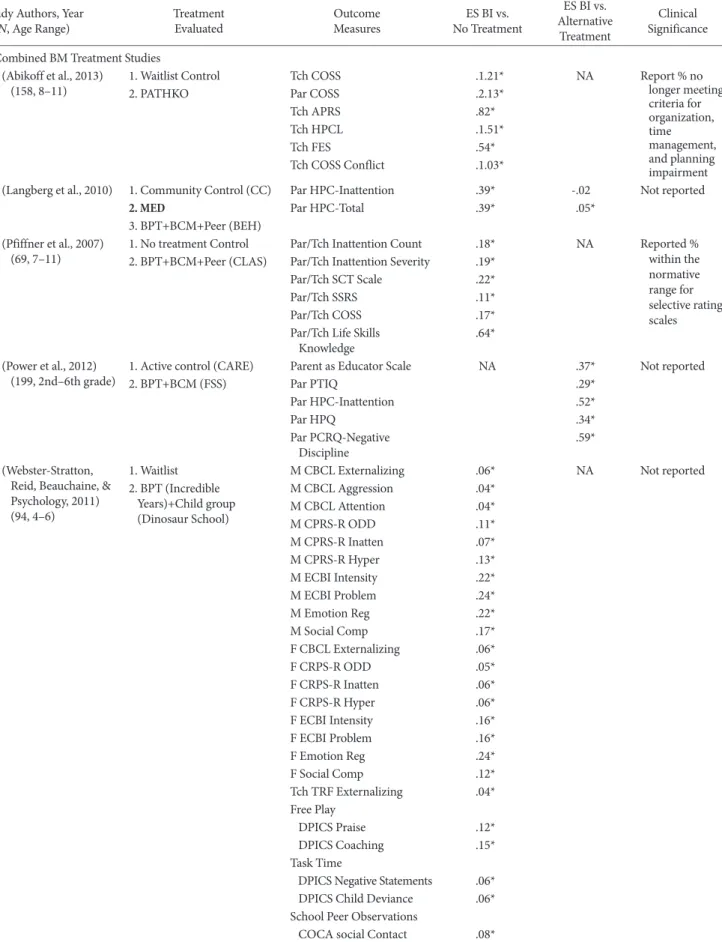
연구에 따르면 행동적 부모훈련과 행동적 교실관리의 조합은 아 무런 개입도 이루어지지 않은 집단과 비교할 때 상당한 효과를 보 였다(Abikoff et al., 2013; Langberg et al., 2010; Webster-Stratton, Reid, & Beauchaine, 2011). 과제수행에 대해 개입방법을 조합해서 적용한 뒤 부모로 하여금 ADHD 증상 척도를 실시하자 다른 방식 의 개입을 실시한 집단에 비해 의미 있는 정도로 증상의 점수가 감 소하였다.
행동적 기법을 조합하여 적용한 DuPaul 등(2013)의 연구는 학령 전기 아동 중 ADHD 가능성이 높은 아이들을 대상으로 이루어졌 다. 이들은 일반적인 부모훈련과 중다요소로 구성된 행동적 개입을 20시간씩 적용한 뒤 집단 간 차이를 검증하였다. 부모교육 프로그 램에 참여한 지역사회의 부모들이 중다요소 행동적 개입에 참여하 였고, 아동들은 행동문제와 학업기술, 안전행동에 초점을 맞춘 교 육을 받았다. 이들에게는 효과적인 부모교육에 대한 체계적인 훈 련 프로그램이 적용되었으며(Dinkmeyer, Dinkmeyer Jr, & McKay, 1997), 연구에 참여한 모든 참가자들이 종속변수 측정치에서 의미 있는 향상을 보였다. 이런 결과는 근거가 뚜렷한 개입방법을 조합 할 경우 단독 개입에 비해 다양한 영역에서 향상을 보인다는 점을 시사한다.
조직화 훈련(Organization training)
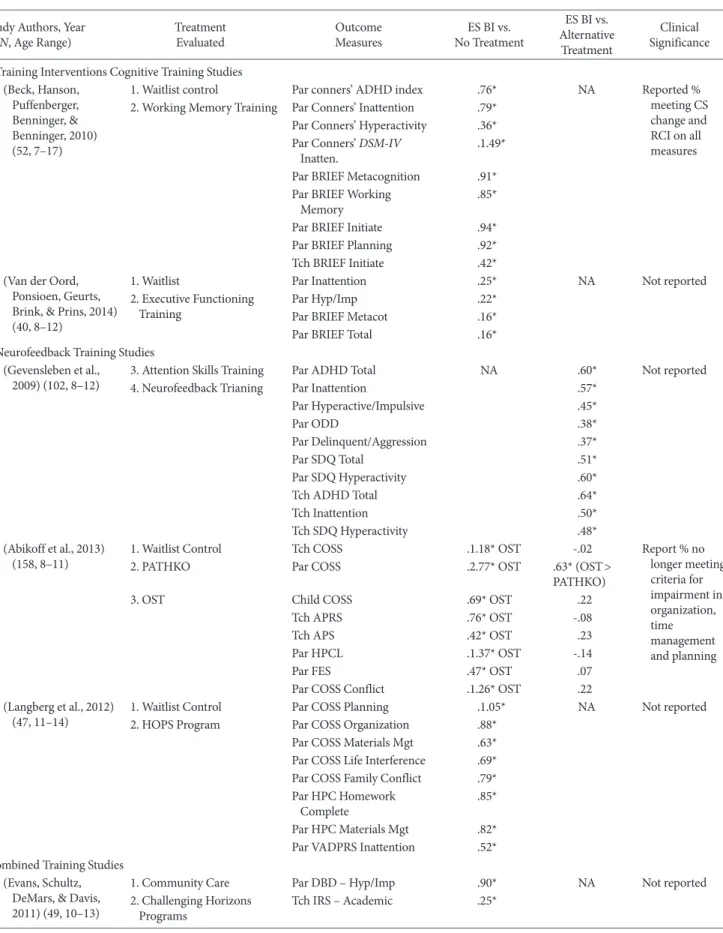
조직화 훈련은 ADHD 아동들이 학습을 조직화하는 데 어려움을 보인다는 점에 관심을 가진 연구자들이 ‘지금 하고 있는(on-go- ing)’ 과제에 초점을 맞추는 개입방법을 고안한 것이다. 방대한 연 구결과를 분석한 결과 다음과 같은 두 가지 요소가 효과가 있는 것 으로 밝혀졌다. 하나는 조직화 영역과 대인관계 영역, 학습영역에 서 필요한 전략을 배우는 것이고, 다른 하나는 컴퓨터에서 제시하 는 청각적, 시각적 자극에 집중하는 훈련이다. 각 회기는 한 번부터 수백 번까지의 다양한 횟수로 구성되며, 각 수행에 대해 피드백이 주어졌다. 조직화 훈련의 효과는 일상적인 생활에서 표적행동이 얼 마나 향상되었는가를 측정한 결과로 입증된다.
조직화 훈련은 대부분 컴퓨터 과제를 통해 작업기억과 같은 인지 기능을 훈련시키는 것이며, 사용된 자극이나 임상가의 상호작용이 일상생활과 연관되었을 때 가장 강력한 효과를 보였다(Tamm, Ep- stein, Peugh, Nakonezny, & Hughes, 2013). 반면 컴퓨터에서 의미 없는 소리나 상징을 제시하고 집중하도록 하는 과제도 있다. 이같
은 훈련의 특징은 시행횟수가 매우 많다는 것이며, 훈련의 논리는 일상과 무관한 자극의 가치가 낮다는 것을 인지시켜 주의를 덜 기 울이게 하는 것이다. 중요한 과제 목록이나 일상의 계획과 같이 일 상생활과 상관이 매우 높은 자극을 드문 간격으로 제시하는 방식 의 훈련 역시 어느 정도 효과가 있는 것으로 나타났다(Mostofsky
& Simmonds, 2008; Sprich, Safren, Finkelstein, Remmert, &
Hammerness, 2016).
오락용 디지털 게임과 같은 방식이 훈련에 사용되기도 하였다 (Bul et al., 2016). 연구에 참여한 ADHD 아동들은 게임집단과 대기 집단에 무선적으로 할당되었고, 10주 이후 집단 간 차이를 측정하 였다. 디지털 게임은 계획을 수립하고, 시간을 조절하며, 협동해야 하는 내용으로 만들어졌다. 한 회기는 62분이었고, 연구에 참여한 아동은 일주일에 세 번씩 이 게임을 하였다. 10주가 지난 후 부모와 교사에게 질문지를 실시한 결과 부모와 교사 모두 훈련 이전에 비 해 시간조절능력과 작업기억, 책임감이 통제집단에 비해 상승했다 고 보고되었다.
연구결과를 종합한 결과 지능수준이 높은 초등학생, 상대적으 로 교육수준이 높은 부모, 일주일에 한두 번 회기에 참여할 정도로 관심을 가진 부모가 참여한 경우 상대적으로 효과가 높게 나타나 (Abikoff et al., 2013; Langberg, Epstein, Becker, Girio-Herrera, &
Vaughn, 2012) 훈련의 효과는 참가자의 특징에 따라 다양한 것으 로 결론 내릴 수 있다.
ADHD의 근거기반치료: 국내
국내에서 ADHD 아동에 대한 심리치료 효과를 검증한 메타연구 는 그리 많이 이루어지지 않았으며, 모두 같은 연구팀에 의해 수행 되었다(Park, Park, & Hwang, 2015). 연구자들은 국내 데이터 베이 스인 학술연구 정보서비스(Research Information Sharing Service [RISS]), 한국학술정보 서비스(Korean studies Information Service System [KISS]), 학술데이터베이스 서비스(DataBase Periodical In- formation Academic [DBpia])에서 1,298편의 논문을 찾아 적합성 을 확인하는 4단계를 거쳐 최종 21편을 분석 대상으로 선정하였다.
연구에서 사용된 CBT 개입유형은 사회기술훈련(SST), 미술치료 (AT), 합리적 정서적 행동치료(REBT), 자기통제 훈련(SCA), 문제 해결기법(PSA), 인지증진훈련(CET), 중다 양식치료(MT), 인지모 델링(CM), Think Aloud 훈련(TAT), 자기교시훈련(SIT), 주의력 향 상훈련(AIT), 컴퓨터훈련 프로그램(cCBT)으로 나타났다.
여러 종류의 중재를 조합해서 실시한 연구도 찾아볼 수 있다 (Seo & Park, 2010). 이 연구의 특징을 살펴보면 ADHD 개입에 효
과가 입증되지 않은 미술치료나 합리적 정서적 행동치료와 같은 기 법이 포함되었다는 것이다. 국내 논문 중에는 특히 미술치료 효과 를 검증한 연구가 많은데 근거가 확립되지 않았을 뿐 아니라 연구 조건이 잘 통제되지 않아 ADHD 증상을 표적으로 하는 개입의 효 과를 측정했다고 보기는 어렵다. 또한 컴퓨터 훈련 프로그램을 제 외한 나머지 개입은 과잉행동을 줄이기 위해 사용되었다고 하나 대부분의 행동적 개입이 과잉행동을 직접 줄이기보다는 집중력과 작업기억력을 높이고, 또래관계 기술 및 조직화 기술을 증진시키기 위해 사용된다는 점으로 볼 때 개입방법과 표적증상이 서로 맞지 않는다는 제한점을 갖는다.
국내 메타연구의 가장 큰 취약점은 근거가 가장 잘 확립된 것으 로 확인된 행동적 부모훈련 연구가 한 편도 포함되지 않았다는 것 이다. 이런 결과는 국내에서 부모교육의 중요성을 간과하고 있다는 사실을 보여준다. 또 다른 가능성은 교육을 시행한다 하더라도 구 조화된 매뉴얼을 사용하고, 교육 전과 후의 결과를 비교하는 방식 으로 이루어지지 않을 가능성을 시사하는 것 같다. 더불어 교실관 리 및 또래관계에 대한 연구도 찾아보기 어려웠다.
소아정신과 장애로 분류된 ADHD의 메타연구가 간호학회 주축 으로 이루어졌다는 점도 주목할 필요가 있다. ADHD의 진단 및 치 료에 있어서 심리평가와 심리치료는 임상심리학자를 중심으로 이 루어지며, 진단 및 약물치료는 정신과 의사가 시행한다. 따라서 ADHD의 특징을 잘 이해하고 그에 맞는 치료를 선정하고 실시할 수 있는 전문가들이 연구에 대한 관심은 높지 않을 가능성도 있다.
ADHD 증상이 의심되는 아동을 둔 부모의 경우 소아정신과를 방 문해 약물치료를 받을 수 있으나 병원의 경우 심리치료를 병행할 수 있는 전문가가 부재한 경우가 많고, 소아정신과 방문을 꺼리는 부모의 경우 근거기반 중재기법을 알지 못하는 비전문가를 찾는 비 율이 높아 초래된 결과일 가능성도 생각해볼 수 있다.
2010년에 수행된 메타분석(Seo & Park, 2010)은 주제의 범주를 인지행동훈련, 사회기술 훈련, 부모훈련, 예술치료로 나누었으며, 근거가 잘 확립된 부모훈련이 포함되었다는 점에서 좀 더 균형을 이룬 결과를 보여준다고 할 수 있다. 이들은 1990년에서 2009년까 지 이루어진 200편의 연구 중 26편을 선정하여 자료를 분석하였으 며, 효과의 크기는 1.32로 큰 편이었다. 가장 효과적인 개입방법은 인지행동 훈련이었으며, 예술치료와 사회성 훈련, 부모훈련의 순으 로 효과가 입증되었다.
그렇지만 2010년도 연구(Seo & Park, 2010)와 마찬가지로 예술치 료가 효과적인 개입방법으로 나타났으며, 외국 문헌과는 달리 부 모훈련의 효과가 다른 방법에 비해 상대적으로 낮아 그 이유에 대 해 논의할 필요가 있다. 추측하건대 국내 ADHD 아동의 경우 개입
시기가 외국에 비해 늦어 이차적인 정서문제가 생겼거나 부모-자녀 관계의 갈등이 커져 정서적 개입이 효과를 보였을 수 있다. 또한 각 회기가 구체적으로 기술되어 있는 아동 인지행동치료에 비해 부모 들의 다양한 질문에 답해야 하는 부모훈련을 능숙하게 실시할 전 문가가 적은 결과일 수도 있는 것 같다. 이같은 결과를 기반으로 할 때 아동 청소년 심리 치료자들은 새로운 지식체계를 지속해서 받 아들이고, 효과가 입증된 기법을 적극적으로 적용하면서 심리치료 의 주체로서 활동할 필요가 있는 것 같다.
ADHD의 근거기반치료 권고안 및 제언
ADHD는 아동기 정신장애 중 심리치료에 대한 근거기반 기법이 상당히 잘 이루어져 있으며, 이런 결과는 오랜 시간 동안 다수의 연 구를 통해 확증되었다. 이를 근거로 할 때 치료적 권고안은 다음과 같다(Table 3).
아동이 ADHD 증상으로 치료가 필요한지 평가할 때 가정생활 이나 학교생활, 또래관계의 적응문제가 심하다면 심리치료에 대한 계획을 세우는 것과 함께 우선 약물치료를 권유하는 것이 좋다. 미 국심리학회에서도 첫 권고안으로 “약물치료 그리고/혹은 심리치 료”를 제시하였으며, 두 가지 방법을 병합했을 때 가장 효과가 있다 고 하였다. 또한 똑같은 기법의 심리치료를 적용해도 약물치료가 이루어지는 아동에게서 효과가 더 크다는 점이 이미 입증되었고, 심지어 어머니의 ADHD 치료를 함께 할 때 더욱 효과가 높은 것으 로 나타났다. 따라서 ADHD 아동을 치료하는 임상심리학자는 아 동과 함께 가족 전체의 생물학적 특징과 가족 역동, 훈육방식 등 심 리사회생물학적 측면을 총체적으로 평가할 필요가 있다.
약물치료의 필요성에 대해 부모와 합의가 이루어지면 그 다음으
로 아동의 행동문제를 표적으로 한 기능적 분석 및 행동수정 방식 방식에 대한 계획을 세워야 한다. 행동수정 기법에 따른 행동조절 의 플로우차트 예시는 Figure 1에 제시하였다(Danforth, 2016).
최근 들어 새로운 기법이나 기존 방식의 새로운 결합에 대해 연 구가 이루어지고 있어 주기적으로 새로운 연구를 개관할 필요는 있 으나 이미 매뉴얼화된 행동적 기법들이 많기 때문에 치료방법을 선 택하는 데 크게 고민할 필요는 없다.
가장 효과가 뚜렷한 개입방법은 행동적 부모훈련이다. Kazdin의
<Parent management training: Treatment for oppositional, ag- gressive, and antisocial behavior in children and adolescents>
(Kazdin, 2008)는 부모훈련의 세부적인 내용을 기술한 주요 저서 이며, 국내에서도 여러 권의 번역서가 있다(Kazdin, 2007, 2014). 부 모훈련은 주 1회 간격의 12회 전후의 횟수로 구성되어 있으며, 각각 의 회기에서는 아동의 문제행동을 확인, 목록화하고 그에 대한 대 응 행동을 결정하고 이를 실천하는 것으로 이루어져 있다. 아동의 행동에 대해 사용할 수 있는 개입 기법들은 Table 4에 제시되어 있 으며, ADHD에 대한 행동적 기법을 구체적으로 찾아보기 위해서 는 관련 영역의 웹사이트도 도움이 된다(예를 들면 www.russell- barkley.com).
근거가 확립된 기법을 적용해 최대의 효과를 얻기 위해서는 치료 자의 경험과 역량이 충분해야 한다. 전문가들은 프로그램 실시 경 험이 많지 않은 임상가는 반드시 슈퍼비전을 받아야 한다고 말한 다(Schoenwald, Henggeler, Brondino, & Rowland, 2000). 같은 매 뉴얼을 갖고 프로그램을 실시한다고 해도 아동 개인의 특징과 부모 의 특징, 부모-자녀 간 관계, 훈육행동, 심지어 약물에 대한 반응까 지도 모두 통합할 수 있어야 진행할 수 있기 때문이다.
그렇지만 국내의 경우 근거기반 치료나 평가기법, 슈퍼비전의 중 Table 3. Summary Table of Levels of Evidence
Level 1: Well-established Behavioral Parent
Training (P, E) Behavioral Classroom
Management (P, E) Behavioral Peer
Intervention (E) Organization
Training (E, A) Combined Behavior Management Interventions (P, E) Level 2: Probably
Efficacious Combined Training Interventions (CTI-1) Level 3: Possibly
Efficacious Behavioral Parent
Training (A) Neurofeedback Training (E) Level 4: Experimental Cognitive Training (E) Combined Training
Interventions (CTI-2) Behavioral Parent Training (M) Level 5: Questionable
Efficacy Social Skills
Training (E) Physical Activity (E) Omega 3/6 supplements (A)
Note. P=Preschool; E=Elementary; A=Adolescents; CTI-1=Combined training interventions that have extensive repetition of skills directly related to daily functioning; M=Modified versions of behavioral parent training for specific populations of parents with elementary-school-age children;
CTI-1=Combined training treatments with relevant skills and extensive practice and feedback; CTI-2=Combined training treatments that include skills relevant to daily functioning but with limited practice and feedback and includes cognitive behavioral techniques and brief behavioral parent training.
요성에 대한 인식이 아직 부족한 편이다. 한 연구에 따르면 정신건 강영역의 일부 전문가들이 근거기반 평가와 근거기반 치료에 대해 부정적인 견해를 가진 것으로 나타났다(Chad & Shin, 2014). 그중 학교 상담자의 비율이 가장 높은 것으로 나타나고 있어 학교에서 중요한 역할을 맡아야 할 전문가들의 인식이 향상될 필요가 있다.
이런 결과로 볼 때 아동 정신건강영역에서 큰 역할을 하는 임상, 사 회, 학교 등 포괄적인 영역에 걸친 교육이 필요할 것으로 보인다.
교사에 의한 행동적 교실관리의 영역은 교육계와의 연계 없이는 불가능하기 때문에 국내에서는 심리학자들이 개입하기 어려운 영 역이다. 외국의 경우 8주의 여름 프로그램을 포함한 3개월의 교실 관리에 대한 연구가 이루어졌고, 그 결과는 긍정적이었다(Fabiano et al., 2010a). 그러나 교실에서의 행동적 개입의 효과를 검증한 국 내 연구는 찾아볼 수 없었다. 미국의 경우 초등학교가 지역사회 내 의 정신건강센터와 연계되어 필요한 경우 평가와 치료를 의뢰하는 데 비해 국내의 경우 이같은 체계가 미비해 연구환경이 취약한 것 같다.
종합하면 아동기 ADHD의 치료는 약물적 접근과 비약물적 접 근의 조합, 임상가 및 부모, 교사의 참여 등 다양한 여건이 충족되어 야 효과적으로 이루어질 수 있다. 이처럼 다양한 변수가 존재하다 보니 근거기반 치료의 효과성을 검증할 때 고려해야 할 변수가 많 고, 다양한 영역의 전문가가 협력하여야 한다. 국내에서는 ADHD
아동을 돕기 위한 시스템이 제대로 구축되어 있지 않은 점이 치료 및 연구에 제한점이 되고 있어 추후 이런 점이 개선되어야 할 것 같 다. 특히 교실에서 다양한 행동개입을 시행하고, 그 결과를 검증하 는 연구가 많이 이루어져야 할 것 같다.
References
Abikoff, H., Gallagher, R., Wells, K. C., Murray, D. W., Huang, L., Lu, F., & Petkova, E. (2013). Remediating organizational func- tioning in children with ADHD: Immediate and long-term ef- fects from a randomized controlled trial. Journal of Consulting and Clinical Psychology, 81, 113.
Akhondzadeh, S., Mohammadi, M. R., & Khademi, M. (2004).
Zinc sulfate as an adjunct to methylphenidate for the treatment of attention deficit hyperactivity disorder in children: A double blind and randomized trial. BMC Psychiatry, 4, 8-9.
Anastopoulos, A. D., DuPaul, G. J., & Barkley, R. A. (1991). Stimu- lant medication and parent training therapies for attention defi- cit-hyperactivity disorder. Journal of Learning Disabilities, 24, 210- 218.
American Psychiatry Association. (2013). Diagnostic and statistical manual of mental disorders (DSM-5th ed). Arlington, V: Ameri- can Psychiatric Pub.
Babinski, D. E., Waxmonsky, J. G., Waschbusch, D. A., & Pelham, EBPCA Components
Assessment Interventions
Ongoing Monitoring Guided by Scientifically Minded
Approach
Informant by Clinical Expertise
Ongoing Monitoring
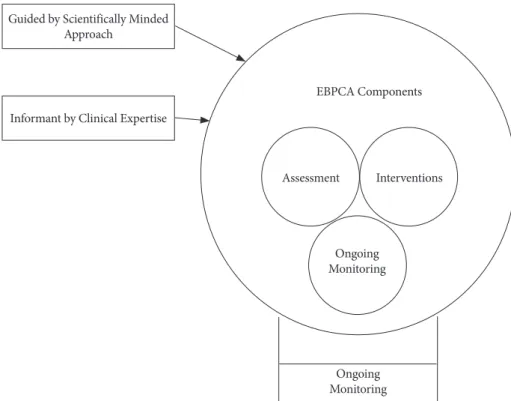
Figure 1. Three primary and reciprocal elements of evidence-based clinical practice.
Jr., W. E. (2015). Behavioral observations of parents with ADHD during parent training. Journal of Attention Disorders, 22, 1289- 1296.
Barkley, R. A. (1987). Defiant children. New York: Guilford Press.
Barkley, R. A. (2013). Defiant children: A clinician’s manual for as- sessment and parent training. New York: Guilford Press.
Barkley, R. A., & Fischer, M. (2010). The unique contribution of emotional impulsiveness to impairment in major life activities in hyperactive children as adults. Journal of the American Academy of Child & Adolescent Psychiatry, 49, 503-513.
Barkley, R. A., Murphy, K. R., & Fischer, M. (2010). ADHD in adults: What the science says. New York: Guilford Press.
Beck, S. J., Hanson, C. A., Puffenberger, S. S., Benninger, K. L., &
Benninger, W. B. (2010). A controlled trial of working memory training for children and adolescents with ADHD. J Clin Child Adolesc Psychol, 39, 825-836.
Bul, K. C., Kato, P., Vander Oord, S., Danckaerts, M., Vreeke, L., Willems, A., . . . Amelsvoort, V. (2016). Behavioral outcome ef- fects of serious gaming as an adjunct to treatment for children with attention-deficit/hyperactivity disorder: A Randomized Controlled Trial. Journal of Medical Internet Research, 18, e26.
Chacko, A., Wymbs, B. T., Wymbs, F. A., Pelham, W. E., Swanger- Gagne, M. S., Girio, E., . . . Psychology, A. (2009). Enhancing traditional behavioral parent training for single mothers of chil- dren with ADHD. J Clin Child Adolesc Psychol, 38, 206-218.
Chad, E., & Shin, S. (2014). Knowledge, attitudes, and usage of evi- dence-based assessment and treatment practices in the Korean mental health system: Current status and future directions. The Korean Journal of Clinical Psychology, 33, 891-917.
Chambless, D. L., & Ollendick, T. H. (2001). Empirically supported psychological interventions: Controversies and evidence. Annual Review of Psychology, 52, 685-716.
Chronis-Tuscano, A., Wang, C. H., Strickland, J., Almirall, D., & Stein, M. A. (2016). Personalized treatment of mothers with ADHD and their young at-risk children: A SMART pilot. Journal of Clinical Child & Adolescent Psychology, 45, 510-521.
Correll, C. U., & Carlson, H. E. (2006). Endocrine and metabolic adverse effects of psychotropic medications in children and ado- lescents. Journal of the American Academy of Child & Adolescent Psychiatry, 45, 771-791.
Danforth, J. S. (2016). A Flow Chart of Behavior Management Strat- egies for Families of Children with Co-Occurring Attention-Def- icit Hyperactivity Disorder and Conduct Problem Behavior. Be- havior Analysis in Practice, 9, 64-76.
Dinkmeyer, D., Dinkmeyer Jr, D., & McKay, JL. (1997). Parenting Young Children, Systematic Training for Effective Parenting of Chil- dren Under Six. Circle Pines, MN: American Guidance Service.
74-91.
Dosreis, S., Zito, J. M., Safer, D. J., Soeken, K. L., Mitchell, Jr., J. W.,
& Ellwood, L. C. (2003). Parental perceptions and satisfaction with stimulant medication for attention-deficit hyperactivity disorder. Journal of Developmental & Behavioral Pediatrics, 24, 155-162.
DuPaul, G., Kern, L., Volpe, R., Caskie, G., Sokol, N., Arbolino, L., . . . Pipan, M. (2013). Comparison of parent education and func- tional assessment-based intervention across 24 months for young children with attention deficit hyperactivity disorder. School Psy- chology Review, 42, 56.
Erhardt, D., & Hinshaw, S. P. (1994). Initial sociometric impres- sions of attention-deficit hyperactivity disorder and comparison boys: Predictions from social behaviors and from nonbehavioral variables. Journal of Consulting and Clinical Psychology, 62, 833.
Evans, S. W., Owens, J. S., & Bunford, N. (2014). Evidence-based psychosocial treatments for children and adolescents with atten- tion-deficit/hyperactivity disorder. Journal of Clinical Child &
Adolescent Psychology, 43, 527-551.
Evans, S. W., Schultz, B. K., DeMars, C. E., & Davis, H. (2011). Ef- fectiveness of the Challenging Horizons after-school program for young adolescents with ADHD. J Behavior therapy, 42, 462- 474.
Fabiano, G. A., Pelham, Jr., W. E., Coles, E. K., Gnagy, E. M., Chro- nis-Tuscano, A., & O'Connor, B. (2009). A meta-analysis of be- havioral treatments for attention-deficit/hyperactivity disorder.
Clinical Psychology Review, 29, 129-140.
Fabiano, G. A., Pelham, W. E., Cunningham, C. E., Yu, J., Gangloff, B., Buck, M., . . . Gera, S. (2012). A waitlist-controlled trial of be- havioral parent training for fathers of children with ADHD. Jour- nal of Clinical Child Adolescent Psychology, 41, 337-345.
Fabiano, G. A., Vujnovic, R. K., Pelham, W. E., Waschbusch, D. A., Massetti, G. M., Pariseau, M. E., . . . Carnefix, T. (2010a). En- hancing the effectiveness of special education programming for children with attention deficit hyperactivity disorder using a dai- ly report card. School Psychology Review, 39, 219.
Fabiano, G. A., Vujnovic, R. K., Pelham, W. E., Waschbusch, D. A., Massetti, G. M., Pariseau, M. E., . . . Carnefix, T. (2010b). En- hancing the effectiveness of special education programming for children with attention deficit hyperactivity disorder using a dai- ly report card. School Psychology, 39, 219-239.
Faraone, S. V., Biederman, J., & Mick, E. (2006). The age-depen- dent decline of attention deficit hyperactivity disorder: A Meta- Analysis of Follow-up Studies. Psychological Medicine, 36, 159- 165.
Froehlich, T. E., Lanphear, B. P., Epstein, J. N., Barbaresi, W. J., Ka- tusic, S. K., & Kahn, R. S. (2007). Prevalence, recognition, and treatment of attention-deficit/hyperactivity disorder in a nation- al sample of US children. Archives of Pediatrics & Adolescent Medicine, 161, 857-864.
Gevensleben, H., Holl, B., Albrecht, B., Schlamp, D., Kratz, O., Stud-
er, P., . . . Heinrich, H. (2009). Distinct EEG effects related to neurofeedback training in children with ADHD: A randomized controlled trial. International Journal of Psychophysiology, 74, 149-157.
Graham, J., Banaschewski, T., Buitelaar, J., Coghill, D., Danckaerts, M., Dittmann, R., . . . Holtmann, M. (2011). European guidelines on managing adverse effects of medication for ADHD. European Child & Adolescent Psychiatry, 20, 17-37.
Grizenko, N., Paci, M., & Joober, R. (2010). Is the inattentive sub- type of ADHD different from the combined/hyperactive sub- type? Journal of Attention Disorders, 13, 649-657.
Grizenko, N., Shayan, Y. R., Polotskaia, A., Ter-Stepanian, M., &
Joober, R. (2008). Relation of maternal stress during pregnancy to symptom severity and response to treatment in children with ADHD. Journal of Psychiatry & Neuroscience, 33, 10.
Hales, R. E. (2008). The American psychiatric publishing textbook of psychiatry. American Psychiatric Pub.
Harpin, V. A. (2005). The effect of ADHD on the life of an individ- ual, their family, and community from preschool to adult life.
Archives of Disease in Childhood, 90(suppl 1), i2-i7.
Hunt, R. D., Arnsten, A. F., & Asbell, M. D. (1995). An open trial of guanfacine in the treatment of attention-deficit hyperactivity disorder. Journal of the American Academy of Child & Adolescent Psychiatry, 34, 50-54.
Jans, T., Jacob, C., Warnke, A., Zwanzger, U., Groß‐Lesch, S., Mat- thies, S., . . . Rösler, M. (2015). Does intensive multimodal treat- ment for maternal ADHD improve the efficacy of parent train- ing for children with ADHD? A randomized controlled multi- center trial. Journal of Child Psychology and Psychiatry, 56, 1298- 1313.
Jensen, P. S. (1999). A 14-month randomized clinical trial of treat- ment strategies for attention-deficit/hyperactivity disorder. Ar- chives of General Psychiatry, 56, 1073-1086.
Jensen, P. S., Martin, D., & Cantwell, D. P. (1997). Comorbidity in ADHD: Implications for research, practice, and DSM-V. Journal of the American Academy of Child & Adolescent Psychiatry, 36, 1065-1079.
Johnson, M., Östlund, S., Fransson, G., Kadesjö, B., & Gillberg, C.
(2009). Omega-3/omega-6 fatty acids for attention deficit hyper- activity disorder: A randomized placebo-controlled trial in chil- dren and adolescents. Journal of Attention Disorders, 12, 394-401.
Kanarek, R. B. (1994). Does sucrose or aspartame cause hyperac- tivity in children? Nutrition reviews, 52, 173-175.
Kazdin, A. E. (2008). Parent management training: Treatment for oppositional, aggressive, and antisocial behavior in children and adolescents. New York, NY: Oxford University Press.
Kessler, R. C., Adler, L., Barkley, R., Biederman, J., Conners, C. K., Demler, O., . . . Secnik, K. (2006). The prevalence and correlates of adult ADHD in the United States: results from the National
Comorbidity Survey Replication. American Journal of psychiatry, 163, 716-723.
Kim, J. W., Park, K. H., & Choi, M. J. (2004). Screening for atten- tion deficit/hyperactivity disorder in community mental health services for children. Journal of Korean Neuropsychiatric Associa- tion, 43, 200-208.
Knouse, L. E., Cooper-Vince, C., Sprich, S., & Safren, S. A. (2008).
Recent developments in the psychosocial treatment of adult ADHD. Expert Review of Neurotherapeutics, 8, 1537-1548.
Konofal, E., Lecendreux, M., Deron, J., Marchand, M., Cortese, S., Zaïm, M., . . . Arnulf, I. (2008). Effects of iron supplementation on attention deficit hyperactivity disorder in children. Pediatric Neurology, 38, 20-26.
Langberg, J. M., Arnold, L. E., Flowers, A. M., Epstein, J. N., Altaye, M., Hinshaw, S. P., . . . Hechtman, L. (2010). Parent-reported homework problems in the MTA study: Evidence for sustained improvement with behavioral treatment. Journal of Clinical Child & Adolescent Psychology, 39, 220-233.
Langberg, J. M., Epstein, J. N., Becker, S. P., Girio-Herrera, E., &
Vaughn, A. J. (2012). Evaluation of the Homework, Organiza- tion, and Planning Skills (HOPS) intervention for middle school students with ADHD as implemented by school mental health providers. School Psychology Review, 41, 342-364.
Mabe, P. A., Turner, M. K., & Josephson, A. M. (2001). Parent man- agement training. Child and Adolescent Psychiatric Clinics, 10, 451-464.
Maleki, Z. H., Mashhadi, A., Soltanifar, A., Moharreri, F., & Gha- manabad, A. G. (2014). Barkley’s parent training program, work- ing memory training and their combination for children with ADHD: Attention Deficit Hyperactivity Disorder. Iranian jour- nal of psychiatry, 9, 47.
Mannuzza, S., & Klein, R. G. (2000). Long-term prognosis in at- tention-deficit/hyperactivity disorder. Child and Adolescent Psy- chiatric Clinics, 9, 711-726.
McGrath, P. J., Lingley-Pottie, P., Thurston, C., MacLean, C., Cun- ningham, C., Waschbusch, D. A., . . . Santor, D. (2011). Telephone- based mental health interventions for child disruptive behavior or anxiety disorders: Randomized trials and overall analysis.
Journal of the American Academy of Child & Adolescent Psychia- try, 50, 1162-1172.
Meyer, K., & Kelley, M. L. (2007). Improving homework in adoles- cents with attention-deficit/hyperactivity disorder: Self vs. parent monitoring of homework behavior and study skills. J Child Fam- ily Behavior Therapy, 29, 25-42.
Mikami, A., Lerner, M., Griggs, M., McGrath, A., & Calhoun, C.
(2010). Parental influence on children with attention-deficit/hy- peractivity disorder: II. Results of a pilot intervention training parents as friendship coaches for children. Journal of Abnormal Child Psychology, 38, 737-749.
Mikami, A. Y., Griggs, M. S., Lerner, M. D., Emeh, C. C., Reuland, M. M., Jack, A., & Anthony, M. R. (2013). A randomized trial of a classroom intervention to increase peers’ social inclusion of children with attention-deficit/hyperactivity disorder. Journal of Consulting and Clinical Psychology, 81, 100.
Molina, B. S., Flory, K., Bukstein, O. G., Greiner, A. R., Baker, J. L., Krug, V., & Evans, S. W. (2008). Feasibility and preliminary effi- cacy of an after-school program for middle schoolers with ADHD:
A randomized trial in a large public middle school. Journal of Attention Disorders, 12, 207-217.
Mostofsky, S. H., & Simmonds, D. J. (2008). Response inhibition and response selection: two sides of the same coin. Journal of Cognitive Neuroscience, 20, 751-761.
Newcorn, J. H., Halperin, J. M., Jensen, P. S., Abikoff, H. B., Arnold, L. E., Cantwell, D. P., . . . Greenhill, L. L. (2001). Symptom pro- files in children with ADHD: Effects of comorbidity and gender.
Journal of the American Academy of Child & Adolescent Psychia- try, 40, 137-146.
Nigg, J. T., Lewis, K., Edinger, T., & Falk, M. (2012). Meta-analysis of attention-deficit/hyperactivity disorder or attention-deficit/
hyperactivity disorder symptoms, restriction diet, and synthetic food color additives. Journal of the American Academy of Child
& Adolescent Psychiatry, 51, 86-97. e88.
Olfson, M., Marcus, S. C., Weissman, M. M., & Jensen, P. S. (2002).
National trends in the use of psychotropic medications by chil- dren. Journal of the American Academy of Child & Adolescent Psychiatry, 41, 514-521.
Park, W., Park, S., & Hwang, S. (2015). Effects of cognitive behav- ioral therapy on attention deficit hyperactivity disorder among school-aged children in Korea: A meta-analysis. J Korean Acad Nurs, 45, 169-182.
Pelham, E. W., Fabiano, A. G., & Massetti, M. G. (2005). Evidence- based assessment of attention deficit hyperactivity disorder in children and adolescents. Journal of Clinical Child and Adoles- cent Psychology, 34, 449-476.
Pelham, W. E., Gnagy, E. M., Greiner, E. R., Waschbusch, D. A., Fa- biano, G. A., & Burrows-Maclean, L. (2010). Summer treatment programs for attention-deficit/hyperactivity disorder. In Weisz, J.
R., Kazdin, A. E. (Eds.), Evidence-based psychotherapies for chil- dren and adolescents (pp. 277-292). New York, NY, US: Guilford Press.
Pelham, W. E. Jr., & Fabiano, G. A. (2008). Evidence-based psycho- social treatments for attention-deficit/hyperactivity disorder.
Journal of Clinical Child & Adolescent Psychology, 37, 184-214.
Pfiffner, L. J., Barkley, R., & DuPaul, G. (2006). Treatment of ADHD in school settings. Attention Deficit Hyperactivity Disorder: A Handbook for Diagnosis and Treatment, 3, 547-589.
Pfiffner, L. J., Mikami, A. Y., Huang-Pollock, C., Easterlin, B., Zal- ecki, C., & McBurnett, K. (2007). A randomized, controlled trial
of integrated home-school behavioral treatment for ADHD, pre- dominantly inattentive type. Journal of the American Academy of Child Adolescent Psychiatry, 46, 1041-1050.
Power, T. J., Mautone, J. A., Soffer, S. L., Clarke, A. T., Marshall, S.
A., Sharman, J., . . . Jawad, A. F. (2012). A family–school inter- vention for children with ADHD: Results of a randomized clini- cal trial. Journal of Consulting & Clinical Psychology Review, 80, 611.
Price, T. S., Simonoff, E., Asherson, P., Curran, S., Kuntsi, J., Wald- man, I., & Plomin, R. (2005). Continuity and change in preschool ADHD symptoms: longitudinal genetic analysis with contrast effects. Behavior Genetics, 35, 121-132.
Prince, J. B. (2006). Pharmacotherapy of attention-deficit hyperac- tivity disorder in children and adolescents: update on new stim- ulant preparations, atomoxetine, and novel treatments. Child and Adolescent Psychiatric Clinics, 15, 13-50.
Rajwan, E., Chacko, A., Wymbs, B. T., & Wymbs, F. A. (2014). Eval- uating clinically significant change in mother and child function- ing: Comparison of traditional and enhanced behavioral parent training. Journal of Abnormal Child Psychology, 42, 1407-1412.
Rasmussen, P., & Gillberg, C. (2000). Natural outcome of ADHD with developmental coordination disorder at age 22 years: A controlled, longitudinal, community-based study. Journal of the American Academy of Child & Adolescent Psychiatry, 39, 1424- 1431.
Rimestad, M. L., Lambek, R., Zacher Christiansen, H., & Hougaard, E. (2016). Short-and long-term effects of parent training for pre- school children with or at risk of ADHD: A systematic review and meta-analysis. Journal of Attention Disorders, pii: 108705471 6648775 [Epub ahead of print].
Schoenwald, S. K., Henggeler, S. W., Brondino, M. J., & Rowland, M. D. (2000). Multisystemic therapy: Monitoring treatment fidel- ity. Family Process, 39, 83-103.
Seo, J., & Park, W. (2010). The Meta Analysis of Trends and the Ef- fects of Non-pharmacological Intervention for School Aged ADHD Children. J Korean Acad Psychiatr Ment Health Nurs, 19, 117-132.
Shin, Y. M., Kim, Y. J., Kim, Y. S., Bang, S. Y., Lee, Y. H., Lee, C. S. . . . Shin, D. W. (2017). The Revised Korean Practice Parameter for the Treatment of Attention-Deficit Hyperactivity Disorder (IV)- Non-Pharmacologic Treatment. J Korean Acad Child Adolesc Psychiatry, 28, 84-95.
Sonuga-Barke, E. J., Brandeis, D., Cortese, S., Daley, D., Ferrin, M., Holtmann, M., . . . Döpfner, M. (2013). Nonpharmacological in- terventions for ADHD: Systematic review and meta-analyses of randomized controlled trials of dietary and psychological treat- ments. American Journal of Psychiatry, 170, 275-289.
Sprich, S. E., Safren, S. A., Finkelstein, D., Remmert, J. E., & Ham- merness, P. (2016). A randomized controlled trial of cognitive