INTRODUCTION
The rapid changes in modern society, reduction in manual labor and increased interest in health have extended the life expectancy of modern people. This prolonged life expectancy has led to an increase in the absolute number and the relative proportion of the elderly population.
According to the National Statistical Office (2016) in South Korea, the Korean population aged 65 years or older accounts for about 13% of the total population, with 6,624,000 individuals as of 2015, which is an increase of 2,000,000 compared with 10 years ago. The elderly popu- lation is predicted to increase to approximately 40% of the total popu- lation by 2020. This prediction has led many medical and health pro- fessionals to pay more attention to the health, safety, and quality of life of the elderly population. In particular, human body functions that change with age include changes in the musculoskeletal system and central nervous system (Alexander, 1994). The aging process is accompanied
by the deterioration of various physical functions, and typical changes include decreased kinesthesia and proprioception, decreased muscle mass, increased vibration sensory threshold and decreased cognitive abilities such as memory and attention span (Kollegger, Baumgartner, Wober, Oder & Deecke, 1992). Such changes in physical functions often lead to gait instability and impaired balance ability, constraining the social autonomy of elderly individuals and causing falls in some cases (Jiang, 1993; Lach et al., 1991). In addition, decreased balance due to increasing age and decreased physical function due to reduced muscle strength, muscle endurance, especially reduced muscle endurance in the lower limbs, are important risk factors for falls (Tinetti & Speechley, 1989;
Tobis, Friis & Reinsch, 1989; Whipple, Wolfson & Amerman, 1987). As such, falls and fall-associated injuries in the elderly are common. Nearly one-third of elderly individuals aged 75 years or older experience at least one fall and 6% of them sustain fractures over a 1-year period (Alexander, 1994).
http://e-kjsb.org eISSN 2093-9752
ORIGINAL
The Effects of Pilates Exercise on Static and Dynamic Balance in the Elderly
Ji-Hye Park1, Joong-Sook Lee2, Jeong-Ok Yang2, Bom-Jin Lee2, Kang-Ho Bae3, Jin-Hyung Shin3
1Major in Physical Education, Graduate School of Education, Silla University, Busan, South Korea
2Division of Kinesiology, College of Health and Welfare, Silla University, Busan, South Korea
3Department of Physical Education, Graduate School, Silla University, Busan, South Korea
Received : 25 August 2016 Revised : 28 September 2016 Accepted : 29 September 2016
Corresponding Author Joong-Sook Lee
Division of Kinesiology, College of Health and Welfare, Silla University, 140, Baekyang-daero 700beon-gil, Sasang-gu, Busan 46958, South Korea Tel : +82-51-999-5064
Fax : +82-51-999-5164 Email : [email protected]
Objective: Pilates is a low/mid-intensity exercise that can be easily performed by elderly individuals as it is an individual body-oriented exercise. It is also a cardio workout that can be performed anywhere to develop strength and flexibility. Therefore, we investigated the effects of 8 week Pilates program on the balancing ability of elderly individuals.
Method: The research participants were selected from elderly residents in B city. Ten individuals voluntarily signed an agreement to undergo free measurements as well as to participate in the workout program.
(Height: 157.1±11.9 cm, Weight: 61.7±8.0 kg). The Pilates exercise was performed 60 minutes a day, three times a week for a total of eight weeks. The measurement variables used to test balance were the vestibular test, 5 m habitual and maximum walk test and 3 m tandem walk test. A series of paired t-test were conducted using IBM SPSS Statistics 23.0 to analyze all the research data collected in order to determine the balance ability of the participants before and after the Pilates program. Additionally, the statistically significant level for all analysis was set to α=.05.
Results: In the vestibular test, some meaningful changes were observed in the length envelope area (ENV) while standing on one foot, but there were no significant differences in the ENV, rectangle(REC), root mean square, and total length. Results also revealed that statistically significant differences existed in the 5 m habitual and maximum walk test, as well as the 3 m tandem walk test.
Conclusion: To summarize the findings, the 8 week Pilates program employed in this study significantly improved the dynamic balance of the elderly participants. Thus, elderly individuals that frequent perform Pilates are expected to enjoy positive benefits such as increased balance and fewer falling accidents.
Keywords: Pilates exercises, Static balance, Dynamic balance, Elderly, Fall, Gait
In general, gait velocity decreases with age (Dobbs et al., 1993), and reduced gait velocity is attributable to a reduction in stride length (Elble, Thomas, Higgins & Colliver, 1991). Such reductions are associated with decreased cadence, increased length of time required to change direc- tion, and increased length of time required to stand with both feet (Imms & Edholm, 1981; Maki, 1997). Although the reductions in gait velocity and gait length due to aging primarily affect the support stance with two feet during the gait cycle (Winter, Patla, Frank & Walt, 1990), they are ultimately related to gait instability, which is a risk factor for falls (Gabell & Nayak 1984). For this reason, efforts have been made to reduce the risk of falls by correcting the impaired balance sense and gait instability through exercises. Many researchers have reported that the postural stability and gait velocity of elderly individuals can be improved if they increase their physical activities through regular exercise (Mills, 1994).
In particular, those who enter old age are at high risk for developing lifestyle diseases due to lack of exercise despite awareness of the impact of aging. They may suffer from serious damage such as fractures and brain damage due to falls that occur as a result of reduced postural control ability such as the sense of balance (Kim & Cho, 2007). In order to prevent diseases and damages that may reduce the quality of life, exercises for the elderly are needed. To encourage exercise among the elderly, it is necessary to provide elderly exercise programs that are relatively safe, efficient and interesting compared with other adult ex- ercise programs. The physiological and psychological characteristics of the elderly should also be considered.
Pilates exercise was created in the early 1990s by Joseph Pilates, who attached springs to beds in a camp during the World War I, enabling bed-ridden patients to exercise to improve their muscle strength and flexibility. This led to the development of the Pilates equipment known as the Reformer, Cadillac, and Chair with some changes applied after- wards. Pilates mat exercises without the use of equipment have also been developed. Pilates is characterized by exercises to eliminate fat in the body and to strengthen the body's core (the central part). The basic spirit of Pilates can be summarized as, "training to create a healthy mind together with a healthy body. Pilates & Miller, 1960) Because of this, Pilates is currently very popular across the US, across all ages and genders. The local media in South Korea has reported that Pilates is an effective exercise for beauty and weight management among young women nowadays (Park, 2007).
Pilates movements pull the muscles gently to make the body more flexible, balanced, and robust. In addition, Pilates has rehabilitative effects by correcting crooked postures, enabling the treatment of injured body parts without forcibly irritating them. In particular, Pilates helps to identify, strengthen, and stimulate small muscles in the body, strengthening the core (lumbar, abdomen, pelvic floor) or the center of the body and creating good posture (Jeon, 2007).
In addition, since Pilates is an individual body-based exercise, it has an advantage in that exercise load can be controlled according to the body's center of balance. Furthermore, Pilates is a low to intermediate intensity exercise that can be easily performed by the elderly. It is de- signed to include a combination of muscle strengthening exercises and aerobic activity to develop muscle strength and flexibility (Kim, 2005),
and is regarded as easy to perform anywhere.
With the increasing interest in Pilates in recent days, various studies involving Pilates have been conducted in South Korea. According to studies by Kim (2005) and Hur (2008), Pilates mat exercise was found to have positive effects on physical fitness and health, and Pilates mat exercise programs have been reported to be effective in improving flexibility (Hwang, 2008; Lee, 2006).
Although a variety of studies on Pilates has been conducted, studies investigating the effects of Pilates on dynamic balance while walking and static balance while standing are scarce for the elderly.
Therefore, it is necessary to quantitatively examine the effects of Pilates exercise on dynamic balance while walking as well as on static balance associated with postural control in the elderly.
The present study aims to quantitatively examine the effects of an 8-week Pilates exercise program on both dynamic balance and static balance in elderly individuals who participated in the Healthcare Project Program at S University in B Metropolitan City and to verify the effects of Pilates exercise on improving balance in elderly individuals.
METHODS
1. ParticipantsThe present study involved a single group with a pre-and post- experimental design and no control group. The subjects were 10 elderly individuals (Gender: 3 male and 7 female, Age: 67±3.3 yrs, Height:
157.1±11.9 cm, Weight: 61.7±8.0 kg) who participated in the Senior Healthcare Project exercise program at S University in B City and were selected by convenience sampling.
2. Measurements
Postural balance is the ability to maintain the center of gravity with minimal postural sway within the base of support. This includes static and dynamic balance control, which can be used to determine the balance ability. Static balance ability is the ability to maintain an upright position in space against gravity on a fixed base of support, while dynamic balance ability is the ability to maintain an upright position without falling while the body is moving (Duncan Studenski, Chandler, Bloomfeld & Lapointe, 1990). Therefore, in the present study, measure- ments were performed using 1) the vestibular test and 2) the dynamic balance test.
1) Vestibular test
In the present study, the vestibular test was performed in four ways.
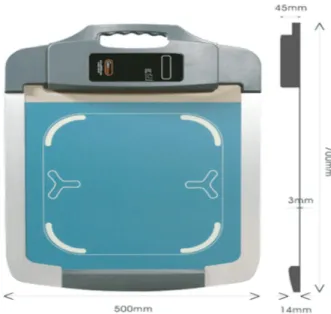
First, each subject was asked to stand still on the force plate of the balance measuring equipment (Gaitview AFA-50; alFOOTs Co., Ltd., Korea) for 20 seconds with eyes open to measure the body's sway distance.
The body's sway distance was measured again after the subject fixed their eyes on a marker attached to the front wall at an angle of 15°. The balance measuring equipment is shown in (Figure 1). The balance measuring test and the movements of the center of balance are shown
in (Figure 2).
Second, the subject was asked to stand still on the balance measuring equipment for 20 second with eyes closed and the body's sway distance was measured using the equipment.
Third, the subject maintained a single-leg stance on the balance measuring equipment for 10 seconds with eyes open while the postural swing distance was measured. The measurement was conducted with the eyes open and fixed on a marker attached to the front wall at 15°.
Fourth, each subject maintained a single leg stance on the equipment for 10 seconds with eyes closed while the postural swing distance was measured using the balance measuring equipment.
Measured variables in the vestibular test are as follows:
(1) Envelope area (ENV)
ENV refers to the envelope area of the trajectory for the center of balance.
(2) Rectangle (REC)
REC refers to the square area obtained from the maximum left, right, top and bottom positions in the center of pressure (COP) for each frame.
(3) Root mean square (RMS)
RMS refers to the area calculated with the position value and the mean value of COP for each frame, and represents the area of a circle calculated using an algorithm.
(4) Total length
Refers to the total travel length of the center of balance during the test.
(5) Sway velocity
COP velocity refers to the total length/test time.
(6) Length/ENV
Refers to the total length/envelop area (ENV), and the value is higher with greater stability.
2) Dynamic balance test
Two test tools, specifically the 5 m habitual and maximum walk test and the 3 m tandem walk test were used to test the dynamic balance of the elderly subjects in the present study.
(1) 5 m habitual and maximum walk (sec)
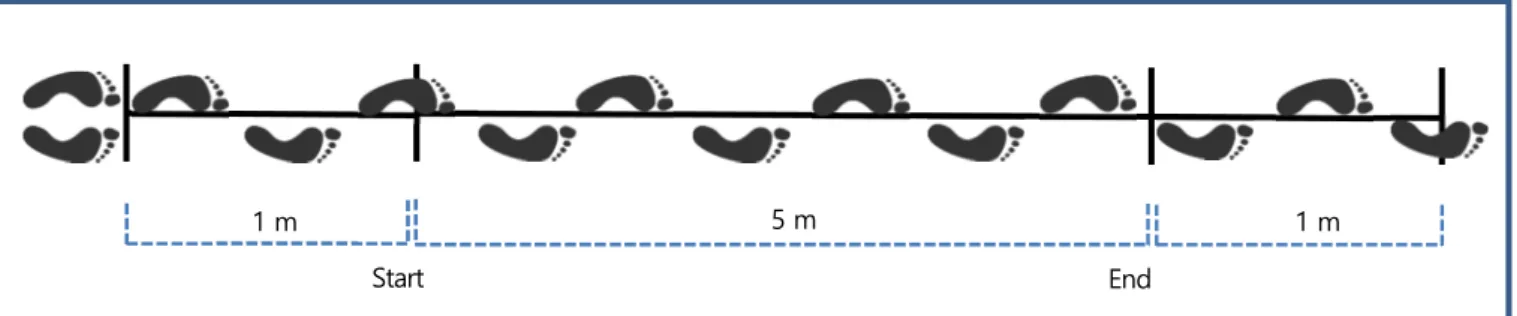
The 5 m habitual and maximum walk test is a gait performance measuring method used to measure lower extremity muscle strength and balance ability in the elderly (Shinkai et al., 2000). The detailed procedure is as follows (Figure 3).
- Each subject was asked to walk along a 5 m line, used as the meas- urement section, with an extra 1 m line on each end.
- The total walk time was measured starting from the time when part of the subject's lower limb reached the measurement starting point (1 m point) to the time when part of the subject's lower limb re- ached the measurement end point.
- Two measurements were conducted at a normal gait, and two meas- urements were conducted at a fast gait.
(2) 3 m tandem walk (sec)
The 3 m tandem walk test is a method used to measure the coord- ination of muscle activity and the ability to predict changes with regard to unstable responses (Nevitt, Cummings, Kidd & Black, 1989). The detailed procedure is as follows (Figure 4).
- After drawing a straight line with a length of 3 m on the floor, each subject was asked to walk along the 3 m line as fast as possible while Figure 1. Static balance measuring equipment (Gaitview AFA-50)
Figure 2. Movement of the center of balance
touching the toe of one foot to the heel of the other foot over the line.
- Each subject was asked to stand on the starting line with both feet together and to wait for a start signal. When the start signal was given, each subject was asked to walk at a maximum speed over the straight line while touching the toe of one foot to the heel of the other foot and touching the heel of the back foot to the toe of the front foot.
- The measurement ended when a subject stepped on the finish line.
- The number of times the subject's hand touched the wall, the sub- ject did not touch the toe of one foot to the heel of the other, and the subject lost balance were counted and recorded as the number of errors.
- A total of two measurements were conducted.
(3) Exercise program
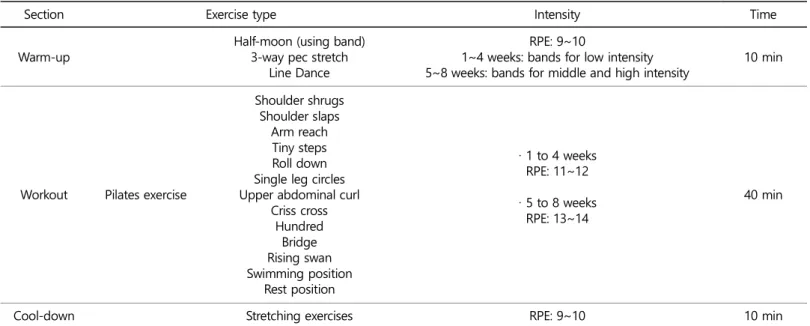
The Pilates exercise program was offered three times a week, with 60 minutes per session for 8 weeks. The exercise intensity of the Pilates exercise program used in the present study was set using the rating of perceived exertion (RPE) based on the Borg 15-step scale (1982).
Stretching, Theraband exercises, and line dancing with an intensity of RPE 9~10 were performed for 10 minutes as warm-up. Cool-down consisted of stretching exercises with RPE of 9~10 for 10 minutes. The intensity of the Theraband exercise was set by controlling the type of Theraband used. The Therabands used were manufactured by Hygenic Corporation. Band exercise with stretching was performed for 10 minutes using yellow bands (1.3 kg resistance while stretching the band by 40 cm) and red bands (1.8 kg resistance while stretching the band by 40 cm), which are suitable for the elderly. After completing the band ex-
ercise, Pilates exercise was performed for 40 minutes to sufficiently relax the muscles contracted by the band exercise. The 8-week Pilates exercise program consisted of Pilates exercise with an intensity of RPE 11~12 for 30 minutes per session during the first to the fourth week and an intensity of RPE 13~14 during the fifth to the eight week. The exercise intensity was maintained within a range of motion that did not cause pain to the joints. Details about the Pilates exercise program are shown in (Table 1).
3. Statistical analysis
Statistical analysis of the data collected in the present study was per- formed using Software Package for Social Sciences for Windows version 24. The data were subjected to a cleaning process to identify errors and to fix incorrectly entered data. The results for all variables were presented as mean (M]) and standard deviation (SD) using descriptive statistics, and the paired t-test was performed to analyze changes before and after the exercise program. The significance level for all statistical analyses was set to α= .05.
RESULTS
1. Static balance1) Static balance while standing with eyes open
(Table 2) shows the static balance data for the elderly subjects while
1 m 5 m 1 m
Start End
Figure 3. Measurement of 5 m habitual and maximum walk
3 m
Start
Figure 4. Measurement of 3 m tandem walk
End
standing for 20 seconds with eyes open. There was a positive change in ENV from 82.67±25.65 mm2 before the exercise to 68.18±16.33 mm2 after the exercise, with no statistically significant difference (t=1.511, p=.165). The mean REC improved from 362.71±349.60 mm2 before the exercise to 164.58±55.73 mm2 after the exercise, with no statistically significant difference (t=1.836, p=.100). The RMS also improved from 160.51±182.08 mm2 before the exercise to 75.28±57.09 mm2 after the exercise, with no statistically significant difference (t=1.389, p=.198).
The mean total length improved from 145.08±41.449 mm before the exercise to 128.08±28.17 mm after the exercise, but there was no sta- tistical significance (t=1.013, p=.337). A positive change was observed in sway velocity from 7.25±2.07 mm/s before the exercise to 6.40±
1.41 mm/s after the exercise, but there was no statistical significance (t=1.013, p=.337). The mean length/ENV also improved from 1.80±
0.29 1/mm before the exercise to 1.94±0.42 1/mm after the exercise, but there was no statistically significant difference (t=-.876, p=.404).
2) Static balance while standing with eyes closed
(Table 3) shows the balance for the elderly subjects while standing for 20 seconds with eyes closed. There was a positive change in ENV from 151.28±88.35 mm2 before the exercise to 126.81±35.53 mm2 after the exercise, but there was no statistically significant difference (t=.985, p=.350). A positive change occurred in the mean REC from 368.54±
224.64 mm2 before the exercise to 275.89±132.75 mm2 after the ex- ercise, but there was no statistical significance (t=1.600, p=.144). There was a positive difference in RMS from 148.21±114.18 mm2 before the exercise to 100.08±66.48 mm2 after the exercise, with no statistically significant difference (t=1.144, p=.282). There was a positive change Table 1. Pilates exercise program
Section Exercise type Intensity Time
Warm-up Half-moon (using band)
3-way pec stretch Line Dance
RPE: 9~10
1~4 weeks: bands for low intensity
5~8 weeks: bands for middle and high intensity 10 min
Workout Pilates exercise
Shoulder shrugs Shoulder slaps
Arm reach Tiny steps Roll down Single leg circles Upper abdominal curl
Criss cross Hundred
Bridge Rising swan Swimming position
Rest position
· 1 to 4 weeks RPE: 11~12
· 5 to 8 weeks RPE: 13~14
40 min
Cool-down Stretching exercises RPE: 9~10 10 min
Note. RPE: Rating of Perceived Exertion
Table 3. Static balance with eyes closed
Section M ± SD
t-value p-value
Pre Post
ENV (mm2) 151.28±88.35 126.81±35.53 .985 .350 REC (mm2) 368.54±224.64 275.89±132.75 1.600 .144 RMS (mm2) 148.21±114.18 100.08±66.48 1.144 .282 Total length
(mm) 213.72±72.16 236.20±81.98 -.785 .452 Sway velocity
(mm/s) 10.69±3.61 11.81±4.10 -.785 .452 Length/ENV
(1/mm) 1.67±0.60 1.90±0.44 -1.383 .200 Table 2. Static balance with eyes open
Section M ± SD
t-value p-value
Pre Post
ENV (mm2) 82.67±25.65 68.18±16.33 1.511 .165 REC (mm2) 362.71±349.60 164.58±55.73 1.836 .100 RMS (mm2) 160.51±182.08 75.28±57.09 1.389 .198 Total length
(mm) 145.08±41.449 128.08±28.17 1.013 .337 Sway velocity
(mm/s) 7.25±2.07 6.40±1.41 1.013 .337 Length/ENV
(1/mm) 1.80±0.29 1.94±0.42 -.876 .404 Note. M: mean; SD: standard deviation; ENV: envelop area; REC:
rectangle; RMS: root mean square
in length/ENV from 1.67±0.60 1/mm before the exercise to 1.90±0.44 1/mm after the exercise, but there was no statistical significance (t= -1.383, p=.200).
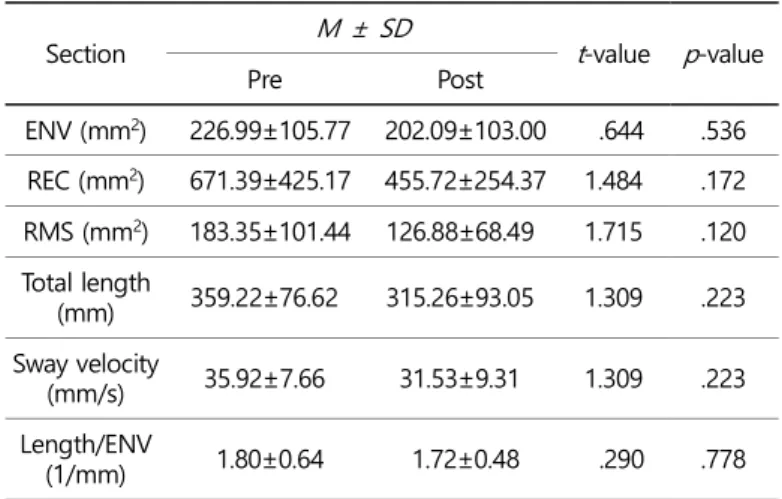
3) Static balance during one-leg stance with eyes open (Table 4) shows the static balance for the elderly subjects while in a one-leg stance for 20 seconds with eyes open. There was a positive change in ENV from 226.99±105.77 mm2 before the exercise to 202.09
±103.00 mm2 after the exercise, but there was no statistically significant difference (t=.644, p=.536). A positive change occurred in the mean REC from 671.39±425.17 mm2 before the exercise to 455.72±254.37 mm2 after the exercise, but there was no statistical significance (t=1.484, p=.172). There was a positive change in RMS from 183.35±101.44 mm2 before the exercise to 126.88±68.49 mm2 after the exercise, with no statistically significant difference (t=1.715, p=.120). There was an impro- vement in mean total length from 359.22±76.62 mm before the ex- ercise to 315.26±93.05 mm after the exercise, with no statistical signifi- cance (t=1.309, p=.223). A positive change was observed in mean sway velocity from 35.92±7.66 mm/s before the exercise to 31.53±9.31 mm/s after the exercise, but there was no statistical significance (t=1.309, p=.223).
4) Static balance during one-leg stance with eyes closed (Table 5) shows the static balance for the elderly subjects while main- taining a one-leg stance for 20 seconds with eyes closed. There was a positive change in ENV from 1898.40±1336.09 mm2 before the exercise to 1590.56±1701.83 mm2 after the exercise, but there was no statistically significant difference (t=1.214, p=.256). A positive change occurred in the mean REC from 6767.97±5816.75 mm2 before the exercise to 6275.48±7214.25 mm2 after the exercise, but there was no statistical significance (t=.474, p=.647). A positive change was observed in RMS from 2145.60±1838.39 mm2 before the exercise to 1933.57±2395.42 mm2 after the exercise, but there was no statistical difference (t=.752, p=.471). A statistically significant positive change was observed in length
/ENV from 0.52±0.22 1/mm before the exercise to 0.83±0.41 1/mm after the exercise (t=-3.699, p=.005**).
2. Dynamic balance
The results for the 5 m habitual and maximum walk test and the 3 m tandem walk test performed to measure dynamic balance in the elderly subjects who participated in the 8-week Pilates exercise program are as follows.
1) 5 m habitual and maximum walk
The results for the 5 m habitual and maximum walk test performed to measure dynamic balance in the elderly subjects are shown in (Table 6). In the 5 m habitual walk test, there was a statistically significant change in dynamic balance from 5.11±0.76 sec before the exercise to 3.39±0.70 sec after the exercise (t=9.135, p=.000***). In the 5 m maximum walk test, there was also a statistically significant difference in dynamic balance from 3.50±0.28 sec before the exercise to 2.59±0.61 sec after the exercise (t=5.581, p=.000***).
Table 4. Static balance during single-leg stance with eyes open
Section M ± SD
t-value p-value
Pre Post
ENV (mm2) 226.99±105.77 202.09±103.00 .644 .536 REC (mm2) 671.39±425.17 455.72±254.37 1.484 .172 RMS (mm2) 183.35±101.44 126.88±68.49 1.715 .120 Total length
(mm) 359.22±76.62 315.26±93.05 1.309 .223 Sway velocity
(mm/s) 35.92±7.66 31.53±9.31 1.309 .223 Length/ENV
(1/mm) 1.80±0.64 1.72±0.48 .290 .778
Table 5. Static balance during single-leg stance with eyes closed
Section M ± SD
t-value p-value
Pre Post
ENV (mm2) 1898.40
±1336.09 1590.56
±1701.83 1.214 .256 REC (mm2) 6767.97
±5816.75 6275.48
±7214.25 .474 .647 RMS (mm2) 2145.60
±1838.39 1933.57
±2395.42 .752 .471 Total length
(mm) 805.89
±297.64 813.09
±336.22 -.079 .939 Sway velocity
(mm/s) 103.09
±39.24 115.85
±77.04 -.771 .460 Length/ENV
(1/mm) 0.52
±0.22 0.83
±0.41 -3.699 .005**
Note. significant at **p< .01
Table 6. 5 m habitual and maximum walk (unit: sec)
Section M ± SD
t-value p-value
Pre Post
5 m habitual walk 5.11±0.76 3.39±0.70 9.135 .000***
5 m maximum walk 3.50±0.28 2.59±0.61 5.581 .000***
Note. significant at ***p< .001
2) 3 m tandem walk
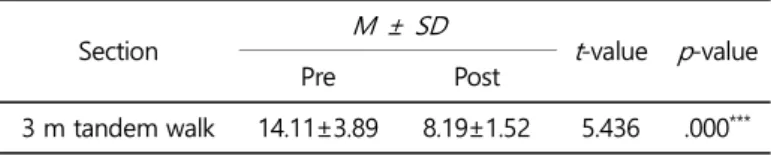
(Table 7) shows the results for the 3 m tandem walk used to measure dynamic balance in the elderly subjects. Comparison of the results before and after the 8-week Pilates exercise program showed a statisti- cally significant change in dynamic balance from 14.11±3.89 sec before the exercise to 8.19±1.52 sec after the exercise (t=5.436, p=.000***).
DISCUSSION
1. Static balanceThe aspects of balance related to gait and falling in the elderly can be defined as static balance and dynamic balance. Static balance is the ability to maintain balance while adopting a certain posture and relies on the ability to maintain the center of gravity within the base of sup- port, thus maintaining a position without postural sway. Dynamic balance is the ability to maintain postural balance while the body is moving, and relies on the ability to maintain the desired position by maintaining the center of gravity within the base of support while the body is moving. These balance abilities are affected by physical ability decline due to aging. Static balance ability is well maintained until the late 70's, whereas, dynamic balance ability decreases rapidly after the 60's (Kang, Jeong & Jeon, 2001).
The reasons for impaired postural balance and impaired balance are known to be impaired sensitivity in the visual, vestibular, and somato- sensory systems and the deformation of the body caused by muscle strength decline, impaired sensory system, and slowdown of the central nervous system activity involved in the maintenance of posture. How- ever, it is not known whether this decline is caused by a single system or a complex interplay of various systems (Brocklehurst, Robertson &
James-Groom, 1982). It is assumed that the contribution of different systems varies depending on the task (Maki & Whitelaw, 1993).
The results for static balance tests performed to measure balance while standing for 20 seconds and while maintaining a one-leg stance for 10 seconds with eyes open as well as eyes closed showed that, in general, there was a statistically positive change in the movement of the center of balance after the 8-week Pilates exercise program com- pared with the results before the program, but there was no statistically significant difference. This is thought to be due to individual differences in balance ability. However, a statistically significant change in length/
ENV was observed from 0.52±0.22 mm2 before the exercise to 0.83±
0.41 mm2 after the exercise (t=-3.699, p=.005) in the one-leg stance
test with eyes closed. The increase in length/ENV indicates that ENV is reduced while standing or in a one-leg stance compared with the total length or the actual distance moved by the center of balance. This is interpreted to mean that the Pilates exercise program was effective in improving static balance. A previous study stated that although visual and vestibular functions among sensory inputs can be impaired in the balancing process as age increases due to the aging of the per- ipheral nerves, exercise enables individuals to overcome the difficulty of maintaining balance. This is done by improving the central nervous system response that integrates and responds to visual and vestibular senses (Oak, Kim & Im, 1999). This supports the observation in the pre- sent study that exercise resulted in positive changes in all indicators of static balance in the elderly subjects after an 8-week Pilates exercise program.
Previous studies on risk factors such as falls and balance in the elderly reported that the increased frequency of falls in older adults is associated with increased response time, decreased coordination of the central nervous system and decreased contraction of the muscles that maintain balance (Woollacott, Shumway-Cook & Nashner, 1986). Other researchers have reported that this phenomenon may occur because of the decline in vestibular functions responsible for balance with age (Cohen, Heaton, Congdon & Jenkins, 1996; Fujii, Goto & Kikuchi, 1990).
Decreased balance and increased sway together with gait sway are considered the leading predictors of falls in the elderly (Maki, Holliday
& Topper, 1994). As age increases, movements that are essential for daily activities become less effective due to decreased balance, resulting in constrained movement. Therefore, it is very important for the elderly to maintain proper postural balance in daily life (Kim, 2000). It was reported that regular physical activity reduced physical sway in the elderly, im- proving postural stability, and that physical sway was reduced in elderly adults that exercised regularly for more than 15 minutes per day com- pared with those who did not exercise (Brooke-Wavell, Prelevic, Bakridan
& Ginsburg, 2001), which supports the results of the present study.
Based on the argument that the vestibular systems play an important role in the deterioration of the somatosensory and visual systems of elderly individuals (Nashner, Black & Wall, 1982), the decrease in balance associated with aging may be caused by the aging of the vestibular system. Considering that balance ability was found to be improved after Pilates exercise, it can be concluded that as age increases, physical activity does not have an independent effect on vestibular function, but is effective in maintaining the body's balance ability by improving the response speed of the somatosensory and central nervous systems.
Pilates is a low intensity exercise that can be easily performed by the elderly to strengthen muscle, improve aerobic activity, and develop flexibility. Thus, Pilates is considered to improve balance in the elderly, thereby contribute to the prevention of falls.
2. Dynamic balance
Gait is the most common and easily accessible indication of mobility in daily life, and is closely related to balance and falls in the elderly (Bae et al., 2016). Gait requires balance, adequate muscle strength and endur- ance as well as the coordination of body segments. In the present
Table 7. 3 m tandem walk (unit: sec)
Section M ± SD
t-value p-value
Pre Post
3 m tandem walk 14.11±3.89 8.19±1.52 5.436 .000***
Note. significant at ***p< .001
study, the 5 m habitual and maximum walk test and the 3 m tandem walk test were performed to measure dynamic balance parameters and the effects of an 8-week Pilates exercise program on dynamic balance parameters were investigated. Pilates was found to have sta- tistically significant positive effects in the 5 m habitual and maximum walk test and the 3 m tandem walk test. The muscle activation stimuli applied prior to the Pilates exercise such as stretching may also have positive effects on balance. Means, Rodell, O'Sullivan and Cranford (1996) argued that exercise including stretching, walking, postural adjustment, and coordination strengthening did not have an independent effect on balance improvement, but had the potential to improve balance in combination with other activities. In the present study, the Pilates ex- ercise program resulted in improvements in the 5 m habitual and maximum walk test and the 3 m tandem walk test. In other words, it was suggested in a study that there might be individual differences in the level of improvement in terms of the test outcomes because the tandem walk test requires very sophisticated neuromuscular control and balance ability (Lee, Choi, Bae, Yoon & Kang, 2010). However, it can be seen in the present study that overall, Pilates exercise resulted in positive changes in dynamic balance.
In general, as age increases, gait velocity decreases (Woo, Ho, Lau, Chan & Yuen, 1995). Decreased gait velocity is associated with a decline in stride length, which is in turn associated with reduced cadence, in- creased length of time required to change direction and to support the body weight with two feet (Elble et al., 1991). The age-associated decline in walking speed and stride length has been studied in an attempt to improve the support stance with two feet during the gait cycle and to improve balance ability to enable safe walking (Winter et al., 1990; Yi &
Chang, 2014). However, the decline is ultimately related to gait instability, which becomes a risk factor for falls. The present study found a statisti- cally significant increase in dynamic balance after an 8-week Pilates program. These results demonstrated that Pilates exercise in elderly had positive effects on gait-related dynamic factors and thus improved gait ability as a whole. Many studies have reported that regular exercise increased the balance and gait velocity of elderly individuals while in- creasing their capability to perform physical activities (Kim & Shin, 2007;
Mills, 1994; Sauvage et al., 1992), which supports the results of the pre- sent study. However, most of the studies investigated the relationship between elastic band exercises and gait function. As demonstrated in the present study, Pilates exercise appears to be more effective in preventing falls in elderly individuals than the other exercises studied.
Regular Pilates exercise, which is relatively safe and allows individuals to control their exercise load, can be performed anywhere and at any time and is flexible enough to capture the interest of elderly individuals.
CONCLUSION
The results of the present study analyzing the effects of an 8-week Pilates program (3 times a week for 60 minutes per session) on static and dynamic balance in 10 elderly subjects aged 65 years or older are as follows.
1. Pilates had positive effects on the static balance of the elderly sub- jects and improved the stability of their center of balance with eyes
open and eyes closed, but there was no statistically significant difference.
This is thought to be due to individual differences in balance ability.
However, there were statistically significant positive changes in length/
ENV in the one-leg stance. These results suggest that the Pilates ex- ercise improved the response speed of the central nervous system, thereby improving the body's balance ability.
2. The Pilates exercise program showed statistically significant differ- ences in the 5 m habitual and maximum walk test and the 3 m tandem walk test in terms of the dynamic balance domain. These results sug- gest that Pilates exercise might improve overall gait function. Regular Pilates exercise may be effective in preventing falls and enhancing the quality of life for elderly individuals by increasing their proprioceptive ability and gait function.
ACKNOWLEDGEMENTS
This study was supported by The Brain Busan 21 Project in 2016.
This study was excerpted from the master's thesis of Ji-Hye Park in 2016.
REFERENCES
Alexander, N. B. (1994). Postural control in older adults. Journal of the American Geriatrics Society, 42(1), 93-108.
Borg, G. A. (1982). Psychophysical bases of perceived exertion. Journal of Medical Science Sports Exercise, 14(5), 377-381.
Bae, K. H., Shin, J. H., Lee, J. S., Yang, J. O., Lee, B. J. & Park, S. B. (2016).
Analyses of plantar foot pressure and static balance according to the type of insole in the elderly. Korean Journal of Sport Bio- mechanics, 26(1), 115-126.
Brocklehurst, J. C., Robertson, D. & James-Groom, P. (1982). Clinical correlates of sway in old age—sensory modalities. Age and Ageing, 11(1), 1-10.
Brooke-Wavell, K., Prelevic, G. M., Bakridan, C. & Ginsburg, J. (2001).
Effects of physical activity and menopausal hormone replacement therapy on postural stability in postmenopausal women—a cross- sectional study. Maturitas, 37(3), 167-172.
Cohen, H., Heaton, L. G., Congdon, S. L. & Jenkins, H. A. (1996). Changes in sensory organization test scores with age. Age and Ageing, 25(1), 39-44.
Dobbs, R. J., Charlett, A., Bowes, S. G., O'NEILL, C. J. A., Weller, C., Hughes, J. & Dobbs, S. M. (1993). Is this walk normal? Age and Ageing, 22(1), 27-30.
Duncan, P. W., Studenski, S., Chandler, J., Bloomfeld, R. & LaPointe, L. K.
(1990). Electromyographic analysis of postural adjustments in two methods of balance testing. Physical Therapy, 70(2), 88-96.
Elble, R. J., Thomas, S. S., Higgins, C. & Colliver, J. (1991). Stride- dependent changes in gait of older people. Journal of Neurology, 238(1), 1-5.
Fujii, M., Goto, N. & Kikuchi, K. (1990). Nerve fiber analysis and the aging process of the vestibulocochlear nerve. Annals of Otology, Rhinology & Laryngology, 99(11), 863-870.
Gabell, A. & Nayak, U. S. L. (1984). The effect of age on variability in
gait. Journal of Gerontology, 39(6), 662-666.
Hur, S. (2008). The Effect of Pilates on the Women Physical Strength and Fat: concentrate upon 20~30 ages. Un- published Master's Thesis. Graduate School of Korea National Sport University. Graduate School of Cheongju University.
Hwang, H. H. (2008). The Effect of Pilates Exercise Program on Health Related Physical Fitness in Salaried Women. Un- published Master's Thesis. Graduate School of Korea National Sport University.
Imms, F. J. & Edholm, O. G. (1981). Studies of gait and mobility in the elderly. Age and Ageing, 10(3), 147-156.
Jeon, H. J. (2007). Pilates For Life. Seoul: Haneon Publishing Co.
Jiang, T. F. (1993). High-frequency stabilization and high-order harmonic generation of an excited Morse oscillator under intense fields.
Physical Review A, 48(5), 3995-3998.
Kang, K, H., Jeong, H. C. & Jeon, M. Y. (2001). A survey study on fall- related fracture in hospitalized elderly patient. Journal of Keukdong College, 251-264.
Kim, B. Y. & Cho, H. C. (2007). The effects of walking exercise on the cardiovascular function and respiratory function in elderly women.
Korean Journal of Sport and Leisure Studies, 31, 911-920.
Kim, C. B. & Shin, J. Y. (2007). Effects of 12-week aquatic exercise on gait in the falls experienced elderly women. Korean Journal of Sport Biomechanics, 17(4), 9-16.
Kim, H. S. (2000). Functional fitness and cardiorespiratory response to exercise training with dumbbell in the elderly. Korean Journal of Physical Educaction, 39(3), 432-442.
Kim, S. Y. (2005). The Effect of Pilates Mat Exercise of Middle-aged Womens' Physical Strength and Composition. Un- published Master's Thesis. Graduate School of Daejeon University.
Kollegger, H., Baumgartner, C., Wober, C., Oder, W. & Deecke, L. (1992).
Spontaneous body sway as a function of sex, age, and vision:
posturographic study in 30 healthy adults. European Neurology, 32(5), 253-259.
Lach, H. W., Reed, A. T., Arfken, C. L., Miller, J. P., Paige, G. D., Birge, S. J. &
Peck, W. A. (1991). Falls in the elderly: reliability of a classification system. Journal of the American Geriatrics Society, 39(2), 197-202.
Lee, J. C., Choi, S. O., Bae, J. J., Yoon, S. J. & Kang. K. H. (2010). Effect of Stretching Exercise on the Proprioceptive and Gait Ability in Elderly Women. Journal of Sport and Leisure Studies, 39(2), 575-586.
Lee, K. H. (2006). The Effect of Pilates Mat Exercise in 8 Weeks on Middle-aged Women's Body Composition, Lumbar Muscle and Flexi- bility. Unpublished Master's Thesis. Graduate School of Daejeon Health Sciences College.
Maki, B. E. (1997). Gait changes in older adults: predictors of falls or indicators of fear? Journal of the American Geriatrics Society, 45(3), 313-320.
Maki, B. E. & Whitelaw, R. S. (1993). Influence of expectation and arousal on center-of-pressure responses to transient postural perturbations.
Journal of vestibular research: equilibrium & orientation.
Maki, B. E., Holliday, P. J. & Topper, A. K. (1994). A prospective study of postural balance and risk of falling in an ambulatory and indepen- dent elderly population. Journal of Gerontology, 49(2), 72-84.
Means, K. M., Rodell, D. E., O'Sullivan, P. S. & Cranford, L. A. (1996).
Rehabilitation of elderly fallers: pilot study of a low to moderate intensity exercise program. Archives of Physical Medicine and Rehabilitation, 77(10), 1030-1036.
Mills, E. M. (1994). The effect of low intensity aerobic exercise on muscle strength flexibility and balance among sedentary elderly persons.
Nursing Research, 43(4), 207-211.
Nashner, L. M., Black, F. O. & Wall, C. I. I. I. (1982). Adaptation to altered support and visual conditions during stance: patients with vestibular deficits. The Journal of Neuroscience, 2(5), 536-544.
Nevitt, M. C., Cummings, S. R., Kidd, S. & Black, D. (1989). Risk factors for recurrent nonsyncopal falls: a prospective study. Jama, 261(18), 2663-2668.
Oak, J. S., Kim, J. I. & Im, J. H. (1999). Effects of exercise on physical fitness in aging. Exercise Science, 8(1), 9-30.
Park, J. Y. (2007). Dolly's Pilates. Seoul: Daehan media, Inc.
Pilates, J. H. & Miller, W. J. (1960). Return to life through contrology. Christopher Publishing House.
Sauvage Jr, L. R., Myklebust, B. M., Crow-Pan, J., Novak, S., Millington, P., Hoffman, M. D., Hartz, A. J. & Rudman, D. (1992). A clinical trial of strengthening and aerobic exercise to improve gait and balance in elderly male nursing home residents. American Journal of Physical Medicine & Rehabilitation, 71(6), 333-342.
Shinkai, S., Watanabe, S., Kumagai, S., Fujiwara, Y., Amano, H., Yoshida, H., Ishizaki, T., Yukawa, H., Suzuki, T. & Shibata, H. (2000). Walking speed as a good predictor for the onset of functional dependence in a Japanese rural community population. Age and Ageing, 29(5), 441-446.
Statistics Korea. (2016, Jun, 4). 2015 Elderly Statistics. Retrieved from https://kostat.go.kr/portal/korea/kor_nw/2/1/index.board?bmode=
read&aSeq=348565
Tinetti, M. E. & Speechley, M. (1989). Prevention of falls among the elderly. The New England Journal of Medicine, 320(16), 1055.
Tobis J, S., Friis, R. & Reinsch, S. (1989). Impaired strength leads to falls in the community. Gerontologist, 29, 256-257.
Whipple, R. H., Wolfson, L. I. & Amerman, P. M. (1987). The relationship of knee and ankle weakness to falls in nursing home residents:
an isokinetic study. Journal of the American Geriatrics Society, 35(1), 13-20.
Winter, D. A., Patla, A. E., Frank, J. S. & Walt, S. E. (1990). Biomechanical walking pattern changes in the fit and healthy elderly. Physical Therapy, 70(6), 340-347.
Woo, J., Ho, S. C., Lau, J., Chan, S. G. & Yuen, Y. K. (1995). Age- associated gait changes in the elderly: pathological or physio- logical? Neuroepidemiology, 14(2), 65-71.
Woollacott, M. H., Shumway-Cook, A. & Nashner, L. M. (1986). Aging and posture control: changes in sensory organization and muscular coordination. The InternationalJournal of Aging and Human Devel- opment, 23(2), 97-114.
Yi, J. H. & Chang, J. K. (2014). The Comparative Analysis of Gait Safety between Elderly Female and Adult Female. Korean Journal of Sport Biomechanics, 24(3), 249-258.