• 검색 결과가 없습니다.

Microstructures and Thermal Properties of Polycaprolactone/Epoxy Resin/SiO<sub>2</sub> Hybrids

N/A
N/A
Protected

Academic year: 2021

Share "Microstructures and Thermal Properties of Polycaprolactone/Epoxy Resin/SiO<sub>2</sub> Hybrids"

Copied!
7
0
0

로드 중.... (전체 텍스트 보기)

전체 글

(1)

Microstructures and Thermal Properties of Polycaprolactone/Epoxy Resin/SiO 2

Hybrids

He Lihua

, Liu Pinggui, and Ding Heyan

Beijing Institute of Aeronautical Materials, P.O. Box 81-9, Beijing 100095, China (Received November 9, 2006; Accepted November 22, 2006)

Abstract: A series of organic-inorganic hybrids, PCL/EP/SiO

2

, involving epoxy resin and triethoxysilane- terminated polycaprolactone elastomer (PCL-TESi) were prepared via polymerization of diglycidyl ether of bisphenol A (DGEBA) with amine curing agent KB-2 and sol-gel process of PCL-TESi. The curing reactions were started from the initially homogeneous mixture of DGEBA, KB-2 and the PCL-TESi. The organicinorganic hybrids containing up to 4.95% (wt) of SiO

2

were obtained and characterized by FT-IR, transmission electron microscopy (TEM), differential scanning calorimetry (DSC) and thermogravimetry analysis (TGA). It was experimentally shown that the swelling property in toluene, morphologies and thermal properties of the resulting hybrids were quite dependent on the contents of SiO

2

. The crosslink network density decreases with increasing of the PCL-TESi. And in TEM, the phase separated morphology of these hybrids was found, which resulted from the coagulation of Si-O-Si networks resulting from -Si(OC

2

H

5

)

3

of PCL-TESi self-curing by hydrolytic silanol condensation, with the advance- ment of the curing reaction in the modified epoxy resin systems. Meanwhile, the change of the SiO

2

content made the morphologies changed from aggregated particles of Si-O-Si in the hybrid to nanocluster of interconnected Si-O-Si particles, then to aggregated Si-O-Si dispersing in the continuous cured epoxy phase again, and last to co-continuous interpenetrating network. The glass transition behavior of the hybrid material was cooperative motion of large chain segments, which were hindered by the inorganic Si-O-Si network. And in TG analysis, the characteristic temperature at 5% of weight loss was evidently increased from 120.5

o

C of pure cured epoxy to 277.6

o

C of 3.84% (wt) of SiO

2

modified epoxy due to the existence of Si-O-Si when PCL-TESi was added in the hybrid.

Keywords: Triethoxysilane-terminated polycaprolactone elastomer, Epoxy resin, Organic/inorganic hybrid, Microstructure, Thermal property

1. Introduction

1)

In recent years, the organic/inorganic hybrids (OIH) have attracted much attention being considered as prom- ising materials with good mechanical and high heat re- sistance properties [1-4]. Sol-gel process, a method for preparing OIH at a low temperature, can control the structural unit formation of hybrid polymers in the range of some nm up to maybe 10 nm, so the formed hybrids can be called nanoscaled or even molecular composites [5,6]. Recently, several applications of hybrid materials in coatings, adhesives and sealants have been reported.

As one of main components used to prepare OIH in

Corresponding author: e-mail: [email protected]

the sol-gel process, the precursors of inorganic compo- nent are often silicon or other metal alkoxides and organoalkoxysilanes. Tetraethoxysilane (TEOS) and other low molecular organo- fuctional alkoxysilanes used as precursors have been studied by many investigators [7].

Based on the type of organoalkoxysilanes, the precursors can be divided roughly into two major groups: (a) non- functional organoalkoxysilanes, and (b) organo-functional organoalkoxysilanes. Typical example of group (a) are organotri- and diorgano-dialkoxysilnesk such as CH

3

- Si(OH)

3

and (CH

3

)

2

Si(OR)

2

(R=CH

3

,C

2

H

5

), respectively.

And groups (b) are mostly acrylic, methacrylic or ep-

oxy-functional organosilanes [8,9]. These organofunctional

alkoxysilanes usually undergo an additional crosslinking,

which can enhance the compatibility of the organic and

(2)

Table 1. Formulation of PCL/EP/SiO

2

hybrid materials

No. PCL-TESi/g EP/g KB-2/g SiO2/wt%* PCL/wt%* Appearance

0 0 150 23.22 0 0 transparent

1 10 135 20.89 0.50 3.97 transparent

2 20 120 18.57 1.04 8.32 transparent

3 30 105 16.25 1.64 13.08 transparent

4 40 90 13.93 2.30 18.33 transparent

5 50 75 11.61 3.03 24.13 transparent

6 60 60 9.29 3.84 30.60 transparent

7 70 45 6.96 4.95 37.84 opaque

8 100 0 0 8.26 65.93 not film-formed

*: calculated from reactant stoichchiometry.

Scheme 1.

inorganic phase by chemically linking the organic and inorganic component.

In the present study, the epoxy-based OIH materials were prepared using the bisphenol-A type epoxy resin and triethoxysilyl-terminated polcaprolactone elastomer containing urethane linkage (PCL-TESi, see scheme 1) as the organic and inorganic sources, respectively. In previous studies [10], synthesis of PCL-TESi by using polcaprolactonediol and isocyanatopropyltriethoxysilane was studied. And also PCL-TESi was proved to be the toughener of epoxy resin.

The obtained hybrid had showed excellent mechanical and high heat resistance properties due to the formation of Si-O-Si network and the intercrosslinking of -CONH- and epoxy, which enhanced the compatibility between organic and inorganic phase. The goal of this work was to evaluate the effect of the SiO

2

content in the hybrid on phase behavior and properties of the resulting epoxy hybrids. The morphology and thermal properties of the hybrid were addressed based on transmission-electron microscopy (TEM), differential scanning calorimetry (DSC) and thermogravimetric analysis (TGA), respec- tively.

2. Experimental

2.1. Materials

Epoxy resin used here was a commercial grade of di- glycidylether of biphenol A (DGEBA, E-20, Wuxi Resin Plant, China). 50% (w/w) butanone solution of E-20 was obtained before usage. Triethoxysilyl-terminated polcapro- lactone elastomer containing urethane linkage (PCL- TESi), with 65.93% (w/w) of PCL content and 3.86%

(w/w) of Si content, was synthesized according to the previous reported method [10]. KB-2, a mixture of modified aliphatic and aromatic amines (amine value = 450 mgKOH/g, Chenghua Chemical Co., China), was used as a curing agent for DGEBA. All organic solvents were directly used without further purification.

2.2. Preparation and Curing of PCL/EP/SiO

2

Hybrid Materials

The prescribed amount of epoxy resin solution, the synthesized PCL-TESi precursor solution and KB-2 were mixed as shown in Table 1. After thoroughly stirred, these mixtures were cast on Teflon substrate to obtain film after completely evaporating the solvent. These formed hybrid films were cured at ambient temperature for 3 weeks under about 60% relative humidity.

2.3. Characterizations

FTIR spectra of the uncured and cured hybrids were recorded by Magna 750 FTIR Spectrometer.

TEM specimens were stained with Ru and sectioned

with a diamond knife at liquid nitrogen temperature. The

(3)

Figure 1. FT-IR spectrum of uncured mixture (a) and the cured (b).

TEM diagram of the prepared hybrid films were ob- tained from the H-800TEM at an accelerating voltage of 20 KV.

Swelling measurement [11] was carried out as following. The cast film samples (8 × 8 mm) were cut off and thoroughly swollen in anhydrous CaCl

2

-dried tol uene at ambient temperature till the weight m

s

of the swollen ones was unchanged. Later, samples were dried under vacuum for 24 h at ambient temperature and weighed again (m

d

). Solvent swelling ratio (Q) was cal- culated as:

   

 

DSC was carried out using Q10 (TA Instruments, USA) from room temperature to 400

o

C at a heating rate of 10

o

C/min under nitrogen.

Thermal gravimetric analysis (TGA) was carried at an Instrument TGA 951 thermal gravimetric analyzer at a heating rate of 20

o

C/min from ambient temperature to 800

o

C.

3. Result and Discussion

3.1. Spectral Analysis

Figure 1 showed the FTIR spectra of the uncured hy- brids and the cured with No.5 sample. In Figure 1a, the band at 908 cm

-1

is assigned to the asymmetric stretch of epoxy group, and 956 cm

-1

to -SiOR group. After cured (Figure 1b), bands at 956 cm

-1

and 908 cm

-1

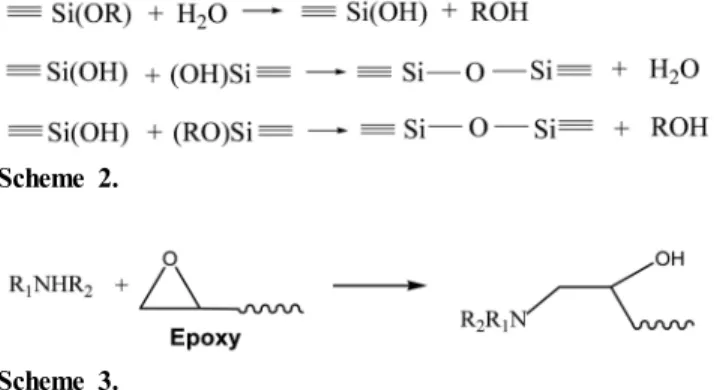
had almost disappeared, indicating the formation of Si-O-Si network (seen in Scheme 2) and the curing reaction

Scheme 2.

Scheme 3.

of the epoxy resin system (Scheme 3). However, the two bands were not completely disappeared, indicating that the incomplete conversion of epoxy and -SiOR be- cause of the steric hindrance [12]. And the fact that the broad band at about 3400 cm

-1

(asymmetric stretch of -OH) strengthened after cured was attributed to the fol- lowing two reasons: 1) more -OH group formed with the curing of epoxy, 2) -SiOR group hydrolyzed to -SiOH group, but not completely condensed to Si-O-Si.

3.2. Morphology of PCL/EP/SiO

2

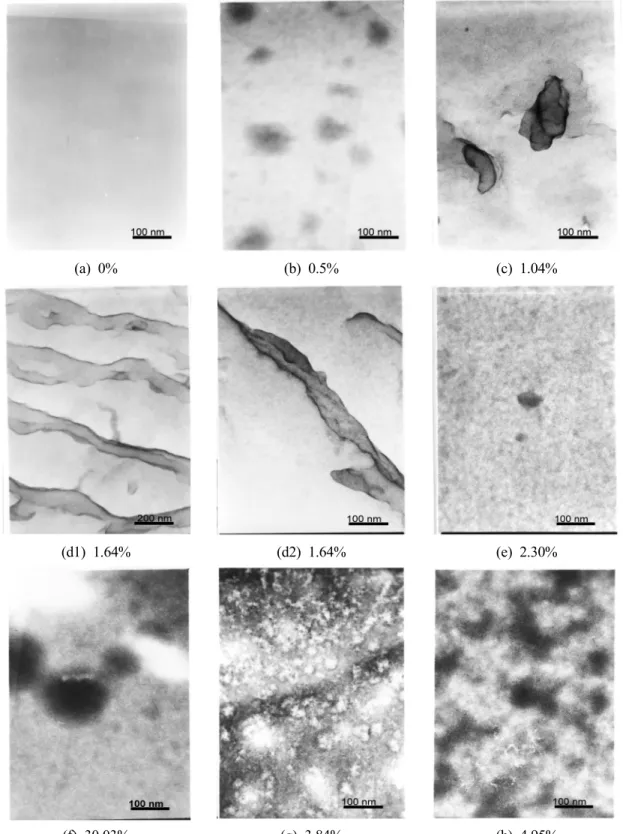
Hybrid Materials The pure epoxy resin and several PCL/EP/silica hy- brids with different SiO

2

content from 0 to 4.95 wt%

were used as samples for the TEM observations as

shown in Figure 2. The pure epoxy system had a uni-

form structure over the entire areas, while the hybrids

with silica showed dark and white areas over each mor-

phology of the hybrid materials, where the dark areas

were from Si-O-Si network and white areas from epoxy

network. It could be seen that the formed Si-O-Si net-

work existed as a type of particle and dispersed in the

epoxy resin when a lower SiO

2

content were used in

hybrids (Figure 2b, c). These dark particles were formed

via sol-gel reaction of the silane alkoxide as depicted in

Scheme 1, where silica was connected with PCL organic

chain because PCL-TESi used as the inorganic source,

so it was thought from these results that the fine silica

particle observed by TEM (Figure 2b, c) were not the

pure inorganic silica network. With the increase of the

SiO

2

content, the particles of Si-O-Si network became

bigger and connected together to form nanocluster of in-

terconnected Si-O-Si network, then to particle of Si-O-Si

dispersing in the continuous cured epoxy phase again

(Figure 2e, f), and last to co-continuous interpenetrating

network structure between the organic and inorganic co-

mponents with a covalent bond (Figure 2g, h). According

(4)

(a) 0% (b) 0.5% (c) 1.04%

(d1) 1.64% (d2) 1.64% (e) 2.30%

(f) 30.03% (g) 3.84% (h) 4.95%

Figure 2. TEM of PCL/EP/SiO

2

hybrids at different SiO

2

mass fractions.

to the literature [13,14], the Si-O-Si network formed by PCL-TESi and epoxy cured network had a great effect on the morphology in the hybrid system.

PCL-TESi had a -CONH- group, which could react

with epoxy resin, so it would be easily understood that

the compatibility between organic phase and inorganic

(5)

Table 2. Glass transition temperature (T

g

) of PCL/EP/SiO

2

hybrid materials

No. 0 1 2 3 4 5 6 8

SiO2 /wt%* 0 0.50 1.04 1.64 2.30 3.03 3.84 8.26

Tg/oC 107.5 70.0 60.0 70.0 68.8 72.5 70.0 45**

*: calculated from reactant stoichchiometry.

**: the melting point of pure PCL-TESi (No. 8).
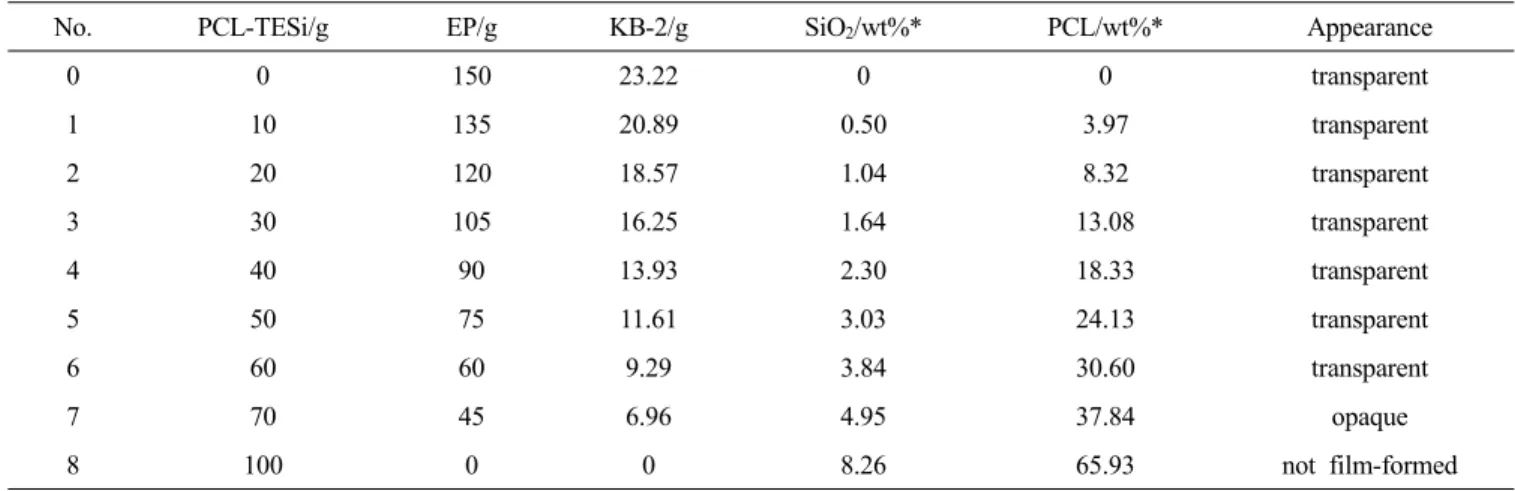
Figure 3. Dependence of the solvent swelling ratio Q on the calculated. SiO

2

mass fraction in the cured hybrids.

phase would increase with an increase in the SiO

2

con- tent and -CONH- group. As shown in Figure 2e, the in- terface between two phases was not clear, and the nano- particle was small, and even the Figure 2g had a re- verse phase in morphology, where epoxy system existed as dispersion but Si-O-Si network of PCL-TESi as con- tinuous phase. When SiO

2

content reached 4.95%, the silyl-crosslink of PCL-TESi was so dense that little ep- oxy was contained in silica network because the influ- ence on -CONH- group by high steric hindrance. These resulted that phase separation appeared not only in mor- phology (in Figure 2h) but also in macroscopic ex- pression (Table 1).

3.3. Effect of the SiO

2

Content on the Crosslinked Networks Density of the Cured Systems

Solvent swelling properties of the cured systems di- rectly reflected their crosslinked network densities. Figure 3 showed the dependence of swelling value Q versus the calculated SiO

2

content of cured systems. Clearly, with the increase of the SiO

2

content, Q increased and the crosslinked network density decreased. These resulted from the facts that there were much more of soft -C-O-

Scheme 4.

chain of the precursors of inorganic component PCL- TESi with the increase of SiO

2

content, which induced the crosslinked networks density’s decrease. Furthermore, in the PCL/EP/SiO

2

hybrids, with the introduction of PCL-TESi, the compact network of the cured epoxy was disturbed, although the Si-O-Si network could form by condensing of SiOR of PCL-TESi (Scheme 4).

3.4. Result of Differential Scanning Calorimetry

DSC thermograms of pure epoxy and PCL/EP/SiO

2

hybrids were presented in Figure 4. Exception the pure epoxy system, they showed an endothermic peak at tem- peratures around 350

o

C like pure PCL-TESi (No. 8), which corresponding to the R-Si-O-Si-R structure from the networks. In Figure 4, all PCL/EP/SiO

2

hybrids ex- hibited a single glass transition temperature (T

g

) pre- sented in Table 2, which in turn confirmed the presence of inter-crosslinked network structure. It can be observed that T

g

decreased when PCL-TESi was incorporated into the epoxy systems, because of the polycaprolactone's in- herent flexibility and free rotation of Si-O-Si linkage [15]. But the increasing of SiO

2

content did not changed significantly the T

g

values of PCL/EP/SiO

2

hybrids, that was to say, more siloxane incorporation did not alter the T

g

. These maybe come from the facts that there were much chain entanglement [16] in the cured systems, and that large chain segments were hindered by the inorganic Si-O-Si networks.

3.5. Termogravimetric Analysis

TGA was always used to evaluate the thermal decom

position and stability of materials. Figure 5 gave the re-

sult of the thermal decomposition of the pure epoxy and

(6)

Figure 4. DSC traces of the PCL/EP/SiO

2

hybrids at differ- ent SiO

2

mass fraction (No.0: 0%; No.1: 0.50%; No.2:

1.04%; No.3: 1.64%; No.4: 2.30%; No.5: 3.03%; No.6:

3.84%; No.8: 8.26%).

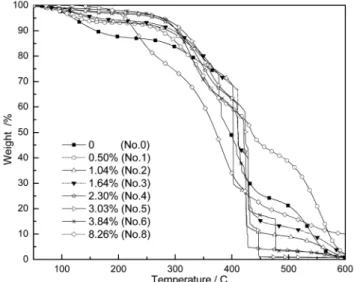
Figure 5. TGA curves for cured PCL/EP/SiO

2

hybrids at different SiO

2

mass fraction (Air environment; Heating rate, 10

o

C/min).

the PCL/EP/SiO

2

hybrids. It was obvious that the values of the initial thermal decomposition temperature defined as 5% of mass loss temperature of PCL/EP/SiO

2

hybrids were higher than that of pure epoxy, which was 120.5

o

C while the PCL/EP/SiO

2

hybrids were 265.6

o

C, 275.4

o

C, 277.6

o

C, when SiO

2

content was 2.3%, 3.03%, 3.84%

respectively. The presence of siloxane skeleton in the or- ganic systems and formation of inter-crosslinking net- work structure within epoxy resin delayed the degrada- tion, and a higher amount of thermal energy was re-

quired to attain the same weight losses when compared with that of pure epoxy system. The delay in degrada- tion caused by the siloxane moiety may be attributed to the stability of inorganic nature (-Si-O-Si-) of siloxane structure, which may stabilize the organic component from heat, because the bond energy of siloxane was sig- nificantly greater than those of carbon-carbon and car- bon-oxygen bonds. However, when SiO

2

content was lower (No.1 and No. 2), the introduction of PCL-TESi reduced the thermal stability and decreased the initial decomposition temperature. This may be attributed to the crosslinking density decreased due to the presence of thermally weak -C-O- soft chain, and also to the SiO

2

content, which was too lower to protect the organic component from heat.

From Figure 4, it was found that the curves of No. 0 and No. 1 were similar, and the curves of No. 2 to No.

6 were similar. These proved that the mechanism of thermogravimetric changed with the increasing of SiO

2

content. When higher temperature was applied, for exam- ple over 300

o

C, the decomposition rate increased for the higher content PCL-TESi hybrids due to the intrinsically poor thermal stability of polycaprolactone under the tem- perature [17,18].

4. Conclusions

PCL/EP/SiO

2

hybrids were prepared and their micro-

structure and thermal property were studied. The Si-O-Si

networks and the curing reaction of the epoxy resin sys-

tem existed in the hybrids. Meanwhile, the size of each

phase was in nanoscale. The introduction of PCL-TESi

into epoxy decreased the crosslinked network density due

to the existence of soft chains in polycaprolactone. All

PCL/EP/SiO

2

hybrids exhibited single glass transition

temperature (T

g

), which confirmed the presence of in-

ter-crosslinked network structure. The incorporation of

PCL-TESi lowered the T

g

value because of the poly-

caprolactone inherent flexibility and free rotation of

Si-O-Si linkage. From the thermogravimetric study, it

can be concluded that the presence of siloxane skeleton

in the organic systems and formation of inter-cross-

linking network structure with epoxy resin delayed the

degradation, and a high amount of thermal energy was

required to attain the same weight losses when compared

with that of pure epoxy system. The characteristic de-

composition temperature at 5% weight loss was evidently

(7)

increased from 120.5

o

C of pure cured epoxy to 277.6

o

C of 3.84% (wt) of SiO

2

modified epoxy.

This work was supported by grant no. 04H21009 of the Aeronautical Foundation of China.

References

1. F. Bauer, H. Glasel, E. Hartmann, H. Langguth, and R. Hinterwaldner, Functionalized inorganic/organic nanocomposites as new basic raw materials for adhe- sives and sealants [J]. Int. J. Adhesion Adhesivers, 24:519-522 (2004).

2. A. Klukowska, U. Posset, G. Schottner, M. L. Wis, C. Salemi-Delvaux, and V. Malatesta, Photochromic hybrid solgel coatings: preparation, properties, and applications [J]. Mater Sci., 20:95-104 (2002).

3. M. Nocun, E. Leja, and W. Bugajski, Microstructure and optical properties of methylmethacrylate-modified silica hybrid glasses and thin film [J]. Mater Sci., 21:471-479 (2003).

4. Y. Ni, S. Zheng, and K. Nie, Morphology and ther- mal properties of inorganic--organic hybrids involving epoxy resin and polyhedral oligomeric silsesquiox- anes [J]. Polymer, 45: 5557-5568 (2004).

5. Hofacker S, M. Mechtel, M. Mager, and H. Kraus, Sol-gel: a new tool for coatings chemistry [J].

Progress in Organic Coatings, 45:159-164 (2002).

6. Li Yan, Fu Shaoyun, Lin Dajie, Zhang Yihe, and Pan Qinyan, Mechanical properties of polyimide composites filled with SiO

2

nano-particles at room and cryogenic temperatures. Acta Materiae Compo- sitae Sinica, 22(2): 11-15 (2005).

7. L. Matejka, O. Dukh, and J. Kolarik, Reinforcement of crosslinked rubbery epoxy by in-situ formed silica [J]. Polymer, 41: 1449-1459 (2000).

8. K. H. Hass and K. Rose, Hybrid inorganic/organic polymers with nanoscale building blocks: precursors, processing, properties and applications [J]. Rev. Adv.

Mater Sci., 5:47-52 (2003).

9. C. T. Yen, W. Chen, D. J. Liaw, and H. Y. Lu, Synthesis and characterization of polyimide/oligo- meric methylsilsesquioxane hybrid films [J] Polymer,

44:7079-7087 (2003).

10. P. Liu, L. He, H. Ding, J. Liu, and X. Yi, Morphology of epoxy resin modified with silyl- crosslinked urethane elastomer [J]. J Appl Polym Sci, 97:611-619 (2005).

11. F. Schapman, J. P. Couvercelle, and C. Bunel, Low molar mass polybutadiene made crosslinkable by si- lane moities introduced via addition of thiol to dou- ble bond: 4. Crosslinking study [J]. Polymer, 41:

17-25 (2000).

12. J. Macac, H. Ivankovic, M. Ivankovic, and H. J.

Mencer, Study of cure kinetics of epoxy-silica or- ganicinorganic hybrid materials [J]. Thermochimica Acta, 414:219-225 (2004).

13. D. Tian, S. Blancher, Ph. Dubois, and R. Jerome, Biodegradable and biocompatible inorganic-organic hybrid materials: 2. Dynamic mechanical properties, structure and morphology [J]. Polymer, 39:855-864 (1998).

14. D. Ratna, Modification of epoxy resins for improve- ment of adhesion: a critical review [J]. J. Adhes Sci Technol, 2003, 17, 1655-1668, and references there- in.

15. A. Anand Prabu and M. Alagar, Mechanical and thermal studies of intercross-linked networks based on siliconized and polyurethane-epoxy/unsaturated polyester coatings [J]. Progress in organic coatings, 49:236-243 (2004).

16. S. Ananda Kumar and T. S. N. Sankara Narayanan, Thermal properties of siliconized epoxy interpenetra- ting coatings [J]. Progress in organic coatings, 45:

323-330 (2002).

17. D. Tian, Ph. Dubois, and R. Jerome, Biodegradable and biocompatible inorganic-organic hybrid materials.

I. Synthesis and characterization [J]. J. Polym. Sci.

Polym. Chem., 35: 2295-2309 (1997).

18. P. M. Remiro, M. Cortazar, E. Calahorra, and M.

M. Calafel, The effect of crosslinking and mis-

cibility on the thermal degradation of an uncured

and an aminecured epoxy resin blended with poly

(-caprolactone) [J]. Polym. Degrad. Stab., 78:83-93

(2002).

수치

Table 1. Formulation of PCL/EP/SiO 2  hybrid materials
Figure 1. FT-IR spectrum of uncured mixture (a) and the  cured (b).
Figure 2. TEM of PCL/EP/SiO 2  hybrids at different SiO 2  mass fractions.
Figure 3. Dependence of the solvent swelling ratio Q on  the calculated. SiO 2  mass fraction in the cured hybrids.
+2

참조

관련 문서

In this study, the ITO thin film was shown the ohmic contact properties as the linear current-voltage curves, and the electrical characteristics of SiO 2 and V 2 O 5 films

The porous ceramics were sintered at 1200 o C, and porosity, density, compressive strength, microstructure and thermal conductivity were analyzed.. So the lower the

In this study, NiFe films with a thickness of about 150nm were deposited on Si(100) wafer and SiO 2 / Si(100) substrate at room temperature by a DC magnetron co-sputtering using Fe

Tensile strength, fracture toughness, vicker's hardness and Izod Impact test were carried out to investigate the effect of particle size and content of TiO 2 on the

In this study, we prepared ITO thin films on Nb 2 O 5 /SiO 2 double buffer layer using DC magnetron sputtering method and investigated electrical and optical properties

The effect of the acidity on the flexible zeolite fibers for the removal of toluene was investigated as a function of the SiO 2 /Al 2 O 3 ratio of zeolites, and the

The film morphology of 100-nm-thick Ni changed to islands on SiO 2 /Si substrate after heat treatment at 900 o C for 2 min because of grain growth, whereas 300-nm-thick

Dendritic and lamellar structures are clearly observed with the variation in the composition ratio between Bi 2 Te 3 and PbTe.. The increase in the Bi