277
Open Access
Clinical Characteristics and Prognostic Factors of Stress-Induced Cardiomyopathy
Jun-Won Lee, MD, Jang-Young Kim, MD, Young-Jin Youn, MD, Joong-Kyung Sung, MD, Nam-Seok Lee, MD, Kyoung-Hoon Lee, MD, Byung-Su Yoo, MD Seung-Hwan Lee, MD, Junghan Yoon, MD and Kyung-Hoon Choe, MD Division of Cardiology, Department of Internal Medicine, Wonju College of Medicine, Yonsei University, Wonju, Korea
ABSTRACT
Background and Objectives: Stress-induced cardiomyopathy (SCM) is characterized by a transient left ventricular (LV) dysfunction due to emotional and physical stress. There are limited data about the clinical characteristics in Korean patients. We sought to clarify the clinical features and prognosis in patients with SCM. Subjects and Me- thods: We reviewed 39 cases diagnosed with SCM in a tertiary hospital. The SCM was diagnosed as: 1) no pre- vious history of cardiac disease, 2) acute onset, 3) regional wall motion abnormality, typically in the takotsubo or inverted takotsubo shape by echocardiography, and 4) no significant stenosis in the coronary angiogram. We ev- aluated clinical characteristics, biomarkers, and prognosis. Results: Mean age was 61.3±16.1 years (female 69%).
The triggering factors were physical stress in 32 patients (82%) and emotional stress in 5 patients (13%). The initial symptom was dyspnea (n=18, 46%) rather than chest pain (n=10, 26%). An initial electrocardiogram (EKG) presented T-wave inversion (n=18, 46%), ST-elevation (n=11, 28%), and ST-depression (n=2, 5%). Multiva- riate logistic regression analysis showed that initial high sensitive C-reactive protein (hs-CRP) {odds ratio (OR) 1.41, 95% confidence interval (CI); 1.02-1.97} and initial left ventricular ejection fraction (LVEF) (OR 0.89, 95% CI;
0.80-0.98) were significantly associated with death or cardiogenic shock, respectively. Conclusion: The major trigger- ing factor of SCM is physical stress due to illness or surgical procedures, and the first manifestation is dyspnea ra- ther than chest pain. Elevated hs-CRP and decreased LVEF at admission were independent risk factors for death or cardiogenic shock. (Korean Circ J 2010;40:277-282)
KEY WORDS: Takotsubo cardiomyopathy; Inflammatory response.
Introduction
The stress-induced cardiomyopathy (SCM) is charac- terized by acute, reversible, and transient left ventricular (LV) systolic dysfunction mimicking acute coronary syn- drome without significant stenosis on coronary angio- gram.1)2) This syndrome was first described by Satoh et al.3) and was named Takotsubo-cardiomyopathy because
its shape resembles the tako-tsubo (Japanese octopus trap).4) The majority of patients are postmenopausal wo- men who present with acute emotional or physical st- ress.1)2) Clinical features are acute onset chest pain or dyspnea, electrocardiographic ST changes with T-wave inversion, elevated cardiac biomarkers, elevated B-type natruretic peptide (BNP), apical or midventricular wall motion abnormality by echocardiography and favorable prognosis.1) The underlying etiology is unclear. There are limited data for clinical manifestations and prognostic factors of SCM in Korea.5)6) Therefore, we sought to cla- rify the clinical features and prognosis in SCM.
Subjects and Methods
We retrospectively reviewed and analyzed 39 patients diagnosed with SCM from May, 2004, to January, 2009, in Wonju Christian Hospital. SCM was diagnosed as:
1) no previous history of cardiac disease, 2) acute onset,
Received: September 20, 2009 Revision Received: October 26, 2009 Accepted: October 28, 2009
Correspondence: Jang-Young Kim, MD,Division of Cardiology, Department of Internal Medicine, Wonju College of Medicine, Yonsei University, 162 Ilsan-dong, Wonju 220-701, Korea
Tel: 82-33-741-0909, Fax: 82-33-741-1219 E-mail: [email protected]
This is an Open Access article distributed under the terms of the Creative Commons Attribution Non-Commercial License (http://creativecommons.
org/licenses/by-nc/3.0) which permits unrestricted non-commercial use, distribution, and reproduction in any medium, provided the original work is properly cited.
cc
3) a regional wall motion abnormality, typically in the takotsubo or inverted takotsubo shape by echocardio- graphy, and 4) no significant stenosis in the coronary angiogram. We investigated baseline clinical character- istics, laboratory data, hospital course, complications, and clinical outcomes.
We defined ST-elevation as deviation >1 mm higher than the baseline in ≥2 contiguous leads. We defined T-wave inversion as a change from the previous electro- cardiogram (EKG) in ≥2 contiguous leads. Echocar- diography was performed at admission and rechecked at discharge or improved symptoms. Coronary angiogra- phy and left ventriculography were performed to ev- aluate coronary artery disease or LV systolic function.
Significant stenosis was defined as >50% diameter ste- nosis by coronary angiography. Shock was defined as sys- tolic blood pressure <90 mm Hg with signs of end-organ hypoperfusion requiring the use of vasopressor agents.
Adverse clinical events were defined as death or cardio- genic shock.
Cardiac biomarkers {creatinine kinase MB (CK-MB) fraction and troponin-I}, high sensitive C-reactive pro- tein (hs-CRP), and BNP were collected at admission and cardiac biomarkers were rechecked until normalization.
EKG was performed daily. The trigger factor was cate- gorized as emotional or physical stress. After discharge, all patients were followed in an out-patient clinic to re- evaluate symptoms, LV systolic function, and adverse ev- ents. SCM patients were grouped in 4 seasons to evalu-
ate seasonal variation.
Continuous data were summarized as mean±SD and were compared by Student’s t-test. Multivariate logistic regression analysis was performed to determine the in- dependent variables associated with the occurrence of adverse events.
Results
Clinical manifestations
The baseline characteristics of 39 SCM patients are presented in Table 1. Female patients were 69% (n=27) and the mean age was 61.3±16.1 years. Past medical his- tory was 10 (26%) of hypertension, 3 (8%) of diabetes mellitus, 5 (13%) of chronic obstructive pulmonary dis-
Table 1. Baseline characteristics and laboratory findings of stress induced cardiomyopathy
Variable
Age (year) 61.3±16.1
Female (n, %) 27 (69)
Hypertension (%) 10 (26)
Diabetes mellitus (%) 3 (8) Chronic obstructive pulmonary disease (%) 05 (13)
Smoking (%) 05 (13)
Clinical presentation
Dyspnea 18 (46)
Chest pain 10 (26)
Mental change 08 (21)
Electrocardiographic changes (%)
T-wave inversion 18 (46)
ST-segment elevation 11 (28) ST-segment depression 2 (5) Non-specific finding 06 (15) Ejection fraction (%)
At initial presentation 45±16
At discharge 61±13
Adverse clinical event (%)
Cardiogenic shock 13 (33)
Death 3 (8)
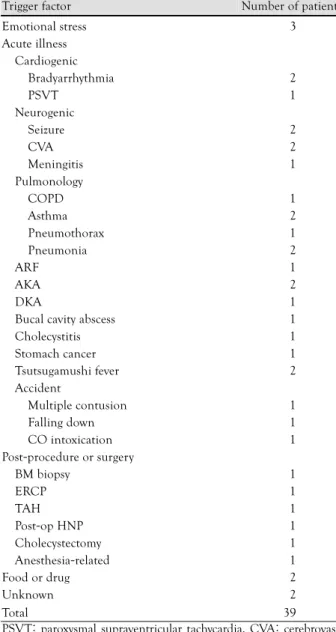
Table 2. Trigger factors of stress induced cardiomyopathy Trigger factor Number of patient Emotional stress
Acute illness Cardiogenic
Bradyarrhythmia PSVT
Neurogenic Seizure CVA Meningitis Pulmonology
COPD Asthma Pneumothorax Pneumonia ARF AKA DKA
Bucal cavity abscess Cholecystitis Stomach cancer Tsutsugamushi fever Accident
Multiple contusion Falling down CO intoxication Post-procedure or surgery
BM biopsy ERCP TAH Post-op HNP Cholecystectomy Anesthesia-related Food or drug Unknown
03
02 01
02 02 01
01 02 01 02 01 02 01 01 01 01 02
01 01 01
01 01 01 01 01 01 02 02
Total 39 PSVT: paroxysmal supraventricular tachycardia, CVA: cerebrovas-
cular attack, COPD: chronic obstructive pulmonary disease, ARF:
acute renal failure, AKA: alcoholic ketoacidosis DKA: diabetic ke- toacidosis, BM: bone marrow, ERCP: endoscopic retrograde cholan- giopancreatography, TAH: total abdominal hysterectomy, HNP: her- niated nucleus pulposus
ease, and 5 (13%) current smokers. The initial symptom were dyspnea (n=18, 46%), chest pain (n=10, 26%), mental change (n=8, 21%), collapse (n=1, 3%), fever (n=1, 3%) and seizure (n=1, 3%). Mean symptom to arrival time in the emergency department was 426.9±
431.9 minutes. The triggering factors of SCM were me- dical illness (n=23, 59%), emotional stress (n=6, 15%), procedure-related (n=3, 8%) , trauma (n=3, 8%), and food or drugs (n=2, 5%) (Table 2). Initial EKG present- ed T-wave inversion (n=18, 46%), ST-elevation (n=
11, 28%), ST-depression (n=2, 5%), or non-specific findings (n=6, 15%). We observed an increasing trend of SCM in spring and winter but there was no statis- tical significance.
Laboratory and imaging findings
The peak CK-MB fraction and troponin I were 15.6
±20.9 ng/mL (reference range: <5.0 ng/mL) and 6.8
±12.3 ng/mL (reference range: <0.78 ng/mL), respec- tively. The BNP at admission was 745.4±905.6 pg/mL (reference range: <100 pg/mL). Initial hs-CRP was 44
±61 mg/L (reference range: <5 mg/L) and 23 patients (59%) had elevated hs-CRP at admission. In echocardio- graphy, the mean LV ejection fraction (EF) was 45±16%
at admission and 61±13% at discharge. There were 3 cases of inverted takotsubo shape, 4 cases of transient LV outflow tract obstruction due to a hyperkinetic basal seg- ment of LV, and 1 case of apical thrombus on the site of apical ballooning (Fig. 1). The patient who developed apical LV thrombus had a distal embolization in the right common iliac artery, right external iliac artery, and left
femoral artery. She had anticoagulation therapy with warfarin and was discharged after 15 days without signi- ficant complications.
Prognosis
Three patients (8%) died due to pneumonia and 13 patients (33%) experienced cardiogenic shock. Inotro- pic agents were administered to 10 patients (26%), and 9 patients (23%) needed mechanical ventilation. Eleven patients (28%) received an emergency coronary angio- gram to rule out acute ST-elevation myocardial infarc- tion. The mean length of hospitalization was 14±14 days.
Thirty-six patients were discharged after improvement of LV systolic function. During follow-up, there was no SCM recurrence or sudden death.
The SCM patients were divided into two groups ac- cording to the presence of cardiogenic shock or death:
the adverse clinical event group (n=15) versus the no event group (n=24). These groups showed significantly different age (54.8±17.5 vs. 65.3±14.0 years; p=0.046), hospitalization (22.1±18.5 vs. 9.4±6.3 days; p=0.020), initial EF (34.9±15.5 vs. 50.6±13.8%; p=0.003), ini- tial hs-CRP (76±80 vs. 23±35 mg/L; p=0.027), initial QTc (477.4±63.1 vs. 532.9±69.5 msec; p=0.018), peak CK-MB fraction (2.8±1.1 vs. 2.0±0.9 ng/mL; p=0.033) and peak troponin I (12.6±17.5 vs. 2.6±2.4 ng/mL; p=
0.045) (Table 3). Multivariate logistic regression analy- sis (adjusted for age, sex, and risk factors) showed that hs-CRP at admission was associated with an odds ratio (OR) of 1.41 {95% confidence interval (CI) 1.02-1.97}
for an adverse event. The initial LVEF was also signifi-
A B
C D
Fig. 1. An apical thrombus of the left ventricle due to stress-induced cardiomyopathy. Two dimensional echocardiography shows an api- cal LV thrombus (A and B) and disappeared apical thrombus (C and D) after anticoagulant therapy.
cantly associated with an event (OR 0.89, 95% CI 0.80- 0.98, p=0.024).
Discussion
Our study shows that elevated hs-CRP levels and initial impairment of LV systolic function relate to poor clinical outcome. Elevated CRP levels are found in SCM patients and related to impaired LV systolic function with BNP release.7) Enhanced production of acute-phase pro- teins in the liver by catecholamines may result from direct stimulation or may be mediated by cytokines such as tumor necrosis factor-α or interleukin 6.8) Patholo- gic findings of SCM revealed the infiltration of in- flammatory cells, including activated macrophages.9) Collectively, our findings and previous reports suggest that systemic or local inflammatory processes may affect myocardial dysfunction and clinical outcomes in SCM.
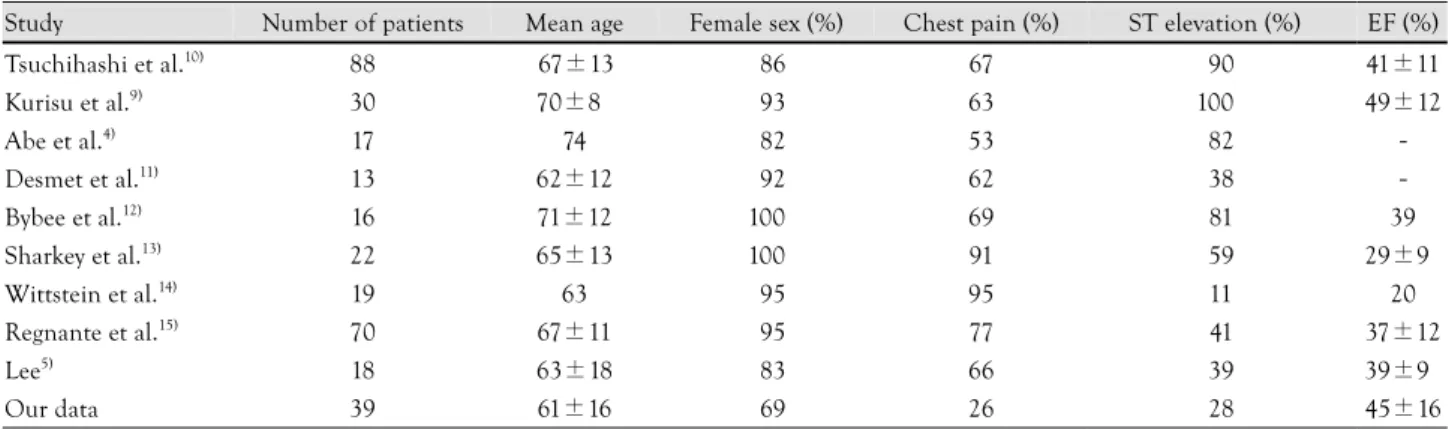
We had different gender-related differences, trigger- ing factors, and initial symptoms than previous studies (Table 4). Postmenopausal females predominate in SCM due to estrogen deficiency after menopause. In animal models, postmenopausal females are more vulnerable to sympathetically mediated myocardial stunning.16) Ovari-
ectomised female rats with estradiol supplementation had significantly less stress-induced ventricular dysfunction, suggesting that estrogen possibly downregulates myocar- dial adrenoreceptors. New animal models propose that estrogen (via immunoreactive estrogen receptors in the central sympathetic neurons) directly attenuates the hy- pothalamo-sympathoadrenal axis, and also gives rise to cardioprotective substances such as atrial natruretic pep- tide, and heat shock protein 70.17)18) We found a lower percentage of women (female 69%) with SCM, and phy- sical stress was more common than emotional stress.
Another SCM study has mostly male patients (65%) and LV apical ballooning developed in a considerable num- ber of patients with severe physical stress who were ad- mitted to the medical intensive care unit.19) Hahn et al.20) also showed that the triggering factors were physical st- ress (69%) rather than emotional stress. Thus, SCM also occurs in men after physical stress, and inflammation (high CRP), leading to the development and poor cli- nical outcome for SCM regardless of gender difference.
Previous studies have reported that chest pain is a more frequent symptom than dyspnea.1)2)20) But, our study showed that dyspnea was more frequent at initial presentation. The patients with dyspnea showed longer
Table 3. The comparison of clinical characteristics between event group and no event group
Variable Event group*(n=15) No event group (n=24) p
Age (year) 54.8±17.5 65.3±14.0 0.046
Hospitalization (day) 22.1±18.5 9.4±6.3 0.020
Symptom to ER arrival time (minute) 507.6±488.1 393.7±418.1 0.569
Initial QTc (msec) 477.4±63.1 532.9±69.5 0.018
Initial BNP (pg/mL) 1103.3±1246.9 517.7±514.6 0.115
Initial CK-MB (ng/mL) 8.8±8.9 7.4±5.4 0.593
Peak CK-MB (ng/mL) 24.1±30.4 9.8±6.6 0.091
Initial TnI (ng/mL) 5.5±11.7 1.8±2.3 0.240
Peak TnI (ng/mL) 12.6±17.5 2.6±2.4 0.045
hs-CRP (mg/L) 76±80 23±35 0.027
Initial EF (%) 34.9±15.5 50.6±13.8 0.003
*Event was defined as combinations of any death or cardiogenic shock. QTc: Q-T interval correted for heart rate, BNP: B-type natriuretic pep- tide, CK-MB: creatinine kinase MB fraction, TnI: Troponin I, f/u: follow up, hs-CRP: highly sensitive C-reactive protein, EF: ejection fraction
Table 4. Clinical characteristics of published data with stress-induced cardiomyopathy
Study Number of patients Mean age Female sex (%) Chest pain (%) ST elevation (%) EF (%)
Tsuchihashi et al.10) 88 67±13 086 67 090 41±11
Kurisu et al.9) 30 70±8 093 63 100 49±12
Abe et al.4) 17 74 082 53 082 -
Desmet et al.11) 13 62±12 092 62 038 -
Bybee et al.12) 16 71±12 100 69 081 39
Sharkey et al.13) 22 65±13 100 91 059 29±9
Wittstein et al.14) 19 63 095 95 011 20
Regnante et al.15) 70 67±11 095 77 041 37±12
Lee5) 18 63±18 083 66 039 39±9
Our data 39 61±16 069 26 028 45±16
EF: ejection fraction
hospitalization than patients with chest pain (18±18 vs.
10±8 days). And dyspnea group showed an elevated BNP level (966±1,118 vs. 779±773 pg/mL), higher hs- CRP level (53±77 vs. 22±29 mg/L) and decreased initial LVEF (42±17 vs. 50±15%), but none significant.
The discrepancy between our data and previous reports is unclear, but could relate to the small sample size and wide range of standard deviation. A further large study is needed to reveal this phenomenon in the future.
We found atypical types of SCM. There are 3 cases of inverted takotsubo type, 4 cases of transient LV outflow obstruction type, and 1 case of apical thrombus (Fig. 2).
Variations in regional wall motion in transient LV api- cal ballooning, transient mid-ventricular ballooning, and other entities involving excess catecholamines relate more to differences in the anatomic location of cardiac adre- nergic receptors, the degree of excess sympathetic activity, or individual differences.21) Transient severe LV dysfunc- tion can cause serious complication such as cerebrovas- cular attack, renal infarct, and peripheral arterial obstruc- tion that originates from an LV apical thrombus. Early evaluation of echocardiogram and anticoagulation ther- apy are important.
Our study is restricted to a single center experience and it cannot represent general characteristics of the Korea population. So, a multicenter prospective study needs to reveal the clinical characteristics and outcomes in Korean patients with SCM.
Conclusions
In our single center experience, the major triggering factor of SCM is physical stress due to medical illness or a procedure. The first manifestation is dyspnea rather than chest pain. Elevated hs-CRP and decreased LVEF at admission were independent risk factors for death or cardiogenic shock in patients with SCM.
REFERENCES
1) Bybee KA, Kara T, Prasad A, et al. Systematic review: transient left ventricular apical ballooning: a syndrome that mimics ST- segment elevation myocardial infarction. Ann Intern Med 2004;
141:858-65.
2) Grawe H, Katoh M, Kuhl HP. Stress cardiomyopathy mimicking acute coronary syndrome: case presentation and review of the literature. Clin Res Cardiol 2006;95:179-85.
3) Dote K, Sato H, Tateishi H, Uchida T, Ishihara M. Myocardial stunning due to simultaneous multivessel coronary spasms: a re- view of 5 cases. J Cardiol 1991;21:203-14.
4) Abe Y, Kondo M, Matsuoka R, Araki M, Dohyama K, Tanio H.
Assessment of clinical features in transient left ventricular apical ballooning. J Am Coll Cardiol 2003;41:737-42.
5) Lee HH, Gwon HC, Kim BJ, et al. Clinical manifestation of novel stress-induced cardiomyopathy mimicking acute myocardial infarction: single center prospective registry. Korean Circ J 2002;
32:1054-63.
6) Chang KY, Jeon HK, Chae JS, et al. A novel cardiomyopathy mi- micking acute myocardial infarction. Korean Circ J 2002;32:608- 12.
7) Morel O, Sauer F, Imperiale A, et al. Importance of inflammation and neurohumoral activation in Takotsubo cardiomyopathy. J Card Fail 2009;15:206-13.
8) Zelinka T, Petrak O, Strauch B, et al. Elevated inflammatory mar- kers in pheochromocytoma compared to other forms of hyperten- sion. Neuroimmunomodulation 2007;14:57-64.
9) Kurisu S, Sato H, Kawagoe T, et al. Tako-tsubo-like left ventricular dysfunction with ST segment elevation: a novel cardiac syndrome mimicking acute myocardial infarction. Am Heart J 2002;143:
448-55.
10) Tsuchihashi K, Ueshima K, Uchida T, et al. Transient left ventri- cular apical ballooning without coronary artery stenosis: a novel heart syndrome mimicking acute myocardial infarction. J Am Coll Cardiol 2001;38:11-8.
11) Desmet WJ, Adriaenssens BF, Dens JA. Apical ballooning of the left ventricle: first series in white patients. Heart 2003;89;1027-31.
12) Bybee KA, Prasad A, Barsness GW, et al. Clinical characteris- tics and thrombolysis in myocardial infarction frame counts in women with transient left ventricular apical ballooning syndrome.
Am J Cardiol 2004;94:343-6.
A B
Fig. 2. A case of inverted stress-induced cardiomyopathy {systolic (A) and diastolic (B) phase}. Left ventriculogram (right anterior oblique view) shows hyper-contractility of the basal and apical segments and ballooning of the mid-segments.
13) Sharkey SW, Lesser JR, Zenovich AG, et al. Acute and reversible cardiomyopathy provoked by stress in women from the United States. Circulation 2005;111:472-9.
14) Wittstein IS, Thiemann DR, Lima JA, et al. Neurohumoral fea- tures of myocardial stunning due to sudden emotional stress. N Engl J Med 2005;352:539-48.
15) Regnante RA, Zuzek RW, Weinsier SB, et al. Clinical character- istics and four-year outcomes of patients in the Rhode Island Ta- kotsubo Cardiomyopathy Registry. Am J Cardiol 2009;103:1015-9.
16) Lambert G, Naredi S, Eden E, Rydenhag B, Friberg P. Monoa- mine metabolism and sympathetic nervous activation following subarachnoid haemorrhage: influence of gender and hydroceph- alus. Brain Res Bull 2002;58:77-82.
17) Ueyama T, Hano T, Kasamatsu K, Yamamoto K, Tsuruo Y, Nishio I. Estrogen attenuates the emotional stress-induced cardiac res- ponses in the animal model of Tako-tsubo (Ampulla) cardiomyo-
pathy. J Cardiovasc Pharmacol 2003;42(Suppl 1):S117-9.
18) Ueyama T, Kasamatsu K, Hano T, Tsuruo Y, Ishikura F. Catecho- lamines and estrogen are involved in the pathogenesis of emo- tional stress-induced acute heart attack. Ann N Y Acad Sci 2008;
1148:479-85.
19) Park JH, Kang SJ, Song JK, et al. Left ventricular apical bal- looning due to severe physical stress in patients admitted to the medical ICU. Chest 2005;128:296-302.
20) Hahn JY, Gwon HC, Park SW, et al. The clinical features of tr- ansient left ventricular nonapical ballooning syndrome: com- parison with apical ballooning syndrome. Am Heart J 2007;154:
1166-73.
21) Hurst RT, Askew JW, Reuss CS, et al. Transient midventricular ballooning syndrome: a new variant. J Am Coll Cardiol 2006;48:
579-83.