• 검색 결과가 없습니다.

The Classification and Comparison of Implant Prosthesis according to Types of Retention Part II: Screw-Cement Retained Prosthesis

N/A
N/A
Protected

Academic year: 2021

Share "The Classification and Comparison of Implant Prosthesis according to Types of Retention Part II: Screw-Cement Retained Prosthesis"

Copied!
14
0
0

로드 중.... (전체 텍스트 보기)

전체 글

(1)

Department of Prosthodontics, School of Dentistry, Chosun University, Korea

Abstract

The screw retained implant prosthesis has an advantage of retrievability, but is hard to get passive fit for the multiple implant restorations. To achieve the passive fit of the implant framework for long term prognosis of the implant therapy, several clinical and laboratorial methods have been introduced. Among those methods, The combined type implant prosthe- sis (Screw and cement retained implant prosthesis; SCRP, and Screw and cement prosthesis; SCP) is an excellent treatment modality, which provide advantages of screw retained type and cement retained type such as retrievability and passive fit.

Especially, SCP technique can be used to manage esthetic and to improve stability of occlusion.

Key Words : esthetic, occlusion, passive fit, retrievability, SCP, SCRP (Implantology 2011; 15(1): 58~70)

The Classification and Comparison of Implant Prosthesis according to Types of Retention Part II: Screw-Cement Retained Prosthesis

Chae-Heon Chung, Mee-Kyoung Son

임프란트 보철의 유지형태에 따른 분류 및 비교 Part II: 나사-시멘트 복합 유지형 보철

정재헌, 손미경

조선대학교 치의학전문대학원 보철학교실

(2)

서론

본론

1. 임프란트 보철물의 수동적 적합(passive fit) 에 대한 고찰

Ⅱ I

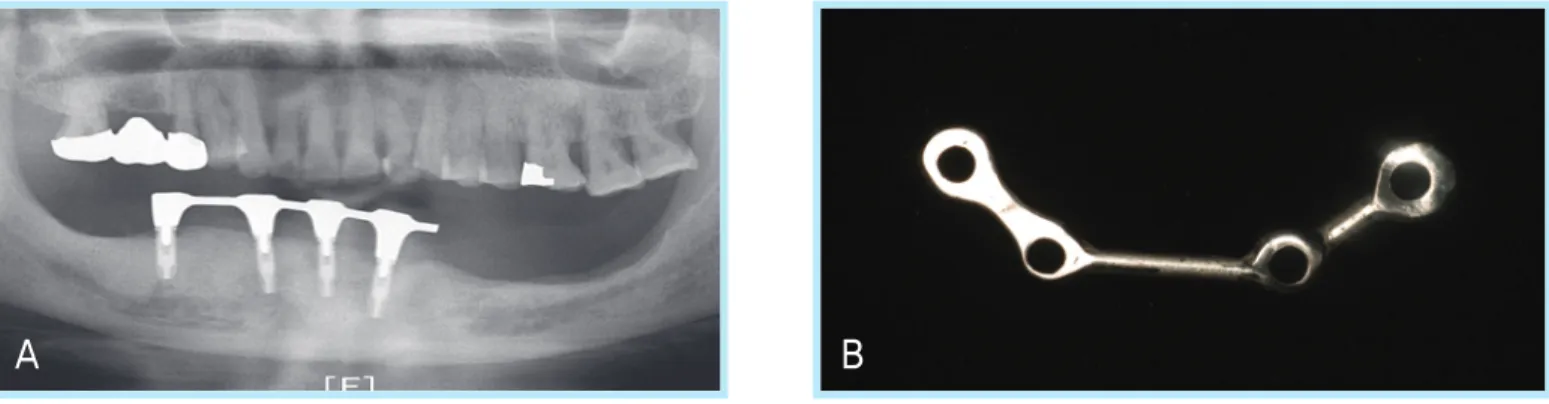
Fig. 1. The gap between implant and bar due to loss of passive fit ((A A)), implant was failed after 5 years ((B B)).

Chae-Heon Chung et al. : The Classification and Comparison of Implant Prosthesis according to Types of Retention Part II: Screw-Cement Retained Prosthesis. Implantology 2011

A B

(3)

Review Articles

2. 수동적 적합을 얻기 위한 방법

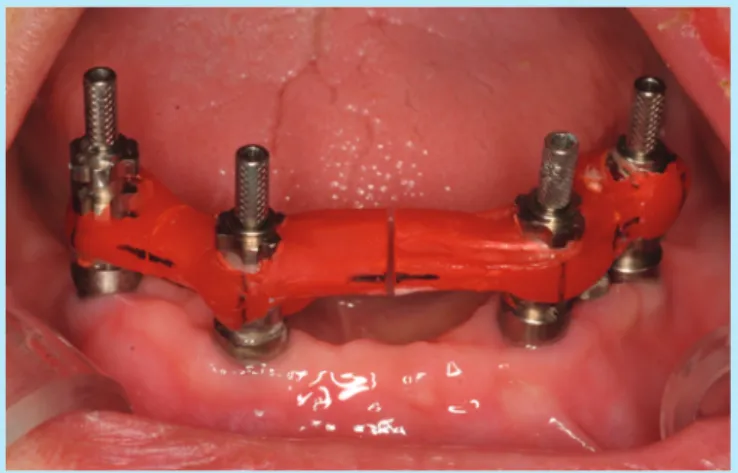
Fig. 2. Pick-up impression coping connected with

Duralay resin.

Chae-Heon Chung et al. : The Classification and Comparison of Implant Prosthesis according to Types of Retention Part II: Screw-Cement Retained Prosthesis.

Implantology 2011

Fig. 3. Check up the abutment position with resin zig on the model ((A A)) and in the mouth ((B B)).

Chae-Heon Chung et al. : The Classification and Comparison of Implant Prosthesis according to Types of Retention Part II: Screw-Cement Retained Prosthesis. Implantology 2011

B

A

(4)

1) Soldering/cast-to procedures

2) Laser welding

3) EDM (electric discharge machining)

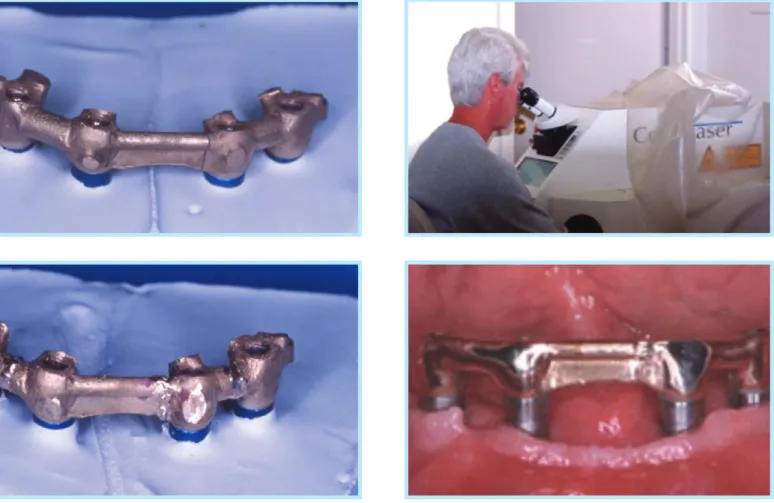
Fig. 4. Framework cutting and soldering.

Chae-Heon Chung et al. : The Classification and Comparison of Implant Prosthesis according to Types of Retention Part II: Screw-Cement Retained Prosthesis. Implantology 2011

(5)

Review Articles

Fig. 5. Framework cutting and laser welding.

Chae-Heon Chung et al. : The Classification and Comparison of Implant Prosthesis according to Types of Retention Part II: Screw-Cement Retained Prosthesis. Implantology 2011

Fig. 6. The mechanism of EMD processing.

Chae-Heon Chung et al. : The Classification and Comparison of Implant Prosthesis according to Types of Retention Part II: Screw-Cement Retained Prosthesis. Implantology 2011

(6)

3. 나사-시멘트 복합 유지형 보철물(SCRP or SCP)

1) 나사-시멘트 유지형 보철물(screw-cement retained prosthesis; SCRP)

(7)

Review Articles

Fig. 7. The principle of Screw-Cement Retained Prostheses (SCRP)

22

.

Chae-Heon Chung et al. : The Classification and Comparison of Implant Prosthesis according to Types of Retention Part II: Screw-Cement Retained Prosthesis.

Implantology 2011

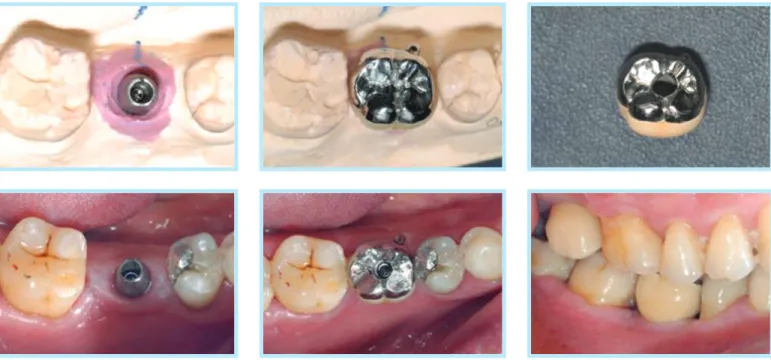
Fig. 8. Single implant restoration using Screw-Cement Retained Prostheses (SCRP)

22

.

Chae-Heon Chung et al. : The Classification and Comparison of Implant Prosthesis according to Types of Retention Part II: Screw-Cement Retained Prosthesis. Implantology 2011

(8)

Fig. 9. Two implant splinted restorations using SCRP concept.

Chae-Heon Chung et al. : The Classification and Comparison of Implant Prosthesis according to Types of Retention Part II: Screw-Cement Retained Prosthesis. Implantology 2011

Fig. 10. Bar retained implant restoration using SCRP concept.

Chae-Heon Chung et al. : The Classification and Comparison of Implant Prosthesis according to Types of Retention Part II: Screw-Cement Retained Prosthesis. Implantology 2011

(9)

Review Articles

2) 나사-시멘트 보철물(screw-cement prosthe-

sis; SCP)

Fig. 11. Diagram of a screw and cement retained implant-supported prosthesis (SCP)

28

.

Chae-Heon Chung et al. : The Classification and Comparison of Implant Prosthesis according to Types of Retention Part II: Screw-Cement Retained Prosthesis.

Implantology 2011

(10)

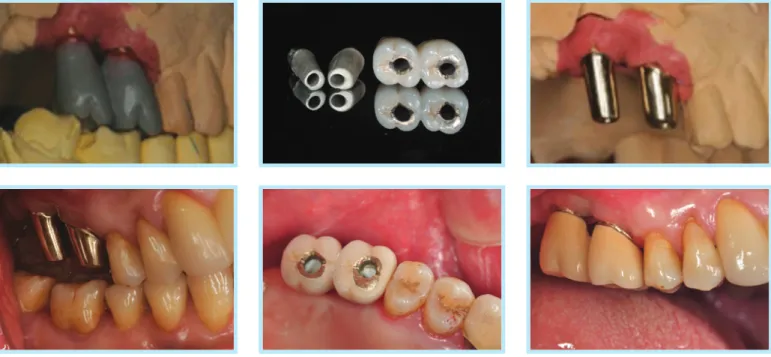
Fig. 12. 6 unit implant restorations using SCP concept.

Chae-Heon Chung et al. : The Classification and Comparison of Implant Prosthesis according to Types of Retention Part II: Screw-Cement Retained Prosthesis. Implantology 2011

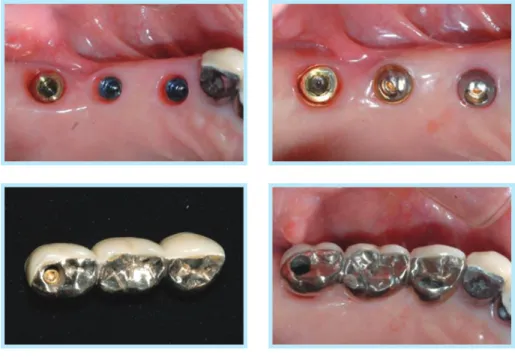
Fig. 13. 3 unit implant restorations using SCP concept.

Chae-Heon Chung et al. : The Classification and Comparison of Implant Prosthesis according to Types of Retention

Part II: Screw-Cement Retained Prosthesis. Implantology 2011

(11)

Review Articles

Fig. 14. Implant restorations using SCP concept to compromise unparalleled implant placement.

Chae-Heon Chung et al. : The Classification and Comparison of Implant Prosthesis according to Types of Retention Part II: Screw-Cement Retained Prosthesis. Implantology 2011

Fig. 15. Anterior implant restorations using SCP concept.

Chae-Heon Chung et al. : The Classification and Comparison of Implant Prosthesis according to Types of Retention Part II: Screw-Cement Retained Prosthesis. Implantology 2011

(12)

결론

참고문헌

1. Gervais MJ, Wilson PR. A rationale for retrievability of fixed, implant- supported prostheses: a complication-based analysis. Int J Prosthodont.

2007; 20: 13-24.

2. Wee AG, Aquilino SA, Schneider RL. Strategies to achieve fit in implant prosthodontics: a review of the literature. Int J Prosthodont.

1999; 12: 167-178.

3. Kallus T, Bessing C. Loose gold screws frequently occur in full-arch fixed prostheses supported by osseointegrated implants after 5 years. Int J Oral Maxillofac Implants. 1994; 9: 169-178.

4. Sones AD. Complications with osseointegrated implants. J Prosthet Dent. 1989; 62: 581-585.

5. Michalakis KX, Hirayama H, Garefis PD. Cement-retained versus screw-retained implant restorations: a critical review. Int J Oral Maxillofac Implants. 2003; 18: 719-728.

6. Jemt T, Book K. Prosthesis misfit and marginal bone loss in edentulous implant patients. Int J Oral Maxillofac Implants. 1996; 11: 620-625.

7. Heckmann SM, Karl M, Wichmann MG, et al. Cement fixation and screw retention: parameters of passive fit. An in vitro study of three-unit implant-supported fixed partial dentures. Clin Oral Implants Res. 2004;

15: 466-473.

8. Taylor TD, Agar JR, Vogiatzi T. Implant prosthodontics: current per- spective and future directions. Int J Oral Maxillofac Implants. 2000; 15:

66-75.

9. Jemt T, Lindén B. Fixed implant-supported prostheses with welded tita- nium frameworks. Int J Periodontics Restorative Dent. 1992; 12: 177-

(13)

Review Articles

184.

10. Linehan AD, Windeler AS. Passive fit of implant-retained prosthetic superstructures improved by electric discharge machining. J Prosthodont. 1994; 3: 88-95.

11. LaBarge KW. Electrical discharge machining. J Dent Technol. 1997;

14: 19-22.

12. Schmitt SM, Chance DA. Fabrication of titanium implant-retained restorations with nontraditional machining techniques. Int J Prosthodont. 1995; 8: 332-336.

13. Van Roekel NB. Electrical discharge machining in dentistry. Int J Prosthodont. 1992; 5: 114-121.

14. Valbao FP Jr, Perez EG, Breda M. Alternative method for retention and removal of cement-retained implant prostheses. J Prosthet Dent. 2001;

86: 181-183.

15. Rajan M, Gunaseelan R. Fabrication of a cement- and screw-retained implant prosthesis. J Prosthet Dent. 2004; 92: 578-580.

16. Uludag B, Ozturk O, Celik G, et al. Fabrication of a retrievable cement- and screw-retained implant-supported zirconium fixed partial denture: a case report. J Oral Implantol. 2008; 34: 59-62.

17. Takeshita F, Suetsugu T, Asai Y, et al. Various designs of ceramometal crown for implant restorations. Quintessence Int. 1997; 28: 117-120.

18. Clausen GF. The lingual locking screw for implant-retained restora- tions--aesthetics and retrievability. Aust Prosthodont J. 1995; 9: 17-20.

19. Clelland NL, Carr AB, Gilat A. Comparison of strains transferred to a bone simulant between as-cast and post soldered implant frameworks for a five-implant-supported fixed prosthesis. J Prosthodont. 1996; 5:

193-200.

20. Aparicio C. A new method for achieving passive fit of an interim restoration supported by Brånemark implants: a technical note. Int J Oral Maxillofac Implants. 1995; 10: 614-618.

21. Randi AP, Hsu AT, Verga A, et al. Dimensional accuracy and retentive strength of a retrievable cement-retained implant-supported prosthesis.

Int J Oral Maxillofac Implants. 2001; 16: 547-556.

22. Heo YK. A new approach of implant prosthesis: theory and practice of screw-cement retained prostheses system. The Journal of Implant Dentistry. 2002; 2: 35-48.

23. Pauletto N, Lahiffe BJ, Walton JN. Complications associated with excess cement around crowns on osseointegrated implants: a clinical report. Int J Oral Maxillofac Implants. 1999; 14: 865-868.

24. Agar JR, Cameron SM, Hughbanks JC, et al. Cement removal from restorations luted to titanium abutments with simulated subgingival margins. J Prosthet Dent. 1997; 78: 43-47.

25. Quirynen M, van der Mei HC, Bollen CM, et al. An in vivo study of the influence of the surface roughness of implants on the microbiology of supra- and subgingival plaque. J Dent Res. 1993; 72: 1304-1309.

26. Preiskel HW, Tsolka P. Telescopic prostheses for implants. Int J Oral Maxillofac Implants. 1998; 13: 352-357.

27. Preiskel HW, Tsolka P. The DIA anatomic abutment system and tele- scopic prostheses: a clinical report. Int J Oral Maxillofac Implants.

1997; 12: 628-633.

28. Preiskel HW, Tsolka P. Cement- and screw-retained implant-supported prostheses: up to 10 years of follow-up of a new design. Int J Oral Maxillofac Implants. 2004; 19: 87-91.

29. Lindström H, Preiskel H. The implant-supported telescopic prosthesis: a biomechanical analysis. Int J Oral Maxillofac Implants. 2001; 16: 34- 42.

30. Kim SG, Park JU, Jeong JH, et al. In vitro evaluation of reverse torque

value of abutment screw and marginal opening in a screw- and cement-

retained implant fixed partial denture design. Int J Oral Maxillofac

Implants. 2009; 24: 1061-1067.

(14)

수치

Fig. 1.  The gap between implant and bar due to loss of passive fit ((A A)), implant was failed after 5 years ((B B))
Fig. 3.  Check up the abutment position with resin zig on the model ((A A)) and in the mouth ((B B))
Fig. 4.  Framework cutting and soldering.
Fig. 5.  Framework cutting and laser welding.
+5

참조

관련 문서

Secondly, effective clinical treatment methods during the fabrication of cement-retained implant fixed prostheses should use customized abutments with properly controlled

A modified technique for extraoral cementation of implant retained restorations for preventing excess cement around the margins..

This study evaluated the effectiveness of various methods for removing provisional cement from implant abutments, and what effect these methods have on the retention of

Osstem 임플란트 시 스템에서는 시멘트 유지형부분에서 Transfer Abutment (Osstem Implant, Seoul, Korea)를 기성 티타늄 지대주로서 사용하였고 나사 유지형

The purpose of this in vitro study was to compare the fracture strength between the cement-retained implant-supported metal-ceramic crowns and the indirect composite resin-

Purpose: The purpose of this study is to evaluate the effect of two different oblique mechanical loading to occlusal surfaces of cement retained implant on the stress

This clinical report presents the reconstruction of a maxillary arch with a cement retained implant supported fixed prosthesis using a Pd-Ag alloy generated by CAD/CAM system