• 검색 결과가 없습니다.

Indolent Metastatic Squamous Cell Carcinoma of Unknown Primary in the Intrathoracic Lymph Node: A Case Report and Review of the Literatures

N/A
N/A
Protected

Academic year: 2021

Share "Indolent Metastatic Squamous Cell Carcinoma of Unknown Primary in the Intrathoracic Lymph Node: A Case Report and Review of the Literatures"

Copied!
4
0
0

로드 중.... (전체 텍스트 보기)

전체 글

(1)

Indolent Metastatic Squamous Cell

Carcinoma of Unknown Primary in the Intrathoracic Lymph Node: A Case Report and Review of the Literatures

Min Jin Kim, M.D., Sang Hyok Lim, M.D., Su Jung Han, M.D., Kang Hyug Choi, M.D., Sun Hyo Lee, M.D., Min Woo Park, M.D., HyeRan Kang, M.D. and Ju Ock Na, M.D., Ph.D.

Department of Internal Medicine, Soonchunhyang University College of Medicine, Cheonan, Korea

Metastatic squamous cell carcinoma from a cancer of unknown primary (CUP) affecting the intrathoracic lymph node is very rare. We reported a case of metastatic squamous cell carcinoma in the hilar and interlobar lymph node from a patient with CUP and reviewed the associated literature. Abnormal mass in the right hilar area was incidentally detected.

A chest computed tomography scan showed a 2.5-cm diameter mass in the right hilum that had changed little in size for 3 years. The patient underwent a right pneumonectomy and mediastinal lymph node dissection. A metastatic squamous cell carcinoma in the hilar and interlobar lymph nodes without a primary lung or other lesion was diagnosed. The patient received adjuvant chemotherapy for a diagnosis of T0N1M0 lung cancer.

Keywords: Neoplams, Unknown Primary; Carcinoma, Squamous Cell

present with only a single site of involvement

4

. Lymph node is one of the most common site of metastasis, followed by the liver, lung, and bone

5

. But metastases into mediastinal or hilar lymph nodes in patients with CUP are rare and have been reported in a few literatures

6-12

. Since only 5% of patients with CUP are squamous cell carcinomas

13

, a metastatic squamous cell carcinoma of mediastinal or hilar lymph node from a CUP is even rarer and have been seldomly reported

6-8,10-12

. We re- port a quite rare case of metastatic squamous cell carcinoma from a CUP in the hilar and interlobar lymph node that had a very indolent clinical course during 3 years. A review of the as- sociated literatures is also presented.

Case Report

A 59-year-old Korean man had a medical examination for healthy check-up in December of 2012. An abnormal mass- like lesion in the right hilum was incidentally detected on chest X-ray without any symptom. He was referred to our cen- ter for further evaluation.

The patient has hypertension, diabetes mellitus and a his- tory of angina. He visited the division of cardiology of our hos- Copyright © 2015

The Korean Academy of Tuberculosis and Respiratory Diseases.

All rights reserved.

Introduction

Cancers of unknown primary (CUP) occur approximately in 3% to 5% of all cancer

1,2

. General characteristics of CUPs consist of early dissemination, unpredictable metastatic pat- tern and aggressiveness

2,3

. More than 50% of patients with CUP have metastasis affecting multiple sites and the rest

CASE REPORT

http://dx.doi.org/10.4046/trd.2015.78.1.23

ISSN: 1738-3536(Print)/2005-6184(Online) • Tuberc Respir Dis 2015;78:23-26

23

Address for correspondence: Ju Ock Na, M.D., Ph.D.

Department of Internal Medicine, Soonchunhyang University College of Medicine, 31 Soonchunhyang 6gil, Dongnam-gu, Cheonan 330-721, Korea

Phone: 82-41-570-3892, Fax: 82-41-574-5762 E-mail: [email protected]

Received: Aug. 4, 2014 Revised: Sep. 17, 2014 Accepted: Sep. 22, 2014

cc
It is identical to the Creative Commons Attribution Non-Commercial

License (http://creativecommons.org/licenses/by-nc/3.0/).

(2)

MJ Kim et al.

24 Tuberc Respir Dis 2015;78:23-26 www.e-trd.org

pital in March of 2010, and was diagnosed with angina and hy- pertension. A cardiac angio computed tomography (CT) scan performed at that time detected a 2.5-cm diameter, minimally enhanced mass in the right hilar area (Figure 1A). Since then, he failed to return and was lost to follow up. The patient had a 40 pack-year cigarette smoking history and a family history of stomach cancer. On this admission, the physical examination was unremarkable. The blood examination showed eosino- philia (eosinophil 18.5%, 1,750/µL) and the rest of the labora- tory tests including serum tumor markers (carcinoembryonic antigen, cancer antigen 19-9, alpha-fetoprotein, and prostate specific antigen), viral markers (hepatitis virus and human im- munodeficiency virus), and autoimmune antibody titers were all within normal range. Examination for parasites was also negative.

A chest CT scan showed a 2.5-cm diameter mass in the right hilum that changed little in terms of size since 2010 (Figure 1B). A primary lesion was not found in the lung parenchyma.

The torso fluorodeoxyglucose (FDG) positron emission to-

mography identified an abnormal FDG uptake in this right hilar mass, but no other pathologic hypermetabolic lesion was seen that may indicate a primary site. Bronchoscopy re- vealed mild bronchial wall thickening at the right upper lobe and right middle lobe opening but no endobronchial lesion was present. A biopsy of the bronchial wall thickening was done and histologic examination showed chronic nonspecific inflammation with squamous metaplasia. No abnormal find- ing was seen on the cytologic exam in the bronchial washing specimen. Endobronchial ultrasound guided transbronchial needle aspiration from the right hilar mass was performed.

Atypical cells, favor malignancy, was seen in the aspiration cy- tology. Endoscopy for gastrointestinal tract and head and neck examination also failed to disclose a primary site of cancer.

Right pneumonectomy and mediastinal lymph node dis- section were done. Grossly, several enlarged lymph nodes were found in the hilar and interlobar areas (Figure 2). On se- rial gross section of the lung, there was no abnormal lesion at bronchial tree and lung parenchyma except multiple lymph

Figure 1. Chest computed tomography (CT) scan in December of 2012 (B) showed a 2.5-cm diameter hilar mass that was little changed, as compared to the cardiac angio CT scan in March of 2010 (A).

Figure 2. Grossly, several enlarged lymph nodes (arrows) were found in the hilar and interlobar area.

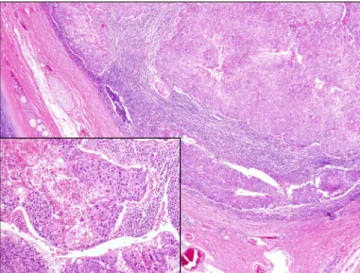
Figure 3. Microscopic finding showed metastatic squamous cell

carcinoma to the lymph nodes (H&E stain, ×40; insert image: H&E

stain, ×200).

(3)

Squamous cell carcinoma of unknown primary in the intrathoracic lymph node

http://dx.doi.org/10.4046/trd.2015.78.1.23 25

www.e-trd.org

nodes enlargement. Entire bronchus and peribronchial tissue were embedded and evaluated. Microscopically, metastatic squamous cell carcinoma was found at several lymph nodes (8/45) and there was no tumor in the lung parenchyma and bronchial tree (Figure 3). Although the tumor was very close to the main bronchus, there was no evidence of bronchial in- vasion microscopically by tumor. The patient was diagnosed with T0N1M0 lung cancer and has received four cycles of adjuvant chemotherapy with cisplatin and vinorelbine. He has been observed at outpatient clinic after treatment without any evidence of recurrence so far.

Discussion

CUP is defined as histologically confirmed metastatic can- cers whose primary site cannot be identified by standardized diagnostic evaluation at the time of diagnosis

14

. CUP accounts for about 3% to 5% of all malignancies

1,2

. Involvement of lymph nodes in the cervical, supraclavicular, and axillary re- gions with CUP is common, but involvement of intrathoracic lymph nodes such as those in the mediastinal and hilar areas accounted for only 4.2% of lymph node metastases

4,15

.

CUP is sorted into five major subtypes by microscopic ex- amination. Well or moderately differentiated adenocarcinoma is the most common (60%) histologic subtype, followed by poorly differentiated carcinoma (29%), poorly differentiated malignant neoplasm (5%), squamous cell carcinoma (5%), and neuroendocrine tumor (1%)

13,14

. Within nodal metastasis range, adenocarcinoma is the dominant subtype expectably except that squamous cell carcinoma is most common in lymph node of head and neck lesion

15

. Only 12.5%–14.3%

of squamous cell carcinoma involve to intrathoracic lymph node, just 4.2% of lymph node metastases with CUP

11,15

.

Albeit CUP is a heterogeneous group of metastatic malig- nancy, the majority of patients with CUP present with an ag- gressive clinical course and poor prognosis with a median sur- vival of 3–9 months and a 12-month survival rate of 24%

2,14,15

. The gloomy prognosis is caused by CUP’s tendency towards early dissemination, with unpredictable metastatic pattern and aggressiveness

2,3

. But some subsets of CUP present with a favorable prognosis

2,3

. Lymph node involvement only is one of the subset with good prognosis

15

. Median survival of single lymph node involvement was 14 months and a 12-month survival rate of 53%. Metastatic squamous cell carcinoma involving the intrathoracic lymph node, like in this case, has a median survival of 16 months and 12-month survival rate of 71%

15

.

Treatment of CUP should be individualized after consider- ing the clinical information, pathology, involved organ, and other prognostic factors

2,14

. Generally, intrathoracic lymph node with carcinoma from a CUP is regarded as coming from an occult primary non-small cell lung cancer

11

. The hypoth-

Ta ble 1. C as es of m et as ta tic s quam ous c ell c ar cin om a of in tr ath or ac ic l ym p h n ode fr om a CUP Stu dy Sex/A ge (yr) L oc ation Sm ok in g his tor y H is tolo gy O p er ation A djuv an t th er ap y Follow-up (m o) St atu s M orita et al.

6

M/56 Middle me di as tinum (N2) 26PY SCC Right lower lob ect om y LN r ese ction N one 20 N o r ec urr ence Yo dona w a et al.

7

F/65 Right me di as tinum (N2) U nknown SCC LN r ese ction RT x 12 N o r ec urr ence Bl anco et al.

8

M/56 Sub carina (N2) 50PY SCC LN r ese ction R Tx +C Tx U nknown U nder tr eatment Sak ur ab a et al.

9

M/63 Right hilum (N1) U nknown SCC LN r ese ction N one 43 D eath, S C C on R UL 34 mo aft er LN r ese ction K anek o et al.

10

M/63 Right hilum (N1) U nknown SCC Right pneumone ct om y me di as tinal LN dis se ction N one 76 N o r ec urr ence Riquet et al.

11

U nknown Right hilum (N1) H ea vy smok er SCC Right upp er lob ect om y R Tx +C Tx 8 D eath, vert ebr al metas tas is Tomita et al.

12

M/56 Left hilum (N1) 35PY SCC LN r ese ction N one 32 N o r ec urr ence C UP : c ancer of unknown primar y; PY : p ac k-ye ar ; S C C : squamous cell c ar cinoma ; LN: l ymph no de; R T x: r adiother apy; C T x: c hemother apy; R UL : right upp er lob e.

(4)

MJ Kim et al.

26 Tuberc Respir Dis 2015;78:23-26 www.e-trd.org

esis that the primary site of a metastasis into the intrathoracic lymph node from a CUP is of pulmonary origin, is supported by some evidence. First, the lymphatic drainage of the lung passes through the hilar and mediastinal lymph nodes.

These lymph nodes are commonly the first lymph nodes involved in lung cancer metastasis

11

. Second, most patients with metastatic involvement of the intrathoracic lymph node from a CUP had heavy smoking history, a major risk factor for developing lung cancer

11

. Because of the above reasons, in- trathoracic lymph node with metastasis form a CUP are diag- nosed and treated as T0N1M0 or T0N2M0 lung cancer

6-8,10,12

.

A few cases of metastatic squamous cell carcinoma of the intrathoracic lymph node from a CUP have been reported. Re- ported cases included patients having N1 to N2 lymph node status and all underwent operation (Table 1). The reported cases showed favorable prognosis after complete surgical re- section regardless of adjuvant therapy. The patient in this case had a relatively indolent clinical course with the right hilar mass barely changed after 3 years. He had an operation and then received adjuvant chemotherapy. Like the previously reported cases, a favorable prognosis is also expected in this patient.

Metastatic squamous cell carcinoma in the intrathoracic lymph node from a CUP is a very rare subset of CUP. So the best treatment and management for this scarce subset of CUP has not been established, although some literatures have provided information and guidance for physicians caring for patients with CUP. There have been cases of CUP that had complete surgical resection and survived long after the op- eration. Therefore, surgery is deemed as one of the preferred treatment option for this rare subset of CUP. We reported this rare case and reviewed the associated literatures to help phy- sicians in choosing the best treatment option for these rare cases.

Conflicts of Interest

No potential conflict of interest relevant to this article was reported.

References

1. Muir C. Cancer of unknown primary site. Cancer 1995;75(1 Suppl):353-6.

2. Pavlidis N, Fizazi K. Carcinoma of unknown primary (CUP).

Crit Rev Oncol Hematol 2009;69:271-8.

3. Pavlidis N. Cancer of unknown primary: biological and clini- cal characteristics. Ann Oncol 2003;14 Suppl 3:iii11-8.

4. Hess KR, Abbruzzese MC, Lenzi R, Raber MN, Abbruzzese JL.

Classification and regression tree analysis of 1000 consecu- tive patients with unknown primary carcinoma. Clin Cancer Res 1999;5:3403-10.

5. Briasoulis E, Pavlidis N. Cancer of unknown primary origin.

Oncologist 1997;2:142-52.

6. Morita Y, Yamagishi M, Shijubo N, Nakata H, Kurihara M, Asakawa M. Squamous cell carcinoma of unknown origin in middle mediastinum. Respiration 1992;59:344-6.

7. Yodonawa S, Mitsui K, Akaogi E, Onizuka M, Ishikawa S, Kinoshita T, et al. Squamous cell carcinoma of unknown ori- gin affecting mediastinal lymph nodes. Nihon Kyobu Shikkan Gakkai Zasshi 1996;34:1364-8.

8. Blanco N, Kirgan DM, Little AG. Metastatic squamous cell carcinoma of the mediastinum with unknown primary tu- mor. Chest 1998;114:938-40.

9. Sakuraba M, Mae M, Oonuki T, Nitta S. Mediastinal and hilar lymph node of cancer unknown origin: 3 case reports. Nihon Kokyuki Gakkai Zasshi 1999;37:72-7.

10. Kaneko K, Yamanda T, Han’uda M, Miyazawa M, Hanaoka T, Kondo R, et al. Metastatic squamous cell carcinoma of hilar lymph node with unknown primary site. Nihon Kokyuki Gak- kai Zasshi 2000;38:39-44.

11. Riquet M, Badoual C, le Pimpec BF, Dujon A, Danel C. Meta- static thoracic lymph node carcinoma with unknown pri- mary site. Ann Thorac Surg 2003;75:244-9.

12. Tomita M, Matsuzaki Y, Shimizu T, Hara M, Ayabe T, Enomoto Y, et al. Squamous cell carcinoma of the hilar lymph node with unknown primary tumor: a case report. Ann Thorac Cardiovasc Surg 2008;14:242-5.

13. Hainsworth JD, Greco FA. Treatment of patients with cancer of an unknown primary site. N Engl J Med 1993;329:257-63.

14. Fizazi K, Greco FA, Pavlidis N, Pentheroudakis G; ESMO Guidelines Working Group. Cancers of unknown primary site: ESMO Clinical Practice Guidelines for diagnosis, treat- ment and follow-up. Ann Oncol 2011;22 Suppl 6:vi64-8.

15. Hemminki K, Bevier M, Hemminki A, Sundquist J. Survival in

cancer of unknown primary site: population-based analysis

by site and histology. Ann Oncol 2012;23:1854-63.

수치

Figure 2. Grossly, several enlarged lymph nodes (arrows) were  found in the hilar and interlobar area.
Table 1. Cases of metastatic squamous cell carcinoma of intrathoracic lymph node from a CUP StudySex/Age  (yr)LocationSmoking historyHistologyOperationAdjuvanttherapyFollow-up (mo)Status Morita et al.6M/56Middle mediastinum  (N2)26PYSCCRight lower lobectom

참조

관련 문서

Base on the unenhanced and enhanced CT scan, the cervical mass, which we believed to be originated from left medial retropharyngeal lymph node, was enlarged.. In addition,

Primary intra- osseous squamous cell carcinoma arising in an odontogenic cyst: a clinicopathologic analysis of 116 reported cases... of odontogenic tumors, jaw

Key words: Oral squamous cell carcinoma, Lymph node metastasis, Metastasis-related factors, Mouth

8 reported that the most common metastatic skin cancer from the lung is squamous cell carcinoma, which occurs in 44% and 71% of cases.. However, in other countries, the most

Bhatlawande et al: Role of immunoreactive patterns of lymph nodes in neck dissection cases of oral squamous cell carcinoma: a clinical and histopathological study.. Bhatlawande et

The left renal tumor was misdiagnosed as a renal abscess but finally diagnosed as squamous cell carcinoma metastasized from the intrahepatic bile duct.. The patient expired because

Here, we report an experience of solitary paraaortic lymph node metastasis from hepatocellular carcinoma which was misdiagnosed as primary retroperitoneal tumor by preoperative

We report a case of bronchogenic squamous cell carcinoma associated with Swyer-James syndrome that performed right upper lobectomy and lymph node dissection with a relevant