* Corresponding author : Hyowon Lee, Korea National Open University, Seoul 03087, Korea, Tel: +82-2-2652-2810, Fax: +82-2-3679-2381, E-mail: [email protected]
Research Article
근적외선 분광법을 이용한 산지방목지 목초시료 화학적 성분 분석에 관한 연구
박형수
1, 이효진
2, 이효원
3*, 고한종
3, 정종성
11
국립축산과학원 초지사료과,
2GEOMEXSOFT,
3한국방송통신대학교
Studies on Predicting Chemical Composition of Permanent Pastures in Hilly Grazing Area Using Near-Infrared Spectroscopy
Hyung-Soo Park
1, Hyo-Jin Lee
2, Hyo-won Lee
3*,Han-Jong Ko
3and Jong-Sung Jeong
11
Grassland & Forage Division, National Institute of Animal Science, Cheonan 31000, Korea
2
GEOMEXSOFT., Ltd, Chunchen 07238, Korea
3
Department of Agriculture, Korea National Open University, Seoul 03087, Korea
ABSTRACT
This study was conducted to find out an alternative way of rapid and accurate analysis of chemical composition of permanent pastures in hilly grazing area. Near reflectance infrared spectroscopy (NIRS) was used to evaluate the potential for predicting proximate analysis of permanent pastures in a vegetative stage. 386 pasture samples obtained from hilly grazing area in 2015 and 2016 were scanned for their visible–NIR spectra from 400~2,400nm. 163 samples with different spectral characteristics were selected and analysed for moisture, crude protein (CP), crude ash (CA), acid detergent fiber (ADF) and neutral detergent fiber (NDF).
Multiple linear regression was used with wet analysis data and spectra for developing the calibration and validation mode1.
Wavelength of 400 to 2500nm and near infrared range with different critical T outlier value 2.5 and 1.5 were used for developing the most suitable equation. The important index in this experiment was SEC and SEP. The R2 value for moisture, CP, CA, CF, Ash, ADF, NDF in calibration set was 0.86, 0.94, 0.91, 0.88, 0.48 and 0.93, respectively. The value in validation set was 0.66, 0.86, 0.83, 0.71, 0.35 and 0.88, respectively. The results of this experiment indicate that NIRS is a reliable analytical method to assess forage quality for CP, CF, NDF except ADF and moisture in permanent pastures when proper samples incorporated into the equation development.
(Key words : Chemical composition, Hilly grazing area, NIRS, Permanent pastures)
Ⅰ. 서 론
최근 수십 년 동안 조사료의 자급도를 향상시키기 위해 답 리작 자급 조사료 생산정책을 펼쳐왔으나 품질에 대한 양축 농가의 불신이 널리 팽배하였고 이를 해소하기 위하여 국가 단위 조사료 품질평가 체계를 구축하여 왔다 . 그 핵심은 근적 외선분광법 (NIRS, Near Infrared Reflectance Spectroscopy)을 이용한 것으로 그간의 연구는 주로 답리작 재배된 보리나, 보 리와 이탈리안 라이그라스를 혼파한 곤포용 사초였다.
근적외선분광법은 유기물의 관능기인 O-H, N-H, C-H 등 의 신축진동 , 변각진동 등 광에너지 흡수에 따른 각 분자간의 진동에너지 변화를 근거로 스펙트럼을 분석하여 유기물질의 성분을 예측한다(Kim, 1996). Norris(1976)는 NIRS가 북방형
및 남방형 다년생 사초의 사료가치 평가를 신속, 정확, 정밀 하게 그리고 비파괴적인 방법으로 이용할 수 있다고 하였다.
NIRS로 화이트 클로버의 화학적 조성분석이 검증된 바 있다 (Bernado, 1997).
NIRS를 이용한 분석에서는 추정하려는 시료가 같은 모집
단에서 선발되어야 하고 습식분석치의 정확도가 높아야하며
분석한 시료를 측정하여 사용해야 하며 추정될 각 매개변수
를 NIR 데이터에 적절히 적용되어야 한다(Shenk et. al.,
1981). 일본에서는 조사료의 성분분석과 영양가추정법 그리
고 건초와 목초사일리지의 TDN 추정에 NIR이 사용되었고
(Amari et. al., 1987), Asal and Taguchi(2002)은 다초종 그리
고 제조법이 다른 화본과 목초의 검량식 작성에 관한 연구를
통해 각 성분마다 각기 다른 파장을 채용하여 수분은
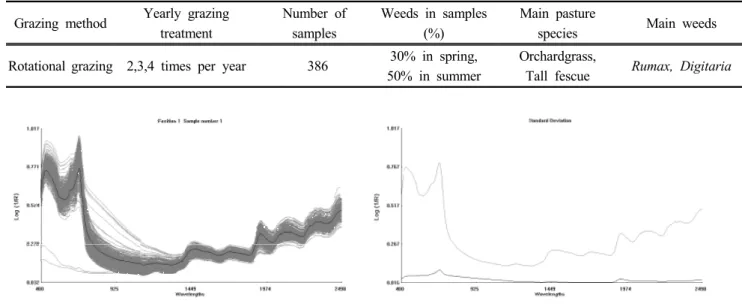
Table 1. Sample collection and characteristics Grazing method Yearly grazing
treatment
Number of samples
Weeds in samples (%)
Main pasture
species Main weeds Rotational grazing 2,3,4 times per year 386 30% in spring,
50% in summer
Orchardgrass,
Tall fescue Rumax, Digitaria
Fig. 1. Spectral data from 386 vegetation samples.
1,445nm와 1,940nm, 조단백질은 1,734nm와 2,180nm, 조지방 은 2,310nm 등을 적용하여 결정계수(R²)는 조단백이 가장 높 은 0.98을, 조회분은 가장 낮은 0.75를 나타내었고 기타는 그 중간의 값을 나타낸다고 하였다 . Xu et al.(2007) 등은 근적외 분광법을 무분쇄 볏짚의 사료성분추정이 가능하였다고 보고 한 바 있다 . 근적외분광법을 이용한 사료화학성분 추정은 주 로 사일리지에서 많이 이루어졌는데 Ibanez and Alomar (2009)는 목초사일리지의 성분추정을 위하여 목초시료의 반 추위 분해물 중에서의 조단백질과 NDF를 R값이 0.99와 0.98 을 나타냈으나 , 검증 값은 0.83와 0.82를 나타냈다고 하였다.
국내에서는 Lee et al.(1996)에 의해 이탈리안 라이그라스 를 재료로 실험되어 , ADF와 NDF의 RSQ 값이 0.97로 NIRS 에 의한 성분추정이 가능함을 입증한 바 있다 . 그 후, Lee and Park(2001)은 볏짚의 CP, CF, NDF 그리고 ADF에 대한 검량 식을 작성하고 , 이의 실용성 여부를 보고하였다. 사일리지용 옥수수에서 NIRS의 이용 가능성을 타진하여, 사일리지용 옥 수수 196점으로 DM, NDF, ADF, ADL 및 CP에서 RSQ의 값 이 0.84, 0.94, 0.91, 0.87 그리고 0.95가 되었다고 발표하였다 (Park et al., 2006). TMR 사료 분석에서도 이 방법의 유용성 이 검증되었는데 , RSQ 값은 조단백 0.84, 조지방 0.94, TDN 0.94이라 보고하였다(Lee et al., 2003). 기타로 퇴비(Ko et al., 2001), 음식물 쓰레기 퇴비(Lee and Kil, 2005)에 대한 연구결 과도 보고된 바 있다 . 그리고 Lee et al.(2014)는 근적외선 분 광분석법을 이용한 두과청예의 단백질 3분획분의 추정가능 성을 확인한 바 있다 . 그리고 답리작 총체사일리지에 대한 NIRS 연구가 실시되어 왔다(Park et al., 2012, ; Park et al.,
2013; Park et al., 2014; Park et al., 2015; Park et al., 2016).
그러나 국내의 조사료 평가를 위한 근적외선분광법은 주로 답리작 사료작물에 집중되어 있고 목초와 잡초가 혼합되고 가축의 방목에 영향을 받는 방목초지에서 생산된 목초를 시 료로 사용한 근적외선분광법의 실용성 연구는 없었다 . 따라 서 본 연구는 2년간 방목초지시험에서 생산된 시료를 대상으 로 목초성분분석의 근적외선분광법의 적용가능성을 타진하 였다.
Ⅱ. 재료 및 방법 1. 시료수집
본 실험에 사용된 시료는 충남 서산시 소재 한우개량사업 소의 산지초지에서 채취한 것으로 연 2, 3, 4회 방목처리한 시험구에서 방목축의 입식 전에 채취한 것을 사용하였다 . 구 성초종은 목초로 오처드그라스 , 톨페스큐가 주 초종이며 두 과로 라디노클로버와 알팔파 등도 소량 혼합되었다. 잡초는 화본과로 바랭이와 새 그리고 애기수영, 소리쟁이 등이 혼재 하며 봄철은 약 30%의 잡초 그리고 여름철 및 가을철은 50%
이상의 잡초가 우점된 초지에서 생산된 시료를 사용하였다 .
방목처리는 년 4회, 3회 그리고 2회를 처리하였으며 방목 전
시료를 지상 5cm 높이에서 채취하여 분쇄 후 습식분석 및 파
장수집에 사용하였다.
Table 2. Summary of chemical values (% composition) used for spectroscopic calibration.
Moisture CP CF Crude ash ADF NDF
Minimum 0.51 7.25 10.52 3.49 21.22 33.93
Maximum 11.59 26.40 40.37 16.73 53.00 81.11
Mean 6.46 16.13 26.09 10.23 33.78 60.04
Std. Deviation 1.94 4.35 5.33 2.75 6.17 7.97
Total Values 163 163 163 163 163 163
2. 파장수집
식물체는 71℃에서 3일간 건조기에서 건조하여 1~2mm 크 기로 분쇄하였고, 시료는 가로 6.4cm, 세로 5.1cm인 각형 시 료컵에 충진하여 근적외선 분광기 (NIRSystems 6,500, Silver Springs, MD, USA)로 측정하였다. 파장의 측정은 근적외영역 (400~2,500m)에서 2nm간격으로 실시하였다. 각 스캔마다 32 회의 촬영이 진행되면서 동시에 같은 회수의 세라믹 참고 반 사 값을 반영한 후 흡광도(log 1/R: absorbance)로 변환시켜 수집하였다 . 파장수집, 수정 그리고 검량식은 WINISI Ⅱ Ver.
1.04를 사용하였다.
3. 시료 화학적 분석
총 386점 시료에 대한 파장을 얻고 이중 파장이 같은 것을 제외한 163점을 습식 분석하여 사용하였다. 시료의 화학적 조성분중에서 조단백질 함량은 AOAC(1990)법에 의거하여 Kjeldahl법(Kjeltec TM 2400 Autosampler System)을 이용하고 분석하였고 NDF 및 ADF 함량은 Goering 및 Van Soest(1970) 법에서 사용되어지는 시약을 이용하여 Ankom fiber analyzer (Ankom technology, USA)로 분석하였다. 수분은 105℃ 건조 기에서 3시간 건조 후 평량하여 구하였다.
4. 파장분석과 검량식 작성
전체 파장에 대하여 주 흡수밴드를 발견하기 위한 표준편 차와 평균을 구하였다 . 시료에 대한 파장변이와 이러한 패턴 값을 통하여 관련된 흡수부위를 구하기 위하여 최소자승법 분석을 이용하였다.
추정식은 최소부분제곱법(Partial Least Square)을 이용하여 유도하였고 미분계수 , 성분길이 그리고 유연분절 등이 고려 된 값을 이용하였다 . 유도식은 상호검증(Cross validation)하 여 회귀식에서 각 최소부분제곱법에서 추정된 예측 값의 중 요도를 측정하고 과도시행(over-fitting)을 방지하였다. 유도된
검량식의 정확도는 다중상관계수 (multiple corelation coefficient, R
2), 검량식 표준오차(standard error of calibration, SEC), 예측 표준오차(standard error of prediction, SEP)로 나타내었다. 사 용파장은 가시 및 근적외파장대역인 400-2,500mm 대역과 근 적외파장대역인 680-2,500mm 파장대역으로 나누어 검량식 을 작성하였다 . 본 실험에서는 결정 T값을 2.5와 1.5로 설정 하여 추정분석치와 화학분석치 값이 과도하게 차이가 나는 시료는 계산에서 제외시키는 과정을 거쳤다.
Ⅲ. 결과 및 고찰
Fig. 1은 근적외선 분광기를 이용하여 386점의 시료에 근 적외선을 조사한 후, 흡광도로 변화시킨(log 1/R: absorbance) 평균 스펙트럼과 표준편차를 나타낸 것이다 . 본 실험의 재료 는 방목지에서 목초 및 잡초가 혼합된 사초시료로 Lee et al.(2009)이 보고한 사일리지용 옥수수, 귀리, 호밀 등에서 얻 은 파장과는 다른 파장형태를 나타내고 있다. 본 실험의 결 과, 1,449nm 파장대와 1,974nm대역에서 피크를 나타내고 있 다 . 가시광역 및 근적외 대역은 여러 개의 흡수대와 평행선 그리고 정열선의 변이를 나타내고 있다 . 이것은 Lee et.
al.(2003)의 결과와는 차이를 보이는 것으로, 이 대역의 편차 는 성분의 변이와 관련이 있는 것으로 생각된다. 또한, 본 실 험의 결과는 음식물 쓰레기 퇴비와 같은 변이가 큰 시료의 결 과와도 다른 패턴을 보였다 (Lee and Kil, 2005).
근적외선대역 내에서의 흡수 스펙트럼을 보면 사료가치 평
가에서 가장 중요한 C-H결합 유기물의 흡수는 1,204, 1,726,
2,112 및 2,344nm 근처에서 이루어지고, 시료의 수분함량과
관련이 있는 O-H결합의 흡수는 1,427과 1,932 근처에서, 단
백질은 2,150nm영역이 가장 근접한 파장대역이라고 보고되
었다(Murray, 1986). Keim et al.(2016)은 반추위 발효 잔재물
의 파장은 가시광선대역 청색(436nm)과 적색(668nm)대역에
서 피크가 나타났고 근적외선대역에서는 수분 , 섬유소 유지
그리고 조단백질 피크 (1,978nm)를 보고한 바 있다.
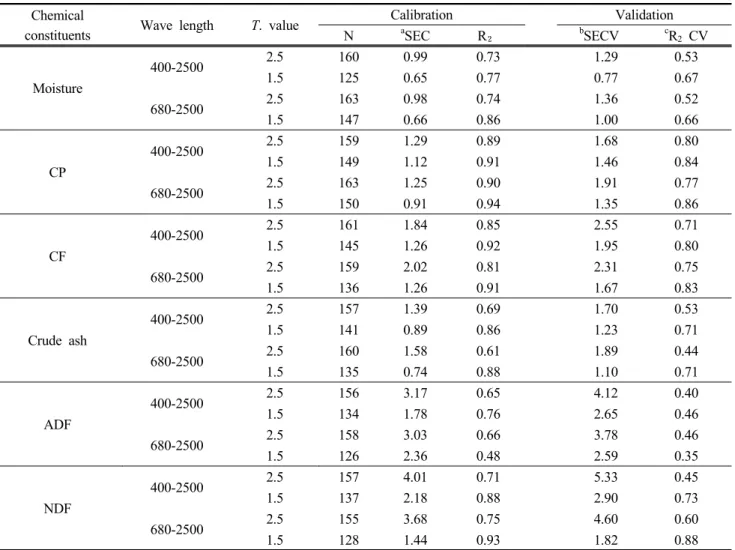
Table 3. Statistical parameters of external validation for the prediction of moisture, CP, CF, Crude ash, ADF and NDF
Chemical
constituents Wave length T. value Calibration Validation N
aSEC R₂
bSECV
cR
2CV
Moisture
400-2500 2.5 160 0.99 0.73 1.29 0.53
1.5 125 0.65 0.77 0.77 0.67
680-2500 2.5 163 0.98 0.74 1.36 0.52
1.5 147 0.66 0.86 1.00 0.66
CP
400-2500 2.5 159 1.29 0.89 1.68 0.80
1.5 149 1.12 0.91 1.46 0.84
680-2500 2.5 163 1.25 0.90 1.91 0.77
1.5 150 0.91 0.94 1.35 0.86
CF
400-2500 2.5 161 1.84 0.85 2.55 0.71
1.5 145 1.26 0.92 1.95 0.80
680-2500 2.5 159 2.02 0.81 2.31 0.75
1.5 136 1.26 0.91 1.67 0.83
Crude ash
400-2500 2.5 157 1.39 0.69 1.70 0.53
1.5 141 0.89 0.86 1.23 0.71
680-2500 2.5 160 1.58 0.61 1.89 0.44
1.5 135 0.74 0.88 1.10 0.71
ADF
400-2500 2.5 156 3.17 0.65 4.12 0.40
1.5 134 1.78 0.76 2.65 0.46
680-2500 2.5 158 3.03 0.66 3.78 0.46
1.5 126 2.36 0.48 2.59 0.35
NDF
400-2500 2.5 157 4.01 0.71 5.33 0.45
1.5 137 2.18 0.88 2.90 0.73
680-2500 2.5 155 3.68 0.75 4.60 0.60
1.5 128 1.44 0.93 1.82 0.88
aSEC: standard error of calibration, bSECV: standard error of cross validation
cR²cv: coefficient of determination of cross validation
검량식 작성을 위한 모집단의 분포를 보면 , 수분은 최하 0.5%에서 최고 11.59%, 평균 6.46%를 나타냈고 조단백질은 평균 16.13%, 조섬유는 26.09%, 회분은 10.23%, ADF는 33.78%, NDF는 60.04%를 보였다(Table 2). 이는 볏짚에서 평 균 수분 8.9%를 목초에서 9.6%, 조단백질 10.1%, 조섬유 36%, ADF 41.2% 그리고 NDF 68.5%를 보고한 Xu et al.(2007) 값보다 낮았다. 목초에서 조단백질 10.1%, 조섬유 36.0% ADF 41.2% 그리고 NDF 68.5%를 보인 Asal and Taguchi(2002)의 보고와는 약간 다른 값이었다. Hwangbo (2015)는 염소 방목지의 사초는 조단백질이 DM기준 8.5%, ADF 41.2%, NDF 62.79% 보고한 바 있다. 시료는 다른 연구 자와 유사한 특성을 나타냈으나 모집단이 넓고 또 시료를 대 표할 수 있어야 한다고 지적한 Keim et al.(2016)은 조단백질 은 건물기준 5∼29%를 ADF는 18∼32%, 그리고 NDF는 36∼
52%를 보고한 바 있다.
각 성분별 검량식 및 검증결과는 Table 3에서 보는 바와
같다. 수분은 400-2,500nm보다 680-2,500nm가 그리고 검량
식 표준오차를 2.5배한 T 2.5보다 T 1.5배한 처리에서 검량
및 검증 값이 더 좋은 결과를 나타내었다 . 같은 처리에서 조
단백질은 0.94 및 0.86, CF는 0.91 및 0.83을 나타내었다. 즉
근적외선 전 범위의 파장을 이용하고 T값을 낮게 설정한 것
이 좋은 결과를 나타낸 반면 ADF는 가시광선 및 근적외 전
범위의 파장을 이용한 것이 보다 양호한 검증 값을 보여 성
분별로 차이가 있음을 나타내었다 . 이러한 것은 사초를 다양
한 처리를 한 후 각기 다른 파장의 선택을 중적외 및 근적외
파장을 사용해도 검량식의 정도에는 큰 영향을 미치지 않았
다는 Reeves III(1999)의 결과와는 다른 것이었다. 한편 반추
위 발효 잔재물을 이용한 잔재물 분석에서 가시 및 근적외선
Fig. 2. Near–infrared spectroscopy(NIRS) predictions versus reference value for moisture, CP, CF, ADF, Crude ash and NDF.
을 이용한 처리를 했던 Keim et al.(2016)은 검량식의 결정계 수 (R2)가 ADF 0.99, NDF 0.96로 나타내었으나 본 연구는 이 보다 낮은 값을 보였다. 목초 사일리지에서 R
2값이 조단 백질, 조섬유, ADF 그리고 NDF에서 각각 0.97, 0.99, 0.96, 0.97이라고 보고한 값보다 낮았다(Ibanez and Alomar, 2009).
한편 토끼용 사료에서 (Xiccato et al., 2003)는 결정계수의 값 을 조단백질 0.86, ADF 0.82, 조섬유 0.60, NDF는 0.50으로 보고한 바 있다.
본 연구에서의 검량 및 검증 값이 다른 연구보다 낮은 것 은 시료의 성분이 골고루 분포되지 못했던 것이 원인으로 생 각된다 (Murray, 1986).
Fig. 2는 도출된 검량식을 이용한 각 성분함량에 대한
NIRS과 습식데이터 간의 상관관계를 나타내고 있다. 작성된
검량식이 유용하게 이용되기 위해서는 화학 분석치 값이 넓
게 분포해야 하며 본 그림에서 보는 바와 같이 시료의 분포가
골고루 퍼져있음을 알 수 있다. 특히 조단백질, NDF에서 그
러한 경향을 나타내고 있다 . 그러나 ADF와 조회분은 너무 넓 게 확산되어 있어 이를 커버하기 위해서는 더 많은 시료를 합 산하여 검량식을 작성할 필요가 있음을 시사하고 있다.
Ⅳ.요약
본 연구는 산지방목초지에서 채취한 목초 및 야초 혼합시 료의 화학조성분석의 근적외선분광법 이용의 가능성을 탐색 하기 위하여 실시하였다 . 충남 서산의 한우개량사업소의 방 목초지에서 2년간 386점의 목야초 혼합시료를 수집하였다.
재료를 이용하여 파장을 수집한 후 파장이 동일한 시료를 제 외한 163점에 대해 습식분석을 하였다. 최적의 검량식 유도 를 위하여 파장은 가시광선 및 근적외선 전대역을 사용한 것 그리고 가시광선대역을 사용하면서 동시에 T값을 2.5 및 1.5 를 적용하여 최상의 검량식을 구하였다. 전체적으로 볼 때 근 적외선 대역의 파장을 사용한 것이 검량식 결정계수값이 높 았고 또한 검증식 역시 같은 경향이었다 . T값은 습식분석치 와 NIRS 예측치의 차가 더 적은 1.5를 적응하였을 때 검량 및 검증값이 더 높은 것으로 나타났다. 검량식의 R²치는 0.48∼
0.93 사이 그리고 검증식은 0.35∼0.88 사이였다. 조단백질, 조섬유 , NDF에서 보다 만족스런 예측이 가능하였다.
Ⅴ. 사사
본 연구는 농촌진흥청 연구사업(과제명 : 체험관광형 산지 초지 활용도 제고 기술 개발 , 과제번호 : PJ01053502)의 지원 에 의해 연구되었다 .
Ⅵ . REFERENCES
Amari, M., Abe, A., Tani, R., Masaki, S., Serizawa, S. and Koga, T.
1987. Prediction of chemical composition and nutritive value of forages by near infrared reflectance spectroscopy: 1.Prediction of chemical composition. Grassland Science. 33:219-226.
Asal, H. and Taguchi, K. 2002. Prediction of grass composition by near infrared reflectance spectroscopy without distinction of grass species and make type. Grassland science. 47:619-623.
Bernado N. 1997. Measuring Italian ryegrass quality by near infrared reflectance spectroscopy(NIRS). In: Murray I. and Cowe I. A.(eds).
Making Light Work : Advances in near infrared spectroscopy. pp.
272-276. Weinheim, VCH.
Keim, J.P., charles, H. and Alcomar, D. 2016. Prediction of crude protein and neutral detergent fiber concentration in residues of in situ ruminal degradation of pasture samples by near–infrared spectroscopy (NIRS). Animal production Science. 56:1504-1511.
Kim, Y.B. 1996. Studies on the chemical analysis in raw meat and meat products by near infrared spectroscopy. Ph.D thesis. Seoul National University.
Ko, H.J. Choi, H.L., Lee, H.W. 2001. Non-destructive constituents measurement in compost using near infrared reflectance spectroscopy. J.Anim.Sci & Technol.(Kor). 43:989-996.
Lee, H.W., Kim, J.D., Han, K.J. and Kim, D.A. 1996. Use of NIRS in grass quality svaluation: 1. Calibration procedures of ADF and NDF in italianryegrass for near infrared reflectance spectroscopy. KNOU Research Journal. 22:375-385
Lee, H.W. and Park, H.S. 2001. Studies on the utilization of NIRS for feed value estimation. KNOU Research Journal. 32:205-213.
Reeves Ⅲ. J. B. 1999. Mid-Versus near infrared spectroscopic analysis of diversely treated feedstuffs. J. Near Infrared Spectroscopy.
7:89-100.
Ibáñez, L., & Alomar, D. 2009. Prediction of the chemical composition and fermentation parameters of pasture silage by near infrared reflectance spectroscopy (NIRS).
Lee, H.W., Park, H.S., Lee, N.J. 2003. Studies on evaluation of TMR by NIRS. Collection of Deasan Research 11:177-183.
Lee, H.W. and Kil, D.Y. 2005. Analysis on food waste compost by near infrared reflectance spectroscopy(NIRS). Korean journal of organic agriculture. 13:281-289.
Lee, H.Y., Kim, J.D., Kim, W.H. and Lee, J.K. 2009. Prediction on the quality of forage crop by near infrared reflectance spectroscopy.
Journal of Korean Grassland and Forage Science. 29:31-36.
Lee, H.Y., Jang, S.K., Lee, H.J. and Park, H.S. 2014. Studies on 5 protein fractions prediction of forage legume mixture by NIRS.
Journal of the Korean Society of Grassland and Forage Science.
34:214-218.
Lorena, I.S.M. and Daniel, A. 2008. Prediction of the chemical composition and fermentation parameters of pasture silage by near infrared reflectance spectroscopy(NIRS). Chilean Journal of Agricultural Research. 68:352-359.
Murray. L. 1986. The NIR spectra of homologous series of organic compounds. Proceeding of NIR/NIT Conference, Budapest. 13-28.
Norris, K.H., Barnes, R.E.F., Moore, J.E. and Shenk. J.S. 1976.
Predicting forages quality by infrared reflectance spectroscopy.
Journal of Animal Science. 43:889-897.
Park, H.S., Lee, J.K., Lee, H.W., Kim, S.G. and Ha, J.K. 2006.
Prediction of the digestibility and energy value of corn silage by near infrared reflectance spectroscopy. Journal of the Korean
Society of Grassland and Forage Science. 26:45-52.
Park, H.S., Lee, S.H., Lim, Y.C., Seo, S., Choi, K.C., Kim, J.G., Kim, J.G., Choi, G.J. and Choi, G.J. 2013. Prediction of the chemical composition of fresh whole crop barley silages by near infrared spectroscopy. Journal of the Korean Society of Grassland and Forage Science. 33:171-176.
Park, H.S., Lee, S.H., Choi, K.C., Kim, J.H., Lee, K.W. and Choi, G.J.
2014. Prediction of the chemical composition and fermentation parameters of winter rye silages by near infrared spectroscopy.
Journal of the Korean Society of Grassland and Forage Science.
34:209-213.
Park, H.S.. Lee, S.H., Choi, K.C., Kim, J.H., So, M.J. and Kim, H.S.
2015. Prediction of chemical composition and fermentation parameters in forage sorghum and sudangrass silage using near infrared spectroscopy. Journal of the Korean Society of Grassland and Forage Science. 35:257-263.
Park, H.S., Kim, J.H., Choi, K.C. and Kim, H.S. 2016. Mathematical transformation influencing accuracy of the prediction of chemical composition and fermentation parameters in corn silage. Journal of the Korean Society of Grassland and Forage Science. 36:50-57.
Park, H.S., Lee, S.H., Choi, K.C., Lim, Y.C., Kim, J.G., Jo, K.Y. and Choi, G.J. 2012. Evaluation of the quality of ltlian ryegrass silages
by near infrared spectrosclpy. Journal of the Korean Society of Grassland and Forage Science. 32:30-308.
Shenk, T.S., Landa, I., Hoover, M.R. and Westhaus, M.O. 1981.
Description and evaluation of a neer infrared spectro-computer for forages and grain analysis. Crop Science. 21:355-358.
Hwangbo, S. 2015. Effects of the grazing of Korean black goats on their on their reproductive performance and growth performance of goatlings. Journal of the Korean Society of Grassland and Forage Science. 35:1-5.
Xiccato, G., Trocino, A., Boever, J.L., Maertens, L., Carabano, R., Pascual, J.J., Perez, J.M., Gidenne, T. and Falcao, L. 2003.
Prediction of chemical composition nutritive value and ingredient composition of European compound feeds for rabbits by near infrared reflectance spectroscopy(NIRS). Animal Feed Science and Technology. 104:153-168.
Xu, C., Cai, Y., Moriya, N., Amari, M., Murai, M. and Ogawa, M. 2007.
Prediction of chemical composition of unground forage paddy rice using near infrared reflectance spectroscopy. Japanese Journal of Grassland Science. 53:6-10.
(Received : April 6, 2017 | Revised : May 16, 2017 | Accepted : May 29, 2017)