REVIEW ARTICLE
자발성 세균성 복막염
송도선
가톨릭대학교 의과대학 성빈센트병원 내과
Spontaneous Bacterial Peritonitis
Do Seon Song
Department of Internal Medicine, St. Vincent’s Hospital, College of Medicine, The Catholic University of Korea, Suwon, Korea
Spontaneous bacterial peritonitis (SBP) is defined as bacterial infections that occur in patients with cirrhosis and ascites without any significant intraperitoneal infection, accounting for approximately 10-30% of bacterial infections in hospitalized patients. SBP devel- ops in patients with liver cirrhosis because bacterial translocations are increased by changes in the intestinal bacteria and mucosal barriers. In addition, the decreased host immune response cannot remove the bacteria and their products. The most common cause of SBP is Gram-negative bacteria, such as Escherichia coli and Klebsiella species, and infections by Gram-positive bacteria are increasing. SBP is diagnosed by the presence of >250 polymorphonuclear leukocyte/mm3 in ascites after paracentesis. If SBP is diagnosed, empirical antibiotic therapy should be started immediately. Empirical antibiotic treatment should distinguish between community acquired infections and nosocomial infections. Cirrhotic patients with gastrointestinal bleeding or low ascitic protein con- centrations should consider primary prevention and those who recover from SBP should consider secondary prevention. This review describes the pathophysiology, diagnosis, treatment, and prevention of SBP. (Korean J Gastroenterol 2018;72:56-63)
Key Words: Spontaneous bacterial peritonitis; Ascites; Therapy
Received July 12, 2018. Revised July 23, 2018. Accepted July 25, 2018.
CC This is an open access article distributed under the terms of the Creative Commons Attribution Non-Commercial License (http://creativecommons.org/licenses/
by-nc/4.0) which permits unrestricted non-commercial use, distribution, and reproduction in any medium, provided the original work is properly cited.
Copyright © 2018. Korean Society of Gastroenterology.
교신저자: 송도선, 16247, 경기도 수원시 팔달구 중부대로 93, 가톨릭대학교 의과대학 성빈센트병원 내과
Correspondence to: Do Seon Song, Department of Internal Medicine, St. Vincent’s Hospital, College of Medicine, The Catholic University of Korea, 93 Jungbu-daero, Paldal-gu, Suwon 16247, Korea. Tel: +82-31-249-8204, Fax: +82-31-253-8898, E-mail: [email protected]
Financial support: None. Conflict of interest: None.
서 론
자발성 세균성 복막염(spontaneous bacterial peritonitis, SBP)은 간경변증과 복수가 있는 환자에게 뚜렷한 복강내 감 염 원인이 없는 상태에서 발생하는 복수의 세균감염을 의미한 다. 자발성 세균성 복막염은 간경변증 환자에서 가장 흔한 세 균성 감염 중 하나로 입원한 간경변증 환자의 약 10-30%에서 발생한다.1,2 1964년 Conn은 명확한 감염 원인이 없이 간경변 증 환자에서 발생하는 복막염 증후군을 기술하면서 자발성 세 균성 복막염이란 용어를 사용하기 시작하였다.3처음 보고되 었을 때에는 사망률이 90%를 넘었으나, 빠른 진단과 적절한 항생제 사용으로 사망률이 약 20-30%로 감소되었다.4,5 하지
만 현재까지도 높은 사망률을 가지며, 특히 병원내 감염 자발 성 세균성 복막염은 30일 사망률이 58%에 이르는 매우 나쁜 예후를 가진다.6 최근 대한간학회(Korean Association for the Study of the Liver)는 복수 및 관련 합병증에 대한 가이 드라인을 개정하여 발표하였다. 본 논고에서는 개정된 가이드 라인을 중심으로 복수 관련 합병증 중 자발성 세균성 복막염 의 진단 및 치료 등에 대하여 고찰하고자 한다.
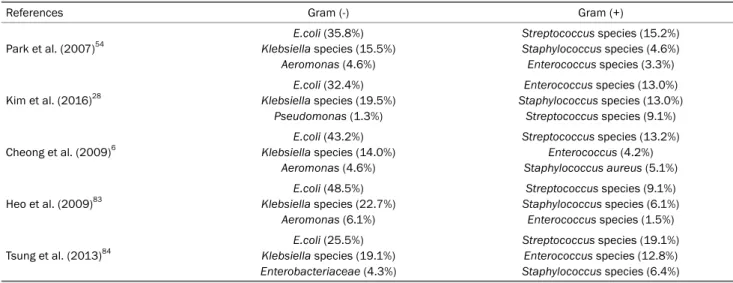
Table 1. Bacteria Causing Spontaneous Bacterial Peritonitis in Korea85
References Gram (-) Gram (+)
Park et al. (2007)54
E.coli (35.8%) Klebsiella species (15.5%)
Aeromonas (4.6%)
Streptococcus species (15.2%) Staphylococcus species (4.6%) Enterococcus species (3.3%) Kim et al. (2016)28
E.coli (32.4%) Klebsiella species (19.5%)
Pseudomonas (1.3%)
Enterococcus species (13.0%) Staphylococcus species (13.0%)
Streptococcus species (9.1%) Cheong et al. (2009)6
E.coli (43.2%) Klebsiella species (14.0%)
Aeromonas (4.6%)
Streptococcus species (13.2%) Enterococcus (4.2%) Staphylococcus aureus (5.1%) Heo et al. (2009)83
E.coli (48.5%) Klebsiella species (22.7%)
Aeromonas (6.1%)
Streptococcus species (9.1%) Staphylococcus species (6.1%)
Enterococcus species (1.5%) Tsung et al. (2013)84
E.coli (25.5%) Klebsiella species (19.1%) Enterobacteriaceae (4.3%)
Streptococcus species (19.1%) Enterococcus species (12.8%) Staphylococcus species (6.4%)
본 론
1. 병태생리
장내 세균의 일부는 소화관의 점막 장벽을 넘어 장간막 림프 절(mesenteric lymph nodes) 혹은 장외 기관으로 침입하기도 하는데 이를 세균전위(bacterial translocation)라고 한다. 세균 전위는 간경변증 환자에서 자발성 세균성 복막염 발생의 중요 한 원인이 된다.7비정상적인 세균전위의 발생에는 여러 가지 기전이 작용한다. 우선, 장내 세균이 간경변증 환자에서 질적 및 양적으로 변화한다. 간경변증 환자의 대변을 분석한 결과를 보면 장내 세균의 다양성이 감소되며, 유익한 균주는 감소되고 해로운 균주는 증가되는 장내 세균의 불균형이 발생하게 된다.8 또한 소장의 운동이 감소되고, 장내 담즙산의 감소 등으로 인하 여 소장의 세균 과증식(small intestinal bacterial overgrowth) 이 발생하게 된다.9,10간경변증에서 문맥압 항진증은 장벽의 구 조적 및 기능적인 변화를 일으켜 세균전위가 용이하게 되고, 세균 혹은 세균 부산물이 문맥전신순환단락(portosystemic shunt)에 의하여 간의 망상내피계(reticuloendothelial sys- tem)을 거치지 않아 제거되지 않는다.7간경변증 환자에서는 세포성 및 체액성 면역(cellular and humoral immunity)이 저하되어 있고, 간의 망상내피계의 기능도 저하되어 있어 전위 된 세균을 방어하지 못하고 감염이 진행하게 된다.11-13 또한 복수 내에 옵소닌 활성도(opsonic activity)가 감소되어 복수 내 세균의 제거 능력도 저하되어 있다.14
2. 위험인자
복수 내의 낮은 총 단백량은 복수의 감소된 옵소닌 활성도 를 반영하고 자발성 세균성 복막염의 발생 위험이 높아진다.15
Llach 등16은 복수내 단백이 1 g/dL 미만인 군(24%)은 1 g/dL 이상인 군(4%)에 비하여 3년간 자발성 세균성 복막염의 발생 이 의미 있게 높음을 보였다. Guarner 등17은 낮은 복수내 단 백을 가진 환자군에서 혈청 빌리루빈 상승(>3.2 mg/dL)과 혈 소판 감소(<98,000/mm3)가 자발성 세균성 복막염 발생의 고 위험군임을 보였다.
간경변증 환자에서 위장관 출혈이 있을 경우 자발성 세균성 복막염을 포함한 감염의 위험이 증가한다.18 그리고 Toll-like receptor 2,19 nucleotide-binding oligomerisation domain containing 2의 유전자 변이20 등이 자발성 세균성 복막염의 증가와 연관되어 있다.
양성자펌프억제제(proton pump inhibitor)는 위산 분비를 억제하여 위 내의 산도를 감소시키고, 위 내로 들어온 세균에 대한 숙주의 방어 능력을 감소시키며, 장내 환경을 변화시키 게 된다. 간경변증 환자에서 양성자펌프억제제의 사용은 소장 의 세균 과증식을 유도할 수 있고, 그로 인한 세균전위가 증가 할 수 있다. 실제로 양성자펌프억제제의 사용이 자발성 세균 성 복막염의 증가와 연관성이 높았던 연구가 보고되기도 하였
다.21-23 하지만 양성자펌프억제제와 자발성 세균성 복막염 발
생에 연관성이 없다는 연구도 있어 이에 대하여서는 전향적 연구가 필요할 것으로 보인다.24,25 반면에 비선택적 베타차단 제(nonseletive beta-blocker)의 사용은 간기능이 비교적 양 호한 간경변증 환자(Child class A 혹은 B)에서 자발성 세균 성 복막염의 발생을 의미 있게 낮추어 주었다.26
3. 원인균주
자발성 세균성 복막염의 가장 흔한 원인 균주는 그람음성간균 (Gram-negative bacilli)이다. 장내 세균의 세균전위가 중요한 병인이기 때문에 장내 세균인
Escherichia coli
와Klebsiella
가가장 흔한 원인균을 차지한다. Table 1은 국내에서 보고된 자발성 세균성 복막염의 원인 균주를 보여주는 표이며, 국내의 많은 연구에서도 공통적으로
Escherichia coli
와Klebsiella
species가 가장 흔한 원인균임을 알 수 있다(Table 1). 최근에는, 중재 치료 및 예방적 항생제 사용이 증가하면서 그람양성균에 의한 자발성 세균성 복막염의 빈도가 증가하고 있다.1,27,284. 진단
자발성 세균성 복막염은 높은 사망률을 보이는 질환이기 때문에 빠른 진단이 중요하다. 따라서 복수를 동반한 간경변 증 환자에서 복막염의 징후, 감염의 증상 등으로 자발성 세균 성 복막염이 의심될 경우에는 반드시 복수천자를 시행하여야 한다. 하지만 감염의 증상이나 징후 없이 간성뇌증의 발생 혹 은 악화로 나타나는 경우도 있고, 무증상의 자발성 세균성 복 막염도 있을 수 있다.29 따라서 복막염의 징후(복통, 구토, 장 마비 등), 감염의 증상, 원인이 불분명한 합병증(신기능 악화, 간성뇌증)이 발생한 경우에는 자발성 세균성 복막염을 의심하 고 복수천자를 시행하며, 복수를 동반하여 입원하는 모든 간 경변증 환자에서 자발성 세균성 복막염 증상 유무에 상관없이 복수천자를 하는 것이 추천된다.
자발성 세균성 복막염은 복수천자 결과에서 다형핵 호중구 (polymorphonuclear leukocyte)가 250/mm3 이상일 경우 진 단할 수 있으며, 다형핵 호중구가 증가되었을 경우 배양 검사 결과가 나오기 전에 경험적 항생제 치료를 시작한다. 결핵성 복수나 암성 복수에서도 복수내 백혈구 수가 증가하면서 다형 핵 호중구가 250/mm3이상으로 증가할 수 있으나 림프구가 우세한 복수라는 점에서 다형핵 호중구가 우세한 자발성 세균 성 복막염과 구분될 수 있다.30 복수에 적혈구가 섞여 있을 경우에는 적혈구 250/mm3당 다형핵 호중구를 1/mm3씩 빼 서 계산한다. 한 번의 항생제 치료로도 복수 배양 검사는 음성 으로 바뀔 수 있기 때문에31경험적 항생제 투여 전에 복수천 자를 하는 것이 좋고, 입원 후 복수천자가 늦춰지는 것은 사망 률 증가와 연관되기 때문에 조기에 복수천자를 하여 진단과 치료를 빠르게 하는 것이 필요하다.32또한 일반 배양 용기(배 양률 50%)보다는 혈액 배양 용기(배양률 80%)가 배양률이 높 기 때문에 침상에서 바로 혈액 배양 용기에 접종하는 것이 배양률을 높일 수 있다. 하지만 적절한 배양 방법을 사용하여 도 다형핵 호중구가 250/mm3 이상으로 증가된 환자의 약 40%에서는 균이 배양되지 않는다(culture-negative neutrocytic ascites or culture negative SBP).33 균이 배양되지 않은 경 우에도 다형핵 호중구가 250/mm3 이상으로 증가된 환자는 복수에서 균이 배양된 환자와 비슷한 임상 경과를 보이기 때 문에 자발성 세균성 복막염으로 진단하고 경험적 항생제 치료 를 하여야 한다.34 일부 환자에서는 복수천자 결과 다형핵 호
중구가 250/mm3미만이지만 복수 배양 검사에서는 단일 균 주가 배양되는 경우가 있다(monomicrobial non-neutrocytic bacterascites). 이런 경우는 복수내 세균이 상재화(colonization) 되어 발생하며, 대부분의 환자들에서는 항생제 치료 없이 상 재화가 해소되기 때문에 증상이 없는 경우는 치료가 필요 없 다. 하지만 monomicrobial non-neutrocytic bacterascites 환자를 대상으로 한 전향적 연구에서 감염의 증상 혹은 징후 를 가진 환자들은 대부분 자발성 세균성 복막염으로 진행을 하였다.35 따라서 복수의 다형핵 호중구가 증가되지 않았더라 도 감염의 증상 혹은 징후를 보인다면 경험적 항생제를 사용 하는 것이 권장된다.
5. 시약띠와 자동 세포 카운터
자발성 세균성 복막염을 진단하는 표준 검사 방법은 복수내 다형핵 호중구를 직접 세는 방법이다(manual counting). 하 지만 직접 세포를 세는 것은 시간과 노력이 많이 필요하기 때문에 이를 대체할 수 있는 방법들에 대한 연구가 이루어졌다.
시약띠(reagent strip)는 소변 검사 목적으로 개발된 것으 로 백혈구 에스테라제(leukocyte esterase)의 활성도를 검사 하는 것이다. 시약띠를 이용한 검사법은 값이 매우 싸고 간단 하게 이용할 수 있는 방법이며, 45-100%의 민감도, 91-100%의 특이도, 50-100%의 양성예측도, 87-100%의 음성예측도를 보 였다.36 하지만 시약띠를 이용한 검사 방법은 낮은 민감도 때 문에 자발성 세균성 복막염의 검사방법으로 권장되지 않는
다.37,38 시약띠를 눈으로 판단하는 것이 주관적이기 때문에 분
광광도계(photospectrometer)를 사용하는 방법을 비교한 최 근 연구에서는 분광광도계를 사용한 방법이 정확도가 높게 나 왔지만, 이에 대하여서는 좀 더 연구가 필요하겠다.39
자동 세포 카운터를 이용하여 복수의 다형핵 호중구를 측정 하는 방법 역시 빠르게 진단할 수 있는 방법이며, 직접 세포를 세는 방법과 일치도가 높다.40 하지만 일부 기기는 250/mm3 근처의 낮은 다형핵 호중구를 가진 환자에서 위양성률이 높아 질 수 있으므로 주의가 필요하다.41
6. 이차성 세균성 복막염
천공이나 농양과 같은 원인에 의하여 발생하는 이차성 세 균성 복막염은 감염성 복막염의 약 5% 정도를 차지하며, 50-80%의 매우 높은 사망률을 보인다.42 이차성 세균성 복막 염 환자에서는 수술적 치료를 고려하여야 하지만 자발성 세균 성 복막염 환자에서 불필요한 수술은 사망률을 높일 수 있기 때문에,43 이차성 세균성 복막염과 자발성 세균성 복막염을 구 분하는 것은 매우 중요하다. 복수의 다형핵 호중구가 수천 이 상으로 증가하고, 그람 염색과 배양에서 여러 개의 균주가 배 양되며, 복수내 총 단백질량이 1 g/dL 초과, 복수내 lactate
dehydrogenate (LDH)가 혈청 내 LDH의 정상 상한치 초과, 복수내 포도당 수치가 50 mg/dL 초과인 경우, 적절한 항생제 치료 48시간 이후에 시행한 복수천자 검사에서 다형핵 호중 구 수가 치료 전보다 감소하지 않는다면 이차성 세균성 복막 염을 의심할 수 있다.31 또한 Wu 등44은 복수내 alkaline phosphatase >240 U/L 혹은 복수내 carcinoembryonic an- tigen >5 ng/mL일 경우 민감도 92%, 특이도 88%의 높은 정확도로 천공에 의한 이차성 세균성 복막염을 진단할 수 있 음을 보여, 복수의 alkaline phosphatase와 carcinoem- bryonic antigen 농도가 감별에 도움을 줄 수 있겠다.
7. 치료
자발성 세균성 복막염의 발생 장소에 따라 경험적 항생제 를 적절히 선택하여야 한다.
1) 지역사회 획득(community acquired) 자발성 세균성 복 막염
지역사회 획득 자발성 세균성 복막염의 가장 흔한 원인균은
Escherichia coli, Klebsiella pneumoniae, Streptococcus
이 며, 이 균주들을 포함한 대부분의 원인균에 효과적인 3세대 세팔로스포린 계통의 항생제가 권장된다. Cefotaxime은 복 수내 농도가 매우 높아 복수의 감염 치료에 효과적이다.45 자 발성 세균성 복막염의 치료에서 cefotaxime 정주 치료는 감 염 소실률이 76-98%로 매우 높았고,45-48 5일 치료군과 10일 치료군의 치료 효과가 비슷하였다.45 Ceftriaxone 정주 치료 도 73-100%의 높은 감염 소실률을 보였으며,48-51 cefotaxime 과 비슷한 치료 효과를 보였다.48 따라서 지역사회 획득 자발 성 세균성 복막염 환자에서 cefotaxime을 하루에 2 g씩 6-8시 간마다 정주하거나, ceftriaxone을 하루에 1 g씩 12시간마다 혹은 하루에 2 g씩 정주하는 것이 권장되며, 치료 기간은 5-10일이다.Amoxicillin-clavulanic acid 정주 치료와 ciprofloxacin 정주 치료도 cefotaxime 치료와 비슷한 치료 효과를 보여 3세 대 세팔로스포린 치료의 대안으로 고려하여 볼 수도 있겠
다.47,52 위장관 출혈, 신기능 장애, 간성 혼수, 장마비, 쇼크
등의 합병증이 없는 환자에서는 경구 ofloxacin 치료가 cefo- taxime 정주 치료와 비슷한 효과를 보이기도 하였다.53 하지 만 국내 지역사회 획득 자발성 세균성 복막염 환자에서 fluo- roquinolone 내성이 점차 증가하고 있어 fluoroquinolone의 경험적 항생제 사용은 주의가 필요하다.54
2) 병원내 감염 자발성 세균성 복막염
병원에 입원하고 48-72시간 이상 경과한 후 발생한 경우 병원내 감염 자발성 세균성 복막염이라 정의한다.55,56 국내 연
구에서 광범위 베타락탐아제(extended spectrum beta-lac- tamase) 생성 균주가 지역사회 감염 자발성 세균성 복막염 (13-20%)보다 병원내 감염 자발성 세균성 복막염(46-66%)에 서 높았고, 점차 빈도가 증가하는 추세를 보인다.54,57-59 또한 병원내 감염 자발성 세균성 복막염은
Enterococcus
나 me- thicillin-resistantStaphylococcus aureus
와 같은 다약제 내성 그람 양성균의 빈도가 높다.6,28 병원내 감염 자발성 세균 성 복막염은 지역사회 감염 자발성 세균성 복막염의 경험적 항생제인 3세대 세팔로스포린에 대한 내성률이 높다.1,6,56,57,60또한 다약제 내성 균주 및 그람 양성균에 의한 감염 빈도가 높아 지역사회 획득 자발성 세균성 복막염에 비하여 사망률이 높다.6,59 Fernández 등56은 전향적 연구를 통하여 병원내 감 염, 장기간의 예방적 항생제 사용, 최근의 베타락탐 항생제 사용, 최근 입원 병력 등이 다약제 내성균에 의한 자발성 세균 성 복막염의 위험인자임을 보였다. Piano 등55은 병원내 감염 자발성 세균성 복막염 환자들을 대상으로 한 무작위 대조군 연구에서 경험적 항생제 치료로서 meropenem+daptomycin 치료가 3세대 세팔로스포린 치료인 ceftazidime보다 좋은 치 료 효과를 보였다. 자발성 세균성 복막염의 치료에서 초기 치 료의 실패는 사망률의 증가와 연관되기 때문에 경험적 항생제 의 선택이 중요하다.55,61 따라서 자발성 세균성 복막염의 경험 적 항생제를 선택할 때는 다약제 내성균 감염의 위험인자, 감 염의 중증도, 지역별 역학을 고려하여 선택하여야 한다.62,63 특히 중증의 감염 상태이거나 다약제 내성균의 위험인자를 가 진 경우에는 carbapenem±glycopeptide 치료를 고려하고, 내성 발생률을 줄이기 위하여 48-72시간 후 재평가를 통한 하향 조정을 고려하여야 한다.62
3) 알부민
자발성 세균성 복막염 환자의 약 30-40%에서 감염의 소실 여부와 관계없이 신기능 장애가 발생하게 되며, 신기능 악화 는 사망률의 증가와 연관된다.64,65 Sort 등66은 자발성 세균성 복막염 환자에서 cefotaxime만 치료한 군과 cefotaxime과 알부민(진단 첫날 1.5 g/kg, 3일째 1.0 g/kg) 정주 치료를 같 이 한 군을 전향적으로 비교하였을 때 알부민을 같이 정주한 군에서 사망률(10% vs. 29%)과 신기능 악화(10% vs. 33%)가 감소함을 보였다. 하지만 자발성 세균성 복막염의 진단시 혈 청 빌리루빈 4 mg/dL 미만, 혈청 크레아티닌 1.0 mg/dL 미 만인 환자에서는 간신증후군의 발생이 드문 반면에(<8%), 혈 청 빌리루빈 4 mg/dL 이상 혹은 혈청 크레아티닌 1.0 mg/dL 이상인 환자에서는 간신증후군의 발생 위험이 높고(58%) 알 부민 치료가 도움이 되었다.66,67
4) 치료 효과의 평가
자발성 세균성 복막염은 대부분 항생제에 치료 효과가 좋 기 때문에 치료 효과를 평가하기 위하여 재복수천자를 할 필 요는 없다. 하지만 경험적 항생제 치료 후에도 증상 호전이 없거나 이차성 복막염이 의심될 경우는 재복수천자가 도움이 될 수 있다. 경험적 항생제를 2일간 투여한 후에 복수내 다형 핵 호중구 수가 치료 전에 비하여 25% 이상 줄지 않으면 치료 실패로 판정할 수 있고,68 이러한 환자에서는 3세대 세팔로스 포린 내성 균주를 표적으로 하여 항생제를 교체한다.
8. 예방
1) 위장관 출혈 환자에서 일차 예방
위장관 출혈로 입원한 간경변증 환자의 약 25-66%에서 1-2주 이내에 자발성 세균성 복막염을 포함한 세균성 감염이 발생한다.18,69 위장관 출혈을 동반한 간경변증 환자에서 세균 감염은 지혈 실패와 재출혈의 위험을 높이고 사망률을 증가시
킨다.70-72 예방적 항생제를 사용한 5개의 연구로 Bernard 등18
이 시행한 메타분석에서는 위장관 출혈을 동반한 간경변증 환 자에서 예방적 항생제가 자발성 세균성 복막염을 포함한 심한 세균성 감염을 19% 감소시킬 뿐만 아니라 생존율을 9.1% 향 상시켰다. 이후에 Chavez-Tapia 등73이 7개의 연구로 시행한 메타분석에서도 예방적 항생제 치료가 재출혈, 세균 감염, 사 망률을 감소시킴을 보였다. 따라서 위장관 출혈을 동반한 간 경변증 환자는 복수의 존재 여부에 관계없이 예방적 항생제 치료가 권장된다. 위장관 출혈 환자에서 예방적 항생제 치료 로 가장 많이 사용된 약제는 norfloxacin이다. 경구 nor- floxacin 400 mg을 하루 2회씩 1주일간 투여한 경우 자발성 세균성 복막염을 포함한 감염의 발생을 줄여주었다.74 하지만 심한 간기능 저하(복수, 심한 영양실조, 빌리루빈 3 mg/dL 초과, 간성 뇌증 중 2가지 이상)를 동반한 위장관 출혈 환자에 서는 경구 norfloxacin보다 ceftriaxone 정주 치료가 감염 예 방에 효과적이었다.75
2) 복수내 낮은 단백질 농도를 가진 환자에서 일차 예방 복수내 낮은 단백질 농도를 가진 간경변증 환자에서는 옵 소닌 활성도가 감소되어 있어 자발성 세균성 복막염의 위험이 높다. 복수내 단백질 농도가 1.5 g/dL 이하인 환자에서 예방 적 항생제 사용에 대한 연구들은 감염 발생의 감소와 사망률 감소에 대하여 서로 다른 결과를 보였다.76,77 하지만, 복수내 낮은 단백질 농도(1.5 g/dL 이하)이며 간부전(Child-Pugh score≥9, 혈청 빌리루빈≥3 mg/dL) 혹은 신부전 소견(혈청 크레아티닌≥1.2 mg/dL, BUN≥25 mg/dL) 혹은 저나트륨 혈증(Na<130 mmol/L)을 동반한 환자에서 예방적 항생제로
norfloxacin을 1년간 투여한 전향적 무작위 대조군 연구에서 는 자발성 세균성 복막염의 발생(61% vs. 7%), 간신증후군의 발생(41% vs. 28%), 3개월 사망률의 감소(94% vs. 62%)를 보여 진행성 간부전 환자에서 선택적으로 예방적 항생제를 사 용하는 것이 자발성 세균성 복막염의 발생을 줄일 수 있겠 다.78 하지만 예방적 항생제 사용의 적절한 사용 기간에 대하 여서는 연구가 부족하며, 장기간의 항생제 사용은 다약제 내 성 균주에 의한 감염 가능성을 높이므로 주의가 필요하다.56,79
3) 자발성 세균성 복막염에서 회복한 환자의 이차 예방 자발성 세균성 복막염에서 회복한 환자는 1년내 재발률이 약 70%에 달한다.4,80따라서 이러한 환자들은 재발을 감소시 키기 위한 예방적 항생제 사용이 필요하다. 자발성 세균성 복 막염에서 회복한 환자들을 대상으로 norfloxacin을 하루 400 mg 투여하는 전향적 연구에서 자발성 세균성 복막염의 재발 률은 68%에서 20%로 감소되었고, 특히 그람 음성균에 의한 재발률은 60%에서 3%로 감소되었다.81 하지만 퀴놀론 약제 는 내성 발생에 주의하여야 하며 예방적 항생제의 적절한 사 용 기간에 대하여서는 추가 연구가 필요하다. 최근에 이차 예 방 목적으로 rifaximin과 norfloxacin을 비교한 무작위 대조 군 연구에서 rifaximin 1,200 mg/day 투여가 norfloxacin 400 mg/day 투여에 비하여 6개월 누적 재발률(3.9% vs.
14.1%)과 사망률(13.7% vs. 24.4%)이 낮았다는 보고가 있어 이에 대한 추가적인 연구가 필요하겠다.82
결 론
자발성 세균성 복막염은 장내 세균전위, 숙주의 면역 반응 저하 등이 작용하여 발생하는 간경변증의 합병증이다. 자발성 세균성 복막염은 사망률이 높기 때문에 빠른 진단과 적절한 경험적 항생제 치료가 필요하며, 초기 치료의 실패는 사망률 증가와 연관되기 때문에 적절한 경험적 항생제의 선택이 중요 하다. 감염의 획득 장소와 다약제내성균 감염의 가능성을 고 려하여 경험적 항생제를 선택하여야 한다. 위장관 출혈을 동 반한 간경변증 환자와 복수내 단백질 농도가 낮으면서 진행성 간경변증 소견을 보이는 환자에서는 일차 예방 목적으로 항생 제를 사용하는 것이 감염 발생을 감소시켜주며, 자발성 세균 성 복막염에서 회복한 환자는 재발률이 매우 높으므로 이차 예방 목적으로 예방적 항생제를 사용하는 것이 추천된다. 하 지만 예방적 항생제 사용의 적절한 기간에 대하여서는 추가적 인 연구가 필요하며, 항생제 내성 발생의 가능성을 고려하여 신중하게 선택하여야 하겠다.
REFERENCES
1. Fernández J, Navasa M, Gómez J, et al. Bacterial infections in cir- rhosis: epidemiological changes with invasive procedures and norfloxacin prophylaxis. Hepatology 2002;35:140-148.
2. Caly WR, Strauss E. A prospective study of bacterial infections in patients with cirrhosis. J Hepatol 1993;18:353-358.
3. Conn HO. Spontaneous peritonitis and bacteremia in Laennec’s cirrhosis caused by enteric organisms. A relatively common but rarely recognized syndrome. Ann Intern Med 1964;60:568-580.
4. Garcia-Tsao G. Spontaneous bacterial peritonitis: a historical perspective. J Hepatol 2004;41:522-527.
5. Tandon P, Garcia-Tsao G. Bacterial infections, sepsis, and multi- organ failure in cirrhosis. Semin Liver Dis 2008;28:26-42.
6. Cheong HS, Kang CI, Lee JA, et al. Clinical significance and out- come of nosocomial acquisition of spontaneous bacterial peri- tonitis in patients with liver cirrhosis. Clin Infect Dis 2009;48:
1230-1236.
7. Wiest R, Lawson M, Geuking M. Pathological bacterial trans- location in liver cirrhosis. J Hepatol 2014;60:197-209.
8. Chen Y, Yang F, Lu H, et al. Characterization of fecal microbial communities in patients with liver cirrhosis. Hepatology 2011;
54:562-572.
9. Pardo A, Bartolí R, Lorenzo-Zúñiga V, et al. Effect of cisapride on intestinal bacterial overgrowth and bacterial translocation in cirrhosis. Hepatology 2000;31:858-863.
10. Slocum MM, Sittig KM, Specian RD, Deitch EA. Absence of in- testinal bile promotes bacterial translocation. Am Surg 1992;
58:305-310.
11. Bolognesi M, Merkel C, Bianco S, et al. Clinical significance of the evaluation of hepatic reticuloendothelial removal capacity in pa- tients with cirrhosis. Hepatology 1994;19:628-634.
12. Fierer J, Finley F. Deficient serum bactericidal activity against Escherichia coli in patients with cirrhosis of the liver. J Clin Invest 1979;63:912-921.
13. Nouri-Aria KT, Alexander GJ, Portmann BC, Hegarty JE, Eddleston AL, Williams R. T and B cell function in alcoholic liver disease. J Hepatol 1986;2:195-207.
14. Runyon BA, Morrissey RL, Hoefs JC, Wyle FA. Opsonic activity of human ascitic fluid: a potentially important protective mecha- nism against spontaneous bacterial peritonitis. Hepatology 1985;5:634-637.
15. Runyon BA. Low-protein-concentration ascitic fluid is predis- posed to spontaneous bacterial peritonitis. Gastroenterology 1986;91:1343-1346.
16. Llach J, Rimola A, Navasa M, et al. Incidence and predictive factors of first episode of spontaneous bacterial peritonitis in cirrhosis with ascites: relevance of ascitic fluid protein concentration.
Hepatology 1992;16:724-727.
17. Guarner C, Solà R, Soriano G, et al. Risk of a first community-ac- quired spontaneous bacterial peritonitis in cirrhotics with low as- citic fluid protein levels. Gastroenterology 1999;117:414-419.
18. Bernard B, Grangé JD, Khac EN, Amiot X, Opolon P, Poynard T.
Antibiotic prophylaxis for the prevention of bacterial infections in cirrhotic patients with gastrointestinal bleeding: a meta-analysis.
Hepatology 1999;29:1655-1661.
19. Nischalke HD, Berger C, Aldenhoff K, et al. Toll-like receptor (TLR) 2 promoter and intron 2 polymorphisms are associated with in- creased risk for spontaneous bacterial peritonitis in liver cirrhosis. J Hepatol 2011;55:1010-1016.
20. Bruns T, Peter J, Reuken PA, et al. NOD2 gene variants are a risk factor for culture-positive spontaneous bacterial peritonitis and monomicrobial bacterascites in cirrhosis. Liver Int 2012;32:
223-230.
21. Trikudanathan G, Israel J, Cappa J, O'Sullivan DM. Association be- tween proton pump inhibitors and spontaneous bacterial peri- tonitis in cirrhotic patients - a systematic review and meta-analysis.
Int J Clin Pract 2011;65:674-678.
22. Choi EJ, Lee HJ, Kim KO, et al. Association between acid sup- pressive therapy and spontaneous bacterial peritonitis in cir- rhotic patients with ascites. Scand J Gastroenterol 2011;46:
616-620.
23. Goel GA, Deshpande A, Lopez R, Hall GS, van Duin D, Carey WD.
Increased rate of spontaneous bacterial peritonitis among cir- rhotic patients receiving pharmacologic acid suppression. Clin Gastroenterol Hepatol 2012;10:422-427.
24. Yu T, Tang Y, Jiang L, Zheng Y, Xiong W, Lin L. Proton pump inhibitor therapy and its association with spontaneous bacterial peri- tonitis incidence and mortality: a meta-analysis. Dig Liver Dis 2016;48:353-359.
25. Kim JH, Lim KS, Min YW, et al. Proton pump inhibitors do not in- crease the risk for recurrent spontaneous bacterial peritonitis in patients with cirrhosis. J Gastroenterol Hepatol 2017;32:
1064-1070.
26. Senzolo M, Cholongitas E, Burra P, et al. Beta-blockers protect against spontaneous bacterial peritonitis in cirrhotic patients: a meta-analysis. Liver Int 2009;29:1189-1193.
27. Such J, Runyon BA. Spontaneous bacterial peritonitis. Clin Infect Dis 1998;27:669-674; quiz 675-666.
28. Kim JH, Jeon YD, Jung IY, et al. Predictive factors of spontaneous bacterial peritonitis caused by gram-positive bacteria in patients with cirrhosis. Medicine (Baltimore) 2016;95:e3489.
29. Runyon BA, Hoefs JC. Ascitic fluid analysis in the differentiation of spontaneous bacterial peritonitis from gastrointestinal tract perforation into ascitic fluid. Hepatology 1984;4:447-450.
30. Runyon BA, Hoefs JC, Morgan TR. Ascitic fluid analysis in malig- nancy-related ascites. Hepatology 1988;8:1104-1109.
31. Akriviadis EA, Runyon BA. Utility of an algorithm in differentiating spontaneous from secondary bacterial peritonitis. Gastroenterology 1990;98:127-133.
32. Kim JJ, Tsukamoto MM, Mathur AK, et al. Delayed paracentesis is associated with increased in-hospital mortality in patients with spontaneous bacterial peritonitis. Am J Gastroenterol 2014;
109:1436-1442.
33. Runyon BA, Canawati HN, Akriviadis EA. Optimization of ascitic fluid culture technique. Gastroenterology 1988;95:1351-1355.
34. Kim SU, Kim DY, Lee CK, et al. Ascitic fluid infection in patients with hepatitis B virus-related liver cirrhosis: culture-negative neutrocytic ascites versus spontaneous bacterial peritonitis. J Gastroenterol Hepatol 2010;25:122-128.
35. Runyon BA. Monomicrobial nonneutrocytic bacterascites: a var- iant of spontaneous bacterial peritonitis. Hepatology 1990;12:
710-715.
36. Koulaouzidis A, Leontiadis GI, Abdullah M, et al. Leucocyte ester- ase reagent strips for the diagnosis of spontaneous bacterial per- itonitis: a systematic review. Eur J Gastroenterol Hepatol 2008;20:1055-1060.
37. Nguyen-Khac E, Cadranel JF, Thevenot T, Nousbaum JB. Review article: the utility of reagent strips in the diagnosis of infected as- cites in cirrhotic patients. Aliment Pharmacol Ther 2008;28:
282-288.
38. Rerknimitr R, Limmathurotsakul D, Bhokaisawan N, Kongkam P, Treeprasertsuk S, Kullavanijaya P. A comparison of diagnostic ef- ficacies among different reagent strips and automated cell count in spontaneous bacterial peritonitis. J Gastroenterol Hepatol 2010;25:946-950.
39. Oey RC, Kuiper JJ, van Buuren HR, de Man RA. Reagent strips are efficient to rule out spontaneous bacterial peritonitis in cirrhotics. Neth J Med 2016;74:257-261.
40. Angeloni S, Nicolini G, Merli M, et al. Validation of automated blood cell counter for the determination of polymorphonuclear cell count in the ascitic fluid of cirrhotic patients with or without spontaneous bacterial peritonitis. Am J Gastroenterol 2003;
98:1844-1848.
41. Cereto F, Genescà J, Segura R. Validation of automated blood cell counters for the diagnosis of spontaneous bacterial peritonitis.
Am J Gastroenterol 2004;99:1400.
42. Soriano G, Castellote J, Alvarez C, et al. Secondary bacterial peri- tonitis in cirrhosis: a retrospective study of clinical and analytical characteristics, diagnosis and management. J Hepatol 2010;
52:39-44.
43. Teh SH, Nagorney DM, Stevens SR, et al. Risk factors for mortality after surgery in patients with cirrhosis. Gastroenterology 2007;
132:1261-1269.
44. Wu SS, Lin OS, Chen YY, Hwang KL, Soon MS, Keeffe EB. Ascitic fluid carcinoembryonic antigen and alkaline phosphatase levels for the differentiation of primary from secondary bacterial peri- tonitis with intestinal perforation. J Hepatol 2001;34:215-221.
45. Runyon BA, Akriviadis EA, Sattler FR, Cohen J. Ascitic fluid and se- rum cefotaxime and desacetyl cefotaxime levels in patients treated for bacterial peritonitis. Dig Dis Sci 1991;36:1782-1786.
46. Felisart J, Rimola A, Arroyo V, et al. Cefotaxime is more effective than is ampicillin-tobramycin in cirrhotics with severe infections.
Hepatology 1985;5:457-462.
47. Ricart E, Soriano G, Novella MT, et al. Amoxicillin-clavulanic acid versus cefotaxime in the therapy of bacterial infections in cir- rhotic patients. J Hepatol 2000;32:596-602.
48. Tuncer I, Topcu N, Durmus A, Turkdogan MK. Oral ciprofloxacin versus intravenous cefotaxime and ceftriaxone in the treatment of spontaneous bacterial peritonitis. Hepatogastroenterology 2003;50:1426-1430.
49. França A, Giordano HM, Sevá-Pereira T, Soares EC. Five days of ceftriaxone to treat spontaneous bacterial peritonitis in cirrhotic patients. J Gastroenterol 2002;37:119-122.
50. Gómez-Jiménez J, Ribera E, Gasser I, et al. Randomized trial com- paring ceftriaxone with cefonicid for treatment of spontaneous bacterial peritonitis in cirrhotic patients. Antimicrob Agents Chemother 1993;37:1587-1592.
51. Baskol M, Gursoy S, Baskol G, Ozbakir O, Guven K, Yucesoy M.
Five days of ceftriaxone to treat culture negative neutrocytic as- cites in cirrhotic patients. J Clin Gastroenterol 2003;37:
403-405.
52. Terg R, Cobas S, Fassio E, et al. Oral ciprofloxacin after a short course of intravenous ciprofloxacin in the treatment of sponta- neous bacterial peritonitis: results of a multicenter, randomized study. J Hepatol 2000;33:564-569.
53. Navasa M, Follo A, Llovet JM, et al. Randomized, comparative study of oral ofloxacin versus intravenous cefotaxime in sponta- neous bacterial peritonitis. Gastroenterology 1996;111:
1011-1017.
54. Park MK, Lee JH, Byun YH, et al. Changes in the profiles of causa- tive agents and antibiotic resistance rate for spontaneous bacte- rial peritonitis: an analysis of cultured microorganisms in recent 12 years. Korean J Hepatol 2007;13:370-377.
55. Piano S, Fasolato S, Salinas F, et al. The empirical antibiotic treat- ment of nosocomial spontaneous bacterial peritonitis: results of a randomized, controlled clinical trial. Hepatology 2016;63:
1299-1309.
56. Fernández J, Acevedo J, Castro M, et al. Prevalence and risk fac- tors of infections by multiresistant bacteria in cirrhosis: a pro- spective study. Hepatology 2012;55:1551-1561.
57. Song JY, Jung SJ, Park CW, et al. Prognostic significance of in- fection acquisition sites in spontaneous bacterial peritonitis: no- socomial versus community acquired. J Korean Med Sci 2006;21:666-671.
58. Kim MJ, Song KH, Kim NH, et al. Clinical outcomes of sponta- neous bacterial peritonitis due to extended-spectrum beta-lacta- mase-producing Escherichia coli or Klebsiella pneumoniae: a retrospective cohort study. Hepatol Int 2014;8:582-587.
59. Song KH, Jeon JH, Park WB, et al. Clinical outcomes of sponta- neous bacterial peritonitis due to extended-spectrum beta-lacta- mase-producing Escherichia coli and Klebsiella species: a retro- spective matched case-control study. BMC Infect Dis 2009;9:41.
60. Ariza X, Castellote J, Lora-Tamayo J, et al. Risk factors for resist- ance to ceftriaxone and its impact on mortality in community, healthcare and nosocomial spontaneous bacterial peritonitis. J Hepatol 2012;56:825-832.
61. Umgelter A, Reindl W, Miedaner M, Schmid RM, Huber W. Failure of current antibiotic first-line regimens and mortality in hospi- talized patients with spontaneous bacterial peritonitis. Infection 2009;37:2-8.
62. Fernández J, Tandon P, Mensa J, Garcia-Tsao G. Antibiotic prophy- laxis in cirrhosis: good and bad. Hepatology 2016;63:2019-2031.
63. Jalan R, Fernandez J, Wiest R, et al. Bacterial infections in cir- rhosis: a position statement based on the EASL special confer- ence 2013. J Hepatol 2014;60:1310-1324.
64. Follo A, Llovet JM, Navasa M, et al. Renal impairment after spon- taneous bacterial peritonitis in cirrhosis: incidence, clinical course, predictive factors and prognosis. Hepatology 1994;20:
1495-1501.
65. Ruiz-del-Arbol L, Urman J, Fernández J, et al. Systemic, renal, and hepatic hemodynamic derangement in cirrhotic patients with spontaneous bacterial peritonitis. Hepatology 2003;38:
1210-1218.
66. Sort P, Navasa M, Arroyo V, et al. Effect of intravenous albumin on renal impairment and mortality in patients with cirrhosis and spontaneous bacterial peritonitis. N Engl J Med 1999;341:
403-409.
67. Sigal SH, Stanca CM, Fernandez J, Arroyo V, Navasa M. Restricted use of albumin for spontaneous bacterial peritonitis. Gut 2007;56:597-599.
68. Rimola A, García-Tsao G, Navasa M, et al. Diagnosis, treatment and prophylaxis of spontaneous bacterial peritonitis: a con- sensus document. International Ascites Club. J Hepatol 2000;
32:142-153.
69. Goulis J, Patch D, Burroughs AK. Bacterial infection in the patho- genesis of variceal bleeding. Lancet 1999;353:139-142.
70. Goulis J, Armonis A, Patch D, Sabin C, Greenslade L, Burroughs AK. Bacterial infection is independently associated with failure to control bleeding in cirrhotic patients with gastrointestinal hemorrhage. Hepatology 1998;27:1207-1212.
71. Bernard B, Cadranel JF, Valla D, Escolano S, Jarlier V, Opolon P.
Prognostic significance of bacterial infection in bleeding cirrhotic patients: a prospective study. Gastroenterology 1995;108:
1828-1834.
72. Vivas S, Rodriguez M, Palacio MA, Linares A, Alonso JL, Rodrigo L. Presence of bacterial infection in bleeding cirrhotic patients is independently associated with early mortality and failure to con- trol bleeding. Dig Dis Sci 2001;46:2752-2757.
73. Chavez-Tapia NC, Barrientos-Gutierrez T, Tellez-Avila F, et al.
Meta-analysis: antibiotic prophylaxis for cirrhotic patients with upper gastrointestinal bleeding - an updated Cochrane review.
Aliment Pharmacol Ther 2011;34:509-518.
74. Soriano G, Guarner C, Tomás A, et al. Norfloxacin prevents bacte- rial infection in cirrhotics with gastrointestinal hemorrhage.
Gastroenterology 1992;103:1267-1272.
75. Fernández J, Ruiz del Arbol L, Gómez C, et al. Norfloxacin vs cef- triaxone in the prophylaxis of infections in patients with ad- vanced cirrhosis and hemorrhage. Gastroenterology 2006;131:
1049-1056; quiz 1285.
76. Grangé JD, Roulot D, Pelletier G, et al. Norfloxacin primary pro- phylaxis of bacterial infections in cirrhotic patients with ascites:
a double-blind randomized trial. J Hepatol 1998;29:430-436.
77. Terg R, Fassio E, Guevara M, et al. Ciprofloxacin in primary pro- phylaxis of spontaneous bacterial peritonitis: a randomized, pla- cebo-controlled study. J Hepatol 2008;48:774-779.
78. Fernández J, Navasa M, Planas R, et al. Primary prophylaxis of spontaneous bacterial peritonitis delays hepatorenal syndrome and improves survival in cirrhosis. Gastroenterology 2007;133:
818-824.
79. Kim J, Kang CI, Joo EJ, et al. Risk factor of community-onset spon- taneous bacterial peritonitis caused by fluoroquinolone-re- sistant Escherichia coli in patients with cirrhosis. Liver Int 2014;34:695-699.
80. Titó L, Rimola A, Ginès P, Llach J, Arroyo V, Rodés J. Recurrence of spontaneous bacterial peritonitis in cirrhosis: frequency and predictive factors. Hepatology 1988;8:27-31.
81. Ginés P, Rimola A, Planas R, et al. Norfloxacin prevents sponta- neous bacterial peritonitis recurrence in cirrhosis: results of a double-blind, placebo-controlled trial. Hepatology 1990;12:
716-724.
82. Elfert A, Abo Ali L, Soliman S, Ibrahim S, Abd-Elsalam S.
Randomized-controlled trial of rifaximin versus norfloxacin for secondary prophylaxis of spontaneous bacterial peritonitis. Eur J Gastroenterol Hepatol 2016;28:1450-1454.
83. Heo J, Seo YS, Yim HJ, et al. Clinical features and prognosis of spontaneous bacterial peritonitis in korean patients with liver cir- rhosis: a multicenter retrospective study. Gut Liver 2009;3:
197-204.
84. Tsung PC, Ryu SH, Cha IH, et al. Predictive factors that influence the survival rates in liver cirrhosis patients with spontaneous bacterial peritonitis. Clin Mol Hepatol 2013;19:131-139.
85. The Korean Association for the Study of the Liver (KASL). KASL clinical practice guidelines for liver cirrhosis: Ascites and related complications. Clin Mol Hepatol 2018 July 9. [Epub ahead of print]