Print ISSN: 2288-4637 / Online ISSN 2288-4645 doi:10.13106/jafeb.2021.vol8.no5.0923
The Impact of the COVID-19 Pandemic on the Batik Industry: An Empirical Study in Indonesia
Feliks Anggia B.K. PANJAITAN1, Mokhtar SAYYID2, Achmad MAQSUDI3, Tri ANDJARWATI4
Received: February 10, 2021 Revised: April 05, 2021 Accepted: April 15, 2021
Abstract
The COVID-19 pandemic weakened the small- and medium-sized enterprise (SME) sector. The decline in turnover is one that is felt by the batik industry in East Java, and the decline in turnover in the batik industry is very drastic. This research was conducted to prove the influence of the COVID-19 pandemic on SMEs in the batik industry. One model is proposed to prove the existence of an increase in the performance of the batik industry’s SMEs by implementing a customer relationship management strategy, business strategy, and market orientation. The study population was the batik industry entrepreneurs in East Java, Indonesia, using SEM analysis based on Amos, purposive sampling method, and a sample of 180 respondents. The results showed that the model was accepted. The results also show that customer relationship management and business strategy contributed to the performance of SMEs, while market orientation did not contribute to the performance of SMEs during the COVID-19 pandemic. To be able to maintain the sustainability of the company, the steps taken by the company are to lay off some of the employees, and during the production period the production stops, and focus on selling goods that have been previously produced.
Keywords: CRM, Business Strategy, Market Orientation, SMEs’ Performance, COVID-19 Pandemic JEL Classification Code: M11, M21, M31
The Ministry of Cooperatives and small- and medium- sized enterprises (Kemenkop UKM) reported that in 2018, the number of MSMEs in Indonesia was around 64,194,057, with an absorption capacity of 116,978,631 total workforce.
This figure is equivalent to 99% of the total business units in Indonesia, with the percentage of labor absorption in the economic sector equivalent to 97%. Meanwhile, the remaining 3% is divided into large industrial sectors (Depkop, 2020). Even though the COVID-19 recovery rate continues to increase, the emergence of cases of the spread of COVID-19 has also increased, so that uncertainty continues to affect the pace of the global economy. Indonesia’s economic growth in 2020 will experience a slowdown at 4.8% of Gross Domestic Product (GDP). This value is below the growth in 2019 which was at 5.02%. This economic slowdown is expected to continue in 2021 even though it is accompanied by a slight strengthening, namely, growth of only 4.9%.
The COVID-19 pandemic now also forces the industry to take steps to lay off most of its employees. This is done to reduce operational costs that must be borne, and hopes that the COVID-19 in Indonesia will quickly pass. In order for conditions to return to normal, the business world can produce as before, and the market will be busy again.
1 First Author and Corresponding Author. Lecturer, Faculty of Economics and Business, University 17 August 1945 Surabaya, Indonesia [Postal Address: Jln. Semolowaru No. 45, Surabaya, East Java, Indonesia] Email: [email protected]
2 Lecturer, Institut Teknologi dan Bisnis Ahmad Dahlan Lamongan, Indonesia. Email: [email protected]
3 Lecturer, Faculty of Economics and Business, University 17 August 1945 Surabaya, Indonesia.
Email: [email protected]
4 Lecturer, Faculty of Economics and Business, University 17 August 1945 Surabaya, Indonesia. Email: [email protected]
© Copyright: The Author(s)
This is an Open Access article distributed under the terms of the Creative Commons Attribution Non-Commercial License (https://creativecommons.org/licenses/by-nc/4.0/) which permits unrestricted non-commercial use, distribution, and reproduction in any medium, provided the original work is properly cited.
1. Introduction
The COVID-19 Pandemic weakened a number of
sectors, including small- and medium-sized enterprises
(SMEs), which also had to lie down. The decline in turnover
is one that is felt by SMEs, including the Batik industry in
East Java. The decline in batik turnover was very drastic, a
decline reaching 70%.
While the Indonesian Center for Crafts and Batik continues to strive to improve the craft and batik industry. For this reason, they always encourage SMEs to increase their competitiveness, even in the midst of the current the COVID-19 pandemic. Herwany et al. (2021) stated that the COVID-19 pandemic had a negative effect on the financial, trade, service and investment sectors. The COVID-19 pandemic has contaminated market shocks with each other (Ozturk & Cavdar, 2021).
The competitiveness of the batik industry can be obtained by implementing the right business marketing strategy. The performance of SMEs can be improved through competitive advantage. Jatmiko et al. (2021) state that competitive advantage can be obtained through good business management. Samsudeen et al. (2021); Syaifullah et al. (2021) show that the use of social media has a positive effect on the performance of MSMEs. Meanwhile, Sahela et al. (2021) state that for the sustainability of MSMEs, the knowledge factor about finance plays an important role.
The use of a customer relationship management (CRM) strategy combined with a market orientation is expected to improve the performance of the batik industry SMEs. This research was conducted to find evidence of the influence of the COVID-19 pandemic on the batik Industry SMEs. It also proves that there has been an increase in the performance of SMEs by implementing a CRM strategy, business strategy, and market orientation.
2. Literature Review and Hypotheses
Buttle (2007); Marty (2010) state that customer relationship management (CRM) is a business strategy to realize customer value and satisfaction, by maximizing all factors owned. According to Kotler and Armstrong (2012), CRM is the process of managing detailed information about individual customers, and all customer contact points carefully to maximize customer loyalty.
Siregar (2016) proves that CRM strategy and business quality can improve competitive advantage and improve company performance. Ikasari (2016) shows the influence of CRM implementation and organizational culture on improving company performance. Implementation of CRM as a business strategy (BS) can improve company performance. Meanwhile, according to Alawiyah and Humairoh (2017), the application of CRM in modern technology has become a new type of business intelligence and has succeeded in becoming a resource factor that can improve company performance. Implementation of CRM effectively and efficiently can improve company performance, especially in financial performance, marketing performance, and operational performance.
A different thing was mentioned by Reimann et al. (2010) that CRM does not directly affect company performance.
In contrast, the CRM performance link is fully mediated by cost differentiation and leadership. Sulaiman et al. (2014) stated that, by combining the ability to respond directly to customer requests and provide customers with highly interactive and specialized experiences, companies will have greater ability to build and maintain long-term customer relationships. It is proven that CRM influences company performance. Tamošiūniene and Jasilioniene (2007) stated that the implementation of CRM as a business strategy will improve company performance. From the above discussion, the following hypothesis is formulated:
H1: CRM affects the SME business strategy.
In hyper-competitive markets, companies must be market-oriented, and market research plays an important role in generating the necessary data, where market orientation can be developed and implemented, which in turn, can improve CRM practices. Market research data can be used to develop, market orientation (MO) and appropriate CRM programs (Javalgi et al., 2006). According to Mönkkönen (2011), CRM mediates the performance effects of MO and needs to be taken into account to determine customer- oriented markets, where MO is an input process that supports CRM activities.
Companies with a higher level of market orientation tend to adopt CRM technology. That CRM technology, which is used to improve an organization’s ability to serve customers, is positively associated with increased perceived customer retention and improved performance. Wu (2002) states that there is a positive relationship between an organization’s market orientation and an increase in perceived customer retention. There is a positive relationship between the organization’s market orientation and the perceived increase in performance. Liew et al. (2014) found that market orientation has a positive and significant effect on the intensity of CRM implementation, and the intensity of CRM implementation has a direct positive effect on CRM performance. It also confirmed that the intensity of CRM implementation mediates the relationship between market orientation and CRM performance. Martini et al. (2019) show that MO has an influence on CRM and marketing performance. CRM also acts as a partial mediator of the relationship of MO with marketing performance. From the above discussion, the following hypothesis is formulated:
H2: CRM affects the SME market orientation.
Ernst et al. (2011) stated that CRM is widely accepted as an effective approach to collect, analyze and translate valuable customer information into managerial actions.
They also proved that CRM has a positive effect on the
performance of new products, which is moderated by the
reward system. Indah and Devie (2013); Siregar (2016) show that CRM affects company performance. Ikasari (2016) stated that CRM implementation and organizational culture can improve company performance. Nasution and Rafiki (2018) state that CRM is a potential system that has a big and positive impact on customers and business performance.
That CRM organizational factors (namely, top management support, customer orientation, training orientation) have a positive and significant effect on organizational performance.
Haislip and Richardson (2017), in particular, argued that after implementing a CRM system, the companies showed improvements in operational performance, operational efficiency, collectability of accounts receivable, and predictability of revenue. These results are evidenced by increased sales and operating cash flow, reduced operating margins, reduced allowance for doubtful accounts, more accurate forecasts of management’s earnings, and improvements in other similar performance measures.
Overall, we found that there were positive implications of implementing a CRM system for improving company performance. Reinartz et al. (2004) show that the application of the CRM process has a fairly positive relationship with the company’s perceptual and objective performance. Wang et al. (2010); Mohammad et al. (2013) show that all dimensions of CRM have a positive impact on various BS perspectives.
Salameha et al. (2020) stated that customer satisfaction, profitability, trust and commitment are strong predictors of successful e-CRM. From the above discussion, the following hypothesis is formulated:
H3: CRM contributes to improving the performance of SMEs.
Performance is a company’s achievement that is influenced by operating activities, in utilizing the available resources. Mustikowati and Tyasari (2015) prove that BS affects the achievement of company performance. Soewarno (2013); Yanney et al. (2014) stated that SMEs business strategy influences organizational performance. Thus, SMEs must be strategic enough and also take advantage of cost leadership, to increase growth and encourage greater organizational performance.
Yuliansyah et al. (2017) state that the performance measurement system must be designed in accordance with business strategies to obtain superior performance. The implementation of a differentiation strategy has proven to be the most effective in gaining competitive advantage and superior performance in Indonesian financial institutions.
Business strategy has a full mediating effect on the relationship between integrative strategic performance measurement and organizational performance. Cross and Daniel (2020) shows that company strategy has a significant
effect on improving company performance. The aspect that most dominantly reflects the company’s strategy is a portfolio strategy followed by a targeted strategy and a childcare strategy. Moghaddam et al. (2016) say that customer relationship orientation influences company performance. While the quality of information affects the performance of customer relations, and overall company performance. Putra et al. (2020) state that business strategy has a positive and significant effect on the capabilities and innovation, as well as influencing business success through innovation capabilities. From the above discussion, the following hypothesis is formulated:
H4: The business strategy contributes to improving the performance of SMEs.
Market orientation (MO) is a measure of an organization’s ability to maintain, develop and build relationships with its customer base. Market orientation depends on the emphasis given by the organization to its customer base in the past, present and future (Balakrishnan 2006). Jyoti and Sharma (2013) state that market orientation is a business perspective that makes customers the focal point of a company’s total operation. Market-oriented companies seek to understand latent and expressed customer needs and develop superior solutions for those needs. It is the organizational culture that most effectively and efficiently creates the behavior necessary to create superior value for buyers and thus sustainable superior performance for the business. There is a significant relationship between market orientation and business performance (Jyoti & Sharma, 2013). Meanwhile, Sandvik and Sandvik (2003) report that there is a direct effect of market orientation on business performance, as well as indirectly mediated by product innovation.
Satwika and Dewi (2018) stated that innovation and MO influence business performance, while Setyawati (2013) shows that MO does not affect business performance.
Lin et al. (2008) report that MO influences business performance. Rodriguez et al. (2004) posit that market orientation as a significant performance antecedent and is considered to contribute to the long-term process, where the relationship between MO and business performance is positive. From the above discussion, the following hypothesis is formulated:
H5: Market orientation contributes to improving the performance of SMEs.
Based on the literature review and previous discussion,
a research framework that explains the relationship between
research variables can be developed. Figure 1 illustrates this
relationship.
Table 1: Characteristics of Respondents (N = 180)
Characteristics Frequency Percent
Gender Men 134 74.4
Age (years) Women 046 25.6
30–40 022 12.2
41–50 097 53.8
51–70 061 34.0
Education High school 068 37.8
Bachelor 091 50.5
Postgraduate 021 11.7
Duration of
effort (years) 1–5 027 15.0
6–10 106 58.8
≥11 047 26.2
Figure 1: SEM Model Research Framework
3. Methodology
This research is a causal research. The study population was batik entrepreneurs in East Java, Indonesia. Analysis is carried out with using SEM with the help of Amos software.
The number of samples of 180 respondents is obtained from the number (variable + indicator) × 10, this is in accordance with the SEM rules (Hair et al., 2014), and the determination of the sample using purposive sampling.
A questionnaire includes 42 statements measured on a 5-point Likert scale. The CRM variable uses three indicators (Buttle, 2007): continuity marketing, one-to- one marketing, and partnering programs. Business strategy uses three indicators (Cravens & Piercy, 2012): company goals, competitive environment, and customer satisfaction.
Market orientation using three indicators (Ellis, 2006):
managerial and marketing incentives in asking customers for information about batik that consumers expect, accuracy in making counter measures in anticipation of competitors, and coordinating across functions in all parts that have an impact on creating high value for buyers. SME performance uses five indicators (Minuzu, 2010): sales growth, capital growth, additional employment every year, market growth, and profit growth.
4. Results
4.1. Descriptive Analysis
Descriptive analysis of 180 respondents’ data (Table 1) shows that male respondents dominate (74.4%), while women are 25.6%; 12.2% of respondents based are aged between 30 and 40, 53.8% are aged between 41and 50, while
34% are aged between 51 and 70. The educational level of the majority of respondents is a bachelor (50.5%), while the rest has a high school education (37.8%) and postgraduate (11.7%). The length of time respondents have been batik entrepreneurs is in the range of 1–5 years (15.0%), 6–10 years (58.8%), and more than 10 years (26.2%).
4.2. Research Instrument Test
The results of the Pearson correlation analysis revealed that all question items in the questionnaire had a significant correlation at an error rate of 5%, so all question items were valid (Hair et al., 2014).
The results of the Cronbach’s Alpha test (α) show that all alpha coefficients of each study variable were >0.6, so that each question item on the measurement instrument can be used, and the research variables can be relied upon. The corrected total correlation item value of all question items is also >0.3.
4.3. Confirmatory Factor Analysis.
Table 2 shows that the indicator values of all study variables have a loading factor ≥ 0.2, and a probability
< 0.05. This means that the indicators used are good, and can explain the latent variables of research.
4.4. Goodness of Fit Test and Hypothesis Testing
The results of data processing using the help of SEM
Amos software, showing Chi-square is 322,514, probability
0.062. Values from GFI, AGFI, TLI, CFI, RMSEA and
CMIN / DF are 0.924, 0.911, 0.951, 0.955, 0.795, 0.079, and
1.636, respectively, within the range of acceptable values
Table 2: Confirmatory Factor Analysis
Research Variables Relationship Loading Factor (λ) S.E. Probability
Customer relationship
management (CRM) CRM → crm1 0.680 0.093 0.000
CRM → crm2 0.666 0.093 0.000
CRM → crm3 0.703 0.056 0.000
Business strategy (BS) BS → bs1 0.757 0.027 0.000
BS → bs2 0.851 0.027 0.000
BS → bs3 0.654 0.038 0.000
Market orientation (MO) MO → mo1 0.624 0.034 0.000
MO → mo2 0.932 0.034 0.000
MO → mo3 0.611 0.034 0.000
Performance SMES (PSME) PSME → psme1 0.882 0.082 0.000
PSME → psme2 0.724 0.082 0.000
PSME → psme3 0.719 0.068 0.000
PSME → psme4 0.595 0.084 0.000
PSME → psme5 0.546 0.072 0.000
Note: SE= standard error.
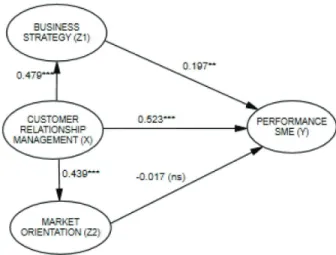
Figure 2: The Result of SEM Note: ***P < 0.001; NS; Not Significant
(Hair et al. 2014). The results are shown in Figure 2, while the path values between the study variables are shown in Table 3.
5. Discussion
The results of the reveal that CRM contributes to the improvement of BS. It means that if the CRM strategy can be directed and developed it will be able to trigger and increase
the company’s BS. The dominance of continuity marketing indicators tells us that the issue of continuity marketing is the main problem that companies must face with the company’s business strategy, because by carrying out a continuous business strategy, it will create business excellence from the company, especially for the long-term interests of the company, also with a strategy of giving discounts to customers specifically, on the second and third purchases.
In terms of one-to-one marketing, the company can provide special services in order to meet the unique needs of each company’s customers, also able to handle each customer complaint according to their needs. The strategy to establish partnerships with customers, establish partnerships with industry, and partnerships with the government also needs to be done. This finding also shows that CRM contributes to increasing the company’s MO. The results means that, when a company implements a CRM that is appropriate by utilizing digital technology, it will have an impact on the company’s market orientation.
The results of the study show that CRM contributes
positively to improve the performance of SMEs. CRM
implementation will be able to increase the performance
of SMEs, which is in line with the reality that with CRM,
customer data will be available in the company’s customer
database, so that if the company will carry out promotional
activities, new products will quickly be distributed to
customers, thus, this will have an impact on the performance
of SMEs. Therefore, the company should always improve the
quality of its CRM usage, with the latest digital technology
programs, so that consumers will increasingly trust and be satisfied with the quality of the company’s services.
Studies on CRM at the time of the COVID-19 pandemic are few, as are studies on the performance of SMEs in terms of the relationship between BS and MO, therefore this research offers a novel perspective. Although conducted during the COVID-19 pandemic, the results of the study showed that BS influences the performance of SMEs. This shows that the presence of BS companies contributes to the performance of SMEs. This happens because the BS is indeed an organizational tool, and also the implications of management concepts to achieve company goals. The dominance of the competition environment indicators on the BS variable shows that the competitive environment is a problem that must immediately be addressed by the company.
This can be done by implementing company strategies that are tailored to the company’s goals, which are tailored to the environment of the company’s competitors, and also the company should adopt a competitive strategy that benefits the company. Companies should also pay attention to customer satisfaction, because customer satisfaction is the company’s goal. Therefore, companies should innovate to maintain customer satisfaction. Companies should work in accordance with the vision, mission, and goals that have been previously planned.
Empirical results show that market orientation (MO) does not affect the performance of SMEs. This shows that the COVID-19 pandemic resulted in the company’s MO not being able to make a positive contribution to the performance of SMEs.
Under normal conditions, MO is a tangible tool that companies can use in maintaining a target market. Where in the current COVID-19 pandemic condition, all markets are closed, transaction activities stop, so market demand and supply also stop. But the MO also provides an appropriate and fast response to change. Therefore, the batik industry took steps to lay off some of its employees, and for a while the production stopped, and the focus was only selling items that had been previously produced. This is done to reduce expenses that must be borne, and also try to switch to producing masks with batik patterns.
With the presence of accurate indicators in making counter measures in anticipation of competitors, the company responds to changes that occur in the market and conduct counter strategy in anticipation of market changes.
Also, managers and marketing executives should continually ask customers for information about batik. Although in the condition of the COVID-19 pandemic, the company should also prepare products in accordance with customer information and desires, which will be produced after Pandemic ends. All levels of the company are expected to have an involvement in solving various problems related to the impact of Pandemic COVID-19 on the company.
6. Conclusion
The results of this study explain the relationship between CRM, BS, MO, and the performance of the batik industry’s SMEs. This result is an important contribution, especially in marketing management, in the current abnormal conditions.
In the COVID-19 pandemic situation, the implementation of a CRM strategy can encourage the performance of the small- and medium-sized enterprises in the batik industry in East Java, while the market orientation cannot encourage the increase in the performance of the small- and medium-sized enterprises in the batik industry. To be able to maintain the sustainability of the company, the steps taken are laying off some of its employees and for a while the production stops; the focus is only selling items that have been previously produced.
References
Alawiyah, I., & Humairoh, P. N. (2017). The Impact of Customer Relationship Management on Company Performance in Three Segments. Jurnal Ekonomi Bisnis, 22(2), 132–144 [Indonesia].
Balakrishnan, M. (2006). Customer relationship orientation- evolutionary link between market orientation and customer relationship management’, in A. Gupta (eds), Proceedings of the 6th Conference on Business and Economics (GCBE), ABER, Lynchburg, USA, 1–32.
Buttle, F. (2007). Customer Relationship Management: Concepts and Technology. Oxford: Butterworth-Heinemann, imprint of Elsevier.
Table 3: The Results of Path Analysis and Hypothesis Testing
H Relationship Standardized Coefficient SE CR P Decision
H1 CSR → BS 0.479 0.097 5.028 0.000 Accepted
H2 CSR → MO 0.439 0.118 3.390 0.000 Accepted
H3 CSR → PSME 0.523 0.110 4.625 0.000 Accepted
H4 BS → PSME 0.197 0.076 2.490 0.013 Accepted
H5 MO → PSME –0.017 0.094 0.199 0.843 Reject
Note: SE: standard error; CR: critical ratio; P: probability.
Cravens, D. W., & Piercy, N. (2012). Strategic Marketing. Asia Higher Education Business & Economics Marketing. New Delhi: McGraw-Hill.
Depkop (2020). Development of Micro, Small, Medium Enterprises (MSMEs). Retrieved December 3, 2020, from: http://www.
depkop.go.id/uploads/laporan/1580223129 [Indonesia]
Ellis, P. D. (2006). Market orientation and performance: A meta-analysis and cross-national comparisons, Journal of Management Studies, 43(5), 1089–1107. https://doi.
org/10.1111/j.1467-6486.2006.00630.x
Ernst, H., Hoyer, W. D., Krafft, M., & Krieger, K. (2011).
Customer relationship management and company performance the mediating role of new product performance. Journal of the Academy of Marketing Science 39(2), 290–306. https://doi.
org/10.1007/s11747-010-0194-5
Haislip, J. Z., & Richardson, V. J. (2017). The effect of Customer Relationship Management systems on firm performance.
International Journal of Accounting Information Systems, 27, 16–29. http://dx.doi.org/10.1016/j.accinf.2017.09.003
Hair, J. F., Anderson, R. E., Tatham, R. L., & Black, W. C. (2014).
Multivariate Data Analysis, 6th Edition. Upper Saddle River, NJ: Prentice-Hall, Inc.
Herwany, A. Febrian, E., Anwar, M., & Gunardi, A. (2021). The Influence of the Covid-19 Pandemic on Stock Market Returns in Indonesia Stock Exchange. Journal of Asian Finance, Economics and Business, 8(3), 39–47. https://doi.org/10.13106/
jafeb.2021.vol8.no3.0039
Ikasari, N. (2016). The Influence of the Implementation of Customer Relationship Management and Organizational Culture on the Improvement of Manufacturing Company Performance with the CRM-Scorecard Approach. Journal of Industrial Engineering and Management, 1(2), 1–9.
Indah, D. P., & Device (2013). Analysis of the Influence of Customer Relationship Management on Competitive Advantage and Company Performance. Business Accounting Review, 1(2), 50–61 [Indonesia].
Kotler, P., & Armstrong, G. (2012). Principles of Marketing (9th ed.). Upper Saddle River, NJ: Prentice Hall, Inc.
Jatmiko, B., Udin, U., Raharti, R., Laras, T., & Ardhi, K. F. (2021).
Strategies for MSMEs to Achieve Sustainable Competitive Advantage: The SWOT Analysis Method. Journal of Asian Finance, Economics and Business, 8(3), 505–515. https://doi.
org/10.13106/jafeb.2021.vol8.no3.0505
Javalgi, R. G., Martin, C. L., & Young, R. B. (2006). Marketing research, market orientation and customer relationship management: A framework and implications for service providers. Journal of Services Marketing 20(1), 12–23. https://
doi.org/10.1108/08876040 610646545
Jyoti, J., & Sharma, J. (2013). Impact of Market Orientation on Business Performance: Role of Employee Satisfaction and Customer Satisfaction. Vision: The Journal of Business Perspective, 16(4), 297–313.
Liew B. S. Y., Ramayah, T., & Yeap, J. A. L. (2014). Market orientation, customer relationship management (CRM) implementation intensity, and CRM performance: A structural model. Handbook of Research on Managing and Influencing Consumer Behavior, Chapter 7, 149. https://doi.org/ 10.4018/
978-1-4666-6547-7.ch007
Lin, C., Peng, C., & Kao, D. T. (2008). The innovativeness effect of market orientation and learning orientation on business performance, International Journal of Manpower, 29(8), 752–772. https://doi.org/ 10.1108/01437720810919332 Martini, I. A. O., Karwini, N. K, Sarmawa, I. W .G., & Sari, D. M.
F. P. (2019). The Role of Customer Relationship Management and Partnership Relationship Management to Mediate Market Orientation on Marketing Performance. WSEAS Transactions on Business and Economics, 16, 326–321.
Marty, M. (2010). Successfully Managing Marketing Mix, CRM, Customer Value, and Customer Dependency. Case in Shopping Center marketing. Bandung: Publisher Alfa Beta [Indonesia]
Minuzu, M. (2010). The Influence of External and Internal Factors on the Performance of Micro, Small and Medium Enterprises in South Sulawesi. Jurnal Manajemen dan Kewirausahaan 12(1), 33–41 [Indonesia].
Mohammad, A, Rashid, B., & Tahir, S. (2013). Assessing the influence of customer relationship management (CRM) dimensions on organization performance: An empirical study in the hotel industry. Journal of Hospitality and Tourism Technology, 4(3), 228–247. https://doi.org/10.1108/JHTT-01-2013-0002
Moghaddam, M. D., Vazife, Z., & Roknabadi, A. D. (2016).
The Effects of Firm Orientation and Customer Relationship Management on firm Performance. International Journal of Humanities and Cultural Studies, 3(2016), 1000–1021. https://
www.ijhcs.com/index.php/ ijhcs/index
Mönkkönen, M. (2011). Towards market oriented customer relationship management. Aalto University. https://urn.fi/
URN:NBN:fi:aalto-201402231479
Mustikowati, R. I., & Tyasari, I. (2015). Entrepreneurship Orientation, Innovation, and Business Strategies for Improving Company Performance (Study at Malang Central District SMEs). Jurnal Ekonomi Modernisasi, 10(1), 23–37. https://doi.
org/ 10.21067/jem.v10i1.771 [Indonesia]
Nasution, F. N., & Rafiki, A. (2018). The Effect of CRM on Organization Performance: A Study of Medium Enterprises in Indonesia. Journal of Entrepreneurship Education, 21(2S), 1–8. https://www.abacademies.org/
Ozturk, M. B. E., & Cavdar, S. C. (2021). The Contagion of Covid-19 Pandemic on The Volatilities of International Crude Oil Prices, Gold, Exchange Rates and Bitcoin. Journal of Asian Finance, Economics and Business, 8(3), 171–179. https://doi.
org/ 10.13106/jafeb.2021.vol8.no3.0171
Putra, I. G. C., Sunarsiha, N. M., Novitasaria, L. G, & Setini, M.
(2020). Exploring the relationship between social capital, innovation capability and innovation during the coronavirus
pandemic. Uncertain Supply Chain Management, 8(2020), 857–864. https://doi.org/10.5267/j.uscm.2020.5.007
Reimann, M., Schilke, O., & Thomas, J. (2010). Customer relation- ship management and firm performance: The mediating role of business strategy. April 2010, Journal of the Academy of Marketing Science, 38(3), 326–346. https://doi.org/10.1007/
s11747-009-0164-y
Reinartz, W., Krafft, M., & Hoyer, W. D. (2004). The Customer Relationship Management Process: Its Measurement and Impact on Performance. Journal of Marketing Research, 41(3), 293–305. https://doi.org/10.1509/jmkr.41.3.293.35991 Rodriguez, C., Carrillat, F. A., & Jaramillo, F. (2004). A meta-
analysis of the relationship between market orientation and business performance: evidence from five continents.
International Journal of Research in Marketing, 21(2004), 179–200. https://doi.org/10.1016/j.ijresmar. 2003.07.001 Sahela, K. Z., Susanti, R., & Adjie, A. R. (2021). The Influence
of Government Dimension on Financial Education and Empowerment of Micro-, Small- and Medium-Sized Enterprises in Indonesia. Journal of Asian Finance, Economics and Business, 8(3), 637–643. https://doi.org/10.13106/
jafeb.2021.vol8.no3.0637
Samsudeen, S. N., Thelijjagoda, S., & Sanjeetha, M.B.F. (2021).
Social Media Adoption: Small and Medium-sized Enterprises’
Perspective in Sri Lanka. Journal of Asian Finance, Economics and Business, 8(1), 759–766. https://doi.org/10.13106/
jafeb.2021.vol8.no1.759
Sandvik, I. L., & Sandvik, K. (2003). The impact of market orientation on product innovativeness and business performance. International Journal of Research in Mar
keting, 20(4), 355–376. https://doi.org/10.1016/j.ijresmar.
2003.02.002
Syaifullah, J., Syaifudin, M., Sukendar, M. U., & Junaedi, J.
(2021). Social Media Marketing and Business Performance of MSMEs During the Covid-19 Pandemic. Journal of Asian Finance, Economics and Business, 8(2), 523–531. https://doi.
org/10.13106/jafeb.2021.vol8.no2.0523
Salameha, A. A., Hatamleh, A., Azim, M. S., & Kanaan, A. G.
(2020). Customer oriented determinants of e-CRM success factors. Uncertain Supply Chain Management, 8(2020), 713–720. https://doi.org/10.5267/j.uscm.2020.8.001
Satwika, N. K. P, & Dewi, N. M. W. K. (2018). Effect of Market Orientation and Innovation on Competitive Advantage and Business Performance. Jurnal Manajemen Unud, 7(3),
1481–1509. https://doi.org/10.24843/ EJMUNUD. 2018.v7.i03.
p013 [Indonesia]
Setyawati, H. A. (2013). The Effect of Entrepreneurial Orientation and Market Orientation on Enterprise Performance through Competitive Advantage and Perception of Environmental Uncertainty as Prediction of Moderation Variables (Survey on Trade MSMEs in Kebumen Regency). Jurnal Fokus Bisnis, 12(2), 20–33 [Indonesia].
Siregar, A. P. (2016). Influence of Customer Relationship Management and Business Strategy Quality on Competitive Advantage in Improving Unit Performance (Study of Bank BNI Regional Office 05). Jurnal Sains Pemasaran Indonesia, 15(3), 193–205 [Indonesia].
Soewarno, N. (2013). The Effect of Business Strategies on Managerial Performance Through Information Capital Readiness and Performance Measurement Systems. Jurnal Ekonomi dan Bisnis, 23(1), 96–112 [Indonesia].
Sulaiman, M. A., Baharum, M. A., & Ridzuan, A. (2014). Customer Relationship Management (CRM) Strategies Practices in Malaysia Retailers. Procedia Socialand Behavioral Sciences, 130 (2014), 354–361. https://doi.org/10.1016/j.
sbspro.2014.04.042
Tamošiūniene, R., & Jasilioniene, R. (2007). Customer relationship management as business strategy appliance: Theoretical and practical dimensions, Journal of Business Economics and Management, 8(1), 69–78. https://doi.org/10.3846/16111699.
2007.9636154
Wang, I. C, Huang, C. Y., Chen, Y. C., & Lin, Y. R. (2010). The Influence Of Customer Relationship Management Process On Management Performance. The International Journal of Organizational Innovation, 2(3), 41–50. https://doi.org/
10.1108/JHTT-01-2013-0002
Wu, W. (2002). Customer relationship management technology, market orientation, and organizational performance. Masters thesis, Concordia University. https://spectrum.library.
concordia.ca/2154/
Yanney, J. P., Dennis, K. A., & Awuah, G. K. (2014). The Effect of Business Strategy on Organizational Performance of SmallMedium Scale Enterprises in the Manufacturing Sector of Ghana. Munich, GRIN Verlag. https://www.grin.com/
document/294536
Yuliansyah, Y., Gurd, B., & Mohamed, N. (2017). The significant of business strategy in improving organizational performance, Humanomics, 33(1), 56–74. https://doi.
org/10.1108/H-06-2016-0049