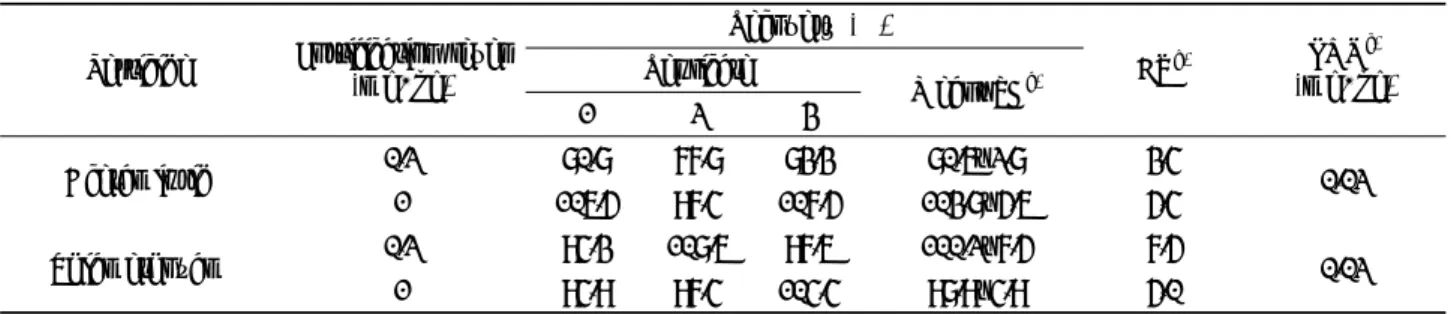
*Corresponding author: Hee-Ra Chang Phone: +82-41-540-9696; Fax: +82-41-540-9696;
E-mail: [email protected]
Korean J Environ Agric. 2018;37(2):97-103. Korean Online ISSN: 2233-4173
Published online 2018 June 29. https://doi.org/10.5338/KJEA.2018.37.2.17 Print ISSN: 1225-3537
시설재배 근대 중 Neonicotinoid계 살충제 Acetamiprid 및 Thiamethoxam의 생산단계 잔류특성
장희라1*, 유정선1, 도정아2
1호서대학교 식품제약공학부, 2식품의약품안전처 식품의약품안전평가원 잔류물질과
Residue Dissipation Patterns of Neonicotinoid Acetamiprid and Thiamethoxam in Swiss Chard for the Harvest Periods under Greenhouse Conditions
Hee-Ra Chang
1*, Jung-Sun You
1and Jung-Ah Do
2(
1Department of Food & Pharmaceutical Engineering, Graduate School of Hoseo University, Asan 31499, Korea,
2Pesticide and Verterinary Drug Residues Division, Food Safety Evaluation Department, Ministry of Food and Drug Safety, Cheongju 28159, Korea)
Received: 15 June 2018/ Revised: 20 June 2018/ Accepted: 25 June 2018 Copyright ⓒ 2018 The Korean Society of Environmental Agriculture
This is an Open-Access article distributed under the terms of the Creative Commons Attribution Non-Commercial License (http://creativecommons.org/licenses/by-nc/3.0) which permits unrestricted non-commercial use, distribution, and reproduction in any medium, provided the original work is properly cited.
ORCID Hee-Ra Chang
http://orcid.org/0000-0002-0307-7703
97
Abstract
BACKGROUND: Dissipation of acetamiprid and thiamethoxam in greenhouse grown chard samples was evaluated at 5 intervals including the pre-harvest interval after application.
This study was conducted to determine the residue levels, the biological half-lives and dissipation rate of acetamiprid and thiamethoxam in chard under controlled conditions.
METHODS AND RESULTS: Acetamiprid and thiamethoxam were applied in accordance with good agricultural practices for chard. Chard samples were collected at 0, 1, 2, 3, 5, 7, 10 and 14 days after application. Quantitaion was performed by HPLC-DAD system with C18 column. Limit of quantification (LOQ) of acetamiprid and thiamethoxam were both 0.02 mg/kg for chard. The recovery of acetamiprid and thiamethoxam were 77.8~107.5% and 94.3~108.6% at two concentration levels. The half-lives of pesticide dissipation in chard for two fields were 11.9 and 8.2 days for acetamiprid and 3.6 and 3.3 days for thiamethoxam respectively. The dissipation rate of acetamiprid and thiamethoxam were estimated according to
the statistics method with a 95% confidence.
CONCLUSION: Dissipation of acetamiprid and thiamethoxam in chard were determined under greenhouse. The concentration of acetamiprid and thiamethoxam in chards at 0 days after application were below specified by Korean MRL.
Dissipation rate constant will be useful to set the pre-harvest residue limit for public health and consumer protection.
Key words: Acetamiprid, Dissipation, Residue, Swiss Chard, Thiamethoxam
서 론
국내에서 국민의 생활수준의 향상으로 건강에 대한 관심 이 높아지면서 소비자들은 농산물에 대한 잔류농약의 안전성 을 우선적으로 고려하고 있다. 이에, 정부는 농약사용에 따른 국내 생산 농산물의 안전성 확보를 위하여 2019년부터 농약 잔류허용물질 목록관리 제도(Positive list system, PLS)가 시행예정에 있으며, 농립축산식품부는 농산물 안전성 강화를 위하여 잔류허용기준을 초과하는 부적합 농산물의 신속하고 체계적인 조치마련 및 농약판매관리인 자격요건 강화 등을 계획하고 있다.
최근에 식물성 식품 섭취의 선호도가 증가하여 채소류 섭 취량의 비중이 높아지고 있어서, 채소류 중 엽채류는 작물의 형태학적 특성상 중량대비 표면적이 크고, 짧은 수확주기에
Research Article Open Access
Pesticide Acetamiprid Thiamethoxam
Chemical structure
Vapor pressure (mPa) < 0.001 (25℃) 6.6×10⁻⁶ (25℃)
log Kow 0.8 -0.13
Water solubility
(mg/L, 20-25℃) <4,250 4,100
Organic solubility (mg/L, 20-25℃)
Soluble in acetone, methanol, ethanol, dichloromethane, chloroform, acetonitrile and tetrahydrofuran
Soluble in acetone (48), ethyl acetate (7.0), dichloromethane (110), toluene (0.68), methanol (13), n-octanol (0.62), hexane (<0.001)
Table 1. Chemical structures and physico-chemical properties of acetamiprid and thiamethoxam (Turner J. A., 2015)
기인하여 농약 검출건수가 높은 비율을 나타내므로, 엽채류 재배시 사용되는 농약의 잔류량에 따른 안전성 확보는 중요 하다(Kwon et al., 2009; Jang et al., 2011; Park et al., 2015). 엽채류 중 근대의 잔류농약 검출률은 1996년에서 2007 년의 식품의약품안전처의 농산물 유해물질 잔류조사에서 25.7%였으며, 2009년 서울 강북지역에서 농약잔류 허용기준 이상의 부적합률은 13.3%, 2013년에는 부적합이 1건이었다 (Seung et al., 2010; Kime t al., 2014). 2010년~2012년 충 북지역에서 학교 급식에 제공된 엽채류 중 근대에서 총 16종 의 농약이 검출되었고, 잔류농약을 초과하여 검출된 농약도 약 3종이었고, 2016년 농산물 안전성조사에서 근대 중 잔류 허용기준 이상의 부적합 농약성분이 18종이었고, 21017년 부 적합 건수도 18건 이상이었다(Woo et al., 2013; NAPQMS, 2016 & 2017).
Neoticotinoide계 살충제인 acetamiprid 및 thiamethoxam 은 침투이행성 약제로 국내에서 2016년 농산물 안전성 조사 에서 엽채류 중 검출률이 각각 3.2% 및 2.0%, 부적합 검출횟 수는 각각 8건 및 6건이었고, 특히, 최근 농산물 안전성조사 에서 잔류농약의 부적합율은 유통단계의 1.7%에 비하여 생산 단계가 5.6%로 높게 나타나므로, 우선적으로 생산단계 농약 잔류량에 따른 안전성 확보가 필요하다(NAPQMS, 2016).
본 연구는 시설재배 근대에 대한 neonicotinoide계 살충 제 acetamiprid 및 thiamethoxam의 농약안전사용 기준에 따른 약제 처리 후의 일자별 잔류량으로부터 감소상수 및 반 감기를 산출하여, 이에 근거하여 생산단계 농약잔류허용기준 을 설정을 위한 기초자료로 활용하여 농산물의 안전성을 확 보하고자 한다.
재료 및 방법
시험약제 및 시약
포장시험에 처리한 시험농약은 Acetamiprid 5% 액제(신 엑스, ㈜경농), Thiamethoxam 10% 입상수화제(아타라, 신 젠타코리아㈜)를 사용하였다. 잔류분석용 표준품은 Acetamiprid
(99.5%, Chem Service, USA) 및 Thiamethoxam (99.7%, Sigma-Aldrich, USA)을 사용하였고, 화학적 구조 및 물리 화학적 특성은 Table 1와 같다(Turner, 2015). HPLC급 acetone, acetonitrile, dichloromethane, water 및 n-hexane 는 Merck (Germany), Sodium sulfate 및 sodium chloride 시약은 Junsei chemical(guaranteed reagent grade, Japan), Solide phase extraction cartridge(florisil, 5 g, 30 cc)는 Agilent Technologies(USA)에서 구입하여 사용하였다.
포장시험
포장시험은 지리적 차이를 고려하여 위도가 다른 직선상 거리가 20 km 이상 다른 지역으로 시설재배 조건으로 2개 포장으로, 경기도 포천시(포장 1, 품종 : 백경근대)와 경기도 안성시(포장 2, 품종 : 백경근대)에서 수행하였다. 시험구는 반복당 10 m
2로 선정하여, 처리구 3 반복 및 무처리구 1 반 복으로 구성하였다. 약제처리는 작물보호제지침서(KCPA, 2014)의 안전사용기준에 따라 약제를 희석하여 조제한 후, 소 형 엔진 배부식 분무기(YAMATO, DY-435Y, Japan)를 이 용하여 약제를 살포하였다(Table 2).
시료채취는 약제처리 후 0, 1, 2, 3, 5, 7, 10 및 14일차에 일자별로 출하시기에 적합한 크기를 선정하여 1 kg 이상 채 취하였다. 채취한 시료는 약제 및 채취 일자를 라벨로 표시한 polyethylene bag에 넣은 후, ice box에 보관하여 24시간 이내에 실험실로 운반하였다.
시료 조제
실험실로 운반된 시료는 개체 무게를 측정한 후, 시료 전 처리를 위하여 세절하였다. 세절한 시료는 deepfreezer(-70℃
이하)에서 48시간 이상 보관한 후, homogenizer를 이용하여 균질화하였다. 전처리가 완료된 시료는 분석용 시료와 보관용 시료로 구분하여 냉동보관(-15℃ 이하)하였다.
분석법 확립
식품 등 시험법 마련 표준절차에 관한 가이드라인에 따라
Pesticide
Formulation Application
PHIb) (days)
MRLc) (mg/kg) Type %AIa) Spray concentration
(kg ai/hl)
Max.
No.
Interval (days)
Acetamiprid SLd) 5 0.005 2 7 3 7.0
Thiamethoxam WGe) 10 0.005 2 7 7 10.0
a)Active ingredient, b)Pre-harvest interval, c)Maximum residue limit, d)Soluble concentrate, e) Water dispersible granule Table 2. Good agricultural practice and maximum residue limit of acetamiprid and thiamethoxam on Swiss Chard in Korea
Pesticides Acetamiprid Thiamethoxam
Instrument Agilent 1260 Infinity Series HPLC
Column Phenomenex Luna 5μ C18 (250×4.60 mm)
Detector Diode Array Detector (DAD)
Flow rate 1.0 mL/min
Mobile phase
Time (min) Acetonitrile (%) Water (%)
0 5 95
15 30 70
20 5 95
Time (min) Acetonitrile (%) Water (%)
0 5 95
15 30 70
20 5 95
25 5 95
Wavelength 258 nm
Injection volume 40 μL
Table. 3. HPLC gradient conditions for the analysis of acetamiprid and thiamethoxam in Swiss Chard
분석법 정량한계(Limit of Quantification, LOQ)는 표준용 액을 이용하여, 기기분석에서 Signal to noise ratio(S/N)가 10 이상의 농도로부터 산출하였다(MFDS, 2016). Acetamiprid 및 Thiamethoxam 정량분석을 위한 HPLC 기기분석 조건 은 Table 3과 같다. Acetamiprid 표준품(99.5%) 10.05 mg 및 Thiamethoxam 표준품(99.7%) 10.03 mg을 각각 acetonitrile /water(5/95, v/v) 10 mL에 용해하여 1,000 mg/L stock solution을 조제한 후, acetonitrile/water(5/95, v/v)로 계 열 희석하여 0.05, 0.1, 0.2, 0.5, 1.0, 2.0, 5.0, 7.0 및 10.0 mg/L 검량선용 표준용액을 조제하였다. 검량선 표준용액의 직선성은 chromatogram에서 peak area를 기준으로 검량 선을 작성하여 회귀식에 의한 결정계수(r
2) 값이 0.99이상으 로 확인하였다.
회수율시험
Acetamiprid 및 thiamethoxam의 회수율 시험는 각각 정량한계 10배(0.2 mg/kg) 및 정량한계 50배(1.0 mg/kg) 수준의 2개 농도에서 3반복 시험을 수행하였다. 시료 25 g에 회수율시험 농도로 각각의 표준용액을 처리하고, acetonitrile /water (80/20, v/v) 100 mL을 가하여 250 rpm으로 20분간 교반한 후 감압 여과하였다. 추출액을 50 mL의 Volumetrick flask에 옮긴 후 포화식염수로 눈금을 맞추고, 20 mL을 취하 여 n-Hexane 20 mL로 2회 분배한 후, dichloromethane 20 mL로 2회 분배하였다. 각각의 분배단계에서 유기용매 층
은 sodium sulfate에 통과시켜 수분을 제거하였고, 40℃에서 rotary vacuum evaporator (V-700, BUCHI, Switzeland)를 이용하여 감압 농축하였다. 농축 건고물은 dichloromethane 10 mL로 재용해한 후, dichloromethane 25 mL로 활성시 킨 florisil SPE cartridge (5 g, 30 cc)를 이용하여 정제하였 다. florisil SPE cartridge에 시료용액 10 mL를 넣은 후, acetone/ dichloromethane (4/96, v/v) 50 mL로 세정하 고 acetone/dichloromethane (45/55, v/v) 70 mL로 용 출하였다. 용출액은 N
2gas로 농축한 후, acetonitrile/ water (5/95, v/v) 4 mL로 재용해하여 HPLC-DAD (Agilnet 1200 Infinity Series, Agilent Technologies, USA)로 정 량분석을 수행하였다(Table 3).
저장안정성 및 일자별 잔류량
저장안정성은 3반복으로 무처리 시료 25 g에 acetamiprid 및 thiamethoxam 표준용액을 1.0 mg/kg 수준으로 처리하 여 균일하게 혼합한 후, 냉동보관(-20℃ 이하)하여, 87일 후 에 회수율 시험과 동일한 방법으로 시료분석을 수행하여 확 인하였다. 시설재배 근대 중 acetamiprid 및 Thiamethoxam의 일자별 잔류량 확인을 위한 시료분석은 회수율 시험과 동일 한 방법으로 수행하였다.
생물학적 반감기 및 감소상수
근대 중 acetamiprid 및 thiamethoxam의 일자별 잔류
Fig. 1. Temparture and humidity of residue field trials for Swiss Chard.
Fig. 2. Changes of Swiss Chard weight at sample harvest intervals.
Pesticide Fortification level (mg/kg)
Recovery (%)
CVb) LOQc)
(mg/kg) Replicate
Mean±SDa)
1 2 3
Acetamiprid 0.2 80.8 77.8 83.3 80.6±2.8 3.4
1 106.5 97.4 107.5 103.8±5.6 5.4 0.02
Thiamethoxam 0.2 94.3 108.6 97.6 100.2±7.5 7.5
1 94.9 97.4 104.4 98.9±4.9 5.0 0.02
a)Standard deviation, b)Coefficient of variation, c)Limit of quantification
Table 4. Limit of quantification and recoveries of acetamiprid and thiamethoxam in Swiss Chard
량을 적용하여 회귀분석에 의해 감소상수 및 생물학적 반감
기를 산출하였고, F -검정 및 t-검정을 수행하여 회귀방정식 및 감소상수의 유의성을 확인한 후, 95% 신뢰수준의 감소상 수 하한값과 반감기를 산출하였다(MFDS, 2014).
결과 및 고찰
포장시험
포장시험 수행기간 동안 포장 1 및 포장 2의 평균기온은 각각 9.9±1.8℃ 및 11.6±1.6℃였고, 평균 습도는 77.4±7.2%
및 81.2±5.7%이었다.(Fig. 1). 약제 처리후 시료채취 일자별 포장 I 및 포장 II에서 채취한 근대의 평균 무게는 24.2±0.7 g 및 20.2±0.7 g으로 유사하였으며, 각 포장별 약제 처리후 0일 차부터 14일차까지 중량변화는 2.9% 및 3.7%였다.(Fig. 2).
분석법 검증
Acetamiprid 및 thiamethoxam의 근대 중 분석법 정량 한계는 모두 0.02 mg/kg였으며, 표준용액의 검량선은 7개 농도(0.2, 0.5, 1.0, 2.0, 5.0, 7.0 및 10.0 mg/L)에서 회귀방 정식 및 결정계수(r
2)를 산출하였고, y=1.44338x-0.60804 (r
2=0.999) 및 y=1.64724x-1.00638 (r
2=0.999)로 직선성을 확인하였다. Acetamiprid의 회수율은 저농도 및 고농도에서 평균 80.6±2.8% 및 103.8± 5.6%, thiamethoxam은 평균 100.2±7.5% 및 98.9±4.9%였으며, 변이계수(% coefficient of variation)는 acetamiprid에서 3.4% 및 5.4%이었으며, thiamethoxam에서 7.5% 및 5.0%로 생산단계 잔류허용기 준 설정을 위한 잔류성시험 분석법 검증 기준인 회수율 70∼
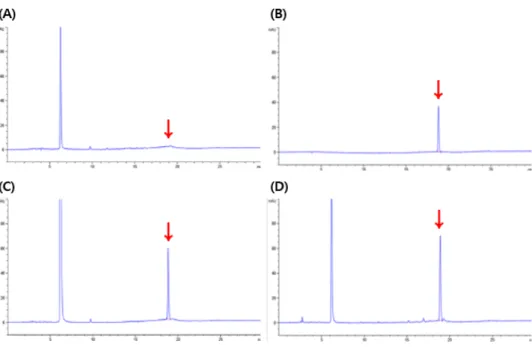
110% 및 변이계수 20% 이내로 적합하였다(Table 4, MFDS, 2014). Acetamiprid 및 thiamethoxam의 HPLC-DAD에 의 한 정량분석에서 무처리시료 및 회수율 시료에서 간섭 peak 에 의한 영향이 없는 것을 확인하였다(Fig. 3, 4).
일자별 잔류량 변화
시설재배 근대 중 acetamiprid 및 thiamethoxam의 약 제 처리 후 시간의 경과에 따른 잔류량의 감소추이를 확인한 결과, 약제 처리 후 0일차 잔류량이 acetamiprid는 포장 1 및 포장 2에서 각각 2.91 mg/kg 및 2.06 mg/kg, thiamethoxam은 각각 2.60 mg/kg 및 2.37 mg/kg으로, 식약처에서 고시되어 있는 acetamiprid 및 thiamethoxam 의 근대 중 잔류허용기준인 7.0 mg/kg 및 10.0mg/kg 이하 로 확인되었다(MFDS, 2018). 이는 acetamiprid 및 thiamethoxam의 유효성분 함량이 각각 5% 및 10%, 희석 배수 1,000배 및 2,000배로, 근대 포장 1 및 포장 2의 약제 살포시 처리구의 유효성분 살포량이 acetamiprid가 각각 0.223g 및 0.207 g, thiamethoxam은 0.243 g 및 0.233 g로 낮은 수준이기 때문이다.
Acetamiprid의 엽채류에 대한 잔류량은 호박잎에서 약제
처리 후 1일차에서 잔류량이 7.1 mg/kg으로 잔류허용기준
인 10 mg/kg보다 낮은 수준이었고, 비름나물은 약제처리
후 3일차에 1.63 mg/kg으로 잔류허용기준인 10 mg/kg이
하로, 약제처리 후 초기 0일~3일차의 잔류량이 잔류허용기준
에 비하여 낮았다(Park et al., 2010; Hur et al., 2012). 시
설재배 근대 중 thiamethoxam의 안전사용 기준에 맞게 조
Fig. 3. Repregentative chromatograms of acetamiprid by HPLC-DAD analysis(A; blank sample, B; standard 2.0 mg/kg, C; recovery 1.0 mg/kg, D; swiss chard sample at 10 days after application).
Fig. 4. Repregentative chromatograms of thiamethoxam by HPLC-DAD analysis (A; blank sample, B; standard 0.5 mg/kg, C; recovery 0.2 mg/kg, D; swiss chard sample at 14 days after application).
제하여 1회 약제처리 후 0일차 잔류량은 평균 2.35 mg/kg
~3.16 mg/kg으로 유사하였다(Rahman et al., 2015). 본 연구의 tiamethoxam 일자별 잔류량에서 약제 처리 후 7일 차에 0일차 잔류량의 약 80%수준으로 감소하므로, 7일 간격 으로 2회 처리시의 0일차 잔류량과 큰 차이가 없었을 것으로 판단된다.
생물학적 반감기 및 감소상수
시설재배 근대 중 시간의 경과에 따른 잔류량을 적용하여
통계학적 방법을 적용하여 회귀분석에 따른 acetamiprid의
생물학적 반감기는 포장 2 및 포장 2에서 각각 12.0일 및 8.2
일, thiamethoxam은 각각 3.6일 및 3.3일이었다(Fig. 5). 시
설재배 조건에서 근대 중 acetamiprid 및 thiamethoxam를
처리한 후, 시간경과에 따른 잔류량으로부터 통계학적 방법에
Fig. 5. Dissipation curves and half-lives of acetamiprid(A) and thiamethoxam(B) in Swiss Chard.
Pesticide Acetamiprid Thiamethoxam
Field No. Field I Field II Field I Field II
Dissipation regression equationa)
y=2.8361e-0.0578x (r2=0.9391)
y=1.8980e-0.0848x (r2=0.9385)
y=2.6131e-0.1935x (r2=0.9870)
y=2.5236e-0.2077x (r2=0.9747) Dissipation rate constantb) 0.0409∼0.0747 0.0598∼0.1098 0.1713∼0.2157 0.1744∼0.2410 Lower limit of dissipation
rate constant 0.0409 0.0599 0.1714 0.1744
a)Significant at
p
<0.05 by theF
-test, b)Significant atp
<0.05 by the t-testTable 5. Regression analysis for the dissipation of acetamiprid and thiamethoxam on Swiss Chard
의한 검증절차를 통하여 산출된 감소상수(95% confidence level)는 acetamiprid가 포장 1 및 포장 2에서 각각 0.0409∼
0.0747 및 0.0598∼0.1098, thiamethoxam은 각각 0.1713∼
0.2157 및 0.1744∼0.2410이었다(Table 5). Acetamiprid는 시설재배조건의 호박 및 호박잎에서 반감기가 각각 1.94 및 2.54일로, 잔류성 포장시험에서 농약의 잔류량 감소 원인은 빛, 온도 등의 물리화학적 특성 및 생장속도에 따른 희석효과 에 따른 영향이 있으며, 경엽처리 후 농약의 감소에 빛이 중 요한 역할을 하며, acetamiprid는 sunlight에 의한 반감기가 4.9일로 재배조건에서 빛에 의한 영향을 받게 된다(Gupta et al., 2008; Park et al., 2010). 시설재배 근대 중 약제 1회 처리 시 clothianidin과 합산하여 산출된 thiamethoxam 반감기는 2개 포장에서 각각 6.3일 및 4.2일이었으나, 국내 및 codex의 잔류허용기준 설정을 위한 잔류분 정의는 thiamethoxam으 로, Rahman et al. 연구결과에서 thiamethoxam의 일자별 잔류량을 선별하여 산출한 반감기는 2개 포장에서 3.6일 및 2.4일로 본 연구와 유사하였다(Rahman et al., 2015).
본 연구 결과에서 시설재배조건 근대 중 acetamiprid 및 thiamethoxam의 안전사용기준과 동일하게 약제를 처리한 후 일자별 잔류량을 근거로 하여 산출된 반감기 및 감소상수 는 생산단계 농산물의 농약잔류허용기준을 설정하기 위한 기 초자료 활용되어, 소비자에게 안전한 식품을 공급하고자 생산 단계에서부터 관리하므로서 국민건강에 기여할 수 있다.
Note
The authors declare no conflict of interest.
Acknowledgement
This research was supported by the Ministry of Food and Drug Safety, Republic of Korea (grant number : 17162MFDS010).
References