REVIEW ARTICLE
약제 유발 소화성궤양과 헬리코박터 제균 치료
주문경
고려대학교 의과대학 내과학교실
Helicobacter pylori Eradication in Drug-related Peptic Ulcer
Moon Kyung Joo
Department of Internal Medicine, Korea University College of Medicine, Seoul, Korea
Non-steroidal anti-inflammatory drugs (NSAIDs) and aspirin are the most frequently prescribed drugs worldwide, and their long-term use often leads to peptic ulcers (PUs) along with serious complications, such as bleeding and perforation. Helicobacter pylori (H. pylori) infection is a significant risk factor for developing NSAID-related PU and ulcer bleeding during long-term aspirin use. In a revised version of the Clinical Guidelines for Drug-induced Peptic Ulcer, two statements regarding H. pylori eradication are recommended. 1) Patients scheduled for long-term NSAID therapy should be tested and treated for H. pylori infection to pre- vent PU and its complications. 2) Patients with a history of PU receiving long-term low-dose aspirin (LDA) therapy should undergo treatment for H. pylori infection to prevent PU and its complications. On the other hand, unlike NSAID-naïve patients, the pre- ventive effects of H. pylori eradication in chronic NSAID users are unclear. In addition, anti-ulcer drugs, such as proton pump in- hibitors, may be necessary for maintenance therapy after H. pylori eradication in a subset of long-term LDA users, particularly if the patients are taking concomitant antiplatelet agents or anticoagulants. (Korean J Gastroenterol 2020;76:227-231)
Key Words: Peptic ulcer; Anti-inflammatory agents, non-steroidal; Aspirin; Helicobacter pylori
Received October 7, 2020. Revised October 23, 2020. Accepted October 23, 2020.
CC This is an open access article distributed under the terms of the Creative Commons Attribution Non-Commercial License (http://creativecommons.org/licenses/
by-nc/4.0) which permits unrestricted non-commercial use, distribution, and reproduction in any medium, provided the original work is properly cited.
Copyright © 2020. Korean Society of Gastroenterology.
교신저자: 주문경, 08308, 서울시 구로구 구로동로 148, 고려대학교 의과대학 고려대학교 구로병원 소화기내과
Correspondence to: Moon Kyung Joo, Division of Gastroenterology, Department of Internal Medicine, Korea University Guro Hospital, Korea University College of Medicine, 148 Gurodong-ro, Guro-gu, Seoul 08308, Korea. Tel: +82-2-2626-3007, Fax: +82-2-2626-1038, E-mail: [email protected], ORCID: https://orcid.org/
0000-0001-6050-3695
Financial support: None. Conflict of interest: None.
서 론
비스테로이드소염제와 아스피린은 전 세계적으로 가장 많 이 처방되는 약제들로서, 소화성궤양과 그 주요 합병증인 출 혈과 천공을 일으키는 주요 원인이 되기도 한다. 이러한 약제 에 의해 유발된 소화성궤양의 고위험군으로는 합병증을 동반 한 소화성 궤양의 과거력이 있으며, 그 밖에 65세 이상의 고 령자, 합병증을 동반하지 않은 소화성 궤양의 과거력 또는 항 혈소판제, 항응고제, 스테로이드제 등의 동시 복용 또한 주요 위험인자로서 알려져 있다.1그러나 헬리코박터 감염과 비스 테로이드소염제 또는 아스피린의 상호 작용에 대해서는 아직
도 잘 알려져 있지 않은 부분이 있고 이러한 약제를 장기 복용 하는 환자에서 헬리코박터 제균 치료의 효과에 대해서는 논쟁 의 여지가 있는 상태이다. 본고에서는 금번에 개정된 약제 연 관 소화성궤양의 임상진료지침의 주요 내용 중 헬리코박터 제 균 치료에 대한 내용을 비스테로이드소염제 및 아스피린 장기 복용자에서 제균 치료에 의한 소화성궤양의 예방 효과에 초점 을 맞춰 간략히 논해보고자 한다.
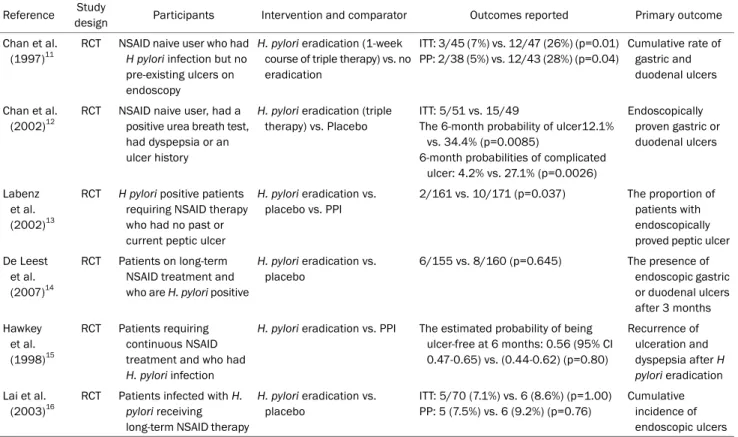
Table 1. Summary of the Evidence According to PICO; Does Eradication of Helicobacter pylori Prevent Peptic Ulcer and Its Complication in Patients with Long-term Nonsteroidal Anti-inflammatory Drug Therapy?
Reference Study
design Participants Intervention and comparator Outcomes reported Primary outcome
Chan et al.
(1997)11
RCT NSAID naive user who had H pylori infection but no pre-existing ulcers on endoscopy
H. pylori eradication (1-week course of triple therapy) vs. no eradication
ITT: 3/45 (7%) vs. 12/47 (26%) (p=0.01) PP: 2/38 (5%) vs. 12/43 (28%) (p=0.04)
Cumulative rate of gastric and duodenal ulcers
Chan et al.
(2002)12
RCT NSAID naive user, had a positive urea breath test, had dyspepsia or an ulcer history
H. pylori eradication (triple therapy) vs. Placebo
ITT: 5/51 vs. 15/49
The 6-month probability of ulcer12.1%
vs. 34.4% (p=0.0085)
6-month probabilities of complicated ulcer: 4.2% vs. 27.1% (p=0.0026)
Endoscopically proven gastric or duodenal ulcers
Labenz et al.
(2002)13
RCT H pylori positive patients requiring NSAID therapy who had no past or current peptic ulcer
H. pylori eradication vs.
placebo vs. PPI
2/161 vs. 10/171 (p=0.037) The proportion of patients with endoscopically proved peptic ulcer De Leest
et al.
(2007)14
RCT Patients on long-term NSAID treatment and who are H. pylori positive
H. pylori eradication vs.
placebo
6/155 vs. 8/160 (p=0.645) The presence of endoscopic gastric or duodenal ulcers after 3 months Hawkey
et al.
(1998)15
RCT Patients requiring continuous NSAID treatment and who had H. pylori infection
H. pylori eradication vs. PPI The estimated probability of being ulcer-free at 6 months: 0.56 (95% CI 0.47-0.65) vs. (0.44-0.62) (p=0.80)
Recurrence of ulceration and dyspepsia after H pylori eradication Lai et al.
(2003)16
RCT Patients infected with H.
pylori receiving long-term NSAID therapy
H. pylori eradication vs.
placebo
ITT: 5/70 (7.1%) vs. 6 (8.6%) (p=1.00) PP: 5 (7.5%) vs. 6 (9.2%) (p=0.76)
Cumulative incidence of endoscopic ulcers PICO, population, intervention, comparison, outcome; RCT, randomized controlled trial; NSAID, nonsteroidal anti-inflammatory drug; H. pylori, Helicobacter pylori; ITT, intention-to-treat; PP, per-protocol; PPI, proton pump inhibitor; CI, confidence interval.
본 론
1. 임상진료지침 개발과정
2017년 6월 대한상부위장관·헬리코박터학회 산하의 약제 연관 소화성궤양 임상진료지침 개발위원회를 구성하여 임상진 료지침 개정 작업을 시행하였다. 개발위원회는 2009년 대한소 화기학회와 대한
Helicobacter
및 상부위장관 연구학회에서 작성한 소화성궤양의 진단과 치료에 대한 가이드라인2-7및 외 국의 가이드라인1,8,9의 내용을 검토하고 내부 검토 과정을 거쳐 11개의 핵심 질문을 population, intervention, comparison, outcome의 원칙 하에 선정하였는데, 이 중 2개는 헬리코박터 제균 치료에 관한 내용이었다.10 즉, “비스테로이드소염제를 장기간 투약하는 환자에서 헬리코박터 제균 치료는 소화성궤 양 및 합병증을 예방하는가?”, “소화성궤양의 과거력이 있는 저용량 아스피린 장기 복용 환자에서 헬리코박터 제균 치료는 궤양 및 출혈을 예방하는가?”의 두 개의 핵심 질문이 이에 해당 하였으며, population에 해당하는 비스테로이드소염제, 아스 피린 및 소화성궤양 관련 색인단어와 intervention에 해당하는 헬리코박터 제균 치료 관련 색인단어의 조합으로 검색하였다 (Supplementary Table 1). 이후 문헌의 질 평가 및 메타분석을시행하여 권고안을 도출하고 grading of recommendations assessment, development and evaluation (http://www.
gradeworkinggroup.org) 방법을 이용하여 권고 강도 및 근거 수준을 도출하였다. 개발위원회에서 도출한 권고안으로 modi- fied Delphi 기법을 이용하여 전문가 패널을 대상으로 한 무기 명 투표를 시행하였고, 헬리코박터 제균 치료와 연관된 두 개의 권고안은 모두 투표 인원의 3분의 2 이상의 동의를 획득하여 권고안으로 채택되었다.
2. 권고안의 내용 및 배경
1) 비스테로이드소염제와 헬리코박터 제균 치료
임상진료지침 개발위원회는 비스테로이드소염제를 장기 복 용하는 환자에서 헬리코박터 제균 치료에 의한 소화성궤양 및 합병증의 예방 효과에 대한 6건의 무작위 배정 연구를 검색하였 는데(Table 1),11-16메타분석 결과 전체적으로 헬리코박터 제균 치료는 비스테로이드소염제 장기 투약과 관련된 소화성궤양의 발생을 유의하게 감소시켰지만(공동위험비[pooled RR] 0.54, 95% CI 0.31-0.94), 아군 분석에서 이러한 효과는 비스테로이드 소염제 장기 복용의 과거력이 없는 초치료 환자군에서만 유의
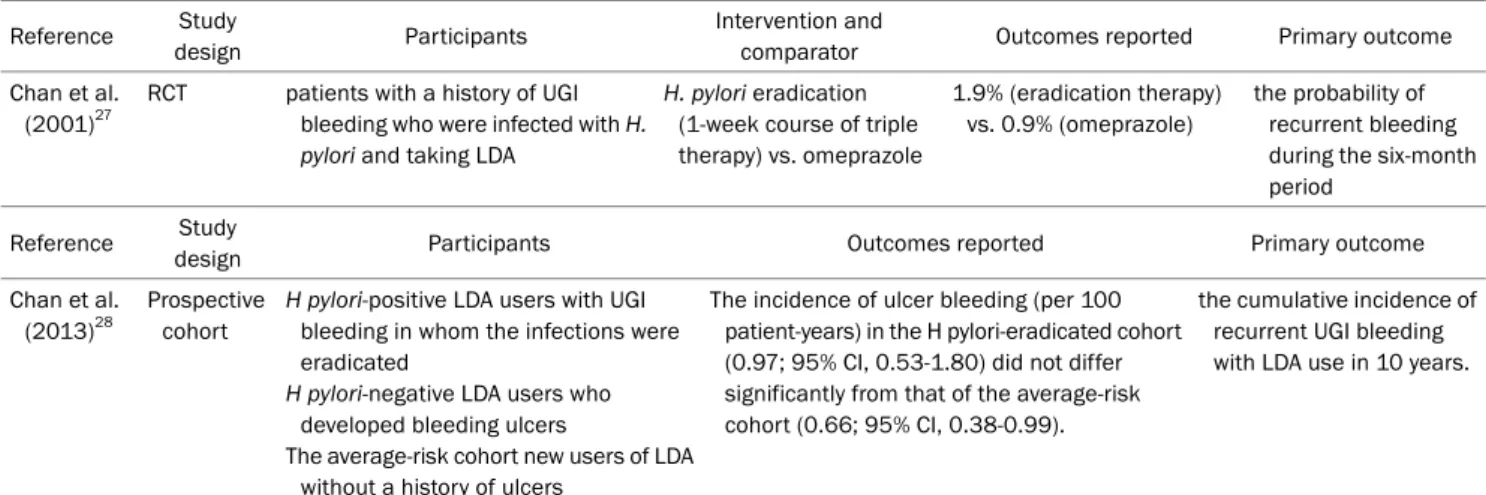
Table 2. Summary of the Evidence According to PICO; Does Eradication of Helicobacter pylori Prevent Ulcer and Bleeding in Patients on Long-term Low Dose Aspirin Therapy Who Have a History of Peptic Ulcer?
Reference Study
design Participants Intervention and
comparator Outcomes reported Primary outcome
Chan et al.
(2001)27
RCT patients with a history of UGI bleeding who were infected with H.
pylori and taking LDA
H. pylori eradication (1-week course of triple therapy) vs. omeprazole
1.9% (eradication therapy) vs. 0.9% (omeprazole)
the probability of recurrent bleeding during the six-month period
Reference Study
design Participants Outcomes reported Primary outcome
Chan et al.
(2013)28
Prospective cohort
H pylori-positive LDA users with UGI bleeding in whom the infections were eradicated
H pylori-negative LDA users who developed bleeding ulcers
The average-risk cohort new users of LDA without a history of ulcers
The incidence of ulcer bleeding (per 100 patient-years) in the H pylori-eradicated cohort (0.97; 95% CI, 0.53-1.80) did not differ significantly from that of the average-risk cohort (0.66; 95% CI, 0.38-0.99).
the cumulative incidence of recurrent UGI bleeding with LDA use in 10 years.
PICO, population, intervention, comparison, outcome; RCT, randomized controlled trial; UGI, upper gastrointestinal; H. pylori, Helicobacter pylori;
LDA, low dose aspirin; CI, confidence interval.
하였고(pooled RR 0.27, 95% CI 0.14-0.53), 이미 비스테로이드 소염제를 장기 복용중인 환자군에서는 유의하지 않았다 (pooled RR 0.92, 95% CI 0.58-1.46).10 헬리코박터 제균 치료의 효과가 비스테로이드소염제의 초치료 환자와 장기 복용 환자에 서 차이가 나는 이유는 명확치 않다. 다만, 비스테로이드소염제 는 상부위장관 점막에 여러 작용, 예를 들면 cyclooxygenase 효소의 억제, prostaglandin, 점액, bicarbonate 등의 방어인자 생성의 감소, 위 pH의 감소, 다형 핵 세포의 침착 및 염증 사이토카인의 생성의 증가, 위 점막 혈류의 감소 등을 통하여 궤양 형성을 촉진하는데, 비스테로이드소염제에 장기간 노출될 경우 점막은 이러한 약제의 작용에 적응하여 약제에 의한 점막 의 손상을 상쇄하는 경향이 있다. 헬리코박터 감염은 이러한 점막의 적응 효과를 감소시키므로 비스테로이드소염제를 장기 복용하기 이전에 헬리코박터 제균 치료를 시행하면 추후 약제 의 장기 복용에 대한 점막의 적응 효과를 보존할 수 있으므로 제균 치료에 의한 소화성궤양의 예방 효과가 있는 것으로 생각 된다.17
상기 주제에 대한 기존 외국의 가이드라인의 내용을 살펴보 면, American College of Gastroenterology에서 발표한 헬리 코박터의 진단과 치료에 대한 가이드라인에서는 “비스테로이 드소염제 장기 복용을 처음 시작하는 환자에서는 헬리코박터 감염 검사를 시행하여 양성이면 제균 치료를 시행하여야 하며, 이미 비스테로이드소염제를 장기 복용 중인 환자에서는 헬리코 박터 검사 및 제균 치료의 효과는 불확실하다”라고 권고하였으 며,18 Japanese Society of Gastroenterology (JSGE)의 소화 성궤양 가이드라인에서는 “비스테로이드 초치료 환자군에서는 헬리코박터 제균 치료가 권장되나 이미 장기 복용 중인 환자군 에서는 권고되지 않는다”고 하여9 본 개발위원회의 메타분석
결과에 부합하는 권고안을 제시하였다. 국내에서 2014년에 발 표된 헬리코박터의 진단과 치료에 대한 가이드라인에서는 “만 성적으로 비스테로이드소염제를 장기 복용하는 환자의 경우 제균 치료에 의한 소화성궤양의 위험을 감소시키지 못한다”고 하였으나 구체적인 제균 치료의 지침에 대한 권고 내용은 없었 다.19본 임상진료지침 개발위원회는 “장기간의 비스테로이드 소염제 투약 시작 전에 소화성궤양 및 합병증 예방을 위해 헬리코박터 감염 검사 및 제균 치료를 권고한다”라는 안을 도출 하였고(권고 강도: 강하게 권고, 근거 수준: 높음) 투표 결과 88%의 전문가 동의를 얻어 권고안으로 최종 채택하였다.
2) 저용량 아스피린과 헬리코박터 제균 치료
저용량 아스피린 장기 복용자에서 소화성궤양과 헬리코박터 감염의 연관성은 주로 상부위장관 출혈의 관점에서 논의된 바 있으며, 이전의 한 환자-대조군 연구에서는 저용량 아스피린을 복용 중인 환자에서 헬리코박터 감염이 상부위장관 출혈의 위 험을 유의하게 증가시키고(보정교차비[adjusted odds ratio]
4.69, 95% CI 2.02-10.91) 독립적인 위험인자임을 보고하였 다.20 또한, 저용량 아스피린을 복용하는 환자를 3개월간 전향 적으로 관찰한 연구에서 헬리코박터 감염은 십이지장 궤양 발 생의 유의한 인자였으나(교차비[odds ratio] 18.5, 95% CI 2.3-149.4), 위궤양에서는 유의하지 않았다(교차비 2.3, 95%
CI 0.7-7.8).21 최근의 Maastricht V/Florence Consensus Report에서는 헬리코박터 감염군에서 아스피린 복용은 궤양 발생의 위험을 증가시키며 소화성궤양이 있는 환자에서 아스피 린의 사용은 궤양 출혈의 위험을 증가시킨다고 언급하였다.22 그러나 아스피린 복용자에서 헬리코박터균에 의한 소화성궤양 발생은 동서양에 따라 차이가 있는 것으로 생각되며, 기존의
연구에서 서양의 경우 저용량 아스피린 장기 복용자에서 헬리 코박터 감염에 의해 상부위장관 손상이나 소화성궤양이 유의하 게 증가하였으나,23,24일본의 연구에서는 같은 환자군에서 헬리 코박터 감염이 소화성궤양의 발생이 유의한 인자가 아니었다.25 이러한 차이의 원인은 명확치 않으나, 일본을 비롯한 동양의 경우 헬리코박터 감염에 의하여 위산이 억제되는 경향이 있으 나 서양의 경우 헬리코박터 감염에 의하여 위산 생성이 보존되 는 경우가 흔하기 때문인 것으로 해석된다.26
저용량 아스피린 장기 복용자에서 헬리코박터 제균에 의한 소화성궤양 및 합병증의 예방 효과에 대한 문헌은 많지 않았으 며, 임상진료지침 개발위원회는 한 건의 무작위 배정 연구와 한 건의 전향적 코호트 연구를 검색하여 분석하였다(Table 2).
먼저, 소화성궤양 출혈의 과거력이 있고 헬리코박터 감염이 확인된 저용량 아스피린 복용자에서 궤양 치료 후 제균 치료군 과 양성자펌프억제제 투약군을 무작위 배정하여 6개월간 관찰 한 연구에서 궤양 출혈의 재발율은 양 군 간에 유의한 차이를 보이지 않았다(제균 치료군: 1.9%, 양성자펌프억제제 투여군:
0.9%, 절대차[absolute difference] 1.0%, 95% CI -1.9 to 3.9, p>0.05).27 또한, 소화성궤양 출혈의 과거력이 있는 저용량 아 스피린 복용자를 3개의 코호트(헬리코박터 제균군; 헬리코박 터 음성군; 평균 위험군)로 나누어 10년간 장기 관찰한 전향적 연구에서 환자가 아스피린만 복용하는 경우에는 재출혈 빈도 가 헬리코박터 제균군과 평균 위험군 간에 유의하게 차이가 있지 않았다(0.97, 95% CI 0.53-1.80 vs. 0.66, 95% CI 0.38-0.99).28 한편, 같은 환자군에서 제균 치료 후 관찰군과 양성자펌프억제제 유지군으로 무작위 배정하여 12개월간 관 찰한 연구에서는 궤양 및 합병증의 빈도가 관찰군에서 유의하 게 높았다(14.8 vs. 1.6%, pooled RR 10.6, 95% CI 1.3-86.1, p=0.008). 이상을 요약하면, 소화성궤양 출혈의 과거력이 있는 저용량 아스피린 복용자에서 헬리코박터 제균 치료는 출혈 재 발의 예방을 위한 유효한 선택이라고 볼 수 있으며, 제균 치료 후 경우에 따라서는 양성자펌프억제제의 유지가 필요할 수 있 다. 만일 궤양 출혈의 과거력이 있으나 헬리코박터 감염이 없는 경우라면 재출혈의 위험이 높으므로 궤양 치료 후 양성자펌프 억제제의 유지가 필요하며,28 같은 환자군에서 경우에 따라서 는 양성자펌프억제제 대신 히스타민수용체억제제29를 고려할 수도 있겠다.
저용량 아스피린 복용자에서 헬리코박터 제균 치료에 대한 기존 가이드라인의 권고안을 살펴보면, American College of Gastroenterology 가이드라인이나 Maastricht V/Florence Consensus Report와 같은 서양의 가이드라인에서는 저용량 아스피린 복용자, 특히 궤양의 과거력이 있는 경우에는 헬리 코박터 검사를 시행하여 양성일 경우 제균 치료를 권고하였으
며,18,22 헬리코박터 진단과 치료에 대한 국내의 가이드라인에
서도 궤양의 과거력이 있는 저용량 아스피린 장기복용자에서 제균 치료를 권고하였다. 임상진료지침 개발위원회에서는 비 록 근거가 되는 문헌의 수가 부족하나 제균 치료의 유효성을 확인할 수 있었고 국내의 경우 헬리코박터 및 위암의 호발 지역임을 감안하여 “저용량 아스피린을 장기 복용하는 환자 에서 소화성궤양의 과거력이 있는 경우 궤양 및 출혈을 예방 하기 위해 헬리코박터 제균 치료를 권고한다”는 안을 도출하 였고, 투표 결과 79%의 전문가 동의를 획득하여 권고안으로 최종 채택하였다.
결 론
헬리코박터 감염은 비스테로이드소염제나 아스피린 복용 자에서 궤양 및 합병증의 위험을 유의하게 증가시키므로 이러 한 약제의 장기 복용자에서 제균 치료는 위장관 합병증의 예 방을 위해 중요하다. 비스테로이드소염제를 처음 복용하는 환 자에서는 제균 치료가 궤양 및 합병증의 예방에 효과적이지 만, 이미 비스테로이드소염제를 장기 복용하는 경우에는 제균 치료의 효과가 유의하지 않으므로 이러한 환자군에서 궤양 및 합병증의 예방을 위한 전략을 어떻게 세워야 할지 추가 연구 가 필요하다. 저용량 아스피린을 장기 복용하는 환자군에서 궤양 및 출혈의 과거력이 있는 경우 헬리코박터 제균 치료는 재출혈의 예방에 유효하나, 제균 치료 후 양성자펌프억제제의 유지 여부나 헬리코박터 음성 환자군에서 궤양 출혈을 예방하 기 위한 치료 전략에 대한 권고안 마련이 추후 필요할 것으로 생각된다.
REFERENCES
1. Lanza FL, Chan FK, Quigley EM; Practice Parameters Committee of the American College of Gastroenterology. Guidelines for pre- vention of NSAID-related ulcer complications. Am J Gastroenterol 2009;104:728-738.
2. Kim SG, Kim JG, Shin SK, et al. Guidelines of diagnosis for peptic ulcer disease. Korean J Gastroenterol 2009;54:279-284.
3. Kim JH, Moon JS, Jee SR, et al. Guidelines of treatment for peptic ulcer disease in special conditions. Korean J Gastroenterol 2009;54:318-327.
4. Lee JH, Lee YC, Jeon SW, et al. Guidelines of prevention and treat- ment for NSAID-related peptic ulcers. Korean J Gastroenterol 2009;54:309-317.
5. Cheung DY, Jung HY, Song HJ, et al. Guidelines of treatment for non-bleeding peptic ulcer disease. Korean J Gastroenterol 2009;
54:285-297.
6. Chung IK, Lee DH, Kim HU, et al. Guidelines of treatment for bleeding peptic ulcer disease. Korean J Gastroenterol 2009;54:
298-308.
7. Shim YK, Kim N. Nonsteroidal anti-inflammatory drug and aspir- in-induced peptic ulcer disease. Korean J Gastroenterol 2016;
67:300-312.
8. Rostom A, Moayyedi P, Hunt R; Canadian Association of Gastro- enterology Consensus Group. Canadian consensus guidelines on long-term nonsteroidal anti-inflammatory drug therapy and the need for gastroprotection: benefits versus risks. Aliment Pharmacol Ther 2009;29:481-496.
9. Satoh K, Yoshino J, Akamatsu T, et al. Evidence-based clinical practice guidelines for peptic ulcer disease 2015. J Gastroenterol 2016;51:177-194.
10. Joo MK, Park CH, Kim JS, et al. Clinical guidelines for drug-in- duced peptic ulcer, 2020 revised edition. Korean J Gastroenterol 2020;76:108-133.
11. Chan FK, Sung JJ, Chung SC, et al. Randomised trial of erad- ication of Helicobacter pylori before non-steroidal anti-in- flammatory drug therapy to prevent peptic ulcers. Lancet 1997;
350:975-979.
12. Chan FK, To KF, Wu JC, et al. Eradication of Helicobacter pylori and risk of peptic ulcers in patients starting long-term treatment with non-steroidal anti-inflammatory drugs: a randomised trial.
Lancet 2002;359:9-13.
13. Labenz J, Blum AL, Bolten WW, et al. Primary prevention of diclo- fenac associated ulcers and dyspepsia by omeprazole or triple therapy in Helicobacter pylori positive patients: a randomised, double blind, placebo controlled, clinical trial. Gut 2002;51:
329-335.
14. de Leest HT, Steen KS, Lems WF, et al. Eradication of Helicobacter pylori does not reduce the incidence of gastro- duodenal ulcers in patients on long-term NSAID treatment: dou- ble-blind, randomized, placebo-controlled trial. Helicobacter 2007;12:477-485.
15. Hawkey CJ, Tulassay Z, Szczepanski L, et al. Randomised con- trolled trial of Helicobacter pylori eradication in patients on non-steroidal anti-inflammatory drugs: HELP NSAIDs study.
Helicobacter eradication for lesion prevention. Lancet 1998;
352:1016-1021.
16. Lai KC, Lam SK, Chu KM, et al. Lansoprazole reduces ulcer relapse after eradication of Helicobacter pylori in nonsteroidal anti-in- flammatory drug users--a randomized trial. Aliment Pharmacol Ther 2003;18:829-836.
17. Sostres C, Gargallo CJ, Lanas A. Interaction between Helicobacter pylori infection, nonsteroidal anti-inflammatory drugs and/or low-dose aspirin use: old question new insights. World J Gastro- enterol 2014;20:9439-9450.
18. Chey WD, Leontiadis GI, Howden CW, Moss SF. ACG clinical guide-
line: treatment of Helicobacter pylori infection. Am J Gastro- enterol 2017;112:212-239.
19. Kim SG, Jung HK, Lee HL, et al. Guidelines for the diagnosis and treatment of Helicobacter pylori infection in Korea, 2013 revised edition. J Gastroenterol Hepatol 2014;29:1371-1386.
20. Lanas A, Fuentes J, Benito R, Serrano P, Bajador E, Sáinz R.
Helicobacter pylori increases the risk of upper gastrointestinal bleeding in patients taking low-dose aspirin. Aliment Pharmacol Ther 2002;16:779-786.
21. Yeomans ND, Lanas AI, Talley NJ, et al. Prevalence and incidence of gastroduodenal ulcers during treatment with vascular pro- tective doses of aspirin. Aliment Pharmacol Ther 2005;22:
795-801.
22. Malfertheiner P, Megraud F, O'Morain CA, et al. Management of Helicobacter pylori infection-the Maastricht V/Florence Consensus Report. Gut 2017;66:6-30.
23. Pilotto A, Franceschi M, Longoa MG, et al. Helicobacter pylori in- fection and the prevention of peptic ulcer with proton pump in- hibitors in elderly subjects taking low-dose aspirin. Dig Liver Dis 2004;36:666-670.
24. Feldman M, Cryer B, Mallat D, Go MF. Role of Helicobacter pylori infection in gastroduodenal injury and gastric prostaglandin syn- thesis during long term/low dose aspirin therapy: a prospective placebo-controlled, double-blind randomized trial. Am J Gastro- enterol 2001;96:1751-1757.
25. Shiotani A, Sakakibara T, Yamanaka Y, et al. Upper gastro- intestinal ulcer in Japanese patients taking low-dose aspirin. J Gastroenterol 2009;44:126-131.
26. Koh JS, Joo MK. The role of Helicobacter pylori infection in drug-induced peptic ulcer. Korean J Helicobacter Up Gastrointest Res 2018;18:89-94.
27. Chan FK, Chung SC, Suen BY, et al. Preventing recurrent upper gastrointestinal bleeding in patients with Helicobacter pylori in- fection who are taking low-dose aspirin or naproxen. N Engl J Med 2001;344:967-973.
28. Chan FK, Ching JY, Suen BY, Tse YK, Wu JC, Sung JJ. Effects of Helicobacter pylori infection on long-term risk of peptic ulcer bleeding in low-dose aspirin users. Gastroenterology 2013;144:
528-535.
29. Chan FK, Kyaw M, Tanigawa T, et al. Similar efficacy of pro- ton-pump inhibitors vs H2-receptor antagonists in reducing risk of upper gastrointestinal bleeding or ulcers in high-risk users of low-dose aspirin. Gastroenterology 2017;152:105-110.e1.