Repair of Acute Aortic Arch Dissection with Hypothermic Circulatory Arrest and Retrograde Cerebral Perfusion
Background: Acute thoracic aortic dissections involving the aortic arch differ in diagnosis, surgical procedures, and operative results compared to those that do not involve the aortic arch. In general cerebral perfusion under deep hypothermic circulatory arrest (HCA) is performed during the repair of the aortic arch dissection. Here, we report our surgical results of the aortic arch dissection repair using retrograde cerebral perfusion (RCP) and its safety. Material and Method: Between January 1996 and June 2002, 22 consecutive patients with aortic arch dissection underwent aortic arch repair. In 20 of them RCP was performed under HCA. RCP was done through superior vena cava in 19 patients and by systemic retrograde venous perfusion in 1, in whom it was difficult to reach the SVC. When the patient's rectal temperature reached 16 to 18
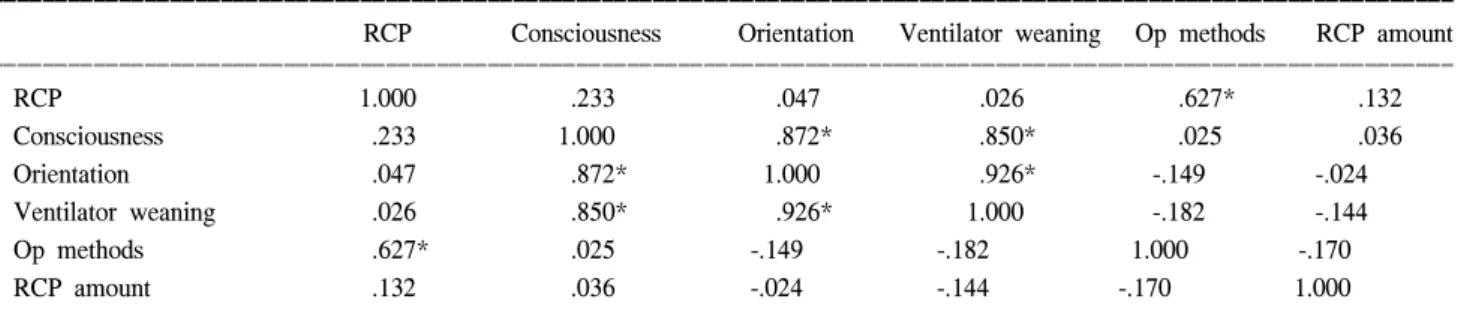
oC, systemic circulation was arrested, and the amount of RCP amount was 481.1±292.9 ml/min with perfusion pressure of 20 30 mm Hg. Result: There were two in-hospital deaths (4.5%) and one late death (9.1%). Mean circulatory arrest time (RCP time) was 54.0±13.4 minutes (range, 7 to 145 minutes). RCP time has no correlation with the appearance of consciousness, recovery of orientation, or ventilator weaning time (p=0.35, 0.86, and 0.92, respectively). Ventilator weaning was faster in patients with earlier recovery of consciousness and orientation (r=0.850, r=926; p=0.000, respectively). RCP of more than 70 minutes did not affect the appearance of consciousness, recovery of orientation, ventilator weaning time, exercise time, or hospital stay (p=
0.42, 0.57, 0.60, 0.83, and 0.51, respectively). Conclusion: Retrograde cerebral perfusion time under hypothermic cir- culatory arrest during repair of aortic arch dissection may not affect recovery of orientation, ventilator weaning time, neurologic complications, and postoperative recovery.
(Korean J Thorac Cardiovasc Surg 2004;37:43-49)
Key words: 1. Aortic dissection 2. Aorta, arch
3. Cerebral protection
4. Total circulatory arrest, induced 5. Aorta, surgery
저체온순환정지와 역행성 뇌관류에 의한 대동맥궁을 침범한 급성 대동맥 박리증의 수술결과
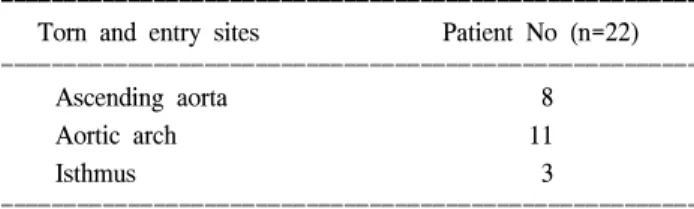
Table 1. Patients profiles Table 2. Entry sites to false lumen in aortic dissection
Table 3. Causes of aortic dissection
Table 4. Parameters for retrograde cerebral perfusion during repair of aortic arch dissection
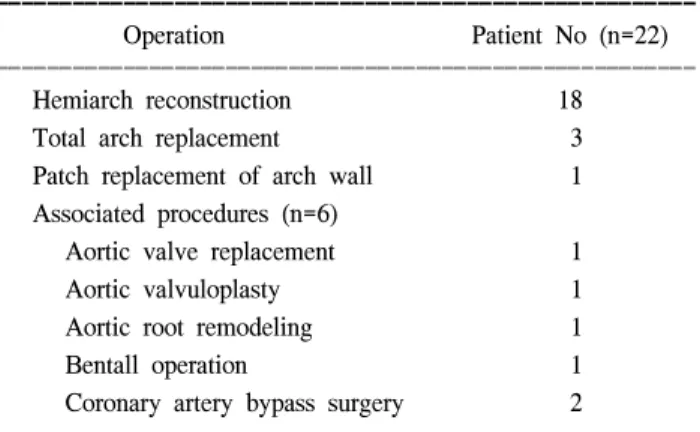
Table 5. Surgical procedures for aortic arch dissection
Table 6. Surgical results
Table 7. Correlation analysis among retrograde cerebral perfusion time (RCP), appearance of consciousness, recovery of orienta- tion, ventilator support time, operative methods, and minute RCP amount (numerical=Spearman correlation coefficient)
=국문 초록=
배경:
대상 및 방법:
결 과:
결론:
중심 단어