H.-K. Kwon ・ K.-H. Yoo ・ E.-S. Yoon ( ) 공주대학교 자연과학대학 생명과학과
(Department of Biology, Colleges of nature sciences, Kongju National University, Kongju 314-701, Republic of Korea) e-mail: [email protected]
범부채 (Belamcanda chinensis)의 식물체 재분화에 미치는 식물생장조절제의 영향
권혜경 ・ 유경화 ・ 윤의수
Effect of plant growth regulators on plant regeneration from the Belamcanda chinensis
Hye-Kyoung Kwon ・ Kyoung-Hwa Yoo ・ Eui-Soo Yoon
Received: 3 September 2010 / Accepted: 6 September 2010
ⓒKorean Society for Plant Biotechnology
Abstract To establish the optimum conditions of in vitro plant regeneration, the leaf, rhizome, and root explants of Belamcanda chinensis were cultured on the MS medium supplemented with different concentration of 2,4-D and BA. The callus induction was more effective in the root explants than the leaf and rhizome explants, and was the best on MS medium containing 3.0 mg/L 2,4-D or 1.0 mg/L 2,4-D and 3.0 mg/L BA. The highest numbers of shoots were regenerated when callus were cultured on MS medium containing 3.0 mg/L 2,4-D for 4 weeks. How- ever, the multiple shoots were induced on MS medium supplemented with the combination of 2,4-D and BA.
The normal root formation from shoot was effective on the MS medium lacking any plant growth regulators. For acclimatization, the regenerated plantlets were cultured on MS medium without sucrose and plant growth regulators for 2 weeks, and then transferred to the pot.
서 론
범부채 (Belamcanda chinensis)는 붓꽃과 (Iridaceae), 범부 채속 (Belamcanda)에 속하는 뿌리줄기가 발달한 여러해 살이 초본식물로 한국, 일본, 중국 등지에 분포하며 산지 나 바닷가에서 서식한다. 범부채라는 이름은 봄에 나오 는 싹이 난초처럼 나란히맥을 가진 길쭉한 잎이 서로 포
개어 안으며 달리는데 그 모습이 마치 펼친 쥘부채와 같 아 “부채”가 되었고, 꽃이 황적색 바탕에 붉은 반점이 박 혀 표범의 몸 같아 범의 부채라는 뜻으로 붙여진 이름이 다 (Lee 2003). 줄기는 옆으로 짧게 뻗는 뿌리줄기에서 곧 게 나와 서고 7~9월에 줄기 윗부분의 끝에서 꽃이 핀다.
한방에서는 뿌리줄기를 사간 (射干)이라고 불리며 약재 로 이용하기도 한다. 범부채의 뿌리줄기에는 belamcandin, tectorigen, tectoridin 등의 성분이 함유되어 있어 소염작용 항혈관생성억제작용 (Jung et al. 2003), 항산화 작용 (Jung et al. 2004), (Hong et al. 2008) 등 다양한 약리작용을 갖는다.
또한 범부채는 변종이나 동일속의 식물이 아직까지 발 견되지 않은 1속 1종 식물로 (Shim 1988) 내한성, 내건성 이 강해 화단, 조경, 분식용으로 유용한 자생식물이며 개 화기간이 길어 관상용으로 이용가치가 높아 화훼작물로 서의 개발 가치가 매우 높다. 그러나 자연상태에서 범부 채의 열매는 잘 맺는 편이나 성숙된 열매가 매우 단단하 여 자연조건에서의 발아율이 매우 낮아 번식에 큰 어려 움이 있을 뿐만 아니라 관상용과 약재용으로 무분별한 채취와 자생지의 훼손으로 오늘날 개체수가 감소되었다.
이에 자연조건에서 범부채의 효율적인 번식을 위하여, 명조건에서 종피 제거 처리에 의해 범부채의 종자 발아 율이 촉진되었다고 보고되었다 (Park et al. 1995). 그러나 종자 발아를 통한 범부채의 생산은 단시간 내에 안정적 으로 대량 생산하는데 어려움이 많다. 지금까지 붓꽃과 식물의 번식은 주로 뿌리줄기에 의한 분주 번식을 이용 하고 있으나, 이들 식물의 뿌리줄기는 1년에 한두개만 분 열할 뿐만 아니라 세대가 경과함에 따라 뿌리줄기의 퇴 화가 일어나므로 번식의 속도가 매우 느리다 (Yabuya et al. 1991). 이러한 문제점들을 해결하기 위해서는 여러 조 직을 통한 조직배양의 시도가 필요하다고 생각되어진다.
DOI:10.5010/JPB.2010.37.3.337 Research Article
식물의 조직배양은 번식 수단으로 이용이 가능하며 국 내에서도 멸종위기종 및 자생특이종에 대한 현지 외 보 존을 위한 연구 결과가 발표된 바 있다 (Moon et al. 1997, 1999; Yoon 1997; Kim et al. 2007). 범부채가 속하는 붓꽃 과 (Iridaceae) 식물에서 조직배양을 통한 연구는 자생붓 꽃 (Iris sanguinea)의 생장점으로부터 식물체 재분화 (Koh 2005), 꽃창포 (Iris ensata)의 화기조직의 절편체와 캘러스 로부터 식물체 재분화 (Yoon and Koh 2003; Boltenkov et al. 2007), 글라디올러스의 체세포배로부터의 식물체 재 분화 (Stefaniak 1994) 등이 보고되어 왔다. 그러나 범부채 의 식물체 재분화에 관련한 연구는 전무한 실정이다. 따 라서, 본 연구는 자생식물인 범부채의 보존과 증식을 위 하여, 기내 식물체의 재분화 체계를 확립하고자 캘러스 형성과 식물체 재분화에 미치는 생장조절물질의 영향을 구명하고자 실시하였다.
재료 및 방법 실험재료
본 실험의 재료는 충남 공주시 계룡산 일대에 자생하 고 있는 범부채 (Belamcanda chinensis)의 종자를 채취하여 사용하였다. 종자의 외종피를 제거 한 후 70% Ethanol로 5분간 침지하여 표면살균 후 5% sodium hypochlorite로 20 분간 살균하여 멸균수로 5회 수세하였다. 멸균된 filter paper로 종자 표면의 물기를 제거한 다음, 생장조절제를 첨가하지 않은 1/3 MS (Murashige and Skoog 1962) 배지에 서 배양하였다. 배양조건은 25 ± 3℃에서 50 μmol・m-2・sec-1 광도 (16시간 광주기)로 조절되는 배양실에서 배양하였다.
캘러스 유도에 미치는 생장조절제의 영향
생장조절제에 따른 캘러스 유도율을 조사하기 위하여, MS 기본배지에 1.0, 3.0, 5.0 mg/L 2,4-D의 단독처리와 1.0 mg/L 2,4-D에 0.1, 1.0, 3.0 mg/L BA를 혼합처리 한 배지를 사용하였다. 3주간 발아시킨 유식물체를 자엽, 뿌리줄기, 뿌리로 구분하여 5 × 5 mm 크기로 잘라 각 배지에 절편 을 치상하여 6주간 배양하였다. 배양조건은 25 ± 3℃에 서 50 μmol・m-2・sec-1 광도 (16시간 광주기)로 배양 6주 후 에 생장조절제의 종류와 농도별 및 유식물체의 부위별에 따른 캘러스 유도율을 조사하였다.
식물체의 재분화
각 절편으로부터 유도된 캘러스에서 신초를 유도하기 위하여, MS 기본배지에 1.0, 3.0, 5.0 mg/L 2,4-D와 BA의
단독처리와 1.0 mg/L 2,4-D에 0.1, 1.0, 3.0 mg/L BA를 혼합 처리 한 배지에 각각 치상하여 신초 형성률을 조사하였 다. 재분화된 신초는 2,4-D와 BA의 단독처리와 혼합처리 한 배지에서 2주간 배양하고 생장조절물질을 첨가하지 않은 MS 기본배지로 이식하여 발근 및 뿌리의 생장을 유 도하였다. 기내에서 재분화된 식물체는 버미큐라이트와 펄라이트를 2 : 1로 혼합한 소형 폿트로 이식하였다.
결과 및 고찰
캘러스 형성에 미치는 생장조절물질의 영향
한국산 범부채의 종자 발아 시 오염률을 줄이기 위하 여, 종자 멸균 전에 외종피를 벗겨낸 후 멸균하여 1/3 MS (Murashige and Skoog 1962) 배지에 치상하였다. 배양 10일 후부터 서서히 발아가 시작되었으며, 77%의 높은 발아율 을 보였다 (결과 미제시). 박 등 (1995)은 한국 자생 범부 채 종자의 종피를 제거하였을 때 상처나 무제거에 비하 여 발아가 촉진되었다고 보고하였으며 25°C에서 가장 높 은 발아율을 보였다고 보고하였다.
발아된 유식물체를 자엽, 뿌리줄기, 뿌리로 구분하여 5
× 5 mm 크기의 절편으로 잘라 MS 기본배지에 1.0, 3.0, 5.0 mg/L 2,4-D 단독처리와 1.0 mg/L 2,4-D에 0.1, 1.0, 3.0 mg/L BA를 혼합처리 한 배지에 각각 치상하여 캘러스를 유도하였다. 치상된 모든 절편체는 배양 1주 후부터 캘러 스가 서서히 형성되기 시작하였으며, 식물생장조절제가 첨가되지 않은 배지에서는 캘러스가 유도되지 않았다 (Table 1). 유식물체의 부위별 캘러스 유도양상은 자엽, 뿌리줄기, 뿌리의 조직간에 큰 차이를 보였으며, 유도된 캘러스는 부드럽고 촉촉한 노란색을 띠었다 (Fig. 1). 자 엽에서는 캘러스 유도률이 30% 이하로 매우 저조하였으 며, 뿌리에서는 비교적 양호하였다 (Table 1). 특히 뿌리 절편체를 3.0 mg/L 2,4-D의 단독처리와 1.0 mg/L 2,4-D와 3.0 mg/L BA를 혼합처리 한 배지에 접종하였을 때 캘러 스가 가장 효과적으로 유도되었다. 1.0 mg/L 2,4-D의 단독 처리구에서 모든 절편체로부터 비교적 높은 캘러스의 유 도가 관찰되었으며 유도된 캘러스의 증식률이 대체로 왕 성하였다. 2,4-D와 BA의 혼합처리는 2,4-D의 단독처리에 비해 캘러스의 유도율 및 캘러스의 증식률을 보다 더 증 가시켰다. 특히 뿌리줄기로부터는 1.0 mg/L 2,4-D와 1.0 mg/L BA의 혼합처리에서 약 81% (Fig. 1B), 뿌리로부터는 1.0 mg/L 2,4-D와 3.0 mg/L BA의 혼합처리에서 약 91%
(Fig. 1C)의 높은 캘러스 유도율을 보였다. 또한 자엽으로 부터 유도된 캘러스의 경우 2,4-D의 단독처리에 비하여 1.0 mg/L 2,4-D에 BA를 혼합처리 하였을 때, BA의 농도에 상관없이 캘러스의 증식률이 크게 증가하였다 (Fig. 1A).
Table 1 Effects of plant growth regulators on the callus induction and callus growth from cotyledon, rhizome, and root explants of Belamcanda chinensis
Growth regulator (mg/L) Callus induction (%)x Callus growthy
2,4-D BA Cotyledons Rhizomes Roots Cotyledons Rhizomes Roots
0.0 0.0 0.0 p 0.0 p 0.0 p — — —
1.0 0.0 26.4 n 76.9 e 77.1 e ± +++ +
3.0 0.0 16.7 o 33.3 j 91.7 a + + +
5.0 0.0 32.5 k 33.3 j 45.3 h ++ ++ +
1.0 0.1 27.8 m 44.4 i 76.4 f +++ +++ +
1.0 1.0 29.2 l 80.6 d 85.6 c ++ +++ +
1.0 3.0 29.2 l 62.5 g 90.6 b +++ ± ±
xMeans followed by the same letter within a column were not significantly different at P < 0.05 by Duncan’s multiple range test.
yVisual quality : —; not detected, ±; poor, +; moderate, ++; good, +++; excellent.
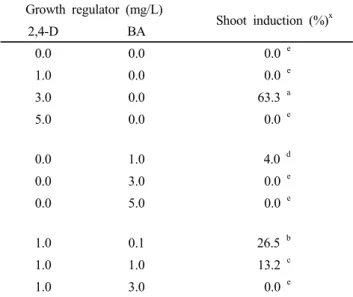
Table 2 Effects of plant growth regulators on the shoot induc- tion from callus of Belamcanda chinensis
Growth regulator (mg/L)
Shoot induction (%)x
2,4-D BA
0.0 0.0 0.0 e
1.0 0.0 0.0 e
3.0 0.0 63.3 a
5.0 0.0 0.0 e
0.0 1.0 4.0 d
0.0 3.0 0.0 e
0.0 5.0 0.0 e
1.0 0.1 26.5 b
1.0 1.0 13.2 c
1.0 3.0 0.0 e
xMeans followed by the same letter within a column were not significantly different at P < 0.05 by Duncan’s multiple range test 이와 유사한 연구 결과들은 몇몇 붓꽃과 식물체에서 관
찰되었다. Koh (2005)는 자생붓꽃 (I. sanguinea)의 생장점 조직으로부터 3 mg/L 2,4-D와 5 mg/L BA의 혼합처리에서 90% 이상의 높은 캘러스 형성율 보였다고 보고하였다.
또한 Raja 등 (2007)은 샤프란 (C. sativus)의 잎절편체로부 터 1 mg/L 2,4-D와 1 mg/L BA를 혼합처리 한 MS배지에서 캘러스와 체세포배 형성에 가장 효과적이었다고 하였으 며, Kang 등 (1998)은 글라디올러스 (Gladiolus ‘Topaz’) 목 자조직으로부터 캘러스 유도는 2,4-D 첨가배지에서 가장 높았다고 보고하였다. 물론 동일 속에 속하는 종이라고 하더라도 품종이나 배양조건, 조직 절편의 종류 등에 따 라 식물체 재분화 양상이 크게 다르지만 (Ryu et al. 1992), 붓꽃과 식물체의 캘러스 형성에 2,4-D가 중요한 작용을 하며, 오옥신과 사이토카이닌의 농도 비율보다 오옥신의 농도가 더 효과적으로 작용하는 것으로 사료된다.
식물체 재분화에 미치는 생장조절물질의 영향
범부채의 재분화체를 획득하기 위하여 자엽, 뿌리줄 기, 뿌리 절편체로부터 6주간 유도 및 증식 시킨 캘러스 를 2,4-D와 BA의 농도별 단독처리와 2,4-D와 BA를 농도 별로 혼합처리 한 10종의 MS 배지에 치상하여 신초와 뿌 리의 형성률을 조사하였다. 유도된 캘러스를 생장조절물 질이 첨가되지 않은 MS 배지로 계대배양 하였을 때에는 더 이상의 캘러스 생장이나 신초의 유도가 나타나지 않 으며 가늘고 흰 부정근이 일부 관찰되었다 (Table 2). 또 한 식물생장조절물질의 단독처리구에서는 3.0 mg/L 2,4-D 를 첨가한 배지를 제외하고 신초의 형성이 거의 관찰되 지 않았다. 특히 BA의 단독처리구에서는 BA의 농도가 높아질수록 캘러스의 갈변 현상이 심화되었으며, 캘러스 의 증식도 보이지 않았다. 한편, 3.0 mg/L 2,4-D를 단독처 리 한 배지에서 4주간 배양하였을 때 63.3%로 가장 많은 신초가 유도되었으며 (Fig. 1D), 1.0 mg/L 2,4-D와 0.1 mg/L
BA 혼합배지에서는 약 27%의 신초 유도율을 보였다. 또 한 1.0 mg/L 2,4-D와 1.0 mg/L BA를 혼합한 배지로 옮겨 치상한 캘러스에서 약간의 신초가 형성되었다. 많은 붓 꽃과 식물체의 재분화에 있어서 사이토카이닌류의 BA가 부정아의 유도에 가장 효과적인 생장조절물질임에도 불 구하고 (Hussey 1976; Meyer and Van Staden 1998; Shibli and Ajlouni 2000; Koh 2005; Madubanya et al. 2006), 범부채 의 신초 유도에는 큰 효과가 관찰되지 않았다. 그러나, 2,4-D와 BA의 혼합배지에서 BA의 농도가 낮을수록 보다 많은 신초의 유도가 관찰된 결과로부터 BA의 단독처리 구에서 신초의 유도없이 갈변 현상을 보인 것은 BA의 처 리농도가 너무 높았기 때문으로 사료된다. 이는 Lim과 Yu (2000)의 연구에서 큰용담 정아로부터 BA의 농도가 증가함에 따라 오히려 신초의 형성수가 감소하였다는 보
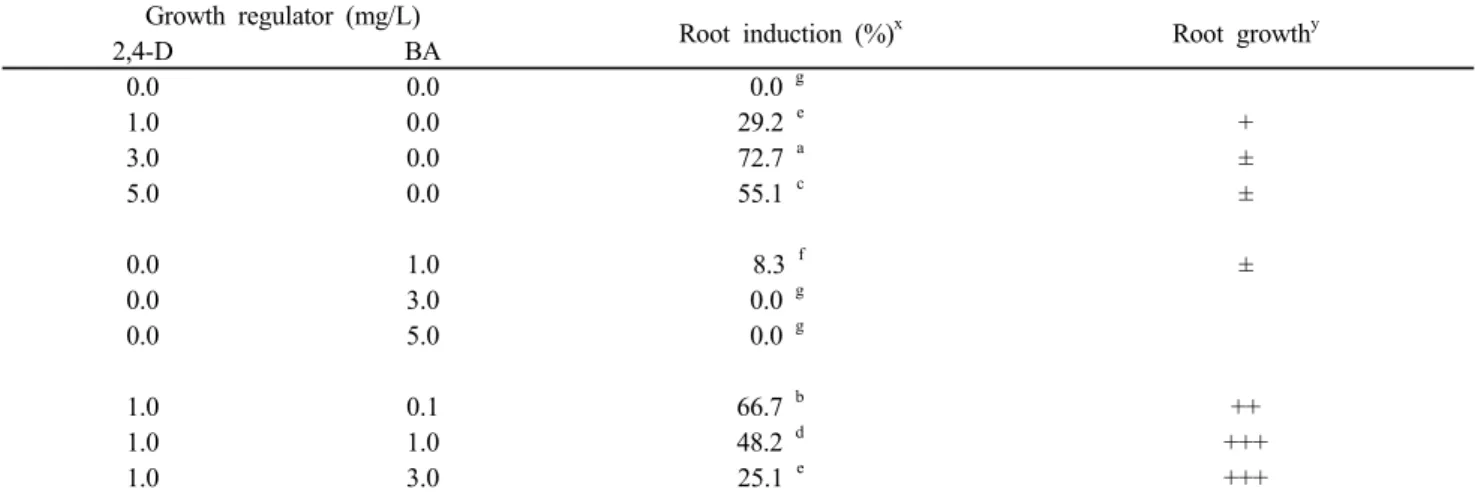
Table 3 Effects of plant growth regulators on the root induction and root growth from shoots of Belamcanda chinensis Growth regulator (mg/L)
Root induction (%)x Root growthy
2,4-D BA
0.0 0.0 0.0 g
1.0 0.0 29.2 e +
3.0 0.0 72.7 a ±
5.0 0.0 55.1 c ±
0.0 1.0 8.3 f ±
0.0 3.0 0.0 g
0.0 5.0 0.0 g
1.0 0.1 66.7 b ++
1.0 1.0 48.2 d +++
1.0 3.0 25.1 e +++
xMeans followed by the same letter within a column were not significantly different at P < 0.05 by Duncan’s multiple range test
yVisual quality : –; not detected, ±; poor, +; moderate, ++; good, +++; excellent
Fig. 1 Callus induction and plant regeneration from the explants of Belamcanda chinensis. Callus were induced from leaf on the MS medium containing 1.0 mg/L 2,4-D and 0.1 mg/L BA (A), rhizome on the MS medium containing 1.0 mg/L 2,4-D and 1.0 mg/L BA (B), and root explants on the MS medium containing 1.0 mg/L 2,4-D and 3.0 mg/L BA (C). Shoots were induced from the induced callus cultured on the medium containing 3.0 mg/L 2,4-D (D). Multiple shoots were induced on the MS medium supplemented with 1.0 mg/L 2,4-D and 0.1 mg/L BA and then transferred to hormone-free MS medium for root induction (E). Regenerated plantlet cultured on hormone-free MS medium for 2 weeks (F). Acclimatization of regenerated plantlets (G). Flowering of regenerated plantlets transferred to soil (H)
고와 유사하다. Kang 등 (1998)은 글라디올러스 캘러스로 부터 기관의 재분화를 위해서 외생 사이토카이닌이 필수 적이기는 하나 고농도를 필요로 하지 않는다고 보고하였 다. 2,4-D와 BA의 혼합배지에서 다발성신초 (multiple shoot) 가 형성되었으며 신초의 생장이 양호하였다 (Fig. 1E). I.
hollandica (Hussey 1976), I. sanguine (Koh 2005), D. luteoalbidum (Madubanya et al. 2006) 등 많은 연구 결과에서 배지내에 BA의 첨가로 다발성신초가 형성되었다고 보고되었다.
재분화된 신초로부터 뿌리를 유도하기 위하여 신초를
절단하여 2,4-D 와 BA의 단독 및 혼합처리 한 MS 배지에 서 2주간 배양한 후 생장조절물질이 첨가되지 않은 MS 기본배지로 치상하였다. 발근은 2,4-D와 BA를 혼합처리 한 배지에서 2주간 배양 한 후 MS 배지로 옮겨 준 것 보 다 2,4-D의 단독처리구에서 약간 양호하였다 (Table 3).
특히, 3.0 mg/L 2,4-D 단독처리 후 생장조절물질 무첨가 배지로 치상하였을 때 발근률은 약 73%로 가장 높았다 (Fig. 1F). BA 단독처리 후 MS 배지로 옮겨 준 재분화된 신초에서는 뿌리의 유도가 거의 일어나지 않았으나, 1.0
mg/L 2,4-D와 0.1 mg/L BA의 혼합처리구에서는 66.7%의 높은 발근률을 보였다. 또한 2,4-D와 BA의 단독처리에 의해 유도된 뿌리의 성장은 매우 저조하였으나 2,4-D와 BA의 혼합처리 후 생장조절물질 무첨가 MS배지에서 유 도된 뿌리의 성장은 매우 양호하였으며 정상적인 뿌리의 분화가 관찰되었다 (Fig. 1F). 다른 붓꽃과 식물체에서도 오옥신과 사이토카이닌의 혼합배지에서 재분화된 신초 로부터 뿌리의 유도는 생장조절물질을 첨가하지 않은 배 지에서 뿌리의 발달이 가장 효과적이었다고 보고하였다 (Wang et al. 1999; Zheng et al. 1999; Boltenkov et al. 2007).
재분화된 식물체는 순화처리를 위해서 생장조절물질 과 당을 첨가하지 않은 MS 기본배지에 옮겨 2주간 배양 하였다. 버미큐라이트와 펄라이트를 2 : 1로 혼합한 인공 토양으로 이식하여 재분화체의 생존율을 관찰한 결과 100%의 생존율을 나타냈으며, 정상적인 식물체로 생장 하였다 (Fig. 1G). 또한 이들을 온실의 토양으로 이식한 후 토양 순화과정에서도 100%의 생존율을 나타냈으며, 춘화처리를 거쳐 정상적인 꽃이 개화하였다 (Fig. 1H).
적 요
범부채 (Belamcanda chinensis)의 기내 식물체 재분화 체 계를 확립하기 위하여, 생장조절물질이 자엽, 뿌리줄기, 뿌리 절편체로부터 캘러스 유도와 식물체 재분화에 미치 는 영향을 조사하였다. 조직별 캘러스 유도율은 자엽절 편체 보다 뿌리절편체에서 더 왕성하게 관찰되었으며, 3.0 mg/L 2,4-D의 단독처리와 1.0 mg/L 2,4-D와 3.0 mg/L BA의 혼합처리에서 캘러스가 가장 효과적으로 유도되었 다. 또한, 3.0 mg/L 2,4-D를 단독처리 한 배지에서 유도된 캘러스를 치상하여 4주간 배양하였을 때 가장 많은 신초 가 유도되었으며, BA를 혼합 처리한 배지에서는 다발성 신초가 유도되었고 신초의 생장이 양호하였다. 2,4-D와 BA를 혼합처리 한 배지로부터 유도된 신초를 생장조절 물질을 첨가하지 않은 MS 배지로 옮겨 주었을 때 보다 더 정상적이며 성장이 양호한 뿌리의 분화가 관찰되었 다. 재분화 식물체는 순화처리를 위하여 당과 식물생장 조절물질이 첨가되지 않은 MS배지로 계대배양 한 후 인 공토양의 화분으로 옮겨 이식하여 관찰한 결과 100%의 생존률을 보였으며 정상적인 재분화 식물체를 대량으로 획득하였다.
인용문헌
Boltenkov EV, Mironova LN, Zarembo EV (2007) Effect of phytohormones on plant regeneration in callus culture of Iris ensata Thunb. Biol Bull 34:446-450
Hong J, Shin KH, Lim SS, Kwak JH, Zee O, Ishihara K, Hirasawa N, Seyama T, Ohuchi K (2008) Lead compounds for anti- inflammatory drugs isolated from the plants of the traditional oriental medicine in Korea. Inflamm Allergy Drug Targets 7:195-202
Hussey G (1976) In vitro release of axillary shoots from apical dominance in monocotyledonous plantlets. Ann Bot 40:1323- 1325
Jung SH, Lee YS, Lee S, Lim SS, Kim YS, Ohuchi K, Shin KH (2003) Anti-angiogenic and anti-tumor activities of isofla- vonoids from the rhizomes of Belamcanda chinensis. Planta Med 69:617-622
Jung SH, Lee YS, Lim SS, Lee S, Shin KH, Kim YS (2004) Antioxidant activities of isoflavones from the rhizomes of Belamcanda chinensis on carbon tetrachloride-induced hepatic injury in rats. Arch Pharm Res 27:184-188
Kang MS, Choi JD, Kim KW (1998) Effects of culture conditions on adventitious bud formation from callus of Gladious ‘Topaz’.
J Kor Soc Hort Sci 39:338-342
Kim HJ, Cho HJ, Kim EY, Kim MY, Park HB (2007) Mass pro- pagation by In vitro culture of Bupleurum latissimum Nakai.
Kor J Plant Res 20:367-374
Koh JC (2005) Callus culture and plant regeneration from shoot apex of Iris Sanguinea Donn ex. Horn. J Nat Sci Res Inst. Vol.
3, Catholic University Institute of Natural Sciences, Daegu, pp 93-98
Lee YM (2001) Our flower story; Belamcanda chinensis. Kyun- ghyang Magazine 93:106-107
Lim JD, Yu CY (2000). Multiple shoot formation of Gentiana axillariflora leveille by in vitro culture. Kor J Med Crop Sci 8:41-48
Madubanya LA, Makunga NP, Fennell CW (2006) Dierama luteoalbidum: liquid culture provides an efficient system for the ex situ conservation of an endangered and horticulturally valuable plant. S Afr J Bot 72:584-588
Meyer HJ, Van Staden J (1998) In vitro multiplication of Ixia fkexuosa. HortScience 23:1070-1071
Murashige T, Skoog F (1962) A revised medium for rapid growth and bioassays with tobacco tissue culture. Physiol Plant 15:
487-497
Park YJ, Yoo SO, Choi GW, Chung YO (1995) Studies on the seed germination of blackberry lily (Belamcanda chinensis (L.) DC.) native to Korea. J Kor Flower Res Soc 4:35-40 Raja W, Zaffer G, Wani SA (2007) In vitro microcorm formation
in Saffron (Crocus sativus L.). Acta Hortic 739:291-296 Ryu JH, Doo HS, Kwon TH (1992) Induction of haploid plants by
anther culture in sesame (Sesamum indicum L.). Kor J Plant Tiss Cult 19:171-177
Shibli RA, Ajlouni MM (2000) Somatic embryogenesis in the endermic Black Iris. Plant Cell Tiss Org Cult 61:15-21 Shim JK (1998) A taxonomic study on iridaceae in Korea. Ph.D.
thesis, Korea University, Seoul.
Stefaniak B (1994) Somatic embryogenesis and plant regeneration of Gladiolus (Gladiolus hort.). Plant Cell Rep 13:386-389 Wang Y, Jeknic Z, Ernst RC, Chen THH (1999) Improved plant
regeneration from suspension-cultured cell of Iris germanica L. “Skating Party”. Hortscience 34:1271-1276
Yabuya T, Ikeda Y, Adachi T (1991) In vitro propagation of Japanese garden iris, Iris ensata Thunb. Euphytica 57:77-81 Yoom IK, Koh JC (2003) Effects of light, temperature, and sucrose
on plant regeneration from the flower organ explants in Iris
ensata. Kor J Plant Biotech 30:41-45.
Zheng SJ, Henken B, Sofiari E, Keizer P, Jacobsen E, Kik C, Krens FA (1999) Effect of cytokinins and lines on plant regeneration from long-term callus and suspension cultures of Allium cepa L. Euphytica 108:83-90