Rutin Ameliorates Neutrophilic Oxidative Stress-Induced Acute Lung Injury by Intratracheal IL-1 Insufflation in Rats
Sung Chul Kwon, Yoon-yub Park and Young Man Lee*
Department of Physiology, School of Medicine, Catholic University of Daegu, Daegu 705-718, Korea Received January 11, 2010 /Accepted March 29, 2010
Rutin, a group II phospholipase A
2(PLA
2) inhibitor, was tested on interleukin-1 (IL-1) induced acute lung injury (ALI) in male Sprague-Dawley rats. Rutin did not alter the increased lung myeloperox- idase activity by IL-1. However, the number of neutrophils in bronchoalveolar lavage fluid (BALF) and IL-1 induced lung leak were decreased by rutin (p<0.001). Simultaneously, rutin decreased lung PLA
2activity, which was increased by IL-1 (p<0.001). The reduction of neutrophilic respiratory burst by the inhibition of PLA
2was confirmed by group II PLA
2inhibitors such as rutin, manoalide and scalaradial. The increased level of cytokine-induced neutrophilic chemoattractant (CINC) in BALF by IL-1 was not affected by rutin. Ultrastructural changes of ALI and increased generation of free radicals in the lung by IL-1 were found, and rutin ameliorated these pathological findings. Taken together, rutin seems to be effective in decreasing IL-1 induced ALI through inhibition of group II PLA
2.
Key words : Group II phospholipase A2, neutrophils, free radicals, acute lung injury
*Corresponding author
*Tel:+82-53-650-4472, Fax:+82-53-621-4106
*E-mail : [email protected]
Introduction
Acute respiratory distress syndrome (ARDS) is a type of acute inflammatory edema caused by various etiologies [20].
The pathogenesis of ARDS has been studied extensively, but the exact mechanism is still cryptogenic.
Since the inflammatory reaction in the lung is evident re- gardless of the etiologies, investigators have agreed that phospholipase A
2(PLA
2), a rate limiting enzyme of in- flammatory reaction, is one of the critical causes to provoke the acute pulmonary inflammation [17]. In an association with the pulmonary inflammation, the massive infiltration of phagocytes especially neutrophils has been confirmed [18].
The so called collateral damage caused by the activated neutrophils seems to be linked to the activation of PLA
2in the lung [1]. As Dana et al. [6] has insisted, the activation of NADPH oxidase for neutrophilic respiratory burst needs the lipid mediators produced by activation of PLA
2. On the basis of these reports, the inhibition of PLA
2has been tested to examine the possibility as the therapeutic modality and possible pathogenic mechanism of ARDS. However, up to now, the underlying mechanism of the ARDS has been dis- covered partially associated with oxidative stress and in-
flammatory cytokines.
Recent studies have discovered that there are various types of PLA
2s and they appear to have specific roles in in- flammation [5,19]. Among these PLA
2s, group II PLA
2is one of the candidates to provoke the inflammatory reaction in ARDS. Therefore, the inhibition of group II PLA
2has been tried to elucidate the role of secretory PLA
2(sPLA
2) in acute lung injury (ALI), which resulted in unsatisfactory outcome.
In this regards, we would like to inspect the effect of rutin, one of the flavonoids and sPLA
2inhibitors, on the neu- trophilic respiratory burst in the IL-1 induced ALI. We admit that present study is not the first experiment to figure out the role of PLA
2inhibition in ALI, but we tried to under- stand the effect of rutin mainly on the production of free radicals associated with neutrophilic chemotaxis and respi- ratory burst.
Materials and Methods Source of reagents
Recombinant human interleukin-1 (IL-1, endotoxin lev-
el<1 EU/mg) was purchased from R & D systems
(Minneapolis, MN, USA) frozen in aliquots and thawed be-
fore use. L-α-dipalmitoyl-(2-palmitoyl-9,10-
3H(N))-phospha-
tidylcholine was obtained from Du Pont NEN research prod-
uct (Boston, MA, USA). All other chemical reagents, other-
wise mentioned, purchased from Sigma Chemical Company
(St. Louis, MO, USA).
Source of rats and experimental protocols for IL-1
treatment in vivoMale Sprague-Dawley rats (250-300 g, 10 weeks old) were obtained from Bio-Korea Co. (Osan, Korea). Rats were fed standard chow and water ad libitum. Experimental protocols were permitted by the Ethical Committee of Animal Experiments in Daegu Catholic University, School of Medicine in accordance with NIH guidelines for the use of laboratory animals.
Induction of ALI and inhibition of group II PLA
2In order to induce ALI simulating ARDS in human being, rats were given IL-1 (50 ng) intratracheally in 0.5 ml of nor- mal saline while rats were anesthetized with enflurane. In sham treated rats, 0.5 ml of normal saline was given intratracheally. Rutin (100 mg/kg; Sigma Chemical, St.
Louis, MO, USA) was given intraperitoneally as suspension in normal saline.
Measurement of lung myeloperoxidase (MPO) activity
Lung tissue MPO activity was measured using ο -dianisidine as the chromogenic substrate. H
2O
2was used for the initiation of the reaction. Light absorbance at 460 nm was proportional to MPO activity according to the elapse of time [7].
Enumeration of bronchoalveolar lavage neutrophils
Bronchoalveolar lavage was performed by cannulating the trachea and instilling 8.0 ml of normal saline with a sy- ringe 3 times. Approximately 6.0 ml of bronchoalveolar lav- age fluid (BALF) was obtained from each rat. After the re- covered BALF was centrifuged (1,000 rpm, 10 min at room temperature), the supernatant was collected and stored at -20
oC for protein measurement. The sedimented cellular pellet was resuspended in 1 ml of distilled water and 1 ml of balanced Hank’s salt solution (HBSS) for two seconds to lyse erythrocytes, and then centrifuged again. The super- natant was discarded and the pellet was resuspended in 1 ml of normal saline. Using 200 μl of suspended solution, cytospin slide preparations were prepared and Wright stained for differential cell count. Total leukocyte count was performed with a hemocytometer and the fraction of neu- trophils was calculated by determining percentage of neutrophils.
Determination of protein content in bronchoalveo- lar lavage fluid
To evaluate the protein leak from the alveolar capillary, the protein content in BALF was measured according to the method of Brown et al. [4].
Measurement of lung PLA
2activity
To evaluate the PLA
2activity in the lung tissue, lungs were excised after perfusion with normal saline. Right lungs were homogenized in 20 mM potassium phosphate (pH 7.4).
The homogenate was then sonicated 90 s on ice. PLA
2activ- ity was measured by incubating the radioactive substrate was tritiated DPPC (30 Ci/mmol) with 100 μl of the lung homogenate in 889 μl of glycine buffer (100 mM, pH 9.0) containing 10 g/l BSA, 2.5 mM sodium deoxycholate, 0.1 mM DPPC, 2.0 mM CaCl
2, and 1.75 M ethanol. After the mixture was incubated for 60 min at 37
oC, the reaction was stopped by adding 200 μl of 5% (v/v) Triton X-100 contain- ing 200 mM EDTA. Subsequently, fatty acids released by PLA
2hydrolysis were extracted by 5.0 ml of hexane contain- ing 0.1% acetic acid and 2.5 g of Na
2SO
4. After vortex mixing, the hexane layer was separated and counted in a liquid scin- tillation counter. Snake venom (Crotalus adamanteus) PLA
2control samples were assayed along with all other ex- perimental samples for standardization. One unit of enzyme activity was defined as the ability to hydrolyze 1 μmol of substrate per minute [10].
Cytochrome-c reduction assay
Neutrophils were isolated from fresh human blood.
Briefly the mixture of 15 ml of pentaspan and 0.1 ml of hep-
arin (1,000 IU) were mixed with 30 ml of fresh human blood
before standing for 40 min at room temperature. Plasma lay-
ered on the 75%, 55% isotonic percoll gradient after separa-
tion from erythrocytes, centrifuged (15,000 rpm, 20 min) and
neutrophils were collected from the 55%, 75% interface of
percoll. Collected suspension of neutrophils was hypotonic
lysed for the elimination of erythrocytes and washed twice
with normal saline. For cytochrome-c reduction assay, save
control samples, phorbol myristate acetate (PMA, 2.5 μ
g/ml), rutin (100 μM), manoalide (20 μM), scalaladial (200
μM) were added to the neutrophil suspension (2×10
6cell/ml) before incubating for 15 min at 37
oC. Additionally,
to know the effect of group II PLA
2on the generation of
free radicals from neutrophils, Crotalus adamanteus PLA
2(1.0
unit) was added to the neutrophil suspension before incubat-
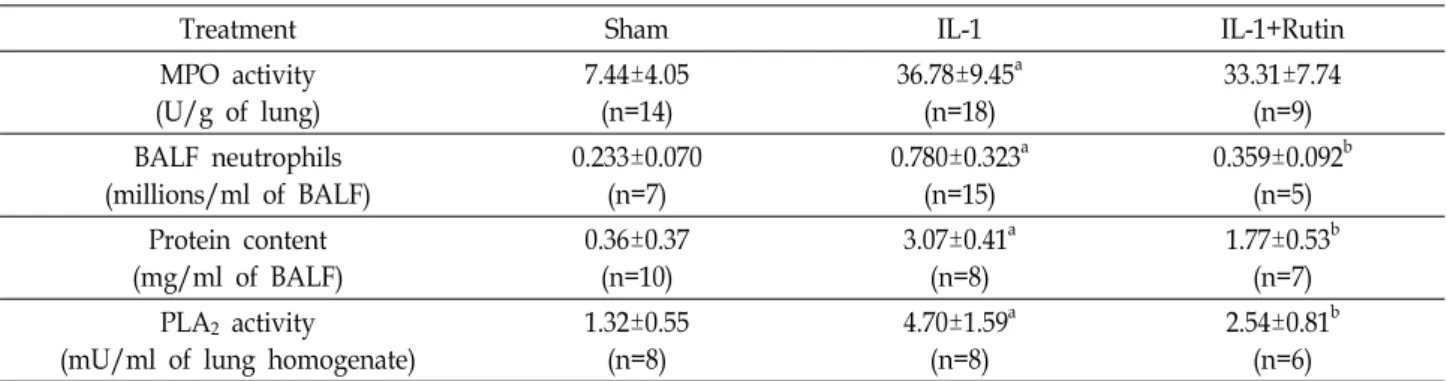
Table 1. Effects of rutin on the lung MPO activity, neutrophils and protein content in BALF, and lung PLA
2activity in experimental rats
Treatment Sham IL-1 IL-1+Rutin
MPO activity (U/g of lung)
7.44±4.05 (n=14)
36.78±9.45
a(n=18)
33.31±7.74 (n=9) BALF neutrophils
(millions/ml of BALF)
0.233±0.070 (n=7)
0.780±0.323
a(n=15)
0.359±0.092
b(n=5) Protein content
(mg/ml of BALF)
0.36±0.37 (n=10)
3.07±0.41
a(n=8)
1.77±0.53
b(n=7) PLA
2activity
(mU/ml of lung homogenate)
1.32±0.55 (n=8)
4.70±1.59
a(n=8)
2.54±0.81
b(n=6) Values are given as mean±SD.
n indicates number of experiments.
MPO: myeloperoxidase, BALF: bronchoalveolar lavage fluid a, p<0.001, Sham vs. IL-1; b, p<0.001 IL-1 vs. IL-1+Rutin ing for 60 min at 37
oC. Rutin was added to know the effect on the generation of free radicals in PLA
2-stimulated neutrophils. Light absorbance at 550 nm was proportional to the reduction of cytochrome-c by free radicals [2,8].
Examination of the ultrastructural changes with electron microscopy
After small blocks (1 mm
3) of the lung tissue were rapidly fixed in the cold 2.5% glutaraldehyde, the lung tissue was degassed by the addition of pressurized air into the sealed vial. The prefixed tissues were rinsed with 1.0 mM phos- phate buffer (pH 7.4) and post fixed with 1% osmium tetroxide. After dehydrated with graded alcohol-propylene, the tissues were embedded in epoxy-resin. The embedded tissues were polymerized at 37
oC for 12 hr and at 60
oC for 24 hr before ultra thin sectioning. The sections were stained with uranyl acetate and lead citrate before electron microscopy.
Localization of hydrogen peroxide in the lung
Five hours after IL-1 insufflation, rats were anesthetized with enflurane. Subsequently, thoracotomy was performed, lungs were removed and the small sections of the tissue were reacted with cerium chloride. Briefly, after the air was removed from the lung tissue, samples were incubated for 1 hr at 37
oC in 0.1 M Tris-maleate buffer (pH 7.5) with 7%
sucrose, 10 mM 3-amino-1,2,4-triazol, 2 mM cerium chloride, and 0.0002% Triton X-100. Then the samples were succes- sively rinsed in 0.1 M Tris-maleate buffer (pH 7.5) with 7%
sucrose and then 0.15 M sodium cacodylate buffer (pH 7.4).
Subsequently, samples were fixed with 1% osmium tetroxide
in 0.1 M sodium cacodylate buffer (pH 7.4) for 2 hr at room temperature, dehydrated through a graded series of ethanol to propylene oxide and embedded in epoxy resin. Block sec- tions, 60-80 nm thick, were stained with uranyl acetate and then examined quantitatively using TEM at 75 kV [9].
Measurement of cytokine-induced neutrophil che- moattractant (CINC) in BAL
The concentration of CINC in BALF was measured by the method of sandwich ELISA according to Wittwer et al. [21].
Statistical analyses
Data are expressed as mean±SD and were analyzed using a one way analysis of variances with Student-Newman- Keuls multiple comparison test. A p value of <0.05 was con- sidered significant.
Results
Effect of rutin on the accumulation and migration of neutrophils
The rats given IL-1 had increased the lung MPO activity compared to sham-treated rats (p<0.001). And the increased lung MPO activity was not altered by the treatment of rutin in IL-1 given rats (Table 1). Interestingly, the number of neu- trophils in BALF, as an index of neutrophilic migration from the vascular compartment into the alveoli, showed a differ- ent pattern compared with that of the lung MPO activity.
IL-1 rats had increased (p<0.001) the number of neutrophils
in BALF compared with sham-treated rats. However, rats
given IL-1 and rutin showed a decrease in the number of
Table 2. Evaluation of production of free radicals from isolated human neutrophils inhibited by Group II PLA2 inhibitors Treatment Control (n=14) PMA (n=9) PMA+Rutin (n=8) PMA+Mano (n=8) PMA+Scala (n=7) cytochrome-c reduced
(nmol/2×106 PMNs) 11.16 ± 9.82 91.51± 4.62a traceb 10.59± 9.17c traced
Values are given as mean±SD.
n indicates number of experiments.
PLA2: phospholipase A2, Mano: manoalide, Scala: scalaradial, PMN: polymorphonuclear neutrophil, PMA: phorbol myristate acetate a, p<0.001, control vs. PMA; b, p<0.001 PMA vs. PMA+Rutin; c, p<0.001, PMA vs. PMA+Mano; d, p<0.01 PMA vs. PMA+Scala
Table 3. Effect of rutin on the generation of free radicals from isolated human neutrophils stimulated by group II PLA2
Treatment Control (n=9) PLA2 (n=9) PLA2+Rutin (n=8)
Cytochrome-c reduced (nmol/2×106 PMNs) 7.94±5.64 50.55±3.93a 12.31±4.43b
Values are given as mean±SD.
n indicates number of experiments.
PMN: polymorphonuclear neutrophil
a, p<0.001, Control vs. PLA2; b, p<0.01, PLA2 vs. PLA2+Rutin
Table 4. Comparison of CINC concentration in experimental rats
Treatment Sham (n=6) IL-1 (n=8) IL-1+Rutin (n=11)
CINC concentration (ng/ml of BALF) 0.04±0.03 0.41±0.16a 0.39±0.14b
Values are given as mean±SD.
n indicates number of experiments.
CINC: cytokine-induced neutrophil chemoattractant a, p<0.001, Sham vs. IL-1; b, p<0.001, Sham vs. IL-1+Rutin
neutrophils in BALF (p<0.001) compared to rats given IL-1 only (Table 1).
Effect of rutin on lung leak
IL-1 rats had increased protein content in BALF compared to sham-treated rats (p<0.001). Rutin significantly decreased this increase of protein content in the BALF in IL-1 rats (Table 1).
Effect of rutin on the PLA2 activity
IL-1 rats had increased lung PLA
2activity (p<0.001) com- pared to sham rats. And the rats given IL-1 and rutin had decreased (p<0.01) the lung PLA
2activity compared with IL-1 rats (Table 1).
Production of free radicals from neutrophils
The generation of free radicals from neutrophils was as- sessed by the cytochrome-c reduction assay. The neutrophils treated with PMA had increased the amount of reduced cy- tochrome-c compared with control neutrophils (p<0.001).
The neutrophils treated with PLA
2inhibitors had reduced the production of free radicals which was shown as the de-
creased amount of reduced cytochrome-c (p<0.001) (Table 2). Similarly, neutrophils treated with sPLA
2had increased (p<0.001) the reduction of cytochrome-c compared with con- trol neutrophils. Likewise in PMA-treated neutrophils, rutin had decreased the reduction of cytochrome-c in PLA
2acti- vated neutrophils (p<0.001) (Table 3).
CINC concentration in BALF
IL-1 rats had increased the concentration of CINC in BALF compared with sham rats (p<0.001). Rutin did not af- fect the increased concentration of CINC in the BALF of rats given IL-1 (Table 4).
Examination of the ultrastructural changes of the lung
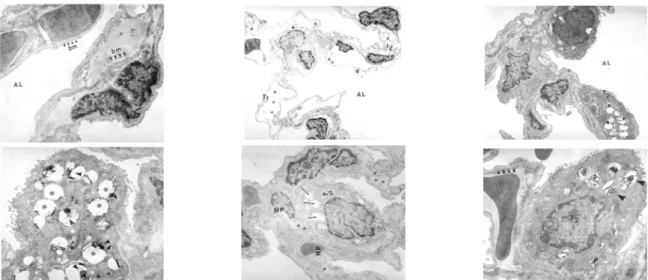
In the lung of sham rats, basement membranes of the en- dothelial and epithelial cells were intact and alveolar lumen was well preserved (Fig. 1A). However the lungs of rats giv- en IL-1 showed various pathological findings. Endothelial and epithelial blebbing and necrosis were noted (Fig. 1B).
Vacuolization of lamellar bodies and denaturation of surfac-
tant in the cytoplasm of type II pneumocytes, and interstitial
edema were shown (Fig. 1C,D). Adhesion and merging of
Fig. 1. Electron microscopic finding of the lung of experimental rats. In normal lung of rat, basement membrane (BM) was well preserved and alveolar lumen was intact (original mag. ×8,000, 1A). In IL-1 insufflated rats, ultrastructural changes of the lung were shown. Endothelial and epithelial blebbing and necroses were noted (asterisks, original mag. ×3,000, 1B). Vacuolization of lamellar bodies in the cytoplasm of the alveolar type II pneumocyte (arrow heads) were shown (original mag. ×5,000, 1C). Vacuolization of lamellar bodies (asterisks) and denaturation of surfactant (arrow heads) in the lamellar bodies in the alveolar type II pneumocyte were noted (original mag. ×8,000, 1D). Neutrophilic infiltration in the interstitium of the lung, vacuolization of the lamellar bodies in the alveolar type II cells (arrow) and interstitial edema (asterisks) were found. Adhesions and merging of neutrophil and epithelial membrane were evident (original mag. ×6,000, 1E). Attenuation of the IL-1 induced injury was demonstrated by the treatment of rutin in the lungs of rats (original mag. ×8,000, 1F). The basement membrane (arrow heads) and lamellar bodies were intact and interstitial edema was diminished. e; endothelial cell, T1; alveolar type I pneumocyte, T2; alveolar type II pneumocyte, AL; alveolar lumen, NP; neutrophil.
Fig. 2. Localization of the hydrogen peroxide in the lung by the method of cytochemical electron microscopy. No deposit of cerrous perhydroxide was found (original mag. ×4,000, 2A). In contrast, in the lungs of rats given IL-1, dense deposits of cerrous perhydroxide granules (arrow heads) were found along the epithelial lining, signifying the production of hydrogen peroxide in the lung (original mag. ×5,000, 2B). In the lungs of rats given IL-1, rutin inhibited the production of hydrogen peroxide and resulted in the devoid of cerrous perhydroxide in the lung in spite of the infiltration of neutrophils (original mag. ×5,000, 2C). T1; alveolar type I pneumocyte, T2; alveolar type II pneumocyte, NP; neutrophil neutrophils and epithelial membrane were evident (Fig. 1E).
Rutin attenuated ALI caused by IL-1 (Fig. 1F). Basement membrane and lamellar bodies were intact and interstitial edema was diminished. Localization of hydrogen peroxide in the lung (Fig. 2): No deposits of cerrous perhydroxide (reactive product of cerium chloride and hydrogen peroxide) was found in the lungs of sham-treated rats (Fig. 2A). In contrast, in the lungs of IL-1 rats, dense deposits of cerrous
perhydroxide granules were found along the epithelial lin-
ing which signified the production of hydrogen peroxide in
the lung (Fig. 2B). However the treatment of rutin to the
rats given IL-1 inhibited the generation of hydrogen per-
oxide and resulted in absence of cerrous perhydroxide gran-
ules in the lung in spite of the infiltration of the neutrophils
in the interstitium (Fig. 2C).
Discussion
Neutrophilic oxidative stress is one of the important pathogenic mechanisms of ARDS. Among the variable ori- gins, phagocytes including neutrophils have been known to play a key role in generating free radicals which is respon- sible for the oxidative stress in the lung [22]. In the present study, we could confirm the fact that IL-1 had increased lung MPO activity and increased the number of neutrophils in BALF. At the same time, IL-1 had increased the protein con- tent in BALF implicating the endothelial injury by IL-1. As Leff et al. [15] insisted, these changes were induced by neu- trophilic oxidative stress by IL-1. Rutin, a derivative of fla- vonoids, effectively attenuated protein leak in the lung even though it could not inhibit the infiltration of neutrophils in the lung. The migration of neutrophils from vascular lumen into alveoli was suppressed by rutin and it might be the cause of the amelioration of lung leak associated with the decrease of endothelial injury. Rutin is known as an oxidant scavenger and effective inhibitor of group II secretory PLA
2[3]. In conjunction with this fact, antioxidant effects of rutin have acted on the decrease of lung leak caused by IL-1. As is well known, IL-1 provokes ALI in human and ex- perimental animals through the activation of PLA
2resulting in the release of proinflammatory lipid mediators [14].
Among these lipid mediators, arachidonic acid or PAF acti- vates NADPH oxidase on the neutrophilic membrane, by which superoxide anions can be released from neutrophils [11].
We observed that rutin had decreased the PLA
2activity which had been enhanced by IL-1. Though rutin has long been known to decrease the oxidative stress in various ex- perimental and clinical situations, still the exact mechanism of reducing oxidative injury has not been elucidated.
According to Lee et al. [13], IL-1 increased PLA
2activity in the lung and adhesion of neutrophils to endothelial cells.
It was revealed that mepacrine, a non-specific PLA
2in- hibitor, did decrease the PLA
2activity and neutrophilic ad- hesion to endothelial cells, and subsequently decreased lung leak. In relation to these reports and our data, the inhibition of PLA
2by rutin might be the cause of the lessening of ALI.
The inhibition of group II PLA
2with manoalide and scalar- adial denoted the reduced production of free radicals from neutrophils. And the amount of free radicals produced by the PLA
2-activated neutrophils was diminished by rutin also. Collectively, these experimental results suggest that the
inhibition of PLA
2by rutin contributed to the decrease the ALI by IL-1.
CINC is a strong chemoattractant for neutrophils but CINC itself is not able to provoke oxidative stress from neu- trophils [12]. CINC was increased by IL-1. Rutin could not affect the concentration of CINC in the BALF of IL-1 rats.
From this result, we deduced that rutin decreased the migra- tion of neutrophils from vessel to alveoli by the inhibition of oxidant production. Even if there is a possibility of scav- enging effect of rutin, it is not strong enough to inhibit ex- plosive oxidative stress. Thus, it appears that the inhibition of PLA
2by rutin could be the principal cause of decreased lung leak in this study. These suggestions were even more evident in our morphological study. As was shown in our data on the ultra structural changes, IL-1 caused typical pathological changes such as endothelial and epithelial injuries. The pathognomonic signs of oxidative stress [16], in the lung, i.e. vacuolization and hypertrophy of lamellar bodies with denaturation of pulmonary surfactant were evi- dent after IL-1. Again, these changes were lessened by rutin.
In addition, the increased generation of free radicals from neutrophils was reduced to normal by rutin. Morphological, cytochemical confirmation of the effect of rutin on the neu- trophilic oxidative stress is direct evidence of rutin’s anti- oxidant property associated with PLA
2inhibition. Recently many types of PLA
2s have been discovered and their func- tions have been under investigation in conjunction with an- ti-inflammatory pulmonary edema. Though some clinical tri- als of anti-sPLA
2antibody turned out to be unsuccessful, still it is possible that a certain type of specific PLA
2inhibitor might be effective for ARDS treatment. Since most of the chemotherapeutic agents for ARDS have been proven un- successful, present results might contribute to the under- standing and development of new therapeutic paradigm for ALI/ARDS.
References
1. Anderson, B. O., J. M. Brown, and A. H. Harken. 1991.
Mechanisms of neutrophil-mediated tissue injury. J. Surg.
Res. 51, 170-179.
2. Botha, A. J., F. A. Moore, E. E. Moore, B. Fontes, A. Banerjee, and V. M. Peterson. 1995. Postinjury neutrophil priming and activation state: therapeutic challenges. Shock 3, 537-566.
3. Bouriche, H., P. Salavei, J. Lessig, and J. Arnhold. 2007.
Differential effects of flavonoids on inactivation of al- pha-1-antitrypsin induced hypohalous acids and the myelo- peroxidase-hydrogen peroxide-halide system. Arch. Biochem.
초록:Interleukin-1으로 유도된 급성폐손상에서 rutin의 효과 권성철․박윤엽․이영만*
(대구가톨릭대학교 의과대학 생리학교실)
흰쥐에서 Interleukin-1 (IL-1)으로 유도된 급성폐손상에서의 group II phospholipase A
2(PLA
2) 억제제인 rutin 의 효과를 알아보기 위하여 본 연구를 시행하였다. Rutin은 IL-1에 의해 증가한 폐장내의 myeloperoxidase의 활 성도를 감소시키지는 못하였으나 폐포세척액 내의 호중구의 수 및 모세혈관의 손상지표로 알려져 있는 폐장 모
세혈관에서의 단백질 누출양을 감소시켰다. 동시에 rutin은 IL-1에 의하여 증가한 폐장의 염증조절효소인 PLA
2의
활성도를 감소시키고 결과적으로 호중구에서의 산소기의 생성을 감소시켰다. Rutin 뿐만 아니라 manoalide, sca- laradial 같은 group II PLA
2의 억제제도 호중구의 respiratory burst를 감소시킴을 확인하였다. IL-1에 의하여 증 가한 폐포세척액 내에서의 cytokine induced neutrophil chemoattractant의 농도는 rutin에 의해 영향을 받지 않 았다. 형태학적으로는 IL-1에 의한 폐장조직에서의 산소기의 형성이 관찰되었고 rutin은 이러한 산소기의 생성을
현저히 감소시켰다. 이러한 결과로 미루어 group II PLA
2억제제인 rutin은 호중구에서의 활성 산소기의 생성을
효과적으로 억제함으로써 IL-1에 의한 급성폐손상의 감소를 가져 오는 것으로 결론지을 수 있다.
Biophys. 459, 137-142.
4. Brown, R. E., K. L. Jarvis, and K. J. Hyland. 1989. Protein measurement using bicinchoninic acid; elimination of inter- fering substance. Anal. Biochem. 180, 136-139.
5. Burke, J. E. and E. A. Dennis. 2009. Phospholipase A2 struc- ture/function, mechanism and signaling. J. Lipid Res. 50, S237-S242
6. Dana, R., T. L. Leto, H. L. Malech, and R. Levy. 1998.
Essential requirement of cytosolic phospholipase A2 in the activation of the NADPH oxidase. J. Biol. Chem. 273, 441-445.
7. Goldblum, S. E., K. M. Wu, and M. Jay. 1985. Lung myelo- peroxidase as a measure of pulmonary leukostasis in rabbits. J. Appl. Physiol. 59, 1978-1985.
8. Haslett, C., L. A. Guthrie, M. M. Kopaniak, R. B. Johnston Jr., and P. M. Henson. 1985. Modulation of multiple neu- trophil function by preparative methods or trace concen- tration of bacterial lipopolysaccharides. Am. J. Pathol. 119, 101-110.
9. Karnovsky, M. J. 1994. Robert Feugen Lecture 1994.
Cytochemistry and reactive oxygen species: a retrospective.
Histochemistry 102, 15-27.
10. Katsumata, M., C. Gupta, and A. S. Goldman. 1986. Rapid assay for activity of phospholipase A2 using radioactive substrate. Anal. Biochem. 139, 573-380.
11. Kim, F. J., E. E. Moore, F. A. Moore, W. L. Biffle, B. Fontes, and A. Banerjee. 1995. Reperfused gut elaborates PAF that chemoattracts and primes neutrophils. J. Surg. Res. 58, 636-640.
12. Koh, Y., B. M. Hybertson, E. K. Jepson, O. J. Cho, and J.
E. Repine. 1995. Cytokine-induced neutrophil chemo- attractant is necessary for interleukin-1 induced lung leak in rats. J. Appl. Physiol. 79, 472-478.
13. Lee, Y. M., B. M. Hybertson, H. G. Cho, and J. E. Repine.
2002. Platelet-activating factor (PAF) induces lung in- flammation and leak in rats: hydrogen peroxide production
along neutrophil-lung endothelial surfaces. J. Lab. Clin. Med.
140, 312-319.
14. Lee, Y. M., B. M. Hybertson, L. S. Terada, A. J. Repine, H.
G. Cho, and J. E. Repine. 1997. Mepacrine decreases lung leak in rats given interleukin-1 intratracheally. Am. J. Respir.
Crit. Care Med. 155, 1624-1628.
15. Leff, J. A., J. W. Baer, M. E. Bodman, J. M. Kirkman, P.
F. Shanley, L. M. Patton, C. J. Beehler, J. M. McCord, and R. E. Repine. 1993. Interleukin-1 induced neutrophil accu- mulation and oxygen metabolite-mediated lung leak in rats.
Am. J. Physiol. 265, L501-506.
16. Martensson, J., A. Jain, W. Frayer, and A. Meister. 1989.
Glutathione metabolism in the lung: inhibition of its syn- thesis leads to lamellar body and mitochondrial defects.
Proc. Natl. Acad. Sci. USA 86, 5296-5300.
17. Pruzanski, W. and P. Vadas. 1991. Phospholipase A2-a me- diator between proximal and distal effectors of inflammation. Immunol. Today 12, 143-146.
18. Repine, J. E. 1992. Scientific perspectives on acute respira- tory syndrome. Lancet 339, 466-469.
19. Schaloske, R. H. and E. A. Dennis. 2006. Phospholipase A2 superfamily and its group numbering system. Biochim.
Biophys. Acta. 1761, 1246-1259.
20. Schuster, D. P. and M. H. Kollef. 1996. Acute respiratory distress syndrome. Dis. Mon. 42, 270-326.
21. Wittwer, A. J., L. S. Carr, J. Zagorski, G. J. Dolecki, B. A.
Grippes, and J. E. De Larco. 1993. High level of expression of cytokine-induced neutrophil chemoattractant (CINC) by metastatic cell line: purification and production of blocking antibodies. J. Cell Physiol. 156, 421-427.
22. Zemans, R. L., S. P. Colgan, and G. P. Downey. 2009.
Transepithelial migration of neutrophils: mechanisms and implications for acute lung injury. Am. J. Respir. Cell Mol.
Biol. 40, 519-535.