• 검색 결과가 없습니다.

A Study on Application of Ubiquitous Technology for Convenient Environment in Cruise Ship

N/A
N/A
Protected

Academic year: 2021

Share "A Study on Application of Ubiquitous Technology for Convenient Environment in Cruise Ship"

Copied!
5
0
0

로드 중.... (전체 텍스트 보기)

전체 글

(1)

A Study on Application of Ubiquitous Technology for Convenient Environment in Cruise Ship

Hyun Kim ․ Won-Kyung Jang ․ Kyung-hwa Kim ․ Joon-hwan Shim

Department of Electronics and Communication Engineering, Korea Maritime University

ABSTRACT

These days, the cruise tourist industry is one of the most dynamic and fastest growing components of the leisure industry in the world. Therefore, the cruise ship with ubiquitous technology is expected to enhance the operation efficiency of the ship. It can also provide valuable addition to the ship’s service as well as high quality of life to crews and passengers. Since a large number of passengers are dwelling in cruise ship, all passengers are not easy to use ship’s facilities, such as restaurants, fitness center, swimming pool and spa at anytime they want. In this paper, passenger service system in ship environment is tested in similar environment and under ship operation condition. We have proposed three applications of ubiquitous technology using Zigbee communication and LabView program.

Keywords: Ubiquitous, Cruise ship, Monitoring system, LabView

I. Introduction 1)

The cruise ship industry is one of the largest components of tourism and is experiencing rapid growth [1]. Also, World Tourism Organization (WTO) selected the cruise tourist industry as the best tour package with the attraction and a great potential for growth [2]. This is because of not only a big affection for ripple effect and trade balance to our shipping industry but also a big expectation for economic effect through the high harbor income.

Ubiquitous technologies such as RFID and USN provide potentially endless opportunities in a diverse number of different applications such as environment and habitat monitoring, healthcare, home automation and intelligent transportation systems [3,4]. Because of these technologies, people are able to use a lot of information easily. Some of important emerging technologies, which have potential for shipboard applications, are reviewed. Shipboard ap- plication areas for utilization of the ubiquitous technology are suggested, which would enhance the operation efficiency of a ship [5-8].

All passengers want to make reservation to restaurants

Received 4 October, 2011; Revised 12 June, 2012 Accepted 10 September, 2012

† Corresponding Author: [email protected]

and go to fitness center and swimming pool at anytime they want. That means they want to use all facilities when there are enough room except crowding. With this concept of passenger convenience, we made an idea for passenger service system using ubiquitous technologies. In this paper, we suggested three service systems, this is, customer counting system in a restaurant, user counting system in swimming pool, travel information providing system. These monitoring systems are installed in passenger rooms of cruise ship. Thus these can provide more convenient services and tour information for passengers at any time.

II. Sensor System

1. Table Monitoring Sensor

If some people sit on the table in the restaurant, the information of table occupancy have to be checked quickly for monitoring the remaining table. Fig. 1 shows a model of the table on which an infrared sensor and detector are attached to check whether the table is occupying or not.

Two yellow circles are the sensor and the detector.

2. Algorithm of Countering System

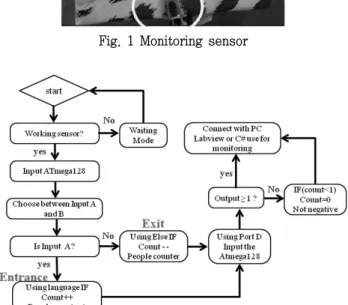
Fig. 2 is the algorithm of user countering system for

(2)

Fig. 1 Monitoring sensor

Fig. 2 Algorism for user countering system

checking occupancy of all facilities in cruise ship. The countering system starts and if a sensor doesn't work, it waits. Otherwise, an input signal enters into artmega128 to recognize. The signal is A or B. The character ‘A’

means ‘Entrance’ and ‘B’ means ‘Exit’. If it is A, the number of people is added +1. If it is B, it is subtracted -1.

The counting values are sent to main PC through Zigbee communication. Because the number of people can't become -, the minimum value is ‘0’. Then an output signal is displayed on a monitor in passenger room using LabView program.

3. GPS

The global positioning system (GPS) provides location

Fig. 3 System configuration

and time information of the ship. We need the GPS in- formation for providing passengers with tour information.

Firstly, the GPS information is taken. This information is entered into the computer. Then the GPS information is compared with the established tourist database in the computer. If the ship location from the GPS data adjoins a tourist city, the computer shows sightseeing information (for example city name, famous tourist attractions, etc.).

If the ship location is far from a tourist city, the computer shows tour courses.

4. System Configuration

Fig. 3 shows system configuration based on ATmega128 microcontroller and Zigbee communication for obtaining sensing information. Table monitoring sensor is connected to LM339 device. The sensor is a photo transistor with an infrared sensor. When the sensor detects some people sit on the table, the sensor output is generated. Then the output signal enters into a comparator. And the sensor signal is entered to ATmega128 through the comparator.

The signal is transmitted to main computer from ATmega 128 by Zigbee wireless communication. The GPS data is directly transmitted to main computer.

III. LabView Monitoring System 1. LabView Block Diagram

Fig. 4 shows a block diagram of main monitoring system.

If people sit on the table, the infrared sensor recognizes

(3)

Fig. 4 Block diagram of monitoring system

Fig. 5 Front panel of monitoring system

them and delivers the sensor data to LabView program by DAQ board. The data of the sensor is converted to the occupancy information of the restaurant by some calculation of LabView program. This block diagram controls the outside images, GPS data, travel information, table vacancy of restaurant and the number of swimmer in swimming pool.

2. LabView Front Panel

Fig. 5 show a front panel of monitoring system. This screen shows the capture images. Passengers in a guest room can directly see them on a monitor display. They can search five information in real-time through this screen.

IV. Experimental Results

1. Automated Table Monitoring System

Fig. 6 is the automated table monitoring system in the

Fig. 6 Automated table monitoring system

restaurant. When table 2 is used, LED of T2 is on. Because passengers can monitor the occupancy of the table in the restaurant, if they want to make a reservation in the restaurant, they can do by the system in their room.

2. Automated Swimmer Count System

At any given time, there may be large numbers of swimmers entering and exiting swimming pool. With a swimmer counting system that systematically counts and analyzes swimmer movements, we can provide passengers with use information of swimming pool. An entrance and exit in the swimming pool are divided and the infrared sensor is attached across two sides of the pathway. If a person passes through the entrance, the sensor works and the number of swimmer is added +1. If a person passes through the exit, the number is subtracted -1.

When the number of swimmer is less than the limited number, green LED is on as shown in Fig. 7. Otherwise

Fig. 7 Automated swimmer count system

(4)

red LED is on. As passengers check the swimming pool in their room, they can confirm whether they can use the swimming pool or not.

3. Travel Information Providing System

This capture images are monitoring screens that pas- sengers can check in their room. As GPS date is analyzed and is compared with tourist database in main server, the travel information is provided to passengers. Lines and routes of cruise ship are installed in the system and arrival time of each tourist spot is set in left box as

(a) Sightseeing information

(b) Tour course information Fig. 8 Travel information providing system

shown in Fig. 8 (a). If the current time is not coincident with arrival time of each tourist spot, the screen displays tour course as shown in Fig. 8 (b).

If the current time of cruise ship is equal to Italy's arrival time, the system provides sightseeing information of Italy. If the current time is equal to the Croatia's arrival time, travel sightseeing information of Croatia is showed in the screen. In Fig. (a), because GPS data indicates location of Korea Maritime University, the screen displays campus view of Korea Maritime University.

V. Conclusion

Today's cruise ships are outfitted with the latest high- tech products and services in passenger areas for improving the customer satisfaction and the companies' image. As following these trends, we proposed three service systems such as customer counting system in a restaurant, user counting system in swimming pool, travel information providing system by applying ubiquitous technology. As a result, these could provide more convenient services and tour information for passengers at any time. If appropriate services are provided using ubiquitous technology satisfying the cruise ship's purpose, convergence of ubiquitous tech- nology and ship technology will be successfully realized.

Reference

1. Managing cruise ship impacts: Guidelines for current and potential destination communities, http://www.tourisk.org/

content/projects/Managing%20Cruise%20Ship%20Impacts.p df.

2. Cruise ship tourism, http://bookshop.cabi.org/Uploads/Books/

PDF/9781845930486/9781845930486.pdf.

3. Ubiquitous sensor networks (USN), ITU-T Technology Watch Briefing Report Series, no.4 (Fabruary 2008).

4. Greenfield A., Everyware: The Dawning Age of Ubiquitous Computing, New Riders Publishing, 2006.

5. Lee J. T., Park J. H., Cho S. R. and Lee D. K.(2007).

An application of ubiquitous technologies for naval ships:

crew location recognition system, ICMRT’07, Italy, 51-60.

6. Park B. J., Paik B. G., Cho S. R., Lee D. K., Kang H. J.

and Choi J.(2008), Application of ubiquitous technology

(5)

to ship environment, Proceeding Mobiquitous‘08, Belgium.

7. Development of Smart Operation Technologies for Exploration Fleet based on Ubiquitous Concept, KORDI Report no. UCE00114A-06077, December 2006.

8. Feasibility Study for Development of Smart Platform for Ubiquitous based on Ship and Ocean Logistic Networks, KORDI Report, December 2006.

심준환 (Shim, Joon-hwan)

He received the M.S. and Ph. D. degrees from Kyungpook National University in 1993 and 1998. He was a Visiting Professor in Texas University at Arlington. He is currently a professor in Dep. of Electronics and Communications Engineering at Korea Maritime University in Busan, Korea.

Phone: +82-51-410-4811

Fax: +82-51-404-3986

E-mail: [email protected]

수치

Fig. 3 shows system configuration based on ATmega128  microcontroller  and  Zigbee  communication  for  obtaining  sensing information
Fig.  6  is  the  automated  table  monitoring  system  in  the

참조

관련 문서

Third, based on the above results, this study concluded that the competitiveness of the agricultural product distribution industry in uncertain business

③ A student who attended Korean course at KNU Korean Language Program and holds TOPIK Level 3 or a student who completed Korean course Level 4 at the KNU Korean Language

· 50% exemption from tuition fee Ⅱ for the student with a TOPIK score of level 3 or higher or completion of level 4 or higher class of the Korean language program at the

웹 표준을 지원하는 플랫폼에서 큰 수정없이 실행 가능함 패키징을 통해 다양한 기기를 위한 앱을 작성할 수 있음 네이티브 앱과

_____ culture appears to be attractive (도시의) to the

Common corporate digital crimes include piracy, financial fraud, espionage, and theft of services.. _______________________________________ such as

The index is calculated with the latest 5-year auction data of 400 selected Classic, Modern, and Contemporary Chinese painting artists from major auction houses..

1 John Owen, Justification by Faith Alone, in The Works of John Owen, ed. John Bolt, trans. Scott Clark, "Do This and Live: Christ's Active Obedience as the