D I A B E T E S & M E T A B O L I S M J O U R N A L
This is an Open Access article distributed under the terms of the Creative Commons Attribution Non-Commercial License (http://creativecommons.org/licenses/by-nc/4.0/) which permits unrestricted non-commercial use, distribution, and reproduction in any medium, provided the original work is properly cited.
Glycemic Effects of Rebaudioside A and Erythritol in People with Glucose Intolerance
Dong Hee Shin1, Ji Hye Lee1, Myung Shin Kang1, Tae Hoon Kim1, Su Jin Jeong1, Chong Hwa Kim1, Sang Soo Kim2, In Joo Kim2
1Division of Endocrinology and Metabolism, Department of Internal Medicine, Sejong General Hospital, Bucheon,
2Division of Endocrinology and Metabolism, Department of Internal Medicine, Pusan National University School of Medicine, Busan, Korea
Background: Rebaudioside A and erythritol are nonnutritive sweeteners. There have been several studies of their glycemic ef- fects, but the outcomes remain controversial. The purpose of this study was to evaluate the glycemic effects of rebaudioside A and erythritol as a sweetener in people with glucose intolerance.
Methods: This trial evaluated the glycemic effect after 2 weeks of consumption of rebaudioside A and erythritol as sweeteners in a pre-diabetic population. The patients were evaluated for fructosamine, fasting plasma glucose, C-peptide, insulin, and 2-hour plas- ma glucose before and after consumption of sweetener. The primary outcome was a change in fructosamine levels from the baseline to the end of treatment. Secondary outcomes were the changes in levels of fasting plasma glucose and 2-hour plasma glucose.
Results: From the baseline to the end of experiment, the changes in fructosamine levels after consumption of rebaudioside A and erythritol, did not differ significantly (244.00±19.57 vs. 241.68±23.39 μmol/L, P=0.366). The change in levels from the baseline to end of the study for rebaudioside A and erythritol were fasting plasma glucose (102.56±10.72 vs. 101.32±9.20 mg/dL), 2-hour plasma glucose (154.92±54.53 vs. 141.92±42.22 mg/dL), insulin (7.56±4.29 vs. 7.20±5.12 IU/mL), and C-peptide (2.92±1.61 vs.
2.73±1.31 ng/mL), respectively, and also did not differ significantly (P>0.05 for all).
Conclusion: Our study suggests that consumption of rebaudioside A and erythritol does not alter the glucose homeostasis in people with glucose intolerance.
Keywords: Erythritol; Glucose intolerance; Rebaudioside A
Corresponding authors: Chong Hwa Kim http://orcid.org/0000-0002-4563-7772 Division of Endocrinology and Metabolism, Department of Internal Medicine, Sejong General Hospital, 28 Hohyeon-ro 489beon-gil, Sosa-gu, Bucheon 14754, Korea
E-mail: [email protected]
In Joo Kim https://orcid.org/0000-0003-1307-6146
Division of Endocrinology and Metabolism, Department of Internal Medicine, Pusan National University School of Medicine, 179 Gudeok-ro, Seo-gu, Busan 49241, Korea
INTRODUCTION
Sugar-free and reduced-calorie foods and beverages are gar- nering more interest due to the increasing rates of obesity in several countries [1]. It was reported that globally, the demand for alternatives to sugar is increasing at a rate of 8% per year.
The market is showing more and more interest in natural sweeteners compared to synthetic ones [2]. Currently, several synthetic non-nutritive sweeteners have been approved for
use as food ingredients by the U.S. Food and Drug Adminis- tration. Non-nutritive sweeteners are sugar substitutes that have zero calories and do not raise blood glucose levels. They may be the preferred choice for reducing carbohydrate and calorie intake in people with diabetes.
Steviol glycosides are natural constituents of the plant Stevia rebaudiana Bertoni [3]. Stevioside, rebaudioside A, rebaudio- side C, and dulcoside A are the major components of the S. re- baudiana leaf [4]. Rebaudioside A is well known for sweetness http://dx.doi.org/10.4093/dmj.2016.40.4.283
pISSN 2233-6079 · eISSN 2233-6087
(250 to 300 times sweeter than sucrose), and is popular as a new, non-caloric sweetener in several countries [5].
Erythritol (four-carbon sugar alcohol) is produced from corn or wheat starch by enzymatic hydrolysis that yields glu- cose, which is fermented by safe and suitable food-grade os- mophilic yeast (either Moniliella pollinis or Trichosporonoides megachliensis), and has also been used as a low-calorie sweet- ener in the food industry. The sweetness of erythritol is about 70% to 80% that of sucrose, and its calories are only 10% of the calories in sucrose [6].
Several studies have reported that stevioside and stevia ex- tracts may have a hypoglycemic effect, particularly among in- dividuals with type 2 diabetes [7-10]. However, more recent studies have not provided any clear evidence to support the previous results [11,12]. Previous studies have also shown that consumption of erythritol did not affect glucose homeostasis [13,14], but so far, the glycemic effects of rebaudioside A and erythritol remains controversial. To date, there are no data about the glycemic effects of rebaudioside A and erythritol in Korea. Therefore, the purpose of this study was to evaluate the glycemic effects of rebaudioside A and erythritol in people with glucose intolerance.
METHODS
Subjects
This was a single, open trial conducted at two research sites in Korea. The inclusion criteria were patients 18 to 74 years old who were glucose intolerant (fasting plasma glucose of 100 to 125 mg/dL). The exclusion criteria were individuals with overt diabetes, treatment of oral hypoglycemic agents within the previous 3 months, previous history of gastrointestinal resec- tion operation (except appendectomy), severe diabetic com- plications, severe liver failure, renal failure, risk of hypoglyce- mia, poorly controlled hypertension, severe cardiovascular disease, severe trauma or infection, patients in a perioperative period, history of drug allergy, excessive alcohol consumers, pregnant women or women that have the possibility of be- coming pregnant, secondary hypertension or malignant hy- pertension (New York Heart Association class III or IV), bilat- eral renal artery stenosis, single kidney, post-kidney trans- plantation, angina, myocardial infarction, cardiac surgery, or stroke in the past 6 months, and a recent history of a revascu- larization within the previous 3 months. This study protocol was approved by the Institutional Review Board (IRB) of Pu-
san National University Hospital (IRB No. 1105-004-001).
Signed written informed consent was obtained from all sub- jects.
Methods
A total of 25 subjects were enrolled for the study. Once en- rolled, they stopped having any similar sweetening agents for at least 1 week before start of study (washout period). A single pack of sweetener contained 16 mg of rebaudioside A and 986 mg of erythritol. All subjects consumed 2 packs of sweetener dissolved in water, twice a day (after breakfast and dinner) for 2 weeks. Body weight and food consumption were monitored at the baseline and at the end of the study. Subjects were in- structed to maintain a stable diet during the course of the study. Diet records completed at the baseline and at the end of the study were used to confirm dietary stability. Subjects re- ported any adverse events that occurred during the study.
Fructosamine, fasting level of blood glucose, insulin, C- peptide, and 2-hour plasma glucose levels were measured at the baseline and at the end of the study period. The subjects fasted at least 8 hours prior to measurement of levels for fast- ing plasma glucose, insulin, and C-peptide. Compliance was assessed by pack count and subject interview. Percent compli- ance was calculated as 100 times the number of doses con- sumed divided by the expected number of doses.
The primary outcome in the short study protocol was the change in fructosamine for blood glucose monitoring from the baseline to the end of treatment. Fasting plasma glucose, 2-hour plasma glucose, C-peptide, and insulin at the baseline and at the end of treatment were obtained for secondary out- comes.
Serum fructosamine was measured using a nitroblue tetra- zolium calorimetric method (Roche Diagnostics, Mannheim, Germany). Fasting blood glucose and 2-hour plasma glucose levels were measured using the hexokinase method (Roche Diagnostics). Serum insulin and C-peptide levels were mea- sured by the electrochemiluminescence immunoassay meth- od (Roche Diagnostics).
Insulin resistance and pancreatic β-cell function were cal- culated using the homeostasis model assessment of insulin re- sistance (HOMA-IR) and the homeostasis model assessment of β-cell function (HOMA-β), by the following formulas, re- spectively.
HOMA-IR=[fasting insulin (μU/mL)×fasting plasma glu- cose (mmol/L)]/22.5
HOMA-β=fasting insulin (μU/mL)/[fasting plasma glu- cose (mmol/L)–3.5]
Statistical analysis
We performed a paired t-test to compare the difference from the baseline. All statistical analyses were performed using SPSS version 18.0 (SPSS Inc., Chicago, IL, USA). All tests of statistical significance were completed at the 5% level and
were two-tailed tests.
RESULTS
Patient characteristics
Data was collected from 25 individuals. There were seven men and 18 women included in the study group. All subjects, except one person, had previous illness. At baseline, the mean height was 159.17±8.15 cm, and the mean body weight was 66.57±
10.35 kg. Mean systolic and diastolic blood pressure were 126.84±10.57 and 77.92±9.80 mm Hg. Mean heart rate was 71.24±10.82 beats/min. Mean fructosamine level was 244.00±
19.57 μmol/L. The mean fasting plasma glucose level and mean 2-hour plasma glucose level were 102.56±10.72 and 154.92±
54.53 mg/dL, respectively. Mean product compliance was 92.53%±7.86%. Table 1 shows the baseline characteristics of all subjects.
Primary outcome
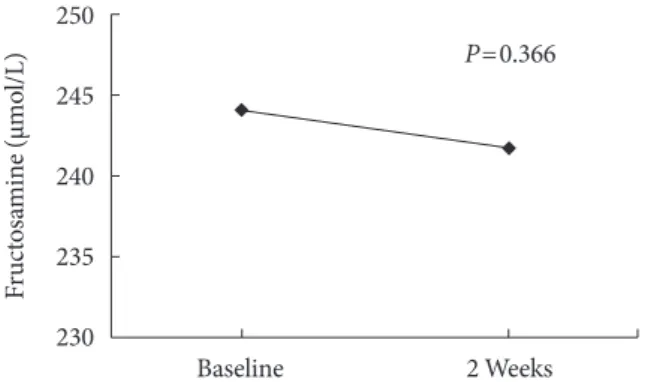
The change in fructosamine levels from the baseline to 2 weeks are shown in Table 2, Fig. 1 (244.00±19.57 and 241.68±23.39 μmol/L, respectively). The fructosamine level did not differ significantly between the baseline and 2 weeks during the peri- od of study (P=0.366).
Secondary outcome
Fasting plasma glucose, insulin, C-peptide, and 2-hour plas- ma glucose from the baseline to 2 weeks are shown in Table 2.
There were no significant differences between the baseline and the end of the study for fasting plasma glucose (102.56±
Table 1. Baseline characteristics of the subjects
Variable Subjects (n=25)
Male sex 7 (28)
Height, cm 159.17±8.15
Weight, kg 66.57±10.35
SBP, mm Hg 126.84±10.57
DBP, mm Hg 77.92±9.80
Heart rate, beats/min 71.24±10.82
Previous history 24 (96)
Cardiovascular 17 (27.42)
Gastroenteric/hepatobiliary 6 (9.68) Endocrinologic/metabolic 36 (58.06)
Dermatologic 1 (1.61)
Others 2 (3.23)
Fructosamine, μmol/L 244.00±19.57
FPG, mg/dL 102.56±10.72
2-Hour plasma glucose, mg/dL 154.92±54.53 Values are presented as number (%) or mean±standard deviation.
SBP, systolic blood pressure; DBP, diastolic blood pressure; FPG, fast- ing plasma glucose.
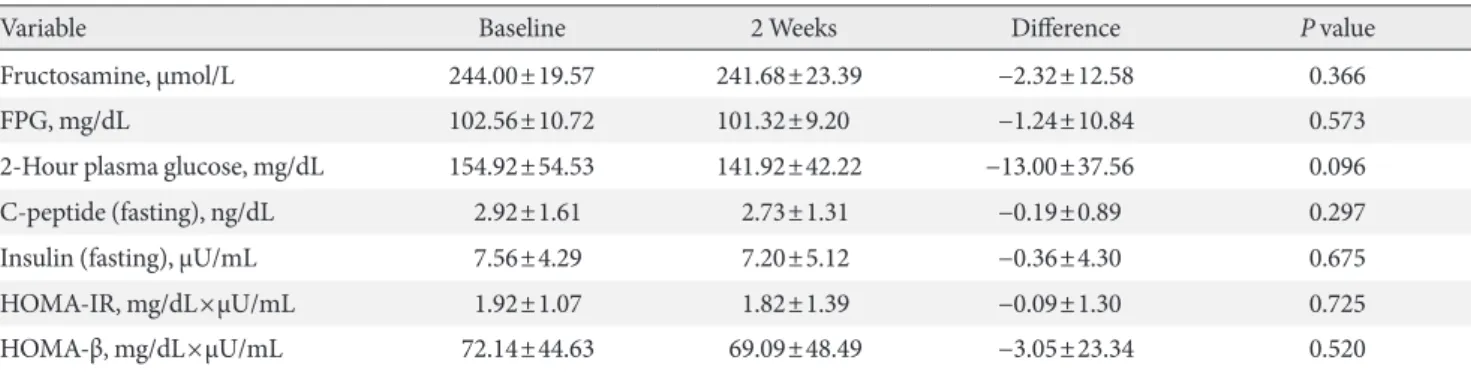
Table 2. Change of fructosamine, fasting plasma glucose, 2-hour plasma glucose, fasting C-peptide, and fasting insulin level at baseline and 2 weeks
Variable Baseline 2 Weeks Difference P value
Fructosamine, μmol/L 244.00±19.57 241.68±23.39 −2.32±12.58 0.366
FPG, mg/dL 102.56±10.72 101.32±9.20 −1.24±10.84 0.573
2-Hour plasma glucose, mg/dL 154.92±54.53 141.92±42.22 −13.00±37.56 0.096
C-peptide (fasting), ng/dL 2.92±1.61 2.73±1.31 −0.19±0.89 0.297
Insulin (fasting), μU/mL 7.56±4.29 7.20±5.12 −0.36±4.30 0.675
HOMA-IR, mg/dL×μU/mL 1.92±1.07 1.82±1.39 −0.09±1.30 0.725
HOMA-β, mg/dL×μU/mL 72.14±44.63 69.09±48.49 −3.05±23.34 0.520
Values are presented as mean±standard deviation.
FPG, fasting plasma glucose; HOMA-IR, homeostasis model assessment of insulin resistance; HOMA-β, homeostasis model assessment of β-cell function.
10.72 and 101.32±9.20 mg/dL, P=0.573) (Fig. 2A), insulin (7.56±4.29 and 7.20±5.12 μU/mL, P=0.675), and C-peptide (2.92±1.61 and 2.73±1.31 ng/dL, P=0.297), respectively. Al- though the 2-hour plasma glucose levels were reduced by 13.0 mg per deciliter after consuming sweetener for 2 weeks, it was not statistically significant (154.92±54.53 and 141.92±42.22 mg/dL, P=0.096) (Fig. 2B).
There were no significant differences between the baseline and 2 weeks for HOMA-IR (1.92±1.07 and 1.82±1.39 mg/
dL×μU/mL, P=0.725) or HOMA-β (72.14±44.63 and 69.09
±48.49 mg/dL×μU/mL, P=0.520) (Fig. 3). Assessments of changes in blood pressure, body weight, and fasting total cho- lesterol showed no differences.
Adverse events
There were two mild adverse events during the study, both in- volving abdominal discomfort. Both adverse events recovered spontaneously. One subject completed the study, but the other subject stopped taking the sweetener.
DISCUSSION
In this study, we found that consumption of rebaudioside A and erythritol for 2 weeks did not affect glucose homeostasis in individuals with glucose intolerance. There were no signifi- cant differences in the change of the fructosamine from the baseline to the end of the study. This result showed that taking Fig. 1. Mean change from the baseline to 2 weeks in fructos-
amine.
Fig. 2. Mean change from the baseline to 2 weeks in (A) fasting plasma glucose (FPG), (B) 2-hour plasma glucose.
Fig. 3. Mean change from the baseline to 2 weeks in (A) homeostasis model assessment of insulin resistance (HOMA-IR) and (B) homeostasis model assessment of β-cell function (HOMA-β).
250 245 240 235 230
110108 106104 102100 9896 9492 90
2.3 2.2 2.1 2.0 1.9 1.8 1.7 1.6 1.5
165 160 155 150 145 140 135 130
79 77 75 73 71 69 67 65
Fructosamine (μmol/L)FPG (mg/dL)HOMA-IR (mg/dL×μU/mL) 2-Hour plasma glucose (mg/dL)HOMA-β (mg/dL×μU/mL)
Baseline 2 Weeks
Baseline 2 Weeks
Baseline 2 Weeks
Baseline 2 Weeks
Baseline 2 Weeks
P=0.366
P=0.573
P=0.725
P=0.297
P=0.520 A
A
B
B
rebaudioside A and erythritol for 2 weeks did not affect the blood glucose level. We found a tendency toward a decline in the level of fasting plasma glucose, C-peptide, insulin, and 2-hour plasma glucose during the study, but these figures were not statistically significant. We calculated HOMA-IR and HOMA-β to evaluate insulin resistance and β-cell func- tion. HOMA-IR and HOMA-β did not differ significantly from the baseline to the end of the study. These results suggest that rebaudioside A and erythritol did not affect the β-cell function and insulin resistance.
There was some evidence that taking rebaudioside A did not affect glucose control in non-diabetics and people with type 1 and type 2 diabetes. In a 3-month study of subjects with type 2 diabetes, it was reported that fasting blood glucose and glycosylated hemoglobin (HbA1c) were not significantly low- ered by intake of 1,500 mg/day of stevioside, when compared with placebo [12]. In another study, 250 mg of steviol glyco- side was administered to a group of type 1 and type 2 diabet- ics and non-diabetics three times daily for 3 months in a dou- ble-blind, placebo-controlled trial. After 3 months, there were no significant changes in glucose level and HbA1c [15].
Several studies reported that stevioside and stevia extracts may have a hypoglycemic effect in patients with type 2 diabe- tes [7,9,10]. There were some hypotheses about hypoglycemic effects of rebaudioside A. First, rebaudioside A may stimulate insulin secretion. Stevioside was shown to stimulate glucose- dependent insulin secretion from islets in an in vitro mouse model [7]. A previous study demonstrated that rebaudioside A directly stimulates insulin secretion from pancreatic β-cells [16]. Therefore, rebaudioside A has insulinotropic effects, and may play a potential role as treatment in type 2 diabetes. Sec- ond, rebaudioside A may improve insulin sensitivity. Stevio- side was shown to have direct effects on insulin sensitivity in 3T3-L1 adipocytes via an increase in glucose uptake and en- hanced expression of proteins involved in the insulin-signal- ing pathway [17]. Lastly, rebaudioside A may enhance insulin utilization. It was shown that stevioside could enhance insulin utilization in insulin-deficient rats due to decreasing phos- phoenolpyruvate carboxykinase (PEPCK) gene expression in rat liver, by slowing down gluconeogenesis [10]. The glycemic effect of rebaudioside A is still not clear, but it seems that con- sumption of rebaudioside A did not worsen glycemic control in individuals with and without diabetes.
Several studies were performed to investigate the potential effect that the ingestion of erythritol might have on carbohy-
drate metabolism in non-diabetics and diabetics. In non-dia- betics, erythritol was dissolved in water and ingested as a sin- gle dose of 0.3 g/kg body weight. Analysis of blood performed at 0.5, 1, 2, 3, 8, and 24 hours after erythritol administration showed no changes in insulin or glucose concentrations [13].
In diabetic individuals, erythritol, in a single oral dose of 20 g dissolved in 100 mL of water, was ingested by five fasting pa- tients, followed by the ingestion of normal meals approxi- mately 3 and 12 hours later. Serum insulin and glucose were measured prior to and for up to 24 hours after erythritol ad- ministration. Analysis of the serum values showed that nei- ther insulin nor glucose concentrations were changed in re- sponse to erythritol administration [14]. These studies in non- diabetics and diabetics demonstrate that erythritol does not adversely affect glycemic homeostasis.
Fructosamine, a measure of glycated serum proteins, is used as a glycemic control indicator representing average glycemia over the previous 2 to 3 weeks [18-20]. Because the half-life of serum albumin is about 14 days, fructosamine reflects short- term (about 2 weeks) control of blood glucose level [21]. Pre- vious studies have shown that fructosamine levels strongly correlate with other measures of glycemic control, including HbA1c [18], fasting glucose [22-24], and oral glucose toler- ance test [25,26]. Measuring fructosamine has been used as an alternative to measuring HbA1c for assessment of glycemic control. Therefore, we checked the change in fructosamine levels for short-term glycemic control monitoring.
Calculating HOMA-IR and HOMA-β for evaluating insulin resistance and β-cell function were distinctive in previous studies. Homeostasis model assessment is a method for as- sessing β-cell function and insulin resistance from basal glu- cose and insulin concentrations [27]. Homeostasis model as- sessment has been widely validated and applied for quantify- ing insulin resistance and secretion [28].
Rebaudioside A and erythritol were well tolerated and gen- erally had no effect on laboratory measurements. Assessments of change in renal function test, liver function test, and fasting total cholesterol showed no difference. A small, significant de- crease was noted for the basophil count from the baseline to the end of treatment. However, the total white cell count showed no difference from the baseline to end of treatment.
This was the first study about the glycemic effects of short- term consumption of rebaudioside A and erythritol in indi- viduals with glucose intolerance in Korea. There were some limitations in this trial. First, the sample size was small. Sec-
ond, the design of this trial was single, open trial. Third, dura- tion of consumption was short-term periods of only 2 weeks.
Fourth, we did not restrict physical activity, which could largely influence the blood glucose levels. Finally, a standard test meal was not supplemented during the study. Although subjects were instructed to maintain a stable diet and record their diet during the study, the free diet could affect the glu- cose homeostasis more than a standard test meal. Further studies are required to assess the long-term glycemic effect of sweeteners in diet.
In conclusion, we suggest that consumption of rebaudioside A and erythritol for 2 weeks does not alter glucose homeosta- sis in people having glucose intolerance, and may be promis- ing alternatives as sweeteners in these individuals.
CONFLICTS OF INTEREST
This trial was supported by grants from the Han Wha Phar- maceuticals Co. Ltd., Seoul, Republic of Korea.
REFERENCES
1. Kroger M, Meister K, Kava R. Low-calorie sweeteners and other sugar substitutes: a review of the safety issues. Compr Rev Food Sci Food Saf 2006;5:35-47.
2. ScienceDaily: Alternative sweeteners are increasing by 8% a year. Available from: http://www.sciencedaily.com/releas- es/2008/05/080512140912.htm (updated 2008 May 14).
3. World Health Organization. Evaluation of certain food addi- tives (WHO technical report series 928): sixty-third report of the Joint FAO/WHO Expert Committee on Food Additives.
Geneva: World Health Organization; 2005. p166.
4. Wood HB, Allerton R, Diehl HW, Fletcher HG. Stevioside. I.
The structure of the glucose moieties. J Org Chem 1955;20:
875-83.
5. Pol J, Hohnova B, Hyotylainen T. Characterisation of Stevia rebaudiana by comprehensive two-dimensional liquid chro- matography time-of-flight mass spectrometry. J Chromatogr A 2007;1150:85-92.
6. Roper H, Goossens J. Erythritol, a new raw material for food and non-food applications. Starch 1993;45:400-5.
7. Jeppesen PB, Gregersen S, Poulsen CR, Hermansen K. Stevio- side acts directly on pancreatic beta cells to secrete insulin: ac- tions independent of cyclic adenosine monophosphate and adenosine triphosphate-sensitive K+-channel activity. Metab-
olism 2000;49:208-14.
8. Gregersen S, Jeppesen PB, Holst JJ, Hermansen K. Antihyper- glycemic effects of stevioside in type 2 diabetic subjects. Me- tabolism 2004;53:73-6.
9. Jeppesen PB, Gregersen S, Rolfsen SE, Jepsen M, Colombo M, Agger A, Xiao J, Kruhoffer M, Orntoft T, Hermansen K. Anti- hyperglycemic and blood pressure-reducing effects of stevio- side in the diabetic Goto-Kakizaki rat. Metabolism 2003;52:
372-8.
10. Chen TH, Chen SC, Chan P, Chu YL, Yang HY, Cheng JT.
Mechanism of the hypoglycemic effect of stevioside, a glyco- side of Stevia rebaudiana. Planta Med 2005;71:108-13.
11. Ferri LA, Alves-Do-Prado W, Yamada SS, Gazola S, Batista MR, Bazotte RB. Investigation of the antihypertensive effect of oral crude stevioside in patients with mild essential hyperten- sion. Phytother Res 2006;20:732-6.
12. Jeppesen PB, Barriocanal L, Meyer MT, Palacios M, Canete F, Benitez S, Logwin S, Schupmann Y, Benitez G, Jimenez JT. Ef- ficacy and tolerability of oral stevioside in patients with type 2 diabetes: a long-term, randomized, doubleblinded, placebo- controlled study. Diabetologia 2006;49(Suppl 1):511-2.
13. Noda K. Analysis of metabolites in urine after single oral ad- ministration of NIK-242 to dogs. Omiya (JP): Division of Me- tabolism, Omiya Research Lab., Niken Chemicals Co. Ltd.;
1994.
14. Ishikawa M, Hirose C, Tsujino D, Miyashita M, Kawashima Y, Nakamura T. The effect of erythritol on glucose tolerance in diabetes patients. Yokohama (JP): Department of Metabolic Endocrinology and Department of Nutrition, Seibu Hospital, St. Marianna University School of Medicine; 1992.
15. Barriocanal L, Palacios M, Benitez S, Canete F, Jimenez JT, Jimenez N, RojasV. Lack of pharmacological effect of steviol glycosides as a sweetener in humans. Studies on repeated ex- posures in normotensive and hypotensive individuals and type 1 and type 2 diabetes. Proceedings of the 2nd Interna- tional Stevia Symposium; 2006 Nov 9-10; Asuncion, PY.
16. Abudula R, Matchkov VV, Jeppesen PB, Nilsson H, Aalkjaer C, Hermansen K. Rebaudioside A directly stimulates insulin se- cretion from pancreatic beta cells: a glucose-dependent action via inhibition of ATP-sensitive K-channels. Diabetes Obes Metab 2008;10:1074-85.
17. Mohd-Radzman NH, Ismail WI, Jaapar SS, Adam Z, Adam A.
Stevioside from stevia rebaudiana Bertoni increases insulin sensitivity in 3T3-L1 adipocytes. Evid Based Complement Al- ternat Med 2013;2013:938081.
18. Sahu A, Sarkar PD. Comparative study of NBT reduction method for estimation of glycated protein (serum fruc- toseamine) with glycated HbA1c estimated on DCA 2000+an- alyzer (immunoagglutination inhibition). Indian J Physiol Pharmacol 2008;52:408-12.
19. Carter AW. Home fructosamine testing: is its demise prema- ture? Diabetes Technol Ther 2002;4:643-4.
20. Hindle EJ, Rostron GM, Clark SA, Gatt JA. Serum fructos- amine and glycated haemoglobin measurements in diabetic control. Arch Dis Child 1986;61:113-7.
21. Tahara Y, Shima K. Kinetics of HbA1c, glycated albumin, and fructosamine and analysis of their weight functions against preceding plasma glucose level. Diabetes Care 1995;18:440-7.
22. Abdel-Gayoum AG. The effect of glycemic control in type 2 diabetic patients with diabetes-related dyslipidemia. Saudi Med J 2004;25:207-11.
23. Gul A, Rahman MA, Hasnain SN. Influence of fructose con- centration on myocardial infarction in senile diabetic and non-diabetic patients. Exp Clin Endocrinol Diabetes 2009;
117:605-9.
24. Serdarevic N, Pepic E, Musanovic J, Pleho-Kapic A. The se- rum fructosamine concentration at patients with diabetes mellitus. Health Med 2010;4:132-7.
25. Ko GT, Chan JC, Yeung VT, Chow CC, Tsang LW, Li JK, So WY, Wai HP, Cockram CS. Combined use of a fasting plasma glucose concentration and HbA1c or fructosamine predicts the likelihood of having diabetes in high-risk subjects. Diabe- tes Care 1998;21:1221-5.
26. Weerasekera DS, Peiris H. The value of serum fructosamine in comparison with oral glucose tolerance test (OGTT) as a screening test for detection of gestational diabetes mellitus. J Obstet Gynaecol 2000;20:136-8.
27. Wallace TM, Levy JC, Matthews DR. Use and abuse of HOMA modeling. Diabetes Care 2004;27:1487-95.
28. Choi ES, Rhee EJ, Kim JH, Won JC, Park CY, Lee WY, Oh KW, Park SW, Kim SW. Insulin sensitivity and insulin secretion de- termined by homeostasis model assessment and future risk of diabetes mellitus in Korean men. Korean Diabetes J 2008;32:
498-505.