Korean J. Breed. Sci. 52(4):454-459(2020. 12) https://doi.org/10.9787/KJBS.2020.52.4.454
다수성 종간교잡 감초 신품종 ‘원감’
이정훈*⋅오명원*⋅이상훈⋅박춘근⋅정진태⋅한종원⋅마경호⋅장재기 농촌진흥청 국립원예특작과학원 약용작물과
‘Wongam’, a Licorice Interspecific Hybrid Cultivar with High Yield
Jeong-Hoon Lee*, Myeong-Won Oh*, Sang-Hoon Lee, Chun-Geon Park, Jin-Tae Jeong, Jong-Won Han, Kyung-Ho Ma, and Jae-Ki Chang
Department of Herbal Crop Research, NIHHS, RDA, Eumseong 27709, Republic of Korea
Abstract A new interspecific hybrid cultivar, Wongam, was developed as a high-yield licorice from a Glycyrrhiza glabra × G. uralensis (G.
korshinski Grig.) cross by the herbal crop team at the National Institute of Horticultural and Herbal Science, Rural Development Administration, Korea. The plant type is erect, and the leaf shape is oval. It has well-developed vascular bundles compared to G. uralensis as a control species. The dried root weight of ‘Wongam’ was 54.6 g per plant, and 22.7 g per plant in the control species G. uralensis. In addition, the average yield of ‘Wongam’ was 359 kg/10a, which was 127% higher than that of G. uralensis. It exhibits resistance to brown spot disease, as well as a to lodging. The glycyrrhizin and liquiritigenin content of ‘Wongam’ are 3.96% and 0.8%, respectively, which meets the Korean Pharmacopoeia Standards. This cultivar can widely adapt to most cultivation zones found in Korea, except for the Gangwon-do Province region (Registration No. 196).
key words licorice, breeding, characteristics, crossing, oriental herb
Received on August 7, 2020. Revised on August 10, 2020. Accepted on September 24, 2020.
* Corresponding Author: Jeong-Hoon Lee (E-mail: [email protected], Tel: +82-43-871-5670, Fax: +82-43-871-5659)
* Co-corresponding Author: Myeong-Won Oh (E-mail: [email protected], Tel: +82-43-871-5683 Fax: +82-43-871-5659)
서 언
콩과(Leguminous)에 속하는 감초속(Glycyrrhiza L.) 식물은 중앙아시아를 중심으로 중국, 러시아, 만주, 몽골, 유럽, 중동, 아메리카 등의 사막 또는 건조한 초원에 광범위하게 분포하는 다년생 약용작물이다(Blumenthal et al. 2000). 이들 감초속에는 Glycyrrhiza glabra, G. uralensis, G. inflata, G. aspera, G.
korshinskyi 및 G. eurycarpa를 포함한 약 22 종이 속해 있다 (Ashurmetov 1996, Blumenthal et al. 2000, Oguz 1972).
그 중 우리나라 대한민국약전(12th, MFDS 2020) 및 식품공전 (MFDS 2017)에서 식약공용 한약재로 규정하여 활용하고 있는 감초 기원종은 감초(G. uralensis Fisch.), 광과(光果)감초(G.
glabra L.) 및 창과(脹果)감초(G. inflate Batal.) 등 3종만 이용할 수 있다.
감초 뿌리의 주 화학성분은 triterpene saponin으로 알려져 있으며, 유효성분으로는 glycyrrhizin, liquiritin, isoliquirtin, liquirtigenin, glycyrrhetinic acid, glucose, saponin 등의 성분이
보고되었다(Park et al. 2008, Lee et al. 2010).
감초는 오래 전부터 모든 약의 독성을 해독하고 서로 다른 약재를 조화시켜 약효를 잘 나타나게 하는데 활용되어 왔다.
현대사회에서 감초는 항바이러스, 항균, 항암 효과 및 항알레르 기 작용(Wang et al. 2013, Fukuchi et al. 2016, Gupta et al.
2008, Chakotiya et al. 2016, Kwak & Park 2004) 등 다양한 효능이 규명되어 최근 양의학에서도 활용 가능성을 지속적으로 부각시키고 있는 실정이다.
감초 지표 성분인 glycyrrhizin은 종 또는 재배환경에 따라 설탕의 약 수십배의 단맛을 내어 천연감미료로 이용되고 있으며, liquiritigenin 성분은 냉장식품 보존 시 발생하는 저온성 균에 살균 효과가 있어 천연보존제로의 가능성을 제시했다(Ahn et al. 1998). 이와 같이 감초는 전통 한약재로서 뿐만 아니라, 식료 품, 의약품 등 여러 분야에 널리 활용되고 있다.
그러나 감초는 국내에서는 자생하지 않아 대부분 수입에 의존 하고 있는 실정이며(MAFRA 2017), 국내 재배 시 지표 성분인 glycyrrhizin (2.5% 이상)과 liquiritigenin (0.7% 이상) 함량이
HPLC Agilent 1260 series
Column YMC-PACK ODS-AM (205 mm x 4.6 mm, 5 μm) Wavelength 254 nm (Glycyrrhizin) and 276 nm (Liquiritigenin) Mobile phase Solvent A : 0.1(v/v)% formic acid in distilled water Solvent B : 0.1(v/v)% formic acid in acetonitrile
Flow rate 1 mL/min
Column temperature 40 °C
Injection volume 5 μL
Gradient elution
Time (min) Solvent A (%) Solvent B (%)
0-3 955
3 95 5
40 0 100
50 0 100
Table 1. Analysis condition of glycyrrhizic acid and liquiritigenin in licorice.
대한민국약전 기준에 미달되거나, 생리적 장해가 발생하여 오래 전부터 감초 국산화에 문제가 되고 있다. 이에 본 연구진은 이를 해결하고자 국내 환경에서 재배 가능하고 약전성분 기준에 적합 한 감초 신품종 ‘원감’을 육성하였으며, 품종보호등록을 완료하 였기에 그 결과를 보고한다.
재료 및 방법
재배 방법
본 시험은 2007년부터 2013년까지 충북 음성군 소재 국립원예 특작과학원에서 수행하였으며, 생육 특성과 수량성을 재배종인 만주감초와 비교하였다. 정식은 4월 중순에 지하경으로 식재하 였으며 시비량은 N-P2O5-K2O:17-11-14 kg/10a를 시비하였다.
재식거리는 조간거리 50 cm, 주간거리 20 cm로 하였으며, 시험 구는 난괴법 3반복으로 배치하였다. 생육특성조사는 시험구별로 20개체를 조사하였으며 품종출원 특성조사표에 준하여 실시하 였다. 수량성 조사는 농촌진흥청 시험연구 조사기준에 준하여 실시하였다. 갈색점무늬병(Phoma sp.)의 이병정도(0~9)와 진딧 물(Aphis craccivora Koch) 및 응애(Tetranychus kanzawai Kishida) 피해정도(0~9)를 수확기에 특성조사기준에 준하여 조 사하였다(RDA 2012).
성분분석
감초의 지표성분인 글리시리진과 리퀴리티게닌은 대한민국 약전 정량법을 기준으로 뿌리분말 시료 0.5 g을 에탄올 추출한 뒤 Table 1에 명시된 조건으로 HPLC (1260 series, Agilent Tech, CA, USA)를 이용하여 분석하였다.
세포독성 측정
세포독성 측정을 위해 육성 품종을 에탄올(100%, 70%, 40%
및 0%)로 24시간 실온에서 추출한 뒤, 추출물을 각 추출 용매에 넣고 24시간 동안 재 추출한 다음 회전증발농축기로 농축 후 동결건 조 하였다. 추출물을 Raw264.7 대식세포에 농도별로 처리 후 24시 간 배양한 뒤 배지에 3-(4,5-dimethylthiazol-2-yl)-2,5-diphenyl tetrazolium bromide (MTT) 용액을 가해 2시간 배양한 다음 dimethyl sulfoxide (DMSO) 용액을 가해준 후, microplate reader (Bio-Tek Synergy HT, BioTek, Winooski, VT, USA)로 540 nm에서 흡광도를 측정하였다. 세포 증식률(cell proliferation rate)은 측정된 감초 육성품종 원감 추출물의 흡광도를 대조 실험의 흡광도에 대한 백분율(%)로 나타내었다.
통계분석
통계분석은 SAS Enterprise Guide 7.1 (Statistical Analysis System 2009, USA)로 분석하였으며, 육성품종과 대비종 간의 차이는 t-test 및 Duncan’s Multiple Range Test (DMRT)로 유의 수준 5% (p<0.05) 혹은 1% (p<0.01)에서 검증하였다. 세포독성 실험 결과는 DMRT를 이용해 품종 간 농도별 차이를 유의수준 5%에서 검증하였다(p<0.05).
결과 및 고찰
육성경위
‘원감’은 국내 환경에서 재배하기 용이하며 고품질 다수성인 감초를 육성하고자 G. glabra를 모본으로 하고 G. uralensis를 부본으로 하여 교배하였다. 2007년~2009년 교배하여 얻어진 F1 종자 중에서 생장이 우수한 계통(GGU06-08)을 선발하여 특성 검정을 실시하고 증식하였다. GGU06-08을 음성2호로 지 적명을 부여하고 생산력검정시험(2010년~2011년)과 지역적응 시험(2012년~2013년)을 각 2년간 실시하였다(Fig. 1). 그 결과
‘음성2호’는 갈색점무늬병과 도복에 비교적 강하며 수량과 성분 함량이 높고 일정한 것이 인정되어 직무육성 품종심의회를 거쳐 신품종으로 등록하였다. 최초로 육성한 감초이며 품질이 우수하 다는 의미로 ‘원감(元甘)’이라 명명하였으며, 품종보호출원을 실시하여 현재 품종보호권(등록번호 196) 등록이 완료되었다.
Fig 1. Pedigree diagram (A) and genealogical diagram (B) of licorice variety ‘Wongam’. PYT means preliminary yield trial and RVT means replicated yield trial. M and F mean mother parent and father parent, respectively.
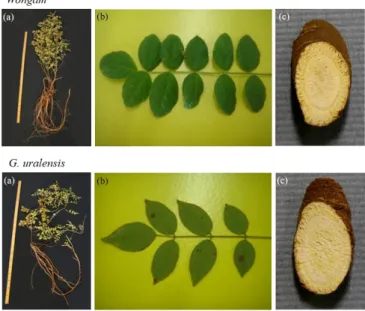
Fig 2. The morphological characteristics of ‘Wongam’ (above) and
‘G. uralensis (below)’. (a) whole plant; (b) leaf shape; (c) root crossing section, respectively.
Cultivar Plant type Leaf Root color Root shape
Shape Color Epidermis Cortex Rhizodermis Vascular bundle
Wongam Erect type Oval Green Brown Light yellow Thick Developed
G. uralensis (Control) Semi-runner type Lanceolate Green Reddish brown White Thin Undeveloped Table 2. Inherent characteristics of Glycyrrhiza glabra (♀) x G. uralensis (♂) hybrid cultivar ‘Wongam’.
기원식물
한약의 재료가 되는 약용식물은 기원, 성상, 포제, 성미, 효능 등 여러 요인과 관련이 있으며 가장 중요한 것은 기원, 즉 식물 종(種)이라고 할 수 있다. 생약은 같거나 유사한 약효를 갖는 여러 가지 약용식물이 하나의 한약재로 통용되므로 본초학적 분류 및 약초에 근거한 응용을 위해서는 식물분류학적인 종, 품종 및 산지 등 기원이 분명하여야 한다(Kim & Kim 2003).
한편 Kim et al. (2019)에 따르면 G. glabra와 G. uralensis의 자연교잡되어 신종으로 명명된 G. korshinski는 육성품종 원감과 내부조직 및 형태학적으로 동일한 특성을 나타냄을 증명하였다.
따라서 우리가 육성한 감초 종간교잡종 ‘원감’은 G. korshinski와 동일한 기원식물로 보는 것이 타당하다.
고유특성
‘원감’의 초형은 직립형이며, 잎의 형태는 타원형으로 이는 대비종인 만주감초와 구별된다. 뿌리 표피색은 갈색, 심부색은 연황색이었고 뿌리 껍질이 두터웠다(Fig. 2). 대비종인 만주감초 는 뿌리 내부의 유관속이 발달하지 않은 반면, ‘원감’은 유관속이 잘 발달되어 있다(Table 2).
가변특성, 병해충 및 도복저항성
‘원감’은 대비종 만주감초에 비해 초장이 길고 줄기가 굵어 도복에 강하다. 경경과 근경 역시 만주감초보다 굵다. ‘원감’은
만주감초보다 지근수가 많아 수량이 높다(Table 3). 또한 ‘원감’
은 감초에 가장 많은 피해를 주는 병해인 갈색점무늬병에 대한 저항성이 대비종인 만주감초보다 강해서 안정적인 재배가 가능 한 품종이라 여겨진다(Table 4).
수량성
2012년~2013년까지 음성을 포함한 4개 지역에서 2년간 지역 적응시험을 실시한 결과, 대비종인 만주감초의 평균 건근수량이 158 kg/10a인데 비하여 원감의 평균 건근수량은 359 kg/10a로 127% 증수하였다(Table 5). 이는 도복에 강하고 갈색점무늬병에 대한 저항성이 증가함으로 인한 재배 안정성에서 기여하였다고 여겨진다.
품질특성
감초 ‘원감’의 지표성분인 glycyrrhizin은 3.95%로 이는 대한 민국약전 기준인 2.5%를 넘는 수치로 대비종인 만주감초(1.9%) 보다 2배 이상 높았다. 반면, 또 다른 성분인 liquiritigenin 함량은
Cultivar Glycyrrhizin Liquiritigenin
Wongam 3.96±0.02
*0.80±0.03
*G. uralensis (Control) 1.90±0.01 0.57±0.10
*
means significantly difference (p<0.05), ns; no significance.
Table 6. Ingredient content (%) of Glycyrrhiza glabra (♀) x G.
uralensis (♂) hybrid cultivar ‘Wongam’.
Cultivar Plant length (cm)
Stem diameter
(mm)
Branch number (ea/plant)
Root length
(cm)
Main root diameter
(mm)
Supporting root number (ea/plant)
Root dry weight (g/plant)
Yield
(kg/10a) Index Wongam 102.9
**8.40
**6.0
*5 1.3
**15.2
*7.3
**5 4.6
**35 9
**227
**G. uralensis (Control) 54.5 4.3 4.7 35.1 11.3 5.3 22.7 158 100
*
and
**Significant at p<0.05 and p<0.01 in the t-test.
Table 3. Agronomical characteristics of Glycyrrhiza glabra (♀) x G. uralensis (♂) hybrid cultivar ‘Wongam’.
Region
Wongam Glycyrrhiza uralensis (Control)
Brown spot disease
(0~9)
zAphid
(0~9) Mite
(0~9) Lodging
(0~9) Brown spot disease
(0~9)
zAphid
(0~9) Mite
(0~9) Lodging (0~9)
Gangwon Cheorwon 1 3 2 0 2 3 2 3
Chungbuk Eumseong 1 3 2 0 3 3 3 3
Gyeongbuk Uiseong 2 3 3 0 2 3 3 3
Jeonnam Naju 1 3 2 0 3 3 2 3
Average 1 3 2 0 3 3 2 3
z
0: Resistance, 9: Susceptible.
Table 4. Disease, pest, and lodging disease resistance of Glycyrrhiza glabra (♀) x G. uralensis (♂) hybrid cultivar ‘Wongam’.
Region Wongam (kg/10a) G. uralensis (kg/10a)
Index
z2012 2013 Mean 2012 2013 Mean
Gangwon Cheorwon 149 404 277 96 194 145191b
yChungbuk Eumseong 2955 88 442 109 245177 249a
Gyeongbuk Uiseong 227 616 421 157 186 172 245a
Jeonnam Naju 291 307 299 132 145139 215 ab
z
(Yield of ‘Wongan’ / yield of ‘G. uralensis’) × 100.
y
Different letter means significant difference according to the DMRT (p<0.05).
Table 5. Root yield (kg/10a) of Glycyrrhiza glabra (♀) x G. uralensis (♂) hybrid cultivar ‘Wongam’ on regional yield trial at four regions.
‘원감’이 0.80%, 만주감초가 0.57%로 ‘원감’이 만주감초보다 높았으며 대한민국약전 기준인 0.7%를 충족하였다(Table 6).
세포독성
신품종 ‘원감’의 세포독성 평가를 실시한 결과, 200 μg/mL 이하의 농도에서 세포 독성이 나타나지 않았다(Table 7). Kim과 Ryu (2017)는 RAW264.7 세포에 G. uralensis 감초 추출물을 처리하여 MTT assay를 수행하였는데, 50 μg/mL 이하 수준에서 유의할 만한 세포독성이 나타나지 않아 세포사멸에 큰 영향을 주지 않는다고 보고했다. 이는 ‘원감’이 기존 보고보다 더 높은 농도에서도 세포독성이 없었기 때문에 한방 재료 및 식품 원료로 이용하기에 문제가 없음을 과학적으로 인정된 결과로 판단된다.
적응지역 및 재배상의 유의점
감초 신품종 ‘원감’의 적응지역은 강원도 산간 고랭지를 제외 한 전 지역에서 가능하나, 배수가 잘 되고 기후가 온난한 평야지 에 재배하며 병해충 방제에 유의하는 것이 좋다.
Sample Treatment (μg/mL)
Percentage of viability (%)
100% EtOH 70% EtOH 30% EtOH Distilled Water
Glycyrrhiza glabra
25 103.35±5.81b
z96.23±5.98a 106.07±14.52a 80.58±8.80b
50 113.29±1.12b 119.73±2.30a 106.62±14.05a 90.04±7.04ab
100 118.53±1.82b 106.02±4.99a 110.26±13.30a 95.07±7.80b
200 125.17±5.70a 118.31±3.61a 109.96±11.04a 113.57±3.95ab
Glycyrrhiza uralensis
25108.69±10.64a 98.29±5 .86a 91.5 8±6.62b 116.10±3.88a
50 122.49±0.86a 110.90±23.35a 85.34±1.28b 110.88±3.35a
100 125.09±6.45a 108.32±10.62a 79.18±1.13c 117.83±5.44a
200 109.73±12.41c 106.22±15.54b 77.29±1.37b 119.69±5.13a
Wongam
25 102.59±14.50b 90.47±1.39a 101.42±4.23a 85.22±3.36b
50 104.56±9.40c 79.34±1.75b 96.49±3.32b 86.17±1.14b
100 116.33±11.18b 80.80±3.69b 100.72±3.36b 92.75±2.0b1
200 118.04±10.19b 66.73±8.07c 114.25±6.92a 106.92±4.03b
z
Different letter means significantly difference according to DMRT (p<0.05).
Table 7. Cytotoxicity of Glycyrrhiza glabra, G. uralensis, and hybrid variety ‘Wongam’.
적 요
국내 재배환경에 적합한 고함량 다수성 감초 품종을 목표로 Glycyrrhiza glabra와 G. urelensis를 교잡하여 육성한 ‘원감’의 주요 특성을 요약하면 다음과 같다. 육성품종 원감은 G. korshinski 와 동일한 기원식물로 보는 것이 타당하며, 초형은 직립형, 엽형 은 타원형, 초장이 길고 줄기가 굵어 도복에 강하며 갈색점무늬병 에 대한 저항성이 강한 것이 특징이다. 원감은 2년간 지역적응시 험 결과 10a 당 전국 평균수량이 359 kg으로 만주감초(대비종)에 비하여 127% 증수되었고, glycyrrhizin은 3.96%, liquiritigenin 은 0.8%로 대한민국약전등재 기준을 충족하였다. 원감은 강원도 산간 고랭지를 제외한 전 지역에 적응하며, 병충해 관리에 유의하 여야 한다. 2016년에 국립산림품종관리센터에 품종보호권을 출 원하여 2019년에 등록되었다(품종등록번호 196).
사 사
본 논문은 농촌진흥청 공동연구사업(과제번호: PJ014371052 020)의 지원에 의해 이루어졌다.
REFERENCES