• 검색 결과가 없습니다.

First Record of the Salurnis marginella (Guérin-Méneville) (Hemiptera: Flatidae) in Korea

N/A
N/A
Protected

Academic year: 2021

Share "First Record of the Salurnis marginella (Guérin-Méneville) (Hemiptera: Flatidae) in Korea"

Copied!
6
0
0

로드 중.... (전체 텍스트 보기)

전체 글

(1)

Original article KOREAN JOURNAL OF APPLIED ENTOMOLOGY

한국응용곤충학회지 ⓒ The Korean Society of Applied Entomology

Korean J. Appl. Entomol. 55(4): 477-482 (2016) pISSN 1225-0171, eISSN 2287-545X

DOI: http://dx.doi.org/10.5656/KSAE.2016.08.0.046

First Record of the Salurnis marginella (Guérin-Méneville) (Hemiptera: Flatidae) in Korea

Heejo Lee, Yang-Seop Bae 1 and Dong Eon Kim*

Division of Ecological Conservation, Bureau of Ecological Research, National Institute of Ecology, Seocheon 33657, Republic of Korea

1

Division of Life Sciences, Incheon National University, Incheon, 22012, Republic of Korea

한국 미기록종 Salurnis marginella (노린재목: 선녀벌레과)에 대한 보고

이희조ㆍ배양섭 1 ㆍ김동언*

국립생태원 생태연구본부 생태보전연구실, 1인천대학교 생명과학부

ABSTRACT: A Flatid (Hemiptera: Flatidae) species Salurnis marginella (Guérin-Méneville,1829) is reported in Korea for the first time.

Morphological and biological information are provided including photographs of the adult, genitalia, nymphs and host plants.

Key words: Flatidae, Salurnis, Salurnis marginella, New record, South Korea

초 록 : 선녀벌레과의 미기록종 Salurnis marginella (Guérin-Méneville, 1829)의 한국 분포를 보고한다. 성충, 생식기, 약충 및 기주식물의 사진을 포함한 형태학적 정보와 생태학적 정보를 함께 제공한다.

검색어: 선녀벌레과, Salurnis, Salurnis marginella, 미기록종, 한국

*Corresponding author: [email protected]

Received July 22 2016; Revised November 2 2016 Accepted November 8 2016

The Flatidae currently includes 1,422 extant species in 298 genera (Bourgoin, 2016). Among them, only three described species, Geisha distinctissima (Walker), Mimophantia maritima Matsumura and Metcalfa pruinosa (Say) have previously been recorded in Korea (Kwon and Huh, 2001; Lee and Wilson, 2010). Metcalfa pruinosa recently became one of the major invasive alien species in Korea (Kim and Kil, 2014). Geisha distinctissima is known as the insect pest of various plants (Fujiwara, 2008) and the vector of a virus which causes dwarf disease of satsuma mandarin in Japan (Mead, 2014).

The genus Salurnis (Hemiptera: Fulgoroidea: Flatidae) was established by Stål (1870) with Salurnis granulosa Stål, 1870 from the Philippines as a type species. Subsequently, Distant

(1906), Kirkaldy (1913), Jacobi (1915) and Lallemand (1939) reported respectively the genus from Myanmar, China, Taiwan and Malaysia. So far, nine species were described in the genus Salurnis, i.e., bipunctata (Walker, 1862), dilina Medler, 1992, dulitana Lallemand, 1939, estora Medler, 1992, granulosa Stål, 1870, hesita Medler, 1992, kryala Medler, 1992, lastendis Medler, 1992, and marginella (Guérin-Méneville, 1829). All the species of the genus are distributed in the Oriental Region and mainly reported in southeast Asia and south China (Bourgoin, 2016).

In this paper, we reported the occurrence of the genus Salurnis for the first time from South Korea with a newly recorded species Salurnis marginella (Guérin-Méneville, 1829).

Morphological information is provided including the description

and diagnosis of the genus and species with photographs of the

adult, genitalia and nymphs. Also, biological information is

(2)

provided including host plants, geographical distribution and ecological photographs.

Materials and Methods

The following abbreviations are used in this paper: CN, Chungcheongnam-do Province, Korea; JB, Jeollabuk-do Pro- vince, Korea; NIE, National Institute of Ecology, Seocheon, Korea. The voucher specimens examined in the present study have been deposited in the NIE. Morphological study was examined using by a stereomicroscope (Olympus SZX16), camera (Olympus, DP27) and software (Olympus cellSens Standard) in NIE. The terminology used in this study follows Medler (1996) and Peng et al. (2009).

Results and Discussion

Taxonomic accounts

Key to the species of Flatidae from Korea

1. Body and tegmina green or pale green (Tribe Phylly- phantini) ··· 2 - Body and tegmina greyish-green or brown ··· 3 2. Apical angle of tegmina rounded; more than 90°

··· Geisha distinctissima - Apical angle of tegmina acute; less than 90°

··· Salurnis marginella 3. Mesonotum without longitudinal carina (Tribe Nephesini)

··· Metcalfa pruinosa - Mesonotum with longitudinal carina (Tribe Phantiini)

··· Mimophantia maritima

Family Flatidae Spinola, 1839 Subfamily Flatinae Melichar, 1901 Tribe Phyllyphantini Melichar, 1923

Genus Salurnis Stål, 1870 뾰족날개선녀벌레속 (신칭) Salurnis Stål, 1870: 773; Metcalf, 1957: 193 (catalog);

Medler, 1992: 7 (review).

Type species: Salurnis granulosa Stål, 1870.

Diagnosis. Body green or yellowish green, strongly contras-

ting patterns of dark brown or black spots in cells along postclaval margin, interveinal spots or dashes along costal, and apical and margins. Head conical, without median longitudinal carina, transverse intergenal carina concealed by anterior margin of pronotum. Mesonotum with three or four longitudinal carinae. Forewing apically rounded, anal angle acute.

Salurnis marginella (Guérin-Méneville, 1829) 뾰족날개선 녀벌레 (신칭)

Ricania marginella Guérin-Méneville, 1829: pl. 58, fig. 6.

(Type locality: Cochin, China).

Poeciloptera marginella (Guérin-Méneville): Spinola, 1839:

433.

Poeciloptera fimbriolata Stål, 1854: 247, synonymized by Melichar, 1902: 41.

Nephesa marginella (Guérin-Méneville): Walker, 1857:

161.

Phyllyphanta fimbriolata (Stål): Stål, 1859: 282.

Phylliphanta marginalis Signoret, 1862: 125, synonymized by Metcalf, 1957: 196.

Phyllyphanta limbata Perroud & Montrouzier, 1864: 243, synonymized by Metcalf, 1957: 196.

Flata marginella (Guérin-Méneville): Atkinson, 1886: 69.

Salurnis marginellus (Guérin-Méneville): Melichar, 1902:

41; Medler, 1992: 13.

Salurnis formosana Jacobi, 1915: 171, synonymized by Melder, 1992: 1.

Colgar limbata Distant, 1920: 461, synonymized by Metcalf, 1957: 198.

Diagnosis. Body green or yellowish green, pronotum and mesonotum with four orange longitudinal carinae. Obtuse angle of frons edge approximately 120° (dorsal view), triangular or half ellipse shape spot on inner margin near anal area of forewing. Forewing apex rounded, anal angle acute, hind tibiae as 1:7:9:2.

Description

Adult. Head slightly narrower than pronotum. Frons and

legs brown. Forewing margin dark brown; several dark brown

spots on margin; veins mustard and inner cells of veins bright

(3)

A

B E

C D

Fig. 1. Salurnis marginella. (A) male head (dorsal view), (B) ditto (lateral view), (C) male abdomen (ventral view), (D) female abdomen (ventral view), (E) hand tibiae, apical part. Scale bars: A=1 mm, B=5 mm, C, D=1 mm, E=0.2 mm.

green (Fig. 1A-B). Hindwing opaque, white or emerald.

Abdomen brown and covered by white or emerald powder (Fig. 1C-D).

Male genitalia. Anal segment elongate; longer than genital segment, apex round and widest, dorsal margin oblique at apical third. Pygofer larger than genital style and wider than long, more longer ventrally than dorsally in lateral view.

Phallus curved with 3 flagellum; a pair of spinose processes laterally at apex with 11 (ventrally 4, dorsally 7) spines, extended similarly to phallus. One short process, half length of phallus at median on dorsal margin. Genital styles subrectangular, smaller than pygofer, wider at subapically than base, with two processes on dorsal margin.

Female genitalia. Complex as figured

Nymph. Base color and eyes white in young nymph, become yellowgreen in last instar. A pair of 2 bright yellow or orange longitudinal stripes from head to abdomen beside the median line. Especially 2 waxy secretion tales from distal abdominal segment; V-shape; horizontally extended; thick and growing longer than body length. Body length(n=5) 1.93~1.97 mm, longest wax secretion(n=1) 4.12 mm in 3rd instar.

Measurements. Male (n=10), female (n=10): Body length (including forewing) male 9.56 mm (SD=0.33), female 10.62 (0.30). Frons ~ distal abdomen length male 5.97 (0.25), female 5.82 (0.38). Frons ~ scutellum length male 2.88 (0.18), female 3.08 (0.15). Forewing length male 8.20 (0.18), female 9.20 (0.29). Forewing area male 29.76 mm 2 (1.89), female 36.78 mm 2 (2.66). Generally female larger than male except frons ~ distal abdomen length because of genital segment (Fig. 1C-D).

Specimen examined. 10 ♂ adults, 10♀ adults, 10 nymphs:

Seogwang-dong, Iksan-si, JB, Korea, 29.VII.2014, DE Kim; 5 nymphs: Suseong-dong, Jeongeup-si, JB, Korea, 12.VI.2015, DE Kim & HJ Lee; 1 adlut: Deokjin-dong, Deokjin-gu, Jeonju-si, JB, Korea. 28.VIII.2015, HM Lee; 3 nymphs:

Maseo-myeon, Seocheon-gun, CN, Korea, 16.VI.2015, DE Kim

& HJ Lee.

Distribution. China (Macau, Anhui, Fujian, Zhejiang, Guang- dong, Guangxi, Hainan, Henan, Hunan, Hubei, Jiangxi, Sichuan, Taiwan), India, Indonesia, Korea(new record: South), Malaysia, Myanmar, Singapore, Taiwan, Vietnam.

Host plants. Castanea crenata, Prunus verecunda, Prunus

yedoensis, Quercus acutissima, Quercus serrata, Zanthoxylum

schinifolium.

(4)

A B

C D E F

G H I

Fig. 2. Salurnis marginella. (A) male genital (lateral view), (B) phallus (lateral view), (C) ditto (dorsal view), (D) process of theca (lateral view), (E) genital style (lateral view), (F) anal tube (lateral view), (G) female terminalia (ventral-posterior view), (H) gonoplac (dorsal view), (I) female genital block (ventral view). Scale bars: A, B, C, G, H=0.5 mm, D, E, F, I=0.2 mm.

Biology. Nymphs were observed from early June to late July and adults were observed from late July to September in Korea.

Young nymphs were usually observed under the young and soft leaves. Old nymphs and adults were usually observed on

the stem or under leaves of host plant (Fig. 4B-C). Generally

the insects walk very slowly, but often hop using their hind

legs. Nymphs produce a wax secretion from the end of the

abdomen and other parts of the body and deposit the wax on

(5)

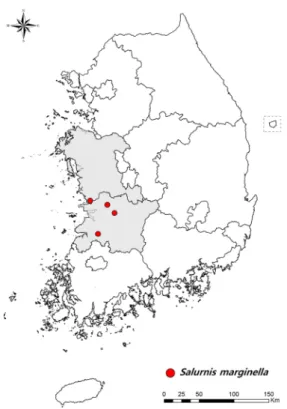
Fig. 3. Distribution from South Korea (2014~2015)

A B

C

Fig. 4. Ecological photographs of Salurnis marginella (Guérin-Méneville, 1829). (A) Nymph of 3rd instar. Scale bar: 1 mm, (B) Nymphs of last instar, (C) Adult after molting.

the host plant. Long, thick and V-shape waxy accumulations are a special feature of this species, growing to over twice the length of the insect’s body length, later shortening after molting only to grow again (Fig. 4A-B).

Remarks. Salurnis marginella was newly recorded in Korea.

This species at Iksan-si, JB, Korea in 2014 and at Jeonju-si, JB,

Seocheon-gun, CN, Korea in 2015.

Nymphs and adults cause damage to tree by sucking juice, fungi through secretion of wax, and reduction of plant assimilation due to the nectar of nymphs.

This species is known as the insect pest of various plant species as Citrus unshiu, Persea americana, Coffea arabica, Camellia oleifera and Jasminum nudiflorum in China(Wang et al., 2000). We confirmed six host plants in Korea and we expect the number of host plant will be increased according to its ecological adaptation. We have been confirming the other distributional locations in south part of Korea sporadically since the first discovery, 2013 and this species assumed to be introduced from the original range; especially southeast China.

Serious damage due to this species has not been confirmed in Korea because the population and density are not high yet.

However additional distributional locations have been confirming sporadically and the insect’s abundance found to be increasing. So the extension of distribution, damage and ecological adaptation of this species in Korea should be monitored continuously.

Acknowledgement

We are grateful to Dr. Wes Bicha, Oak Ridge National

Laboratory, Atlanta, USA, for his corrections that improved

the clarity of the manuscript. This study was carried out by the

project “Research of Ecological Risk Assessment and Import

(6)

Permission Required Unintroduced Species”, National Institute of Ecology (NIE), funded by the Ministry of Environment, Republic of Korea.

Literature Cited

Atkinson, E.T., 1886. Notes on Indian Rhynchota., No. 5, Journal and Proceedings of the Asiatic Society of Bengal. Calcutta 55, 12-83.

Bourgoin, T., 2016. FLOW (fulgoromorpha lists on the web): a world knowledge base dedicated to Fulgoromorpha. (Insecta, Hemiptera, Fulgoromorpha, Flatidae). http://hemiptera-databases.

org/flow/ Version 8, updated (26 January 2016).

Distant, W.L., 1906. The Fauna of British India Including Ceylon and Burma. Rhynchota. Heteroptera-Homoptera. Taylor &

Francis, London 3, 408-409.

Distant, W.L., 1920. Rhynchota from New Caledonia Part II.

Homoptera, Annals and Magazine of Natural History. London.

(Ser. 9) 6, 456-470.

Fujiwara, T., 2008. [At a glance Flowers and trees, garden and home fruit tree diseases and pests-tree species Diagnostics and Control]. Makotobundo Shinkosha. pp. 255.

Guérin-Méneville, F.E., 1829. Homoptera, In: Cuvier G.L.C.F.D.

1829 - Iconographie du règne animal pp. 359-360.

Jacobi, A., 1915. Kritische Bemerkungen über die Flatinae (Rhynchota Homoptera). Deutsche Ent. Zeit. 1915, 157-178.

Kim, D.E., Kil, J.H., 2014. Occurrence and Host Plant of Metcalfa Pruinosa (Say) (Hemiptera: Flatidae) in Korea. J. Env. Sci. Intern.

23(8), 1385-1394.

Kirkaldy, G.W., 1913. On some new species of leafhoppers. Part 1.

Bull. Hawaii. Sugar Planter's Assoc. Div. Ent. 12, 7-27.

Kwon, Y.J., Huh, E.Y., 2001. Suborder Auchenorrhyncha.

Economic Insects of Korea 19. Insecta Koreana Suppl. 26, 461pp.

Lallemand, V., 1939. Ⅲ Faune de Sarawak. Homopteres Recueillis par Ì Expedition Universitaire ďOxford en 1932 et par Mr.

Shelford Autor de Kuching en 1900. Ann. Mag. Nat. Hist.(11) 4, 57-78.

Lee, H.S., Wilson, S.W., 2010. First Report of the Nearctic Flatid Planthopper Metcalfa pruinosa (Say) in the Republic of Korea (Hemiptera: Fulgoroidea). Entomological News 121(5), 506-513.

Mead, F.W., 2014. Citrus Flatid Planthopper, Metcalfa pruinosa (Say) (Insecta: Hemiptera: Flatidae). IFAS Extension. University of Florida.

Medler, J.T., 1992. Revision of the tribe Phyllyphantini in the Oriental region, with descriptions of New genera and New spe- cies (Homoptera: Flatidae). Oriental Insects 26, 1-38.

Medler, J.T., 1996. Flatidae of Borneo, with descriptions of new

genera and species (Homoptera: Fulgoridea). Oriental Insects 30, 11-96.

Melichar, L., 1901. Monographic der Acanaloniiden und Flatiden (Homoptera). Annalen des Naturhistorischen Museums in Wien 16, 178-258.

Melichar, L., 1902. Monographie der Acanaloniiden und Flatiden (Homoptera) (Fortsetzung), Annalen des k.k Naturhistorischen Hofmuseums. Wien 17, 1-253.

Melichar, L., 1923. Homoptera, fam. Acanalonidae, Flatidae et Ricaniidae. Genera Insectorum. Bruxelles, 182, 1-185.

Metcalf, Z.P., 1957. Part 13. Flatidae and Hypochthonellidae, In:

Metcalf Z. P. 1954 - General Catalogue of the Homoptera.

Fascicule IV, North Carolina State College, Raleigh(United States of America) pp. 565.

Peng, L.F., Zhang, Y.L., Wang, Y.L., 2009. A taxonomic study of the genus Salurnis Stal from China (Hemiptera, Flatidae) with de- scription of two new record species. Acta Zootaxonomica Sinica 34(4), 878-884.

Perroud, B.P., Montrouzier X., 1864. Essai sur la faune en- tomologique de Kanala (Nouvelle-Calédonie) et description de quelques espèces nouvelles ou peu connues, Annales de la Société Linnéenne de Lyon. Lyon 11, 46-257.

Signoret, V., 1862. Quelques espèces nouvelles d'Hémiptères de Cochinchine, Annales de la Société Entomologique de France.

Paris.(Ser. 4) 2, 123-126.

Spinola, M., 1839. Essai sur les Fulgorelles, sous-tribu de la tribu des Cicadaires, ordre des Ryngotes. Annales de la Société Entomolo- gique de France 8, 133-337[205].

Stål, C., 1854. Nya Hemiptera, Ofversigt af Kongliga Svenska Vetenskaps-Akademiens Förhandlingar. Stockholm 11, 231-255.

Stål, C., 1859. Hemiptera. Species novas descripsit. Fregatten Eugenies Resa, Arkiv for Zoologi. Utgifvet af K. Svenska Vetenskaps-akademien. Stockholm 4, 219-298.

Stål, C., 1870. Hemiptera insularum Philippinarum. Bidrag till Philippinska öarnes Hemipter-fauna. Ofversigt af Kongliga Svenska Vetenskaps-Akademiens Förhandlingar. Stockholm 27, 607-776[773].

Wang, S.Z., Wang, F.Z., Xuan, L.F., 2000. Fauna Study of Fulgoroidea of Hainan Province. Acta agriculturae boreali-sinica 15, 157-161.

Walker, F., 1857. Catalogue of the Homopterous insects collected at Sarawak, Borneo, by Mr. A. R. Wallace, with descriptions of new species, Journal of the Proceedings of the Linnean Society.

London 1, 141-175.

Walker, F., 1862. Characters of undescribed species of Homoptera

in the collection of F. P. Pascoe, F. L. S. The Journal of en-

tomology: descriptive and geographical 1, 303-319[312].

수치

Fig. 1.  Salurnis marginella. (A) male head (dorsal view), (B) ditto (lateral view), (C) male abdomen (ventral view), (D) female abdomen  (ventral view), (E) hand tibiae, apical part
Fig. 2.   Salurnis marginella. (A) male genital (lateral view), (B) phallus (lateral view), (C) ditto (dorsal view), (D) process of theca (lateral view),  (E) genital style (lateral view), (F) anal tube (lateral view), (G) female terminalia (ventral-poster
Fig. 3.  Distribution from South Korea (2014~2015)

참조

관련 문서

ABSTRACT: The subgenus Pronocerodes Plavilstshikov (Coleoptera: Cerambycidae: Cerambycinae) is reported from Korea for the first time with a species of

ABSTRACT: A genus Parechthistatus Breuning belongs to the subfamily Lamiinae (Coleoptera: Cerambycidae) is reported in Korea for the first time, with a species of

ABSTRACT: A genus, Eocanthecona Bergroth (Hemiptera: Heteroptera: Pentatomidae: Asopinae), is reported from the Korean Peninsula for the first time based on the

Ulleung-do in the East Sea of Republic of Korea, one species of Gelechiidae, Bagdadia gnomia Ponomaranko, is reported for the first time from Korea and an unknown species of

The genus Duplachionaspis (Hemiptera: Diaspididae) is comprised of 34 species worldwide with the type-species, Chionaspis graminis Green being described from Sri Lanka.. The

Therefore the genus Lycodes of Korea contains 7 species including 4 species newly recorded in this time and the eelpout fishes of the family Zoarcidae known Korean waters

A study of newly recorded genus and species for aerial cyanobacteria Wilmottia murrayi (Oscillatoriales, Cyanobacteria) in Korea.. Nam-Ju Lee, Yoseph Seo 1 , Jang-Seu Ki 1,

A Newly Recorded Basket Star of Genus Gorgonocephalus (Ophiuroidea: Euryalida: Gorgonocephalidae) from Korea.. Donghwan Kim