Short communication KOREAN JOURNAL OF APPLIED ENTOMOLOGY
한국응용곤충학회지 ⓒ The Korean Society of Applied Entomology
Korean J. Appl. Entomol. 55(3): 309-312 (2016) pISSN 1225-0171, eISSN 2287-545X
DOI: http://dx.doi.org/10.5656/KSAE.2016.08.0.027
A New Record of the Genus and Species, Drepanepteryx phalaenoides (Linné) (Neuroptera:Hemerobiidae:Drepanepteryginae) from Korea
Seulki Kim and Soowon Cho*
Dept. of Plant Medicine, Chungbuk National University, Cheongju 28644, Korea
낙엽날개뱀잠자리붙이아과의 미기록속 및 미기록종,
Drepanepteryx phalaenoides (Linné) (풀잠자리목:뱀잠자리붙이과)
김슬기ㆍ조수원*
충북대학교 농업생명환경대학 식물의학과
ABSTRACT: In the subfamily Drepanepteryginae of Hemerobiidae, Neuronema albostigma has been the only species known in Korea.
Here we report that the genus Drepanepteryx Leach, 1815 and its species Drepanepteryx phalaenoides (Linné), 1758 are newly reported as a member of Drepanepteryginae in Korea. Together with a key for the species of Korean Drepanepteryginae, a brief description, COI barcoding sequence, and photos of adult and male genitalia for the species are provided.
Key words: Neuroptera, Hemerobiidae, Drepanepteryginae, Drepanepteryx phalaenoides, Korean fauna
초 록: 그 동안 국내 Drepanepteryginae 아과(낙엽날개뱀잠자리붙이아과; 신칭)에는 오직 Neuronema albostigma만이 기록되어 있었으나, 이번 연 구를 통해 국내 미기록속인 Drepanepteryx와 이 속에 포함되는 미기록종 Drepanepteryx phalaenoides (낙엽날개뱀잠자리붙이; 신칭)를 새롭게 보고 한다. 이 종에 대한 간략한 기재와 속내 분류키, COI 바코드 염기서열, 그리고 성충 및 수컷 생식기의 사진을 제공한다.
검색어: 풀잠자리목, 뱀잠자리붙이과, 낙엽날개뱀잠자리붙이아과, Drepanepteryx phalaenoides, 낙엽날개뱀잠자리붙이
*Corresponding author: [email protected] Received May 13 2016; Revised August 10 2016 Accepted August 23 2016
Hemerobiidae is the third largest family of the order Neuroptera, containing c.a. 600 species worldwide (Oswald, 2004; Farahi et al., 2009). They are similar to the species of Chrysopidae in general structure, but differ in several aspects.
Commonly, hemerobiids are brownish in color, while chrysopids are green. They are also much less common than the latter in number of specimens (Banks, 1905). In forewing, a forked recurrent humeral vein is found in hemerobiids except Micromus spp., but not in chrysopids. Their forewing characters can distinguish them from other neuropteran families by the
combination of (1) anterior radial trace with two or more radial sectors and (2) absence of nygmata (Oswald, 1993).
Eighteen species of Hemerobiidae have been recorded in Korea Peninsula, and most of them were listed from North Korea (Monserrat, 2000). So far, eight species have been described in South Korea (ESK and KSAE, 1994; Paek et al., 2010).
Drepanepteryginae (낙엽날개뱀잠자리붙이아과, new Korean name) are large hemerobiids, and are distributed in Asia, Europe, and Southern South America. Proposed synapomorphies for the subfamily include (1) temporal costae lost or poorly developed, (2) forewing intramedial crossvein 2im present, and (3) forewing intercubital crossvein 1cua-cup present (Oswald, 1993).
This is an Open-Access article distributed under the terms of the Creative Commons Attribution Non-Commercial License (http://creativecommons.org/licenses/by-nc/3.0) which permits unrestricted non-commercial use, distribution, and reproduction in any medium, provided the original work is properly cited.
310 Korean J. Appl. Entomol. 55(3): 309~312 (2016)
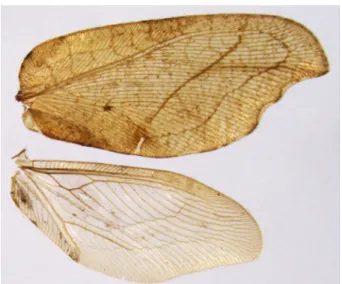
Fig. 1. Wing venation and pattern of Drepanepteryx phalaenoides.
Only one species, Neuronema albostigma, has been reported in Korea, and here we report Drepanepteryx phalaenoides, the second species in Drepanepteryginae of Korea. This species is rather a well-known species in the Palaearctic region, but it is the first time that the occurrence of the genus and the species is reported as new to Korea.
Materials and Methods
We examined our collected specimens as well as some dried specimens loaned from the Korea National Arboretum (KNA).
The samples were examined through a dissecting microscope with an imaging apparatus. The forewing length was measured from the base to the apex. For some samples, their genitalia were dissected, examined, and saved in glycerol. We also extracted its nucleic acids to get a sequence of COI barcode region following the method described in An et al. (2014). The specimens examined were deposited at the insect collection room of the Department of Plant Medicine in Chungbuk National University.
Taxonomic Account
Genus Drepanepteryx Leach, 1815 Drepanepteryx Leach, 1815:138.
Type: Hemerobius phalaenoides Linné, 1758:550.
Drepanopteryx [sic]: Burmeister, 1839:975.
Drepanopteryx Agassiz, [1847] 1842-1846:130 (unjustified emendation).
Megalomus Rambur, 1842:418.
Canisius Navás, 1913:512.
Oedobius Nakahara, 1915:44.
Phlebonema Kruger, 1922:170.
Bestreta Navas, 1924:222.
Diagnosis
Body size: middle to large. Forewing: crossvein 2sc-r present;
anterior radial trace bearing eight or more radial sectors; costal space with gradate series of five or more crossveins.
Drepanepteryx phalaenoides (Linné 1758) 낙엽날개뱀잠자 리붙이(신칭) (Figs. 1, 2a-c, and 3a)
Hemerobius phalaenoides Linné 1758:550.
Drepanopteryx phalaenoides, Burmeister, 1839:975; Wesmael, 1841:219; Rostock, 1888:108; Kuwayama, 1962:358.
Drepanepteryx phalaenoides, Leach, 1815:138; Wallengren, 1871:33; Kuwayama, 1920:87, pl. 1, figs. 1, 4-7; Krüger, 1922:
179; Matsumura, 1931:1161, fig.; Matsumura, 1933:8 (12), pl.
2, fig. 16; Killington, 1937:143, pl. 17, fig. 2, text figs. 98, 99.
Megalomus phalaenoides, Rambur, 1842:418. Pl. 9, fig. 6.
Diagnosis
Adult (Figs. 1 and 3a). Head: antennal flagellum 55-56 segmented. Thorax: browish; prothorax blackish laterally;
mesothorax longer than prothorax and metathorax. Wing:
forewing length 13-16 mm; forewing (Fig. 1) light brown, brown along veins, with brown mesh-like pattern, distinctly falcate at apex, with a small blackish brown spot near basal 2/5 of M1; 2sc-r present; with two dark brown lines, inner one along third intraradial and intramedial crossveins and outer one along fourth intraradial and intramedial crossveins, outer line usually narrower or fainter than inner line; with a dark brown line from near anterior 2/5 point of inner line to apex, line somewhat darker towards apex.
Male genitalia (Fig. 2). Ectoproct and anal plate sclerotized with setae (Fig. 2a); callus cerci rounded (Fig. 2c); gonarcus curved downward, beak-shaped (Fig. 2b); parabaculum elongated, clamp shaped, distally curved outwardly and downwardly, with pointed tip.
Drepanepteryx phalaenoides (Neuroptera: Hemerobiidae) 311 Fig. 2. Male genitalia of D. phalaenoides. a, caudal view; b, dorsal view; and c, lateral view.
Fig. 3. Two species of Korean Drepanepteryginae. a, Drepanepteryx phalaenoides; b, Neuronema albostigma.
Material Examined
1 female, 1 male. Jangsan, Sangdong-eup, Yeongwol-gun, GW. May 18, 2010. S.Y. Park, J.S. Lim, B.K. Byun; 1 female.
Jangsan, Sangdong-eup, Yeongwol-gun, GW. Jun. 14, 2010.
S.Y. Park, J.S. Lim, B.K. Byun; 1 female. Bannonsan, Yeoryang- myeon, Jeongseon, GW. May 19, 2010. S.Y. Park, J.S. Lim, B.K. Byun; 1 female. Bannonsan, Yeoryang-myeon, Jeongseon, GW. Jul. 20, 2010. S.Y. Park, J.S. Lim, K.M. Kim; 1 male.
Obong-ri, Geumseo-myeon, Sancheong-gun, GN. Jun. 4, 2013.
S.K. Lee, S.K. Kim; 1 female. 34, Sambonghyuyangrim-gil, Nae-myeon, hongcheon-gun, GW. Jun. 6, 2015. S.K. Kim; 1 female. Yongmun, Daegwang-ri, Juam-myeon, Suncheon-si, JN. Jul. 15, 2015. G.H. Cho.
Distribution
The species is widely distributed in the Palearctic region including Russia, China, Japan and Korea.
Remarks
This species is known as a beneficial predator of plant-sucking insect pests. The species is widely distributed, but never reaching significant abundance, on different deciduous trees and shrubs (Stelzl and Devetak, 1999).
Key to the species of Korean Drepanepteryginae
1. Large-sized species; forewing length 13-16 mm; forewing distinctly falcate at apex, with narrow fenestella on posterior margin ··· Drepanepteryx phalaenoides 낙엽날개뱀잠자리붙이(신칭) (Fig. 3a)
2. Medium-sized species; forewing length 11-13 mm; forewing tip not falcate, with whitish deltoid fenestella on posterior margin ··· Neuronema albostigma 큰날개뱀잠자리붙이 (Fig. 3b)
COI barcode sequence
TTGATCAGGTCTTGTAGGAACAAGACTTAGATTATTAA
312 Korean J. Appl. Entomol. 55(3): 309~312 (2016)
TTCGAGCAGAATTAGGTCAACCAGGTTCATTAATTGGTGA TGATCAAGTTTATAATGTTATTGTTACTGCTCATGCATTTA TTATAATTTTTTTTATAGTTATACCAATTGTTATTGGTGGA TTTGGAAACTGATTAGTCCCATTAATATTAGCTGCACCGG ATATAGCATTCCCTCGAATAAATAATATAAGATTCTGAAT ACTACCTCCCTCTTTAACACTTTTATTAGCTTCATCAATGG TGGAAAGTGGGGCTGGTACAGGTTGAACTGTATACCCACC CCTCTCATCAAGTATTGCTCATGCAGGAGCATCAGTTGAT TTAGCAATTTTTAGCCTACATTTAGCTGGAGTCTCAAGAA TTTTAGGAGCAGTAAATTTTATTACTACAGTTATTAATATG CGTTTAAATTATATAACTTTAGATCGTATACCATTATTTGT TTGATCAGTAGTAATTACTGCCTTACTTCTATTATTATCAT TACCCGTATTAGCTGGAGCTATCACTATATTATTAACAGA CCGAAATCTAAACACATCATTCTTTGACCCTGCAGGGGGA GGGGACCCAATTTTATATCAACATTTATTTTGATTTTT
Acknowledgments
This research is supported by the research grant of Chungbuk National University in 2014. We would like to thank Dr. Bong- Woo Lee, Dr. Il-Kwon Kim, Mr. Shin-Yong Park, Dr. Jong-Ok Lim (Korea National Arboretum, Pocheon, Gyeonggi, Korea) and G. H. Cho (Seoul National University) for their help and advice in this study.
Literature Cited
Agassiz, L., 1842-1846. Nomenclator Zoologicus, continens nomina systematica generum animalium tam viventium quam fossilium, secundum ordinem alphabeticum disposita, adjectis auctoribus, libris, in quibus reperiuntur, anno editionis, etymologia et familiis, ad quas pertinent, in singulis classibus. Soloduri.
An, S. L., Hong, C. K., Kim, S. K., Lee, S. K., Cho, S.W., 2014. Aoria rufotestacea Faimaire (Coleoptera: Chrysomelidae) long been confused as Bromius obscurus (Linnaeus) in Korea. Entomological Research 44, 80-85.
Banks, N., 1905. A revision of the Nearctic Hemerobiidae.
Transactions of the American Entomological Society 32, 21-51.
Burmeister, H. C. C., 1839. Handbuch der entomologie. Band 2, Abt.
2. Enslin, Berlin.
ESK, KSAE (Entomological Society of Korea, Korean Society of Applied Entomology), 1994. Check list of insects from Korea.
Konkuk Univ. Press, Seoul.
Farahi, S., Sadeghi, H., Whittington, A. E., 2009. Lacewing (Neuroptera: Chrysopidae & Hemerobiidae) from north eastern and east provinces of Iran. Munis Entomology & Zoology 4, 501-509.
Killington, F. J., 1937. A monograph of the British Neuroptera. Vol.
2. Ray Society, London.
Kruger, L., 1922. Hemerobiidae. Beitrage zu einer monographie der Neuropteren-Familie der Hemerobiiden. Stettiner Entomologische Zeitung 83, 138-172.
Kuwayama, S., 1920. On the genus Drepanepteryx in Japan.
Transactions of the Sapporo Natural History Society 8, 51-83.
Kuwayama, S., 1962. A revisional synopsis of the Neuroptera in Japan. Pacific Insects 4, 325-412.
Leach, W. E., 1815. Entomology, in: Brewster, D. (ed.), Edinbergh encyclopaedia, Vol. 9, pt. 1, Edinburgh, pp. 57-172.
Linné, C., 1758. Systema naturae per regna tria naturae secumdum classes, ordines, genera, species, cum characteribus, differentiis, synonymis, locis. 10th ed. Vol. 1. Salvii, Holmiae.
Matsumura, S., 1931. Nippon konchû daizukan [=6000 illustrated insects of Japan-empire]. Tokoshoin Co., Tokyo.
Matsumura, S., 1933. Illustrated common insects of Japan, Vol. 5, (Neuroptera, Orthoptera, Odonata). Shunyodo [Co.], Tokyo.
Monserrat, V. J., 2000. New data on the brown lacewings from Asia (Neuroptera: Hemerobiidae). Journal of Neuropterology 3, 61-97.
Nakahara, W., 1915. On the Hemerobiinae of Japan. Annotationes Zoologicae Japonenses 9, 11-48.
Navás, L., 1913. Mis excursiones por el extranjero en el verano de 1912 (25 julio- 16 septiembre). Memorias de la Real Academia de Ciencias y Artes de Barcelona (3) 10, 479-514.
Navás, L., 1924. Insecta Orientalia. III Series. Memorie dell'Accademia Pontifica dei Nuovi Lincei, Rome (2) 7, 217-228.
Oswald, J. D., 1993. Revision and cladistic analysis of the world genera of family Hemerobiidae (Insecta:Neuroptera). Journal of the New York Entomological Society 101, 143-299.
Oswald, J. D., 2004. Review of the brown lacewing genus Biramus (Neuroptera: Hemerobiidae), with the description of a new species from Costa Rica and Panama. Tijdschrift voor Entomologie 147, 41-47.
Paek, M.-K. (Ed.), 2010. Checklist of Korean insects. Nature &
Ecology Academic Series 2, Nature & Ecology, Seoul.
Rambur, P., 1842. Histoire naturelle des insects, Névroptères.
Librairie encyclopédique de Roret. Fain et Thunot, Paris.
Rostock, M., Kolbe, H. J., 1888. Neuroptera germanica. Die netzflügler Deutslands mit Berücksichtigung auch einiger ausserdeutscher Arten nach der analytischen unter Mitwirkung von H. Kolbe bearbeitet. Jahresbericht des Vereins Für Naturkunde zu Zwickau 1887, 1-198.
Stelzl, M., Devetak, D., 1999. Neuroptera in agricultural ecosystems.
Agriculture, Ecosystems and Environment 74, 305-321.
Wallengren, H. D. J., 1871. Skandinaviens Neuroptera. Första Avdelningen Neuroptera, Planipennia. Kungliga Svenska Vetenskapsakademiens Handlingar 9, 1-76.
Wesmael, C., 1841. Notice sur les Hémérodes de Belgique. Bulletins de l’Academie Royale des Sciences et Belles Lettres de Bruxelles 8, 203-221.