• 검색 결과가 없습니다.

Electrocatalytic Reduction of Hydrogen Peroxide at Nanoporous Gold Surfaces

N/A
N/A
Protected

Academic year: 2021

Share "Electrocatalytic Reduction of Hydrogen Peroxide at Nanoporous Gold Surfaces"

Copied!
5
0
0

로드 중.... (전체 텍스트 보기)

전체 글

(1)

Vol. 13, No. 4, 2010, 251-255 DOI:10.5229/JKES.2010.13.4.251

− 251 −

Electrocatalytic Reduction of Hydrogen Peroxide at Nanoporous Gold Surfaces

Youhoon Park and Jongwon Kim*

Department of Chemistry, Chungbuk National University, Cheongju, Chungbuk 361-763, Korea (Received August 6, 2010 : Accepted August 18, 2010)

Abstract : We report on the electrocatalytic reduction of hydrogen peroxide at nanoporous gold (NPG) surfaces. Various NPG surfaces with different surface structure were prepared by changing the conditions of electrodeposition for Ag-Au layers such as the concentration ratios of KAu(CN)

2

over KAg(CN)

2

and deposition charges. The effects of different electrochemical con- ditions on the electrocatalysis of H

2

O

2

reduction were investigated. The NPG surfaces exhibited sensitive amperometric responses for H

2

O

2

reduction, from which calibration plots with higher sensitivity than a bare Au surface were obtained.

Keywords : Nanoporous gold, Electrocatalysis, Hydrogen peroxide, Amperometric detection

1. Introduction

Over the past decades, there has been a notable progress in the synthesis of gold nanoparticles (AuNPs) of various sizes and shapes, which led their useful applications in various fields such as fundamental physics, electrochemistry, and biology.

1)

For AuNPs being utilized in electrochemical appli- cations, they should be assembled on the electrode surfaces;

however, the supported AuNPs suffer from sintering and self-aggregation.

2)

Recently, nanoporous gold (NPG) surfaces attracted much attention due to their unique physical and chemical properties.

2-4)

Various applications based on NPG surface structures have been reported including electroca- talysis,

5)

surface-enhanced Raman scattering spectroscopy,

6)

and electrochemical sensors.

7-9)

NPG structures can be prepared by the selective dissolu- tion of Ag from thin Ag-Au alloy films in a concentrated nitric acid. The NPG surfaces exhibit a high surface area with well-defined pore-ligament structures on the nanometer scale. A commercialized Ag-Au thin foil has been traditio- nally utilized to produce NPG surface layers,

3,4)

which were supported on electrode surfaces such as glassy carbon for electroanalytical applications.

7,8)

In an alternative route to fabricate NPG electrode surfaces, Ag-Au alloy layers are directly electrodeposited on electrode surfaces and then

transferred to a concentrated nitric acid to dissolve Ag to produce NPG surfaces.

10)

In addition to the apparent simplicity in the fabrication steps, this method offers an important advantage for electroanalytical applications because the fine control of surface structures of NPG is possible by changing various electrochemical parameters during the electrodeposition of Ag-Au layers. Recently we have showed that the surface structure of NPG electrodes can be finely tuned by controlling the deposition charges during the formation of Ag-Au layers, which in turn regulates the electrocatalytic activity of glucose oxidation.

11)

In this work, we investigated the electrocatalytic reduction of hydrogen peroxide (H

2

O

2

) at NPG electrode surfaces.

The surface structure of NPG was controlled by changing the composition and total charge of electrodeposition for the formation of Ag-Au layers on Au electrodes. The depen- dence of electrocatalytic activities toward the reduction of H

2

O

2

on the surface structures of NPG was examined by cyclic voltammetric methods, based on which the amperometric detection of H

2

O

2

was demonstrated.

2. Experimental Section

All solutions were prepared using purified water (Milli-Q, 18.2 M Ω· cm). KAg(CN)

2

, KAu(CN)

2

, and Na

2

CO

3

were obtained from Aldrich and H

2

O

2

was obtained from Junsei.

H

2

SO

4

was obtained from Merck and a 0.1 M solution was

*E-mail: [email protected]

(2)

used as a supporting electrolyte. Electrochemical measure- ments were conducted using a BAS 100B (Bioanalytical Systems) and the solution was purged with nitrogen prior to use. Pt wire and Ag/AgCl electrodes (3 M KCl) were used as counter and reference electrodes, respec- tively.

Scanning electron microscopy (SEM) characterization was performed using a LEO 1530 Field Emission SEM (Carl Zeiss) with an acceleration voltage of 5 kV.

Au films evaporated onto silicon (Au/Si) wafers (KMAC, Korea) were employed as substrates and cleaned for 1 min in piranha solution. The Ag-Au alloy layers were electro- deposited on the cleaned Au/Si surfaces from solutions containing 15 mM KAu(CN)

2

and various concentration of KAg(CN)

2

in 0.25 M Na

2

CO

3

supporting electrolytes such that the concentration ratios of KAu(CN)

2

over KAg(CN)

2

were adjusted from 1 : 1.5 to 1 : 5. A constant potential of − 0.95 V was applied and the deposition charge was changed to control the thickness of the Ag-Au alloy layers, which were transferred to concentrated nitric acid to selective dissolution of Ag.

10)

The prepared NPG electrode was confined in a Viton O-ring with an inner diameter of 2.9 mm and used as a working electrode.

3. Results and Discussion

3.1. Electrocatalytic reduction of H

2

O

2

at NPG surfaces

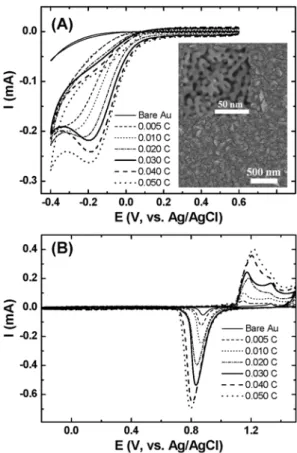
Fig. 1(A) shows cyclic voltammograms of bare Au and NPG surfaces prepared from solutions containing 15 mM KAu(CN)

2

and 30 mM KAg(CN)

2

measured in 10 mM H

2

O

2

+ 0.1 M H

2

SO

4

solutions. On bare Au surfaces, no discernable faradaic current for H

2

O

2

reduction was observed down to − 0.4 V, and a further potential excursion in the negative direction resulted in the hydrogen evolution. On the other hand, a significant cathodic current was measured at NPG surfaces, indicating that the NPG surfaces are electro- catalytically active for H

2

O

2

reduction. A typical SEM image of NPG surfaces obtained with a deposition charge of 0.03 C during Ag-Au alloy layer formation steps is shown in the inset of Fig. 1(A). Erlebacher and co-workers also reported that NPG surfaces reduce oxygen via a 4-electron route consisting of a first 2-electron reduction of oxygen to hydrogen peroxide, followed by a second 2-electron catalytic reduction of hydrogen peroxide to water.

12)

As the total depo- sition charge increases, the peak potential gradually shifts in the positive direction and the overall current level increases.

This means that NPG surfaces prepared with higher deposition charges becomes more active for H

2

O

2

electro- reduction. The increase of current level for H

2

O

2

reduction

can be ascribed to the increase of electrochemical surface area (ESA) at NPG surfaces prepared with higher deposition charges. Fig. 1(B) shows the cyclic voltammograms of NPG surfaces in the Au oxide formation and dissolution region, where the cathodic peak current at around 0.8 V increases. This indicates that the ESA of NPG surfaces becomes larger as the deposition charge increases.

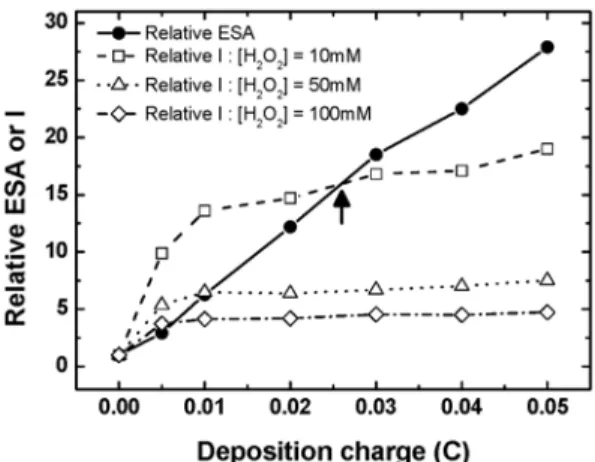
Fig. 2 reveals more detailed aspects regarding on the

effect of deposition charge on the electrocatalytic activity

of NPG surfaces toward H

2

O

2

reduction. The ESAs of NPG

surfaces were estimated from Fig. 1B by integrating the

charge consumed for the reduction of the surface oxide

monolayer,

13)

which were normalized with respect to the

ESA of bare Au surfaces. As shown by the filled circles in

Fig. 2, relative ESAs of NPG surfaces linearly increase with

Fig. 1. Cyclic voltammograms of bare Au and NPG surfaces

obtained in solutions containing (A) 10 mM H

2

O

2

+ 0.1 M

H

2

SO

4

and (B) 0.1 M H

2

SO

4

. Scan rate: 50 mV s

1

. The Ag-Au

alloy layers were electrodeposited from solutions containing

15 mM KAu(CN)

2

and 30 mM KAg(CN)

2

(conc. ratio = 1 : 2) in

0.25 M Na

2

CO

3

with various total deposition charges during

the formation of Ag-Au alloys. Inset shows a typical SEM

image of NPG surfaces with a deposition charge of 0.03 C.

(3)

deposition charge. Fig. 2 also shows that the current level for H

2

O

2

reduction rapidly increases up to around 0.01 C of deposition charge, and thereafter the rate of increase slows down. We have recently reported a similar result for glucose electrooxidation on NPG surfaces, where we ascribed this behavior to the fact that diffusion layer of glucose cannot fully penetrate through all the pores in NPG surfaces with higher ESA.

11)

At higher concentrations of H

2

O

2

, the relative cathodic current level for H

2

O

2

reduction on NPG surfaces compared to that on bare Au surfaces became smaller. This might be due to the fact that a higher concentration of H

2

O

2

forms a thicker diffusion layer, which results in the less efficient usage of the NPG surfaces.

3.2. Effect of the composition of electrodepo- sition solution on electrocatalysis

We next examined the effect of composition of KAu(CN)

2

+ KAg(CN)

2

solutions for electrodeposition of Ag-Au layers on the electrocatalysis toward H

2

O

2

reduction.

The solid lines in Fig. 3 show that the relative ESAs of Fig. 2. Relative electrochemical surface area (ESA) or

cathodic current for H

2

O

2

reduction measured on NPG surfaces as a function of the deposition charge during the formation of Ag-Au alloy layers. The Ag-Au alloy layers were electrodeposited from solutions containing 15 mM KAu(CN)

2

and 30 mM KAg(CN)

2

(conc. ratio = 1 : 2) in 0.25 M Na

2

CO

3

.

Fig. 3. Relative electrochemical surface area (ESA) or cathodic current for H

2

O

2

reduction measured on NPG surfaces

as a function of the deposition charge. The Ag-Au alloy layers were electrodeposited from solutions containing 15 mM

KAu(CN)

2

and (A) 22.5 mM, (B) 45 mM, (C) 60 mM, and 75 mM KAg(CN)

2

in 0.25 M Na

2

CO

3

. The concentration ratios

of KAu(CN)

2

over KAg(CN)

2

are (A) 1 : 1.5, (B) 1 : 3, (C) 1 : 4, and (D) 1 : 5. Insets show typical SEM images of NPG

surfaces with a deposition charge of 0.03 C at each concentration ratio.

(4)

NPG surfaces linearly increase with deposition charge for all of the solution compositions. As the concentration ratios of KAu(CN)

2

over KAg(CN)

2

increases from 1 : 1.5 to 1 : 5, the relative ESA gradually decreases. This can be explained by the SEM images of NPG surfaces (insets in Fig. 3) that the nanoporous domains decrease at higher concentration ratios.

The dependence of cathodic currents for H

2

O

2

reduction on the deposition charge exhibits a similar trend as shown in Fig. 2. Interestingly, the cathodic currents for H

2

O

2

reduction were maintained at virtually same level for concentration ratios between 1 : 1.5 and 1 : 4 despite the decrease of ESA of NPG surfaces. The decrease of cathodic currents in the case of 1 : 5 concentration ratio (Fig. 3(D)) might be due to the apparent collapse of nanoporous structures.

It is noteworthy to consider the catalytic efficiency of NPG surfaces toward H

2

O

2

electroreduction compared to that of a bare Au surface in terms of the cathodic current per unit ESA. Fig. 2 shows that the relative ESA curve (solid line) and the relative current curve (dashed line for 10 mM H

2

O

2

case) cross at the deposition charge of ~0.025 C (noted as an arrow). This means that the NPG surfaces prepared with deposition charges less than 0.025 C produce higher cathodic currents than those expected from the increase of ESA. For example, the NPG surface with 0.01 C of deposition charge has 6 times larger ESA than a bare Au surface, while the current at NPG surface is 14 times larger than that observed on the bare Au surface. However, after 0.025 C of deposition charge, the NPG surfaces do not utilize all the increased ESA for electroreduction of H

2

O

2

. If we consider the crossing points between the relative ESA and cathodic current (arrows in Fig. 2 and Fig. 3), the position of the crossing points becomes greater as the concentration ratios increases. For the NPG surface with a concentration ratio of 1 : 4 (Fig. 3C), the relative cathodic currents are always higher than the relative ESA up to 0.05 C of deposition charge, indicating all the increased ESA introduced by NPG formation is utilized for electroreduction of H

2

O

2

and this NPG surface shows higher catalytic efficiency than other NPG surfaces in terms of the cathodic current per unit ESA.

3.3. Amperometric detection of H

2

O

2

at NPG surfaces

Because the NPG surfaces show electrocatalytic activity toward H

2

O

2

, we performed the amperometric detection of H

2

O

2

on NPG surfaces. Although the electrocatalytic efficiency is better at NPG surfaces with higher concentration ratios, the absolute current level is more important in amperometric detection. In this regard, the NPG surfaces

with concentration ratios of 1 : 2 and 1 : 3 were chosen for the amperometric detection. Fig. 4(A) shows amperometric responses of bare Au and NPG surfaces with a successive addition of 2 mM H

2

O

2

in 0.1 M H

2

SO

4

electrolyte solutions.

The applied potential on electrode surfaces is − 0.2 V, at which potential negligible amperometric responses are observed on a bare Au surface. On the other hand, NPG surfaces exhibit sensitive amperometric responses upon the addition of H

2

O

2

. Fig. 4(B) shows calibration plots obtained from the amperometric responses, where NPG surfaces exhibit an order of magnitude lager sensitivity than a bare Au surface. Considering the amperometric detection of H

2

O

2

is important in many bioanalytical applica- tions such as glucose sensors, we expect the NPG surface can be utilized in other electroanalytical fields.

4. Conclusion

Electrocatalytic reduction of H

2

O

2

at nanoporous gold

Fig. 4. (A) Amperometric responses of bare Au and NPG

surfaces with a successive addition of 2 mM H

2

O

2

in

0.1 M H

2

SO

4

electrolyte solutions at − 0.2 V. NPG surfaces

were prepared with a deposition charge of 0.05 C. (B)

Calibration plots obtained from (A).

(5)

(NPG) surfaces prepared by electrodeposition of Ag-Au alloy layers followed by the selective dissolution of Ag was examined. We found that the NPG surfaces are electro- catalytically active for H

2

O

2

reduction compared to bare Au surfaces and the activity depends on the conditions of electrodeposition for Ag-Au layers such as the concentration ratios of KAu(CN)

2

over KAg(CN)

2

and deposition charges.

NPG surfaces prepared with higher concentration ratios showed better electrocatalytic activity in terms of the cathodic current per unit ESA. The NPG surfaces exhibited sensitive amperometric response for H

2

O

2

reduction, from which calibration plots with higher sensitivity than a bare Au surface were obtained. The unique electrocatalytic reduction of H

2

O

2

at NPG surfaces may find applications in other electrochemical area.

Acknowledgements

This work was supported by the research grant of the Chungbuk National University in 2009.

References

1. M. C. Daniel and D. Astruc, ‘ Gold nanoparticles: Assembly, supramolecular chemistry, quantum-size-related properties, and applications toward biology, catalysis, and nanotec- hnology ’ Chem. Rev., 104, 293 (2004).

2. A. Wittstock, V. Zielasek, J. Biener, C. M. Friend, and M.

Baumer, ‘ Nanoporous Gold Catalysts for Selective Gas- Phase Oxidative Coupling of Methanol at Low Tempera- ture ’ Science, 327, 319 (2010).

3. Y. Ding and J. Erlebacher, ‘ Nanoporous metals with controlled multimodal pore size distribution ’ J. Am. Chem.

Soc., 125, 7772 (2003).

4. J. Erlebacher, M. J. Aziz, A. Karma, N. Dimitrov, and K.

Sieradzki, ‘ Evolution of nanoporosity in dealloying ’ Nature, 410, 450 (2001).

5. Z. Liu, L. Huang, L. Zhang, H. Ma, and Y. Ding, ‘ Electro- catalytic oxidation of d-glucose at nanoporous Au and Au-Ag alloy electrodes in alkaline aqueous solutions ’ Electrochim. Acta, 54, 7286 (2009).

6. L. H. Qian, X. Q. Yan, T. Fujita, A. Inoue, and M. W.

Chen, ‘ Surface enhanced Raman scattering of nanoporous gold: Smaller pore sizes stronger enhancements ’ Appl.

Phys. Lett., 90, (2007).

7. Z. Liu, J. Du, C. Qiu, L. Huang, H. Ma, D. Shen, and Y.

Ding, ‘ Electrochemical sensor for detection of p-nitrophenol based on nanoporous gold ’ Electrochem. Commun., 11, 1365 (2009).

8. H. J. Qiu, G. P. Zhou, G. L. Ji, Y. Zhang, X. R. Huang, and Y. Ding, ‘ A novel nanoporous gold modified electrode for the selective determination of dopamine in the presence of ascorbic acid ’ Colloid Surf. B-Biointerfaces, 69, 105 (2009).

9. K. C. Hu, D. X. Lan, X. M. Li, and S. S. Zhang, ‘ Electro- chemical DNA Biosensor Based on Nanoporous Gold Electrode and Multifunctional Encoded DNA-Au Bio Bar Codes ’ Anal. Chem., 80, 9124 (2008).

10. C. X. Ji and P. C. Searson, ‘ Synthesis and characterization of nanoporous gold nanowires ’ J. Phys. Chem. B, 107, 4494 (2003).

11. B. Seo and J. Kim, ‘ Electrooxidation of Glucose at Nano- porous Gold Surfaces: Structure Dependent Electrocatalysis and Its Application to Amperometric Detection ’ Elec- troanalysis, 22, 939 (2010).

12. R. Zeis, T. Lei, K. Sieradzki, J. Snyder, and J. Erlebacher,

‘ Catalytic reduction of oxygen and hydrogen peroxide by nanoporous gold ’ J. Catal., 253, 132 (2008).

13. S. Trasatti and O. A. Petrii, ‘ Real surface-area measurements

in electrochemistry' Pure Appl. Chem., 63, 711 (1991).

수치

Fig. 2 reveals more detailed aspects regarding on the effect of deposition charge on the electrocatalytic activity of NPG surfaces toward H 2 O 2  reduction
Fig. 3. Relative electrochemical surface area (ESA) or cathodic current for H 2 O 2  reduction measured on NPG surfaces as a function of the deposition charge

참조

관련 문서

[r]

자석 팽이는 볼록한 두 부분에는 고리 자석이 들어 있고, 받침대에는 팽이의 고 리 자석 위치와 일치하는 부분에 삼각형 모양의 자석이 네 개 들어 있다.. 그리고

캐나다정부간행물목록(Weekly checklist of Canadian government publications) 에 수록된 자료 중 Folder자료, 인구센서스, 전화번호 자료 등을 제외한

In this study, hydrogen peroxide(H 2 O 2 ) was used for producing low molecular weight sodium alginates(LMWSAs) under e-beam irradiation or controlled

회원국의 영토밖에서 다른 회원국의 , 영토내에서 회원국의 서비스 소비자에게

판단되는 경우에는 즉시 의사의 의료지도에 따를 것 다만 통신장애 등으로 인해 의사의 의료지도가 불.. 사람 외국에 있는 교육기관에서

[r]

15) 세광음악출판사