• 검색 결과가 없습니다.

Relationship of Oral Bacterial Load Over One Year of Smoking Cessation

N/A
N/A
Protected

Academic year: 2021

Share "Relationship of Oral Bacterial Load Over One Year of Smoking Cessation"

Copied!
7
0
0

로드 중.... (전체 텍스트 보기)

전체 글

(1)

RESEARCH ARTICLE

Received: August 26, 2019, Revised: September 19, 2019, Accepted: October 1, 2019 eISSN 2233-7679

Correspondence to: Soo-Jeong Hwang, https://orcid.org/0000-0003-4725-1512

Department of Dental Hygiene, College of Medical Science, Konyang University, 158 Gwanjeodong-ro, Seo-gu, Daejeon 35365, Korea Tel: +82-42-600-8444, Fax: +82-42-600-8408, E-mail: [email protected]

Copyright © The Korean Society of Dental Hygiene Science.

Relationship of Oral Bacterial Load Over One Year of Smoking Cessation

Sunghyun Kim

1

, Min-Seock Seo

2

, and Soo-Jeong Hwang

3,†

1

Department of Clinical Laboratory Science, College of Health Sciences, Catholic University of Pusan, Busan 46252,

2

Department of Conservative Dentistry, Wonkwang University Daejeon Dental Hospital, Daejeon 35233,

3

Department of Dental Hygiene, College of Medical Science, Konyang University, Daejeon 35365, Korea

Background: Smoking exerts an adverse effect on the periodontal tissue by reorganizing the ecosystem of oral microorganisms

and is considered to be an important factor in the development of periodontal disease. Although cross-sectional studies on smokers and non-smokers have been attempted to investigate the microbial differences in periodontal oral cavity, only few studies have been conducted to investigate the changes in oral microorganisms during smoking cessation. The purpose of this study was to investigate the changes of bacteria in saliva and gingival crevicular fluid (GCF) over a period of one year among 11 smokers trying to quit smoking.

Methods: Eleven smokers trying to quit smoking visited the clinic at baseline, two weeks, two months, four months, six months,

and 12 months to give saliva and GCF samples. The amounts of 16S rRNA, Porphyromonas gingivalis , Treponema denticola , Prevotella intermedia , Fusobacterium nucleatum subsp. nucleatum , Streptococcus mutans , and Streptococcus sobrinus in saliva and GCF were quantified using real-time polymerase chain reaction TaqMan probe assay. The results were analyzed by nonparametric statistical analysis using Friedman test and Spearman correlation coefficient.

Results: After cessation of smoking, the amounts of 16S rRNA corresponding to

P. gingivalis , F. nucleatum , P. intermedia , and T. denticola in saliva decreased and then again increased significantly. The amount of F. nucleatum 16S rRNA in GCF decreased significantly after smoking cessation. Positive correlations were observed between 16S rRNA and F. nucleatum and between F.

nucleatum and T. denticola in saliva and GCF.

Conclusion:

Even if the number of subjects in this study was small, we suggest that smoking cessation may reduce the total bacterial amount and F. nucleatum in GCF. However, the results regarding changes in the microbial ecosystem due to smoking or smoking cessation were inconsistent. Therefore, further in-depth studies need to be carried out.

Key Words: Bacteria, Periodontal disease, Smoking, Smoking cessation

Introduction

Smoking has an adverse effect on the periodontal tissue and is considered to be an important factor in the progression of periodontal disease. Previous studies have demonstrated the clinical impact of smoking, reporting that scaling and root planing were less effective in smokers than in non-smokers

1)

, and that periodontal treatment combined with smoking cessation resulted in greater reduction in average periodontal pocket depth

2)

.

When the amounts of matrix metalloproteinase 9 in gingival crevicular fluid (GCF) were measured in the smoking, non-smoking, and smoking cessation groups, significant differences between the groups were found after adjusting for age and gingival index

3)

, with the smoking group showing higher concentration of enzymes that destroy periodontal tissues.

In addition, other studies have reported that smoking reorganizes the ecosystem of oral microorganisms.

Smoking was reported to stimulate formation of diverse

(2)

and relatively unstable biofilms at gingival margins and subgingival spaces

4)

, while it was also reported that smokers are more susceptible to Porphyromonas gingivalis infection. In addition, smoking alters the expression of surface components of P. gingivalis to ultimately cause damage to immunoglobulins

5)

. Shah et al.

6)

reported that smoking increases pro-inflammatory and oxidative stress response to virulence-enhanced commensal biofilms.

Assessing oral microorganisms or the health status of periodontal tissues in smokers and non-smokers through a cross-sectional study is less difficult than a longitudinal study. However, the follow-up survey study with smoking cessation as an intervening factor showed a low 12-month success rate in smoking cessation (2.5∼16.9%)

7)

, and thus, it was not easy to measure any changes. Although there was a study that regularly monitored patients undergone periodontal treatment to investigate the effects of periodontal treatment and smoking cessation

8)

, there are limited studies that exclusively investigated changes in periodontal tissues during smoking cessation. The purpose of the present study was to observe and analyze changes in oral bacterial load during the smoking cessation process, without involvement of periodontal treatment, in 11 subjects who successfully quit smoking. These subjects were followed up for 12 months in public health center smoking cessation clinics.

Materials and Methods

1. Study subjects and collection of GCF and saliva

The study was performed on a population of 122 men who had signed a written consent to participate in the study and enrolled in public health center smoking cessation clinics. The exclusion criteria of the present study consisted of the following: those with uncontrolled systemic disease; those taking steroids or anti-inflammatory drugs during the study period or within three months prior to participating in the study; those using an oral rinse product during the study period or within three months prior to participating in the study; those receiving dental treatment during the study period; those with ≤20 teeth, excluding the third molars; and those with any area of

periodontal pocket ≥5.5 mm. The subjects were in- structed to visit the public health center at baseline, two weeks, and two, four, six, and 12 months. Due to a very high drop-out rate, only 26 subjects visited the public health center smoking cessation clinics at all time points.

Among them, 15 subjects were unable to quit smoking and only 11 subjects successfully quit smoking for 12 months

9)

. The success of smoking cessation was determined by verbal reports and using a carbon monoxide meter.

Each time a subject visited the health center, 2 to 4 ml of unstimulated saliva sample was collected, while GCF was collected after removing biofilm and drying. Paper points were used 25 times for 1 minute absorption by intra- crevicular “superficial” method from five interdental spots in maxillary anterior teeth and five interdental spots in mandibular anterior teeth. The samples were frozen immediately after collection at the health center and kept at –20°C until the experiment was performed.

2. Measurement of some oral bacterial load real-time polymerase chain reaction

TaqMan probe assay

Amounts of certain bacteria in saliva and GCF from mandibular anterior region were analyzed using real-time polymerase chain reaction (qPCR) TaqMan probe assay.

Bacteria were received from the Korean Collection for Type Cultures (KCTC) and the following were selected: P.

gingivalis (KCTC 5352, ATCC 33277), Treponema denticola (KCTC 15104, ATCC 35405), Prevotella intermedia (KCTC 5692, KCOM 1107), Fusobacterium nucleatum subsp. nucleatum (KCTC 2640, ACTC25586), Streptococcus mutans (KCTC 3065, ACTC 25175), and Streptococcus sobrinus (KCTC  3308, ACTC  27607).

Molecular biological quantitative bacterial load test was performed at the Department of Clinical Laboratory Science, Catholic University of Pusan, with the primers and TaqMan probe sets prepared as suggested in the previous studies

10-12)

.

3. Statistics

The cycle threshold (Ct) values of real-time PCR were

used in the analysis without converting them to bacterial

count. This was based on the assumption that analysis

(3)

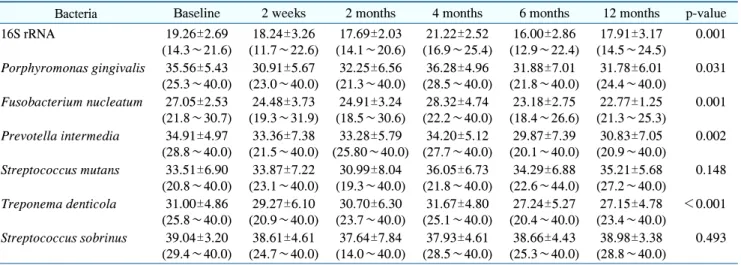
Table 1. Change of Cycle Threshold Values in Real-Time Polymerase Chain Reaction on Each Bacteria in the Saliva of 11 Stop-Smokers

Bacteria Baseline 2 weeks 2 months 4 months 6 months 12 months p-value

16S rRNA 19.26±2.69

(14.3∼21.6)

18.24±3.26 (11.7∼22.6)

17.69±2.03 (14.1∼20.6)

21.22±2.52 (16.9∼25.4)

16.00±2.86 (12.9∼22.4)

17.91±3.17 (14.5∼24.5)

0.001

Porphyromonas gingivalis 35.56±5.43 (25.3∼40.0)

30.91±5.67 (23.0∼40.0)

32.25±6.56 (21.3∼40.0)

36.28±4.96 (28.5∼40.0)

31.88±7.01 (21.8∼40.0)

31.78±6.01 (24.4∼40.0)

0.031

Fusobacterium nucleatum 27.05±2.53 (21.8∼30.7)

24.48±3.73 (19.3∼31.9)

24.91±3.24 (18.5∼30.6)

28.32±4.74 (22.2∼40.0)

23.18±2.75 (18.4∼26.6)

22.77±1.25 (21.3∼25.3)

0.001

Prevotella intermedia 34.91±4.97 (28.8∼40.0)

33.36±7.38 (21.5∼40.0)

33.28±5.79 (25.80∼40.0)

34.20±5.12 (27.7∼40.0)

29.87±7.39 (20.1∼40.0)

30.83±7.05 (20.9∼40.0)

0.002

Streptococcus mutans 33.51±6.90 (20.8∼40.0)

33.87±7.22 (23.1∼40.0)

30.99±8.04 (19.3∼40.0)

36.05±6.73 (21.8∼40.0)

34.29±6.88 (22.6∼44.0)

35.21±5.68 (27.2∼40.0)

0.148

Treponema denticola 31.00±4.86 (25.8∼40.0)

29.27±6.10 (20.9∼40.0)

30.70±6.30 (23.7∼40.0)

31.67±4.80 (25.1∼40.0)

27.24±5.27 (20.4∼40.0)

27.15±4.78 (23.4∼40.0)

<0.001

Streptococcus sobrinus 39.04±3.20 (29.4∼40.0)

38.61±4.61 (24.7∼40.0)

37.64±7.84 (14.0∼40.0)

37.93±4.61 (28.5∼40.0)

38.66±4.43 (25.3∼40.0)

38.98±3.38 (28.8∼40.0)

0.493

Values are presented as mean±standard deviation (minimum∼maximum).

Table 2. Change of Cycle Threshold Values in Real-Time Polymerase Chain Reaction on Each Bacteria in the Gingival Crevicular Fluid of 11 Stop-Smokers

Bacteria Baseline 2 weeks 2 months 4 months 6 months 12 months p-value

16S rRNA 24.72±2.66

(19.8∼28.8)

25.36±2.12 (21.9∼30.2)

25.19±2.15 (22.8∼29.8)

27.14±3.07 (22.6∼31.3)

28.35±1.76 (24.4∼31.1)

28.09±2.18 (24.7∼30.8)

0.001

Porphyromonas gingivalis 38.11±3.29 (32.3∼40.0)

40.00±0.00 (40.0)

39.14±2.86 (30.5∼40.0)

38.26±3.01 (32.9∼40.0)

39.45±1.84 (33.9∼40.0)

38.47±2.63 (33.8∼40.0)

0.358

Fusobacterium nucleatum 26.89±7.16 (21.0∼40.0)

26.35±5.47 (19.6∼40.0)

25.93±5.18 (21.8∼40.0)

32.72±7.22 (22.5∼40.0)

34.64±6.49 (25.6∼40.0)

32.10±7.02 (22.10∼40.0)

<0.001

Prevotella intermedia 35.46±5.44 (26.6∼40.0)

36.84±4.49 (29.0∼40.0)

35.33±4.52 (30.4∼40.0)

39.08±3.05 (29.9∼40.0)

38.98±3.38 (28.8∼40.0)

38.55±3.24 (31.7∼40.0)

0.090

Streptococcus mutans 38.83±2.62 (33.1∼40.0)

39.28±2.38 (32.1∼40.0)

39.14±2.86 (30.5∼40.0)

39.54±1.54 (34.9∼40.0)

39.27±2.41 (32.0∼40.0)

40.00±0.00 (40.0)

0.681

Treponema denticola 34.20±4.94 (27.6∼40.0)

36.93±4.40 (29.3∼40.0)

34.96±4.19 (28.7∼40.0)

37.43±4.52 (28.7∼40.0)

38.94±3.53 (28.3∼40.0)

37.82±3.74 (31.7∼40.0)

0.077

Values are presented as mean±standard deviation (minimum∼maximum).

using Ct values would be appropriate since specific bacteria may not be detected in some samples, and thus, the final variable was presented as Ct value in the table.

Moreover, since the number of subjects was low (n=11) and did not show normal distribution, parametric statistics could have been problematic, and thus, non-parametric statistics were used. For statistical analysis of changes in bacteria at each time point, the Friedman test was used, while the Spearman’s correlation analysis was used for analyzing the correlation between variables. The statistical program IBM SPSS 20.0 (IBM Corp., Armonk, NY, USA) was used and the significance level was set to 0.05.

Results

As shown in Table 1, with respect to the bacteria in saliva, the mean Ct value of 16S rRNA, which reflected the total bacterial count, decreased up to two months;

increased at four months; and decreased again at six and

12 months. Therefore, the total bacterial count showed a

pattern of increasing first, and then decreasing, and the

differences between time point were significant. The Ct

values of P. gingivalis, F. nucleatum, P. intermedia, and

T. denticola also showed a pattern of decreasing at two

weeks and two months, as compared to the baseline;

(4)

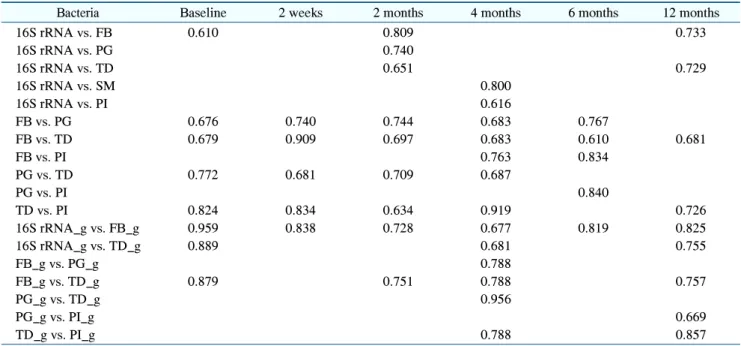
Table 3. Significant Spearmann Coefficients among Cycle Threshold Values of Oral Bacteria in Saliva and Gingival Crevicular Fluid
Bacteria Baseline 2 weeks 2 months 4 months 6 months 12 months

16S rRNA vs. FB 0.610 0.809 0.733

16S rRNA vs. PG 0.740

16S rRNA vs. TD 0.651 0.729

16S rRNA vs. SM 0.800

16S rRNA vs. PI 0.616

FB vs. PG 0.676 0.740 0.744 0.683 0.767

FB vs. TD 0.679 0.909 0.697 0.683 0.610 0.681

FB vs. PI 0.763 0.834

PG vs. TD 0.772 0.681 0.709 0.687

PG vs. PI 0.840

TD vs. PI 0.824 0.834 0.634 0.919 0.726

16S rRNA_g vs. FB_g 0.959 0.838 0.728 0.677 0.819 0.825

16S rRNA_g vs. TD_g 0.889 0.681 0.755

FB_g vs. PG_g 0.788

FB_g vs. TD_g 0.879 0.751 0.788 0.757

PG_g vs. TD_g 0.956

PG_g vs. PI_g 0.669

TD_g vs. PI_g 0.788 0.857

FB: Fusobacterium nucleatum, PG: Porphyromonas gingivalis, TD: Treponema denticola. SM: Streptococcus mutans, PI: Prevotella intermedia, _g: in gingival crevicular fluid.

increasing at four months; and then decreasing again at six and 12 months. The results were similar to that of 16S rRNA and the differences between time point were significant. Meanwhile, S. mutans and S. sobrinus did not show significant differences with respect to time.

The total bacterial count in GCF was lower than in saliva. As shown in Table 2, the Ct values of 16S rRNA in GCF showed an increasing pattern, as compared to the baseline, indicating a decrease in bacterial count and showing significant differences with respect to time. In GCF, the Ct values of F. nucleatum showed significant differences with respect to time. The Ct value after four months was higher than the Ct value after 2 months, indicating that the amount of F. nucleatum decreased after four months. Other bacteria did not show significant changes and S. sobrinus was detected in none of the GCF samples.

Table 3 shows the results of correlation analysis of Ct values for each bacterium by time points (results that were not significant are not shown in the table). The correlation coefficients of bacteria at each time point did not show a consistent tendency, with 16S rRNA in saliva samples showing positive correlations with different bacteria at

different time points. F. nucleatum and P. gingivalis in saliva samples showed distinctly positive correlations, except at 12 months. F. nucleatum and T. denticola in saliva samples showed distinctly or strongly positive correlations at all time points. T. denticola and P.

gingivalis in saliva samples showed distinctly positive correlations up to four months. T. denticola in saliva samples showed significantly positive correlations with P.

intermedia at all time points, except at six months.

Meanwhile, 16S rRNA in GCF samples showed strongly or distinctly positive correlations with F. nucleatum. Red complex bacteria

13)

in GCF samples showed correlations at some time points, but the degree of correlation was lower than that of saliva samples. F. nucleatum and T.

denticola in saliva samples showed the strongest correlations.

Discussion

Although previous studies demonstrated that there are

differences in the composition of oral bacteria between

smokers and non-smokers, the results were not consistent,

and in particular, Prevotella intermedia showed

conflicting results with positive correlation with smoking

(5)

in some cases and negative correlation in others. In a previous study by van Winkelhoff et al.

1)

, six different bacterial strains were analyzed in the periodontal pockets of untreated smokers, untreated non-smokers, treated smokers, and treated non-smokers. The results showed that prevalence of Prevotella intermedia/nigrescens was high in untreated smokers, while average values of Peptostreptococcus micros and Fusobacterium nucleatum were high. Shiloah et al.

14)

reported that between smokers and non-smokers with no clinical differences, smokers had 18-fold higher likelihood of pathogen colonization and that expression of pathogenic bacteria was proportional to the amount and duration of smoking, even without periodontitis. According to a study on Korean subjects

15)

, Fusobacterium, Fretibacterium, Streptococcus, Veillonella, and Corynebacterium were abundant in smokers, whereas levels of Prevotella, Campylobacter, and Aggregatibacter were low in smokers.

Although the studies on changes in bacterial flora due to smoking have yielded inconsistent results, research on the causes underlying these changes has continued. Wu et al.

16)

reported that there are differences in the composition of oral microorganisms between current smokers and former smokers, and that metagenome analysis showed that carbohydrate energy metabolism and xenobiotic metabolism are associated with bacterial changes. Shah et al.

6)

reported that exposure to smoking drastically lowered the essential metabolic functions in symbiotic biofilms, whereas it significantly increased the expression of virulent genes, especially those involved in lipopolysaccharide, flagellum, and capsule synthesis.

This study was also conducted with the expectation that the composition of oral bacteria would change in smokers as they go through the process of smoking cessation. Since there was no intervention in the general lifestyle and oral health behaviors of 11 former smokers, these factors are assumed to have been maintained constantly and smoking cessation acted as the intervening factor in this study.

Total bacterial count in saliva tended to increase up to two months after smoking cessation; decreased at four months;

and increased again from six months onwards. Therefore, a consistent tendency could not be obtained (Table 1), but total bacterial count in GCF continued to decrease

according to the duration of smoking cessation (Table 2).

These findings were consistent with the results of another study reporting that non-smokers have lower bacterial count

14)

. However, other studies have reported that non-smokers have higher bacterial count in saliva

17)

. Considering that periodontitis starts from the gum ridge, changes of bacteria in GCF would be expected to have a greater effect than changes of bacteria in saliva, and thus, decrease of bacterial count in GCF due to smoking cessation is believed to have a positive effect on periodontal tissues.

P. intermedia and T. denticola in saliva showed an increasing pattern at six months after smoking cessation.

Kubota et al.

18)

reported that P. intermedia and T. denticola are significantly associated with periodontal pocket depth and that smoking and P. intermedia are significantly associated with each other. However, the present study showed contradictory results. Meanwhile, a study by Moon et al.

15)

also reported that the genus Prevotella was less abundant in smokers. Thus, additional studies may be needed to confirm this finding. F. nucleatum in GCF showed decrease starting from four months and the changes were significant. A study by Moon et al.

15)

also found greater amount of F. nucleatum in smokers than non-smokers, while the study by Kumar et al.

4)

reported that Fusobacterium is present in the biofilm of smokers, thereby showing initial inflammatory response. Delima et al.

19)

reported that after 12 months of smoking cessation and non-surgical periodontal treatment, subgingival microbiome showed increase in non-pathogenic species and decrease in putative periodontal pathogens. The findings of the present study also supported these results.

However, there are conflicting results, where Shakhatreh et al.

20)

reported that level of F. nucleatum in gingival sulcus was lower in smokers.

The present study had a small sample size and could not

find consistent tendencies in the compositions of bacteria

in saliva and GCF. However, the positive correlations

between F. nucleatum and 16S rRNA in both saliva and

GCF and between F. nucleatum and T. denticola in both

saliva and GCF were maintained. Moreover, the results

also showed decrease in F. nucleatum in GCF following

smoking cessation. Therefore, smoking cessation can

(6)

reduce total bacterial count in GCF and F. nucleatum, and thus, can have a positive effect on periodontal tissues.

Since decrease in F. nucleatum can lead to decrease in T.

denticola, which showed a positive correlation, it is suggested that red complex oral bacteria that cause periodontitis could be reduced as well following smoking cessation. However, additional studies may be needed on the changing trends of bacteria in saliva and GCF based on smoking.

Notes

Conflict of interest

No potential conflict of interest relevant to this article was reported.

Ethical approval

This study was approved by the Institutional Review Board of Konyang University Hospital (approval no.

KYUH 09-25).

ORCID

Sunghyun Kim, http://orcid.org/0000-0003-2511-6555 Min-Seock Seo, http://orcid.org/0000-0001-7203-7775 Soo-Jeong Hwang, http://orcid.org/0000-0003-4725-1512

Acknowledgements

This research was supported by Women Scientists Program through the National Research Foundation of Korea (NRF) funded by the Ministry of Science, ICT &

Future Planning (2009-0069179).

References

1. van Winkelhoff AJ, Bosch‐Tijhof CJ, Winkel EG, van der Reijden WA: Smoking affects the subgingival microflora in periodontitis. J Periodontol 72: 666-671, 2001.

https://doi.org/10.1902/jop.2001.72.5.666

2. Preshaw PM, Heasman L, Stacey F, Steen N, McCracken GI, Heasman PA: The effect of quitting smoking on chronic periodontitis. J Clin Periodontol 32: 869-879, 2005.

https://doi.org/10.1111/j.1600-051X.2005.00779.x

3. Hwang SJ, Kim YK, Yang SJ, Cho HJ: Influence of smoking

on matrix-metalloproteinase-9 in the gingival crevicular fluid. J Dent Hyg Sci 11: 339-344, 2011.

4. Kumar PS, Matthews CR, Joshi V, de Jager M, Aspiras M:

Tobacco smoking affects bacterial acquisition and colonization in oral biofilms. Infect Immun 79: 4730-4738, 2011. https://doi.org/10.1128/IAI.05371-11

5. Zeller I, Hutcherson JA, Lamont RJ, et al.: Altered antigenic profiling and infectivity of Porphyromonas gingivalis in smokers and non-smokers with periodontitis. J Periodontol 85: 837-844, 2014. https://doi.org/10.1902/jop.2013.130336 6. Shah SA, Ganesan SM, Varadharaj S, Dabdoub SM, Walters

JD, Kumar PS: The making of a miscreant: tobacco smoke and the creation of pathogen-rich biofilms. NPJ Biofilms Microbiomes 3: 26, 2017.

https://doi.org/10.1038/s41522-017-0033-2

7. Johnson NW: The role of the dental team in tobacco cessation. Eur J Dent Educ 8 Suppl 4: 18-24, 2004.

8. Delima SL, McBride RK, Preshaw PM, Heasman PA, Kumar PS: Response of subgingival bacteria to smoking cessation. J Clin Microbiol 48: 2344-2349, 2010.

https://doi.org/10.1128/JCM.01821-09

9. Liu KH, Hwang SJ: Effect of smoking cessation for 1 year on periodontal biomarkers in gingival crevicular fluid. J Periodontal Res 51: 366-375, 2016.

https://doi.org/10.1111/jre.12316

10. Hyvärinen K, Laitinen S, Paju S, et al.: Detection and quantification of five major periodontal pathogens by single copy gene-based real-time PCR. Innate Immun 15: 195-204, 2009. https://doi.org/10.1177/1753425908101920

11. Wade WG: The oral microbiome in health and disease.

Pharmacol Res 69: 137-143, 2013.

https://doi.org/10.1016/j.phrs.2012.11.006

12. Bizzarro S, Loos BG, Laine ML, Crielaard W, Zaura E:

Subgingival microbiome in smokers and non-smokers in periodontitis: an exploratory study using traditional targeted techniques and a next-generation sequencing. J Clin Periodontol 40: 483-492, 2013.

https://doi.org/10.1111/jcpe.12087

13. Mysak J, Podzimek S, Sommerova P, et al.: Porphyromonas gingivalis: major periodontopathic pathogen overview. J Immunol Res 2014: 476068, 2014.

https://doi.org/10.1155/2014/476068

14. Shiloah J, Patters MR, Waring MB: The prevalence of

(7)

pathogenic periodontal microflora in healthy young adult smokers. J Periodontol 71: 562-567, 2000.

https://doi.org/10.1902/jop.2000.71.4.562

15. Moon JH, Lee JH, Lee JY: Subgingival microbiome in smokers and non-smokers in Korean chronic periodontitis patients. Mol Oral Microbiol 30: 227-241, 2015.

https://doi.org/10.1111/omi.12086

16. Wu J, Peters BA, Dominianni C, et al.: Cigarette smoking and the oral microbiome in a large study of American adults.

ISME J 10: 2435-2446, 2016.

https://doi.org/10.1038/ismej.2016.37

17. Lira-Junior R, Åkerman S, Klinge B, Boström EA, Gustafsson A: Salivary microbial profiles in relation to age, periodontal, and systemic diseases. PLoS One 13: e0189374,

2018. https://doi.org/10.1371/journal.pone.0189374

18. Kubota M, Tanno-Nakanishi M, Yamada S, Okuda K, Ishihara K: Effect of smoking on subgingival microflora of patients with periodontitis in Japan. BMC Oral Health 11: 1, 2011. https://doi.org/10.1186/1472-6831-11-1

19. Delima SL, McBride RK, Preshaw PM, Heasman PA, Kumar PS: Response of subgingival bacteria to smoking cessation. J Clin Microbiol 48: 2344-2349, 2010.

https://doi.org/10.1128/JCM.01821-09

20. Shakhatreh MAK, Khabour OF, Alzoubi KH, Masadeh MM, Hussein EI, Bshara GN: Alterations in oral microbial flora induced by waterpipe tobacco smoking. Int J Gen Med 11:

47-54, 2018. https://doi.org/10.2147/IJGM.S150553

수치

Table 1. Change of Cycle Threshold Values in Real-Time Polymerase Chain Reaction on Each Bacteria in the Saliva of 11 Stop-Smokers
Table  3.  Significant  Spearmann  Coefficients  among  Cycle  Threshold  Values  of  Oral  Bacteria  in  Saliva  and  Gingival  Crevicular  Fluid

참조

관련 문서

The relationship between oral health behavior, smoking, and periodontal diseases in Korean middle-aged mee: based on data from the Korea National Health and

Conclusion: This innovative policy including increase in cigarette prices affected smoking cessation, and its impact varied by sub-group of smokers in South Korea..

Accordingly, this study was conducted on smokers who received varenicline in the smoking cessation clinic of a general hospital health care center to analyze

We found that in general, among Korean male smokers, marital status, educational level, and chronic disease were associated with success in smoking cessation.. How- ever,

In the stepwise multiple logistic regression analyses, pre- dictors of successful smoking cessation, which were different according to the fol- low-up periods, were found to be the

This study aims to identify factors related to successful smoking cessation by comparing the characteristics of individuals who successfully quit smoking and those who failed