ORIGINAL ARTICLE
INTRODUCTION
Menopause is an important phenomenon in every woman’s life and can be initiated in a primary (i.e., natural) or a secondary form (i.e., via surgery, che- motherapy, radiotherapy, etc.). Surgical menopause refers to the removal of both ovaries with or without the removal of the uterus [1]. Depending on its timing, surgical menopause can be categorized as pre-mature for patients who are under 40 or early menopause for patients who are under 45 years old. In surgical meno-
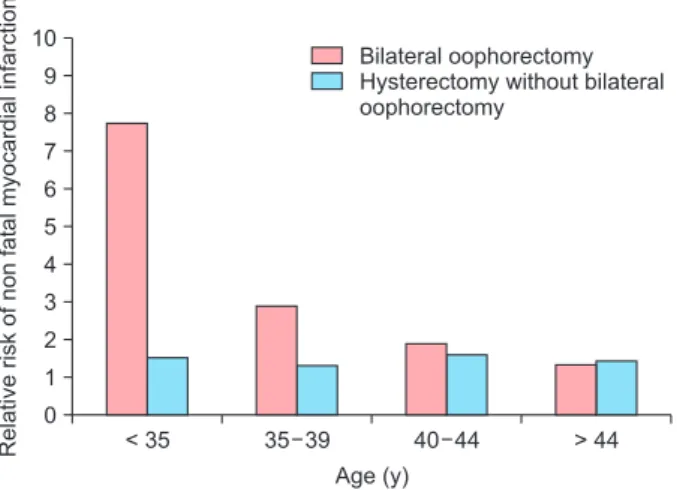
pause the body automatically enters the menopausal phase without any preparation. This can cause a crisis in women’s lives [2,3]. Annually, in the United States, 36,000 women under the age of 45 undergo either a hysterectomy with bilateral oophorectomy or surgical menopause. The most common ages for undergoing surgical menopause in decreasing order of occurrence are under 35, 35–39, 40–44, and above 44 [4] (Fig. 1).
In the UK, 1 in every 5 women who has had hysterec- tomy has also undergone oophorectomy. According to the World Health Organization’s health report in 2002,
Received: April 4, 2019 Revised: October 10, 2019 Accepted: November 11, 2019
Address for Correspondence: Mansoureh Yazdkhasti, Social Determinants of Health Research Center, Department of Midwifery, School of Medicine, Alborz University of Medical Sciences, Hasan Abad Blvd, Ooge St, Karaj 3149779453, Iran
Tel: 98-026-32563328, E-mail: [email protected], ORCID: https://orcid.org/0000-0002-9298-4531
Effectiveness of a Multi-Dimensional Group Counseling Program Based on the GATHER Approach on the Quality of Life in Surgically Menopausal Women
Fereshteh Salimi Moghadam1, Zohreh Mahmoodi2, Kourosh Kabir3, Parvaneh Mirabi4, Mansoureh Yazdkhasti2
1Department of Midwifery, Medical School, Alborz University of Medical Sciences, Karaj, Iran, 2Social Determinants of Health Research Center, Department of Midwifery, School of Medicine, Alborz University of Medical Sciences, Karaj, Iran, 3Department of Community Medicine, School of Medicine, Dietary Supplements and Probiotic Research Center, Alborz University of Medical Sciences, Karaj, Iran,
4Infertility and Reproductive Health Research Center, Health Research Institute, Babol University of Medical Sciences, Babol, Iran
Objectives: Surgical menopause can influence women’s quality of life in many aspects. This study was designed to assess the effectiveness of a multi-dimensional group counseling program based on the great clients, ask clients, tell clients, help clients, explain how to use, return for follow up (GATHER) approach, on quality of life in the surgically menopausal women.
Methods: This randomized clinical trial was conducted using two groups. The study comprised 78 women meeting inclusion criteria who had visited 4 healthcare centers in Tehran from December 2017 to September 2018. The participants were selected through simple random sampling (39 in each group). The intervention group underwent 6 consecutive weekly group counseling sessions based on GATHER approach, whereas the control group received no interventions. Data were collected using the Menopause-specific Quality of Life questionnaire at 4 time-points (i.e., baseline, immediately after the intervention, 1 month after the intervention, and 3 months after the intervention).
Results: The trend of changes at four time-points obtained on the basis of repeated measures test results showed significant between- group differences in vasomotor (P = 0.001), psychosocial (P = 0.025), and physical (P = 0.001) domains. Friedman test showed significant between-group differences in the mean score trend of changes at 4 time-points in sexual (P = 0.002) and overall quality of life (P = 0.004) domains.
Conclusions: On the basis of the study results, implementation of this approach with less expenditure in healthcare centers aimed at improving quality of life in surgically menopausal women is highly recommended.
Key Words: Counseling, Menopause, Quality of life
146,422 women have undergone hysterectomy in Iran, a figure that has been rising in recent years [5].
Sudden menopausal crisis, caused by the immediate drop in sex hormone levels, causes an exacerbation in the distressing symptoms of menopause [4]. This crisis compromises the vasomotor, psychosocial, physical, and sexual wellbeing of a woman [6]. Marra et al. [4]
reported that 100% of women with surgical menopause experience a wide range of vasomotor symptoms. In 90% of cases, they experience more severe hot flashes compared to those who go through natural menopause.
This process continues for an average of 8.5 years after the surgery. Additionally, undergoing oophorectomy prior to the age of 45 results in a 5-time increase in the morbidity rate resulting from neurologic and mental disorders [4]. It also increases the risk of developing various cardiovascular diseases [7], reduced bone den- sity [8], neurological diseases, and cardio-metabolic and urogenital disorders. Surgical menopause also has a negative effect on a woman’s sexual well-being and satisfaction [8,9]. Overall, these issues significantly influence women’s quality of life and satisfaction [10].
These problems not only influence the quality of life in surgically menopausal women, but also cause dis- tress, disability, as well as enormous financial burden on health systems [11]. The quality of life in surgically menopausal women is lower in all domains, espe- cially in psychosocial domain compared to the natural menopausal women [12]. The majority of the surgi- cally menopausal women who experience moderate to severe symptoms need preventive care for at least up to 10 years after undergoing risk-reducing salpingo- oophorectomy, in order to improve their quality of life
[13]. The use of hormonal therapy is considered to be the last option, due to its side effects such as causing breast and uterine cancer [10]. Therefore, alternative methods such as education or counseling are often sug- gested [5]. It is thought that increasing women’s aware- ness through applying proper educational methods, which are in accordance with social norms, results in improving the quality of their lives in various aspects [14]. Group counseling along with interpersonal com- munication further increases the effectiveness of the education provided. In these sessions, participants are able to share similar experiences with their peers, ultimately contributing in making better decisions by group members for resolving their own issues [15].
Therefore, the purpose of this study was to investigate the effectiveness of a multi-dimensional group coun- seling program, based on the great clients, ask clients, tell clients, help clients, explain how to use, return for follow up (GATHER) approach, on the quality of life of the surgically postmenopausal women.
MATERIALS AND METHODS
This randomized clinical trial, consisting of a control and an intervention group, was conducted from De- cember 2017 to September 2018. Data sampling was done in two stages: initially, 4 healthcare centers from the northwest region that are affiliated with Shahid Be- heshti University of Medical Sciences were randomly selected. Subjects were then assigned to two groups of intervention and control by applying simple random sampling as follows; first, a registration list was created using the participants’ information. Next, the partici- pants were invited to report to a designated location on a particular day in order to receive information on the purpose of the study. Then, a written consent was ob- tained from the eligible individuals who were willing to participate in the study. Each person was then given ID code. Next, random numbers were generated in order to read the numbers from top to bottom. After regis- tering the random numbers, the odd numbers were designated to the control group and the even numbers to the intervention group. This process was continued until the sample size was exhausted. Sample size was calculated using the G-Power software (USA) with a 95% confidence interval (α = 5%, β = 20%, and power
= 80%), in accordance with the guidelines specified [16], with an estimated 20% lost to follow-up rate 78 persons.
< 35 10
9 8 7 6 5 4 3 2 1
Age (y) 0
Bilateral oophorectomy Hysterectomy without bilateral oophorectomy
35 39 40 44 > 44
Relativeriskofnonfatalmyocardialinfarction
Fig. 1. Prevalence of surgical menopause in the U.S.
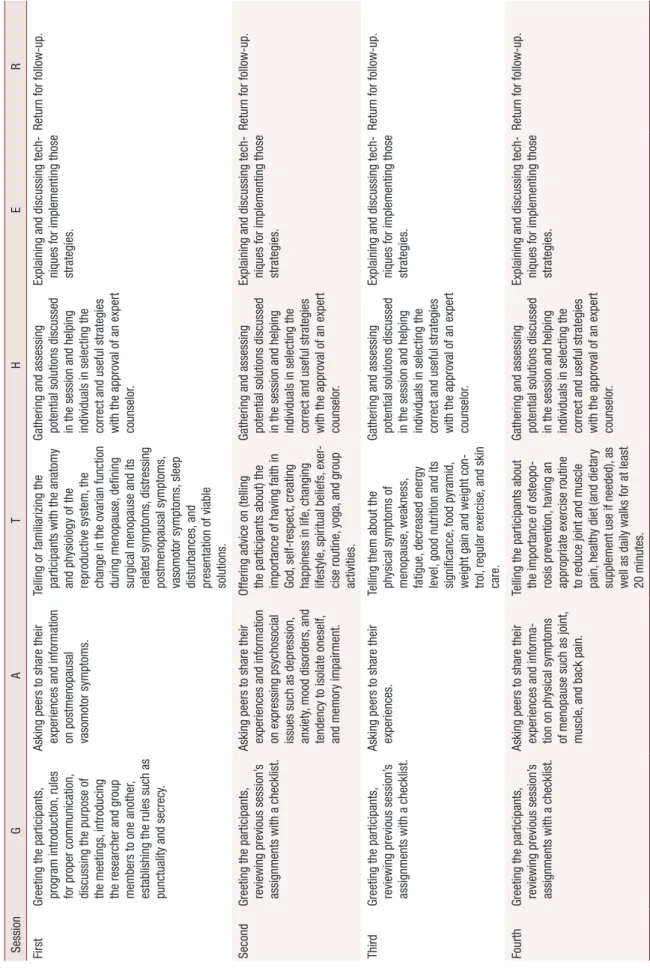
Table 1. Group counseling session agenda including the introduction, intervention, and termination of the program based on the GATHER approach for counseling SessionGATHER First Greeting the participants, program introduction, rules for proper communication, discussing the purpose of the meetings, introducing the researcher and group members to one another, establishing the rules such as punctuality and secrecy.
Asking peers to share their experiences and information on postmenopausal vasomotor symptoms.
Telling or familiarizing the participants with the anatomy and physiology of the reproductive system, the change in the ovarian function during menopause, defining surgical menopause and its related symptoms, distressing postmenopausal symptoms, vasomotor symptoms, sleep disturbances, and presentation of viable solutions.
Gathering and assessing potential solutions discussed in the session and helping individuals in selecting the correct and useful strategies with the approval of an expert counselor.
Explaining and discussing tech- niques for implementing those strategies.
Return for follow-up. Second Greeting the participants, reviewing previous session’s assignments with a checklist.
Asking peers to share their experiences and information on expressing psychosocial issues such as depression, anxiety, mood disorders, and tendency to isolate oneself, and memory impairment.
Offering advice on (telling the participants about) the importance of having faith in God, self-respect, creating happiness in life, changing lifestyle, spiritual beliefs, exer- cise routine, yoga, and group activities.
Gathering and assessing potential solutions discussed in the session and helping individuals in selecting the correct and useful strategies with the approval of an expert counselor.
Explaining and discussing tech- niques for implementing those strategies.
Return for follow-up. Third Greeting the participants, reviewing previous session’s assignments with a checklist.
Asking peers to share their experiences.Telling them about the physical symptoms of menopause, weakness, fatigue, decreased energy level, good nutrition and its significance, food pyramid, weight gain and weight con- trol, regular exercise, and skin care.
Gathering and assessing potential solutions discussed in the session and helping individuals in selecting the correct and useful strategies with the approval of an expert counselor.
Explaining and discussing tech- niques for implementing those strategies.
Return for follow-up. Fourth Greeting the participants, reviewing previous session’s assignments with a checklist.
Asking peers to share their experiences and informa- tion on physical symptoms of menopause such as joint, muscle, and back pain.
Telling the participants about the importance of osteopo- rosis prevention, having an appropriate exercise routine to reduce joint and muscle pain, healthy diet (and dietary supplement use if needed), as well as daily walks for at least 20 minutes.
Gathering and assessing potential solutions discussed in the session and helping individuals in selecting the correct and useful strategies with the approval of an expert counselor.
Explaining and discussing tech- niques for implementing those strategies.
Return for follow-up.
Table 1. Continued SessionGATHER Fifth Greeting the participants, reviewing previous session’s assignments with a checklist.
Asking peers to share their experiences and information on genitourinary disorders and their associated symptoms (sneezing, coughing, urinary frequency, etc.).
Telling the participants about the sexual side effects of menopause, the importance of having a healthy sexual relationship and its positive effect on women’s well-being as well as offering advice on reducing vaginal dryness, maintaining proper personal hygiene, and strengthening pelvic floor muscles by performing various maneuvers such as Kegel exercises.
Gathering and assessing potential solutions discussed in the session and helping individuals in selecting the correct and useful strategies with the approval of an expert counselor.
Explaining and discussing techniques for implementing those strategies.
Return for follow-up. Sixth session Greeting the participants, reviewing previous session’s assignments with a checklist.
Asking peers to share their experiences and informa- tion on various symptoms of menopause in four symptom domains namely vasomotor, psychosocial, physical, and sexual based on the discus- sions in previous sessions.
Telling the participants about (i.e., summarizing) general recommendation based on the advice that had been offered in previous sessions.
Gathering and assessing potential solutions discussed in the session and helping individuals in selecting the correct and useful strategies with the approval of an expert counselor.
Explaining and discussing techniques for implementing those strategies.
Return for follow-up. Since this was the last counseling session, follow-up was done via a virtual meeting. G: great clients, A: ask clients, T: tell clients, H: help clients, E: explain how to use, R: return for follow up.
The data was collected at 4-time points: 1) before the intervention/baseline, 2) after the intervention, 3) 1 month after the intervention, and 4) 3 months after the intervention. The inclusion criteria were: 1) bilateral salpingo oophorectomy (BSO) with or without hyster- ectomy, 2) married women, 3) 35–55 years old, and 4) within 6 months of BSO.
Exclusion criteria included: 1) surgically menopausal women who had received additional treatments in form of chemo or radiation therapy or BSO due to cancer, 2) using hormone replacement therapy (HRT) within 6 months and till the end of the study period, 3) using drinking or smoking, and 4) women who had chronic diseases such as diabetes, hypertension, seizures, or mental disorders.
The study was designed as follows: the intervention group was organized into 4 subgroups (3 groups, 10th and 1 group, 9th). Four subgroups received 6 continu- ous, weekly sessions of group counseling for an average of 90 minutes per session addressing 4 symptoms of vasomotor, psychosocial, physical, and sexual domains.
The sessions were conducted in a bright and quiet environment away from any noise pollution with the participants gathering in a circle for better face-to-face interaction. These group counseling sessions were done in 3 phases while adhering to the GATHER approach:
1) orientation and proceeding phase in first session, 2) proceeding phase in second to fifth session, and 3) con- clusion phase in sixth session.
It should be noted that the participants were also con- sulted in devising the discussion guidelines and topics.
The content of the meetings is listed in Table 1. There were no interventions in the control group.
In order to consider the ethical issues and due to the observed low quality of life in the control group, upon completion of the study, the control group participants were offered notebooks containing detailed contents of the group counseling sessions.
A demographic questionnaire was used to investigate factors related to the characteristics of a particular pop- ulation. The Menopause-specific Quality of Life (MEN- QOL) questionnaire was also used to assess the quality of life in various symptom domains namely vasomo- tor, psychosocial, physical, and sexual. The MENQOL questionnaire is a widely-recognized, standardized tool that was developed and used by Hilditch et al. [17] in 2008. Content validity within the Iranian society was done by Yasdkhasti et al. [18] in 2011. The reliability of this questionnaire was done by test-retest analysis in the overall quality of life (r = 0.84), vasomotor (r = 0.80), psychosocial (r = 0.79), physical (r = 0.82), and sexual (r = 0.83) domains [2]. According to scoring and points and number of questions (29 questions), minimum and maximum scores for vasomotor, psychosocial, physical and sexual dimensions were, respectively, 3 to 24, 7 to 56, 16 to 128, and 3 to 24; the overall quality of life was 29 to 232. According to the MENQOL questionnaire, a higher score indicates lower quality of life whereas a
Excluded (n = 50)
Not meeting inclusion criteria (n = 63) Declined to participate (n = 23) Other reasons (n = 25) Assessed for eligibility (n = 239)
Lost to follow-up (give reasons) (n = 0) Allocated to control group (n = 39)
Analysed (n = 39)
Lost to follow-up (give reasons) (n = 2) Discontinued intervention (due to being absent
from three sessions [n = 1], relocation [n = 1]) Allocated to intervention group (n = 39)
Analysed (n = 37) Enrollment
Allocation
Follow-up
Analysis Randomized (n = 78)
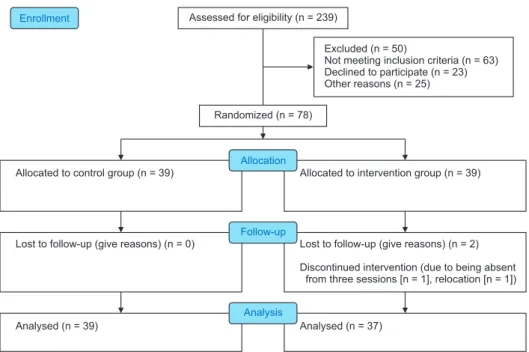
Fig. 2. Consort diagram shows the flow of participants through each stage of a randomized trial.
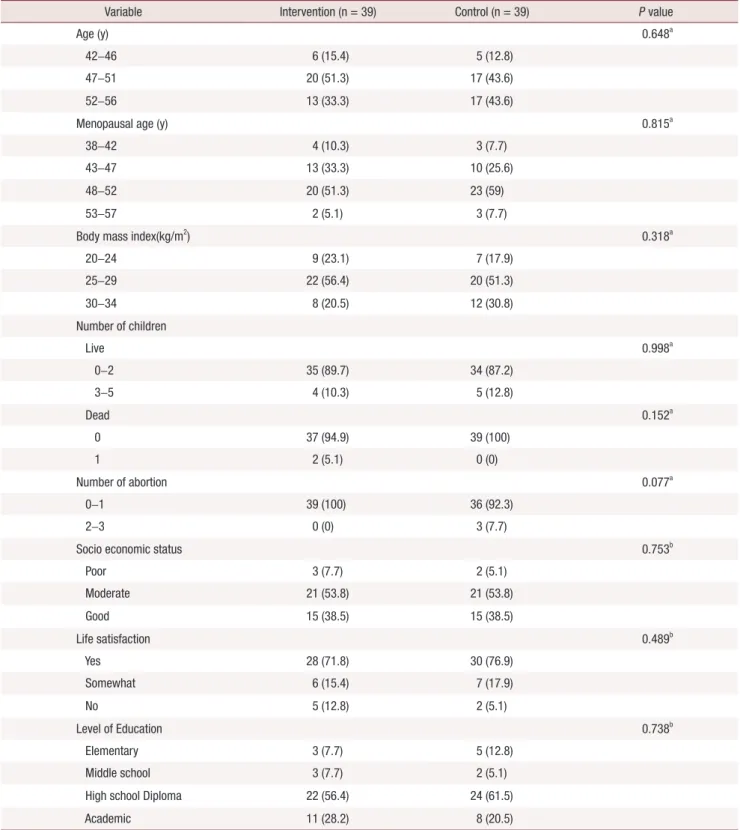
Table 2. Comparison of baseline demographics characteristics between intervention and control groups
Variable Intervention (n = 39) Control (n = 39) P value
Age (y) 0.648a
42–46 6 (15.4) 5 (12.8)
47–51 20 (51.3) 17 (43.6)
52–56 13 (33.3) 17 (43.6)
Menopausal age (y) 0.815a
38–42 4 (10.3) 3 (7.7)
43–47 13 (33.3) 10 (25.6)
48–52 20 (51.3) 23 (59)
53–57 2 (5.1) 3 (7.7)
Body mass index(kg/m2) 0.318a
20–24 9 (23.1) 7 (17.9)
25–29 22 (56.4) 20 (51.3)
30–34 8 (20.5) 12 (30.8)
Number of children
Live 0.998a
0–2 35 (89.7) 34 (87.2)
3–5 4 (10.3) 5 (12.8)
Dead 0.152a
0 37 (94.9) 39 (100)
1 2 (5.1) 0 (0)
Number of abortion 0.077a
0–1 39 (100) 36 (92.3)
2–3 0 (0) 3 (7.7)
Socio economic status 0.753b
Poor 3 (7.7) 2 (5.1)
Moderate 21 (53.8) 21 (53.8)
Good 15 (38.5) 15 (38.5)
Life satisfaction 0.489b
Yes 28 (71.8) 30 (76.9)
Somewhat 6 (15.4) 7 (17.9)
No 5 (12.8) 2 (5.1)
Level of Education 0.738b
Elementary 3 (7.7) 5 (12.8)
Middle school 3 (7.7) 2 (5.1)
High school Diploma 22 (56.4) 24 (61.5)
Academic 11 (28.2) 8 (20.5)
Data are presented as number (%).
aChi-square results.
bFishers exact test.
lower score indicates a better one in surgically meno- pausal women.
Two of the participants were lost to follow up in the intervention group, one due to being absent from three sessions because of the time conflict with work hours and the other due to relocation. (Fig. 2).
Statistical analysis was conducted using IBM SPSS Statistics 19.0 software (IBM Co., Armonk, NY, USA).
Chi-square and Fisher’s exact test were used for qualita- tive variables. Statistical results from the quantitative data were presented with mean ± standard deviation.
Data normality was reviewed using the Kolmogorov- Smirnov test. The score for the sexual domain did not follow a normal distribution in either of the interven- tion or control groups. For that reason, non-parametric tests such as Wilcoxon, Mann-Whitney and Friedman tests were used to assess those scores. Scores in other
domains followed a normal distribution. Therefore, parametric tests such as t test and two-way analysis (time × group) of variance (ANOVA) with repeated measures of “time” were used to analyze the multidi- mensional counseling program on each of the depen- dent variables. Also, the Greenhouse-Geisser correction was used in the case that the sphericity assumption was not established. The a priori level of significance was set at 0.05.
RESULTS
In this study, the characteristics of demographic data on 78 participants (n = 39 per group) were analyzed.
There were no significant statistical differences between the control and intervention groups in terms of the age, menopausal age, body mass index, number of children (live or dead), number of abortions, socioeconomic status, life satisfaction, or level of education. These variables were homogenous before the intervention/
baseline (Table 2).
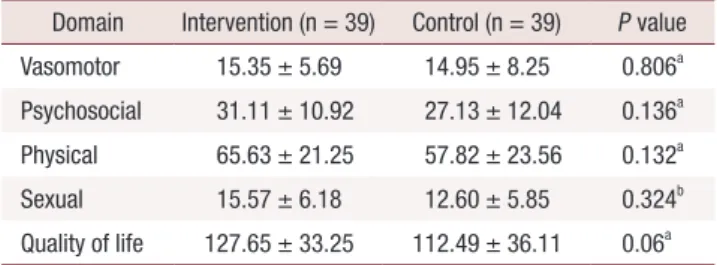
At baseline, mean scores in domains of vasomotor, psychosocial, physical, and overall quality of life were compared using the independent t test and results showed no significant difference between the control and intervention groups. Additionally, at baseline, the mean scores for the sexual domain were analyzed by the Mann-Whitney test for control and intervention groups. The results showed no significant difference (Table 3).
Paired t test results in the intervention group showed Table 3. Baseline comparison of the mean of overall quality of life
score and its domains in two groups
Domain Intervention (n = 39) Control (n = 39) P value Vasomotor 15.35 ± 5.69 14.95 ± 8.25 0.806a Psychosocial 31.11 ± 10.92 27.13 ± 12.04 0.136a Physical 65.63 ± 21.25 57.82 ± 23.56 0.132a
Sexual 15.57 ± 6.18 12.60 ± 5.85 0.324b
Quality of life 127.65 ± 33.25 112.49 ± 36.11 0.06a Data are presented as mean ± standard deviation.
aIndependent t test.
bMann-Whitney test.
Table 4. Comparison of the overall quality of life score and its domains before and 3 months after the intervention in each of the control and intervention groups
Domain Intervention (n = 39) Control (n = 39)
Baseline 3 months after Results Baseline 3 months after Results
Vasomotor 15.35 ± 5.69 11.95 ± 4.39 P = 0.008
t = 2.87a 14.95 ± 8.25 15.05 ± 13.43 P = 0.973 t = –0.47a Psychosocial 31.11 ± 10.92 22.57 ± 16.63 P = 0.001
t = 3.69a
27.13 ± 12.04 26.13 ± 11.72 P = 0.532 t = 0.63a
Physical 65.63 ± 21.25 47.70 ± 16.34 P = 0.001
t = 4.19a 57.82 ± 23.56 71.15 ± 24.07 P = 0.001 t = –3.87a
Sexual 15.57 ± 6.18 10.70 ± 8.32 P = 0.002
Z = -2.39b 12.60 ± 5.85 12.59 ± 5.88 P = 0.1 Z = –5.44b Quality of life 127.65 ± 33.25 92.92 ± 29.44 P = 0.001
t = 4.71a 112.49 ± 36.11 115.12 ± 5.94 P = 0.415 t = –0.35a Data are presented as mean ± standard deviation.
aPaired t test.
bWilcoxon test.
that the mean score of overall quality of life, vasomo- tor, psychosocial, and physical domains 3 months after the intervention was significantly different compared to those baseline. The Wilcoxon test results in the in- tervention group showed that the mean score for the sexual domain 3 months after the intervention was significantly different compared to those of baseline.
Paired t test results in the control group showed no sta- tistically significant differences (Table 4).
The ANOVA test results with repeated measures in control and intervention groups showed that the temporal trends of the mean scores in the vasomotor, psychosocial, and physical domains during at 4 time- points (i.e., baseline, after the intervention, 1 month after the intervention, and 3 months after the inter- vention) were statistically significant between the two groups. The results of the Mauchly’s test for the vaso- motor and sexual domains revealed that the sphericity assumption was not established (P = 0.001). Therefore, Greenhouse-Geisser assumption was used to correct the degrees of freedom of the repeated measures test.
The Friedman test showed a statistically significant dif- ference between the control and intervention groups, in the mean score trend in the sexual and overall quality of life domains during at 4 time-points (Table 5).
DISCUSSION
In our study, comparison of mean scores of vaso- motor, psychosocial, physical, and sexual domains,
as well as the overall quality of life at baseline in the intervention and control groups showed no statisti- cally significant difference. The mean score of overall quality of life and their domains after the intervention was significantly different compared to that baseline in the intervention group. There were no statistically significant differences in control group. Also, the trend of changes at 4 time-points based on the results of the repeated measures test showed statistically significant difference in overall quality of life and their domains between the two groups. Surgical menopause can result in a crisis in women’s life and have a negative effect on the quality of their life [9], as it causes sudden changes in various aspects of their lives, which are distressing and bothersome [17]. In a descriptive study conducted on 700 postmenopausal women, 4 symptom domains related to the quality of life namely vasomotor, psycho- social, physical, and sexual, as well as overall quality of life were analyzed using MENQOL questionnaire.
The main distressing issues based on a decreasing or- der of severity were related to vasomotor and physical domains, respectively. Therefore, proper interventions were designed to mainly focus on improving the quality of life in those particular domains [19]. In the present study, the effectiveness of implementing group counsel- ing sessions was assessed in improving the quality of life of surgical postmenopausal women and decreasing the associated distressing symptoms in 4 domains of vasomotor, psychosocial, physical, and sexual, as well as the overall quality of life. The results of the study
Table 5. The repeated measures and Friedman tests of quality of life and its domains at 4 time-points in intervention and control groups
Domain Group Baseline After 1 month after 3 months after Results
Within group Between group Vasomotor Intervention 15.35 ± 5.69 12.32 ± 5.14 12.60 ± 3.17 11.95 ± 4.39 F = 0.051 F = 216.48
Control 14.95 ± 8.25 14.85 ± 6.76 16.08 ± 14.20 15.05 ± 13.43 P = 0.823a P = 0.001a Psychosocial Intervention 31.11 ± 10.92 24.57 ± 11.40 52.81 ± 8.52 22.57 ± 16.63 F = 2.36 F = 4.52
Control 27.13 ± 12.04 28.10 ± 11.50 26.67 ± 10.96 26.13 ± 11.72 P = 0.035a P = 0.025a Physical Intervention 65.63 ± 21.25 53.78 ± 20.19 45.70 ± 20.97 47.70 ± 16.34 F = 4.91 F = 5.68
Control 57.82 ± 23.56 63.85 ± 24.87 65.79 ± 24.83 71.15 ± 24.07 P = 0.005a P = 0.001a Sexual Intervention 15.57 ± 6.18 12.70 ± 5.04 12.14 ± 5.40 10.70 ± 8.32 X2 = 34.69 X2 = 29.84 Control 12.60 ± 5.85 12.92 ± 5.13 14.28 ± 8.69 13.59 ± 5.88 P = 0.003b P = 0.002b Quality of life Intervention 127.65 ± 33.25 103.38 ± 34.15 92.24 ± 28.33 92.92 ± 29.44 X2 = 63.092 X2 = 45.25 Control 112.49 ± 36.11 119.72 ± 36.96 122.82 ± 37.49 115.12 ± 5.94 P = 0.061b P = 0.004b Data are presented as mean ± standard deviation.
aRepeated measures test.
bFriedman test.
showed that, implementation of a 6-week, consecutive, and multi-dimensional group counseling program had a positive effect in the intervention group compared to the control regarding decreasing the distressing post- menopausal symptoms. As such, statistically significant differences were observed in the average scores for overall quality of life and its 4 domains at 4 time-points between the intervention and control groups in the av- erage scores for overall quality of life and its 4 domains (i.e., vasomotor, psychosocial, physical, and sexual) at 4 time-points.
The rate of hot flash in surgically postmenopausal was reported 90% to 100% vs. 80% in naturally meno- pausal women [20]. Several studies have also evaluated the effectiveness of group counseling in reducing the vasomotor symptoms using the group support method [16,17,19-21] as well as group discussion methods de- scribed by Forouhari et al. [22] and Rostami et al. [23].
In the study by Rostami et al. [23], vasomotor scores in the intervention and control groups were compared 3 months after the group counseling, which showed a statistically significant reduction in hot flash, daytime sweating, and night sweats and improvements in other distressing symptoms [22]. In this study, the effective- ness of the group counseling program on the vasomo- tor domain was evaluated over time, and a significant decrease was found in the score for this domain.
Surgical menopause is also associated with psycholog- ical effects in addition to physical ones [24]. Experienc- ing the abrupt onset of menopause along with its asso- ciated symptoms and having to deal with the new state can place women in a vulnerable state of mental health and cause psychosocial crisis [21,25]. Many women ex- perience severe menopausal symptoms interfering with their daily life routine, and negatively influencing their overall quality of life [26]. Eighty percent of women in various parts of the Middle East experience distress- ing symptoms such as headaches, sexual issues (such as vaginal dryness and decreased libido), palpitations, hot flashes, sweating, insomnia, and irritability, all of which can reduce their quality of life [16]. A clinical trial study on 89 patients with breast cancer based on a group psychosocial intervention reported that women in the intervention group had less depression, less over- all mood disturbance, better overall quality of life, and fewer psychiatric symptoms than those in the control group, beginning immediately post-intervention and remaining so at 2 years post-intervention [10]. In a study of 350 Iranian post-menopausal women, a series
of premature menopausal complications including forgetfulness and lack of concentration (56%), psycho- logical and mood issues (52.6%), insomnia (50.6%), and hot flashes and fatigue (48.9%) have been reported [27]. The results of a study showed that surgically menopausal women experience a higher level of stress, anxiety, and depression, as well as a lower overall qual- ity of life compared to the women with natural meno- pause. Therefore, in the present study, it is suggested to design a multi-dimensional counseling program for postmenopausal women aimed at improving the qual- ity of their life [28]. Psychological changes caused by menopause can influence various elements of empow- erment such as self-efficacy and self-esteem; they can diminish one’s sense of self-worth and create a negative self-concept in postmenopausal women. They can also cause a sense of inadequacy and lack of control over the distressing symptoms of menopause [29]. On the other hand, knowledge enrichment through participa- tion in group counseling sessions plays a crucial role in enabling postmenopausal women to deal with their psychosocial issues. In a study, an educational interven- tion was implemented based on an empowering model developed to enable health promoting behaviors, and a positive correlation was observed between the elements of the empowering model and the health promoting behaviors [30]. In another study by Faraji et al. [16], the effectiveness of group counseling on psychosocial symptoms, with a focus on self-care, was investigated.
In their study, a positive impact was observed after con- ducting five weekly, consecutive group counseling ses- sions with an average of 60 minutes per session. In our study, group counseling also showed a positive impact in the psychosocial domain in the intervention group.
Surgical menopause leads to serious health conse- quences such as osteoporosis, memory loss, genito- urinary and sleep disorders, weight gain, muscle pain, fatigue, and lack of energy [4]. Several studies have suggested providing education and counseling to post- menopausal women to improve their physical well- being [14,20,31,32]. In another study, the effectiveness of the “green practice” was investigated on improving the sleep quality in elderly women who had no routine physical activity. The study was conducted for 10 weeks with 3 sessions per week, each lasting 60 minutes. Sleep quality was assessed using the Pittsburgh Sleep Quality Index, in which a statistically significant increase was observed in the average score for sleep quality before and after the intervention in the intervention group
[30]. The results of a study also showed the positive ef- fect of group counseling on diabetic postmenopausal women who were recommended to have an exercise routine and a proper diet, taking dietary supplements as needed. The study showed that, after 3 months, with respect to the physical well-being, the quality of life im- proved in the intervention group [33]. Exercise, proper diet, and daily walks for at least 20 minutes were also included in the present study. There was a statistically significant difference in the average score of physical fitness between the control and intervention groups, indicating the effectiveness of these strategies in reduc- ing distressing physical symptoms.
Hypoestrogenism can also cause distressing symp- toms in postmenopausal women such as vaginal dry- ness, decreased libido, and sexual contact avoidance due to the dyspareunia [34]. In one study, a 70% reduc- tion in sexual performance and an 80% reduction in sex drive were reported [35]. Changes in libido, avoid- ing sexual contact, and reduction in quality of life with respect to sex have all been reported to be more signifi- cant in surgically postmenopausal women compared to the ones who go through natural menopause [3,36]. It is reported that surgically postmenopausal women are at a 17% increased risk for developing disorders of sex- ual dysfunction compared to naturally postmenopausal women [34]. After conducting a large trial with an em- phasis on biomedicine, Newton et al. [37] concluded that not all the symptoms of menopause can be attrib- uted to the decrease in sex hormones; they emphasized that in order to alleviate menopausal symptoms. One needs to consider the psychosocial and cultural issues of postmenopausal women and design multi-dimen- sional programs addressing such issues. The effect of counseling in improving the quality of life of the meno- pausal women was evaluated in a semi-experimental study, consisting of control and intervention groups and using a counseling method that is based on the GATHER approach. This study was conducted in form of 4 continuous, weekly counseling sessions with each session lasting for 45 to 60 minutes in the intervention group. The control group received routine counsel- ing. The results of the study based on the MENQOL questionnaire showed that there was only a statistically significant difference in the quality of life score as it was related to sexual well-being and that the difference in the scores for vasomotor, psychosocial, and physical domains did not show any significant difference [38].
Another study showed that a group counseling pro-
gram consisting of 4 sessions, 120 minutes each, that focused on improving sexual function in menopausal women led to statistically significant improvements after 2 months compared to its status prior to the in- tervention, while the difference was not significant in the control group [39]. In another study conducted on women with an average age of 39 ± 5 years old, it was found that group counseling, involving 8 sessions 60-minute sessions, improved the intimacy and mar- riage satisfaction in the intervention group after the last counseling session [40]. Similarly, our study with 6 weekly group counseling sessions resulted in significant improvements in the quality of life in regards to sexual well-being baseline as well as one and three months lat- er in the intervention group. Yazdkhasti et al. [25] also examined the effects of implementing an educational support group program in improving the quality of life and reducing the distressing menopausal symptoms in 4 domains namely vasomotor, psychosocial, physical, and sexual. The program consisted of 10 weekly ses- sions each lasting 120 minutes. No interventions were done in the control group. The results, according to the MENQOL questionnaire, showed a statistically signifi- cant difference between the symptom scores related to vasomotor, psychosocial, physical, and sexual domains in the intervention group 3 months after the interven- tion compared to baseline. This different was not sta- tistically significant in the control group. Regarding the effectiveness of the proposed program in the present study, it appears that group counseling offers promis- ing solutions in resolving the distressing symptoms of menopause, and also postmenopausal women who participate in such programs are better prepared to dis- cuss their issues regarding sexual well-being and other domains with their peers and are able to benefit from the experiences of others as well.
A particular limitation of this study was the prob- ability of content leakage from the intervention to the control group. This limitation was minimized to our best efforts by having the participants from the control and intervention groups attend the counseling sessions at the healthcare center on different dates. Addition- ally, occasionally the length of the counseling sessions caused mild fatigue in some participants. This was addressed by holding brief receptions. Factors such as accounting for different participant lifestyles, providing routine care in healthcare centers, and public education through mass media or social networks were beyond the scope of this study and the authors’ control.
In the present study, the implementation of multi- dimensional group counseling sessions addressing the vasomotor, psychosocial, physical, and sexual domains in surgically postmenopausal women led to the signifi- cant improvements in reported symptoms in these do- mains as well as the overall quality of life for these indi- viduals. It was also found that knowledge enhancement through sharing similar experiences among peers by those who have experienced the distressing symptoms of menopause firsthand, in a reliable and trustworthy setting with the presence of an expert counselor to guide the process, has helped the participants to make better and more effective decisions over the course of the study. Therefore, implementing this approach with less expenditure in health care organizations aimed at improving the quality of life in surgically postmeno- pausal women is highly recommended.
ACKNOWLEDGMENTS
Permission to conduct a study with a code of ethics IR.Abzums.REC.1396.214 was obtained.
Ethical issues (including plagiarism, informed con- sent, misconduct, data fabrication and/or falsification, double publication and/or submission, redundancy, etc.) have been completely observed by the authors.
IRCT Id: 20180110038302N4. The authors would like to thank the participants, the staff at all the participat- ing healthcare centers, as well as the research affairs de- partment of the Alborz University of Medical Sciences.
CONFLICT OF INTEREST
No potential conflict of interest relevant to this article was reported.
REFERENCES
1. Al Kadri H, Hassan S, Al-Fozan HM, Hajeer A. Hormone therapy for endometriosis and surgical menopause. Cochrane Database Syst Rev 2009; (1): CD005997.
2. Niro J, Panel P. [Interest of hysterectomy with or without bilat- eral oophorectomy in the surgical treatment of endometriosis:
CNGOF-HAS Endometriosis Guidelines]. Gynecol Obstet Fertil Senol 2018; 46: 314-8. French.
3. Rotem M, Kushnir T, Levine R, Ehrenfeld M. A psycho-educa- tional program for improving women's attitudes and coping with menopause symptoms. J Obstet Gynecol Neonatal Nurs 2005; 34:
233-40.
4. Marra AR, Puig-Asensio M, Edmond MB, Schweizer ML, Bender D. Infectious complications of laparoscopic and robotic hysterec- tomy: a systematic literature review and meta-analysis. Int J Gyne- col Cancer 2019; 29: 518-30.
5. Currie H. BMS Vision for menopause Care in the UK; is imple- mentation achievable? Post Reprod Health 2019; 25: 5-6.
6. Tarvardi M, Shabani A. [Assessment of psychological problems in menopause women and relationship’s between individual and so- cial characteristic and menopausal symptoms in referred to tabriz educational hospitalS in 2005-2006]. J Urmia Nurs Midwifery Fac 2007; 5: 37-45. Persian.
7. Erekson EA, Martin DK, Ratner ES. Oophorectomy: the debate between ovarian conservation and elective oophorectomy. Meno- pause 2013; 20: 110-4.
8. Tsiligiannis S, Panay N, Stevenson JC. Premature ovarian insuffi- ciency and long-term health consequences. Curr Vasc Pharmacol 2019; 17: 604-9.
9. Lip GY, Blann AD, Jones AF, Beevers DG. Effects of hormone- replacement therapy on hemostatic factors, lipid factors, and endothelial function in women undergoing surgical menopause:
implications for prevention of atherosclerosis. Am Heart J 1997;
134: 764-71.
10. Simpson JS, Carlson LE, Trew ME. Effect of group therapy for breast cancer on healthcare utilization. Cancer Pract 2001; 9: 19- 26.
11. Li S, Ho SC, Sham A. Relationship between menopause status, attitude toward menopause, and quality of life in Chinese midlife women in Hong Kong. Menopause 2016; 23: 67-73.
12. Elit L, Esplen MJ, Butler K, Narod S. Quality of life and psycho- sexual adjustment after prophylactic oophorectomy for a family history of ovarian cancer. Fam Cancer 2001; 1: 149-56.
13. Hickey M, Trainer A, Braat S, Davey MA, Krejany E, Wark J. What Happens After Menopause? (WHAM): protocol for a prospective, multicentre, age-matched cohort trial of risk-reducing bilateral salpingo-oophorectomy in high-risk premenopausal women. BMJ Open 2017; 7: e018758.
14. Kalkım A, Dağhan Ş. Theory-based osteoporosis prevention edu- cation and counseling program for women: a randomized con- trolled trial. Asian Nurs Res (Korean Soc Nurs Sci) 2017; 11: 119- 27.
15. Sehhatie Shafaie F, Mirghafourvand M, Jafari M. Effect of educa- tion through support group on early symptoms of menopause: a randomized controlled trial. J Caring Sci 2014; 3: 247-56.
16. Faraji K, Kamrani MA, Saeieh SE, Farid M. Could a midwife lead- ing health behavior counseling improve self-care of women dur- ing perimenopause? A quasi-experimental study. J Midlife Health 2018; 9: 195-9.
17. Hilditch JR, Lewis J, Peter A, van Maris B, Ross A, Franssen E, et al. A menopause-specific quality of life questionnaire: develop-
ment and psychometric properties. Maturitas 2008; 61: 107-21.
18. Yazdkhasti M, Keshavarz M, Khoei EM, Hosseini A, Esmaeilzadeh S, Pebdani MA, et al. The effect of support group method on qual- ity of life in post-menopausal women. Iran J Public Health 2012;
41: 78-84.
19. Nazarpour S, Simbar M, Ramezani Tehrani F, Alavi Majd H.
Quality of life and sexual function in postmenopausal women. J Women Aging 2018; 30: 299-309.
20. Direkvand-Moghadam A, Delpisheh A, Montazeri A, Sayehmiri K.
Quality of life among Iranian infertile women in postmenopausal period: a cross-sectional study. J Menopausal Med 2016; 22: 108- 13.
21. Yazdkhasti M, Simbar M, Abdi F. Empowerment and coping strat- egies in menopause women: a review. Iran Red Crescent Med J 2015; 17: e18944.
22. Forouhari S, Safari Rad M, Moattari M, Mohit M, Ghaem H. [The effect of education on quality of life in menopausal women refer- ring to Shiraz Motahhari clinic in 2004]. Birjand Univ Med Sci 2009; 16: 39-45. Persian.
23. Rostami A, Ghofrani Pour F, Ramezanzadeh F. The effect of edu- cation on quality of life in women [dissertation]. Tehran: Tarbiat Modares University; 2001; 12: 25-9. [Persian]
24. Abdullah B, Moize B, Ismail BA, Zamri M, Mohd Nasir NF. Preva- lence of menopausal symptoms, its effect to quality of life among Malaysian women and their treatment seeking behaviour. Med J Malaysia 2017; 72: 94-9.
25. Yazdkhasti M, Keshavarz M, Khoei EM, Hosseini A, Esmaeilzadeh S, Pebdani MA, et al. The effect of support group method on qual- ity of life in post-menopausal women. Iran J Public Health 2012;
41: 78-84.
26. Nosek M, Kennedy HP, Gudmundsdottir M. Distress during the menopause transition: a rich contextual analysis of midlife wom- en’s narratives. Sage Open 2012; 2: 2158-440.
27. Bener A, Falah A. A measurement-specific quality-of-life satisfac- tion during premenopause, perimenopause and postmenopause in Arabian Qatari women. J Midlife Health 2014; 5: 126-34.
28. Faubion SS, Kuhle CL, Shuster LT, Rocca WA. Long-term health consequences of premature or early menopause and consider- ations for management. Climacteric 2015; 18: 483-91.
29. Karimy M, Aminshokravi F, Zareban E, Koohpayezadeh J, Barada- ran H, Khoshdel A. [The effect of education based on individual empowerment model on the quality of life in the menopause
women in Zarandieh]. Yafte 2014; 16: 80-90. Persian.
30. Kermode M, Herrman H, Arole R, White J, Premkumar R, Patel V.
Empowerment of women and mental health promotion: a qualita- tive study in rural Maharashtra, India. BMC Public Health 2007; 7:
225.
31. Khajavi D. Kanmohamadi R. The effect of "green exercise" on im- proving the sleep quality of female elderly without regular physical activity in Arak city. Journal of Woman and Family Studies 2016; 3:
7-32.
32. Camerini L, Schulz PJ, Nakamoto K. Differential effects of health knowledge and health empowerment over patients' self-manage- ment and health outcomes: a cross-sectional evaluation. Patient Educ Couns 2012; 89: 337-44.
33. Parsa P, Ahmadinia Tabesh R, Soltani F, Karami M, Khorami N.
Effects of group counseling on self-care behaviors in menopausal women with diabetes. J Menopausal Med 2017; 23: 108-16.
34. Nappi RE, Martini E, Terreno E, Albani F, Santamaria V, Tonani S, et al. Management of hypoactive sexual desire disorder in women:
current and emerging therapies. Int J Womens Health 2010; 2:
167-75.
35. Meston CM, Frohlich PF. The neurobiology of sexual function.
Arch Gen Psychiatry 2000; 57: 1012-30.
36. Nappi RE, Lello S, Melis GB, Albani F, Polatti F, Genazzani AR.
LEI (Lack of tEstosterone Impact) survey in a clinical sample with surgical menopause. Climacteric 2009; 12: 533-40.
37. Newton KM, Reed SD, LaCroix AZ, Grothaus LC, Ehrlich K, Guiltinan J. Treatment of vasomotor symptoms of menopause with black cohosh, multibotanicals, soy, hormone therapy, or pla- cebo: a randomized trial. Ann Intern Med 2006; 145: 869-79.
38. Aloumanis K, Karras D, Drossinos V, Korelis E, Polydorakis A.
Fracture incidence, quality of life, and back pain during 18-months treatment with teriparatide in Greek postmenopausal women with osteoporosis: results from the European forsteo observational study. J Osteoporos 2011; 2011: 510398.
39. Babakhani N, Taravati M, Masoumi Z, Garousian M, Faradmal J, Shayan A. The effect of cognitive-behavioral consultation on sexual function among women: a randomized clinical trial. J Car- ing Sci 2018; 7: 83-8.
40. Dhikav V, Karmarkar G, Gupta R, Verma M, Gupta R, Gupta S, et al. Yoga in female sexual functions. J Sex Med 2010; 7(2 Pt 2): 964- 70.