Extremely high white blood cell counts on postoperative day 1 do not predict severe complications following distal pancreatectomy
Gun Hee Jung1, Ho Kyoung Hwang1,2,3, Woo Jung Lee1,2,3, and Chang Moo Kang1,2,3
1Department of Surgery, Yonsei University College of Medicine, 2Division of Hepatobiliary and Pancreatic Surgery, Department of Surgery, Yonsei University College of Medicine, 3Pancreatobiliary Cancer Clinic,
Yonsei Cancer Center, Severance Hospital, Seoul, Korea
Backgrounds/Aims: Distal pancreatectomy(DP) is associated with high morbidity. In clinical practice, postoperative white blood cell(WBC) counts are useful indicators of infection complications. The aim of this study was to determine the relevance of extremely high postoperative day (POD)1 WBC counts after DP and their relationship to perioperative outcomes. Methods: From December 2005 to December 2016, data from patients who had open or minimally invasive DP surgery (robot or laparoscopy, MIS) for benign or borderline malignant tumors were retrospectively reviewed.
Patients were divided into groups based on POD1 WBC count (>20K, High and <20K, Low) for comparisons. Results:
Twelve patients (4.6%) were categorized into the High group. There were significant differences in age (p=0.019), BMI (p=0.010), and spleen-preserving rate (p=0.002) between the High and Low groups. In binary logistic regression analysis, the risk factors for severe complication was age (p=0.032) and open DP (p=0.005), not POD1 WBC count.
Conclusions: Extremely high WBC count after POD1 after DP was not associated with severe complications, but was associated with splenectomy. Surgical methods and age were associated with severe complications. (Ann Hepatobiliary Pancreat Surg 2019;23:377-384)
Key Words: WBC; Distal pancreatectomy; Minimally invasive surgery; Leukocytosis; Postoperative pancreatic fistula;
Retrospective study
Received: June 19, 2019; Revised: July 14, 2019; Accepted: July 25, 2019 Corresponding author: Chang Moo Kang
Division of Hepatobiliary and Pancreatic Surgery, Department of Surgery, Yonsei University College of Medicine, 50 Yonsei-ro, Seodaemun-gu, Seoul 03722, Korea
Tel: +82-2-2228-2100-3, Fax: +82-2-313-8289, E-mail: [email protected]
Copyright Ⓒ 2019 by The Korean Association of Hepato-Biliary-Pancreatic Surgery
This is an Open Access article distributed under the terms of the Creative Commons Attribution Non-Commercial License (http://creativecommons.org/
licenses/by-nc/4.0) which permits unrestricted non-commercial use, distribution, and reproduction in any medium, provided the original work is properly cited.
Annals of Hepato-Biliary-Pancreatic Surgery ∙ pISSN: 2508-5778ㆍeISSN: 2508-5859
INTRODUCTION
Mortality rates in pancreatic surgery have declined markedly throughout the last decade due to the advance- ment of surgical methods and imaging techniques;1-3 how- ever, morbidity rates remain high for distal pancreatec- tomy (DP).4,5 The most life-threatening complication of DP is a postoperative pancreatic fistula (POPF). The in- cidence of POPF after DP has been reported to range from 18.6 to 64.9%.6,7 POPF causes a variety of complications, such as intra-abdominal abscess, delayted gastric empty- ing, and postoperative hemorrhage. Therefore, early diag- nosis and treatment of POPF are of vital importance.
Leukocytosis is frequently found in the early post- operative period after major surgery. Although leukocy- tosis may be a sign of developing infection in the early
postoperative period, it may also be part of a normal sur- gical response. Systemic inflammatory response syndrome (SIRS) is considered a useful parameter for early de- tection of postoperative complications and end-organ dys- function after gastrointestinal surgery.8 One of the diag- nostic criteria for SIRS is a white blood cell (WBC) count
>12k cells/l or <4k cells/l. Thus, it is reasonable to infer that a higher WBC count in the post-operative blood test after DP indicates a worse prognosis.
Interestingly, in clinical practice, it is uncommon to find a WBC count >20k cells/l on postoperative day 1 (POD1) following DP, raising questions about the use of this parameter as a predictor of complication following DP. Therefore, in this study, we investigated whether a WBC count >20k cells/l on POD1 influences the post- operative course following DP for benign and low-grade
Fig. 1. Patient eligibility.
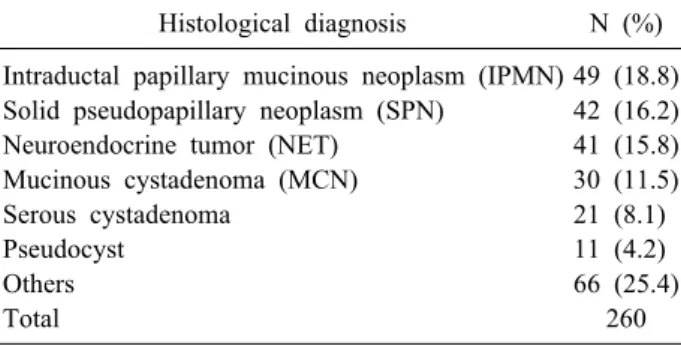
Table 1. Histological analysis of 260 distal pancreatectomy cases
Histological diagnosis N (%) Intraductal papillary mucinous neoplasm (IPMN) 49 (18.8) Solid pseudopapillary neoplasm (SPN) 42 (16.2) Neuroendocrine tumor (NET) 41 (15.8) Mucinous cystadenoma (MCN) 30 (11.5)
Serous cystadenoma 21 (8.1)
Pseudocyst 11 (4.2)
Others 66 (25.4)
Total 260
The Yonsei Institutional Review Board approved the current study protocol (4-2018-1114). The medical records of 474 patients who underwent DP from December 2005 to December 2016 were retrospectively reviewed using the Electronic Medical Record Database. Among them, patients with malignant pancreatic tumors (n=179) and DP secondary to primary cancer surgery (n=35) were ex- cluded (Fig. 1). Patients were categorized into two groups according to their WBC count on POD1: >20k cells/l (Group 20K-High) or <20k cells/l (Group 20K-Low).
Perioperative outcomes were compared according to WBC count on POD1.
Data collection
Perioperative variables, including age, gender, body mass index (BMI), length of hospital (LOH) stay, oper- ative time, estimated blood loss (EBL), intraoperative transfusion (Yes/No, ml), reoperation, readmission, and surgical approach (distal pancreatectomy with splenec- tomy [DPS] vs. spleen-preserving distal pancreatectomy [SPDP]), were retrospectively determined. Additionally, the WBC counts on preoperative day, operation (OP) day, POD1, POD2, POD3, POD5, POD7, and day 1 of out-pa- tient department (OPD) follow-up were collected. Compli- cations were classified according to the Clavien-Dindo classification system.9 POPF was defined by the amylase level in the drainage fluid on POD3 based on the (Internal Study Group of Pancreatic Fistula (ISGPF) guidelines.10
using SPSS 20.0 for Windows (SPSS Inc., Chicago, IL, USA). The resultant p-values <0.05 were considered to be statistically significant.
RESULTS
Patient characteristics
Of the 260 intention-to-treat patients, 164 (63%) were female. The average patient age was 51.75±15.2 y. The preoperative mean BMI was 23.09±3.2 kg/m2. Intraductal papillary mucinous neoplasm (IPMN) of the pancreas was the most common pathologic condition (18.8%), and solid pseudopapillary neoplasm (SPN) was the second most common (16.2%; Table 1).
Among the study population, 84 (32.3%) patients un- derwent open surgery, while the remaining 176 (67.6%) patients underwent minimally invasive surgery (MIS). It
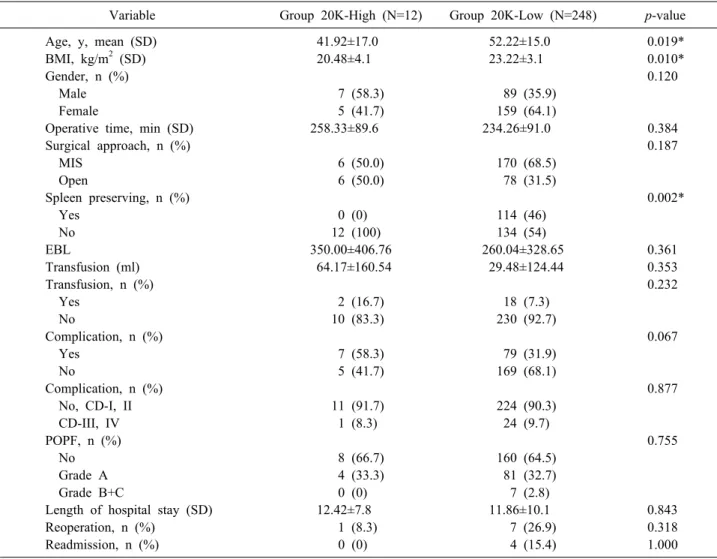
Table 2. Univariable associations between Group 20K-High, Group 20K-Low, and baseline characteristics
Variable Group 20K-High (N=12) Group 20K-Low (N=248) p-value
Age, y, mean (SD) 41.92±17.0 52.22±15.0 0.019*
BMI, kg/m2 (SD) 20.48±4.1 23.22±3.1 0.010*
Gender, n (%) 0.120
Male 7 (58.3) 89 (35.9)
Female 5 (41.7) 159 (64.1)
Operative time, min (SD) 258.33±89.6 234.26±91.0 0.384
Surgical approach, n (%) 0.187
MIS 6 (50.0) 170 (68.5)
Open 6 (50.0) 78 (31.5)
Spleen preserving, n (%) 0.002*
Yes 0 (0) 114 (46)
No 12 (100) 134 (54)
EBL 350.00±406.76 260.04±328.65 0.361
Transfusion (ml) 64.17±160.54 29.48±124.44 0.353
Transfusion, n (%) 0.232
Yes 2 (16.7) 18 (7.3)
No 10 (83.3) 230 (92.7)
Complication, n (%) 0.067
Yes 7 (58.3) 79 (31.9)
No 5 (41.7) 169 (68.1)
Complication, n (%) 0.877
No, CD-I, II 11 (91.7) 224 (90.3)
CD-III, IV 1 (8.3) 24 (9.7)
POPF, n (%) 0.755
No 8 (66.7) 160 (64.5)
Grade A 4 (33.3) 81 (32.7)
Grade B+C 0 (0) 7 (2.8)
Length of hospital stay (SD) 12.42±7.8 11.86±10.1 0.843
Reoperation, n (%) 1 (8.3) 7 (26.9) 0.318
Readmission, n (%) 0 (0) 4 (15.4) 1.000
Data is shown as number (%) or mean±SD
*Indicates that p<0.05
BMI, body mass index; MIS, minimally invasive surgery; EBL, estimated blood loss; CD, clavien dindo; POPF, postoperative pancreatic fistula
Fig. 2. Proportion of MIS for DP at Yonsei University Health System, Seoul, Korea. There was increasing trend annually (p<0.001) for MIS. MIS, minimally invasive surgery; DP, distal pancreatectomy.
Fig. 3. WBC count profiles preoperative, POD1-7 and at the first OPD follow-up. Data is shown as number (%) or mean±SD. WBC, white blood cell; POD, postoperative day;
OPD, out-patient department. *<0.05.
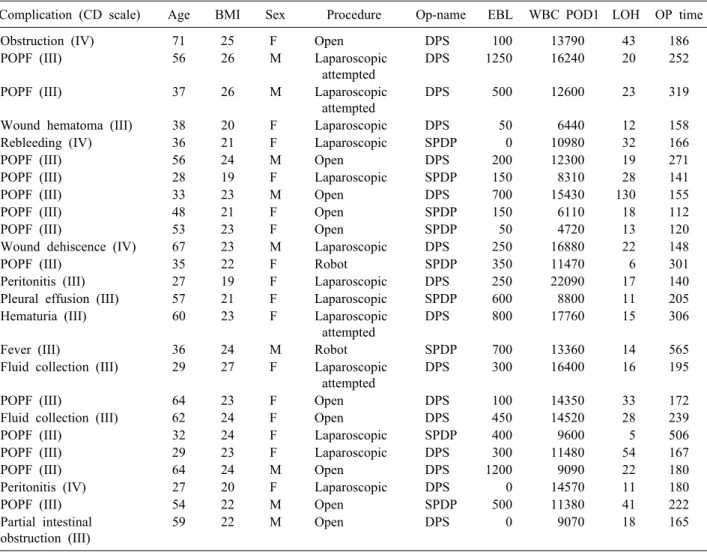
Table 3. Summary of severe complications following DP
Complication (CD scale) Age BMI Sex Procedure Op-name EBL WBC POD1 LOH OP time
Obstruction (IV) 71 25 F Open DPS 100 13790 43 186
POPF (III) 56 26 M Laparoscopic
attempted
DPS 1250 16240 20 252
POPF (III) 37 26 M Laparoscopic
attempted
DPS 500 12600 23 319
Wound hematoma (III) 38 20 F Laparoscopic DPS 50 6440 12 158
Rebleeding (IV) 36 21 F Laparoscopic SPDP 0 10980 32 166
POPF (III) 56 24 M Open DPS 200 12300 19 271
POPF (III) 28 19 F Laparoscopic SPDP 150 8310 28 141
POPF (III) 33 23 M Open DPS 700 15430 130 155
POPF (III) 48 21 F Open SPDP 150 6110 18 112
POPF (III) 53 23 F Open SPDP 50 4720 13 120
Wound dehiscence (IV) 67 23 M Laparoscopic DPS 250 16880 22 148
POPF (III) 35 22 F Robot SPDP 350 11470 6 301
Peritonitis (III) 27 19 F Laparoscopic DPS 250 22090 17 140
Pleural effusion (III) 57 21 F Laparoscopic SPDP 600 8800 11 205
Hematuria (III) 60 23 F Laparoscopic
attempted
DPS 800 17760 15 306
Fever (III) 36 24 M Robot SPDP 700 13360 14 565
Fluid collection (III) 29 27 F Laparoscopic attempted
DPS 300 16400 16 195
POPF (III) 64 23 F Open DPS 100 14350 33 172
Fluid collection (III) 62 24 F Open DPS 450 14520 28 239
POPF (III) 32 24 F Laparoscopic SPDP 400 9600 5 506
POPF (III) 29 23 F Laparoscopic DPS 300 11480 54 167
POPF (III) 64 24 M Open DPS 1200 9090 22 180
Peritonitis (IV) 27 20 F Laparoscopic DPS 0 14570 11 180
POPF (III) 54 22 M Open SPDP 500 11380 41 222
Partial intestinal obstruction (III)
59 22 M Open DPS 0 9070 18 165
CD scale, clavien dindo scale; BMI, body mass index; Op-name, operation name; EBL, estimated blood loss; WBC POD1, white blood cell(count) postoperative day 1; LOH, length of hospitalization; Op-time, operation time; DPS, distal pancreatectomy;
SPDP, spleen preserving distal pancreatectomy; POPF, postoperative pancreatic fistula time was 235.4±90.9 min. The mean length of hospital
stay was 11.88±10.0 d. Of the total number of patients, 12 (4.6%) were categorized into Group 20K-High, and the other 248 (95.4%) were categorized into Group 20K-Low.
Postoperative WBC count after DP in Group 20K-High and Group 20K-Low
The WBC count of Group 20K-High and Group 20K- Low were significantly different on OP day, POD1, POD2, POD3, POD5, and POD7 (Fig. 3). There was no
between Group 20K-High and Group 20K-low (10.92 vs.
10.85 days, p=0.97).
Comparative analysis of perioperative
outcomes between Group 20K-High and Group 20K-Low
There was no statistically significant difference be- tween Group 20K-High and Group 20K-Low with respect to gender, operation time, surgical approach, estimated blood loss, intraoperative transfusion, length of hospital
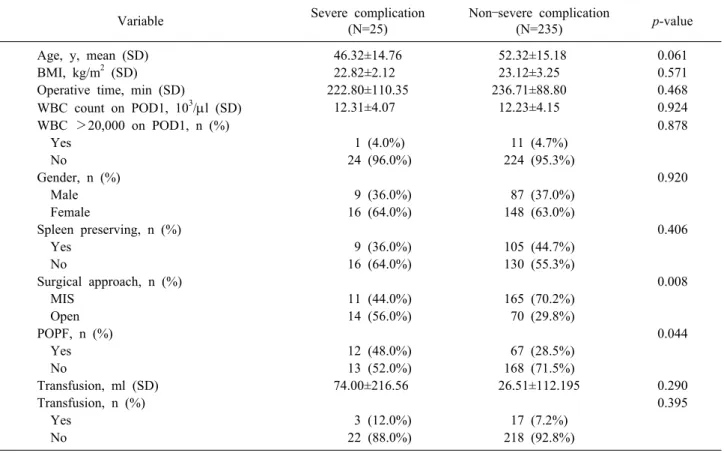
Table 4. Univariate predictors of major complications
Variable Severe complication
(N=25)
Non–severe complication
(N=235) p-value
Age, y, mean (SD) 46.32±14.76 52.32±15.18 0.061
BMI, kg/m2 (SD) 22.82±2.12 23.12±3.25 0.571
Operative time, min (SD) 222.80±110.35 236.71±88.80 0.468
WBC count on POD1, 103/l (SD) 12.31±4.07 12.23±4.15 0.924
WBC >20,000 on POD1, n (%) 0.878
Yes 1 (4.0%) 11 (4.7%)
No 24 (96.0%) 224 (95.3%)
Gender, n (%) 0.920
Male 9 (36.0%) 87 (37.0%)
Female 16 (64.0%) 148 (63.0%)
Spleen preserving, n (%) 0.406
Yes 9 (36.0%) 105 (44.7%)
No 16 (64.0%) 130 (55.3%)
Surgical approach, n (%) 0.008
MIS 11 (44.0%) 165 (70.2%)
Open 14 (56.0%) 70 (29.8%)
POPF, n (%) 0.044
Yes 12 (48.0%) 67 (28.5%)
No 13 (52.0%) 168 (71.5%)
Transfusion, ml (SD) 74.00±216.56 26.51±112.195 0.290
Transfusion, n (%) 0.395
Yes 3 (12.0%) 17 (7.2%)
No 22 (88.0%) 218 (92.8%)
Data is shown as number (%) or mean±SD
BMI, body mass index; WBC count on POD1, white blood cell count on postoperative day 1; MIS, minimally invasive surgery;
POPF, postoperative pancreatic fistula
Fig. 4. Incidence of CD-III/IV complications after DP. There was annually decreasing trend (p<0.001). CD, calvien-dindo;
DP, distal pancreatectomy.
stays, reoperation, or readmission (p>0.05). The overall complication rate was slightly higher in Group 20K-High with marginal significance, but the frequencies of clin- ically relevant major complications, including POPF, were similar between the two groups (Table 2). However, it was shown that age (41.92±17.03 years vs. 52.22±15.00 years, p=0.019), BMI (20.48±4.08 kg/m2, vs. 23.22±3.06 kg/m2, p=0.01), and spleen-preserving rate (0% vs. 46%, p=0.002) were significantly different between the two groups.
Prediction of severe complications CD-III/IV following DP
Table 3 shows the severe complications following DP.
According to the Clavien-Dindo classification, 25 patients (9.6%) had complications classified as grade III (n=21) and IV (n=4). There was pancreatic leakage in 13 patients (52%), sustained abdominal pain with free air (peritoni- tis) in 2 patients (8%), fluid collection in 2 patients (8%), and wound complication in 2 patients (8%). Since 2005,
the number of cases of DP increased, but the rate of se- vere complications decreased annually (p<0.001, Fig. 4), with no noted cases of severe complications in 2015 and 2016.
Univariate analysis demonstrated that surgical approach
Open DP 3.376 1.434-7.949 0.005 OR, adjusted odds ratio; 95% CI, 95% confidence interval;
Open DP, open distal pancreatectomy
(p=0.008) and POPF (p=0.044) were associated with se- vere complications following DP (Table 4). Age was not- ed to have a marginal relationship with severe complica- tions (p=0.061). WBC count over 20K on POD1 was not associated with severe complications after DP (p=0.878).
Subsequent multivariate analysis showed that age (OR=
1.031, [95% CI: 1.003-1.059], p=0.032) and surgical ap- proach (OR=3.376, [95% CI: 1.434-7.949], p=0.005) were associated with severe complications (Table 5).
DISCUSSION
POPF is the most serious complication in patients un- dergoing DP. POPF after DP has been reported in as many as 40% of patients, and this rate is higher than after pancreaticoduodenectomy.11-13 Objective data from peri- operative laboratory tests may help surgeons predict com- plications after surgery;14,15 however, the prognostic sig- nificance of the WBC count in surgical patients with in- fection has not been thoroughly assessed. This study sought to predict the development of POPF or other se- vere complications after DP using the POD1 WBC count.
An elevation in WBC count can be used as a prognostic marker for infection or inflammation, but a variety of fac- tors can lead to such elevation in otherwise asymptomatic individuals. Observational studies often fail to show an as- sociation between WBC extremes and infection in the im- mediate postoperative period in the surgical popu- lation.16,17 POPF after DP may lead to a systemic in- flammatory response with leukocytosis and fever, result- ing in a more complicated postoperative recovery and pro- longed hospitalization. Thus, it is hypothesized that there is an association between POD1 leukocytosis and post- operative complications due to infection.
In this study, we enrolled 260 patients with benign and low-grade malignant tumors in the left side of the pan-
splenectomy (p=0.002). The high WBC count of Group 20K-High gradually decreased to near normal levels be- tween POD7 and day 1 of OPD. A high WBC count im- mediately after the postoperative period was not asso- ciated with POPF or any severe complications. Multivar- iate analysis showed that age (OR=1.031) and open DP (OR=3.376) were independent factors capable of predict- ing severe complications following DP.
Since Velanovich18 reported in 2006 the first com- parative study between laparoscopic DP (LDP) and open DP (ODP) and concluded that LDP produced surgical re- sults equivalent to OPD, there have been several studies showing that MIS in DP is associated with decreased morbidity.19,20 Our retrospective results support that MIS in DP is associated with fewer severe complications. The potential association between severe complications and open DP was analyzed in this study by comparing the pro- portions of severe complications according to the laparo- scopic approach used. Recent meta-analyses comparing LDP and ODP have shown the superiority of LDP in terms of intraoperative blood loss, patient recovery, and hospital stay.7,21-23 The first multicenter patient-blinded randomized control study of MIS in DP versus ODP (LEOPARD) reported MIS reduced the time to functional recovery compared with ODP.24
We found that a WBC count >20K cells/l on POD1 after DP was a clinically uncommon phenomenon that oc- curred in only 12 (4.6%) of 260 patients with DP. A post- operative WBC count >20K cells/l was found in the combined splenectomy group, and it returned to a normal range without clinically relevant severe complications.
Thus, a WBC count >20K cells/l appears to be a phys- iologic change associated with splenectomy but not with severe complications after surgery. Previous reports25,26 demonstrated that DPS is associated with a statistically significant increase in postoperative WBC and platelet counts. Kehoe et al.27 also demonstrated that leukocytosis and thrombocytosis are common in upper abdominal sur- gery after a splenectomy. Additionally, investigators re- ported efforts to identify the mechanism underlying sple-
nectomy-related leukocytosis.28 These studies suggested that the spleen exerts an inhibitory effect on bone marrow cell release and that after splenectomy, the circulation los- es a factor that promotes cell apoptosis, thereby increasing the WBC count. Our results are in agreement with these findings, indicating that splenectomy is the most im- portant factor for POD1 leukocytosis, as elevated WBC counts in the DPS group decrease to near-normal levels between POD7 and day 1 of OPD.
A major limitation of this study is the retrospective de- sign and the limited number of patients. In addition, dur- ing the long study period, there may have been significant differences in postoperative techniques and perioperative management. Therefore, significant differences in severe complication rates between our early and late time periods were evident, as the standardized surgical techniques for DP changed during that time (p<0.001). Nonetheless, it is interesting to note that the complication rate decreased annually. With increasing laparoscopic or robotic en- hancement and the development of new surgical techni- ques, DP has become safer even during the course of this study. Currently, the MIS technique should be considered the operation of choice.
POD1 WBC counts >20K cells/l are not common following DP. POD1 WBC counts >20K cells/l were related to a physiologic phenomenon resulting from com- bined splenectomy, not found to be a useful predictor of severe complications following DP. Instead, severe com- plications were found to be associated with age and open DP. Therefore, it may not necessary to imply clinical sig- nificance of the WBC count on POD1 after DP. It should be considered as a physiological change associated with the splenectomy. Surgeons are advised to apply laparo- scopic or robotic surgery when performing DP in well se- lected patients with benign and low grade malignant tu- mor of the pancreas.
REFERENCES
1. Lillemoe KD, Kaushal S, Cameron JL, Sohn TA, Pitt HA, Yeo CJ. Distal pancreatectomy: indications and outcomes in 235 patients. Ann Surg 1999;229:693-698; discussion 698-700.
2. Kneuertz PJ, Patel SH, Chu CK, Fisher SB, Maithel SK, Sarmiento JM, et al. Laparoscopic distal pancreatectomy: trends and lessons learned through an 11-year experience. J Am Coll Surg 2012;215:167-176.
3. Stauffer JA, Coppola A, Mody K, Asbun HJ. Laparoscopic ver-
sus open distal pancreatectomy for pancreatic adenocarcinoma.
World J Surg 2016;40:1477-1484.
4. Fahy BN, Frey CF, Ho HS, Beckett L, Bold RJ. Morbidity, mor- tality, and technical factors of distal pancreatectomy. Am J Surg 2002;183:237-241.
5. Kelly KJ, Greenblatt DY, Wan Y, Rettammel RJ, Winslow E, Cho CS, et al. Risk stratification for distal pancreatectomy utiliz- ing ACS-NSQIP: preoperative factors predict morbidity and mortality. J Gastrointest Surg 2011;15:250-259, discussion 259-261.
6. Fox AM, Pitzul K, Bhojani F, Kaplan M, Moulton CA, Wei AC, et al. Comparison of outcomes and costs between laparoscopic distal pancreatectomy and open resection at a single center. Surg Endosc 2012;26:1220-1230.
7. Nakamura M, Wakabayashi G, Miyasaka Y, Tanaka M, Morikawa T, Unno M, et al.; Study Group of JHBPS, JSEPS.
Multicenter comparative study of laparoscopic and open distal pancreatectomy using propensity score-matching. J Hepatobiliary Pancreat Sci 2015;22:731-736.
8. Haga Y, Beppu T, Doi K, Nozawa F, Mugita N, Ikei S, et al.
Systemic inflammatory response syndrome and organ dysfunc- tion following gastrointestinal surgery. Crit Care Med 1997;25:
1994-2000.
9. Dindo D, Demartines N, Clavien PA. Classification of surgical complications: a new proposal with evaluation in a cohort of 6336 patients and results of a survey. Ann Surg 2004;240:205- 213.
10. Bassi C, Dervenis C, Butturini G, Fingerhut A, Yeo C, Izbicki J, et al.; International Study Group on Pancreatic Fistula Definition. Postoperative pancreatic fistula: an international study group (ISGPF) definition. Surgery 2005;138:8-13.
11. Sugimoto M, Gotohda N, Kato Y, Takahashi S, Kinoshita T, Shibasaki H, et al. Risk factor analysis and prevention of post- operative pancreatic fistula after distal pancreatectomy with sta- pler use. J Hepatobiliary Pancreat Sci 2013;20:538-544.
12. Lillemoe KD, Cameron JL, Kim MP, Campbell KA, Sauter PK, Coleman JA, et al. Does fibrin glue sealant decrease the rate of pancreatic fistula after pancreaticoduodenectomy? Results of a prospective randomized trial. J Gastrointest Surg 2004;8:766- 772; discussion 772-774.
13. Parikh P, Shiloach M, Cohen ME, Bilimoria KY, Ko CY, Hall BL, et al. Pancreatectomy risk calculator: an ACS-NSQIP re- source. HPB (Oxford) 2010;12:488-497.
14. Da Silva M, Cleghorn MC, Elnahas A, Jackson TD, Okrainec A, Quereshy FA. Postoperative day one neutrophil-to-lympho- cyte ratio as a predictor of 30-day outcomes in bariatric surgery patients. Surg Endosc 2017;31:2645-2650.
15. Giaccaglia V, Salvi PF, Cunsolo GV, Sparagna A, Antonelli MS, Nigri G, et al. Procalcitonin, as an early biomarker of colorectal anastomotic leak, facilitates enhanced recovery after surgery. J Crit Care 2014;29:528-532.
16. Kumar S, Mehta Y, Vats M, Chand R, Kapoor P, Trehan N.
An observational study to know the association of leukocytosis and fever with infection in post cardiac surgery patients. Indian Heart J 2007;59:316-322.
17. Raymond DP, Crabtree TD, Pelletier SJ, Gleason TG, Banas LE, Patel S, et al. Extremes of white blood cell count do not in- dependently predict outcome among surgical patients with infection. Am Surg 2000;66:1124-1130; discussion 1130-1131.
18. Velanovich V. Case-control comparison of laparoscopic versus open distal pancreatectomy. J Gastrointest Surg 2006;10:95-98.
19. Nigri GR, Rosman AS, Petrucciani N, Fancellu A, Pisano M, Zorcolo L, et al. Metaanalysis of trials comparing minimally in- vasive and open distal pancreatectomies. Surg Endosc 2011;25:
Emami G, et al. A systematic review and meta-analysis of lapa- roscopic versus open distal pancreatectomy for benign and ma- lignant lesions of the pancreas: it's time to randomize. Surgery 2015;157:45-55.
22. Ricci C, Casadei R, Taffurelli G, Toscano F, Pacilio CA, Bogoni S, et al. Laparoscopic versus open distal pancreatectomy for duc- tal adenocarcinoma: a systematic review and meta-analysis. J Gastrointest Surg 2015;19:770-781.
23. Cesaretti M, Bifulco L, Costi R, Zarzavadjian Le Bian A.
Pancreatic resection in the era of laparoscopy: State of Art. A sys- tematic review. Int J Surg 2017;44:309-316.
24. de Rooij T, van Hilst J, van Santvoort H, Boerma D, van den
13:738-744.
26. Tezuka K, Kimura W, Hirai I, Moriya T, Watanabe T, Yano M.
Postoperative hematological changes after spleen-preserving dis- tal pancreatectomy with preservation of the splenic artery and vein. Dig Surg 2012;29:157-164.
27. Kehoe SM, Eisenhauer EL, Chi DS. Upper abdominal surgical procedures: liver mobilization and diaphragm peritonectomy/re- section, splenectomy, and distal pancreatectomy. Gynecol Oncol 2008;111(2 Suppl):S51-S55.
28. Djaldetti M, Bergman M, Salman H, Cohen AM, Fibach E, Bessler H. On the mechanism of post-splenectomy leukocytosis in mice. Eur J Clin Invest 2003;33:811-817.