< 目 次 >
Ⅰ. 緖 論
Ⅱ. 硏究資料 및 硏究方法 1. 硏究資料
2. 硏究方法
Ⅲ. 硏究成績
Ⅳ. 總括 및 考按
Ⅴ. 結 論 參考文獻 英文抄錄
Ⅰ. 緖 論
模型은 普通 任意的인 方法으로 咬合器에 옮겨지는데, 이는 true hinge axis를 찾는 것이 複雜하고 時間이 걸 리는 過程이라고 生覺하기 때문이다.
또한 hinge axis가 齒科 補綴物 製作에 어떠한 影響을 미치는 가에 對한 그 意義와 重要性을 認識하지 못한 原 因도 크게 作用한다. 槪念上의 差異로 因해 hinge axis 를 찾는 것이 意義가 없다고 主張하는 사람도 있다(1, 2, 3).
下顎의 hinge axis를 찾는 것은 1882年 Gilmore(4)가 처음으로 着眼하였으며, 그 後 1921年 McCollum(5), 1942年 Anthony(6), 1946年 Schlosser(7), 1949年 Sears(8), 1951年 Craddock(9), 1953年 Brandrup—
Wognsen(10)等이 hinge axis point를 任意的으로 찾아 내는 方法들에 對해 記述하고, 이에 따른 face-bow의 使用을 推薦했다.
1961年 Lauritzen과 Bodner(11)는 true hinge axis를 쉽고 正確하게 位置시키는 機具와 方法을 考案해냈으며 같은 해 Lauritzen과 Wolford(12)는 여러 狀態의 被檢者 를 分類해서 實驗에 基礎를 둔 hinge axis 決定을 硏究 하기도 했다.
1964年 Francisco(13)는 clutch tray를 使用하여 顆路 를 tracing하여, 鐵絲로 이 tracing line과 같게 구부려 皮膚에 붙이고 roentgenogram상에서 hinge axis를 찾 아 比較 說明한 것도 있다.
本 實驗에서 著者는 hinge axis locator를 製作하여 任意的인 方法으로 決定된 hinge axis point와 true hinge axis point의 差異를 알아보고, true hinge axis point를 찾는 것이 重要하다는 結論을 얻었으므로 이에 그 硏究結果를 報告하는 바이다.
Ⅱ. 硏究資料 및 硏究方法
1. 硏究資料
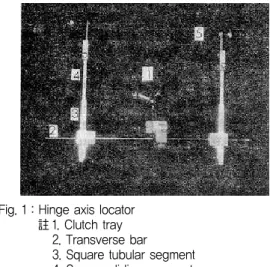
hinge axis locator를 下顎에 裝置하기 爲해서 알미늄 으로 鑄造하여 clutch tray를 製作했다. Hinge axis locator는 Hanau hinge axis face bow를 參酌하여 著 者가 直接 設計하여 製作하였다(Fig.1. 參照).
Fig. 1 : Hinge axis locator 註 1. Clutch tray
2. Transverse bar 3. Square tubular segment 4. Square sliding segment 5. Condylar pointer - 대한 치과 보철학회지 Vol. 14 No. 1, 1976 -
Hinge Axis Point에 關한 實驗的 硏究※
서울大學敎 大學院 齒醫學科 補綴學 專攻 (指導 敎授 김 영 수)
曺 仁 鎬
被檢者는 下顎骨 運勤에 障碍가 없고, 比較的 咬合狀 態가 正常인 齒科大學生 50名을 相對로 했다.
2. 硏究方法
1) Arbitrary hinge axis point의 위치결정
이 硏究에서는 true hinge axis point의 相對的 位置 를 決定해주기 爲해 다음과 같은 方法으로 arbitrary hinge axis point를 定했다. tragus의 最上端部와 눈의 外角部를 자로 이어서 線을 긋고, tragus 最上端部에서 前方 13㎜.되는 部位를 arbitrary hinge axis point로 定했다(Fig.2. 參照).
2) True hinge axis point의 位置決定
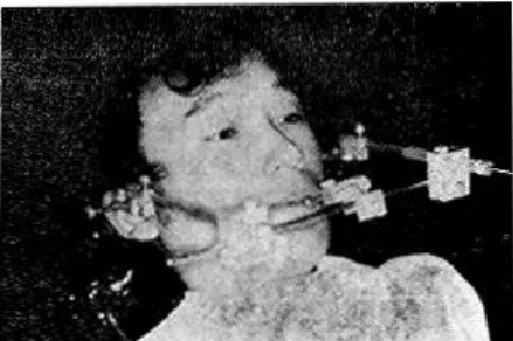
3.5% 食鹽水에 石膏를 混合해서 clutch tray에 담은 後 被檢者의 下顎齒牙에 附着하였다. hinge axis locator의 transverse bar, square sliding segment, condylar pointer等을 arbitrary hinge axis point에 맞춘 後 clutch tray의 stem에 끼워 裝着했다(Fig.3. 參 照).
hinge axis locator의 condylar pointer는 皮膚와 接 觸은 안되지만 最大로 接近된 狀態가 되도록 했다. 被檢 者로 하여금 便安한 狀態에서 下顎骨 運動에 關係되는 筋肉들을 弛緩시킨 다음, 術者의 왼쪽 손으로 被檢者의 눈을 가리고 오른쪽 손의 拇指는 被檢者의 mento-
labial sulcus 部位를, 食指로는 被檢者의 mentum 部位 를 잡은 후, 下顎骨의 開閉運動이 便安히 일어날 수 있는 最後方位置, 즉 terminal hinge relation의 狀態에 到達 하도록 下顎을 誘導했다. 開閉運動을 할때 condylar pointer 圓弧의 形態로 움직이면, 그 中心쪽으로 condylar pointer를 움직여 圓弧로 움직이지않고 單純 히 回轉運動만 하는 點을 찾았다. 이것을 擴大鏡 (Optivisor)으로 確認한 後 condylar pointer끝에 물에 축인 indelible pencil을 묻혀 皮膚에 印記했다. 같은 過 程을 反對便에도 反復한 後 hinge axis locator와 clutch tray를 除去하였다.
Fig. 2 : Arbitrary hinge axis point의 位置 測定 方法
Fig. 3 : Hinge axis locator를 被檢者에 裝着한 貌襲
Fig. 4 : Arbitrary hinge axis point와 True hinge axis point間의 差異 測定方法
註 A; Arbitrary hinge axis point.
B; True hinge axis point.
O; A와 B間의 直線距離.
V; A와 B間의 垂直距離.
H; A와 B間의 水平距離.
3) Arbitrary hinge axis point와 True hinge axis point와의 差異 測定
透明한 테이프(Lepage’s thriftape)를 皮膚에 붙여 印 記된 arbitrary point와 true hinge axis point를 複印 한 後 이것을 모눈종이에 옮겨 그 差異를 caliper로 測定 했다. 모눈종이에서 true hinge axis point가 arbitrary hinge axis point의 後方과 下方에 存在하는 境遇를 陽 數로 表示하고, 이와 反對되는 方向을 陰數로 表示하였 으며, arbitrary hinge axis point의 差異를 直線距離는 O, 垂直距離는 V, 水平距離는 H로 表示하였다(Fig.4. 參 照).
위와 같은 過程을 50名의 被檢者에 施行해서 100個의 true hinge axis point를 얻었다.
Ⅲ. 硏究成績
arbitrary hinge axis point와 true hinge axis point의 距離上의 差異는 右側에서는 直線距離(O) 5.17
㎜., 垂直距離(V) 3.44㎜., 水平距離(H) 3.45㎜.였으며, 左側은 直線距離(O) 5.63㎜., 垂直距離(V)3.95㎜., 水平 距離(H) .51㎜였다. 위의 結果에서 볼 때 左側이 右側보 Table. 1 : 50名의 被檢者로부터 얻은 實驗成績(O. V. H.)
L Leefftt R Riigghhtt
다 더 큰 數値를 나타내나 統計學的으로 有意한 差는 認 定할 수 없었다(Table 1. 參照).
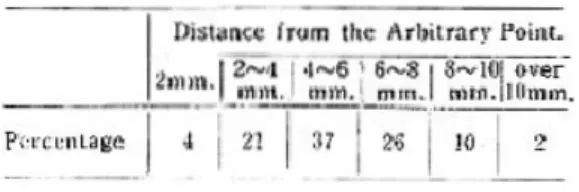
100個의 true hinge axis point中에서 arbitrary hinge axis point로 부터 2㎜. 以內에 存在하는 境遇가 4%, 2�4㎜.가 21%, 4�6㎜.가 37%, 6�8㎜.가 26%, 8
�10㎜.가 10%, 10㎜.보다 큰 境遇가 2%였으며, 5㎜. 半 徑 以內에 存在하는 境遇가 50%였다(Table Ⅱ. 參照).
또한 右側 50개의 true hinge axis point와 左側 50 개의 true hinge axis point를 各各 한 장의 모눈종이에 옮겨본 結果 거의 大部分의 point가 arbitrary hinge axis point의 後下方에 存在하였다(Fig.5. 參照).
Ⅳ. 總括 및 考按
hinge axis location의 重要性을 第一먼저 主張한 사 람은 Campion(14)이며, Brotman(15), Fox(16)등은 이의 重
要性을 數學的인 方法으로 證明해 주었다.
本 硏究에서 나타난 結果를 보면 arbitrary hinge axis point에서 5㎜.半徑內에 存在하는 true hinge axis point는 50%로써 Schallhorn(17)이 主張하는 95%, Beyron(18)의 87%와는 많은 差異를 나타내고 있으며, Lauritzen(11)등이 主張하는 33%와는 어느 程度 �似한 結果를 얻게 되었다.
Schlosser(7)는 患者가 開閉運動을 하는동안 皮膚를 觸 診함으로써 顆頭의 位置를 決定하는 方法과 外耳孔의 上 端部와 눈의 外角部를 자로 이어서, 外耳孔의 前綠 前方 13㎜. 部位에 直角되게 crossing line을 긋는 또다른 方 法을 使用하기도 했다. Brandrup-Wognsen(10)은 tragus에서 눈의 外角部를 잇는 線을 그어서 tragus의 가장 突出된 部位의 後綠에서 前方 12㎜.되는 部位에 arbitrary hinge axis point를 잡았다. 이와같이 눈의 外角部를 前方 基準點으로 定한 것은 同一하나 後方의 基準點이 서로 다른 故로 著者는 中間部位가 되는 tragus 最上端部를 택하게 되었다.
이와 같이 著者가 arbitrary hinge axis point로 擇한 點이 다른 사람들과 다르다는 것이 論點이 될 수 있으나, arbitrary hinge axis point와 10㎜.以上 差異가 나는 true hinge axis point들도 存在하는 故로 患者 箇箇人 의 true hinge axis point를 決定해 주는 것이 模型을 咬合器에 옮길 때 나타나는 큰 誤差를 防止할 수 있게 될 것이다.
1967年 金(19)이 下顎關節 顆頭를 觸指하여 tragus와 顆頭頂의 距離를 測定한 結果 韓國人이 西洋人에 비해 1 2 짧게 나타난다고 報告한 바도 있으나, 이것이 韓國人에
Fig. 5 : True hinge axis point의 分布 狀態 Table. 2 : Arbitrary hinge axis point에 對한 100개의
True hinge axis point의 相對的 位置 分類.
있어서 true hinge axis point와 arbitrary hinge axis point의 差異를 줄여주는 큰 要因이 된다고 思料되지는 않는다.
V. 結 論
下顎骨 運動에 障碍가 없고 健全한 咬合을 가진 50明 의 被檢者를 對象으로, hinge axis locator 使用하여 true hinge axis point와 著者가 택한 arbitrary hinge axis point와의 差異를 測定한 結果 다음과 같은 結論을 얻었다.
1. true hinge axis point는 arbitrary hinge axis point에서, 平均的으로, 右側이 直線距離(O) 5.17㎜., 垂 直距離(V) 3.44㎜., 水平距離(H)3.55㎜. 였으며, 左側이 直線距離(O) 5.63㎜., 垂直距離(V) 3.95㎜., 水平距離(H) 3.51㎜.. 였다.
2. 100個의 true hinge axis point 中에서 arbitrary hinge axis point로부터 2㎜以內에 存在하는 境遇가 4%, 2~4㎜가 21%, 4~6㎜가 37%, 6~8㎜가 26%, 8~10
㎜가 10%, 10㎜보다 큰 境遇가 2%였으며, 5㎜半徑 내에 存在하는 경우는 50個로서 50%를 나타내었다.
3. arbitrary mounting에 存在하지 않고 true hinge axis point를 主意깊게 찾는 것이 模型을 咬合器에 옮길 때 나타나는 誤差의 潛在的 要因을 없애주게 될 것으로 思料된다.
(끝으로 本 硏究에 指導와 校閱을 돌봐 주신 恩師 金英 洙 敎授님께 深謝하오며, 여러 面으로 指導鞭撻하여 주 신 張完植 主任敎授님께 感謝를 드립니다.)
參考文獻
1. TTrapozzzno, V.R. and Lazzari, J.B. : A Study of Hinge Axis Determination, J. Prosthet. Dent.
11:858, 1961.
2. TCollet, H.A. : The Movement of the Temporomandibular Joint and Their Relation to the Problems of Occlusion, J. Prosthet. Dent.
5:489, 1955.
3. TKurth, L.E. and Feinstein, I.K. : The Hinge Axis of the Mandible, J. Prosthet. Dent. 1:332, 1951(cited from 1).
4. TGilmore, T.L. : J. Illinois State Dental Society,
1882(cited from 6).
5. TMcCollum, B.B. and Stuart, C.E. : A Reaserch Report, South Pasadena, Calif., 1955, Scientific Press(cited from 1).
6. TAnthony, L.P. : American Textbook of Prosthetic Dentistry, ed. 7, Philadelphia. 1942, Lea & Febiger, p. 241.
7. TSchlosser, R.O. : Complete Denture Prosthesis, ed. 2, Philadelphia and London, 1946, W.B.
Saunders Company, p. 241.
8. TSears, V.H. : Principles and Technics for Complete Denture Construction, St. Lous, 1949, The C.V. Mosby Company, p. 205.
9. TCraddock, F.W. : Prosthetic Dentistry, a Clinical Outline, ed. 2, St. Louis, 1951, The C.V. Mosby Company, p. 151.
10. TBrandrup-Wognsen, T: The Face Bow, Its Significance and Application, J.Prosthet. Dent.
3:p. 618, 1853.
11. TLauritzen, A.G. and Bonder, G.H. : Variations in Location of Arbitrary and True Hinge Axis Points, J.Prosthet. Dent. 2:pp. 224-229, 1961.
12. TLauritzen, A.G. and Wolford, L.W. : Hinge Axis Location on an Experimental Basis, J.Prosthet.
Dent. 6:pp. 1059-1067, 1961.
13. TFrancisco Le Pera : Determination of the “Hinge axis”, J. Prosthet. Dent. 4:pp. 651-666, 1964.
14. TCampion, G.G. : Some Graphic Records of Movements of the Mandible in the Living Subject and Their Bearing on the Mechanism of the Joint and the Construction of Articulators, D. Cosmos 47:pp. 39-42, 1905(cited from 12))
15. TBrotman, D.N. : Part Ⅱ. Geometric Significance of the Transverse Axis, J. Prosthet. Dent.
4:pp631-636, 1960.
16. TFox, S.S. : The Significance of Errors in Hinge Axis Location, J. Amer. Dent. Ass. 74:pp. 1268- 1272, 1967.
17. TSchallhorn, R.G. : A Study of the Arbitrary Center and the Kinematic Center of Rotation for Face-Bow Mountings, J. Prosthet. Dent. 7:p. 162, 1957.
18. TBeyron, H. : Orienteringsproblem vid Protetiska Rekonstruktioner ock Bettstudier, Svenska tandl.
tskr. 35:p.37, pp.53-54, 1942(cited from 11) 19. T金祥世 : 顆頭 位置에 關한 �床的 硏究, 綜合 醫學 제
12권, 제11호, pp.877-880, 1967.
= Abstract =
AN EXPERIMENTAL STUDY ON THE HINGE AXIS POINT
In Ho Jo, D. D. S.
Department of Prosthodontics, Graduate School, Seoul National University.
(Directed by Assist. Prof. Yung Soo Kim, D.D.S., M.S.D., Ph.D., M.Sc(O.S.U.))
Casts are often transferred to the articulator by arbitrary means, because the method of locating the true hinge axis point thought to be a complicated and time consuming procedure, and because the importance and significance of the true hinge axis in the construction of dental prosthesis is not sufficiently understood.
In this report, the author constructed the hinge axis locator and determined the variations in location of the true hinge axis points from the location of the hinge axis point determined by arbitrary means.
For this report, the procedure was followed on 50 persons with normal occlusion and sound T.M.J. function, so 100 true hinge axis points were recorded and compared with the arbitrary hinge axis point.
The results obtained were as follows.
1. The mean distance from the arbitrary hinge axis point to the true hinge axis point was as follows.
Right;(O) 5.17㎜.,(V) 3.44㎜.,(H) 3.55㎜.
Left ;(O) 5.63㎜.,(V) 3.95㎜.,(H) 3.51㎜.
2. The percentage of true hinge axis points classified at intervals of 2㎜ was as follows.
0—2㎜; 4%, 2—4㎜; 21%, 4—6㎜; 37%, 6—8㎜; 26%, 8—10㎜; 10%, Over 10㎜; 2%.
And only 50% of the 100 true hinge axis points were located within a 5㎜ radius of the arbitrary hinge axis point.
3. Instead of transferring the casts to the articulator by arbitrary means, the careful location of the true hinge axis points is recommended to avoid potential sources of error in mounting casts.