1
Personalized Therapy in Lung Cancer: Focused on Mole- cular Targeted Therapy
Lung cancer is the leading cause of cancer death worldwide, with an overall 5 year survival rate of 15%. Most patients present with advanced disease that requires systemic chemotherapy, which merely confers several months of survival benefit. Recent advances in understanding the molecular mechanisms underlying lung cancer have led to molecular targeted therapy in this field.
Epidermal growth factor receptor tyrosine kinase inhibitors (EGFR-TKIs) are the first successful personalized therapy for non-small cell lung cancer (NSCLC), with about 30 months of median overall survival in patients with sensitive EGFR mutations. In addition, monoclonal antibodies against vascular endothelial growth factor (VEGF) or EGFR are also in current clinical use.
Resistance to EGFR-TKIs has emerged as a major limitation of these agents and become challenge clinically. A number of novel targeted agents have been developed and investigated in clinical trials to overcome the limitation of agents currently available. Recently, echinoderm microtubule-associated protein-like 4-anaplastic lymphoma kinase fusion gene (EML4-ALK), as a novel molecular target of NSCLC, has been identified, and its inhibitor is under rapid clinical development. We herein review the molecular targeted therapies currently available for NSCLC and discuss the clinical data of novel agents under clinical development. (J Lung Cancer 2011;10(1):1 12)
Key Words: Individualized Medicine, Lung neoplasms, Molecular targeted therapy
Shin Yup Lee, M.D. and Jae Yong Park, M.D.
Department of Internal Medicine, Kyungpook National University School of Medicine, Daegu, Korea
Received: June 2, 2011 Revised: June 13, 2011 Accepted: June 14, 2011
Address for correspondence Jae Yong Park, M.D., Ph.D.
Department of Internal Medicine, Kyungpook National University School of Medicine, 50, Samdeok-dong 2-ga, Jung-gu, Daegu 700-712, Korea Tel: 82-53-420-5536
Fax: 82-53-426-2046
E-mail: [email protected]
서 론
폐암은 전세계적으로 암사망율 1위를 기록하고 있는 치 명적인 질환이다. 지난 수십 년간 수술, 방사선요법, 세포독 성약물의 발전과 이들을 병합하여 폐암의 치료성적을 높이 고자 했던 노력들에도 불구하고, 폐암환자의 5년 생존율은 15%에 불과하다(1). 이러한 불량한 예후의 주요 원인은 약 70%의 환자가 근치적 수술이 불가능한 진행된 병기로 진단 되기 때문이다(2). 병기가 진행된 폐암의 주된 치료는 항암 화학요법이다. 1980년대에 cisplatin이 도입된 이후 1990년 대에는 여러 가지 신세대 항암제와 platinum의 병합치료로 기존의 최선의 지지치료(best supportive care)에 비해 생존기 간이 수 개월 정도 향상되었다(3,4). 그러나, 여러 신세대 항 암제-platinum doublet간의 치료성적에 큰 차이를 내지 못했 고 non-platinum doublet의 시도에서도 더 이상의 이득을 얻 지 못하여(4,5), 진행병기 비소세포폐암의 항암화학요법의
성적은 중간생존기간 8∼11개월, 1년 생존율 30%로 매우 저조하다(6). 이러한 참담한 결과는 개별 환자에 있어 폐암 의 생물학적 특징을 고려하지 않은 경험적인 집단치료의 결과일 것으로 생각된다.
과거부터 폐암의 치료에 조직형(비소세포폐암 vs. 소세포 폐암), 병기, 수행상태, 나이 등의 임상적, 병리학적인 지표 들을 이용해 왔으며 이들은 일종의 전통적인 맞춤 또는 개 별화된 치료(personalized or individualized therapy)라고 볼 수 있다. 최근 폐암의 분자유전학적 지식을 응용한 개별화된 치료의 시도는 폐암치료에 일대 혁신을 가져왔다. 분자표 적의 발견과 표적치료제의 개발, 그리고 표적치료의 결과 를 예측할 수 있는 생물학적 표지자(biological biomarker)의 도입으로 경험적인 집단치료에서 벗어나 개개인의 특성에 맞는 맞춤치료가 현실로 다가오고 있다. 분자표적치료는 치료의 효과를 극대화하고 동시에 부작용을 최소화하고자 하는 이상적인 목표에 부합하는 치료이다. 본고에서는 진 행병기 비소세포폐암의 치료분야에서 이루어진 개별화된
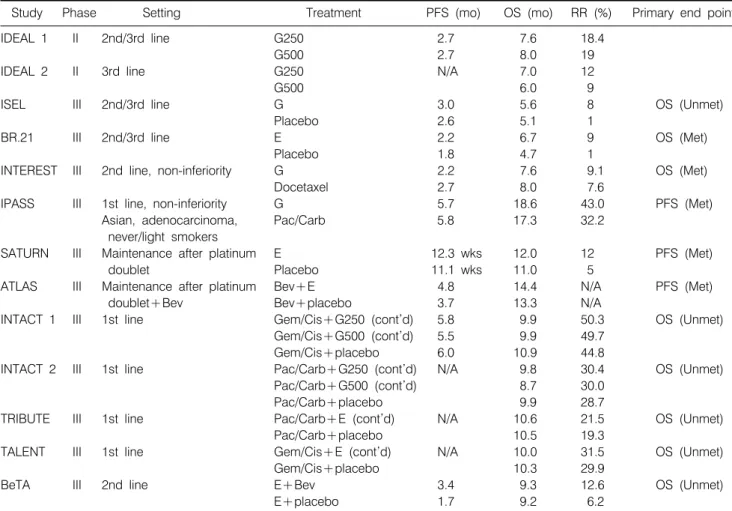
Table 1. Main Clinical Trials of the First Generation EGFR-TKIs
Study Phase Setting Treatment PFS (mo) OS (mo) RR (%) Primary end point
IDEAL 1 II 2nd/3rd line G250 2.7 7.6 18.4
G500 2.7 8.0 19
IDEAL 2 II 3rd line G250 N/A 7.0 12
G500 6.0 9
ISEL III 2nd/3rd line G 3.0 5.6 8 OS (Unmet)
Placebo 2.6 5.1 1
BR.21 III 2nd/3rd line E 2.2 6.7 9 OS (Met)
Placebo 1.8 4.7 1
INTEREST III 2nd line, non-inferiority G 2.2 7.6 9.1 OS (Met)
Docetaxel 2.7 8.0 7.6
IPASS III 1st line, non-inferiority G 5.7 18.6 43.0 PFS (Met)
Asian, adenocarcinoma, Pac/Carb 5.8 17.3 32.2
never/light smokers
SATURN III Maintenance after platinum E 12.3 wks 12.0 12 PFS (Met)
doublet Placebo 11.1 wks 11.0 5
ATLAS III Maintenance after platinum Bev+E 4.8 14.4 N/A PFS (Met)
doublet+Bev Bev+placebo 3.7 13.3 N/A
INTACT 1 III 1st line Gem/Cis+G250 (cont’d) 5.8 9.9 50.3 OS (Unmet)
Gem/Cis+G500 (cont’d) 5.5 9.9 49.7
Gem/Cis+placebo 6.0 10.9 44.8
INTACT 2 III 1st line Pac/Carb+G250 (cont’d) N/A 9.8 30.4 OS (Unmet)
Pac/Carb+G500 (cont’d) 8.7 30.0
Pac/Carb+placebo 9.9 28.7
TRIBUTE III 1st line Pac/Carb+E (cont’d) N/A 10.6 21.5 OS (Unmet)
Pac/Carb+placebo 10.5 19.3
TALENT III 1st line Gem/Cis+E (cont’d) N/A 10.0 31.5 OS (Unmet)
Gem/Cis+placebo 10.3 29.9
BeTA III 2nd line E+Bev 3.4 9.3 12.6 OS (Unmet)
E+placebo 1.7 9.2 6.2
PFS: progression free survival, OS: overall survival, RR: response ratio, mo: months, G250: gefitinib 250 mg, G500: gefitinib 500 mg, G: gefitinib, E: erlotinib, Pac/Carb: paclitaxel/carboplatin, Bev: bevacizumab, Gem/Cis: gemcitabine/cisplatin, cont’d: continued, N/A: not assessed.
치료, 특히 분자표적치료(molecular target therapy)에 초점을 맞추어 최근까지의 연구와 향후의 연구 방향에 관해 조망 해보고자 한다.
Anti-epidermal Growth Factor Receptor (EGFR) Therapy 1) EGFR tyrosine kinase inhibitor (EGFR-TKI)
Gefitinib (IressaⓇ)과 erlotinib (TarcevaⓇ)는 1세대 EGFR- TKI로서 EGFR tyrosine kinase에 ATP가 결합하는 것을 가역 적으로 방해하여 EGFR의 활성화를 억제함으로써 수용체 하부 신호경로(downstream signaling)를 차단한다. 1세대 EGFR-TKI를 이용한 대표적인 임상연구들은 Table 1과 같 다.
진행병기 비소세포폐암의 2nd/3rd line의 치료로서 EGFR- TKI와 최선의 지지치료를 비교한 3상 임상연구로 BR.21
(erlotinib)연구와 ISEL (gefitinib)연구가 대표적이다(7,8).
BR.21연구는 위약군에 비하여 erlotinib 치료군에서 생존기 간(overall survival, OS)이 유의하게 향상되었다(Hazard ratio [HR], 0.70; 95% confidence interval [CI], 0.58∼0.85; p
<0.001). 남성에 비하여 여성이(p=0.006), 다른 조직형에 비 하여 선암이(p<0.001), 흡연자에 비하여 비흡연자가(p<
0.001), 다른 인종에 비하여 아시아인이(p=0.02) 좋은 치료 반응을 보였다. 하지만 생존기간의 연장은 남성, 흡연자, 선 암 이외의 조직형, 아시아인 이외의 인종에서도 관찰되었 다. ISEL연구는 primary end point (PEP)인 OS의 향상은 없 었으나(HR, 0.89; 95% CI, 0.77∼1.02; p=0.087), 소그룹 분석 에서는 아시아인종, 비흡연자에서 위약군에 비하여 gefi- tinib군의 OS가 증가되었다. INTEREST연구는 진행병기 비 소세포폐암의 2nd/3rd line 단일약제치료로서 표준치료인 docetaxel과 gefitinib을 비교한 3상 임상연구로 PEP인 OS에 서 gefitinib의 비-열등성을 입증하였다(9). 또한 docetaxel군
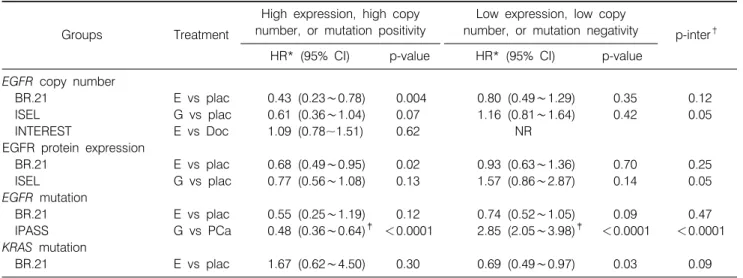
Table 2. Summary of EGFR Biomarker Analyses from Randomised Trials
Groups Treatment
High expression, high copy number, or mutation positivity
Low expression, low copy
number, or mutation negativity p-inter† HR* (95% CI) p-value HR* (95% CI) p-value
EGFR copy number
BR.21 E vs plac 0.43 (0.23∼0.78) 0.004 0.80 (0.49∼1.29) 0.35 0.12
ISEL G vs plac 0.61 (0.36∼1.04) 0.07 1.16 (0.81∼1.64) 0.42 0.05
INTEREST E vs Doc 1.09 (0.78~1.51) 0.62 NR EGFR protein expression
BR.21 E vs plac 0.68 (0.49∼0.95) 0.02 0.93 (0.63∼1.36) 0.70 0.25
ISEL G vs plac 0.77 (0.56∼1.08) 0.13 1.57 (0.86∼2.87) 0.14 0.05
EGFR mutation
BR.21 E vs plac 0.55 (0.25∼1.19) 0.12 0.74 (0.52∼1.05) 0.09 0.47
IPASS G vs PCa 0.48 (0.36∼0.64)‡ <0.0001 2.85 (2.05∼3.98)‡ <0.0001 <0.0001 KRAS mutation
BR.21 E vs plac 1.67 (0.62∼4.50) 0.30 0.69 (0.49∼0.97) 0.03 0.09
*HR is for overall survival unless otherwise stated, †p for interaction, ‡HR is for progression free survival.
E: erlotinib, G: gefitinib, plac: placebo, Doc: docetaxel, PCa: paclitaxel-carboplatin, HR: hazard ratio, CI: confidence interval, NR:
not reported.
에 비하여 gefitinib군은 grade 3, 4 독성의 빈도가 유의하게 낮았다(9% vs. 41%). 이 연구에서는 성별, 조직형, 인종, 흡 연력에 따라 두 치료군 사이에 OS의 차이가 없었는데, 이는 docetaxel군에 포함되었던 환자 가운데 상당수의 환자가 연 구기간 이후 gefitinib을 투여 받았기 때문으로 분석되었다 (cross-over) (10).
이미 gefitinib의 초기 임상연구(IDEAL 1, 2)를 포함한 여 러 연구들에서 아시아인, 여성, 선암, 비흡연자가 특별히 EGFR-TKI에 대한 좋은 반응과 연관이 있음이 관찰되어 이 러한 요소들은 좋은 반응을 예측할 수 있는 임상적 예측지 표(clinical predictor)로 간주되었다(11-14). 2004년에는 EGFR 유전자의 체세포 돌연변이(somatic mutation)가 보고되어 EGFR-TKI에 대한 특히 좋은 반응을 나타내는 기전임이 밝 혀졌고, EGFR-TKI에 대한 좋은 반응의 임상적 예측지표들 을 가지는 환자들에서 이 돌연변이의 빈도가 특히 높다는 것이 알려지게 되었다(15-17). 비소세포폐암에서 EGFR 돌 연변이의 빈도는 유럽계 백인에서는 약 10%, 아시아인에서 는 약 25∼50%로 보고되었으며, 특히 아시아인 선암에서는 21∼67%까지 보고되고 있다(18,19). 대표적인 활성화 돌연 변이(activating mutation)는 exon 19번의 결손 또는 exon 21 번의 점-돌연변이(L858R)로 이들은 EGFR 돌연변이의 약 90%를 차지한다(20). EGFR 돌연변이 양성환자에서 반응률 (response rate, RR)은 55∼82%, 무진행 생존기간(progression free survival, PFS)은 9.4∼13.3개월로 보고되었으며, 돌연변 이 선별을 하지 않은 환자에서의 RR은 10∼20%로 보고되 었다(21,22).
EGFR-TKI 치료의 결과를 예측할 수 있는 분자생물학적 표지자(molecular biomarker)로 EGFR 돌연변이 이외에도 fluorescence in situ hybridization (FISH)를 이용한 EGFR copy number와 immunohistochemistry (IHC)를 이용한 EGFR ex- pression 등이 연구되었다(23-26). 후향적 표지자 분석을 시 행한 대규모 임상연구를 살펴보면, BR.21연구와 ISEL연구 에서 high EGFR copy number (FISH 양성) 환자와 EGFR expression 양성인 환자는 위약군에 비해서 EGFR-TKI군의 생존결과가 더 좋았다(Table 2). 그러나, 여러 연구에서 EGFR expression은 EGFR copy number에 비하여 예측력 (predictive power)이 다소 낮게 평가되었다(22-25). ISEL연구 에서는 EGFR-TKI 치료가 생존결과에 미치는 영향이 FISH 와 IHC의 결과에 따라 통계적으로 차이가 있었으나(p-inter
<0.05), BR.21연구에서는 유의한 차이가 없었다(p-inter>
0.05). INTEREST연구는 FISH 양성 환자에서 docetaxel에 비 하여 gefitinib의 생존 성적이 우수함을 증명하는 것을 co-PEP로 정하였으나, FISH 양성 환자에서 gefitinib과 doce- taxel의 효과는 유사하였다(9). KRAS 돌연변이는 EGFR- TKI치료의 일차내성(primary resistance)의 예측 표지자 (pre- dictive biomarker)로서(27), 또한 나쁜 예후를 예측하는 예후 표지자(prognostic biomarker)로서 주목을 받았는데(28), 여 러 연구에서 일관되지 않는 결과를 보이고 있어 논란의 여 지가 있다. BR.21 연구에서는 KRAS 돌연변이 양성인 환자 에서는 지지치료군에 비하여 erlotinib 치료군의 생존율이 낮았으나, KRAS 돌연변이 음성 환자에서는 erlotinib 치료 군의 생존율이 더 좋았다(p-inter=0.09) (29). 그러나, KRAS
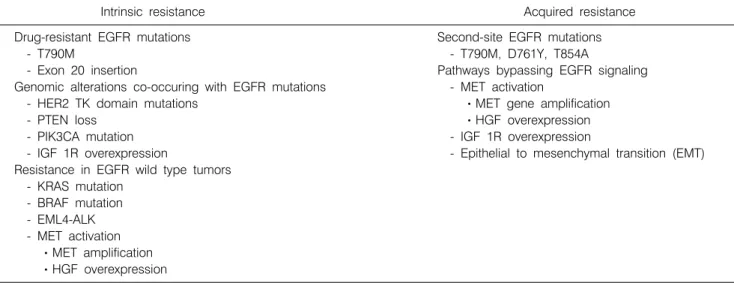
Table 3. Mechanisms of Resistance to EGFR-TKI
Intrinsic resistance Acquired resistance
Drug-resistant EGFR mutations Second-site EGFR mutations
- T790M - T790M, D761Y, T854A
- Exon 20 insertion Pathways bypassing EGFR signaling
Genomic alterations co-occuring with EGFR mutations - MET activation
- HER2 TK domain mutations ㆍMET gene amplification
- PTEN loss ㆍHGF overexpression
- PIK3CA mutation - IGF 1R overexpression
- IGF 1R overexpression - Epithelial to mesenchymal transition (EMT) Resistance in EGFR wild type tumors
- KRAS mutation - BRAF mutation - EML4-ALK - MET activation ㆍMET amplification ㆍHGF overexpression
돌연변이는 EGFR 돌연변이와 동시에 발견되지 않는데, EGFR-TKI에 반응이 없는 것은 KRAS 돌연변이의 존재가 아니라 EGFR 돌연변이가 없는 것과 관련이 있을 가능성이 있다(30,31). 위와 같은 대규모 임상연구에서의 EGFR copy number와 expression 분석은 대상환자 중 시료가 가용한 일 부 환자에서만 시행된 후향적 분석으로 제한점이 있으며, EGFR-TKI 치료의 결과에 대한 예측지표로서 EGFR copy number 검사의 가치는 전향적인 연구에서 추가적인 검증이 필요하다.
IPASS연구는 총 1,217명의 환자에서 1st line 치료로 gefi- tinib과 paclitaxel-carboplatin을 비교하였다. 앞선 연구들과 달리 EGFR 돌연변이의 빈도가 높은 것으로 알려진 아시아 인, 선암, 비흡연자/경량흡연자(never/light smoker)의 선택적 인 환자군을 대상으로 연구를 진행하였다(32). 항암화학요 법군에 비하여 gefitinib군은 PFS, RR, 독성에서 유의하게 좋 은 결과를 보였다. 전체환자 중 EGFR 돌연변이 결과가 알 려진 437명(35.9%)을 대상으로 분석하였을 때, EGFR 돌연 변이 양성 환자에서는 항암화학요법군에 비하여 gefitinib군 이 유의하게 PFS가 연장되었으나(HR, 0.48; p<0.0001), 돌 연변이 음성 환자에서는 gefitinib이 오히려 열등하였다(HR, 2.85; p<0.0001). Gefitinib과 항암화학요법에 대한 RR는 EGFR 돌연변이 양성 환자에서는 각각 71%와 47%였고, 돌 연변이 음성군에서는 각각 1.1%, 23.5%였다. 전체환자에서 두 치료군 간에 OS는 차이가 없었는데(중간생존기간, 18.6 개월 vs. 17.3개월), 이러한 결과는 항암화학요법군의 상당 수에서 병의 진행 시 gefitinib을 사용하였기 때문으로(cross- over) 생각된다. IPASS연구의 결과는 EGFR 돌연변이가 EGFR-TKI 치료 결과의 강력한 예측지표임을 보여줌으로
써 EGFR 돌연변이를 가지는 비소세포폐암 환자에서 1st line 치료로 EGFR-TKI를 선택하는 중요한 근거가 되었다.
임상적으로 좋은 반응이 예상되는 선택적인 환자군(First- SIGNAL) (33) 또는 EGFR 돌연변이 양성 환자만을 대상으 로 1st line gefitinib의 성적을 조사한 다른 연구들(34,35)에 서도 IPASS연구와 유사한 결과를 확인하였고, EGFR 돌연 변이 양성 환자만을 대상으로 한 1st line erlotinib에 대한 연구(EURTAC, OPTIMAL)가 현재 유럽과 중국에서 각각 진행 중이다.
2) EGFR-TKI 내성
EGFR-TKI 치료 초기에 좋은 반응을 보이던 환자들도 결 국에는 거의 예외 없이 TKI에 대한 내성을 획득하여 병의 진행을 경험하게 되는데 대개 치료 시작 6∼12개월 무렵으 로 알려져 있다(20). EGFR-TKI에 대한 2차 내성(secondary resistance)의 기전으로는 T790M을 비롯하여 D761Y, T854A 등의 EGFR의 2차 돌연변이(secondary mutation)와 EGFR 신 호경로를 우회(bypass)하는 기전으로 크게 나누어 볼 수 있 다(Table 3). 후자에는 c-MET 유전자 증폭(amplification)을 비롯하여 IGF1R등의 중복경로(overlapping pathway)의 변이 에 의한 EGFR 하부 신호경로의 활성화가 가능하다(36-39).
Epithelial-mesenchymal transition (EMT)은 원격전이와 병의 진행에 중요한 역할을 하며, EGFR을 우회하는 기전으로 TKI에 대한 내성을 나타낼 수 있다(40).
T790M 돌연변이는 획득 내성의 약 50%를 차지하며, 내 성의 기전으로는 TK 부위의 구조적 변형을 일으키거나 (41), ATP 결합 부위의 ATP 결합력을 증가시킴으로써(42) gefitinib이나 erlotinib의 결합을 방해하여 EGFR-TKI 내성에
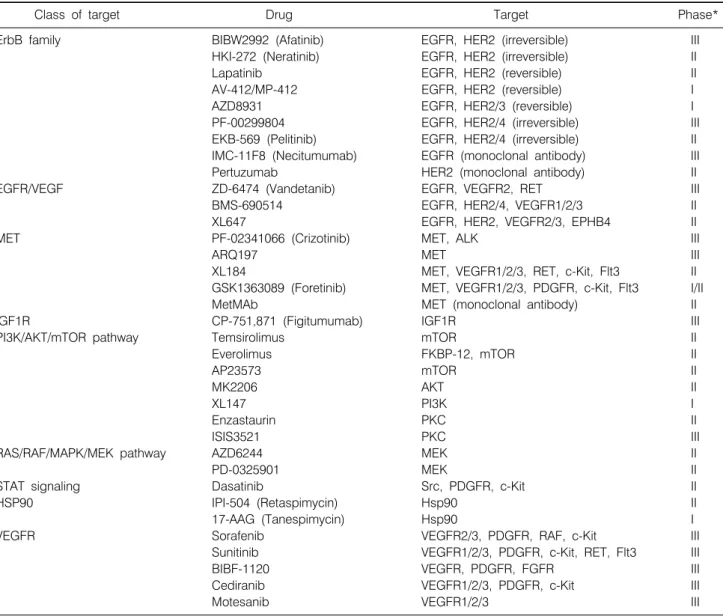
Table 4. Targeted Agents for Lung Cancer in Clinical Development
Class of target Drug Target Phase*
ErbB family BIBW2992 (Afatinib) EGFR, HER2 (irreversible) III
HKI-272 (Neratinib) EGFR, HER2 (irreversible) II
Lapatinib EGFR, HER2 (reversible) II
AV-412/MP-412 EGFR, HER2 (reversible) I
AZD8931 EGFR, HER2/3 (reversible) I
PF-00299804 EGFR, HER2/4 (irreversible) III
EKB-569 (Pelitinib) EGFR, HER2/4 (irreversible) II
IMC-11F8 (Necitumumab) EGFR (monoclonal antibody) III
Pertuzumab HER2 (monoclonal antibody) II
EGFR/VEGF ZD-6474 (Vandetanib) EGFR, VEGFR2, RET III
BMS-690514 EGFR, HER2/4, VEGFR1/2/3 II
XL647 EGFR, HER2, VEGFR2/3, EPHB4 II
MET PF-02341066 (Crizotinib) MET, ALK III
ARQ197 MET III
XL184 MET, VEGFR1/2/3, RET, c-Kit, Flt3 II
GSK1363089 (Foretinib) MET, VEGFR1/2/3, PDGFR, c-Kit, Flt3 I/II
MetMAb MET (monoclonal antibody) II
IGF1R CP-751,871 (Figitumumab) IGF1R III
PI3K/AKT/mTOR pathway Temsirolimus mTOR II
Everolimus FKBP-12, mTOR II
AP23573 mTOR II
MK2206 AKT II
XL147 PI3K I
Enzastaurin PKC II
ISIS3521 PKC III
RAS/RAF/MAPK/MEK pathway AZD6244 MEK II
PD-0325901 MEK II
STAT signaling Dasatinib Src, PDGFR, c-Kit II
HSP90 IPI-504 (Retaspimycin) Hsp90 II
17-AAG (Tanespimycin) Hsp90 I
VEGFR Sorafenib VEGFR2/3, PDGFR, RAF, c-Kit III
Sunitinib VEGFR1/2/3, PDGFR, c-Kit, RET, Flt3 III
BIBF-1120 VEGFR, PDGFR, FGFR III
Cediranib VEGFR1/2/3, PDGFR, c-Kit III
Motesanib VEGFR1/2/3 III
*Based on ClinicalTrials.gov.
관여한다고 알려져 있다. T790M 돌연변이에 의한 획득 내 성을 극복하기 위하여 여러 가지 비가역적 EGFR-TKI가 연 구되고 있으며(Table 4), EGFR, HER2 이중 억제제인 BIBW2992 (afatinib)에 대한 연구가 가장 많이 진행되어, 최 근 3상 임상연구(LUX-Lung 1)의 결과가 보고되었다(43).
2nd/3rd line 치료로 EGFR-TKI (최소 12주간)를 투여 받은 후 진행한 진행병기폐암 환자를 대상으로 afatinib군과 위약 군을 비교하였으며, PEP인 OS (HR, 1.08; 95% CI, 0.86∼
1.35)는 유의한 향상이 없었으나, 위약군에 비하여 PFS가 유의하게 연장(3.3개월 vs. 1.1개월; HR, 0.38; p<0.0001)되 었다. 현재 EGFR 돌연변이 양성 환자들을 대상으로 1st line 으로 BIBW2992와 platinum doublet을 비교하는 3상 임상연
구가 진행 중이다(LUX-Lung 3, 6). PF0299804는 EGFR, HER2/4의 비가역적인 억제제로 이전에 항암화학요법을 받 은 진행병기폐암 환자를 대상으로 시행한 2상 연구에서 erlotinib치료와 비교하여 PFS의 연장(HR=0.67; p=0.017)과 RR (17% vs 4%; p=0.008)의 향상을 보였다(44). c-MET 유전 자 증폭은 EGFR-TKI에 대한 획득 내성의 20%정도를 차지 하며 ERBB3을 통한 PI3K/AKT 신호경로를 활성화시킴으 로써 EGFR-TKI의 저항성을 초래한다(45). 최근 비소세포폐 암에서 EGFR-TKI에 대한 획득 내성의 기전으로 EGFR 돌 연변이(T790M)와 c-MET 유전자 증폭이 동시에 존재할 수 있는 것으로 보고되어(46), c-MET 억제제(ARQ197, XL184, MetMAb)와 EGFR-TKI의 병합치료에 대한 임상연구가 진
행되고 있다(Table 4) (47-49). 과거 항암화학요법을 받았던 진행병기 비소세포폐암환자에서 erlotinib+ARQ197과 erlo- tinib+위약군을 비교한 2상 임상연구에서 erlotinib+ARQ197 병용군에서 PFS가 연장되었는데(16.1주 vs. 9.7주; adjusted HR, 0.68; p<0.05), 이러한 효과는 비편평상피세포형, EGFR 돌연변이 음성, KRAS 돌연변이 양성 환자에서 뚜렷하였다 (47). Erlotinib과 MetMAb을 병용한 2상 임상연구에서는 erlotinib+위약군에 비하여 Met expression 양성 환자에서는 PFS (HR, 0.56; p=0.05)와 OS (HR, 0.55; p=0.11)가 연장되었 으나, Met 음성 환자에서는 불량한 PFS와 OS를 보였다(49).
3) EGFR-TKI를 이용한 지속치료(maintenance therapy)
현재 1차 항암화학요법은 platinum-doublet 또는 일부 표 적치료제를 포함한 3가지를 4∼6주기 치료하는 것이 표준 으로 인정되고 있고, 1차 항암약물치료 후의 일반적인 전략 은 이른바 ‘watch and wait’로, 주기적인 평가 도중 병의 진 행이 확인되면 2차 항암화학요법을 시행하는 것이다(50,51).
그러나, 1차 항암화학요법 후 병이 진행할 때까지의 기간 (PFS)이 2∼3개월 정도에 불과하며, 1차 항암화학요법 후 병이 진행된 폐암환자 중 약 50∼70%만이 추가적인 약물치 료를 받는다는 사실은 ‘watch and wait’ 전략에 따를 경우 병의 진행에 따른 수행상태의 악화가 다음 단계의 효과적 인 약물투여에 걸림돌이 될 수 있음을 시사한다(52). 유지 요법은 정해진 주기의 1차 항암화학요법에 반응이 있거나 (complete or partial response [CR or PR]) 변화가 없는 경우 (stable disease, SD), 1차 약제에 포함되었던 약물 가운데 적 어도 한 가지를(지속유지요법, continuation maintenance), 혹 은 새로운 약물을(전환유지요법, switch maintenance) 병이 진행할 때까지 혹은 심각한 부작용이 나타날 때까지 지속 적으로 투여하는 경우를 말한다(53). 최근 세포독성항암제 또는 표적치료제를 이용한 유지요법에 관한 많은 연구들이 이루어져 희망적인 결과를 보여주고 있다(52,54-57). 특히, pemetrexed와 erlotinib을 사용한 전환유지요법이 3상 임상 연구에서 OS의 유의한 향상이 있었다(52,57). SATURN연구 에서는 4주기의 platinum doublet 후 SD이상의 반응을 보인 환자들을 대상으로 erlotinib 유지군과 위약군의 성적을 비 교하였다(52). 위약군에 비하여 Erloitnib 유지군은 PFS (12.3 주 vs. 11.1주; HR, 0.71; p<0.0001)와 OS (12.0개월 vs. 11.0 개월; HR, 0.81; p=0.0088)가 우수하였으며, 소그룹 분석에 서 EGFR 유전자의 돌연변이가 있는 군에서는 erlotinib 유 지요법으로 PFS의 극적인 향상(HR, 0.1; 95% CI, 0.04∼
0.25; p<0.0001)이 있었다. 이 연구에서 OS의 유의한 연장 은 없었는데, 이러한 결과는 EGFR 유전자 돌연변이를 가진
위약군 환자들 가운데 상당수가 이후에 EGFR-TKI 치료를 받았기 때문으로 생각된다(cross-over). EGFR 유전자 돌연 변이 음성 환자에서도 erlotinib 유지요법을 시행한 경우 PFS (HR, 0.78; p=0.0185) 및 OS (HR, 0.78; p=0.0243)의 유의 한 연장이 있었다. ATLAS연구에서는 1차 항암화학요법으 로 platinum-doublet과 bevacizumab 투여 후 SD 이상의 반응 을 보였던 환자들을 대상으로 bevacizumab+erlotinib 유지군 과 bevacizumab+위약 투여군을 비교하였는데 interim analy- sis에서 bevacizumab+erlotinib 투여군에서 PFS의 유의한 연 장(4.8개월 vs. 3.7개월; HR, 0.72; p=0.0012)이 입증되어 이 연구는 조기종료 되었다(58).
4) EGFR-TKI와 항암화학요법의 병용요법
1차 항암화학요법으로서 고식적인 항암화학요법(plati- num doublet)에 1세대 EGFR-TKI를 병용하여 더 나은 결과 를 얻고자 하는 연구들이 시도되었다. INTACT 1, 2 연구는 각각 gemcitabine/cisplatin 또는 paclitaxel/carboplatin과 gefi- tinib을 병용하여 항암화학요법 단독치료와 비교하였다 (59,60). 이와 유사하게 TALENT, TRIBUTE는 각각 gemci- tabine/cisplatin 또는 paclitaxel/carboplatin에 erlotinib을 추가 하여 항암화학요법 단독치료와 비교하였다(61,62). 이 모든 연구에서 EGFR-TKI의 추가적 이득을 증명하지 못했다. 이 연구들이 계획될 당시에는 EGFR 돌연변이가 EGFR-TKI의 효과에 미치는 영향에 대해 알려지지 않아 임상적 예측지 표 또는 표지자에 따른 선택적인 환자를 대상으로 시행되 지 못했다는 점이 이러한 시도의 문제점으로 지적되었다 (6). 또한 이러한 시도의 실패의 한 원인으로 EGFR-TKI는 G1기의 세포주기 정지(cell cycle arrest)를 초래하여 S1, G2/M기의 세포주기 정지를 일으키는 세포독성항암제로부 터 암세포를 보호하는 결과를 초래함으로써 병용투여의 효 과가 상쇄될 수 있다는 이론이 제기되었다(63,64). 이에 근 거한 여러 전임상 및 임상연구에서 EGFR-TKI와 세포독성 항암제의 순차적 투여의 효과를 보고하였다(63-66). 이를 바탕으로 1st line으로 erlotinib과 gemcitabine/platinum 항암 제의 순차적 투여 효과를 시험한 2상 임상연구(FAST-ACT) 에서 항암제 단독치료에 비하여 PFS의 유의한 연장을 보고 하였다(HR, 0.47; p=0.0002) (63). 이러한 시도는 현재 3상 임 상연구로 이어져 진행되고 있다(FAST-ACT II).
5) Anti-EGFR monoclonal antibody (항EGFR 단클론 항체)
Cetuximab (ErbituxⓇ)은 EGFR의 세포외 부위의 ligand 결 합을 억제함으로써 EGFR의 activation을 차단한다. FLEX연 구는 EGFR expression 양성인 환자(선별대상환자의 85%에
서 양성)들을 대상으로 하여 1st line으로 vinorelbine/cisplatin 에 cetuximab을 병용하였을 때 vinorelbine/cisplatin에 비하여 OS가 연장됨을 보고하였다(11.3개월 vs. 10.1개월; HR, 0.87;
p=0.04) (67). BMS099 연구는 1st line으로 taxane/cisplatin에 cetuximab을 병용투여 하였으나 PEP인 PFS의 연장이 없었 다(68). 최근의 한 메타연구(meta-analysis)는 2,018명의 환자 에서 1st line cetuximab과 항암화학요법 병용군과 항암화학 요법 단독군의 치료성적을 비교분석 하였는데, OS, RR은 병합치료군이 우수(HR for OS, 0.87; p=0.004; Relative risk for RR, 1.19; p=0.013)하였으나 PFS는 유의한 차이가 없었 다(HR, 0.91; p=0.06) (69). Cetuximab은 Food and Drug Administration (FDA)의 승인을 얻지 못했으나, National Comprehensive Cancer Network (NCCN)는 IHC로 EGFR expression이 확인된 비소세포폐암환자의 치료에 cisplatin/
vinorelbine과 cetuximab의 병용요법을 선택사항으로 제시하 고 있다(70). 아직까지 cetuximab 치료의 반응을 예측할 수 있는 표지자는 밝혀지지 않았다.
Anti-angiogenic Therapy
1) Anti-vascular endothelial growth factor (VEGF) mono- clonal antibody (항VEGF 단클론 항체)
Bevacizumab (AvastinⓇ)은 vascular endothelial growth factor (VEGF)와 결합하여 활성을 막는다. Bevacizumab과 항암화학요법의 병합요법에 관한 2상 임상연구에서는 치 료의 효능이 있었으나, 편평상피세포암에서는 치명적인 폐 출혈이 높은 빈도(9.1%)로 발생함을 보고하였다(71). 두 개 의 3상 임상연구(ECOG 4599, AVAiL)에서 진행병기 비편평 상피세포형 비소세포폐암 환자의 1st line 치료로 각각 paclitaxel/carboplatin과 gemcitabine/cisplatin에 bevacizumab을 병용하는 치료와 항암화학요법 단독치료를 비교하였다 (72,73). ECOG 4599 연구는 PEP인 OS의 연장(12.3개월 vs.
10.3개월; HR, 0.80; p=0.013)과 PFS, RR의 향상됨을 보고하 였으며, AVAiL연구도 PFS와 RR의 이득을 보고하였다. 특 히 ECOG 4599연구는 진행병기 비소세포폐암의 1st line 치 료에 대한 3상 임상연구로서는 최초로 12개월이 넘는 중앙 생존기간을 보고하였다. ECOG 4599연구에서 심각한 폐출 혈의 빈도는 1.9%로 보고하였고 AVAiL 연구에서도 bevaci- zumab 7.5 mg/kg군, 15 mg/kg군에서 각각 1.5%와 0.9%의 빈 도를 보고하였다. 두 4상 임상연구(SAiL, ARIES)는 실제 처 방된 bevacizumab 포함 1st line 항암치료의 안전성과 효과 를 조사하였다(74,75). 두 연구는 각각 2,166명과 1,758명의 환자를 대상으로 하였고 고령의 환자, 수행상태가 불충분
한 환자(ECOG 2), 항응고치료를 받고 있는 환자를 일부 포 함하였으며, 다양한 platinum-doublet과의 병용치료 결과를 포함하였다. 기존의 3상 연구에서 보고되었던 안전성을 재 확인하였는데, 심각한 출혈의 빈도는 3상 연구에 비하여 높 지 않았다. 특히 bevacizumab+erlotinib 지속치료를 연구한 ATLAS 연구와, 1st/2nd line에서 항암화학요법 또는 erlo- tinib과 병용한 bevacizumab의 안정성을 시험한 2상 연구인 PASSPORT 연구는 뇌전이를 치료받은 환자를 포함하였지 만 이들에 있어서 뇌출혈의 빈도가 증가되지는 않았다(76).
현재 European Medicines Agency에서는 뇌전이가 있는 환자 에서의 bevacizumab의 사용을 허가하고 있으며, 아직까지 bevacizumab에 대한 반응을 예측할 수 있는 표지자로 밝혀 진 것은 없다.
2) Vascular endothelial growth factor receptor tyrosine kinase inhibitor (VEGFR-TKI)
다른 암과 마찬가지로 폐암은 매우 복잡하고 얽힌 여러 신호경로의 이상을 동반하므로, 어느 하나의 경로만 차단 하는 치료는 불완전할 수밖에 없다. VEGFR-TKI 중 많은 수가 혈관신생에 관여하는 다른 주요 신호경로, 즉 EGFR, PDGFR 경로 등을 동시에 차단할 수 있다(77). 특히 VEGFR 과 EGFR는 하부 신호경로를 공유하므로, EGFR과 VEGFR 을 동시에 억제할 수 있는 약물들이 임상적으로 많이 연구 되었다(78). Vandetanib (ZactimaⓇ)은 EGFR, VEGFR2, RET 억제제로 VEGFR 억제 약물 가운데 연구가 가장 많이 진행 된 약물이다. 4개의 3상 임상연구가 이전에 항암치료를 받 았던 진행병기 비소세포폐암 환자에서 vandetanib 치료의 효과를 평가하였다. ZEAL연구(79)에서는 pemetrexed 단독 치료에 비하여 pemetrexed+vandetanib을 투여한 경우 PFS 의 유의한 연장은 없었지만(17.6주 vs. 11.9주; HR, 0.86;
p=0.108), ZODIAC연구(80)에서는 docetaxel 단독치료에 비 하여 vandetanib을 병용하였을 때 PFS가 유의하게 연장되었 다(4개월 vs. 3.2개월; HR, 0.79; p<0.001). ZEST연구(81)에 서는 erlotinib 치료에 비하여 vandetanib 치료로 PFS의 연장 을 증명하지는 못했지만 비열등성을 만족하였다. ZEPHYR 연구(82)는 erlotinib 치료 실패 후 vandetanib과 최선의 지지 요법을 비교하였는데, PEP인 OS의 향상은 없었으나 PFS와 RR이 유의하게 향상되었다. 이러한 결과들은 vandetinib을 비소세포폐암의 치료에 임상적으로 투여하기에는 충분하지 못한 성적이었다. BMS-690514는 EGFR, HER2/4, VEGFR1/2/3 억제제로 2상 연구에서 erlotinib 치료를 받은 적이 없는 환 자와 erlotinib 치료 후 내성이 발생한 환자에 투여하여 각각 39%, 22%의 질병조절률(disease control rate, DCR)을 얻었다
(83). 이 연구에서는 특히 EGFR 돌연변이 양성과 음성 환자 에서 각각 75%, 28%의 DCR을 보고하였고, KRAS codon 13 돌연변이를 가지는 erlotinib naïve 환자에서 종양크기의 48% 감소와 EGFR T790M 돌연변이를 가지는 erlotinib 내성 환자 2명에서 SD의 반응을 보고하였다. 현재 진행병기 비 소세포폐암에서 BMS-690514와 erlotinib의 효과를 비교하는 2상 임상연구가 진행 중이다. Sorafenib은 VEGFR2/3, PDGFR, RAF, c-Kit 억제제로 신장암과 간암의 치료에 사용되고 있 으며, 비소세포폐암을 대상으로 한 3상 임상연구(ESCAPE) 에서 1st line 치료로 paclitaxel/carboplatin과 sorafenib 병용의 효과를 시험하였는데, 중간 분석에서 실패가 예상되어 조 기종료 되었다(84). Sunitinib은 VEGFR1/2/3, PDGFR, c-Kit, RET, Flt3 억제제로 신장암과 위장관기질종양(gastrointesti- nal stromal tumor)의 치료로 사용되고 있다. 이전에 항암화 학요법을 받은 비소세포폐암 환자에서 erlotinib+sunitinib와 erlotinib 단독치료의 효과를 비교하기 위한 연구와 sunitinib 를 사용한 지속치료에 관한 3상 임상연구가 진행되고 있다.
Echinoderm Microtubule-associated Protein-like 4 (EML4) - Anaplastic Lymphoma
Kinase (ALK) Fusion Protein (EML4-ALK)
EML4-ALK 융합단백은 비소세포폐암의 새로운 분자표 적이다. 염색체 2번 단완의 역위(inversion)에 의해 EML4가 ALK에 융합되어 생성되며, 융합단백은 발암성을 가진다 (85). ALK는 anaplastic large cell lymphoma와 연관된 염색체 전위로 발견되었으며, 폐암에서는 최초로 발견된 발암성 재배열(oncogenic rearrangement)이다(85). NSCLC에서 빈도 는 2∼7%로 알려졌으며, 선암, 비흡연 혹은 10갑년 이하의 경량 흡연자, 젊은 환자에서 높은 빈도로 발견된다(85-88).
EML4-ALK는 EGFR 및 KRAS 돌연변이와는 동시에 발견되 지 않는(mutually exclusive)것으로 알려져 있다(85,86). 이러 한 특징으로 인하여 EGFR 돌연변이 양성을 시사하는 임상 적 특징을 가지는 환자들을 대상으로 하였을 때, EGFR 돌 연변이 음성인 환자의 1/3 정도에서 EML4-ALK가 발견된 다(87). PF02341066 (crizotinib)은 MET와 ALK 동시 억제제 로 82명의 EML4-ALK 양성 환자를 대상으로 한 1/2상 임상 연구에서 57%의 반응률(CR/PR)과 33%의 SD를 보고하였다 (88). EGFR이라는 분자표적의 경험을 바탕으로 EML4-ALK 의 발견 이후에는 전향적인 종양유전자 검사를 통해 약물 개발과 임상연구의 진행을 매우 앞당길 수 있었다(85). 현 재 EML4-ALK 양성 환자에서 crizotinib과 표준 2차 치료인 docetaxel, pemetrexed를 비교(NCT00932893), 또는 crizotinib
의 1차 치료로서의 효과를 평가(NCT01154140)하는 3상 임 상연구가 진행되고 있다. 또한 crizotinib은 MET 억제제로서 EML4/ALK 여부에 관계없이 여러 항암화학요법에 실패한 환자들에서 erlotinib과 병합요법(NCT00965731)에 대한 연 구가 진행되고 있다.
기타 분자표적치료제
Insulin-like growth factor-1 수용체(IGF1R)를 표적으로 하 는 약물 중에는 단클론 항체인 figitumumab (CP-751,871)이 가장 많이 연구되었다. 2상 연구에서 paclitaxel/carboplatin과 figitumumab를 병용 시 항암제 단독치료에 비하여 반응률이 우수하였으며(55% vs. 42%), 이러한 효과는 특히 편평상피 세포암 환자에서 더욱 뚜렷하였다(72% vs. 42%) (89). 이러 한 성적을 바탕으로 3상 연구가 진행되었는데, ADVIGO 1016은 1차요법으로 paclitaxel/cisplatin과 fagitumumab의 병 용요법을 조사하였으나, 중간분석 후 실패가 예상되어 조 기에 종료되었다(90). 주요 부작용으로는 dehydration, hyper- glycemia, hemoptysis가 보고되었다. 그 외에도 EGFR의 하 부 신호경로인 PI3K/AKT/mTOR 경로, RAS/RAF/MAPK/
MEK 경로, STAT 신호경로를 차단하는 표적치료가 개발되 고 있다(6,36,39). 또한 EGFR family 수용체, MET 등 다양한 kinase의 과발현단백 또는 돌연변이의 형태적인 안정화에 기여하는 Heat shock protein 90 (Hsp90)을 억제하는 약물도 개발되고 있다(91).
결 론
폐암의 표적치료는 EGFR-TKI를 통해 성공적인 시작을 알렸다. 진행병기 폐암 환자의 중간생존기간은 최선의 지 지치료로 4∼5개월, 항암화학요법으로 8∼11개월에 불과 하였지만, EGFR-TKI 치료는 임상적인 예측인자를 가진 환 자들의 생존기간을 19개월로(32), EGFR 돌연변이라는 bio- marker를 가진 환자들의 생존기간을 약 30개월로 증가시켰 다(34,35). 폐암의 정복을 위한 연구는 새로운 표적으로 EML4-ALK를 등장시켰고 빠른 속도로 치료를 향해 나아가 고 있다. 하지만, EGFR-TKI 치료가 획득 내성의 극복이라 는 난제를 앞두고 있는 사실에서 보듯, 암세포들은 표적의 내성 돌연변이를 만들거나 표적을 우회하는 신호 활성화 경로를 이용하여 그들을 제거하려는 우리의 시도를 무마하 려는 노력을 지속하고 있다. 따라서, 우리는 폐암의 분자생 물학적인 특성에 대한 더욱 깊은 통찰을 통해 새로운 치료 의 표적을 발굴하고, 치료결과를 예측할 수 있는 biomarker
의 개발과, 내성을 극복하여 폐암치료를 최적화하려는 노 력을 지속하여야 한다. 하지만 개별화 치료는 단지 종양의 분자생물학적 이해와 표적치료에만 있지 않다. 최선의 개 별화 치료는 환자의 기능적, 생리학적인 상태 및 환자의 필 요와 선호에 맞는 최선의 지지치료와 환자의 처지에 맞는 사회적, 경제적인 지지체계를 포함해야 한다. 이러한 노력 들을 통해 폐암이 정복되는 날이 곧 오기를 기대한다.
REFERENCES
1. Jemal A, Siegel R, Ward E, et al. Cancer statistics, 2008. CA Cancer J Clin 2008;58:71-96.
2. Molina JR, Yang P, Cassivi SD, Schild SE, Adjei AA.
Non-small cell lung cancer: epidemiology, risk factors, treatment, and survivorship. Mayo Clin Proc 2008;83:584-594.
3. Non-small Cell Lung Cancer Collaborative Group. Chemo- therapy in non-small cell lung cancer: a meta-analysis using updated data on individual patients from 52 randomised clinical trials. BMJ 1995;311:899-909.
4. Schiller JH, Harrington D, Belani CP, et al. Comparison of four chemotherapy regimens for advanced non-small-cell lung cancer. N Engl J Med 2002;346:92-98.
5. Gridelli C, Gallo C, Shepherd FA, et al. Gemcitabine plus vinorelbine compared with cisplatin plus vinorelbine or cisplatin plus gemcitabine for advanced non-small-cell lung cancer: a phase III trial of the Italian GEMVIN Investigators and the National Cancer Institute of Canada Clinical Trials Group. J Clin Oncol 2003;21:3025-3034.
6. Dempke WC, Suto T, Reck M. Targeted therapies for non-small cell lung cancer. Lung Cancer 2010;67:257-274.
7. Shepherd FA, Rodrigues Pereira J, Ciuleanu T, et al. Erlotinib in previously treated non-small-cell lung cancer. N Engl J Med 2005;353:123-132.
8. Thatcher N, Chang A, Parikh P, et al. Gefitinib plus best supportive care in previously treated patients with refractory advanced non-small-cell lung cancer: results from a rando- mised, placebo-controlled, multicentre study (Iressa Survival Evaluation in Lung Cancer). Lancet 2005;366:1527-1537.
9. Kim ES, Hirsh V, Mok T, et al. Gefitinib versus docetaxel in previously treated non-small-cell lung cancer (INTEREST):
a randomised phase III trial. Lancet 2008;372:1809-1818.
10. Pérez-Soler R. Individualized therapy in non-small-cell lung cancer: future versus current clinical practice. Oncogene 2009;
28(Suppl 1):S38-S45.
11. Fukuoka M, Yano S, Giaccone G, et al. Multi-institutional randomized phase II trial of gefitinib for previously treated patients with advanced non-small-cell lung cancer (The IDEAL 1 Trial) [corrected]. J Clin Oncol 2003;21:2237-2246.
12. Kris MG, Natale RB, Herbst RS, et al. Efficacy of gefitinib, an inhibitor of the epidermal growth factor receptor tyrosine kinase, in symptomatic patients with non-small cell lung cancer: a randomized trial. JAMA 2003;290:2149-2158.
13. Pérez-Soler R, Chachoua A, Hammond LA, et al. Deter- minants of tumor response and survival with erlotinib in patients with non--small-cell lung cancer. J Clin Oncol 2004;
22:3238-3247.
14. Miller VA, Kris MG, Shah N, et al. Bronchioloalveolar pathologic subtype and smoking history predict sensitivity to gefitinib in advanced non-small-cell lung cancer. J Clin Oncol 2004;22:1103-1109.
15. Lynch TJ, Bell DW, Sordella R, et al. Activating mutations in the epidermal growth factor receptor underlying respon- siveness of non-small-cell lung cancer to gefitinib. N Engl J Med 2004;350:2129-2139.
16. Paez JG, Jänne PA, Lee JC, et al. EGFR mutations in lung cancer: correlation with clinical response to gefitinib therapy.
Science 2004;304:1497-1500.
17. Pao W, Miller V, Zakowski M, et al. EGF receptor gene mutations are common in lung cancers from "never smokers"
and are associated with sensitivity of tumors to gefitinib and erlotinib. Proc Natl Acad Sci USA 2004;101:13306-13311.
18. Sequist LV, Bell DW, Lynch TJ, Haber DA. Molecular predictors of response to epidermal growth factor receptor antagonists in non-small-cell lung cancer. J Clin Oncol 2007;25:587-595.
19. Lee SY, Kim MJ, Jin G, et al. Somatic mutations in epidermal growth factor receptor signaling pathway genes in non-small cell lung cancers. J Thorac Oncol 2010;5:1734-1740.
20. Mitsudomi T, Yatabe Y. Mutations of the epidermal growth factor receptor gene and related genes as determinants of epidermal growth factor receptor tyrosine kinase inhibitors sensitivity in lung cancer. Cancer Sci 2007;98:1817-1824.
21. Früh M. The search for improved systemic therapy of non-small cell lung cancer--what are today's options? Lung Cancer 2011;72:265-270.
22. Doebele RC, Oton AB, Peled N, Camidge DR, Bunn PA Jr.
New strategies to overcome limitations of reversible EGFR tyrosine kinase inhibitor therapy in non-small cell lung cancer.
Lung Cancer 2010;69:1-12.
23. Coate LE, John T, Tsao MS, Shepherd FA. Molecular predictive and prognostic markers in non-small-cell lung cancer. Lancet Oncol 2009;10:1001-1010.
24. Tsao MS, Sakurada A, Cutz JC, et al. Erlotinib in lung cancer-molecular and clinical predictors of outcome. N Engl J Med 2005;353:133-144.
25. Hirsch FR, Varella-Garcia M, Bunn PA Jr, et al. Molecular predictors of outcome with gefitinib in a phase III placebo- controlled study in advanced non-small-cell lung cancer. J Clin Oncol 2006;24:5034-5042.
26. Douillard JY, Shepherd FA, Hirsh V, et al. Molecular predictors of outcome with gefitinib and docetaxel in previously treated non-small-cell lung cancer: data from the randomized phase III INTEREST trial. J Clin Oncol 2010;
28:744-752.
27. Pao W, Miller VA, Politi KA, et al. Acquired resistance of lung adenocarcinomas to gefitinib or erlotinib is associated with a second mutation in the EGFR kinase domain. PLoS
Med 2005;2:e73.
28. Mascaux C, Iannino N, Martin B, et al. The role of RAS oncogene in survival of patients with lung cancer: a systematic review of the literature with meta-analysis. Br J Cancer 2005;92:131-139.
29. Zhu CQ, da Cunha Santos G, Ding K, et al. Role of KRAS and EGFR as biomarkers of response to erlotinib in National Cancer Institute of Canada Clinical Trials Group Study BR.21.
J Clin Oncol 2008;26:4268-4275.
30. Suda K, Tomizawa K, Mitsudomi T. Biological and clinical significance of KRAS mutations in lung cancer: an oncogenic driver that contrasts with EGFR mutation. Cancer Metastasis Rev 2010;29:49-60.
31. Jackman DM, Miller VA, Cioffredi LA, et al. Impact of epidermal growth factor receptor and KRAS mutations on clinical outcomes in previously untreated non-small cell lung cancer patients: results of an online tumor registry of clinical trials. Clin Cancer Res 2009;15:5267-5273.
32. Mok TS, Wu YL, Thongprasert S, et al. Gefitinib or car- boplatin-paclitaxel in pulmonary adenocarcinoma. N Engl J Med 2009;361:947-957.
33. Lee JS, Park K, Kim SW, et al. A randomized phase III study of gefitinib (IRESSA) versus standard chemotherapy (gem- citabine plus cisplatin) as a first-line treatment for never- smokers with advanced or metastatic adenocarcinoma of the lung. J Thorac Oncol 2009;4(9 Suppl 1):S283-S284.
34. Mitsudomi T, Morita S, Yatabe Y, et al. Gefitinib versus cisplatin plus docetaxel in patients with non-small-cell lung cancer harbouring mutations of the epidermal growth factor receptor (WJTOG3405): an open label, randomised phase 3 trial. Lancet Oncol 2010;11:121-128.
35. Maemondo M, Inoue A, Kobayashi K, et al. Gefitinib or chemotherapy for non-small-cell lung cancer with mutated EGFR. N Engl J Med 2010;362:2380-2388.
36. Gazdar AF. Epidermal growth factor receptor inhibition in lung cancer: the evolving role of individualized therapy.
Cancer Metastasis Rev 2010;29:37-48.
37. Toschi L, Cappuzzo F. Impact of biomarkers on non-small cell lung cancer treatment. Target Oncol 2010;5:5-17.
38. Pao W, Chmielecki J. Rational, biologically based treatment of EGFR-mutant non-small-cell lung cancer. Nat Rev Cancer 2010;10:760-774.
39. Giaccone G, Wang Y. Strategies for overcoming resistance to EGFR family tyrosine kinase inhibitors. Cancer Treat Rev 2011 Feb 28. [Epub] DOI:10.1016/j.ctrv.2011.01.003.
40. Barr S, Thomson S, Buck E, et al. Bypassing cellular EGF receptor dependence through epithelial-to-mesenchymal-like transitions. Clin Exp Metastasis 2008;25:685-693.
41. Kobayashi S, Boggon TJ, Dayaram T, et al. EGFR mutation and resistance of non-small-cell lung cancer to gefitinib. N Engl J Med 2005;352:786-792.
42. Yun CH, Mengwasser KE, Toms AV, et al. The T790M mutation in EGFR kinase causes drug resistance by increasing the affinity for ATP. Proc Natl Acad Sci USA 2008;105:
2070-2075.
43. Miller VA, Hirsh V, Cadranel J, et al. Phase IIB/III double-blind randomized trial of afatinib (BIBW 2992, an irreversible inhibitor of EGFR/Her1 and Her2)+ best supportive care (BSC) versus placebo + BSC in patients with NSCLC failing 1-2 lines of chemotherapy and erlotinib or gefitinib (LUX-LUNG 1). Ann Oncol 2010;21(Suppl 8):viii1.
44. Boyer MJ, Blackhall FH, Park K, et al. Efficacy and safety of PF299804 versus erlotinib (E): a global, randomized phase II trial in patients (pts) with advanced non-small cell lung cancer (NSCLC) after failure of chemotherapy (CT). J Clin Oncol 2010;28(Suppl 18):LBA7523.
45. Engelman JA, Zejnullahu K, Mitsudomi T, et al. MET amplification leads to gefitinib resistance in lung cancer by activating ERBB3 signaling. Science 2007;316:1039-1043.
46. Bean J, Brennan C, Shih JY, et al. MET amplification occurs with or without T790M mutations in EGFR mutant lung tumors with acquired resistance to gefitinib or erlotinib. Proc Natl Acad Sci USA 2007;104:20932-20937.
47. Schiller JH, Akerley WL, Brugger W, et al. Results from ARQ 197-209: A global randomized placebo-controlled phase II clinical trial of erlotinib plus ARQ 197 versus erlotinib plus placebo in previously treated EGFR inhibitor-naive patients with locally advanced or metastatic non-small cell lung cancer (NSCLC). J Clin Oncol 2010;28(Suppl 18):LBA7502.
48. Wakelee HA, Gettinger SN, Engelman JA, et al. A phase Ib/II study of XL184 (BMS 907351) with and without erlotinib (E) in patients (pts) with non-small cell lung cancer (NSCLC). J Clin Oncol 2010;28(Suppl 15):3017.
49. Spigel D, Ervin T, Ramlau R, et al. Randomized multicenter double-blind placebo-controlled phase II study evaluating MetMab, an antibody to MET receptor, in combination with erlotinib, in patients with advanced non-small cell lung cancer.
Ann Oncol 2010;21(Suppl 8):viii7.
50. Azzoli CG, Baker S Jr, Temin S, et al. American Society of Clinical Oncology Clinical Practice Guideline update on chemotherapy for stage IV non-small-cell lung cancer. J Clin Oncol 2009;27:6251-6266.
51. Galetta D, Rossi A, Pisconti S, Millaku A, Colucci G.
Maintenance or non-maintenance therapy in the treatment of advanced non-small cell lung cancer: that is the question.
Cancer Treat Rev 2010;36(Suppl 3):S30-S33.
52. Cappuzzo F, Ciuleanu T, Stelmakh L, et al. Erlotinib as maintenance treatment in advanced non-small-cell lung cancer:
a multicentre, randomised, placebo-controlled phase 3 study.
Lancet Oncol 2010;11:521-529.
53. Stinchcombe TE, Socinski MA. Maintenance therapy in advanced non-small cell lung cancer: current status and future implications. J Thorac Oncol 2011;6:174-182.
54. Brodowicz T, Krzakowski M, Zwitter M, et al. Cisplatin and gemcitabine first-line chemotherapy followed by maintenance gemcitabine or best supportive care in advanced non-small cell lung cancer: a phase III trial. Lung Cancer 2006;52:155-163.
55. Fidias PM, Dakhil SR, Lyss AP, et al. Phase III study of immediate compared with delayed docetaxel after front-line therapy with gemcitabine plus carboplatin in advanced
non-small-cell lung cancer. J Clin Oncol 2009;27:591-598.
56. Takeda K, Hida T, Sato T, et al. Randomized phase III trial of platinum-doublet chemotherapy followed by gefitinib compared with continued platinum-doublet chemotherapy in Japanese patients with advanced non-small-cell lung cancer:
results of a west Japan thoracic oncology group trial (WJTOG0203). J Clin Oncol 2010;28:753-760.
57. Ciuleanu T, Brodowicz T, Zielinski C, et al. Maintenance pemetrexed plus best supportive care versus placebo plus best supportive care for non-small-cell lung cancer: a randomised, double-blind, phase 3 study. Lancet 2009;374:1432-1440.
58. Kabbinavar FF, Miller VA, Johnson BE, et al. Overall survival (OS) in ATLAS, a phase IIIb trial comparing bevacizumab (B) therapy with or without erlotinib (E) after completion of chemotherapy (chemo) with B for first-line treatment of locally advanced, recurrent, or metastatic non-small cell lung cancer (NSCLC). J Clin Oncol 2010;28(Suppl 15):7526.
59. Giaccone G, Herbst RS, Manegold C, et al. Gefitinib in combination with gemcitabine and cisplatin in advanced non-small-cell lung cancer: a phase III trial--INTACT 1. J Clin Oncol 2004;22:777-784.
60. Herbst RS, Giaccone G, Schiller JH, et al. Gefitinib in combination with paclitaxel and carboplatin in advanced non-small-cell lung cancer: a phase III trial--INTACT 2. J Clin Oncol 2004;22:785-794.
61. Gatzemeier U, Pluzanska A, Szczesna A, et al. Phase III study of erlotinib in combination with cisplatin and gemcitabine in advanced non-small-cell lung cancer: the Tarceva Lung Cancer Investigation Trial. J Clin Oncol 2007;25:1545-1552.
62. Herbst RS, Prager D, Hermann R, et al. TRIBUTE: a phase III trial of erlotinib hydrochloride (OSI-774) combined with carboplatin and paclitaxel chemotherapy in advanced non-small-cell lung cancer. J Clin Oncol 2005;23:5892-5899.
63. Mok TS, Wu YL, Yu CJ, et al. Randomized, placebo- controlled, phase II study of sequential erlotinib and chemo- therapy as first-line treatment for advanced non-small-cell lung cancer. J Clin Oncol 2009;27:5080-5087.
64. Piperdi B, Ling YH, Kroog G, et al. Schedule-dependent interaction between epidermal growth factor inhibitors (EGFRI) and G2/M blocking chemotherapeutic agents (G2/MB) on human NSCLC cell lines in vitro. J Clin Oncol 2004;22(Suppl 14):7028.
65. Gumerlock PH, Pryde BJ, Kimura T, et al. Enhanced cytotoxicity of docetaxel OSI-774 combination in non-small cell lung carcinoma. Proc Am Soc Clin Oncol 2003;22:abstr 2661.
66. Li T, Ling YH, Goldman ID, Perez-Soler R. Schedule- dependent cytotoxic synergism of pemetrexed and erlotinib in human non-small cell lung cancer cells. Clin Cancer Res 2007;13:3413-3422.
67. Pirker R, Pereira JR, Szczesna A, et al. Cetuximab plus chemotherapy in patients with advanced non-small-cell lung cancer (FLEX): an open-label randomised phase III trial.
Lancet 2009;373:1525-1531.
68. Lynch TJ, Patel T, Dreisbach L, et al. Cetuximab and first-line
taxane/carboplatin chemotherapy in advanced non-small-cell lung cancer: results of the randomized multicenter phase III trial BMS099. J Clin Oncol 2010;28:911-917.
69. Lin H, Jiang J, Liang X, Zhou X, Huang R. Chemotherapy with cetuximab or chemotherapy alone for untreated advanced non-small-cell lung cancer: a systematic review and meta- analysis. Lung Cancer 2010;70:57-62.
70. National Comprehensive Cancer Network. NCCN clinical practice guidelines in oncology: non-small cell lung cancer, v.3. Fort Washington, PA: National Comprehensive Cancer Network; 2011.
71. Johnson DH, Fehrenbacher L, Novotny WF, et al. Randomized phase II trial comparing bevacizumab plus carboplatin and paclitaxel with carboplatin and paclitaxel alone in previously untreated locally advanced or metastatic non-small-cell lung cancer. J Clin Oncol 2004;22:2184-2191.
72. Sandler A, Gray R, Perry MC, et al. Paclitaxel-carboplatin alone or with bevacizumab for non-small-cell lung cancer. N Engl J Med 2006;355:2542-2550.
73. Reck M, von Pawel J, Zatloukal P, et al. Phase III trial of cisplatin plus gemcitabine with either placebo or bevacizumab as first-line therapy for nonsquamous non-small-cell lung cancer: AVAil. J Clin Oncol 2009;27:1227-1234.
74. Crinò L, Dansin E, Garrido P, et al. Safety and efficacy of first-line bevacizumab-based therapy in advanced non-squa- mous non-small-cell lung cancer (SAiL, MO19390): a phase 4 study. Lancet Oncol 2010;11:733-740.
75. Fischbach NA, Spigel D, Brahmer J, et al. Preliminary safety and effectiveness of bevacizumab (BV) based treatment in subpopulations of patients (pts) with non-small cell lung cancer (NSCLC) from the ARIES study: a bevacizumab (BV) treatment observational cohort study (OCS). J Clin Oncol 2009;27(Suppl 15):8040.
76. Socinski MA, Langer CJ, Huang JE, et al. Safety of bevacizumab in patients with non-small-cell lung cancer and brain metastases. J Clin Oncol 2009;27:5255-5261.
77. Ivy SP, Wick JY, Kaufman BM. An overview of small- molecule inhibitors of VEGFR signaling. Nat Rev Clin Oncol 2009;6:569-579.
78. Pennell NA, Lynch TJ Jr. Combined inhibition of the VEGFR and EGFR signaling pathways in the treatment of NSCLC.
Oncologist 2009;14:399-411.
79. de Boer RH, Arrieta Ó, Yang CH, et al. Vandetanib plus pemetrexed for the second-line treatment of advanced non-small-cell lung cancer: a randomized, double-blind phase III trial. J Clin Oncol 2011;29:1067-1074.
80. Herbst RS, Sun Y, Eberhardt WE, et al. Vandetanib plus docetaxel versus docetaxel as second-line treatment for patients with advanced non-small-cell lung cancer (ZODIAC):
a double-blind, randomised, phase 3 trial. Lancet Oncol 2010;11:619-626.
81. Natale RB, Thongprasert S, Greco FA, et al. Phase III trial of vandetanib compared with erlotinib in patients with previously treated advanced non-small-cell lung cancer. J Clin Oncol 2011;29:1059-1066.
82. Lee J, Hirsh V, Park K, et al. Vandetanib versus placebo in patients with advanced non-small cell lung cancer (NSCLC) after prior therapy with an EGFR tyrosine kinase inhibitor (TKI): A randomized, double-blind phase III trial (ZEPHYR).
J Clin Oncol 2010;28(Suppl 15):7525.
83. Bahleda R, Soria J, Harbison C, et al. Tumor regression and pharmacodynamic (PD) biomarker validation in non-small cell lung cancer (NSCLC) patients treated with the ErbB/VEGFR inhibitor BMS-690514. J Clin Oncol 2009;27(Suppl 15):8098.
84. Scagliotti G, Novello S, von Pawel J, et al. Phase III study of carboplatin and paclitaxel alone or with sorafenib in advanced non-small-cell lung cancer. J Clin Oncol 2010;28:
1835-1842.
85. Soda M, Choi YL, Enomoto M, et al. Identification of the transforming EML4-ALK fusion gene in non-small-cell lung cancer. Nature 2007;448:561-566.
86. Horn L, Pao W. EML4-ALK: honing in on a new target in non-small-cell lung cancer. J Clin Oncol 2009;27:4232-4235.
87. Shaw AT, Yeap BY, Mino-Kenudson M, et al. Clinical fea- tures and outcome of patients with non-small-cell lung cancer who harbor EML4-ALK. J Clin Oncol 2009;27:4247-4253.
88. Kwak EL, Bang YJ, Camidge DR, et al. Anaplastic lymphoma kinase inhibition in non-small-cell lung cancer. N Engl J Med 2010;363:1693-1703.
89. Karp DD, Paz-Ares LG, Novello S, et al. Phase II study of the anti-insulin-like growth factor type 1 receptor antibody CP-751,871 in combination with paclitaxel and carboplatin in previously untreated, locally advanced, or metastatic non- small-cell lung cancer. J Clin Oncol 2009;27:2516-2522.
90. Jassem J, Langer CJ, Karp DD, et al. Randomized, open label, phase III trial of figitumumab in combination with paclitaxel and carboplatin versus paclitaxel and carboplatin in patients with non-small cell lung cancer (NSCLC). J Clin Oncol 2010;28(Suppl 15):7500.
91. Shimamura T, Shapiro GI. Heat shock protein 90 inhibition in lung cancer. J Thorac Oncol 2008;3(6 Suppl 2):S152-S159.