폭발에 의한 건축물 붕괴 시 매몰공동 위치 예측에 관한 수치해석 사례 연구
정자혜⋅박 훈 * ․김광염 † ․신휴성
한국건설기술연구원 지반연구소․
*
코리아 카코(2015. 11. 16. 접수 / 2015. 12. 7. 수정 / 2015. 12. 13. 채택)
Numerical Simulation for Prediction of
Existing Cavity Location on Explosion-Induced Building Collapse
Jahe Jung⋅Hoon Park * ⋅Kwang Yeom Kim † ⋅Hyu-Soung Shin
Geotechnical Engineering Research Institute, KICT*
Korea Kacoh CO., LTD(Received November 16, 2015 / Revised December 7, 2015 / Accepted December 13, 2015)
Abstract : When a severe disaster such as a building collapse occurs, a first priority for rapid rescue is to find a location where people are
highly expected to be buried but alive. It is, however, very difficult to correctly designate the location of such cavities by conventional geophysical survey due to a pile of debris of building members. In this study, location of possible lifeguard cavities were evaluated through a series of simulations of building collapse by explosion depending on the height of the building, a structure of basement floor and a location of explosion. Three types of building structure: five-story, ten-story and fifteen-story were prepared as a model for the simulation. As a results, in the case of low building, only basement floor partially collapsed. On the other hand, in the case of high building, a collapsed range on the inside of the building increased and lifeguard spaces were formed only in the lateral side or corner of the building. In addition, when a wall exists in the basement floor, the possibility that cavities could be formed increased compared to the cases without wall. However, for the fifteen-story building case, no possible lifeguard cavity was found. It is noted that for a high rise building, the height of building more affect forming of safeguard cavity than the structure of the basement floor.Key Words : rapid rescue, existing cavity, collapse simulation, explosion
†
Corresponding Author : Kwang Yeom Kim, Tel : +82-31-9100-225, E-mail : [email protected]
Geotechnical Engineering Research Institute, KICT, 283, Daehwa-dong, Goyangdae-ro, Goyang-si, Gyeonggi-do Goyang-si 10223, Korea
1.
서 론도심지 인구 과밀화로 지하시설물은 날로 증가하고 지하층고가 깊어지고 있다. 이러한 이유로 과거 삼풍 백화점 붕괴사고와 같은 대형재난이 발생했을 때, 재 래식 중장비를 이용한 기존의 구호방식으로는 고립된 인명의 신속하고 안전한 구호에 한계가 있다. 이에 구 조물의 붕괴로 인한 매몰사고 발생 시 인명과 재산피 해를 최소화하기 위한 정확한 고립지점 예측을 바탕으 로 한 긴급구호 방안 마련을 위한 연구의 필요성이 대 두되고 있다. 지금까지의 재난관련 연구는 확률을 바 탕으로 한 피해위험도 평가에 관한 연구 1,2) 또는 정확 한 구호지점에 접근하기 위한 연구 3) 등이 주를 이루고
있다 . 하지만 생존한 사람이 매몰되어 고립되어 있는 매몰공동의 형성 위치 및 유형에 관한 연구는 보고되 지 않고 있다. 따라서 본 연구에서는 구조물 붕괴발생 시 긴급구호를 위한 기초연구로, 폭발에 의한 구조물 의 붕괴시뮬레이션을 실시하여 긴급구호의 목표지점 으로 활용될 매몰 공동의 형성 위치를 예측하고자 하 였다 .
2.
폭발에 의한 붕괴 시뮬레이션매몰 공동 형성에 영향을 미치는 인자를 선정한 후 ,
각 인자들에 따른 케이스를 설정하여 붕괴시뮬레이션을
실시하였다. 붕괴시뮬레이션에는 ELS 상용프로그램
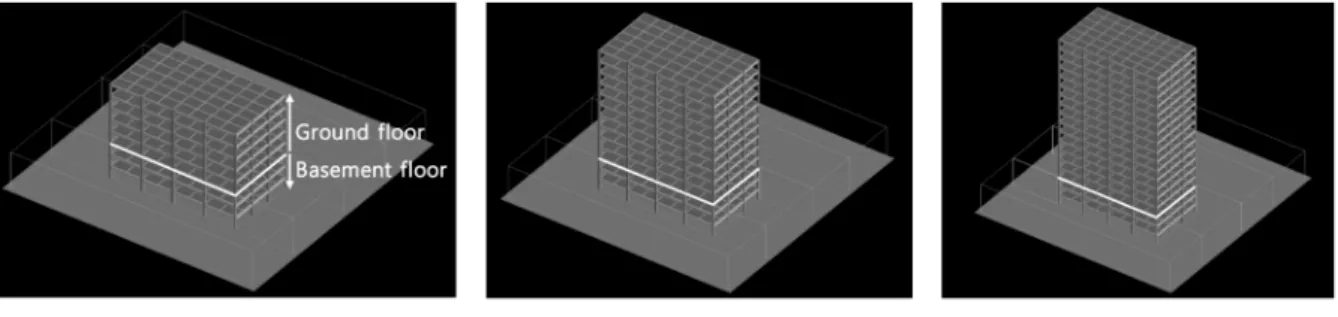
(a) 5-story building (b) 10-story building (c) 15-story building
Fig. 1. Collapse simulation models depending on building height.
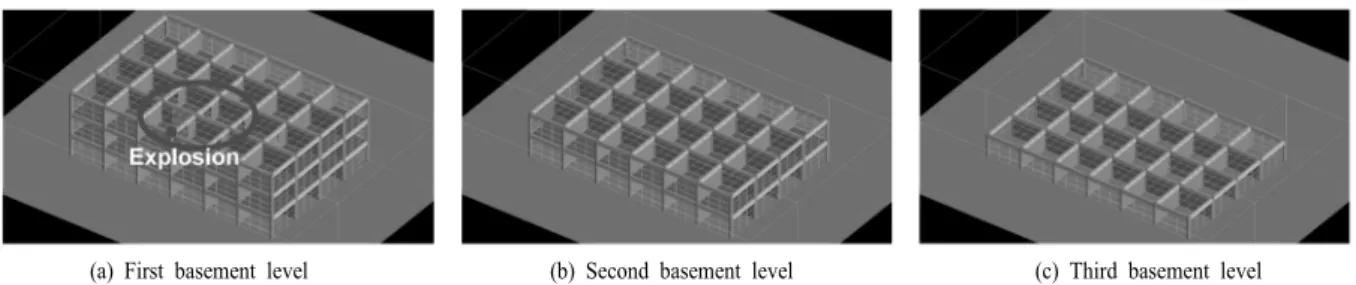
(a) First basement level (b) Second basement level (c) Third basement level
Fig. 2. Expected existing cavities after blasting-induced 5-story building collapse simulation in case of explosion on outside and no wall in the basement floor.
2.1 매몰 공동 형성에 영향을 미치는 인자
구조물이 붕괴된 후 구조물 내에 발생하는 매몰 공 동은 구조물의 붕괴원인, 구조물을 이루는 부재의 종 류 및 성질 , 지상·지하 층수, 구조, 사용연한 등에 따라 다양하게 형성될 것이다. 본 논문에서는 이들 중 건물 붕괴 발생원인, 건물층수, 건물구조를 인자로 선정하여 각 인자에 따른 구조물의 붕괴 후 매몰 공동 형성의 위 치를 파악하고자 하였다 . 건물붕괴 발생 원인으로는
선행연구 5),6) 를 참고하여 국내에서 발생건수는 비교적
낮으나 , 건물붕괴 및 연쇄붕괴 유발 가능성이 높고, 발 생시 많은 인명피해를 야기할 수 있는 폭발을 대상으 로, 폭원의 위치를 내부/외부로 설정하였다. 건물층수 는 저층(10층 이하), 중층(11∼15), 고층(16∼20)을 대표 하는 층수로 각각 저층은 5층, 중층은 10층, 고층은 15 층을 선정하였다. 건물구조는 국내에서 가장 많이 분 포하는 구조이면서 대규모 상업시설에 가장 빈번히 사 용되는 건물구조인 RC구조를 선택하고, 벽체의 유/무 로 인자를 설정하였다.
Fig. 1은 지하층의 높이는 3층으로 동일하고, 지상층
본 시뮬레이션은 붕괴사고가 발생하기 전에 실시하 여 여러 인자에 따른 매몰 공동 형성위치 파악을 위한 기초자료로서 활용될 것이다 .
2.2 붕괴시뮬레이션 결과
각 인자별로 붕괴시뮬레이션을 실시하여, 매몰 공동 이 형성된 결과를 Fig. 2∼11에 도시하였다. 단, 지하층 에 형성된 매몰 공동을 확인하기 위해 붕괴 후의 상태 에서 상부에 덮여있는 슬라브 등의 구조물 부재 잔해 를 걷어낸 후의 그림이다.
2.2.1 층수에 따른 매몰 공동 형성
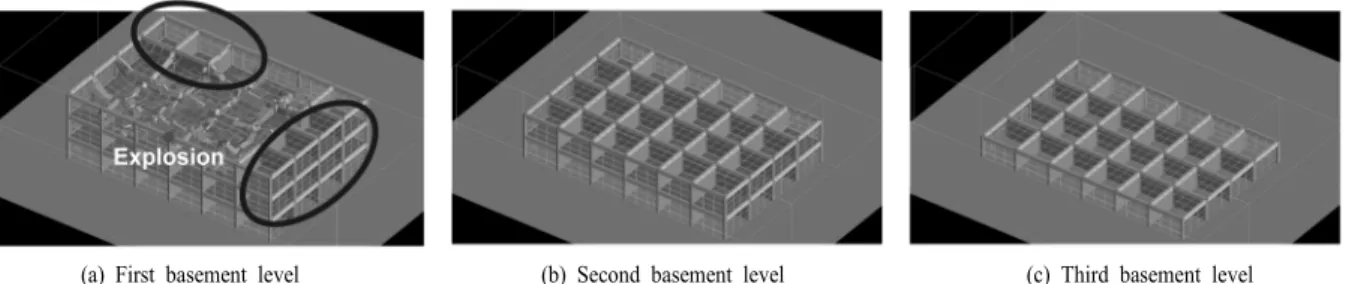
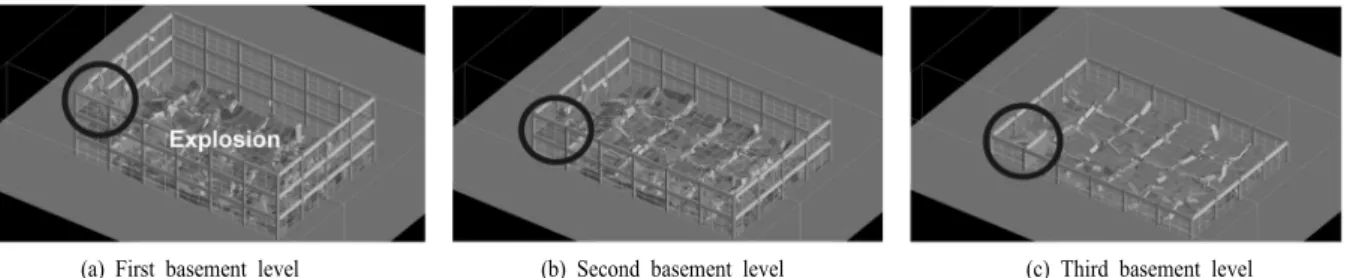
Fig. 2, 3, 4는 각각 5, 10, 15층 구조물의 붕괴 후 지 하 1, 2, 3층에 형성된 매몰 공동 위치를 나타낸다. 지 상층수 이외의 다른 조건―지하층수(3층), 폭원위치(외 부), 구조(지하벽체 없음) 등은 동일하게 설정하였다.
Fig. 2의 5층 구조물의 결과를 보면, 지하 1층은 전체가
붕괴되어 매몰공동이 형성되지 않았고 , 지하 2, 3층은
폭원 반대쪽 후면부가 붕괴되지 않아 매몰 공동이 형
(a) First basement level (b) Second basement level (c) Third basement level
Fig. 3. Expected existing cavities after blasting-induced 10-story building collapse simulation in case of explosion on outside and no wall in the basement floor.
(a) First basement level (b) Second basement level (c) Third basement level
Fig. 4. Expected existing cavities after blasting-induced 15-story building collapse simulation in case of explosion on outside and no wall in the basement floor.
(a) First basement level (b) Second basement level (c) Third basement level
Fig. 6. Expected existing cavities after blasting-induced 5-story building collapse simulation in case of explosion on outside and wall existing in the basement floor.
Fig. 5. Vertical displacement of the top of column at same height (5m) on 5, 10 and 15-story building.
성되었다. Fig. 3와 4의 10, 15층 구조물은 지하 1, 2, 3 층이 전체 붕괴되어 매몰공동이 형성되지 않았다. 이
는 구조물의 높이와 관련이 있다. Fig. 5는 5, 10, 15층 구조물이 붕괴될 때 , 동일한 높이(5층)에서의 시간에 따른 기둥 상단의 수직 변위를 나타낸 것이다 . Fig. 5의 그래프에서 보면 층수가 높을수록 낙하속도가 증가하 는 경향을 보이며 , 이는 층수가 높을수록 자중이 증가 하기 때문으로 생각된다.
2.2.2 벽체 존재하는 구조물의 매몰 공동 형성
구조물을 구성하는 부재들 중 지하에 벽체가 있을 때의 5, 10, 15층의 결과를 Fig. 6, 7, 8에 나타내었다.
그 외의 조건들은 2.2.1에서 설명한 것과 동일하다.
Fig. 6의 5층 구조물의 결과에서, 지하 1층만 중앙벽체
일부분이 붕괴되었을 뿐, 그 외의 층에서는 붕괴가 발
생하지 않았다 . Fig. 7의 10층 구조물에서는, 지하 1층
은 전면부는 붕괴되고 우측면부와 좌측후면부에 매몰
공동이 발생하였는데 , 이는 전방으로 기울어지면서 붕
(a) First basement level (b) Second basement level (c) Third basement level
Fig. 7. Expected existing cavities after blasting-induced 10-story building collapse simulation in case of explosion on outside and wall existing in the basement floor.
(a) First basement level (b) Second basement level (c) Third basement level
Fig. 8. Expected existing cavities after blasting-induced 15-story building collapse simulation in case of explosion on outside and wall existing in the basement floor.
(a) First basement level (b) Second basement level (c) Third basement level
Fig. 9. Expected existing cavities after blasting-induced 5-story building collapse simulation in case of explosion on inside and wall existing in the basement floor.
(a) First basement level (b) Second basement level (c) Third basement level
Fig. 10. Expected existing cavities after blasting-induced 10-story building collapse simulation in case of explosion on inside and wall existing in the basement floor.
괴되면서 전면부에 하중이 편중되었기 때문이다 . 또한 지하 1층까지만 붕괴가 발생하였고, 이후에는 지하층 의 벽체로 하중이 분산되면서 지하 2, 3층은 붕괴되지 않았다 . Fig. 8의 15층 구조물은 지하 3층의 좌/우측 모 서리에만 매몰 공동이 발생하였고, 그 외의 부분과 지 하 1, 2층은 붕괴되었다. 2.2.1과 동일하게 층수가 높을 수록 붕괴되는 면적이 커 매몰 공동의 발생 가능성은
적은 것으로 나타났다.
2.2.3 내부 폭발에 따른 구조물의 매몰 공동 형성
Fig. 9, 10, 11은 건물내부에서 폭발이 일어났을 때
의 결과이다. Fig. 9의 5층 구조물의 결과를 보면, 지하
1층에서는 구조물의 내부에서 폭발이 일어나면서 중심
부는 넓은 범위에서 파괴가 일어나고 측면부에는 매몰
(a) First basement level (b) Second basement level (c) Third basement level
Fig. 11. Expected existing cavities after blasting-induced 15-story building collapse simulation in case of explosion on inside and wall existing in the basement floor.
(a) First basement level (b) Second basement level (c) Third basement level
(d) Contour map of the first basement level (e) Contour map of the second basement level (f) Contour map of the third basement level
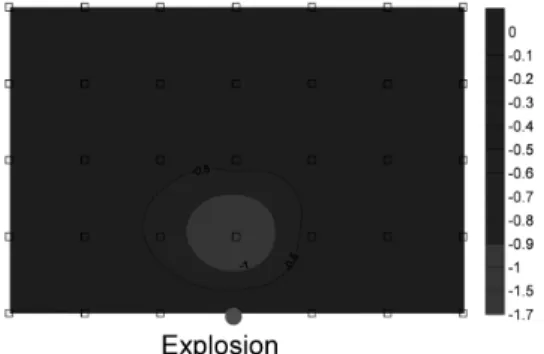
Fig. 12. Vertical displacement on column after blasting-induced 5-story building collapse simulation in case of explosion on outside and wall existing in the basement floor.
공동이 발생한 반면 , 지하 2, 3층은 중심부의 벽체 일 부만 어긋난 정도에 그쳤다. Fig. 10의 10층 구조물은 지하 1층 양측 벽면부를 제외하고는 전체 붕괴되고, 지 하 2, 3층은 중앙부 일부벽체만 어긋나 5층 구조물과 비슷한 양상을 보였다. 반면 Fig. 11의 15층 구조물은 지하 전체층에서 대부분이 붕괴되고, 좌측 전면부 모 서리에만 매몰 공동이 발생하였다. 즉, 내부에서 폭발 이 발생할 경우에도 앞의 결과와 동일하게 층수가 높 을수록 붕괴는 크게 발생하였다 .
3.
고 찰앞에서 서술한 시뮬레이션 결과에서 기둥의 수직변
위를 이용하여 등고선도를 작성, 매몰 공동 형성 위치 를 검토하였다 . 이는 시뮬레이션 결과를 도시하는 것 만으로는 부재가 부분 붕괴되어 벽체와 이루는 작은 공간의 매몰 공동의 상태를 확인하는데 어려움이 있기 때문이다. 등고선도 작성에는 크리깅(Kriging) 기법을 적용하였으며 등고선도와 함께 붕괴 시뮬레이션도 도 시하였다.
3.1 붕괴 후 지하층에 따른 매몰 공동 위치
붕괴 시뮬레이션 결과 중, 지하벽체가 없는 5층 구
조물의 결과를 지하 1, 2, 3층의 순으로 Fig. 12에 도시
하였다 . Fig. 12 (a)의 지하 1층의 붕괴시뮬레이션 결과,
전체가 붕괴되어 폭원반대방향인 후면부에도 매몰 공
(a) First basement level (b) Second basement level (c) Third basement level
(d) Contour map of the 5-story building (e) Contour map of the 10-story building (f) Contour map of the 15-story building
Fig. 13. Vertical displacement on column after blasting-induced building collapse simulation depending on building hight.
동이 발생하지 않았다. 그러나 (d)의 변위 등고선에서 보면 좌측 후면부는 기둥의 변위가 전면부와 비교해서 적게 발생한 것을 알 수 있다. 이는 (a)의 상부에 나타 낸 좌측 후면부를 확대한 그림을 보면, 화살표와 같이 붕괴된 기둥이 기울어지면서 일부 부재가 붕괴되어 완 전하지는 않지만 사람이 고립되어 생존가능한 매몰 공 동이 형성되어 있는 것을 알 수 있다.
3.2 층수에 따른 매몰 공동 위치
구조물의 층수에 따른 매몰 공동의 위치를 검토하기 위해 5층, 10층, 15층 구조물의 붕괴 후 결과를 알아보 았다. 이 중 매몰 공동의 발생확률이 가장 적은 지하 1 층의 결과를 Fig. 13에 나타내었다. Fig. 13의 (a), (b), (c)는 해석결과, (d), (e), (f)는 기둥변위의 등고선도이 다. 해석 조건으로는 지하벽체가 있는 구조물을 대상 으로 외부 폭원에 의한 폭발을 상정하였다. 먼저 해석 결과를 보면, 층수가 높아질수록 매몰 공동의 발생면 적이 작은 것으로 나타났다. 구체적으로 보면, 5층 구 조물은 폭원 근처 벽체 일부만 파괴된데 비해, 15층 구 조물은 전체적으로 붕괴되어 매몰 공동이 거의 발생하 지 않는다. 이는 층수가 높을수록 파괴된 부재의 자중 에 의해 지하층의 벽체와 기둥에도 큰 충격이 가해져 광범위하게 파괴되기 때문이다. 이를 Fig. 13의 (d), (e), (f)와 같이 수직변위의 등고선도로 보면, 5층 구조물의 변위는 다른 2개의 구조물과 비교하여 현저히 낮다. 15 층 구조물의 경우, 폭발이 외부에서 발생함에도 불구
하고 큰 변위가 발생했음을 알 수 있다. 10층 구조물은 우측면부와 폭원 반대방향의 후면부에 매몰 공동이 발 생하였으며, 15층 구조물은 전체적으로 붕괴되어 매몰 공동이 발생하지 않았다.
3.3 벽체의 유/무에 따른 매몰 공동 위치
건물의 구조 중 지하벽체의 유 /무에 따른 매몰 공동 의 위치를 검토하기 위해 Fig. 14에 5층 구조물의 지하 벽체 유/무에 따른 붕괴 후 매몰 공동의 위치를 나타내 었다 . 붕괴시뮬레이션 결과와 더불어 변위의 등고선도 함께 도시하였다. Fig. 14 (a)와 (b)의 지하벽체가 있는 경우 , 폭원으로부터 6 m에 위치한 기둥까지 변위가 관 찰되고 , 그 외는 변위가 관찰되지 않았다. 반면 Fig. 14 (c)와 (d)의 지하벽체가 없는 구조물의 경우, 층수가 가 장 낮은 5층임에도 좌측 후면부에 기둥변위가 적게 발 생한 것을 제외하면 , 전체적으로 붕괴되어, 매몰 공동 은 거의 발생하지 않았다. 벽체의 유/무에 따른 결과는 예상과 크게 다르지 않으나 , 유동인구가 많은 대형 쇼 핑센터와 같은 고층건물의 지하층은 대부분 기둥만 있 고, 벽체가 없는 구조임을 감안할 때, 붕괴 시 매몰 공 동의 위치를 예측하는 일은 중요하다.
3.4 폭원 위치에 따른 매몰 공동 위치
폭발 사고가 일어나는 위치가 건물의 외부인지 내부
인지가 붕괴 사고시 매몰 공동의 형성에 큰 영향을 미
치는 것은 자명한 일이지만, 지금까지 시뮬레이션을
(a) Building with wall on the basement floor (b) Contour map of building with wall on the basement floor
(c) Building without wall on the basement floor (d) Contour map of building without wall on the basement floor
Fig. 14. Vertical displacement on column after blasting-induced building collapse simulation depending on the presence of wall.
(a) Explosion outside of the building (b) Contour map of explosion outside of the building
(c) Explosion inside of the building (d) Contour map of explosion inside of the building