Print ISSN: 2288-4637 / Online ISSN 2288-4645 doi:10.13106/jafeb.2021.vol8.no2.0041
Sustainability Report Publication and Bank Share Price: Evidence from Saudi Arabia Stock Markets*
Mualla Ali ALHARBI 1 , Mahfoudh Hussein MGAMMAL 2 , Ebrahim Mohammed AL-MATARI 3
Received: November 05, 2020 Revised: December 30, 2020 Accepted: January 08, 2021
Abstract
We examine the effects of the sustainability report (SURE) and investment decision on share price (SPRC). Explore whether the sustainability report changes the value-relevance of financial accounting variables indirectly. It is evident that the number of banks is only 12, which are all banks in Saudi Arabia, and we have included all of them in the final sample. Moreover, the same number of banks applied for the analysis concerning the accounting variables. This article utilizes a panel dataset from a sample of Saudis registered banks from the first quarter of 2014 to the last quarter of 2018. We utilize a balanced sample that contains all banks listed in Tadawul, 240 observations. Run GLM regression to tests the relationships. Findings exhibit that investors value the complementary disclosure of accounting information provided in SURE, and this disclosure produces a positive effect on SPRC. The SURE figure is robustly significant, suggesting that the market assigns a positive-significant correlation to the further information in the SURE. The indirect effects show that BPS×SURE is a positive-significant effect on SPRC, whereas EPS×SURE is positively-insignificant. The analysis shows that SURE’s value relevance conforms through Saudis Banks, consistent with the hypothesis that diverse institutional perspectives probably influence the value-relevance of SURE.
Keywords: Sustainability Report, CSR Disclosure, Sustainability Accounting, Corporate Responsibility, Corporate Social Responsibility JEL Classification Code: G21, G30, M14, M41
Global Reporting Initiative and the Integrated Reporting Frameworks can improve the structure of either an integrated report or a sustainability report.
The decision to focus our investigation on CSR- disclosure in the sector of banking has numerous purposes.
To begin with, the sharing of the sustainability report (SURE) in this segment is far-reaching; the number of banks that spread the report expands yearly (Viganò &
Nicolai, 2009; Wensen et al., 2011; Carnevale & Mazzuca, 2014; Gungadeen & Paull, 2020). Second, study on SURE within the managing an account division is limited, despite the intrigued appeared by the Worldwide Detailing Activity (GRI) and the European Keeping money League (EBF) that drew up a record enclosing a set of standards in 2005 and rules for the distribution of the SURE (European Banking Federation, 2016).
The banks risk reputational is imperative seeing their sponsors just as to their loans/investments (Aintablian et al., 2007). The connection between the depositor and the bank might be a guardian association. In making this relationship, the bank’s status plays a vitally essential role. From a general theoretic purpose of see, the association between corporate social responsibility detailing, repute possibility chance, and banks can be deciphered through political-social hypotheses,
*Acknowledgements:
*
We acknowledge helpful comments from Dr. DIAW, Alassane, and Dr. Moez Dabboussi, College of Business, Jouf University, Saudi Arabia. We are grateful as this paper has benefitted from him and the referees’ constructive comments.
1
First Author. Ph.D. Candidate, College of Business, Jouf University, Saudi Arabia. Email: [email protected]
2
Corresponding Author. Assistant Professor, [1] College of Business, Jouf University, Saudi Arabia [2] Faculty of Commerce & Economics, Amran University, Yemen [Postal Address: Sakaka, Al-Jouf, Saudi Arabia] Email: [email protected]
3
Associate Professor, [1] College of Business, Jouf University, Saudi Arabia [2] Faculty of Commerce & Economics, Amran University, Yemen, Email: [email protected]
© Copyright: The Author(s)
This is an Open Access article distributed under the terms of the Creative Commons Attribution Non-Commercial License (https://creativecommons.org/licenses/by-nc/4.0/) which permits unrestricted non-commercial use, distribution, and reproduction in any medium, provided the original work is properly cited.
1. Introduction
Recently, Bini and Bellucci (2020) examined the
incentives for sustainability reporting from the perspective
of the two theories underlying voluntary social and
environmental reporting and regulatory frameworks on
non-financial disclosure. The explicit reference to the
which recognize corporate social responsibility as an apparatus accessible to companies. It grows their realness about partners and to boost their translucence about financial experts.
Moreover, Aureli et al. (2020) suggests that shareholders observe sustainability that runs for a long time over short term financial performance. It comparatively indirectly suggests that doubtful investors of Environmental, Social, and Governance data would contain it in their source designation decisions. Because the market offers courtesy to ESG data, results of the study motivate unrivalled mindfulness of sustainability among companies. It also suggested future research on firms that may plan the time of SURE distribution to hypothesize the effect on the shares price. Furthermore, Ates (2020) provided evidence that sustainability-index involvement is important for stockholders in a developing market. The analyses indicated a negative association between a small level of company sustainability-performance and company financial- performance. Outcomes recommended that this association does not modify based on the firm profitability and size, as investors’ pledge to firms listed in a sustainability-index that are anticipated to have a high level of sustainability- performance.
The main reason and the motivation of the study is to increase current knowledge on the sustainability report determinants. Given the focus of the study, the starting point for motivating the paper is to identify and explain our understanding, so far, of the market reaction to the publication of a stand-alone sustainability report. There are many studies in this area. We have listed and explained the results of these studies below to discuss why another study is needed focusing on banks in Saudi Arabia. Berthelot et al.
(2012) study attempted to address whether capital markets take sustainability reports into account in Canadian. The outcomes suggested that stockholders certainly price this sort of reporting and can help as claims to assist an organization’s voluntary pledge to this kind of disclosures. On the contrary, Guidry and Patten (2010) found no important market response to the declaration of the sustainability reports release. Though, corporations with high-quality reports displayed meaningfully more positive market responses than corporations issuing low-quality reports.
Furthermore, Wang and Li (2016) found that the market values separate CSR reports and perceived credibility and that reporting of CSR quality are significant elements in the market assessment. However, Safari and Areeb (2020) results designated that contracted reporting systems, lengthways with cost and time restrictions, have served as prominent obstacles to effective practices of the “Principles for Defining Report Quality.” The results provided examples on respectable sustainability reporting applies and explain the
transition benefits of 2-way interaction strategies that allow sense giving and sense-making together. On the other hand, Lackmann et al. (2012) suggested that stockholders consider the dependability of sustainability data when defining a company’s market value. From another angle, Simoni et al. (2020) outcomes show that a corporation’s decision to guarantee its sustainability reports is inspired by the necessity to preserve good relationships with its stakeholders and the will to sign their sustainability performance and to gain legality.
In this article, we address the above-mentioned issues in the case of KSA’s economy, specifically in the financial sector. Nowadays, the government has introduced vast economic developments intended to decrease the Kingdom’s dependence on oil income and reform the whole economy, including the financial sector. They applied the main reform of economic program called 2030 Saudi Vision, which aimed to revoke the country out of its reliance on oil income and differentiate its economy. As the “Financial Sector Development Vision Realization Program” (FSDVRP) proposes advancing a varied and operative financial sector to sustenance the countrywide economy’s improvement, vary its income sources, and stimulate investment, finance, and savings. The FSDVRP tends to achieve this motivation by enabling financial organizations to sustain the private sector’s growth, ensuring the construction of a progressive capital market, and encouraging financial planning. While simultaneously assisting the combination of its economy into the new universal economy.
The paper deals with an interesting topic that has been studied extensively in the literature (stock market reaction to CSR report publication). This study’s unique and distinguishing feature is that it focuses on banks from Saudi Arabia, an industry and a market from which results are non-existent. In as much as the Saudi economy is a mono exporter economy founded mostly on oil, any significant deterioration in oil prices is an effect of the economy of KSA. Kingdome’s foreign trade reliance on oil return is 72 percent of the nation’s entire exports and nearly 70 percent of regime income. Subsequently, these incomes are gathered by public governance, which raises public spending and guides numerous influences on macro-economic’ collections.
Therefore, some studies show that the sustainability report determinants are influenced by actual variables such as total income variables. Hence, it is interesting to evaluate the effects of the sustainability report (SURE) and investment decision on share price (SPRC). Moreover, we investigate whether the sustainability report changes indirectly the value-relevance of the variables of financial-accounting.
This article intends to investigate whether the attribute
of investors has significant relevance to the data conveyed
by SUREs. We try to confirm the presence of an association
between share price and SUREs by scrutinizing a sample of all Saudi verified banks from 2014 to 2018. This study is an extension of past studies; it offers various contributions to the scientific debate and logical discussion. It contributes to the present literature on the value-significance of nonfinancial variables investigation. Moreover, it enhances the literature by adopting SURE’s value-significance, examining not merely the direct influences of the SURE on share price but also its interface with other accounting- variables. Also, it enhances the early studies on disclosure of CSR in the banking section, which, to antedate, has typically concentrated on the issues of corporate social responsibility strategy and corporate social responsibility policy. Lastly, it is specially intended at measuring whether variances occur in the value significance of the SURE in Saudi Arabia cross time, due to the reasons prior mentioned.
The article organization is as shadows. Primary, we state the review of previous literature. Then, we talk about the SURE role in the disclosure of the banks. Third base, we form a research design. Next, we depict samples and data collected then, discussion of the practical outcomes. Lastly, synopsize the results, deliberate the suggestions, and make recommendations for future research.
2. Literature Review 2.1. Disclosure of CSR
Currently, corporate laws, firms have commitments to provide details regarding their business financial performance. Nevertheless, over the years, it was a popular exercise to incorporate some nonــfinancial disclosures in yearly reports. What has been transformed in the past quarter of the 20 century is that nonــfinancial reporting began to advance as a distinct reporting practice because of the expanding concerns and awareness concerning the business influence on the environment and society (Dumay et al., 2016; Rinaldi et al., 2018; Farooq & De Villiers, 2019). This differentiation has been improved by the effect of the development and spread of independent reports on environmental performance and corporate social. The 2008 financial related crisis located banks in the look of community judgment. Commercial entities did not receive an interval in reacting, escalating their efforts in what had become known as sustainable banking, intending to stabilize the undesirable effects of their loss of reputation (Nájera- Sánchez, 2020).
Even though corporate environmental disclosures have been researched extensively, no earlier literature in the Middle-East is surrendered to studying stand- alone sustainabilityــreports (Ismaeel & Zakaria, 2019).
Nevertheless, few practical studies were conducted on environmental and social disclosure in yearly reports in
some countries in the region. Furthermost of these literatures concentrate their analysis on recognizing the elements that influence sustainability disclosure and CSR. For example, Ibrahim and Hanefah (2016) describe in determining CSR disclosure levels how the board diversity characteristics play a role in Jordan companies. Menassa (2010) in Lebanese commercial banks discovered that size and profitability are positively related to CSR disclosure, even though worldwide occurrence and listing in the share market do not affect.
Hernawati (2020) examines the role of Effectiveness of Board Monitoring in exploring appropriate possibility between environmental doubts and business-strategies and how it influences the SURE level. These outcomes specify that the Effectiveness of Board Monitoring positively influences the possibility of appropriate environmental doubts and business-strategies. On the other hand, in other study, the outcomes display that CSR disclosure has a significant and positive influence on the company’s value, and profitability moderates the influence of CSR disclosure on company value. The study implies that implementing CSR is very important to increase the company’s sustainability and the company’s value in the upcoming (Machmuddah et al., 2020).
Likewise, results from Egypt sustenance the function of the industry in inspiring CSR disclosure; Salama (2009) specified that some firms from telecommunication and building sectors form exclusions among other Egyptian firms that have inadequate social disclosure (Ismaeel &
Zakaria, 2019). Current studies described some rise in social and environmental disclosure in the region (Mgammal, 2011; Alotaibi & Hussainey, 2016; Habbash, 2016; Ibrahim
& Hanefah, 2016; Mgammal, 2017; Gerged et al., 2018;
Rahman et al., 2019). Though, best of these literatures were worried about social and environmental disclosure overall, with no concern for stand-alone sustainabilityــreports as a separate reporting practice.
Several hypotheses that legitimize CSR applications and ensuing disclosure have been placed onward within the writing, and, in this logic, it is conceivable to portray a multi-theoretical framework (Cormier et al., 2005). For example, Aureli et al. (2020) examined the association between an organization’s sustainability practices and its financial performance with different methods. From different theoretical perspectives, outcomes show a growing level of significance in the reports issued. Social, political hypotheses initiate from the thought that a company is a financial element that cannot be insulated from the social setting in which it lives and works, and by which it is affected and shaped.
As indicated by Max (1995), to endure, the firm should
catch the authorization of both is crucial (e.g., workers,
shareholders, clients) and auxiliary partners (e.g., media,
uncommon intrigued bunches). CSR action and CSR
disclosure are helping the communication prepare essentially to shape and keep up this back. Beginning from this hypothesis, and based on partner and legality hypotheses, a few experts have preceded diverse hypothetical arguments on CSR action (David, 2000; Maignan & Ralston, 2002;
Carnevale & Mazzuca, 2014; Tomaselli et al., 2020). For instance, Gray et al. (1995) and Hooghiemstra (2000) contended that companies employ CSR divulgence to discover authenticity among diverse partners.
In summary, the creator contended that the financial circumstances (the relative wellbeing of companies and the economy, and the rank of competition amongst corporations) impact the likelihood of performing in socially mindful ways.
These situations are interfered with by a variety of regulation restrictions: solid-state control, collective mechanical selfــ regulation, nonــgovernmental corporations and other free companies that screen companies, a regulating organization environment that energizes socially dependable behavior, the contribution of representative affiliations and correlation in discourse of institutionalized with shareholders.
2.2. Share Price for Bank, the BPS and EPS
This paper aims to explore whether SURE publication affects accounting information’s relevance, more facilitating to clarify the company’s market value. Pursuing Carnevale et al. (2012) and Cardamone et al. (2012), SURE publication can similarly influence share price ultimately since the record is realized by stockholders to be a source of additional and complementary info about the trends, composition, and nature of the customary valueــrelevant BPS and EPS accounting variables. Affording to the procedures anticipated by GRI and through other relations, SURE should offer data not merely on a bank’s previous and current obligations to corporate social responsibility then likewise on its upcoming policy. As in several nations in Europe, issuing of SURE with GRI standards is compulsory. In contrast, in several nations, it is voluntary; e.g., in Indonesia, SURE announcement is not compulsory because there are no basic standards that govern (Kholis et al., 2020).
Accordingly, SURE must contain information about arrangements and activities that may create various decisions in the distribution of economic resources. This information is not essentially involved in the financial report, clarifying the paired nature of the data held in the SURE. For instance, stockholders may discover data in the SURE related to a mediumــterm scheme to construct a network playground or to fund a drive for the expectations of a specific topographical territory. These are schemes that, by their effectiveness, are not imitated in the financial statement, yet contain an optimal concerning the future allocation of financial sources. An instance can be a scheme for a nurseryــfirm. The SURE highpoints social benefits (e.g., the working environment
improvement) and the economic features (such as less absenteeism) connected to the project that can be measured in financial reports in coming years. Moreover, the SURE suggests measuring the influence that the project will have on accounting variables involved in upcoming financial reports.
Inversely, the cases do not stop over there as the helpful value of the SURE is wide-ranging. For instance, the new EU ــplans on pollution and sustainable power source will have an influence on the contribution strategies of banks about firms associated with regular conventional energy manufacture and the vehicles segment. Each bank in its SURE must give data on the financed firms and their degree of acquiescence with the novel EUــrules on renewableــenergy and pollution.
The occurrence of nonــcompliant firms might disclose the bank to an unintended hazard (for example, the conceivable increment in credit risk initiated by non-compliant firms).
This data on the possible credit hazard is very significant and essential for investors, yet they are not given by the financial reports (Carnevale & Mazzuca, 2014).
The SURE reflects the natural position for reporting upcoming risks associated with selections of financing firms that are not good in terms of CSR. In this context, it is clear that the SURE informational role is complementary to the info offered by the financial-report. Therefore, if this is right, disclosure of SURE might indirectly influence share prices by interrelating with other accountingــvariables and adjusting their influences. For instance, if a SURE shows a potential future obligation for the firm, it is reasonable to assume that investors will assign low noteworthiness to BPS than they ought to in the truancy of the data conveyed by the SURE. In such a manner, Saudi Arabia recognizes the essential significance of a diversified energy mix to its long- term economic prosperity. Hence, the National Renewable Energy Program has pledged a commitment to expand its energy leadership through the Competitive and Sustainable Industry, particularly in Framework for Developing Tendering Policies; Bank Guarantees play a vital role in it (National Renewable Energy Program, 2019).
2.3. Sustainability Report and Value Relevance Radhouane et al. (2019) concentrated on social and annual reports of French firms. Outcomes indicated that ESI companies and their reassurance environmental disclosure are unhelpful in terms of market value. Besides, whereas having a professional accountant and offering a broader range of reassurance as the assurance supplier enriches environmental reporting value relevance. In precise, an advanced rank of environmental disclosure is commercially rewarded by market members for ESI companies that offer an advanced reassurance level.
Nonetheless, numerous researches have concentrated on
the environmental reporting valueــrelevance, and several of
them offer a significant logical background for our scrutiny.
Cormier and Magnan (2007) inspected the influence of environmental reporting on the association between a company’s earnings and the value of its share market. Their outcomes display that the publication of environmental report influences earnings and the value of the share market of German companies. Nevertheless, it does not affect the evaluation of Canadian and French companies’
share market. Moneva and Cuellar (2009) established an important association between the company’s environmental reporting and market value. Semenova et al. (2010) initiated that environmental disclosure is complementary to financial information and is value relevant.
Thus far, insufficient researches have concentrated on the SURE value relevance. These researches found very diverse outcomes. Greeves and Lapido (2004) examined the association between SURE’s advantages and the performance of firms that publish the SURE. Schadewitz and Niskala (2010) explored the influences of GRI accountability reporting toward companies’ market value to examine whether the presence of the SURE delivers additional clarification for company value. Cardamone et al.
(2012) investigated the SURE value relevance in the banking segment. They found a remote association between the company’s SURE publication and marketــvalue. Cardamone et al. (2012) found a significant negative association between a firm’s SURE writing and market value.
Moreover, comparing firms that do not publish the SURE and firms that publish the SURE, the authors established that the BPS accounting data is further related for corporations that publish the SURE, while the value-relevance of EPS does not vary for these firms which are aligned with Carnevale and Mazzuca (2014) findings. In this context, Carnevale and Mazzuca (2014) study fits into this propositions and background by suggesting a key to the thought that there is a probable association between the bank’s marketــvalue and the publication of a sustainabilityــreport. This article fits into this area by providing the key to recognizing the potential correlation between the publication of a SURE and bank’s share price.
2.4. Sustainability Report (SURE)
Prior studies have found many factors impacting the sustainable reporting process, of which environmental and social news is the most significant. In several previous studies, such as Adams (2002), Baele and Van (2012), and Mitra et al. (2015), revealed that the internal and external regulatory climate combined to report on sustainability had identified aggregating influences. Besides, Adams (2002) has shown that these influences assist in preparing high-quality reports showing sustainability. Managers can also be known to play a significant role in the efficiency of reports that show the
resilience of organizations. In its role of disclosure because of its essential role in promoting corporate responsibility and improving the relationship between businesses and other parties, Baele and Van (2012) have shown that the goal of management is necessary to expose longevity.
Mitra et al. (2015) found that managers play an important role in news quality sustainability studies. Legislation and regulations must also instruct administrators in the production of effective reports on good management. It would help them plan business and other areas of social reporting pertaining to sustainable growth, which in turn help decision-makers in businesses. In addition, required protocols will allow businesses to report on sustainability.
Also, the built model shows knowledge mechanisms relevant to the threefold survival of both stakeholders. The basic phrases and phrases in the annual reports are “corporate social responsibility,” “world, people, benefits,” “corporate sustainable growth,” “corporate citizenry,” “economic ethics,” and “sustainable industry,” which help to identify the sustainability elements. In order to help people interested in getting knowledge peacefully and seamlessly, sustainable development should be listed on the websites within the same context (Dissanayake et al., 2016). In addition, research has shown that the mechanism of viability commentary relates to the degree and income produced by financial firms (Alberici
& Querci, 2016). The manner in which environmental and ecological concerns have been paired with news over time has been highly relevant (Scholtens, 2008).
Sustainability proponents have demonstrated that the encouragement of transparency would deliver outstanding outcomes to businesses and customers, helping to generate valuable information that will support them in turn. It has been seen that better environmental reporting can help us make appropriate external and internal choices, leading in turn to financial stability and helping to boost social cohesion (Eccles & Saltzman, 2011; Krzus, 2011; Eccles et al., 2015).
According to Adams and Larrinaga-González (2007), sustainability reporting involves organizational unity in organizations to help drive improvements in corporate sustainability efficiency expressed in the numbers of results. This study justified the decisive role of managers in applying such indicators to enterprises, which allow them to communicate sustainability through annual reports.
2.5. Investment Decisions (INDECI)
No matter the degree to which the willingness to make
an investment decision depends on the valuation of the share
price, it was not observed. Considering its importance, it
was one of the main aims of this paper to study this variable
to provide information which on the one hand, strengthens
the literature of earlier studies, on the other hand, it is an
extension and a guide to the future research.
2.6. Sustainability Report and Bank Disclosure The relationship between corporate and Indian banks’
success has been discussed by Saxena and Kohli (2012).
Some efficiency proxies, such as benefit after tax (PAT) and income per share (EPS), analyzed the performance. Lastly, managers were advised to report on sustainability in the production of the annual reports because of their importance in fostering institutional social responsibility. It also suggested that prospective scholars work on improving the concept of environmental communication by enhancing decisions on social responsibility-related investment processes.
Recent studies have found that the Muslim Finance concept aims to improve exclusively social practices and encourage growth through environmentally sustainable practices.
However, statistically, the contribution of the industrial sector to sustainability disclosure has not been strongly identified, so future research in future studies should concentrate on this sector (Akhtar, 2008; Ahmed Esra & Hamdan, 2015; Aliyu, 2017). Also, reporting on sustainability is not mandatory when writing annual reports since laws on social liability take into account the implementation of international regulations (Kumar & Prakash, 2019).
The previous study, which addressed the mechanism of reporting sustainability in some of the surveys, studies revealed that the mechanism of sustainability disclosure has dropped, on the one side. Thus, in the Gulf countries, including Saudi Arabia, there is a lack of education, particularly in the banking sector. Its importance differs drastically from the importance of the other regions. Therefore, the purpose of this research is to cover this deficit and improve previous studies, which are theoretical and experimental.
3. Research Hypotheses
Conferring to the current studies, we think that SURE publication influences share price by offering stockholders with superior information about risks and chances (associated with environmental dimensions, social and economic). Furthermore, the data resulting from precise accounting information. Diamond and Verrecchia (1991) study on voluntary-disclosure states that the association between a company’s revelation strategy and its share marketــvalue relies upon data asymmetries. Consequently, more exposure prompts more translucence. A more elevated level of disclosure can help decrease the information irregularity among shareholders and managers to minimize the ambiguity about a corporation’s future protection returns and bring down exchange costs for shareholders (Lang &
Lundholm, 2000).
The studies on voluntaryــdisclosure show that the association between a bank’s disclosure technique and its
share marketــvalue depends-upon data asymmetries, and this way, more disclosure intimates to more translucence (Diamond & Verrecchia, 1991; Carnevale & Mazzuca, 2014). A more rank of the disclosure can help diminish the data asymmetry among stockholders and managers, decrease uncertainty concerning a company’s future securitiesــreturns, and lower transaction costs for stock- holders (Kim & Verrecchia, 1994). Besides, the firm is mindful of more disclosure because this can translate 5 into a rise in its trustworthiness, irrespective of whether disclosed news is bad or good (Blacconiere & Patten, 1994). However, even not good newscast can aid to expand the quality of disclosure, and hence boost the credibility of the firm and improve its status. Thus, this type of data should influence market value (Cormier & Magnan, 2007;
Cardamone et al., 2012; Carnevale et al., 2012; Carnevale
& Mazzuca, 2014). In this context, we examine the subsequent supposition:
H1: SURE release directly influences share price.
Financial information stated by firms is a component that finalizes the regular data required to enhance the investment decisions. The level to which they add to the value relevance of the share price formation replicates together the degree of efficacy and the qualitative level of the accounting figures and capital markets maturity (Afrăsinei & Georgescu, 2020). Prior researches illustrate that accounting data only is not adequate to clarify the company’s marketــvalue and recommend investigating nonfinancial information value relevance (Hirschey et al., 2001), promise to trade ethics (Choi & Jung, 2008; Pae & Choi, 2011) and intended disclosure (Lapointe-Antunes et al., 2006; Clarkson Peter et al., 2008; Carnevale & Mazzuca, 2014).
It plays a significant role in achieving companies’
goals for their goals by examining the role of investment decisions about the present and future investment process.
By reporting on sustainability, companies seek to provide useful information on social activities in full, as well as environmentally friendly operations. This promotes the development and gives a good indication of the companies
‘performance, and through these decisions are made to
continue for local investors. This helps investors simplify
the process of making an investment decision and choosing
the companies that continuously strive to provide reliable
information at the right time. The quality of the information
referred to in the reports helps those interested, both
internal and external, to take this information seriously and
build upon it the process of investment decisions. In the
same context, investment decisions help forecast the stock
price to use the fundamental and technical analysis, as the
primary and technical analysis depends on the quality of the
information referred to in the reports. Accordingly, the link between reporting on sustainability, social responsibility, and corporate performance will have a significant role in the decision-making process regarding the stock price process.
Through this logic, the emphasis is on choosing investment decisions as a factor with reporting on sustainability and corporate performance within Saudi banks. Based on that, we examine the following hypothesis:
H2: there is a relationship between INDECI and share price.
Several studies have concentrated on the environmental reporting value relevance, and a rare of them provide a vital logical basis for study ( Carnevale & Mazzuca, 2014) . Cormier and Magnan (2007) scrutinized the effect of environmental reporting on the association between a company’s stock market value and its revenue. They seem that the distribution of environmental report influences on the stock market value and revenue of German companies, but does not impact the stock market valuation of Canadian and French companies. Moneva and Cuellar (2009) found a critical association between the business’s environmental reporting and market value. Semenova et al. (2010) discovered that environmental exposure is value-relevant and matches financial related data.
The SURE offers information on environmental risks and social influencing banks. These can be indirect or direct (Scholtens, 2009). Direct is the outcome of the performance and choices made by the bank. The indirect are those that are suffered by the bank’s debtors. The incidence of the risk to the borrower would decline the credit excellence of the loan approved by the bank. This reasonable paradigm is likewise effective about the effect that the SURE might have on EPS.
Then, by offering additional data on EPS and BPS values, the SURE interrelates with EPS and BPS and variations the significance that stockholders allocate to the accounting ــvariables (Cormier & Magnan, 2007; Cardamone et al., 2012; Carnevale et al., 2012; Carnevale & Mazzuca, 2014).
To confirm whether the SURE affords stockholders with corresponding data, and might, thus, impact the significance of accountingــvariables, we examine the following hypothesis:
H3: SURE release indirectly influences share price.
4. Research Design 4.1. Sample and Data
We choose Saudi Arabia and its public banks as a laboratory for studying the effects of the sustainability report on share price performance and the value relevance
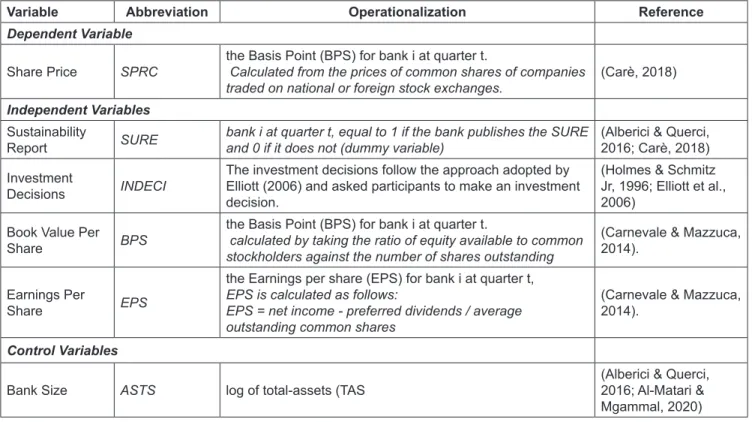
of financial accounting variables, based on the fact that the current reforms in the economy and the financial sector of Saudi Arabia represent noteworthy evolvements in a relatively under-researched geographic area, this fact per se, justify our choice of that particular market (the banking sector). It is evident that the number of banks is only 12, which are all banks in KSA, and we have included all of them in the final sample. Moreover, the same number of banks applied for the analysis concerning the accounting variables. This article utilizes a panel of dataset from a sample of Saudis registered banks from the first quarter of 2014 to the last quarter of 2018. We utilize a balanced sample that contains all banks listed in Tadawul, 240 observations. To choose the sample framework, we used the subsequent principles. Initially, we chose banks affording to the availability of their financial reports on the TADAWL website. Based on Xiao et al., (2005) the outliers were identified by studentized residual> | 2 | as this exhibit a high notes residual that may point out an irregular value of the variable presenting its value on the regressors. The information to carry out this analysis has been gathered from the banks’ financial reports and their Web. Data about accountingــvariables were similarly obtained from Data stream. Pursuing Barth et al. (1998), Cazavan-Jeny and Jeachenjean (2006), Cormier and Magnan (2007), Carnevale et al. (2012), Cardamone et al. (2012), and Carnevale and Mazzuca (2014), we utilize EPS and BPS as accountingــvariables in our pattern, to which we include the bank size (ASTS) as a controlــvariable. Banks reported EPS, BPS, and ASTS estimations in the examination in their quarterly statements. This decision is directed by a substantial-evaluation that displays that SURE distribution in Saudi banks, as a rule, overlays with a quarterly statement. Thus, we interface the regression estimations of factors on a quarterly set.
-40 -20 0 20 40
0 20 40 60 80
3. 245570 2. 906584 2. 846618 2. 896374 3. 305832 3. 087190 3. 388411 3. 455020 3. 645359 3. 569102 3. 082108 2. 989502 3. 423161 2. 896523 3. 610189 2. 967309 3. 293484 3. 239792 3. 389161 3. 455055 3. 409899 3. 132054 3. 255936 2. 470514 Residual
Actual Fitted
Figure 1: Residual
4.2. Estimation Equations
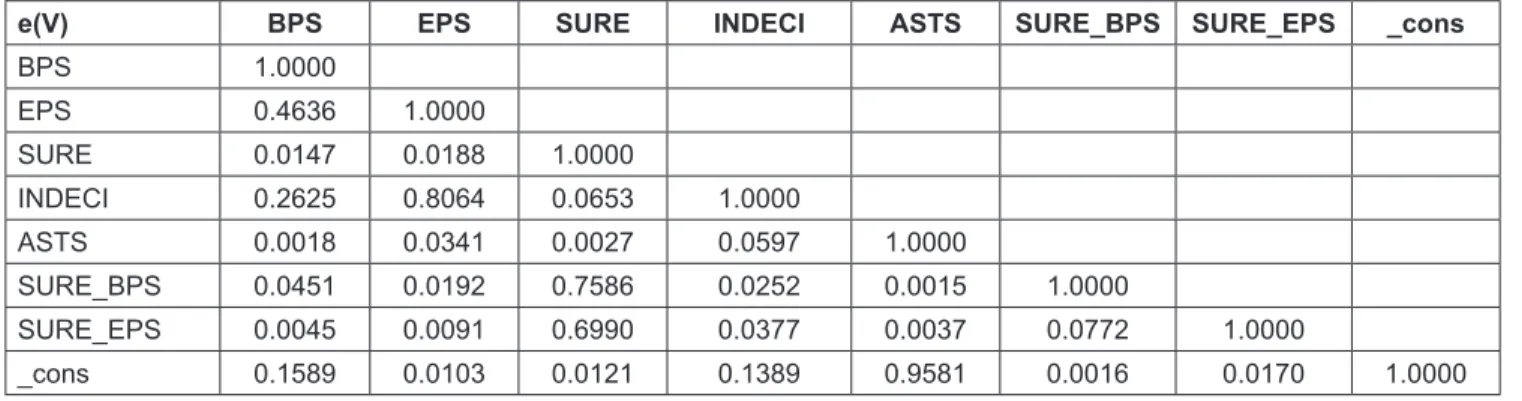
We estimate the log Poisson Regression GLM model. The model we represent below utilizes a robust approximation of the varianceـــcovariance matrix, which lets us assess probable correlated residuals and heteroskedasticity. To examine whether the accessibility of the data held in the SURE can impact banks’
share price (H1), we incorporate in our model the accountingــ variables EPS & BPS. We insert a dummy SURE variable that is equivalent to one of the banks distributes the SURE and 0 if it does not follow studies by (Barth & McNichols, 1994; Barth et al., 2008; Wahba & Management, 2008). To examine the opposite association between the accountingــvariables and the SURE (H3), we implant interaction terms between the SURE and both EPS and BPS. Based on prior studies that illustrate a positive association between the level of company voluntary ــdisclosure and size of the corporate (Healy & Palepu, 2001;
Archambault & Archambault, 2003; Makni et al., 2009).
Bank size is measured by totalــassets, and we assume that the SURE is further important for bigger banks. The next model synopsizes our practical approach:
0 3 4 1
2 5 6 _
7 _
β β β β
β β β
β ε
= + + +
+ + +
+ +
it it it
it it it
it it