• 검색 결과가 없습니다.

Traumatic Aortic Injury: Single-center Comparison of Open versus Endovascular Repair

N/A
N/A
Protected

Academic year: 2021

Share "Traumatic Aortic Injury: Single-center Comparison of Open versus Endovascular Repair"

Copied!
6
0
0

로드 중.... (전체 텍스트 보기)

전체 글

(1)

http://dx.doi.org/10.5090/kjtcs.2012.45.6.390 ISSN: 2233-601X (Print) ISSN: 2093-6516 (Online)

Department of Cardiovascular and Thoracic Surgery, Catholic University of Daegu School of Medicine Received: June 4, 2012, Revised: August 1, 2012, Accepted: August 16, 2012

Corresponding author: Oh Choon Kwon, Department of Cardiovascular and Thoracic Surgery, Catholic University of Daegu School of Medicine, 33 Duryugongwon-ro 17-gil, Nam-gu, Daegu 705-718, Korea

(Tel) 82-53-650-4566 (Fax) 82-53-629-6963 (E-mail) [email protected]

C

The Korean Society for Thoracic and Cardiovascular Surgery. 2012. All right reserved.

CC
This is an open access article distributed under the terms of the Creative Commons Attribution Non-Commercial License (http://creative- commons.org/licenses/by-nc/3.0) which permits unrestricted non-commercial use, distribution, and reproduction in any medium, provided the original work is properly cited.

Traumatic Aortic Injury: Single-center Comparison of Open versus Endovascular Repair

Jun Woo Cho, M.D., Oh Choon Kwon, M.D., Sub Lee, M.D., Jae Seok Jang, M.D.

Background: Conventional open repair is a suboptimal therapy for blunt traumatic aortic injury (BTAI) due to the high postoperative mortality and morbidity rates. Recent advances in the thoracic endovascular repair technique may improve outcomes so that it becomes an attractive therapeutic option. Materials and Methods: From August 2003 to March 2012, 21 patients (mean age, 45.81 years) with BTAI were admitted to our institution. Of these, 18 cas- es (open repair in 11 patients and endovascular repair in 7 patients) were retrospectively reviewed and the early perioperative results of the two groups were compared. Results: Although not statistically significant, there was a trend toward the reduction of mortality in the endovascular repair group (18.2% vs. 0%). There were no cases of paraplegia or endoleak. Statistically significant reductions in heparin dosage, blood loss, and transfusion amounts during the operations and in procedure duration were observed. Conclusion: Compared with open repair, endovas- cular repair can be performed with favorable mortality and morbidity rates. However, relatively younger patients who have acute aortic arch angulation and a small aortic diameter may be a therapeutic challenge. Improvements in graft design, delivery sheaths, and graft durability are the cornerstone of successful endovascular repair.

Key words: 1. Endovascular stent 2. Trauma

3. Aorta

INTRODUCTION

Blunt traumatic aortic injury (BTAI) is highly lethal. About 80% of patients with BTAI die at the scene of the injury [1], and the mortality rate during hospitalization without any treat- ment is about 81% [2]. In most of these patients, a sudden decelerating force acts on the isthmic portion that connects the fixed aortic arch and the relatively mobile descending thoracic aorta. The tear is transverse in 80% to 90% of the patients. BTAI was traditionally treated with an open surgical approach. It consisted of clamp-and-sew and distal aortic per- fusion with cardiopulmonary bypass or left heart bypass. The

improvement of perioperative care and maintenance of distal aortic perfusion during aortic cross-clamp has reduced terrible complications such as spinal cord ischemia. Nevertheless, the reported mortality and paraplegia incidence of a group under- going open surgery were 20.2% and 5.7%, respectively [3];

this is mostly because many of the patients had severe asso-

ciated injuries, and such injuries serve as an independent

mortality factor. Indeed, a trauma severity score such as the

injury severity score (ISS) has a very close correlation with

the mortality rate of BTAI patients [4]. Moreover, systemic

heparinization, one-lung ventilation, and aortic cross-clamping

can cause further multi-organ dysfunction. To overcome these

(2)

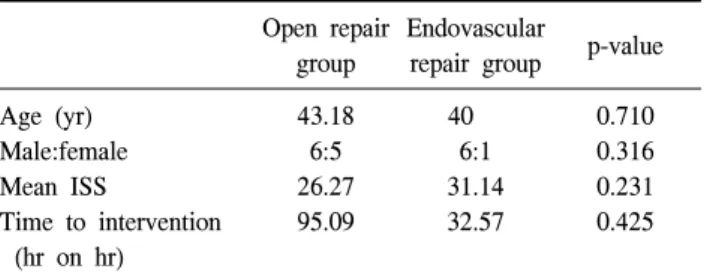
Table 1. Patients’ characteristics Open repair

group

Endovascular

repair group p-value Age (yr)

Male:female Mean ISS

Time to intervention (hr on hr)

43.18 6:5 26.27 95.09

40 6:1 31.14 32.57

0.710 0.316 0.231 0.425

ISS, injury severity score.

limitations, an endovascular approach was introduced in the late 1990s, and good results with endovascular repair have been reported [5]. In this study, we retrospectively reviewed our cases of endovascular repair and compared it with open repair in order to analyze the impact of endovascular repair on perioperative results.

MATERIALS AND METHODS

From August 2003 to March 2012, 21 patients were diag- nosed with BTAI at Catholic University of Daegu School of Medicine. Of these, 18 patients (mean age, 41.94 years; fe- male:male=6:12) who had an injury at the isthmic portion were evaluated; the excluded cases were ascending aorta in- jury in 2 cases and a combined distal arch aneurysm requir- ing hybrid thoracic endovascular aortic repair in 1 case.

During the study period, 11 patients underwent open repair and 7 patients underwent endovascular repair. In all 18 cases, preoperative diagnosis was achieved using a contrast en- hanced computed tomography (CT) scan. In the early phase of treatment, hemodynamic stabilization and strict blood pres- sure control were performed expeditiously. As a general rule, we performed open or endovascular repair as soon as possible. Delayed treatment (treatment beyond 24 hours of admission) was considered only for patients with severe non-aortic injuries. In Catholic University of Daegu School of Medicine, endovascular repair was used as a first treatment strategy beginning in August 2008. The patients’ character- istics and perioperative results were retrospectively reviewed using the hospital records and radiologic findings. The clin- ical characteristics of the patients are summarized in Table 1.

1) Open repair techniques

All operations were performed under general anesthesia with a double lumen endotracheal tube. No patients under- went cerebrospinal fluid drainage. The patients were placed in the right lateral decubitus position with the left pelvis rotated posteriorly to access the left femoral vessels. After left femo- ral artery and vein isolation, left posterolateral thoracotomy in the fourth intercostal space was performed. Meticulous dis- section was performed around the left side aortic arch vessels and distal descending thoracic aorta for proximal and distal clamping. After systemic heparinization and femoral cannula- tion, cardiopulmonary bypass was carried out, along with mild systemic hypothermia (32

o

C to 34

o

C) for spinal cord protection. Aortic clamping was applied proximally between the left common carotid and left subclavian arteries, and dis- tally at the distal descending thoracic aorta beyond the site of injury. During the aortic cross-clamping, cardiopulmonary by- pass flow was adjusted to 60% to 70% of the maximum flow rate in order to maintain the femoral blood pressure at 70 to 80 mmHg. After the aorta was opened longitudinally, the in- jured aortic edges were carefully debrided and any of the bleeding intercostal arteries were controlled. The injured aorta was repaired with graft interposition using 4-0 Prolene con- tinuous sutures (Ethicon, Somerville, NJ, USA). After prot- amine reversal, the wound was closed in layers. If necessary, combined operations were performed immediately after aortic repair.

2) Endovascular repair techniques

All operations were performed under general anesthesia in

the operating room. A portable C-arm fluoroscopic device

was used in all of the cases. After induction, all of the pa-

tients underwent cerebrospinal fluid drainage through the third

lumbar space, and cerebrospinal fluid pressure was kept be-

low 10 mmHg during the operation. The femoral artery was

exposed through a small longitudinal incision and cannulated

with a sheath. Percutaneous access of the contralateral femo-

ral artery was performed, and a sheath was introduced. Under

fluoroscopic guidance, the marked pigtail catheter for measur-

ing treatment lengths and landing zones was introduced into

the contralateral femoral artery. A soft guidewire was ad-

(3)

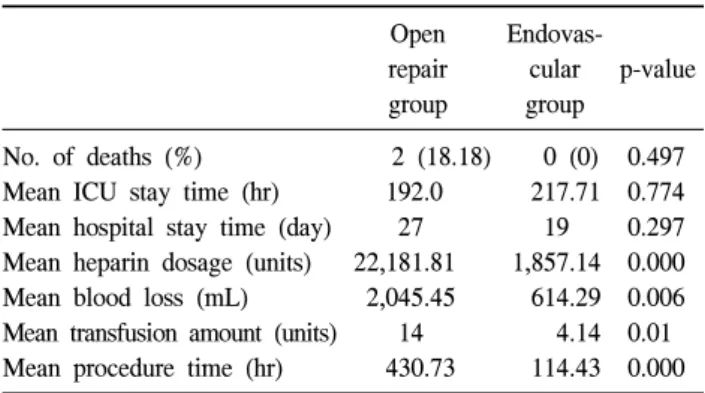
Table 2. Comparative analyses between the repair and endo- vascular groups based on the postoperative results

Open repair group

Endovas- cular group

p-value

No. of deaths (%) Mean ICU stay time (hr) Mean hospital stay time (day) Mean heparin dosage (units) Mean blood loss (mL) Mean transfusion amount (units) Mean procedure time (hr)

2 (18.18) 192.0 27 22,181.81 2,045.45 14 430.73

0 (0) 217.71 19 1,857.14 614.29 4.14 114.43

0.497 0.774 0.297 0.000 0.006 0.01 0.000 ICU, intensive care unit.

vanced through the sheath into the femoral artery until it reached the ascending aorta. A Bern catheter was used to ex- change the soft wire for a stiff one. An endovascular stent-graft (S&G Biotech, Seoul, Korea) was then introduced until it lay within the distal aortic arch. Fluoroscopy with contrast was performed in order to position the stent-graft for deployment. During deployment, the systolic blood pressure was lowered below 100 mmHg. The proximal and distal landing zones of at least 2 cm were confirmed, and the de- vice was deployed; the completion angiogram was then obtained. After deployment of the stent-graft, the mean blood pressure was kept above 90 mmHg. All wires and sheaths were removed.

3) Statistical analysis

For normally distributed continuous data, the Student’s t-test, non-normally distributed data, and Mann-Whitney U-test were used. The chi-squared test was used for catego- rical data. Statistical analysis was performed with SPSS ver.

12.0 (SPSS Inc., Chicago, IL, USA).

RESULTS 1) Open repair group

All cases were treated with graft interposition; in 3 cases treatment was delayed due to large liver contusion and cere- bral hemorrhage. After aortic repair, a combined operation was performed in 5 cases. One patient required deep hypo- thermic circulatory arrest because of a preoperative rupture and severe hemodynamic instability. Overall, the mortality rate was 18.2% (2/11). One patient died of acute renal failure requiring peritoneal dialysis, and another patient died of in- tractable bleeding due to underlying severe coagulopathy.

Postoperatively, there was no paraplegia. Mean cardiopulmo- nary bypass time and mean aorta cross-clamping time were 103.90 minutes (range, 50 to 305) and 57.27 minutes (range, 28 to 83), respectively.

2) Endovascular repair group

Technical success was achieved in all of the cases. All of the patients underwent single graft surgery. In 1 case, treat- ment was delayed due to cerebral hemorrhage. All patients

had cerebrospinal fluid drainage. The left subclavian artery was covered in 3 patients (42.85%), but no patient suffered from upper arm ischemia or stroke. The mean stent-graft di- ameter and length were 26 mm (range, 24 to 36) and 115.71 mm (range, 100 to 130). The overall mortality rate was 0%

(0/7), and there was no endoleak or paraplegia. Five patients underwent the procedure without systemic heparinization due to the risk of bleeding. The mean interval from diagnosis to intervention was 70.78 hours, and no patient suffered from aortic rupture during the waiting period. There were no stat- istically significant differences between the two groups in the mortality rate, and the duration of intensive care unit and hospital stay. However, the statistically significant differences between the two groups included heparin dosage, blood loss, and transfusion amounts during operation, as well as proce- dure time (Table 2).

DISCUSSION

According to their natural history, most aortic ruptures will occur within 24 hours of initial presentation. Therefore, re- ducing aortic wall stress with anti-hypertensive medication and restrictive fluid resuscitation should be the first priority.

Traditional diagnostic methods such as chest X-ray, trans- esophageal echocardiography, and aortography have limited sensitivity and specificity. Therefore, even if the initial chest X-ray appears normal, a CT scan should be considered for confirmation depending on the mechanism of the injury [6,7].

Information about the aortic arch vessel anatomy including

(4)

both vertebral arteries, the diameter of the normal aortic seg- ment, and the status of the iliac and femoral arteries should also be obtained. Several anatomic variants such as ductus di- verticulum and aortic spindle can mimic an aortic injury [7,8]. Azizzadeh et al. [4] introduced 4 categories of aortic injury based on CT findings. They defined grade 1 as intimal tear, grade 2 as intramural hematoma, grade 3 as pseudoa- neurysm, and grade 4 as free rupture; medical management was suggested for grade 1 injuries. Our patients exhibited 17 cases of grade 3 and 1 case of a grade 4 injury.

There are two major changes that occur in different periods during the treatment of BTAI. The first is the introduction of delayed repair, and the second is the application of endovas- cular treatment. There are still some conflicting reports about the optimal time for intervention. Pate et al. [9] reported that if hemodynamic stability was maintained during the initial 4 hours of treatment, aortic rupture rarely occurred before repair because of the reduction of aortic wall stress. Camp and Shackford [10] also reported that most causes of mortality during the early period of hospitalization were associated with combined injury rather than with aortic rupture itself.

Therefore, they concluded that in high-risk patients early sta- bilization followed by delayed aortic repair is favorable.

On the other hand, there are some limitations of delayed repair. In the state of increased intracranial pressure, lowering the blood pressure limits brain perfusion and this can poten- tially cause brain injury. Progressive dilatation of pseudoa- neurysms can compress the trachea and left main bronchus.

Finally, despite aggressive anti-impulse therapy, there is a risk of delayed free rupture [11,12]. Early repair is advanta- geous for the total hospital stay period, total hospitalization cost, and the ability to perform combined aortic and non-aort- ic procedures at the same time [13,14]. Altogether, the trends in recently published papers are toward favoring delayed re- pair [2,15]. However, early repair should be considered for patients with massive hemothorax, rapid growth of a pseudoa- neurysm, or active contrast leakage based on a CT scan.

Starnes et al. [16] also recommend urgent repair in cases of periaortic hematoma at the aortic arch level exceeding 15 mm and when the initial systolic blood pressure is less than 90 mmHg, because these are predictors of death from BTAI.

Currently, endovascular approaches for treating BTAI are

being considered as the preferred method due to the avoid- ance of thoracotomy, one-lung ventilation, and aortic cross-clamping. There are numerous articles comparing endo- vascular repair with open repair, but because BTAI is a rare injury, the number of patients has been small in most studies.

Recently, several meta-analyses of retrospective studies on BTAI were published [3,17]. Tang et al. [17] reported that in 699 patients with a similar level of ISS (meta-analysis 4), the endovascular repair technique and open repair had a mortality rate of 7.6% and 15.2%, a rate of paraplegia of 0% and 5.6%, and a rate of stroke of 0.85% and 5.3%, respectively, among which the rates were significantly lower with endovas- cular repair. In 2008, the American Association for the Surgery of Trauma published a multicentered prospective study of 193 patients that included endovascular repair in 125 patients compared to open repair in 68 patients [18]. The study also concluded that mortality was significantly lower in the endovascular repair group, even in the patients with major associated injuries. Based on these results, the Society for Vascular Surgery suggested that endovascular repair should be performed preferentially over open surgical repair [19].

However, there are several considerations for endovascular repair in BTAI. The first is the device-related complications, which have an incidence of about 20%. Based on this rate, Caffarelli et al. [20] reported early favorable outcomes from a deliberate nonoperative strategy. Of a total of 53 patients, 29 patients were treated with planned, nonoperative management, and the in-hospital survival rate was 93%. The most common device-related complication is endoleak. Patients with BTAI tend to be younger than patients with other degenerative aneurysmal diseases. Acute angulation of the aortic arch and the relatively small aortic diameter can cause excessive over- sizing of the graft in these patients. The average diameter of the aorta proximal to the lesion is 18 to 26 mm, and oversiz- ing can result in graft infolding or collapsing, and acute aort- ic occlusion [8,19]. Atkins et al. [21] suggested that conven- tional open repair should be considered in patients whose outer aortic wall diameter is less than 18 mm or who are un- der 18 years old.

The second consideration is left subclavian artery (LSA)

coverage. The minimum length of the normal proximal land-

ing zone required to perform endovascular repair without

(5)

LSA coverage is about 1.5 to 2 cm. In BTAI, the incidence of LSA coverage is 25%, and this results in a perioperative stroke rate of 1.19% and an arm ischemia rate of 4.06%, but it does not show a significant difference in mortality [22]. Of our patients, 37.5% (3/8) required coverage, and there was no neurologic deficit during the follow-up period. Cooper et al.

[23] also reported that preemptive LSA revascularization had less effect on the prevention of neurologic complications.

Therefore, the patency of the right subclavian artery should be evaluated via angiography during endovascular repair, and selective revascularization rather than routine revascularization should be considered in cases of an atretic or a hypoplastic right subclavian artery [19].

The third consideration is heparinization. As previously mentioned, a reason for paying attention to delayed open re- pair is the risk of fatal bleeding associated with systemic heparinization in patients who have cerebral or intraperitoneal hemorrhage. Unlike other diseases, endovascular repair for BTAI has a relatively short procedural time; therefore, it can be successfully performed with a low-dose of heparin.

Garcia-Toca et al. [24] reported that 84% of endovascular re- pair patients (20/24) did not undergo heparinization, and only 1 patient developed a thrombotic complication. Thus, whether to use heparin and its optimal dosage should be based upon each patient’s risk of bleeding and thromboembolism.

The fourth consideration is the cerebrospinal fluid drainage.

In contrast to degenerative aneurysmal disease, BTAI requires less graft coverage length, and there is a risk of epidural hematoma in coagulopathic patients; thus, cerebrospinal fluid drainage is not routinely indicated [2,19]. However, Desai et al. [25] reported that BTAI itself can increase the risk of par- aplegia regardless of the aortic coverage length. All of our patients received cerebrospinal fluid drainage, and there was no paraplegia or drainage-related complications.

The main limitation of this study was the small sample size and the use of a retrospective review of a non- randomized patient sample.

CONCLUSION

Our study did not show a statistically significant advantage of endovascular repair in terms of mortality and hospital stay.

However, there was a trend toward a lower mortality rate in the endovascular repair group with a similar ISS and time to intervention. In conclusion, an endovascular approach can be performed expeditiously and even without heparinization in selected cases. The long-term durability of endovascular re- pair should be evaluated because there is uncertainty of the long-term aortic conformational changes in these relatively younger patients.

CONFLICT OF INTEREST

No potential conflict of interest relevant to this article was reported.

REFERENCES

1. Teixeira PG, Inaba K, Barmparas G, et al. Blunt thoracic aortic injuries: an autopsy study. J Trauma 2011;70:197-202.

2. Estrera AL, Gochnour DC, Azizzadeh A, et al. Progress in the treatment of blunt thoracic aortic injury: 12-year sin- gle-institution experience. Ann Thorac Surg 2010;90:64-71.

3. Hoffer EK, Forauer AR, Silas AM, Gemery JM. Endovas- cular stent-graft or open surgical repair for blunt thoracic aortic trauma: systematic review. J Vasc Interv Radiol 2008;

19:1153-64.

4. Azizzadeh A, Keyhani K, Miller CC 3rd, Coogan SM, Safi HJ, Estrera AL. Blunt traumatic aortic injury: initial experi- ence with endovascular repair. J Vasc Surg 2009;49:1403-8.

5. Kato N, Dake MD, Miller DC, et al. Traumatic thoracic aortic aneurysm: treatment with endovascular stent-grafts.

Radiology 1997;205:657-62.

6. Demetriades D. Blunt thoracic aortic injuries: crossing the Rubicon. J Am Coll Surg 2012;214:247-59.

7. Steenburg SD, Ravenel JG, Ikonomidis JS, Schonholz C, Reeves S. Acute traumatic aortic injury: imaging evaluation and management. Radiology 2008;248:748-62.

8. Kwolek CJ, Blazick E. Current management of traumatic thoracic aortic injury. Semin Vasc Surg 2010;23:215-20.

9. Pate JW, Fabian TC, Walker W. Traumatic rupture of the aortic isthmus: an emergency? World J Surg 1995;19:119- 25.

10. Camp PC, Shackford SR. Outcome after blunt traumatic thoracic aortic laceration: identification of a high-risk co- hort. Western Trauma Association Multicenter Study Group.

J Trauma 1997;43:413-22.

11. Bortone AS, Schena S, D’Agostino D, et al. Immediate ver-

sus delayed endovascular treatment of post-traumatic aortic

pseudoaneurysms and type B dissections: retrospective anal-

(6)

ysis and premises to the upcoming European trial. Circulat- ion 2002;106(12 Suppl 1):I234-40.

12. Canaud L, Alric P, Branchereau P, et al. Open versus endo- vascular repair for patients with acute traumatic rupture of the thoracic aorta. J Thorac Cardiovasc Surg 2011;142:1032- 7.

13. Demetriades D, Velmahos GC, Scalea TM, et al. Blunt trau- matic thoracic aortic injuries: early or delayed repair: re- sults of an American Association for the Surgery of Trauma prospective study. J Trauma 2009;66:967-73.

14. Agostinelli A, Saccani S, Borrello B, Nicolini F, Larini P, Gherli T. Immediate endovascular treatment of blunt aortic injury: our therapeutic strategy. J Thorac Cardiovasc Surg 2006;131:1053-7.

15. Pacini D, Angeli E, Fattori R, et al. Traumatic rupture of the thoracic aorta: ten years of delayed management. J Thorac Cardiovasc Surg 2005;129:880-4.

16. Starnes BW, Lundgren RS, Gunn M, et al. A new classi- fication scheme for treating blunt aortic injury. J Vasc Surg 2012;55:47-54.

17. Tang GL, Tehrani HY, Usman A, et al. Reduced mortality, paraplegia, and stroke with stent graft repair of blunt aortic transections: a modern meta-analysis. J Vasc Surg 2008;47:

671-5.

18. Demetriades D, Velmahos GC, Scalea TM, et al. Operative repair or endovascular stent graft in blunt traumatic thora- cic aortic injuries: results of an American Association for the Surgery of Trauma Multicenter Study. J Trauma 2008;64:

561-70.

19. Lee WA, Matsumura JS, Mitchell RS, et al. Endovascular repair of traumatic thoracic aortic injury: clinical practice guidelines of the Society for Vascular Surgery. J Vasc Surg 2011;53:187-92.

20. Caffarelli AD, Mallidi HR, Maggio PM, Spain DA, Miller DC, Mitchell RS. Early outcomes of deliberate nonoperative management for blunt thoracic aortic injury in trauma. J Thorac Cardiovasc Surg 2010;140:598-605.

21. Atkins MD, Marrocco CJ, Bohannon WT, Bush RL.

Stent-graft repair for blunt traumatic aortic injury as the new standard of care: is there evidence? J Endovasc Ther 2009;16 Suppl 1:I53-62.

22. Sepehripour AH, Ahmed K, Vecht JA, et al. Management of the left subclavian artery during endovascular stent grafting for traumatic aortic injury: a systematic review. Eur J Vasc Endovasc Surg 2011;41:758-69.

23. Cooper DG, Walsh SR, Sadat U, Noorani A, Hayes PD, Boyle JR. Neurological complications after left subclavian artery coverage during thoracic endovascular aortic repair:

a systematic review and meta-analysis. J Vasc Surg 2009;49:

1594-601.

24. Garcia-Toca M, Naughton PA, Matsumura JS, et al. Endo- vascular repair of blunt traumatic thoracic aortic injuries:

seven-year single-center experience. Arch Surg 2010;145:

679-83.

25. Desai ND, Pochettino A, Szeto WY, et al. Thoracic endo-

vascular aortic repair: evolution of therapy, patterns of use,

and results in a 10-year experience. J Thorac Cardiovasc

Surg 2011;142:587-94.

수치

Table 1. Patients’ characteristics Open  repair
Table 2.   Comparative  analyses  between  the  repair  and  endo- endo-vascular  groups  based  on  the  postoperative  results

참조

관련 문서

Even among those who arrive at the hospital alive, traumatic aortic rupture after high-speed motor vehicle accidents leads to a high in-hospital mortality rate and is

Western Trauma Association Multicenter Study Group. Traumatic rupture of the aortic ishmus: program of selective manage- ment. Endovascular repair of traumatic thoracic

Exclusion of accessory renal arteries during endovascular repair of abdominal aortic aneurysms.. J Vasc

Aortic Valve Replacement Using Balloon Catheter for Thoracic Endovascular Aortic Repair to Patient with Calcified Aorta.. In Sook Kim,

Background: Endovascular aneurysm repair (EVAR) has dramatically changed the management of abdominal aortic aneurysms (AAAs) as the number of open aneurysm repairs

After computed tomography (CT) for an episode of hemoptysis, the patient underwent elective thoracic endovascular aortic repair (TEVAR) because of a degenerative

This study was designed to compare the hospital-related costs of elective abdominal aortic aneurysm (AAA) treatment and cost structure between endovascular aneurysm repair (EVAR)

Thoracic aortogram following thoracic endovascular aortic repair shows a delayed filling of the aneurysmal sac with blood flow from the left seventh intercostal artery, suggesting