ISSN 2234-3806 • eISSN 2234-3814
https://doi.org/10.3343/alm.2017.37.6.499
Multicenter Evaluation of an Image Analysis Device (APAS): Comparison Between Digital Image and Traditional Plate Reading Using Urine Cultures
John Glasson, M.S.1, Rhys Hill, B.S.1,2, Michael Summerford, B.S.1, Dianne Olden, Ph.D.3, Fotula Papadopoulos, B.S.4, Stephen Young, Ph.D.5, and Steven Giglio, Ph.D.1
LBT Innovations Ltd.1, Adelaide, Australia; Australian Centre for Visual Technologies2, University of Adelaide, Adelaide, Australia; Australian Clinical Laboratories (formerly Healthscope Pathology)3, Clayton, Australia; SydPath4, St Vincent’s Pathology, Darlinghurst, Australia; Tricore Reference Laboratories5, Albuquerque, NM, USA
Background: The application of image analysis technologies for the interpretation of mi- crobiological cultures is evolving rapidly. The primary aim of this study was to establish whether the image analysis system named Automated Plate Assessment System (APAS;
LBT Innovations Ltd., Australia) could be applied to screen urine cultures. A secondary aim was to evaluate differences between traditional plate reading (TPR) and the reading of cultures from images, or digital plate reading (DPR).
Methods: A total of 9,224 urine samples submitted for culture to three clinical laborato- ries, two in Australia and one in the USA, were included in the study. Cultures were pre- pared on sheep blood and MacConkey agar plates and read by panels of three microbiol- ogists. The plates were then presented to APAS for image capture and analysis, and the images and results were stored for later review.
Results: Image analysis of cultures using APAS produced a diagnostic sensitivity and specificity of 99.0% and 84.5%, respectively. Colonies were detected by APAS on 99.0%
of blood agar plates with growth and on 99.5% of MacConkey agar plates. DPR agreed with TPR for colony enumeration on 92.1% of the plates, with a sensitivity of 90.8% and specificity of 92.8% for case designation. However, several differences in the classification of colony morphologies using DPR were identified.
Conclusions: APAS was shown to be a reliable screening system for urine cultures. The study also showed acceptable concordance between DPR and TPR for colony detection, enumeration, and case designation.
Key Words: Urine cultures, Image analysis, Digital image plate reading
Received: October 25, 2016 Revision received: January 9, 2017 Accepted: June 20, 2017
Corresponding author: Steven Giglio LBT Innovations Ltd., Level 1, 300 Flinders Street, Adelaide, SA 5000, Australia Tel: +61-8-8470-6818
Fax: +61-8-8223-1775
E-mail: [email protected]
© Korean Society for Laboratory Medicine This is an Open Access article distributed under the terms of the Creative Commons Attribution Non-Commercial License (http://creativecom- mons.org/licenses/by-nc/4.0) which permits unrestricted non-commercial use, distribution, and reproduction in any medium, provided the original work is properly cited.
INTRODUCTION
An approaching “wave of automation” is gradually making its way towards application in diagnostic microbiology laboratories [1, 2]. The first sign of this wave was evident in the introduction of systems that automate manual processes such as culture plate inoculation, incubation, and plate transport to and from
workstations. These systems can be integrated into plate imag- ing instruments that provide microbiologists with the ability to read cultures at computer workstations rather than by the tradi- tional method involving the manual handling of plates [1, 3, 4].
This latter feature is evolving rapidly and promises to offer re- duced plate handling with an increase in reporting efficiencies as well as the provision of culture image archives for case review
2017-03-16 https://crossmark-cdn.crossref.org/widget/v2.0/logos/CROSSMARK_Color_square.svg
and training purposes [4].
The development of image analysis in microbiology has not progressed as quickly as applications currently in use within some other diagnostic disciplines such as hematology, histology, and cytopathology. However, signs of change were seen in 2008 following a report on the detection and identification of colonies from food and environmental samples using a spectral imaging method [5]. The detection of Campylobacter spp. from food was similarly reported a few years later [6], as was the detection of methicillin-resistant Staphylococcus aureus (MRSA) and urine pathogens from chromogenic agars using the Biomic V3 digital image analyzer (Giles Scientific Inc., Santa Barbara, CA, USA).
More recently, two evaluations of culture plate image analysis technologies have been published. One described the auto- mated detection of MRSA on chromogenic agar [7], and the other described detection of urinary pathogens on blood and MacConkey agar plates [8].
In this study, we report findings from the multicenter applica- tion of an image analysis technology, Automated Plate Assess- ment System (APAS; LBT Innovations Ltd., Adelaide, Australia), following an earlier pilot study [8]. The primary aim of the cur- rent study was to determine if the image analysis technology could be reliably applied to screen routine urine cultures in a number of laboratories and in two different countries. A second- ary aim was to determine any differences between traditional plate reading (TPR) and digital plate reading (DPR) from on- screen images. DPR is now integral to some of the large auto- mation systems being installed within microbiology laboratories [4], although little has been published regarding its efficiency, utility, and limitations.
METHODS
1. Clinical evaluation sites for the assessment of image analysis
The laboratories involved were TriCore Reference Laboratories (Albuquerque, NM, USA), Australian Clinical Laboratories (for- merly Healthscope Pathology; Clayton, Australia), and SydPath, St. Vincent’s Hospital (Darlinghurst, Australia).
The laboratory staffs involved in this study were trained in the use of the instrumentation and the clinical trial protocols by a microbiologist from LBT Innovations Ltd. (Adelaide, Australia), and their proficiency was checked before testing commenced.
Urine samples submitted for routine culture to each labora- tory were included in the study after the completion of routine testing, and were then de-identified as per the protocols ap-
proved by each of the participant laboratories. Site 1 analyzed samples over a 15-week period in 2015, Site 2 analyzed sam- ples for 3 weeks in 2014, and Site 3 analyzed samples for 7 weeks in 2015. The samples were sourced from community clinics and hospitals with a variety of age groups and clinical presentations represented.
Cultures were prepared by inoculating 1 µL of well-mixed urine onto 90-mm plates of trypticase soy agar with 5% v/v sheep blood and on MacConkey agar (Remel, Lenexa, KS, USA), and were incubated aerobically for 18 hr at 35±2˚C.
Urine samples included in the study were 73.0% from fe- males, 27.0% from males, and three samples from patients of unspecified gender. The age distribution was as follows: 10.8%
≤20 yr, 25.9% 20–39 yr, 23.2% 40–59 yr, 28.4% 60–79 yr, and 11.7% ≥80 yr.
2. Instrumentation
The APAS instruments used in the analyses were prototypes, consisting of a lighting module, digital camera, and analytical software. High-quality monitors (Dell U3014, 30” wide, 2,560
×1,600 pixels at one site, and LG 27EA83-B, 2,560 ×1,440 pixels at the other two sites) were linked to the system for the review of the digital images. The monitors incorporated a mag- nification facility as well as a grid overlay to assist with colony counting.
APAS assessed growth by enumerating colonies, determining colony morphologies for isolates, and finally applying an inter- pretive rule-set to the findings. Each case was then sorted into one of three groups: “Positive” for plates requiring microbiolo- gist interpretation and further work, “Negative” for plates with a low probability of requiring further work, and “Review” where an interpretation and decision by a microbiologist was required. For the purposes of this trial, any samples in the review category were designated as positive, as this outcome required microbi- ologist intervention.
3. Traditional plate reading
A reference panel of three microbiologists at each center inde- pendently performed TPR on the urine cultures and recorded the quantity of growth and the colony morphologies found on the plate pairs for each sample. Panel members also recorded a sample designation of “Positive” for plates requiring further work such as isolate identification and antibiotic susceptibility testing, or “Negative” for plates with a low probability of requir- ing further work using a prescribed rule-set based on published guidelines for the interpretation of urine cultures [9, 10].
After being read by the reference panels, the plates were pre- sented to APAS for image capture and analysis within 4 hr of the 18 hr incubation period. All images and results from APAS were stored for analysis and comparison with the TPR findings.
Observations of multiple colony types were recorded in both the TPR and APAS assessments.
4. Digital plate reading
As part of the secondary aim to compare DPR with TPR, 250 blood agar and MacConkey agar pairs were randomly selected for analysis from each of two laboratories (SydPath, St. Vincent’s Hospital, Darlinghurst, Australia, and Australian Clinical Labora- tories, Wayville, Australia).
A panel of three microbiologists at LBT Innovations Ltd., com- prised of different individuals from those included in the TPR reference panels and who were experienced in DPR, indepen- dently read the culture results from the stored plate images after the TPR assessments. Panel members recorded their findings for growth enumeration and the colony morphology types pres- ent, and proposed a sample designation as positive or negative, utilizing the same assessment criteria as defined for TPR.
5. Analysis
All results were referred to an independent statistician (Emphron Informatics Pty Ltd., Brisbane, Australia), and the APAS findings were compared with the consensus, which was defined as a minimum agreement between two of the reference panel mem- bers in both TPR and DPR evaluations.
Comparisons between APAS and the panel results for growth detection, enumeration, and the differentiation of colony mor- phologies using sensitivity and specificity calculations were per- formed. Sensitivity was defined as the number of true positives divided by the number of true positives plus false negatives ex- pressed as a percentage, and specificity was calculated as the number of true negatives divided by the number of true nega- tives plus false positives and expressed as a percentage.
When discrepant results were identified, the de-identified clinical laboratory reports were also compared with the data generated by APAS and the reference panels. This was per- formed in order to provide additional clinical information that may assist with the interpretation of data obtained in this study.
RESULTS 1. Growth detection
From the host laboratory results, the positive culture rate was
31% and the overall proportion and type of organisms found were consistent with those reported in published studies from a number of countries [11-15]. Growth was detected by APAS on 99.0% of the blood agar plates and on 99.5% of the MacCon- key agar plates reported by the reference panel as showing growth. This resulted in a growth detection sensitivity and speci- ficity of 99.0% (95% confidence interval [CI] 98.7% to 99.2%) and 84.5% (95% CI 83.1% to 85.9%) for blood agar, and of 99.5% (95% CI 99.2% to 99.7%) and 98.8% (95% CI 98.5%
to 99.1%) for MacConkey agar, respectively.
Growth detection performance varied for different levels of growth. For blood agar, the detection sensitivity was 99.9% (95%
CI 99.6% to 100%) at 105 colony-forming unit (CFU)/mL, 99.6%
(95% CI 99.2% to 99.8%) at 104 CFU/mL, and 97.3% (95% CI 96.5 to 97.9%) at 103 CFU/mL. For MacConkey agar, the detec- tion sensitivity was 99.9% (95% CI 99.6% to 100%) at 105 CFU/
mL, 99.6% (95% CI 98.9% to 99.9%) at 104 CFU/mL, and 98.6%
(95% CI 97.6% to 99.2%) at 103 CFU/mL.
2. Colony enumeration
APAS produced the same colony counts as the reference panel in 84.4% of cases. Of the 15.6% discrepant counts, 81.2% of
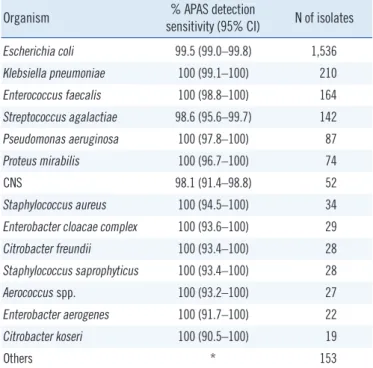
Table 1. Detection sensitivity for the most frequently isolated urinary tract pathogens
Organism % APAS detection
sensitivity (95% CI) N of isolates
Escherichia coli 99.5 (99.0–99.8) 1,536
Klebsiella pneumoniae 100 (99.1–100) 210
Enterococcus faecalis 100 (98.8–100) 164
Streptococcus agalactiae 98.6 (95.6–99.7) 142
Pseudomonas aeruginosa 100 (97.8–100) 87
Proteus mirabilis 100 (96.7–100) 74
CNS 98.1 (91.4–98.8) 52
Staphylococcus aureus 100 (94.5–100) 34
Enterobacter cloacae complex 100 (93.6–100) 29
Citrobacter freundii 100 (93.4–100) 28
Staphylococcus saprophyticus 100 (93.4–100) 28
Aerococcus spp. 100 (93.2–100) 27
Enterobacter aerogenes 100 (91.7–100) 22
Citrobacter koseri 100 (90.5–100) 19
Others * 153
*Variable detection sensitivity, ranging from 70.0% to 100% across 19 dif- ferent organisms.
Abbreviations: APAS, automated plate assessment system; CI, confidence interval; CNS, coagulase-negative staphylococci.
the APAS counts were higher than the consensus counts, and 18.8% were lower. Of the discrepant results, 96% of the APAS counts were within 1-log of the consensus counts.
3. Organisms reported
A total of 2,586 bacterial isolates were reported by the three laboratories. The most common organism identified was Esche- richia coli, which accounted for 59.1% of all organisms reported (Table 1). The organisms listed in the table represented 91.1%
of microorganisms found at the three sites. The remainder rep- resented organisms that appeared infrequently (i.e., 1–5 times throughout the study); these included, but were not limited to, Corynebacterium spp., Moraxella spp., and Streptococcus mitis.
4. Case designations
The reference panels designated 6,584 cases as positive and 2,640 as negative. APAS analysis of these samples resulted in a sample designation sensitivity of 99.0% (95% CI 98.7% to –99.2%) and specificity of 84.5% (95% CI 83.1% to –85.9%) (Table 2).
5. Digital plate reading
For colony enumeration, the DPR results agreed with those of TPR in 92.1% of the plates studied. Of the 79 differences, 64 involved blood agar and 15 involved MacConkey agar. Of the di- vergent counts, 65% (51/79) were reported to be higher and
35% (28/79) were lower by DPR.
For the blood agar colony morphologies representing the En- terobacteriaceae, DPR showed a sensitivity of 99.4% and speci- ficity of 93.4%. On MacConkey agar, agreement was noted for the lactose-fermenting colonies with a sensitivity of 98.6% and specificity of 99.7%, while the non-fermenters showed a sensi- tivity of 95.6% and specificity of 98.6%. Swarming Proteus spp.
and hemolytic streptococci were identified by DPR with sensitiv- ities of 100% each (Table 3).
Identification of gram-positive cocci produced sensitivities of 81.5% for the staph-like colonies and 88.8% for the various small colonies that represent a range of different species in this group. For the overall designation of cases using DPR, a sensi- tivity of 90.8% and specificity of 92.8% was found.
DISCUSSION
The primary aim of this study was to determine if digital image analysis using the APAS technology was reliable for sorting cases that required further work such as isolate identification and antibiotic susceptibility testing from those that did not re- quire further work.
APAS demonstrated a designation sensitivity of 99.0 % for its ability to sort cases and plates into a number of different action categories. This corresponded to a false-negative incidence rate of 0.7% (69/9,224) across the three centers. Analysis of these Table 3. Summary of digital plate reading performance for colony morphology identification when compared with traditional plate reading
Colony morphology Examples of colony morphologies N of isolates % Sensitivity (95% CI) % Specificity (95% CI) Blood agar
Coliform-like colonies Swarming colonies Staphylococcus-like colonies Small beta-hemolytic colonies Small colonies
E. coli, Enterobacter spp., Klebsiella spp.
P. mirabilis S. saprophyticus, CNS S. agalactiae
Enterococci, Lactobacilli, Corynebacteria
168
28 130 7 241
99.4 (97.3–99.9) 100 (91.5–100.0) 81.5 (74.2–87.5)
100 (70.8–100.0) 88.8 (84.4–92.3)
93.4 (90.3–95.7) 99.8 (99.0–100.0) 89.7 (86.3–92.5) 97.8 (96.2–98.8) 82.6 (77.7–86.9) MacConkey agar
Lactose fermenters Non-lactose fermenters
E. coli Proteus spp.
145
68
98.6 (95.6–99.7) 95.6 (88.7–98.7)
99.7 (98.7–100.0) 98.6 (97.2–99.4) Abbreviations: CI, confidence interval; CNS, coagulase-negative staphylococci.
Table 2. Summary of APAS performance with urine cultures across three centers
Total cases True positive True negative False positive False negative % Sensitivity (95% CI) % Specificity (95% CI)
Site 1 5,634 4,144 1,490 270 41 99.0 (98.7–99.3) 81.9 (79.8–83.8)
Site 2 1,769 1,256 513 75 15 98.8 (98.0–99.3) 85.4 (82.1–88.2)
Site 3 1,821 1,184 637 63 13 98.9 (98.1–99.4) 90.1 (87.5–99.2)
Pooled 9,224 6,584 2,640 408 69 99.0 (98.7–99.2) 84.5 (83.1–85.9)
Abbreviations: APAS, automated plate assessment system; CI, confidence interval.
cases showed that 43.5% were reported as showing no growth and 50.7% were reported as showing no significant growth by the participating laboratories.
Our position is that limitations on the TPR panel members, who did not have access to basic colony morphology identifica- tion tests such as Gram staining or the available clinical notes as a part of this study, may have biased them toward recording more conservative “positive” results in such cases. Of the eight remaining cases, two were reported to show E. coli growth by the reference panel, but the corresponding stored images did not show any coliform-like colonies when reviewed in detail.
This suggests the possibility of errors in either processing or re- porting these samples by the reference panel, or in the prepara- tion of the corresponding image as presented to APAS as there appears to be a clear mismatch of information relating to the stored images (clearly negative with no growth) and the desig- nation of positive growth by the reference panel.
In another case where the laboratory reported the growth of Aerococcus urinae, the images did not show any growth. This case serves as a reminder that operators need to be aware of potentially complicated urinary tract infections where the exten- sion of incubation times beyond 18–22 hr is standard practice.
The stored images of the remaining five cases showed either very small colonies that were under-counted by the device or complex mixtures of colony morphologies that APAS reported as negative.
For a screening test to be reliable, it must show high sensitiv- ity to minimize the risk of missing true positive cases [16-18].
The specificity of a screening test, or the measurement of the number of false-positive findings, is of less concern from the laboratory’s perspective as these cases will be examined further by skilled microbiologists before the results are released.
Digital image analysis using APAS provides a reliable method for screening urine cultures given its sensitivity of 99.0% across 9,224 samples from three separate laboratories. The method’s sensitivity could be further improved if complicated urinary tract infections are identified pre-analytically and those samples are managed with additional input such as the application of higher sample volumes, direct staining of the urine, extension of incu- bation times, and specialized culture media [9, 10].
This study also showed acceptable agreement between DPR and TPR results for colony identification, enumeration, and case designation. The main difference found between the methods was that DPR tended to produce higher counts than TPR.
It is probable that the differences observed were due to the improved visual discrimination of colonies by DPR. This is a pre-
dictable consequence of reading culture images from screens where plates have apparent diameters of 20–50 cm with supe- rior illumination to those used during TPR. On-screen gridlines across the images may also have assisted the image readers in providing more accurate colony counts.
This study clearly demonstrates that DPR is different from TPR, and its introduction will likely result in a change of how microbiologists manage workloads and plate readings. The adoption of DPR will be accompanied by a need for appropriate training and adjustment periods before its routine application to ensure that it is fully utilized appropriately. In addition, the de- velopment of an appropriate validation protocol is essential along with the understanding that TPR, the current “gold stan- dard”, has its own limitations as a reference method.
This multicenter study examined two emerging technologies:
the use of digital images for assessing cultures and the applica- tion of digital image analysis. These technologies are evolving rapidly and will assist laboratories in meeting some of their cur- rent challenges such as the management of increasing de- mands, need for greater cost efficiency, and reduction in the time to report [1, 3, 19]. Improved result traceability, a reduction in transcription errors, and the capacity to review archived im- ages are likely to provide additional quality benefits.
Authors’ Disclosures of Potential Conflicts of Interest
JG, SG, MS, and RH are employees of LBT Innovations.
Acknowledgments
We wish to thank the laboratory staff at the participating labora- tories for their patience and professional contributions through- out these studies.
REFERENCES
1. Bourbeau PP and Ledeboer NA. Automation in clinical microbiology. J Clin Microbiol 2013;51:1658-65.
2. Ledeboer NA and Dallas SD. The automated clinical microbiology labo- ratory: fact or fantasy? J Clin Microbiol 2014;52:3140-6.
3. Mutters NT, Hodiamont CJ, de Jong MD, Overmeijer HPJ, van den Boogaard M, Visser CE. Performance of Kiestra total laboratory automa- tion combined with MS in clinical microbiology practice. Ann Lab Med 2014;34:111-7.
4. Rhoads DD, Novak SM, Pantanowitz L. A review of the current state of digital plate reading of cultures in clinical microbiology. J Pathol Inform 2015;6:23.
5. Miyazawa K, Kobayashi K, Nakauchi S, Hiraishi A. In situ detection and identification of microorganisms at single-colony resolution by spectral imaging. Opt Rev 2008;15: 285-91.
6. Yoon SC, Lawrence KC, Line JE, Siragusa GR, Feldner PW, Park B, Windham WR. Detection of vv colonies using hyperspectral imaging.
Sens Instrumen Food Qual Saf 2010;4:35-49.
7. Faron ML, Buchan BW, Vismara C, Lacchini C, Bielli A, Gesu G, et al.
Automated scoring of chromogenic media for detection of methicillin- resistant Staphylococcus aureus by use of WASPLab image analysis software. J Clin Microbiol 2016;54:620-4.
8. Glasson J, Hill R, Summerford M, Giglio S. Evaluation of an image anal- ysis device (APAS) for screening urine cultures. J Clin Microbiol 2016;
54:300-4.
9. McCarter YS, Burd EM, et al. Cumitech 2C, Laboratory diagnosis of uri- nary tract infections. Coordinating ed., Sharp SE. Washington, DC: ASM Press, 2009.
10. Kouri T, Fogazzi G, Gant V, Hallander H, Hofmann W, Guder WG, eds.
ECLM. European urinalysis guidelines. Scand J Clin Lab Invest 2000;60(S231):38.
11. Grude N, Tveten Y, Kristiansen BE. Urinary tract infections in Norway:
bacterial etiology and susceptibility. A retrospective study of clinical iso- lates. Clin Microbiol Infect 2001;7:543-7.
12. Karlowsky JA, Lagacé-Wiens PR, Simner PJ, DeCorby MR, Adam HJ, Waltky A, et al. Antimicrobial resistance in urinary tract pathogens in Canada from 2007 to 2009: CANWARD Surveillance Study. Antimicrob Agents Chemother 2011;55:3169-75.
13. Kahlmeter G; ECO.SENS. An international survey of the antimicrobial susceptibility of pathogens from uncomplicated urinary tract infections:
the ECO.SENS Project. J Antimicrob Chemother 2003;51:69-76.
14. Zhanel GG, Hisanaga TL, Laing NM, DeCorby MR, Nichol KA, Palatnick LP, et al. Antibiotic resistance in outpatient isolates: final results from the North American Urinary Tract Infection Collaborative Alliance (NAU- TICA). Int J Antimicrob Agents 2005;26: 380-8.
15. Gupta K, Scoles D, Stamm WE. Increasing prevalence of antimicrobial resistance among uropathogens causing acute uncomplicated cystitis in women. JAMA 1999;281:736-8.
16. Murray PR, Niles AC, Heeren RL and Pikul F. Evaluation of the modified Bac-T-Screen and FiltraCheck-UTI urine screening systems for detec- tion of clinically significant bacteriuira. J Clin Microbiol 1988;26:2347- 50.
17. Manoni F, Fornasiero L, Ercolin M, Tinello A, Ferrian M, Hoffer P, et al.
Cutoff values for bacteria and leukocytes for urine flow cytometer Sys- mex UF-1000i in urinary tract infections. Diagn Microbiol and Infect Dis 2009;65:103-7.
18. Jolkkonen S, Paattiniemi EL, Kärpänoja P, Sarkkinen H. Screening urine samples by flow cytometry reduces the need for culture. J Clin Microbi- ol 2010;48:3117-21.
19. Dauwalder O, Landrieve L, Laurent F, de Montclos M, Vandenesch F, Lina G. Does bacteriology laboratory automation reduce time to results and increase quality management? Clin Microbio Infect 2016; 22:236- 43.