73 http://dx.doi.org/10.4196/kjpp.2013.17.1.73
Received November 6, 2012, Revised December 12, 2012, Accepted January 1, 2013
Corresponding to: Wonyong Kim, Department of Microbiology, College of Medicine, Chung-Ang University, 84, Heukseok-ro, Dong- jak-gu, Seoul 156-756, Korea. (Tel) 82-2-820-5685, (Fax) 82-2-822- 5685, (E-mail) [email protected]
This is an Open Access article distributed under the terms of the Creative Commons Attribution Non-Commercial License (http://
creativecommons.org/licenses/by-nc/3.0) which permits unrestricted non-commercial use, distribution, and reproduction in any medium, provided the original work is properly cited.
ABBREVIATIONS: NO, nitric oxide; IL, interleukin; PGE2, prosta- glandin E2; LPS, lipopolysaccharide; iNOS, inducible NO synthase;
COX, cyclooxygenase; MRSA, methicillin-resistant Staphylococcus aureus; CRAB, carbapenem-resistant Acinetobacter baumanii; TNF- α, tumor necrosis factor-α; PBR, Polyphenol of black raspberry root;
PBF, Polyphenol of black raspberry fruit.
Anti-Inflammatory and Anti-Superbacterial Activity of Polyphenols Isolated from Black Raspberry
Seong Keun Kim1, Hyuna Kim2, Song Ah Kim1, Hee Kuk Park1, and Wonyong Kim1
1Department of Microbiology, College of Medicine, 2Department of Economics, Faculty of Business and Economics, Chung-Ang University, Seoul 156-756, Korea
The fruit of the black raspberry (Rubus coreanus Miquel) has been employed in traditional medicine, and recent studies have demonstrated its measureable biological activities. However, the root of the black raspberry has not been studied. Therefore, in this study, we evaluated the anti-inflammatory and antibacterial properties of the root and unripe fruit polyphenols of the black raspberry. Both polyphenols proved to have anti-inflammatory activity as evidenced by the decreased nitric oxide (NO), cytokines (IL-1β , IL-6, and IL-10) and prostaglandin E2 (PGE2) levels in lipopolysaccharide (LPS)- stimulated RAW 264.7 murine macrophages. However, root polyphenols showed stronger anti- inflammatory activity than fruit polyphenols. LPS-induced mRNA and protein expressions of inducible NO synthase (iNOS) and cyclooxygenase (COX)-2 levels were also decreased, confirming the anti- inflammatory activity. Root polyphenols showed lethal activity against methicillin-resistant Staphy- lococcus aureus (MRSA), carbapenem-resistant Acinetobacter baumannii (CRAB), and Bacillus anthracis. In contrast, the black raspberry fruit did not demonstrate these properties. These data provide the first demonstration that black raspberry root has potential anti-inflammatory and anti- superbacterial properties that can be exploited as alternatives for use in the food and cosmetic indu- stries and/or as pharmaceuticals.
Key Words: Anti-inflammatory effect, Antimicrobial activity, Black raspberry, Cytokine, RAW 264.7 murine macrophages
INTRODUCTION
Black raspberry is a perennial shrub belonging to the Rosaceae family that grows wild in Far East Asian Coun- tries, namely South Korea, Japan and China [1]. The fruit, a type of black raspberry called “Bokbunja” in Korean, has long been used in traditional alternative medicine for liver and kidney diseases, spermatorrhoea and prostate and uri- nary diseases [2,3].
Inflammation is inherent to the pathogenesis of a variety of diseases. Macrophages are critical immune cells in the regulation of inflammatory responses. Activated macro- phages secrete a number of different inflammatory media- tors, including interleukin-1β (IL-1β), interleukin-6 (IL-6), prostaglandin E2 (PGE2), nitric oxide (NO), and tumor ne- crosis factor-α (TNF-α) [4-6]. Cytokines, such as IL-1β,
IL-6, IL-10, and TNF-α, are soluble proteins that are se- creted by the cells of the immune system and can alter the properties of different cell types and provide essential com- munication signals for motile cells of the immune system [7];
excessive and uncontrolled production of these inflam- matory cytokines may lead to serious systemic complica- tions, such as microcirculatory dysfunction, tissue damage and septic shock, which can exact a high mortality [8].
Prostaglandins (PG) are generated by a variety of cell types, including activated macrophages [9]. The rate-limit- ing enzyme in PG synthesis is cyclooxygenase (COX).
COX-2 is induced by several stimuli, including growth fac- tors, mitogens, cytokines, and tumor promoters. Its uncon- trolled activity has been theorized to perform an important function in the pathogenesis of a host of chronic in- flammatory disorders [9,10]. NO is synthesized from L-argi- nine by nitric oxide synthase (NOS). Among three distinct NOS isoforms, iNOS is known to be the most important with regard to the regulation of inflammatory responses [11-13]. These inflammatory mediators are critically in- volved in the pathogenesis of a variety of human in- flammatory diseases, including inflammatory bowel dis-
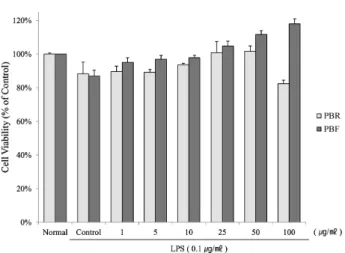
Fig. 1. The cell viability of Raw 264.7 cells with the polyphenol of black raspberry at different concentrations. Cells were treated for 24 hr with 0, 1, 5, 10, 25, 50 or 100 μg/ml of polyphenols in the presence of 0.1 μg/ml LPS. The normal group was treated with media only. The results are expressed as the mean±SE from three independent experiments. PBR, polyphenol of black raspberry root; PBF, polyphenol of black raspberry fruit.
ease, multiple sclerosis and rheumatoid arthritis.
Currently, the emergence of multiple-antimicrobial-re- sistant bacteria, such as Staphylococcus aureus (MRSA), carbapenem-resistant Acinetobacter baumannii (CRAB), and biological agents (namely Bacillus anthracis), repre- sent a serious worldwide health problem [14]. Of these or- ganisms, MRSA has become particularly troublesome in hospitals and the community [15]. High incidences of CRAB infections and hospital-wide outbreaks have been reported from many countries in recent years [16,17]. B. anthracis, the most notorious biological agent often referred to as
“anthrax,” has been widely used in weapons that could cause disease and death in sufficient numbers to cripple a city or region [18].
Herbal medical approaches against a variety of diseases utilize a number of fruits and vegetables, and the use of these materials in medicine remains a vital field of activity in Oriental countries. Previously, an anti-inflammatory re- sponse from the fruit polyphenols of the black raspberry was reported in murine macrophage cells [19]. However, the anti-inflammatory and antimicrobial activities of the root polyphenols of this plant have not yet been evaluated.
Recently, plant polyphenols were reevaluated by examining the root polyphenols, which were reported to have many properties, including anti-inflammatory and antidote ef- fects [20]. Therefore, in this study, the biological activities of the polyphenols of black raspberry root were evaluated and compared with those of the fruit polyphenols. We exam- ined the effects of black raspberry polyphenols from two distinct plant parts on the production of IL-1β, IL-6, IL-10, TNF-α, NO, PGE2, iNOS, and COX-2 in RAW 264.7 cells stimulated by lipopolysaccharide (LPS) and showing an- ti-bacterial effects against multiple-antimicrobial-resistant bacteria.
METHODS Plant material and extraction
Black raspberry root and unripe fruits were purchased from the Yakryeong (Drug) Market (Seoul, Korea). Dried plant materials (100 g) were extracted with 80% ethanol under reflux for 24 hours, and the supernatants were fil- tered using Whatman filter paper (Macherey-Nagel, Germany). The filtered extracts were evaporated with a ro- tary evaporator (Eyela, Japan) under reduced pressure, yielding a viscous polyphenol solution. The concentrated polyphenols were freeze-dried.
Cell viability assay
RAW 264.7 murine macrophages were acquired from the Korea Cell Bank (Seoul, Korea) and cultured in DMEM (Lonza, Walkersville, MD, USA) containing 10% heat-in- activated FBS (GIBCO BRL, Grand Island, NY, USA) and 20 μg/ml of gentamycin (GIBCO BRL) at 37oC in a wa- ter-jacketed CO2 incubator (Model 3111, Thermo Fisher Scientific, Waltham, MA, USA). Cell viability was de- termined with 0, 1, 5, 10, 25, 50, and 100 μg/ml samples of polyphenols of the root and fruits. RAW 264.7 cells at 5×10⁵ cells/well were seeded in 24-well plates. After 24 hr, the cells were treated with serial concentrations of test com- pounds in 1 ml of serum-free media. After 24-hr treatments, the cells were subject to 3-(4,5-dimethylthiazol-2-yl)-2, 5-di- phenyltetrazolium bromide (MTT) assay. Media were re- placed by 500 μl of fresh serum-free media containing 0.5 mg/ml of MTT (Sigma-Aldrich, St. Louis, MO, USA). After 1 hr of incubation at 37oC with a 5% CO2 incubator, MTT-containing media were removed, and the reduced for- mazan dye was solubilized by adding 500 μl of dimethyl sulfoxide (DMSO) to each well. After gentle mixing, the ab- sorbance was monitored at 590 nm using an InfiniteⓇ F200 plate reader (Tecan, Männedorf, Switzerland).
Nitrite determination
RAW 264.7 cells were plated at a density of 5×10⁵ cells in 24-well cell culture plates with 1 ml of culture medium and then incubated for 24 hr. The cells were treated with 0, 1, 5, 10, 25, 50, and 100 μg/ml of various polyphenols in LPS (0.1 μg/ml) and incubated for an additional 24 hr.
The quantity of nitrite generated was measured using the Griess reagent system (Sigma-Aldrich, St. Louis, MO, USA). Equal volumes of culture supernatant and Griess re- agent were mixed and incubated for 10 min at room temperature. The absorbance was measured at 540 nm on a spectrophotometer and compared to a nitrite standard curve to determine the nitrite concentration in the super- natants.
Measurement of IL-1β, IL-6, IL-10, PGE2, and TNF-α The levels of IL-6, 10, 1β, PGE2, and TNF-α in the su- pernatants from macrophage cultures were determined us- ing an enzyme-linked immunosorbent assay (ELISA) kit ac- cording to the manufacturer's instructions (R&D Systems, Minneapolis, MN, USA). RAW 264.7 cells were incubated with LPS (0.1 μg/ml) in the presence of different concen- trations of polyphenols for 24 hr. The supernatants were collected and stored at −80oC before analysis.
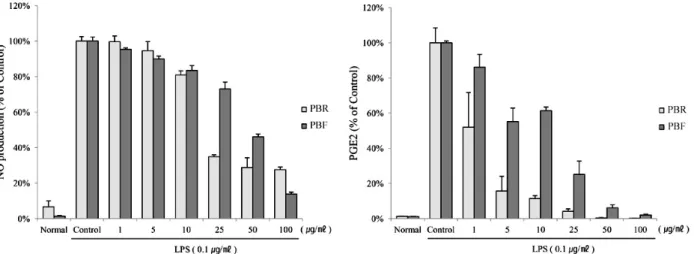
Fig. 2. Suppression of LPS-induced NO and PGE2 production in RAW264.7 cells by the polyphenol of black raspberry. Cells were treated for 18 hr with 0, 1, 5, 10, 25, 50 or 100 μg/ml of polyphenols in the presence of 0.1 μg/ml LPS. The normal group was treated with media only. The results are expressed as the mean±SE from three independent experiments. PBR, polyphenol of black raspberry root;
PBF, polyphenol of black raspberry fruit.
Evaluation of iNOS, COX-2 using real-time PCR RAW 264.7 cells were incubated with LPS (0.1 μg/ml) in the presence of different concentrations of the polyphe- nols for 24 hr. Total RNA was extracted from cultured cells using the Trizol method (Gibco BRL). Reverse transcription of the RNA was performed using AMV reverse tran- scriptase (PROMEGA, Madison, WI, USA). Real-time poly- merase chain reaction (PCR) assay was performed and monitored using SYBR Green chemistry with a 7500 Fast Real-time PCR System (Applied Biosystems, Foster City, CA, USA). All reactions were performed in triplicate to con- firm reproducibility. The amount of mRNA in each sample was normalized using that of the mean β-actin levels.
Primer sequences were as follows: iNOS, forward primer 5'-TCCTACACCACACCAAAC-3', reverse primer 5'-CTCC- AATCTCTGCCTATCC-3'; COX-2, forward primer 5'-CCTC- TGCGATGCTCTTCC-3', reverse primer 5'-TCACACTTAT- ACTGGTCAAATCC-3' [21]; β-actin, forward primer 5'-TG- AGAGGGAAATCGTGCGTGAC-3', reverse primer 5'-GCT- CGTTGCCAATAGTGATGACC-3' [22].
In vitro antimicrobial activity assay
Antimicrobial activity against ten microorganisms was primarily determined by the agar disc diffusion method us- ing the diameter of the clear zone. MRSA CAU 11001-CAU 11005 and CRAB CAU 10210-CAU 10204 were isolated in our laboratory from patients. B. anthracis ATCC 14578T was obtained from the American Type Culture Collection (ATCC; Manassas, VA, USA). The strains were grown aer- obically on Mueller Hinton agar (Difco, Detroit, MI, USA) at 37oC for 18 hr. Cultured-media from test microorganisms were put in sterilized paper discs (10 mm) and placed on the inoculated agar surface. The cultured media from the isolated bacteria were used to fill in the paper discs (100 μl/disc). After pre-diffusion at room temperature for 1 hr, the plates were incubated at 37oC for 19 hr. The non-cul- tured-media filled in the paper discs were used as controls.
Determination of the minimum inhibitory concentra- tions (MICs)
A broth microdilution susceptibility assay was conducted in accordance with NCCLS (2009) guidelines for the mini- mal inhibitory concentration (MIC) determinations. All tests were performed in Mueller Hinton agar (Difco), and the strains were cultured overnight at 37oC. Bacterial sus- pensions were diluted to match the 0.5 MacFarland stand- ards (approximately 1.5×10⁸ CFU/ml). The extracted com- pounds were dissolved in DMSO, and two-fold serial dilu- tions were prepared then added to the BHI media (final con- centration range: 15.6∼1,000 μg/ml). The culture media were incubated under normal atmospheric conditions for 24 hr at 37oC. Bacterial growth was indicated by the presence of a white pellet on the bottom of the tube. The MIC value was defined as the lowest concentration of polyphenols at which no visible growth could be observed.
RESULTS Cell viability MTT
The cytotoxic effects of the root and unripe fruit poly- phenols of black raspberry were evaluated in RAW 264.7 cells using MTT assays. Polyphenols were measured at treatment concentrations in the cell culture system. As shown in Fig. 1, the cytotoxicity of the polyphenols (up to a concentration of 100 μg/ml) was not obvious after a 24-hr incubation.
Generation of NO and PGE2 in LPS-stimulated RAW 264.7 cells
The inhibitory effects of the root and unripe fruit poly- phenols of black raspberry were evaluated on the pro- duction of nitrite, a stable metabolite of NO, and PGE2 in RAW 264.7 cells that had been challenged with LPS in the presence or absence of polyphenols. As shown in Fig. 2, both
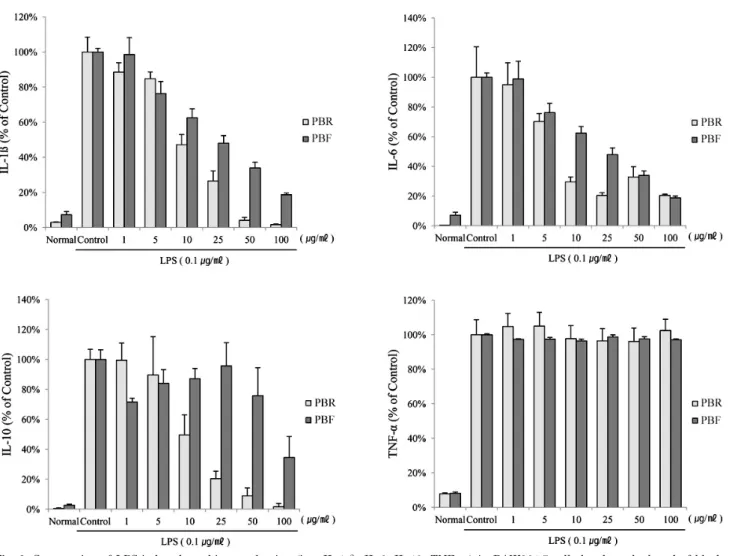
Fig. 3. Suppression of LPS-induced cytokine production (i.e., IL-1β, IL-6, IL-10, TNF-α) in RAW264.7 cells by the polyphenol of black raspberry. RAW264.7 cells were treated for 18 h with 0, 1, 5, 10, 25, 50 or 100 μg/ml of polyphenols in the presence of 0.1 μg/ml LPS.
The normal group was treated with media only. The cell culture media were then collected. The results are expressed as the mean±SE from three independent experiments. PBR, polyphenol of black raspberry root; PBF, polyphenol of black raspberry fruit.
polyphenols effectively suppressed LPS-induced nitrite pro- duction in a dose-dependent manner. Consistent with the observations with regard to nitrite accumulation, the root polyphenol profoundly inhibited PGE2 production. NO pro- duction in the treatment of the root polyphenol was sig- nificantly lower than that of the fruit polyphenols at 25 and 50 μg/ml concentrations. The NO in LPS-stimulated RAW 264.7 cells was exposed to 25 μg/ml of the root polyphenols, and the fruit polyphenols were measured at 34.9±1 and 73
±3.9% (% of the control), respectively. PGE2 production with the treatment of the root polyphenol was lower in LPS-stimulated RAW 264.7 cells than the fruit polyphenol at the various concentrations (1, 5, 10, 25, 50, and 100 μg/ml).
PGE2 production exposed to 5 μg/ml of the fruit poly- phenols and the fruit polyphenol measured at 15.7±8.4 and 55.2±7.8% (% of the control), respectively. These results show that the polyphenols of the black raspberry exerted an anti-inflammatory effect by ameliorating the production of inflammatory mediators, including NO and PGE2. In par- ticular, PGE2 was dramatically reduced (47%) compared to NO and other inflammation factors in the root polyphenols treated with 1 μg/ml on the RAW 264.7 cells.
Effect of pro-inflammatory cytokines in LPS-stimul- ated RAW 264.7 cells
The root and unripe fruit polyphenols of the black rasp- berry were evaluated and compared with regard to the pro- duction of IL-1β, IL-6, IL-10, and TNF-α (major pro-in- flammatory cytokines) in LPS-stimulated RAW 264.7 cells.
As shown in Fig. 3, IL-1β, IL-6 and IL-10 production was diminished dramatically following treatment with both polyphenols. In particular, root polyphenols revealed 10 μg/
ml concentrations, which was lower than fruit polyphenols with regard to IL-1β, IL-6 and IL-10 production. The per- centage of inhibition in the exposure of 10 μg/ml of root and fruit polyphenols were as follows: 47.2±5.8 and 62.5±
5.1% (% of the control), respectively, for IL-1β; 29.4±3.4 and 62.3±4.5% (% of the control), respectively, for IL-6; and 49.6±13.4 and 87.1±6.9% (% of the control), respectively, for IL-10. The inhibitory effects of the 25 μg/ml of root poly- phenols on IL-1β production were similar to the effects on IL-6 in that 25 μg/ml of the root polyphenols inhibited IL-10 production by 75∼80%. However, no inhibition of
Fig. 4. Effects of PBR on mRNA levels of iNOS and COX-2 in LPS-stimulated RAW 264.7 cells. The cells were treated with LPS or LPS plus black raspberry root polyphenol at concentrations indicated in Fig. 4. After 24 hr of incubation, total RNA was subjected to qRT-PCR. The RT products were labeled with SYBR Green dye. Relative iNOS and COX-2 mRNA expression (2−ΔΔCt) were determined by real-time PCR and calculated by the Ct value for iNOS and COX-2 from ß-actin mRNA. ΔΔCt = (Cttarget gene−Ct ß-actin)−(Ctcontrol−Ctβ-actin).
Each value represents the mean±SE of three independent experiments.
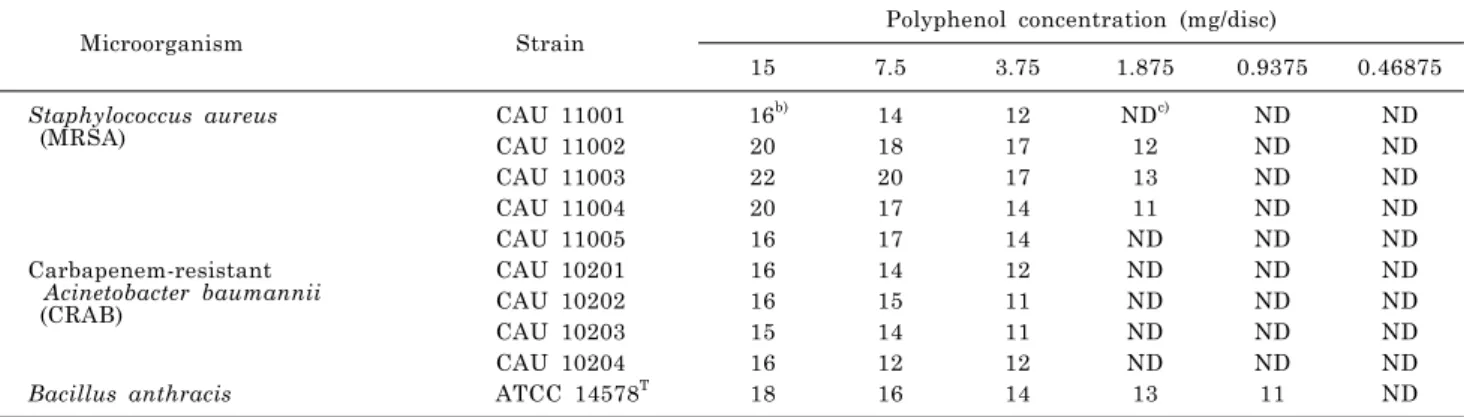
Table 1. Antibacterial test results of PBRa) in disc diffusion assay
Microorganism Strain Polyphenol concentration (mg/disc)
15 7.5 3.75 1.875 0.9375 0.46875
Staphylococcus aureus
(MRSA) CAU 11001 16b) 14 12 NDc) ND ND
CAU 11002 20 18 17 12 ND ND
CAU 11003 22 20 17 13 ND ND
CAU 11004 20 17 14 11 ND ND
CAU 11005 16 17 14 ND ND ND
Carbapenem-resistant Acinetobacter baumannii (CRAB)
CAU 10201 16 14 12 ND ND ND
CAU 10202 16 15 11 ND ND ND
CAU 10203 15 14 11 ND ND ND
CAU 10204 16 12 12 ND ND ND
Bacillus anthracis ATCC 14578T 18 16 14 13 11 ND
a)PBR, polyphenol of black raspberry root; b)Inhibition zones including the diameter of the paper disc (10 mm); c)ND, not detected.
TNF-α was observed in either polyphenol.
Quantitative RT- PCR of iNOS and COX-2
The mRNA levels of iNOS and COX-2 were determined us- ing qRT-PCR in order to confirm the inhibitory effects against NO and PGE2 production in LPS-stimulated RAW 264.7 cells treated with root polyphenols. As shown in Fig. 4, iNOS and COX-2 expressions were reduced, which is similar to the results shown in Fig 2. The findings demonstrated that 10, 25 and 50 μg/ml of polyphenols significantly decreased iNOS mRNA levels by 51, 59 and 99%, respectively, as com- pared to the LPS-treated positive control cells. The effects of COX-2 revealed that 10, 25 and 50 μg/ml of polyphenols resulted in significant decreases in mRNA levels of COX-2 by 61, 73 and 100%, respectively, as compared to the LPS- treated positive control cells.
Antimicrobial activity
As shown in Table 1, the root polyphenols were effective at inhibiting all strains tested, especially MRSA and B.
anthracis. The disc diffusion values of the 15 mg/ml the root polyphenol were included for the ten strains of MRSA and
CRAB. As shown in Table 1, the diameters for the different strains were 18, 16, 20, 22, 20, 16, 16, 16, 15, 16, 20, 17, and 12 mm after an 18-hr exposure. The MICs of the poly- phenols using each strain are shown in Table 2. CRAB CAU 10201, CAU 10202, CAU 10203, and CAU 10204 had MICs of 1,000 μg/ml, while MRSA CAU 11001, MRSA CAU 11002 and MRSA CAU 11003 had MICs of 250 μg/ml. B. an- thracis, MRSA CAU 11004 and CRAB CAU 10205 had MICs of 125 μg/ml, and MRSA CAU 11005 had an MIC of 62.5 μg/ml. However, no inhibitory effects were observed in any test strains treated with the fruit polyphenols.
DISCUSSION
Black raspberry fruit has traditionally been used in Oriental medicine, and recent in vitro studies have demon- strated its antioxidant, anti-tumorigenic and anti-inflam- matory effects [23-26]. The roots of many plants have bio- logical activity with anti-inflammatory, antioxidant, anti- bacterial, anti-fungal, and antidote effects [20]; therefore, the black raspberry may be useful for the food and cosmetic industries and/or as pharmaceuticals. The increased con- sumption of the root of black raspberry has prompted farm-
pathogenicbacteria
Microorganism Strain MIC (μg/ml) Staphylococcus aureus
(MRSA)
CAU 11001 250
CAU 11002 250
CAU 11003 ≤250
CAU 11004 125
CAU 11005 62.5
Carbapenem-resistant Acinetobacter baumannii (CRAB)
CAU 10201 >1,000
CAU 10202 1,000
CAU 10203 >1,000
CAU 10204 1,000
Bacillus anthracis ATCC 14578T 125
ers to expand the harvest area of this plant, and the grow- ing area in the Jeonbuk province in South Korea has in- creased year by year. The root of this plant wastes after fruit harvest, so it can be gathered more easily than other plant root materials. However, its biological activities have not been studied until recently.
The present study examined the bioactive natural con- stituents exerting anti-nociceptive and anti-inflammatory activities from the polyphenols of the black raspberry by ac- tivity-guided fractionation using ethyl acetate and butyl alcohol. These fractions showed significant anti-nociceptive effects as assessed by writhing-, hot plate- and tail flick tests in mice and rats, as well as an anti-inflammatory effect in rats with carrageenan-induced edema [27]. Recently, these anti-inflammatory effects were examined by comparison of polyphenols of the unripe, semi-ripened and ripe fruits of this plant. Unripe and semi-ripened fruits were found to re- duce the production of NO and PGE2 as well as pro-in- flammatory cytokines. However, ripe fruit exerted no in- hibitory effects against the production of NO and IL-6 [19].
Drugs that suppress or inhibit the expression of these inflammation-associated genes can be considered to harbor therapeutic potential for the prevention of inflammatory re- actions and diseases. In this study, it was demonstrated that root polyphenols down-regulated NO, PGE2, IL-1β, IL-6, and IL-10 production in LPS-stimulated RAW264.7 cells to a greater extent than fruit polyphenols. These find- ings indicate that the roots of this plant may prove to have a useful therapeutic approach in a variety of inflammatory diseases.
In addition, as a result of anti-superbacterial activity, root polyphenols were more effective than fruit polyphenols against MRSA, CRAB and B. anthracis. Notably, CRAB was inhibited by root polyphenols. Carbapenems have been reported as the most appropriate choice for the treatment of infections by multidrug-resistant A. baumannii. The most clinically significant carbepenemases are metalloen- zymes, and resistance to carbapenems in A. baumannii is also conferred by some carbapenemases (Ambler class D) that weakly hydrolyze imipenem and meropenem [28].
However, resistance to these molecules has increased great- ly worldwide [29,30]. The present findings clearly indicate that root polyphenols are a candidate for powerful anti- microbial biocides for the control of multi-drug resistance or harmful bacteria. This is the first report of this potential application.
In conclusion, the results obtained from this study can be expected to serve as the basis for understanding the
pharmacological effects of black raspberry and could be used to develop new pharmaceutical materials.
ACKNOWLEDGEMENTS
This study was supported by a grant of the Korea Healthcare Technology R&D Project, Ministry of Health and Welfare, Republic of Korea (Grant No.: A103017).
REFERENCES
1. Kim EJ, Lee YJ, Shin HK, Park JH. Induction of apoptosis by the aqueous extract of Rubus coreanum in HT-29 human colon cancer cells. Nutrition. 2005;21:1141-1148.
2. Moon GS. Constituents and Uses of Medicinal Herbs. Seoul:
Ilwolbooks; 1991.
3. Heo J. Donguibogam. Seoul: Yeogang Publishing Co.; 1994.
4. Boscá L, Zeini M, Través PG, Hortelano S. Nitric oxide and cell viability in inflammatory cells: a role for NO in macrophage function and fate. Toxicology. 2005;208:249-258.
5. Lawrence T, Willoughby DA, Gilroy DW. Anti-inflammatory lipid mediators and insights into the resolution of inflam- mation. Nat Rev Immunol. 2002;2:787-795.
6. Kaplanski G, Marin V, Montero-Julian F, Mantovani A, Far- narier C. IL-6: a regulator of the transition from neutrophil to monocyte recruitment during inflammation. Trends Immunol.
2003;24:25-29.
7. Ware CF. Network communications: lymphotoxins, LIGHT, and TNF. Annu Rev Immunol. 2005;23:787-819.
8. Ulevitch RJ, Tobias PS. Receptor-dependent mechanisms of cell stimulation by bacterial endotoxin. Annu Rev Immunol.
1995;13:437-457.
9. Harris SG, Padilla J, Koumas L, Ray D, Phipps RP. Prostag- landins as modulators of immunity. Trends Immunol. 2002;23:
144-150.
10. Smith WL, Meade EA, DeWitt DL. Pharmacology of prostag- landin endoperoxide synthase isozymes-1 and -2. Ann N Y Acad Sci. 1994;714:136-142.
11. Bogdan C. Nitric oxide and the immune response. Nat Immunol.
2001;2:907-916.
12. Laskin DL, Pendino KJ. Macrophages and inflammatory mediators in tissue injury. Annu Rev Pharmacol Toxicol. 1995;
35:655-677.
13. Wu G, Morris SM Jr. Arginine metabolism: nitric oxide and beyond. Biochem J. 1998;336:1-17.
14. Boucher HW, Talbot GH, Bradley JS, Edwards JE, Gilbert D, Rice LB, Scheld M, Spellberg B, Bartlett J. Bad bugs, no drugs:
no ESKAPE! An update from the Infectious Diseases Society of America. Clin Infect Dis. 2009;48:1-12.
15. Moellering RC Jr. Current treatment options for community- acquired methicillin-resistant Staphylococcus aureus infection.
Clin Infect Dis. 2008;46:1032-1037.
16. Esterly JS, Griffith M, Qi C, Malczynski M, Postelnick MJ, Scheetz MH. Impact of carbapenem resistance and receipt of active antimicrobial therapy on clinical outcomes of Acineto- bacter baumannii bloodstream infections. Antimicrob Agents Chemother. 2011;55:4844-4849.
17. Routsi C, Pratikaki M, Platsouka E, Sotiropoulou C, Nanas S, Markaki V, Vrettou C, Paniara O, Giamarellou H, Roussos C.
Carbapenem-resistant versus carbapenem-susceptible Acineto- bacter baumannii bacteremia in a Greek intensive care unit:
risk factors, clinical features and outcomes. Infection. 2010;
38:173-180.
18. Inglesby TV, Henderson DA, Bartlett JG, Ascher MS, Eitzen E, Friedlander AM, Hauer J, McDade J, Osterholm MT, O'Toole T, Parker G, Perl TM, Russell PK, Tonat K. Anthrax as a biological weapon: medical and public health management.
Working Group on Civilian Biodefense. JAMA. 1999;281:1735-
1745.
19. Yang HM, Oh SM, Lim SS, Shin HK, Oh YS, Kim JK. Anti- inflammatory activities of Rubus coreanus depend on the degree of fruit ripening. Phytother Res. 2008;22:102-107.
20. Quave CL, Estévez-Carmona M, Compadre CM, Hobby G, Hendrickson H, Beenken KE, Smeltzer MS. Ellagic acid derivatives from Rubus ulmifolius inhibit Staphylococcus aure- us biofilm formation and improve response to antibiotics. PLoS One. 2012;7:e28737.
21. Pan MH, Lai CS, Wang YJ, Ho CT. Acacetin suppressed LPS-induced up-expression of iNOS and COX-2 in murine macrophages and TPA-induced tumor promotion in mice.
Biochem Pharmacol. 2006;72:1293-1303.
22. Kim SJ. Curcumin suppresses the production of interleukin-6 in Prevotella intermedia lipopolysaccharide-activated RAW 264.7 cells. J Periodontal Implant Sci. 2011;41:157-163.
23. Lee JW, Do JH. Determination of total phenolic compounds from the fruit and Rubus coreanum and antioxidative activity.
J Korean Soc Food Sci Nutr. 2000;29:943-947.
24. Yoon I, Wee JH, Moon JH, Ahn TH, Park KH. Isolation and identification of quercetin with antioxidative activity from the fruits of Rubus coreanum Miquel. Korean J Food Sci Technol.
2003;35:499-502.
25. Jeon SK, Lee JW, Lee IS. Effect of antioxidant activity and induction of DNA damage on human gastric cancer cell by Rubus coreanus Miquel. J Life Sci. 2007;17:1723-1728.
26. Cho YJ, Chun SS, Kwon HJ, Kim JH, Yoon SJ, Lee KH.
Comparison of physiological activities between hot-water and ethanol extracts of Bokbunja (Rubus coreanum F.). J Korean Soc Food Sci Nutr. 2005;34:790-796.
27. Choi J, Lee KT, Ha J, Yun SY, Ko CD, Jung HJ, Park HJ.
Antinociceptive and antiinflammatory effects of Niga-ichigoside F1 and 23-hydroxytormentic acid obtained from Rubus coreanus.
Biol Pharm Bull. 2003;26:1436-1441.
28. Nordmann P, Poirel L. Emerging carbapenemases in Gram- negative aerobes. Clin Microbiol Infect. 2002;8:321-331.
29. Beck-Sagué CM, Jarvis WR, Brook JH, Culver DH, Potts A, Gay E, Shotts BW, Hill B, Anderson RL, Weinstein MP.
Epidemic bacteremia due to Acinetobacter baumannii in five intensive care units. Am J Epidemiol. 1990;132:723-733.
30. Smolyakov R, Borer A, Riesenberg K, Schlaeffer F, Alkan M, Porath A, Rimar D, Almog Y, Gilad J. Nosocomial multi-drug resistant Acinetobacter baumannii bloodstream infection: risk factors and outcome with ampicillin-sulbactam treatment. J Hosp Infect. 2003;54:32-38.