www.cmj.ac.kr
The Effect of Perineural Administration of Dexmedetomidine on Narcotic Consumption and Pain Intensity in Patients Undergoing Femoral Shaft Fracture Surgery; A Randomized Single-Blind
Clinical Trial
Elham Memary1, Alireza Mirkheshti1, Ali Dabbagh2, Mehrdad Taheri1, Aida Khadempour1, and Sadegh Shirian3,4*
1Department of Anesthesiology, Imam Hossein Hospital, Shahid Beheshti University of Medical Sciences, 2Department of Anesthesiology, Modaress Hospital, Shahid Beheshti University of Medical Sciences, Tehran, 3Department of Pathology, School of Veterinary Medicine, Shahrekord University, Shahrekord, 4Shiraz Molecular Pathology Research Center, Dr Daneshbod Lab, Shiraz, Iran
Dexmedetomidine is a selective -2 adrenoceptor agonist with anxiolytic, sedative, and analgesic properties that prolongs analgesia and decreases opioid-related side effects when used in neuraxial and perineural areas as a local anesthetics adjuvant. The cur- rent study was designed to evaluate the effects of a single perineural administration of dexmedetomidine without local anesthetics on narcotic consumption and pain in- tensity in patients with femoral shaft fractures undergoing surgery. This prospective randomized single-blind clinical trial was conducted in patients undergoing femoral fracture shaft surgery. Based on block permuted randomization, the patients were ran- domly divided into intervention and control groups. The intervention group received 100 g dexmedetomidine, for a femoral nerve block without any local anesthetics. Total intraoperative opioid consumption, postoperative opioid consumption, visual analogue score (VAS) for pain, and hemodynamic parameters were recorded and compared.
Finally the data from 60 patients with a mean age of 30.4±12.3 were analyzed (90%
male). There were no significant differences between the baseline characteristics of the two groups (p>0.05). The mean total consumption of narcotics was reduced during in- duction and maintenance of anesthesia in the intervention group (p<0.05). The amount of postoperative narcotics required showed a significant difference in the intervention group compared with the control group (p<0.05). It is likely that perineural admin- istration of dexmedetomidine significantly not only reduced intra and postoperative narcotic requirement but also decreased postoperative pain intensity in patients un- dergoing femoral shaft surgery. Femoral blockade by dexmedetomidine can provide excellent analgesia while minimizing the side-effects of opioids.
Key Words: Dexmedetomidine; Nerve block; Propofol; Narcotics; Pain management
This is an Open Access article distributed under the terms of the Creative Commons Attribution Non-Commercial License (http://creativecommons.org/licenses/by-nc/4.0) which permits unrestricted non-commercial use, distribution, and reproduction in any medium, provided the original work is properly cited.
Article History:
Received January 11, 2017 Revised January 25, 2017 Accepted January 26, 2017
Corresponding Author:
Sadegh Shirian
Department of Pathology, School of Veterinary Medicine, Shahrekord University, Rahbar Street 88186-34141. Shahrekord, Iran Tel: +982166581560
Fax: +987132346325
E-mail: [email protected]
INTRODUCTION
Femoral nerve blocks are commonly used as a simple and conventional peripheral anesthetic method to perform pro- cedures such as knee arthroscopy, anterior cruciate liga- ment reconstruction and femoral shaft fractures.1,2 In or- der to decrease postoperative pain and opioid require-
ments, single-shot peripheral nerve blocks (PNB) are rou- tinely performed as an alternative to general anesthesia that are also associated with shorter hospital stays.3 Minimizing analgesic-related side effects and maximizing pain relief are vital to patient recovery after surgery. To reach this goal, multimodal approaches using different classes of analgesics are currently recommended.4 Various
adjunct drugs, such as ketamine, antiemetic, pure opioid- antagonist, opioid agonist–antagonist, and non-steroidal anti-inflammatory drugs have been used in different circumstances.5 It is known that alpha-2 agonist agents have some peripheral analgesic effects, so they can be used as a sole anesthetic or an adjuvant in this regard.6 Dexmedetomidine is a selective -2 adrenoceptor agonist with anxiolytic, sedative, and analgesic properties that prolongs analgesia when used in neuraxial and intra- venous (IV) infusion.7,8 As an off-label medication, dexme- detomidine has been administered as an adjunct to general or regional anesthesia in and out of the operating room for both medical and surgical procedures.9 The current study was designed to evaluate the efficacy of single perineural administration of dexmedetomidine without local anes- thetics, on pain intensity and opioid consumption in pa- tients with femoral shaft fractures undergoing surgery.
MATERIALS AND METHODS
This prospective single-blind study was performed from April 2011 to December 2013 in Imam Hossein Hospital, Tehran, Iran.
1. Participants
The studied population included 18-65 year-old pa- tients, with American Society of Anesthesiologists (ASA) physical status I–II, undergoing elective femoral shaft frac- ture surgery. The exclusion criteria were known allergies to 2-adrenergic agonists or any of the drugs used during the procedure (atracurium, propofol, morphine, mid- azolam, dexmedetomidine, lidocaine and fentanyl); renal or hepatic failure; planned intraoperative use of regional analgesia; addicted patients; consumption of psychotropic medication or an opioid agonist or antagonist in the 24 hours before surgery; history of recent treatment with
2-adrenergic agonist or antagonist; patients weighing less than 40 kg or more than 100 kg; and surgery durations of more than 3 hours.
2. Intervention
The patients were randomly divided into intervention and control groups, using block permuted randomization.
the intervention group included those who received the femoral block and control group involved those who did not.
On arrival at the operating room, all patients were under- going routine monitoring including mean arterial blood pressure (BP), baseline measurements of heart rate heart rate (HR), peripheral oxygen saturation (Spo2), and bis- pectral (BIS) index. To create a desirable BIS index, pa- tients received a standardized anesthetic regimen that in- cluded premedication of IV midazolam 0.03-0.05 mg/kg and fentanyl 2-4 g/kg. An IV administration of propofol titrate 1-2 mg/kg was started until the target level of 60-80 on the BIS index was obtained. In the intervention group, the femoral nerve was identified at a depth of 5 cm using a linear ultrasound (US) probe (Esaote, 10-18 MHz,
Florence, Italy) or 5- to 12-Hz ultrasound probe (ToshibaTM, Tokyo, Japan). A 20-21 gauge, 70-100 mm-long Stimuplex needle (B-BraunTM, Melsungen, Germany) was used to per- form the block and was connected to a neurostimulator (StimuplexTM; B-Braun) at a 2-Hz frequency and 0.5-mA intensity. A motor response was acquired to confirm the neural target and an anesthetic solution containing 100 g dexmedetomidine in 20 ml distilled water was injected sur- rounding the nerve.
After performing the femoral blockade, the IV infusion of propofol, 100-200 g/kg/min, was continued till 40-60 on the BIS index was achieved and endotracheal intubation was facilitated with atracurium 0.5 mg/kg and lidocaine 1.5 mg/kg. It used a dual proportional-integral-derivative al- gorithm for the IV administration of propofol. The input variable is the BIS value, whereby the system titrates pro- pofol infusion to maintain a BIS between 40 and 60. The BIS was checked every 5 minutes and 20% of anesthetic in- fusion was reduced when BIS<40, while it was increased by 20% when BIS>60. If any patient was involved with ta- chycardia or hypertension more than 20% of its baseline for hemodynamic control, fentanyl was administrated with 1
g/kg and repeated on failure of response after 10 min. At the end of surgery propofol was stopped and all patients un- derwent IV infusion analgesia.
Opioid consumption was recorded every one hour.
Narcotic consumption was recorded in the recovery room and 12 and 24 hours after surgery. Blood pressures were recorded before, and at 0, 5, 10, 15, 30 minutes, then at 1, 2 and 3 hours after the start of the propofol infusion.
Patients were then given a patient-controlled analgesia (PCA) delivery system provided by a 100 mL solution in the PCA reservoir bag containing 10 mg of morphine sulfate, 2 ml/hours, in normal saline. Pain was recorded using a vis- ual analogue scale (VAS) for pain ranging from 0 (no pain) to 10 (worst pain) at hours 6, 12 and 24 after surgery. When a VAS score exceeded 3, rescue therapy was administered by providing 5 mg of IV morphine sulphate, followed as nec- essary by 2.5 mg boluses at 5-minute intervals. Adverse events were defined as bradycardia (heart rate <50 beats per minute), hypotension (a 30% decrease in systolic blood pressure in relation to the baseline value), and nausea or vomiting.
Finally, total intraoperative opioid consumption, post- operative opioid consumption, VAS and blood pressures were recorded and compared. Each patient was asked to grade satisfaction (Likert scale 1 to 5, in which grade 1 were completely satisfy; grade 2: relatively satisfy; grade 3: a lit- tle satisfy; grade 4: partly unsatisfied; grade 5: completely unsatisfied) with pain relief at the end of the PCA use.
3. Statistical analysis
Data analyses were done using the SPSS-22 software package. All data was expressed as mean±standard deviation. After testing for normality of pairwise differ- ences with Shapiro-Wilk normality test, the effect of dex- medetomidine on propofol and opioid consumption and he-
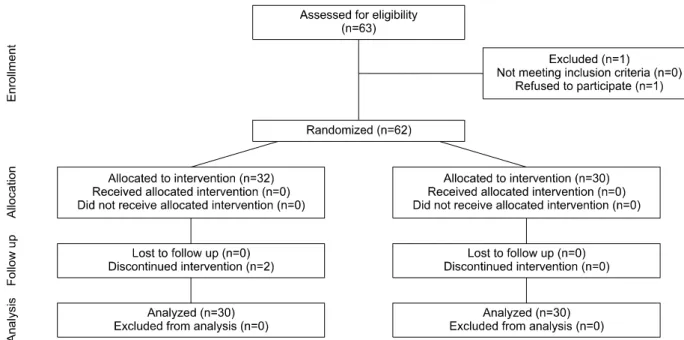
FIG. 1. Consort table showing participants.
TABLE 1. Demographic data of studied patients
Variable Group
Intervention Control
Weight (kg) 69.33±16.3 70.6±10.2
Sex (male/female) 25/7 25/5
Age (years) 31.6±11.2 29.4s±13.4
ASA I/II* 22/8 24/6
Surgery duration (hour) 2.40±0.24 2.45±0.18
*ASA: American Society of Anesthesiologists.
modynamic values were compared between groups using independent t tests. Hemodynamic data, BP means, are presented in a descriptive manner. A value of p<0.05 was considered statistically significant. Intra-group hemody- namic parameters were analyzed by using repeated meas- ure ANOVA.
4. Ethics
All authors adhered to the Helsinki - Ethical Principles for Medical Research throughout the study. The Ethics Committee of the Faculty of Medical School, Shahid Beheshti University of Medical Sciences, Tehran, Iran ap- proved the study protocol (Ethical approval number:
IR.SBMU.MSP.REC.1395.22). All patients were included after signing the written informed consent from. The trial was submitted in Iranian Registry of Clinical Trial at www.irct.ir and was received (IRCT code:
IRCT201608019593N4)
RESULTS
In total, 63 patients were considered eligible. One was excluded due to refusing to sign the consent form and the rest were randomly divided into two groups. The 62 pa- tients were allocated into 2 intervention 2 groups including 30 and 32 patients. Furthermore, intervention was dis- continued in 2 cases who had severe bradycardia after peri- neural injection of dexmedetomidine. Finally the data from 60 patients was analyzed. The CONSORT flowchart is pre- sented in Fig. 1. Demographic data is summarized in Table 1. There were no significant differences between the two groups with respect to age, duration of surgery and weight (p>0.05).
1. Vital signs
Table 2 showed that intraoperative vital signs between two groups. There are some statistical differences in these regards.
2. Pain intensity
Table 3 includes recovery and postoperative VAS changes in studied patients. The mean VAS scores showed a significant difference immediately postoperatively and at the 6th, 12th, and 24th hours postoperatively in the inter- vention group in compare with the control group (p<0.05).
3. Narcotic consumption
The assessment of narcotic consumption during in- duction and maintenance of anesthesia is shown in Table 4. The mean total consumption of narcotics was reduced during induction and maintenance of anesthesia in the in- tervention group: 216.6±11.3 g versus 275±17.1 g, in comparison with the control group, but the reduction was significant at the 3rd hour for intraoperative and total nar- cotic consumption (p<0.05).
Comparison of postoperative narcotic consumption in
TABLE 5. Postoperative narcotic consumption based on mg in the studied patients
Time Mean±SD (range)
Intervention group Control group p
Recovery 2.06±0.43 (0-6) 5.31±0.58 (0-15) 0.006 12th hour 6.73±0.53 (0-16) 11.43±0.7 (10-30) 0.02 24th hour 11.53±0.41 (10-16) 16.87±0.92 (10-30) 0.03 TABLE 2. Intraoperative vital signs ofstudied patients in two groups
Variable Mean±SD (range)
Intervention group Control group p Heart Rate (/min)
1st hour 92.56±2.48 (66-115) 81±2.21 (70-120) 0.001
2nd hour 85.63±1.69 (70-101) 78.06±2.17 (60-107) 0.001
3rd hour 80±1.4 (75-100) 79.86±1.19 (60-103) 0.001
Systolic blood pressure (mmHg)
1st hour 120.8±2.85 (114-140) 118.18±1.95 (105-150) 0.23
2nd hour 116.6±1.69 (96-140) 117.75±2.16 (105-150) 0.002
3rd hour 110.15±2.98 (86-160) 119±2.47 (105-150) 0.29
Diastolic blood pressure (mmHg)
1st hour 79.56±1.89 (58-90) 67.71±1.95 (50-86) 0.001
2nd hour 74.26±1.76 (54-85) 66.25±1.18 (60-80) 0.002
3rd hour 70.73±1.82 (50-90) 67.33±1.66 (50-80) 0.001
TABLE 3. Postoperative VAS for pain assessment of studied pa- tients in two groups
Time Mean±SD (range)
Intervention group Control group p
On recovery 2.8±0.5 (0-8) 7.06±0.43 (3-10) 0.002 6 hours
after surgery 1.5±0.29 (0-5) 4±0.42 (0-10) 0.001 12 hours
after surgery
1.93±0.19 (0-3) 3.31±0.42 (0-10) 0.01 24 hours
after surgery 0.2±0.09 (0-2) 1.56±0.27 (0-5) 0.001
TABLE 4. Narcotic consumption based on g during induction and maintenance of anesthesia in two groups
Variable Mean±SD (range)
Intervention group Control group p
Induction 128.3±7.3 (50-200) 125±5.4 (100-200) 0.3 1st hour 46.6±7.4 (0-100) 65.6±8.6 (0-200) 0.002 2nd hour 35±5.8 (0-100) 56.2±11.2 (0-250) 0.1 3rd hour 33.3±3.1 (0-50) 40.6±8.1 (0-150) 0.04 Intraoperative 85±13.5 (0-200) 153.1±15.1 (0-300) 0.002 Total 216.6±11.3 (100-300) 275±17.1 (150-500) 0.007
the studied patients is summarized in table 5. The amount of postoperative narcotics required showed a significant difference immediately postoperatively and at 12th and 24th hour postoperatively in the intervention group in compar- ison with the control group (p<0.05).
4. Side effects
Regarding to the adverse effects, just one case showed severe bradycardia with a reduction of BIS after peri- neural injection of dexmedetomidine. In this case, peri- neural injection was performed after an accidental punc- ture of the femoral artery and sever bradycardia was treat-
ed with 1 mg of atropine.
5. Patient satisfaction
For overall patient satisfaction, patients in the inter- vention group reported significantly higher mean sat- isfaction scores than those in the control group (4.7±0.08 vs. 3.8±0.2) (p=0.001).
DISCUSSION
In the current study, perineural administration of dex- medetomidine significantly not only reduced intra and postoperative narcotic requirements, but also decreased postoperative pain intensity in the patients undergoing femoral shaft surgery.
Perineural administration of anesthetic drugs is asso- ciated with limit considerable systematic absorption.
Propofol is a suitable intravenous anesthetic agent for in- duction and maintenance of anesthesia during surgery that has some advantages including providing good control of anesthetic depth and rapid onset and recovery.10 Alfa-ag- onist drugs have been demonstrated as anesthetic ad- juvant or sedative agents.11 Interest in dexmedetomidine as a potentially powerful adjunct to human anesthesia was generated by the report from Segal et al. (1988) that showed that dexmedetomidine produced more than a 90% reduc- tion in halothane anesthetic requirements in rats through a postsynaptic alpha2-adrenergic receptor with little change in arterial blood gases and BP.12 It has been also
reported that administration of dexmedetomidine sig- nificantly reduces the requirement for propofol.13 While, most of the previous studies have reported positive effects of dexmedetomidine as an adjuvant to the propofol require- ment, the effects of the femoral blockade, by administering it alone, on the required amounts of propofol in maintain- ing the adequate depth of anesthesia was investigated in this study for the first time.13 The results from our study also showed that intraoperative and total narcotic require- ments were lower in patients with the femoral blockade than in the group without the femoral blockade. Acute post- operative pain has various components such as in- flammatory, nociceptive, and neuropathic issues because of direct nerve injury. These components are possible tar- gets for postoperative analgesic strategies.14 The precise mechanism of action of perineural dexmedetomidine is not clear, but studies using other 2-adrenoceptor such as clo- nidine reported that 2-adrenoceptor-mediated vaso- constrictive effects may somehow explain the in- flammatory responses, centrally mediated analgesia, and activities on the peripheral nerves. Also, it is well demon- strated that postoperative analgesia of clonidine or dexme- detomidine is based on activity-dependent inhibition of in- wardly modifying potassium currents.15,16 The analgesic effect of dexmedetomidine was not reversed by an al- pha-adrenoceptor antagonist.17 In addition, dexmedeto- midine induced perineural vasoconstriction with con- comitant slower absorption of itself.14 Inhibiting potas- sium channel-mediated discharge of nociceptive C-fibres, attenuating the release of inflammatory mediators, and re- ducing ectopic neuronal discharge may justify how peri- neural dexmedetomidine alone can prolong the duration of analgesia. Prolonging the duration of postoperative an- algesia by clonidine and dexmedetomidine, as a local anes- thetic adjuvant, has been also demonstrated for brachial plexus blocks and infra-clavicular brachial plexus blocks, respectively.16,18 Here we suggest that dexmedetomidine alone without any local anesthetics prolongs the duration of sensory blocks when administered perineurally to pa- tients undergoing femoral anesthesia. It has generally been believed that the 2 agonists can reduce pain and opioid requirements after surgery, thus decreasing the in- cidence of opioid-related adverse effects.19 However, intra- venous administration of dexmedetomidine exhibits syn- ergy with regional that neuraxial analgesia effects of dex- medetomidine on narcotic consumption and controling pain in patients undergoing femoral surgery. We showed that perineural administration of dexmedetomidine sig- nificantly reduce intra and postoperative analgesic consumption. Furthermore, the lower mean VAS score in the intervention group indicated that perineural dexmede- tomidine alone was associated with significantly lowering pain intensity postoperatively in comparison with control group. The recent systematic review and meta-analysis has indicated that dexmedetomidine as a neuraxial ad- juvant was associated with a reduction in postoperative pain intensity within 24 hours.20 Brummett et al. con-
ducted several animal studies to test the effects of addi- tional dexmedetomidine to local anesthetics and showed that the duration of complete sensory and motor blockades were lengthened in the dexmedetomidine group.21 They al- so showed that perineural dexmedetomidine admin- istration provided an increased duration of analgesia to a thermal stimulus when compared with a systemic control in a rat sciatic nerve block.17 Human studies have sub- sequently demonstrated that increased duration of a sen- sory blockade can be achieved by adding dexmedetomidine as an adjuvant to bupivacaine and levobupivacaine, in greater palatine and axillary brachial plexus nerve blocks, respectively.22 Unlike previous studies, we demonstrated that perineural dexmedetomidine alone resulted in pa- tient’s qualitatively ‘better’ analgesia or lower pain scores than without. In the present study, significantly higher pa- tient satisfaction scores were reported by patients in the perineural dexmedetomidine group. There were not any undesired effects from perineural dexmedetomidine ad- ministration in the current study. However, one of our cas- es had severe bradycardia after perineural injection of dex- medetomidine, who underwent accidental puncture of femoral artery before perineural block. Abdel-Aleem et al.
reported that intrathecal administration of dexmedetomi- dine with morphine significantly decreased postoperative nausea and vomiting and improved overall patient sat- isfaction after cesarean delivery.23 Well-designed mul- ti-central research is still need to generalize the results of this study. Considering some other baseline character- istics such as history of drug abuse could also challenge the results.
It is likely that perineural administration of dexmedeto- midine not only significantly reduced intra and post- operative narcotic requirement but also decreased post- operative pain intensity in the patients undergoing femo- ral shaft surgery. Femoral blockade by dexmedetomidine can provides excellent analgesia, minimizing the side-ef- fects of opioids.
ACKNOWLEDGEMENTS
The authors would like to thank Miss Zahra Unesi and Miss Maedeh Sayad for their help.
CONFLICT OF INTEREST STATEMENT None declared.
REFERENCES
1. Mulroy MF, Larkin KL, Batra MS, Hodgson PS, Owens BD.
Femoral nerve block with 0.25% or 0.5% bupivacaine improves postoperative analgesia following outpatient arthroscopic ante- rior cruciate ligament repair. Reg Anesth Pain Med 2001;26:24-9.
2. Fletcher AK, Rigby AS, Heyes FL. Three-in-one femoral nerve block as analgesia for fractured neck of femur in the emergency department: a randomized, controlled trial. Ann Emerg Med
2003;41:227-33.
3. Williams BA, Kentor ML, Vogt MT, Williams JP, Chelly JE, Valalik S, et al. Femoral-sciatic nerve blocks for complex out- patient knee surgery are associated with less postoperative pain before same-day discharge: a review of 1,200 consecutive cases from the period 1996-1999. Anesthesiology 2003;98:1206-13.
4. Joshi GP. Multimodal analgesia techniques and postoperative rehabilitation. Anesthesiol Clin North America 2005;23:
185-202.
5. Lin TF, Yeh YC, Lin FS, Wang YP, Lin CJ, Sun WZ, et al. Effect of combining dexmedetomidine and morphine for intravenous pa- tient-controlled analgesia. Br J Anaesth 2009;102:117-22.
6. Le Guen M, Liu N, Tounou F, Augé M, Tuil O, Chazot T, et al.
Dexmedetomidine reduces propofol and remifentanil require- ments during bispectral index-guided closed-loop anesthesia: a double-blind, placebo-controlled trial. Anesth Analg 2014;118:
946-55.
7. Rancourt MP, Albert NT, Côté M, Létourneau DR, Bernard PM.
Posterior tibial nerve sensory blockade duration prolonged by adding dexmedetomidine to ropivacaine. Anesth Analg 2012;115:958-62.
8. Gertler R, Brown HC, Mitchell DH, Silvius EN. Dexmedetomi- dine: a novel sedative-analgesic agent. Proc (Bayl Univ Med Cent) 2001;14:13-21.
9. Mason KP, Lerman J. Review article: Dexmedetomidine in chil- dren: current knowledge and future applications. Anesth Analg 2011;113:1129-42.
10. Burow BK, Johnson ME, Packer DL. Metabolic acidosis asso- ciated with propofol in the absence of other causative factors.
Anesthesiology 2004;101:239-41.
11. Ohtani N, Kida K, Shoji K, Yasui Y, Masaki E. Recovery profiles from dexmedetomidine as a general anesthetic adjuvant in pa- tients undergoing lower abdominal surgery. Anesth Analg 2008;107:1871-4.
12. Segal IS, Vickery RG, Walton JK, Doze VA, Maze M. Dexmedeto- midine diminishes halothane anesthetic requirements in rats through a postsynaptic alpha 2 adrenergic receptor. Anesthesio- logy 1988;69:818-23.
13. Sen S, Chakraborty J, Santra S, Mukherjee P, Das B. The effect of dexmedetomidine infusion on propofol requirement for main- tenance of optimum depth of anaesthesia during elective spine surgery. Indian J Anaesth 2013;57:358-63.
14. Wang PH, Tsai CL, Lee JS, Wu KC, Cheng KI, Jou IM. Effects of
topical corticosteroids on the sciatic nerve: an experimental study to adduce the safety in treating carpal tunnel syndrome. J Hand Surg Eur Vol 2011;36:236-43.
15. Ali Erdogan M, Polat A, Yucel A, Aydogan MS, Parlakpinar H, Tekin S, et al. Effects of perineural administration of dexmedeto- midine in combination with levobupivacaine in a rat sciatic nerve block. Curr Ther Res Clin Exp 2013;74:74-8.
16. Pöpping DM, Elia N, Marret E, Wenk M, Tramèr MR. Clonidine as an adjuvant to local anesthetics for peripheral nerve and plexus blocks: a meta-analysis of randomized trials. Anesthesiology 2009;111:406-15.
17. Brummett CM, Hong EK, Janda AM, Amodeo FS, Lydic R.
Perineural dexmedetomidine added to ropivacaine for sciatic nerve block in rats prolongs the duration of analgesia by blocking the hyperpolarization-activated cation current. Anesthesiology 2011;115:836-43.
18. Mirkheshti A, Saadatniaki A, Salimi A, Manafi Rasi A, Memary E, Yahyaei H. Effects of dexmedetomidine versus ketorolac as lo- cal anesthetic adjuvants on the onset and duration of in- fraclavicular brachial plexus block. Anesth Pain Med 2014;4:
e17620.
19. Blaudszun G, Lysakowski C, Elia N, Tramèr MR. Effect of peri- operative systemic α2 agonists on postoperative morphine con- sumption and pain intensity: systematic review and meta-analy- sis of randomized controlled trials. Anesthesiology 2012;116:
1312-22.
20. Wu HH, Wang HT, Jin JJ, Cui GB, Zhou KC, Chen Y, et al. Does dexmedetomidine as a neuraxial adjuvant facilitate better anes- thesia and analgesia? A systematic review and meta-analysis.
PLoS One 2014;9:e93114.
21. Brummett CM, Amodeo FS, Janda AM, Padda AK, Lydic R.
Perineural dexmedetomidine provides an increased duration of analgesia to a thermal stimulus when compared with a systemic control in a rat sciatic nerve block. Reg Anesth Pain Med 2010;35:427-31.
22. Esmaoglu A, Yegenoglu F, Akin A, Turk CY. Dexmedetomidine added to levobupivacaine prolongs axillary brachial plexus block.
Anesth Analg 2010;111:1548-51.
23. Abdel-Aleem M, Osman A, Morsy K. Effect of coadministration of dexamethasone with intrathecal morphine on postoperative outcomes after cesarean delivery. Int J Gynaecol Obstet 2012;116:158-61.