Ⅰ. 緖 論
Ⅱ. 實驗器材 및 方法
Ⅲ. 實驗結果
Ⅳ. 考 察
1930년 이래로 齒科用 鑄造體인 局部義齒나 總義齒 金屬構造物 製作材料로 크롬, 코발트, 니켈을 主成分으로 한 合金(chromium-cobalt- nickel base alloys)이 使用되었으나, 非貴金屬合
朴 孝 秉
Abstract
The Influence on Castability of Nickel-Chromium Alloys according to Burn-out Temperature and Recast Content Ratio
Hyo-byeang Park
Dept. of Dental Lab. Thchnology Kwangju Health Junior College
The castability of base metal alloys for dental casting in influenced by burn-out temperature and recent percentage.
Burn-out temperatures for casting are set at 200℉ interval from 1000℉ to 1800℉.
According to recast metal percent in new cast alloy metal alloys are tested.
The results are as followings:
1. In the new alloy(100%), the castability is the most.
2. The burn-out temperature in 1600~1800℉, castability of 100% new alloy was more four times than of 50% new alloy plus 50% recast alloy.
The using of 50% new alloy and 50% recast alloy, therefore, was unlike in castability.
3. The burn-out temperature in 1600℉, castability of 100% new alloy was more than foru times in soaking 20 minutes, but there was no any difference at 18700℉.
4. It is investigated that the optimal burn-out temperature is 1600℉ for the C & B alloy.
며, 또 硬度가 너무 높아 鑄造 후 硏磨할 때 특별한 기구를 使用해야 하는 어려움이 있어 貴金屬合金이 많이 使用되어 왔으나 齒科 機 械 및 材料의 發達로 最近에는 齒科補綴物 材 料로 非貴金屬合金이 貴金屬 代用物로 많이 사용된다.
齒冠製作用 非貴金屬合金에 대해서는 O’
brein외 여러 사람에 의해 調査, 報告된 바 있 으며, 특히 合金의 可鑄性에 대해 Kaminski, Compagni등은 鑄造溫度, 埋沒材의 種類, 鑄造 壓, 주입선의 식립 方法, 埋沒方法, Wax의 除 去, 合金, 용융등의 요인이 部分 혹은 複合的으 로 發生하여 合金의 可鑄性을 左右한다고 밝 혔으며, Jarvis는 埋沒材의 燒還溫度가 可鑄性 에 미치는 影響 또한 크다고 報告했다.
이에 筆者는 齒冠 補綴物用 材料로 많이 사 용되는 Ni-Cr係 合金을 利用하여 可鑄性에 미 치는 要因을 同一하게 해주고 ring의 燒還溫度 와 金屬 再鑄造時 可鑄性에 미치는 影響을 比 較 分析하여 報告하는 바이다.
1) Plastic screen mesh
2) Wax : casting wax(HAN Deuk chemistrys, Korea)
3) Wetting agent : Debullizer(G-C dental ind., Co., Japen)
4) Casting ring(Korea)
5) investment : Hi-Temp investment (whip- mix Co., U.S.A.)
6) Vaccum mixer(whip-mix Co., U.S.A.) 7) Furnace : Sae Kang Electronics Co.,
Korea.
Plastic screen mesh(방충망)을 18 18mm되게 詩片을 만들고 casting round wax의 正中央을 틈을 낸 후 plastic screen mesh를 casting round wax에 固定시키고 V-Shaped runner bar pattern이 되게 形成하고 원추대에 附着했다 (그림 1).
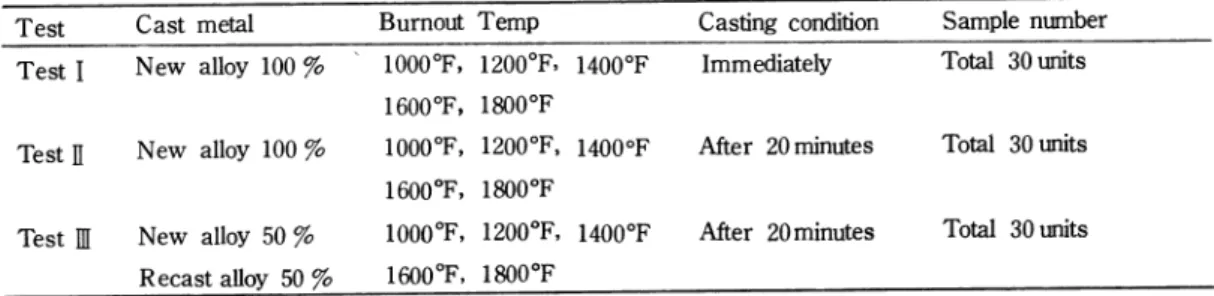
實驗材料의 可鑄性을 增加시키기 위해 wetting agent를 塗布하고 special liquid와 distilled water를 80:20로 稀釋한 後 Hi-Temp 매몰재의 混水比를 0.16%로 自動混合機를 이 용하여 60초간 混合하여 埋沒하였다. 埋沒한 ring을 하루 경화시킨 후 물에 5분간 담근후 燒還溫度를 1000℉, 1200℉, 1400℉,1600℉, 1800℉등 5段階로 區分하여 燒還한 후 표 1, 1-1 條件으로 주조기기는 thermotrol 2500을 使 用하여 C & B alloy를 응용, 주조했다.
표 1-1의 實驗 條件으로 鑄造後 완성된 주조 체를 sand-blaster를 이용하여 埋沒材 殘渣를 그림 1. Pattern assembly with sprue and crucible former.
Ring의 燒還溫度를 1000℉, 1200℉, 1400℉, 1600℉, 1800℉로 區分하여 표1-1 實驗 條件으 로 하여 한 標本의 주조체 내부 사각형 총 81 個중 완전한 사각형을 調査한 결과 다음과 같 다(표 2).
合金의 可鑄性에 影響을 미치는 要因으로는 Kaminski, Compagni등에 의해 보고된바 있으 며, Jarvis은 매몰재의 燒還溫度가 可鑄性에 미 치는 影響 또한 크다고 報告한 바 있다.
이 중 金屬의 鑄造 온도가 미치는 영향은 매 우 크므로 齒科 補綴物 金屬 용융시 gas- oxygen flame 사용보다 thermotrol 주조기를 사 용 하 는 것 이 좋 다 고 사 료 된 다 . 또 한 Presswood, Duncan, Whitlock 등은 nickel- chromium 合金중 beryllium을 包含한 nickel- chromium 合金이 包含안된 合金에 비해 鑄造
溫度가 낮으며 鑄造收縮이 적고 鑄造의 正確 渡가 좋다고 報告한 바 있으나 實驗 結果 使 用했던 C & B Alloy조성은 nickel 51.5%, manganese 20.0%, chromium 15.6%, copper 10% 그 외 3.5%로 이루어져 있고 Jarvis가 조 사한 合金의 beryllium의 存在 有無에 따른 可 鑄 性 比 較 分 析 은 어 려 운 상 태 이 나 1600~1800℉ 소환온도에서는 Jarvis 實驗時 使 표 1-1. Burn out casting conditions
그림 2. Completed of casting body
표 2. Composite castability vs. burn out TEmp., recast percentage
用한 A.B 金屬과는 可鑄性이 一致했으며 C.D 金屬보다는 優秀한 주조성을 보였다. 이에 실 험 Ⅰ,Ⅱ에 의한 소환온도에 따른 鑄造性의 差 異는 ring 內部 온도와 furnace muffle 內의 指 示 온도와 一致하지 못한 현상으로 사료되며, 실험 Ⅱ,Ⅲ의 結果에 대한 差異느 C&B Alloy 의 조성 중 주조시 manganse의 상실로 인한 酸化物淸掃濟 役割이 減少함으로 可鑄性이 減 少됐다고 사료된다.
실험 Ⅱ에 있어서 1600℉, 1800℉에서는 同一 한 鑄造性이 나타났으나, 表面 滑澤面에서는 1600℉가 1800℉보다 좋게 나타났으며 Jarvis외 다수의 보고에 의하면 燒還溫度 증가시 鑄造 體 表面 滑澤度의 減少 현상을 나타낸다는 調 査와 一致함을 알았다.
그러므로 C & B alloy의 最適의 燒還 온도 는 1600℉로 간주할 수 있다고 생각된다.
C & B alloy(nickel-chromium係)를 사용하여 ring 의 燒還溫度 차이 및 50 new alloy : 50 recast alloy 合金 鑄造時 可鑄性에 대한 調査 結果 다음과 같은 結論을 얻었다.
1. 가주성이 가장 優秀한 것은 100% new alloy였다.
2. 100% new alloy가 50% new alloy : 50%
recast alloy보다 1600~1800℉ 燒還溫度에서 可 鑄性이 4배가 좋다. 그러므로 new alloy와 recast alloy를 50:50으로 하는 것은 좋지 못하 다.
3. 100% new alloy로 鑄造時 1600℉ 燒還溫 度에서 20分間 繫留한 것이 안한것보다 可鑄 性이 4배 좋으나 1800℉에서는 거의 差異가 없 다.