http://www.j-circ.or.jp
lthough drug-eluting stents (DES) reduce angiographic restenosis and target lesion revascularization (TLR) compared with bare-metal stents (BMS),
1–3con- cerns about the safety of DES have been raised because of late stent thrombosis (ST).
4,5Currently, prolonged dual antiplatelet therapy of at least 12 months of clopidogrel is recommended after percutaneous coronary intervention (PCI) with DES.
6However, there is a paucity and controversy of
evidence regarding the optimal duration of dual antiplate- let therapy.
7,8Dual antiplatelet therapy increases bleeding risk
9,10and cost compared with aspirin alone. Endoscopic, dental, and surgical procedures are often delayed due to prolonged dual antiplatelet therapy, which might affect the patient’s quality of life.
11Moreover, it is also unclear whether the optimal duration of dual antiplatelet therapy is similar for all DES types.
Received April 12, 2010; revised manuscript received June 21, 2010; accepted July 1, 2010; released online October 2, 2010 Time for primary review: 35 days
Division of Cardiology, Department of Medicine, Samsung Medical Center, Sungkyunkwan University School of Medicine, Seoul (J.-Y.H., Y.B.S., J.-H.C., S.-H.C., S.H.L., H.-C.G.); Inje University Ilsan Paik Hospital, Goyang (S.Y.L.); Kyungpook National University Hospital, Daegu (H.S.P.); Keimyung University Dongsan Medical Center, Daegu (S.H.H.); Eulji Medical Center, Eulji University, Daejeon (S.L.); Kangdong Sacred Heart Hospital, Hallym University, Seoul (K.-R.H.); Korea University Guro Hospital, Seoul (S.-W.R.); Kangwon National University Hospital, Chuncheon (B.R.C.); Yeungnam University Hospital, Daegu (J.-S.P.);
Wonju Christian Hospital, Yonsei University, Wonju (J.Y.); and Korea University Anam Hospital, Seoul (D.S.L.), Republic of Korea Mailing address: Hyeon-Cheol Gwon, MD, Cardiac and Vascular Center, Samsung Medical Center, Sungkyunkwan University School
of Medicine, 50 Irwon-dong, Gangnam-gu, Seoul 135-710, Republic of Korea. E-mail: [email protected] ISSN-1346-9843 doi: 10.1253/circj.CJ-10-0347
All rights are reserved to the Japanese Circulation Society. For permissions, please e-mail: [email protected]
Three-Month Dual Antiplatelet Therapy After Implantation of Zotarolimus-Eluting Stents
– The DATE (Duration of Dual Antiplatelet Therapy After Implantation of Endeavor Stent) Registry –
Joo-Yong Hahn, MD; Young Bin Song, MD; Jin-Ho Choi, MD; Sung-Hyuk Choi, MD;
Sung Yun Lee, MD; Hun Sik Park, MD; Seung Ho Hur, MD; Sahng Lee, MD;
Kyoo-Rok Han, MD; Seung-Woon Rha, MD; Byung Ryul Cho, MD; Jong-Sun Park, MD;
Junghan Yoon, MD; Do Sun Lim, MD; Sang Hoon Lee, MD; Hyeon-Cheol Gwon, MD for the DATE Registry Investigators
Background: The optimal duration of dual antiplatelet therapy remains controversial.
Methods and Results: Between December 2006 and March 2008, 823 patients were enrolled in a prospective
multicenter registry for 3-month dual antiplatelet therapy (aspirin 100–200 mg+clopidogrel 75 mg daily) followed by aspirin mono-therapy after zotarolimus-eluting stents (ZES). Major exclusion criteria were: cardiogenic shock, stent thrombosis (ST)-segment elevation myocardial infarction (MI) within 48 h, previous drug-eluting stent implan- tation, severe left ventricular dysfunction, bifurcation lesions requiring 2-stenting, left main and graft lesions. The primary outcome was a composite of cardiac death, MI, or ST at 1 year. The median duration of dual antiplatelet therapy was 95 days (interquartile range 90–101). At 1 year, 3 patients (0.4%) had cardiac deaths, 3 patients (0.4%) had MI, and 4 patients (0.5%) had definite or probable ST, leading to the primary outcome in 5 patients (0.6%). Death, MI, or any revascularization occurred in 68 patients (8.3%). Among patients who were event-free at 3 months (n=812), clopidogrel was discontinued at 3 months in 661 patients and was continued for longer than 3 months in 151 patients. Discontinuation of clopidogrel at 3 months did not increase the primary outcome (HR 0.90; 95%CI, 0.09–9.02), death, MI, or any revascularization (HR 0.89; 95%CI, 0.48–1.67) after adjustment for the propensity score.
Conclusions: Three-month dual antiplatelet therapy seems to be feasible after ZES implantation in relatively
low-risk patients. (Circ J 2010; 74: 2314 – 2321)
Key Words: Antiplatelets; Drug-eluting stents
A
Cardiovascular Intervention
Zotarolimus-eluting stents (ZES) (Endeavor, Medtronic Vascular, Inc, Santa Rosa, CA, USA) have a favorable long- term safety profile and carry a lower risk of myocardial infarc- tion (MI) and ST after 1 year compared with paclitaxel-elut- ing stent (PES).
12Several animal and human studies support the safety of ZES.
13–17Theoretically, the duration of dual anti- platelet therapy can be shorter with ZES than with other stents.
This study aims to determine the feasibility of 3-month dual antiplatelet therapy after ZES implantation in relatively low- risk patients with coronary artery disease.
Methods Study Population
The DATE (Duration of dual Antiplatelet Therapy after implantation of Endeavor stent) registry was a prospective multicenter cohort study to evaluate the safety of 3 months of dual antiplatelet therapy after successful implantation of ZES conducted at 17 major centers in Korea. Patients were eligible for participation based on the following inclusion criteria: (1) clinically significant coronary stenosis (diameter stenosis >70% or diameter stenosis >50% with typical angina and/or objective evidence of myocardial ischemia); (2) de novo coronary lesions; and (3) exclusive treatment with ZES.
The exclusion criteria were as follows: (1) clinical charac- teristics including cardiogenic shock, ST-segment elevation MI within 48 h of onset, previous implantation of DES, and severe left ventricular dysfunction (left ventricular ejection fraction <25%) or congestive heart failure; (2) lesion char- acteristics including total stent length >60 mm, bifurcation lesions requiring side branch stenting, left main lesions, and graft lesions; and (3) patient’s characteristics including clopi- dogrel use for reasons other than PCI, use of warfarin or antiplatelet therapy other than aspirin and clopidogrel, hyper- sensitivity to aspirin or clopidogrel, expected survival less than 1 year, child-bearing age in women, bleeding diathesis, major bleeding within 3 months, and renal dysfunction (serum creatinine >2.0 mg/dl). The study protocol was approved by the institutional review board at each participating institu- tion and all subjects gave informed consent to participation.
PCI and Antiplatelet Therapy
All procedures were performed with standard interventional techniques. All patients were administered loading doses of aspirin (300 mg) and clopidogrel (300–600 mg) unless they had previously received antiplatelet medications. Anti-coag- ulation during PCI was performed according to the routine practices of each hospital. Predilation, post-stent adjunctive balloon inflation, use of intravascular ultrasound, and admin- istration of glycoprotein IIb/IIIa receptor antagonists were all at the operator’s discretion. After the procedure, aspirin (100–200 mg once daily) was continued indefinitely. Dis- continuation of clopidogrel (75 mg once daily) was planned at 3 months (window period: ±2 weeks).
Data Collection and Follow up
This study was coordinated by the Clinical Trial Center of Samsung Medical Center. Demographic, clinical, laboratory, angiographic, procedural, and outcome data were collected by a dedicated web-based case report form. Additional infor- mation was obtained by further inquiry into medical records or telephone contact, if necessary. Quantitative angiographic analysis (QCA) was performed at the angiographic core laboratory of the Cardiac and Vascular Center, Samsung Medical Center. All outcome data were confirmed by source
documentation collected from each participating center and were reviewed by an independent clinical event adjudication committee. Clinical follow up was scheduled at 1, 3, 6, and 12 months after the index procedure. At each visit, drug com- pliance was evaluated by interview. Drug compliance was defined as 100 × pills taken/pills prescribed. Serious adverse events were reported within 24 h to the steering committee.
Definitions and Study Endpoints
Clinical events were defined based on the recommendations of the Academic Research Consortium (ARC).
18All deaths were considered cardiac unless a definite non-cardiac cause could be established. MI was defined as the presence of clinical signs of MI combined with a creatine kinase MB fraction or troponin-T/troponin-I increase higher than the upper normal limit. TLR was defined as either a repeat PCI of the lesion within 5 mm of the deployed stent or bypass graft surgery of the target vessel. Target vessel revascularization (TVR) was defined as repeat revascularization of the target vessel by PCI or bypass graft surgery. Definite, probable and possible ST was defined according to the ARC recommen- dations.
18The timing of ST was classified as early, late, or very late if it occurred within 1 month, 1 month to 1 year, and greater than 1 year post index procedure, respectively.
The primary outcome of this study was a composite of cardiac death, MI, or definite/probable ST at 1 year. Among patients who were event-free at 3 months, the primary out- come and patient-oriented composite endpoint by the ARC recommendation (all-cause death, any MI, or any repeat revascularization including all target and non-target vessels) at 1 year were compared between patients taking clopidogrel for 3 months only and those taking clopidogrel for more than 3 months.
Statistical Analysis
Continuous variables were analyzed using the Student’s t-test or the Mann-Whitney U test, and categorical variables were compared using the χ
2test or Fisher’s exact test, as appropri- ate. Cumulative event rates were estimated using the Kaplan- Meier methods and were compared by the log-rank test.
Adjusted hazard rates were compared with multivariable
Cox proportional-hazards regression that incorporated pro-
pensity score, to reduce the effect of selection bias regarding
the duration of clopidogrel and potential confounding in this
observational study.
19The propensity score was the estimated
probability of discontinuation of clopidogrel at 3 months after
the index procedure rather than continuation of clopidogrel
for longer than 3 months. This propensity score was derived
from a separate logistic regression model that predicted dis-
continuation of clopidogrel at 3 months. Factors significantly
associated with death, MI, or repeat revascularization in
univariate analysis and potential confounders such as demo-
graphic factors, coronary risk factors, medical history, angi-
ographic and procedural variables were included in this
logistic regression model for the propensity score. Included
variables were as follows: age, gender, clinical presentation,
current smoker, diabetes mellitus, hypertension, dyslipidemia,
prior MI, prior PCI, prior cerebrovascular disease, disease
extent, left anterior descending artery disease, number of
treated lesions, reference diameter, lesion length, type B2/C
lesion, lesion eccentricity, number of stents used, stent
diameter, and total stent length. In addition to the propensity
score, history of PCI was incorporated into the Cox model
to adjust for differences between patients taking clopido-
grel for 3 months and those taking clopidogrel for more than
Figure 1. Patient flow chart. DES, drug-eluting stents.
Table 1. Baseline Clinical Characteristics
Characteristic Overall
(n=823)
Group I*
Clopidogrel for 3 months (n=661)
Group II*
Clopidogrel
>3 months (n=151) P value
Age, years, median (interquartile range) 63 (54–70) 64 (53–70) 62 (56–70) 0.75
Men 588 (71) 474 (72) 105 (70) 0.59
Diabetes mellitus 259 (32) 207 (31) 47 (31) 0.96
Hypertension 473 (58) 378 (57) 90 (60) 0.59
Dyslipidemia 211 (26) 167 (25) 41 (27) 0.63
Current smoking 259 (32) 206 (31) 50 (33) 0.64
Peripheral arterial occlusive disease 5 (1) 3 (1) 1 (1) 0.56
Prior MI 19 (2) 12 (2) 6 (4) 0.12
Prior PCI 24 (3) 14 (2) 10 (7) 0.007
Prior CABG 5 (1) 5 (1) 0 (0) 0.59
Prior cerebrovascular disease 28 (3) 19 (3) 9 (6) 0.08
Clinical presentation 0.24
Stable angina 423 (51) 346 (52) 71 (47)
Acute coronary syndrome 400 (49) 315 (48) 80 (53)
LVEF†, %, median (interquartile range) 62 (56–68) 62 (56–68) 62 (56–67) 0.88
Data are expressed as number of patients (%) unless otherwise indicated.
*Among patients who were event-free at 3 months.
†Available in 671 of all patients, in 534 patients of group I, and in 127 patients of group II, respectively.
MI, myocardial infarction; PCI, percutaneous coronary intervention; CABG, coronary artery bypass graft surgery; LVEF, left ventricular ejection fraction.
3 months. All analyses were performed with Stata software, version 11.0 (Stata Corp, College Station, TX, USA). P<0.05 was considered statistically significant.
Results
Baseline Characteristics and Antiplatelet Therapy
Between December 2006 and March 2008, 851 patients were registered. Of these, 16 patients did not meet the enrollment criteria: use of warfarin in 3 patients; clopidogrel use for neu- rologic disease in 1 patient; previous implantation of DES in
6 patients; use of other DES in addition to ZES in 2 patients;
left main lesions in 2 patients; renal dysfunction in 1 patient;
and total stent length >60 mm in 1 patient. During follow up, 12 additional patients dropped out; withdrawal of consent for 2 patients; hypersensitivity to clopidogrel in 1 patient;
and use of antiplatelets other than aspirin and clopidogrel in 9 patients. Thus, the final analysis included data from 823 patients (Figure 1). Among these, 350 patients (42.5%) received clopidogrel prior to the index PCI for at least 1 week and the other patients were administered loading doses of clopidogrel (300–600 mg) before PCI. The median
Table 2. Angiographic and Procedural Characteristics
Characteristic Overall
(n=823)
Group I*
Clopidogrel for 3 months (n=661)
Group II*
Clopidogrel
>3 months (n=151) P value
Diseased vessels 0.14
1 713 (87) 571 (86) 132 (87)
2 100 (12) 84 (13) 15 (10)
3 10 (1) 6 (1) 4 (3)
Left anterior descending artery disease 373 (45) 299 (45) 67 (44) 0.85
Treated lesions per patient 0.16
1 705 (86) 567 (86) 130 (86)
2 108 (13) 88 (13) 17 (11)
3 or more 10 (1) 6 (1) 4 (3)
Stent per patient 0.42
1 637 (77) 515 (78) 115 (76)
2 157 (19) 125 (19) 28 (19)
3 or more 29 (4) 21 (3) 8 (5)
Stent diameter†, mm 3.1 (0.5) 3.1 (0.5) 3.1 (0.5) 0.79
Stent total length, mm 26.7 (13.0) 26.3 (12.5) 27.8 (14.8) 0.22
Lesions, no. 951 760 178
Target-lesion coronary artery 0.73
Left anterior descending 414 (44) 333 (44) 79 (43)
Left circumflex 257 (27) 202 (27) 53 (29)
Right 280 (29) 225 (29) 52 (28)
Lesion characteristics
ACC-AHA lesion class B2/C 484 (51) 380 (51) 101 (58) 0.09
Bifurcation 179 (19) 144 (19) 33 (19) 0.93
Calcification (moderate to severe) 36 (4) 28 (4) 8 (5) 0.60
Eccentric lesion 275 (29) 233 (31) 40 (23) 0.04
Thrombus present 44 (5) 38 (5) 6 (3) 0.37
Ulceration 34 (4) 27 (4) 7 (4) 0.80
Procedural characteristics
Stent diameter, mm 3.1 (0.5) 3.1 (0.4) 3.1 (0.5) 0.90
Stent length, mm 23.0 (8.7) 22.9 (8.6) 23.5 (9.5) 0.35
Maximal pressure, atm 13.5 (3.3) 13.5 (3.3) 13.2 (3.2) 0.22
No. of stent per lesion 1.1 (0.3) 1.1 (0.3) 1.1 (0.3) 0.64
Quantitative coronary angiography Preintervention
Reference vessel diameter, mm 3.0 (0.6) 3.0 (0.6) 3.1 (0.6) 0.32
Minimal luminal diameter, mm 0.9 (0.5) 0.9 (0.5) 0.9 (0.5) 0.78
Diameter stenosis, % 70.0 (16.2) 70.0 (16.2) 70.3 (16.1) 0.81
Lesion length, mm 15.7 (7.9) 15.5 (7.9) 16.5 (8.2) 0.12
Postintervention
Minimal luminal diameter, mm 2.9 (0.5) 2.9 (0.5) 2.9 (0.5) 0.76
Diameter stenosis, % 8.8 (9.5) 8.9 (8.9) 8.4 (11.8) 0.51
Data are expressed as mean (SD) or number of patients (%).
*Among patients who were event-free at 3 months.
†In patients undergoing multiple stenting, the smallest diameter is presented.
duration of dual antiplatelet therapy was 95 days (interquar- tile range 90–101). Clopidogrel was discontinued as planned at 3 months (window period: ±2 weeks) in 661 patients (80%
of all patients). Patients who were event-free at 3 months (n=
812) were divided into 2 groups according to their duration of clopidogrel use. Patients taking clopidogrel for 3 months were classified as group I (n=661) and those taking clopido- grel for more than 3 months were classified as group II (n=
151). The median duration of dual antiplatelet therapy was 93 days (interquartile range 90–97) in group I and 157 days (interquartile range 115–353) in group II (P<0.001). Drug compliance was very high and similar in both groups (98.6±
4.9% in group I vs 98.7 ±5.2% in group II, P=0.91 for aspirin and (98.6±6.5% in group I vs 98.2±8.7% in group II, P=0.50 for clopidogrel).
Baseline clinical characteristics are presented in Table 1.
Male patients were 71% and their median age was 63 years.
Approximately half of the patients presented with acute coronary syndrome. Patients with a previous history of PCI were found more frequently in group II than in group I. Other- wise, no significant differences in the baseline clinical char- acteristics between groups I and II were found.
Angiographic and Procedural Data
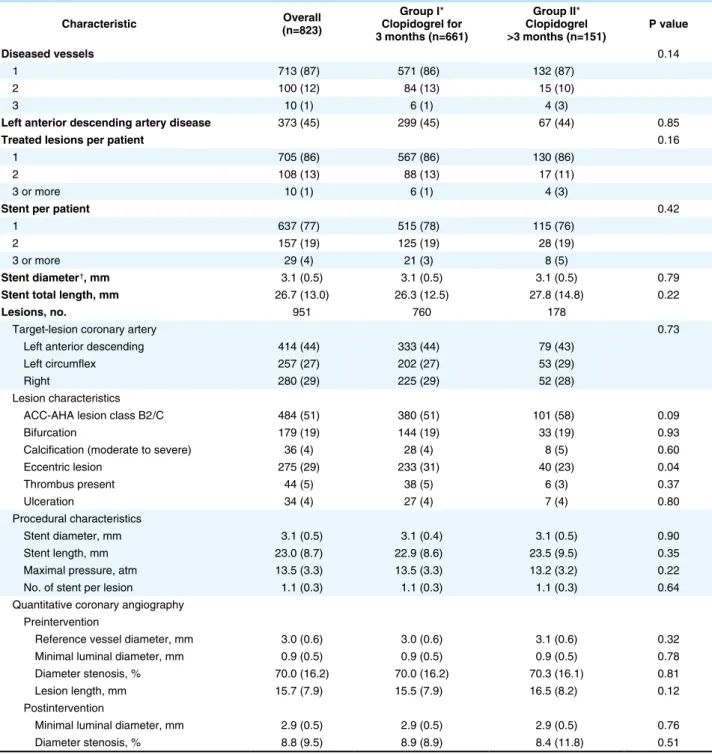
Angiographic and procedural data are presented in Table 2.
The majority of patients had single vessel disease and most patients were treated with 1 stent. No significant differences were found in angiographic and procedural data between groups I and II, with the exception of lesion eccentricity.
However, type B2/C lesions were more common in group II compared to group I, with borderline statistical significance.
Clinical Outcomes
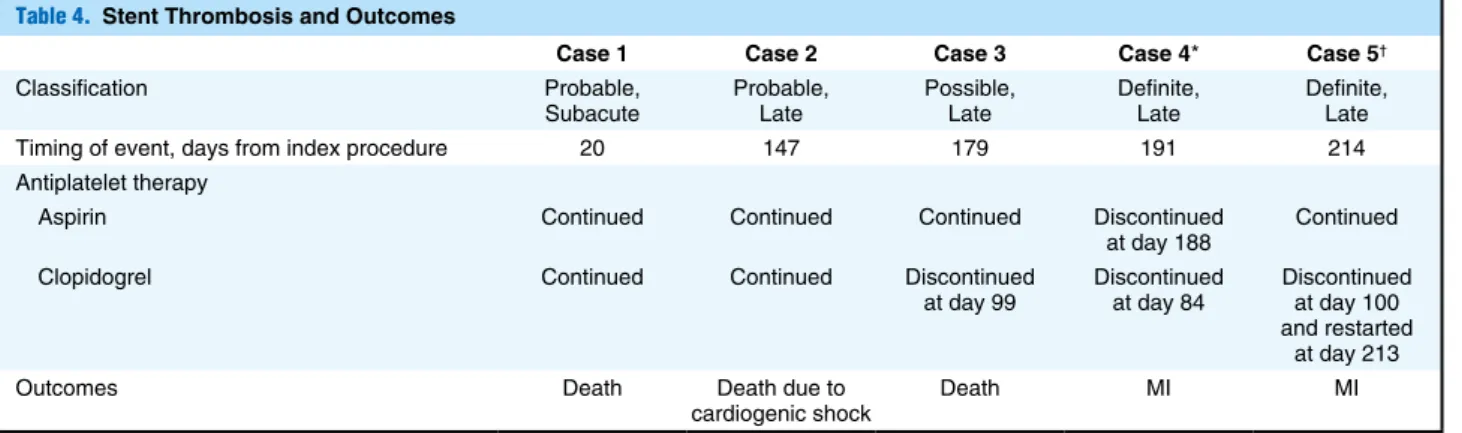
Complete clinical follow-up 1-year data were obtained for 808 patients (98.2% of the overall cohort). At 1 year, the primary outcome (cardiac death, MI or definite/probable ST) occurred in 5 patients (0.6%), with cardiac death in 3 patients (0.4%) and MI in 3 patients (0.4%) (Table 3). Definite or probable ST was noted in 4 patients (0.5%) and 1 patient had possible ST. The timing of ST, antiplatelet therapy at the time of ST, and the outcome of ST are presented in Table 4.
TLR, TVR, and any revascularization occurred in 34 patients (4.1%), 43 patients (5.2%), and 62 patients (7.5%), respec- tively. The composite of all causes of death, MI, or any revascularization occurred in 68 patients (8.3%). Survival free from the primary outcome and survival free from com-
Table 3. Clinical Outcomes Endpoint Overall
(n=823)
Group I*
Clopidogrel for 3 months (n=661)
Group II*
Clopidogrel
>3 months (n=151)
Unadjusted HR for Group I**
(95%CI) P value Adjusted HR for Group I**
(95%CI) P value
Death 7 (0.9) 2 (0.3) 3 (2.0) 0.16 (0.03–0.93) 0.04 0.20 (0.03–1.27) 0.09
Cardiac death 3 (0.4) 1 (0.2) 1 (0.7) 0.23 (0.01–3.69) 0.30 0.52 (0.03–9.88) 0.67
MI 3 (0.4) 2 (0.3) 1 (0.7) 0.46 (0.04–5.11) 0.53 0.48 (0.04–5.56) 0.55
ST† 4 (0.5) 2 (0.3) 1 (0.7) 0.45 (0.04–4.98) 0.52 0.44 (0.04–5.08) 0.51
Primary outcome†† 5 (0.6) 3 (0.5) 1 (0.7) 0.67 (0.07–6.43) 0.73 0.90 (0.09–9.02) 0.93
TLR 34 (4.1) 27 (4.1) 6 (4.0) 0.99 (0.41–2.39) 0.97 1.04 (0.42–2.55) 0.93
TVR 43 (5.2) 31 (4.7) 8 (5.3) 0.85 (0.39–1.84) 0.67 0.89 (0.41–1.96) 0.77
Any revascularization 62 (7.5) 46 (7.0) 11 (7.3) 0.91 (0.47–1.76) 0.78 0.96 (0.49–1.88) 0.91
MACE‡ 68 (8.3) 48 (7.3) 13 (8.6) 0.82 (0.45–1.52) 0.53 0.89 (0.48–1.67) 0.72
Data are expressed as number of patients (%).
*Among patients who were event-free at 3 months.
**Adjusted for propensity score and history of prior PCI.
†Definite/probable ST.
††Composite of cardiac death, MI, or definite/probable ST.
‡Composite of all-cause death, any MI, or any repeat revascularization.
HR, hazard ratio; ST, stent thrombosis; TLR, target lesion revascularization; TVR, target vessel revascularization; MACE, major adverse cardiac events. Other abbreviations see in Table 1.
Table 4. Stent Thrombosis and Outcomes
Case 1 Case 2 Case 3 Case 4* Case 5†
Classification Probable,
Subacute Probable,
Late Possible,
Late Definite,
Late Definite,
Late
Timing of event, days from index procedure 20 147 179 191 214
Antiplatelet therapy
Aspirin Continued Continued Continued Discontinued
at day 188 Continued
Clopidogrel Continued Continued Discontinued
at day 99 Discontinued
at day 84 Discontinued at day 100 and restarted
at day 213
Outcomes Death Death due to
cardiogenic shock Death MI MI
*The patient stopped taking aspirin arbitrarily.
†Stent thrombosis occurred secondary to an intervening TLR with a paclitaxel-eluting stent (day 213).
Abbreviation see in Tables 1,3.
Figure 2. Survival curves according to clopidogrel duration among patients who were event-free at 3 months. (A) Freedom
from composite of cardiac death, myocardial infarction (MI), or stent thrombosis. (B) Freedom from composite of composite of death, MI, or revascularization.
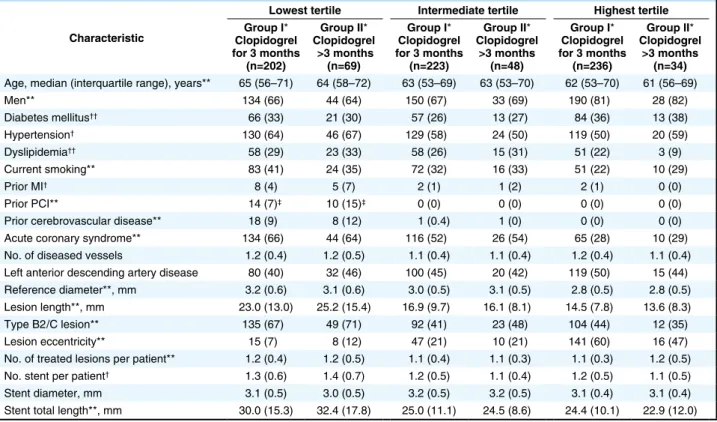
Table 5. Baseline Characteristics of Patients by Clopidogrel Duration Within Tertile of Propensity Score for Discontinuation of Clopidogrel at 3 Months
Characteristic
Lowest tertile Intermediate tertile Highest tertile Group I*
Clopidogrel for 3 months
(n=202)
Group II*
Clopidogrel >3 months
(n=69)
Group I*
Clopidogrel for 3 months
(n=223)
Group II*
Clopidogrel
>3 months (n=48)
Group I*
Clopidogrel for 3 months
(n=236)
Group II*
Clopidogrel
>3 months (n=34) Age, median (interquartile range), years** 65 (56–71) 64 (58–72) 63 (53–69) 63 (53–70) 62 (53–70) 61 (56–69)
Men** 134 (66) 44 (64) 150 (67) 33 (69) 190 (81) 28 (82)
Diabetes mellitus†† 66 (33) 21 (30) 57 (26) 13 (27) 84 (36) 13 (38)
Hypertension† 130 (64) 46 (67) 129 (58) 24 (50) 119 (50) 20 (59)
Dyslipidemia†† 58 (29) 23 (33) 58 (26) 15 (31) 51 (22) 3 (9)
Current smoking** 83 (41) 24 (35) 72 (32) 16 (33) 51 (22) 10 (29)
Prior MI† 8 (4) 5 (7) 2 (1) 1 (2) 2 (1) 0 (0)
Prior PCI** 14 (7)‡ 10 (15)‡ 0 (0) 0 (0) 0 (0) 0 (0)
Prior cerebrovascular disease** 18 (9) 8 (12) 1 (0.4) 1 (0) 0 (0) 0 (0)
Acute coronary syndrome** 134 (66) 44 (64) 116 (52) 26 (54) 65 (28) 10 (29)
No. of diseased vessels 1.2 (0.4) 1.2 (0.5) 1.1 (0.4) 1.1 (0.4) 1.2 (0.4) 1.1 (0.4)
Left anterior descending artery disease 80 (40) 32 (46) 100 (45) 20 (42) 119 (50) 15 (44)
Reference diameter**, mm 3.2 (0.6) 3.1 (0.6) 3.0 (0.5) 3.1 (0.5) 2.8 (0.5) 2.8 (0.5)
Lesion length**, mm 23.0 (13.0) 25.2 (15.4) 16.9 (9.7) 16.1 (8.1) 14.5 (7.8) 13.6 (8.3)
Type B2/C lesion** 135 (67) 49 (71) 92 (41) 23 (48) 104 (44) 12 (35)
Lesion eccentricity** 15 (7) 8 (12) 47 (21) 10 (21) 141 (60) 16 (47)
No. of treated lesions per patient** 1.2 (0.4) 1.2 (0.5) 1.1 (0.4) 1.1 (0.3) 1.1 (0.3) 1.2 (0.5)
No. stent per patient† 1.3 (0.6) 1.4 (0.7) 1.2 (0.5) 1.1 (0.4) 1.2 (0.5) 1.1 (0.5)
Stent diameter, mm 3.1 (0.5) 3.0 (0.5) 3.2 (0.5) 3.2 (0.5) 3.1 (0.4) 3.1 (0.4)
Stent total length**, mm 30.0 (15.3) 32.4 (17.8) 25.0 (11.1) 24.5 (8.6) 24.4 (10.1) 22.9 (12.0) Values are mean ± SD or n (%) unless otherwise indicated.
*Among patients who were event-free at 3 months.
**P<0.001 between tertiles. †P<0.01 between tertiles. ††P<0.05 between tertiles. ‡P value for prior PCI in the lowest tertile = 0.056.
posite of death, MI, or any revascularization were not signifi- cantly different between groups I and II (Figure 2). Among patients who were event-free at 3 months, patients in the highest tertile of propensity score for discontinuation of clopidogrel at 3 months were less likely to have risk factors such as hypertension, dyslipidemia, and current smoking, and previous history of MI or revascularization (Table 5). Num- ber of stents per patient was highest and total stent length was longest in the lowest tertile. However, no significant dif- ferences in baseline characteristics were observed between groups I and II within each tertile, except that patients in group II had a history of prior PCI more frequently than those in group I in the lowest tertile. Propensity score-adjusted anal- ysis showed no significant differences in the primary outcome (hazard ratio for group I, 0.90; 95%CI, 0.09–9.02) and com- posite of death, MI, or any revascularization (hazard ratio for group I, 0.89; 95%CI, 0.48–1.67) between groups I and II (Table 3). Of 3 patients who had the primary outcome in group I, only 1 patient had possible ST within 3 months after discontinuation of clopidogrel. Of 48 cases with composite of death, MI, or any revascularization in group I, 7 cases occurred within 3 months after discontinuation of clopidogrel.
Discussion
In this study, we constructed a prospective multicenter regis- try to evaluate the safety of 3-month dual antiplatelet therapy after successful implantation of ZES. The primary outcome occurred infrequently. Among patients who were event-free at 3 months, no significant differences were observed in ad- verse cardiac events between patients taking clopidogrel for only 3 months and those taking clopidogrel for more than 3 months.
Optimal Duration of Dual Antiplatelet Therapy
The optimal duration of dual-antiplatelet therapy has not been well established. Although some studies have reported that extended use of clopidogrel in patients with DES is associ- ated with a reduced risk of death or MI,
8,20other studies have reported that there is no apparent clinical benefit to dual anti- platelet therapy for greater than 6 months.
7,21There have been no prospective, randomized trials addressing this issue thus far. Moreover, the optimal duration of dual antiplatelet ther- apy might be different according to DES types. Therefore, we constructed a prospective multicenter registry to evaluate the safety of 3-month dual antiplatelet therapy after success- ful implantation of ZES. To the best of our knowledge, this is the first study to evaluate the feasibility of 3-month dual antiplatelet therapy, particularly after implantation of ZES.
Favorable Outcomes With a Short Duration of Dual Antiplatelet Therapy
The main finding of our study is that 3-month dual anti- platelet therapy appears to be safe and efficacious after ZES implantation. The results might be explained by our patient profiles and the relative safety of ZES. Patients enrolled in our registry were considered to be at relatively low risk. Pa- tients with a high risk of ST such as those with renal failure, bifurcation lesions with 2 stents, and lower ejection frac- tions,
22or those with expected high fatality after ST such as patients with left main lesions, were excluded. Half of the patients presented with acute coronary syndrome, but patients with cardiogenic shock or ST-segment elevation MI within 48 h of onset were excluded. Compared with previous studies of patients receiving ZES,
23,24the patients in our study had a
lower prevalence of prior MI and revascularization. Although the only exclusion criteria based on lesion complexity were very long stenting and bifurcation lesions with 2 stents, inves- tigators might have been reluctant to enroll patients with com- plex lesions. As a result, the lesion characteristics were not complex in this study. The reference vessel size was larger and the prevalence of type B2/C lesions and multivessel disease was lower in our study than in previous studies with ZES.
23,24There are several possible mechanisms explaining the rela- tive safety of ZES. The phosphorylcholine coating of ZES has been reported to promote rapid healing of the endothe- lium and to show an excellent biocompatibility with aspirin- only treatment.
13In a rabbit model, less inflammation was seen with ZES than with sirolimus-eluting stents (SES) or PES, and there were uncovered struts with SES and PES but not with ZES and BMS.
14Several clinical studies have also supported the safety of ZES. In optical coherence tomog- raphy studies, most of the stent struts were covered with neointima at 3 months after ZES implantation,
15and expo- sure of stent struts and thrombi was observed less frequently in patients undergoing PCI with ZES than in those under- going PCI with SES at 9 months follow up.
16In other OCT studies, uncovered struts were frequently observed in SES at 9–12 months.
25–27Vasoconstriction to incremental doses of acetylcholine was observed less intensely with ZES com- pared with SES.
17Collectively, these findings suggest that ZES might be advantageous for re-endothelialization and preservation of endothelial function. However, head-to-head comparisons are needed to determine whether ZES is safer than other DES of ST.
Outcomes According to Clopidogrel Duration
Among patients who were event-free at 3 months, clopido-
grel was not discontinued at 3 months in 19% of patients in
this study. To evaluate the safety and efficacy of discontin-
uation of clopidogrel at 3 months specifically, we compared
clinical outcomes between patients taking clopidogrel for
only 3 months and those taking clopidogrel for more than
3 months. Baseline clinical, angiographic, and procedural
characteristics were mostly similar between the 2 groups. To
reduce the effect of selection bias regarding the duration of
clopidogrel and potential confounding in this observational
study, we calculated a propensity score for the discontinua-
tion of clopidogrel at 3 months and incorporated it into the
multivariable Cox proportional-hazard model. After adjust-
ment, no significant differences between the 2 groups were
seen for safety and efficacy outcomes. Moreover, most events
occurred more than 3 months after the discontinuation of
clopidogrel (6 months after the index procedure) in patients
taking clopidogrel for only 3 months. However, continua-
tion or discontinuation of clopidogrel at 3 months was not
randomly assigned. Physicians might have continued clopi-
dogrel in patients who they felt had high-risk profiles and we
cannot discount the possibility of confounding by unmeasured
variables. Some previous observational studies reported that
discontinuation of thienopyridine therapy was the major
determinant of ST within the first 6 months after DES implan-
tation,
7and the extended use of clopidogrel in patients with
DES might be associated with a reduced risk for death or
MI.
8These results seem to be contrary to our study, which
might be explained by differences in the baseline character-
istics of the study population and used stents. They studied
real-world registries without strict exclusion criteria and
enrolled patients with SES or PES. To determine the optimal
duration of dual antiplatelet therapy, a larger randomized
study is needed.
Study Limitations
There are several limitations to our study. First, the sample size was too small to provide a definite answer regarding low- frequency events such as ST. However, we constructed a high-quality prospective registry with detailed information on antiplatelet therapy and performed thorough follow up, with the goal of challenging prolonged dual antiplatelet therapy after ZES. Second, because we enrolled patients after suc- cessful implantation of ZES and the exclusion criteria were strict, patients in our registry had a low-risk profile, limiting generalization of the study results to all patients undergoing PCI with DES. Finally, our findings apply only to ZES. Be- cause safety and efficacy differ according to the DES type, other studies are needed to determine the feasibility of short duration dual antiplatelet therapy after other DES are used.
Conclusions
Three-month dual antiplatelet therapy followed by aspirin alone seems to be feasible after implantation of ZES in rela- tively low-risk patients with coronary artery disease. These results should be confirmed by a large randomized trial.
Acknowledgment
This work was supported by the IN-SUNG Foundation for Medical Research, Seoul, Republic of Korea (CA78161 to HC Gwon) and by Medtronic Vascular Inc. The sponsor had no access to the study data and had no role in the design, conduct, or reporting of the study. Approval of the sponsor was not required before manuscript submission.
Trial Registration Information: clinicaltrials.gov number NCT00794014.
Disclosure None.
References
1. Moses JW, Leon MB, Popma JJ, Fitzgerald PJ, Holmes DR, O’Shaughnessy C, et al. Sirolimus-eluting stents versus standard stents in patients with stenosis in a native coronary artery. N Engl J
Med 2003; 349: 1315 – 1323.2. Stone GW, Ellis SG, Cox DA, Hermiller J, O’Shaughnessy C, Mann JT, et al. A polymer-based, paclitaxel-eluting stent in patients with coronary artery disease. N Engl J Med 2004; 350: 221 – 231.
3. Fajadet J, Wijns W, Laarman GJ, Kuck KH, Ormiston J, Munzel T, et al. Randomized, double-blind, multicenter study of the Endeavor zotarolimus-eluting phosphorylcholine-encapsulated stent for treat- ment of native coronary artery lesions: Clinical and angiographic results of the ENDEAVOR II trial. Circulation 2006; 114: 798 – 806.
4. Pfisterer M, Brunner-La Rocca HP, Buser PT, Rickenbacher P, Hunziker P, Mueller C, et al. Late clinical events after clopidogrel discontinuation may limit the benefit of drug-eluting stents: An observational study of drug-eluting versus bare-metal stents. J Am
Coll Cardiol 2006; 48: 2584 – 2591.5. Daemen J, Wenaweser P, Tsuchida K, Abrecht L, Vaina S, Morger C, et al. Early and late coronary stent thrombosis of sirolimus- eluting and paclitaxel-eluting stents in routine clinical practice:
Data from a large two-institutional cohort study. Lancet 2007; 369:
667 – 678.
6. King SB 3rd, Smith SC Jr, Hirshfeld JW Jr, Jacobs AK, Morrison DA, Williams DO, et al. 2007 Focused Update of the ACC/AHA/
SCAI 2005 Guideline Update for Percutaneous Coronary Interven- tion: A report of the American College of Cardiology/American Heart Association Task Force on Practice Guidelines: 2007 Writing Group to Review New Evidence and Update the ACC/AHA/SCAI 2005 Guideline Update for Percutaneous Coronary Intervention, Writing on Behalf of the 2005 Writing Committee. Circulation 2008; 117: 261 – 295.
7. Airoldi F, Colombo A, Morici N, Latib A, Cosgrave J, Buellesfeld L, et al. Incidence and predictors of drug-eluting stent thrombosis
during and after discontinuation of thienopyridine treatment. Circu-
lation 2007; 116: 745 – 754.8. Eisenstein EL, Anstrom KJ, Kong DF, Shaw LK, Tuttle RH, Mark DB, et al. Clopidogrel use and long-term clinical outcomes after drug-eluting stent implantation. JAMA 2007; 297: 159 – 168.
9. Yusuf S, Zhao F, Mehta SR, Chrolavicius S, Tognoni G, Fox KK.
Effects of clopidogrel in addition to aspirin in patients with acute coronary syndromes without ST-segment elevation. N Engl J Med 2001; 345: 494 – 502.
10. Hallas J, Dall M, Andries A, Andersen BS, Aalykke C, Hansen JM, et al. Use of single and combined antithrombotic therapy and risk of serious upper gastrointestinal bleeding: Population based case- control study. BMJ 2006; 333: 726.
11. Iwata Y, Kobayashi Y, Fukushima K, Kitahara H, Asano T, Ishio N, et al. Incidence of premature discontinuation of antiplatelet therapy after sirolimus-eluting stent implantation. Circ J 2008; 72: 340 – 341.
12. Leon MB, Mauri L, O’Shaughnessy C, Ovelie PA, McLaurin BT, Solomon SL, et al. Late safety and efficacy of a Zotarolimus- Eluting stent compared with a Paclitaxel-Eluting stent in patients with de novo coronary lesions: Three-year follow-up from the ENDEAVOR IV Trial (abstract). Am J Cardiol 2009; 104: 150D.
13. Whelan DM, van der Giessen WJ, Krabbendam SC, van Vliet EA, Verdouw PD, Serruys PW, et al. Biocompatibility of phosphoryl- choline coated stents in normal porcine coronary arteries. Heart 2000; 83: 338 – 345.
14. Nakazawa G, Finn AV, John MC, Kolodgie FD, Virmani R. The significance of preclinical evaluation of sirolimus-, paclitaxel-, and zotarolimus-eluting stents. Am J Cardiol 2007; 100: 36M – 44M.
15. Kim JS, Jang IK, Fan C, Kim TH, Kim JS, Park SM, et al. Evalua- tion in 3 months duration of neointimal coverage after zotarolimus- eluting stent implantation by optical coherence tomography: The ENDEAVOR OCT trial. JACC Cardiovasc Interv 2009; 2: 1240 – 1247.
16. Kim JS, Jang IK, Kim JS, Kim TH, Takano M, Kume T, et al.
Optical coherence tomography evaluation of zotarolimus-eluting stents at 9-month follow-up: Comparison with sirolimus-eluting stents. Heart 2009; 95: 1907 – 1912.
17. Kim JW, Seo HS, Park JH, Na JO, Choi CU, Lim HE, et al. A pro- spective, randomized, 6-month comparison of the coronary vasomo- tor response associated with a zotarolimus- versus a sirolimus-elut- ing stent: Differential recovery of coronary endothelial dysfunction.
J Am Coll Cardiol 2009; 53: 1653 – 1659.
18. Cutlip DE, Windecker S, Mehran R, Boam A, Cohen DJ, van Es GA, et al. Clinical end points in coronary stent trials: A case for standardized definitions. Circulation 2007; 115: 2344 – 2351.
19. Rubin DB. Estimating causal effects from large data sets using pro- pensity scores. Ann Intern Med 1997; 127: 757 – 763.
20. Banerjee S, Varghese C, Samuel J, Weideman RA, Little BB, Kelly KC, et al. Comparison of the impact of short (<1 year) and long-term (> or =1 year) clopidogrel use following percutaneous coronary intervention on mortality. Am J Cardiol 2008; 102: 1159 – 1162.
21. Kimura T, Morimoto T, Nakagawa Y, Tamura T, Kadota K, Yasumoto H, et al. Antiplatelet therapy and stent thrombosis after sirolimus-eluting stent implantation. Circulation 2009; 119: 987 – 995.
22. Iakovou I, Schmidt T, Bonizzoni E, Ge L, Sangiorgi GM, Stankovic G, et al. Incidence, predictors, and outcome of thrombosis after successful implantation of drug-eluting stents. JAMA 2005; 293:
2126 – 2130.
23. Gershlick A, Kandzari DE, Leon MB, Wijns W, Meredith IT, Fajadet J, et al. Zotarolimus-eluting stents in patients with native coronary artery disease: Clinical and angiographic outcomes in 1,317 patients. Am J Cardiol 2007; 100: 45M – 55M.
24. Jain AK, Meredith IT, Lotan C, Rothman MT, Pateraki S. Real- world safety and efficacy of the endeavor zotarolimus-eluting stent:
Early data from the E-Five Registry. Am J Cardiol 2007; 100:
77M – 83M.
25. Ishigami K, Uemura S, Morikawa Y, Soeda T, Okayama S, Nishida T, et al. Long-term follow-up of neointimal coverage of siroli- mus-eluting stents: Evaluation with optical coherence tomography.
Circ J 2009; 73: 2300 – 2307.
26. Katoh H, Shite J, Shinke T, Matsumoto D, Tanino Y, Ogasawara D, et al. Delayed neointimalization on sirolimus-eluting stents: 6- month and 12-month follow up by optical coherence tomography.
Circ J 2009; 73: 1033 – 1037.