소아 거식증 (Infantile Anorexia)의 韓醫學적 치료에 관한 고찰 - 中醫學 저널을 중심으로 -
김희연․성우용․김기봉
부산대학교 한의학전문대학원
Abstract
A Literature Study on Treatment of Infantile Anorexia Based on Chinese Medical Journals
Kim Hee Yeon, Seong Woo Yong, Kim Ki Bong Pusan National University School of Korean Medicine
Objectives
The purpose of this study is to find a literature study of infantile anorexia clinical cases with Traditional Chinese Medicine (TCM) to utilize with Korean medicine treatment methods.
Methods
5 TCM journals with the highest impact factors were searched and selected among the journals listed in www.cnki.net.
The search keywords were 「小儿厌食症」, 「厌食患儿」, 「Children’s Anorexia」, 「Infantile Apositia」, 「Infantile Anorexia」,
「Anorexia Nervosa」, and 「child of anorexia」. he search was limited to the publication date from 2000 to 2012.
Results
Total 20 studies were selected: Acupuncture (5), Herbal medicine (9), Complex Treatment (3), External Application (2) and Moxibustion (1). Among the Acupuncture related studies, 1 study tested the effect of Sifeng (EX-UE10, 四縫), 3 studies tested the effect of Sifeng (EX-UE10, 四縫) and other acupoints treatment together, and 1 study tested the effect of combination of other acupoints. In all these studies, the study groups showed better therapeutic effects compared to the control groups. The Herbal medicine related studies showed the improvement in appetite and weight as a result of Herbal Medicines treatment. Among the Complex Treatment related studies, 2 studies tested the effect of Acupuncture and Chiropractic co-treatment, 1 study tested the effect of Moxibustion and Herbal medicine co-treatment. In all these studies, symptoms of Infantile anorexia showed significantly improved. Other papers related to External Application and Moxibustion treatment were reported improving in appetite and had other the clinical effects as well.
Conclusions
Clinical studies testing the effect of TCM for the treatment of Infantile Anorexia have been conducted in small scales, and all the studies showed a certain level of symptom improvement of the patients in the study groups. These results implicate that the methods in Korean medicine can be highly potential treatment options for the treatment of Infantile Anorexia. Accurate and well-controlled studies in large scale would be required to prove the effect of Korean medicine for the treatment of patients with Infantile Anorexia.
Key words : Infantile anorexia, Infantile apositia, Acupuncture, Herbal medicines, Randomized controlled trial, Review
Received: October 25, 2013 ∙ Revised: November 11, 2013 ∙ Accepted: November 14, 2013 Corresponding Author: Kim Ki Bong
Department of Oriental Pediatrics, Pusan National University Korean Medicine Hospital, 20, Geumo-ro, Mulgeum-eup, Yangsan-si, Gyeongsangnam-do, Rep. of Korea.
Tel: +82-55-360-5952 Fax: +82-55-360-5952 E-mail: [email protected]
ⓒ The Association of Pediatrics of Korean Medicine. All rights reserved. This is an open-access article distributed under the tenus of the Creative Commons Attribution Non-Commercial License (http://creativecommons.org/licenses/by-nc/3.0/), which permits unrestricted non-commercial use, distribution, and reproduction in any medium, provided the original work is properly cited.
ISSN 1226-8038(Print), 2287-9463(Online), http://dx.doi.org/10.7778/jpkm.2013.27.4.087
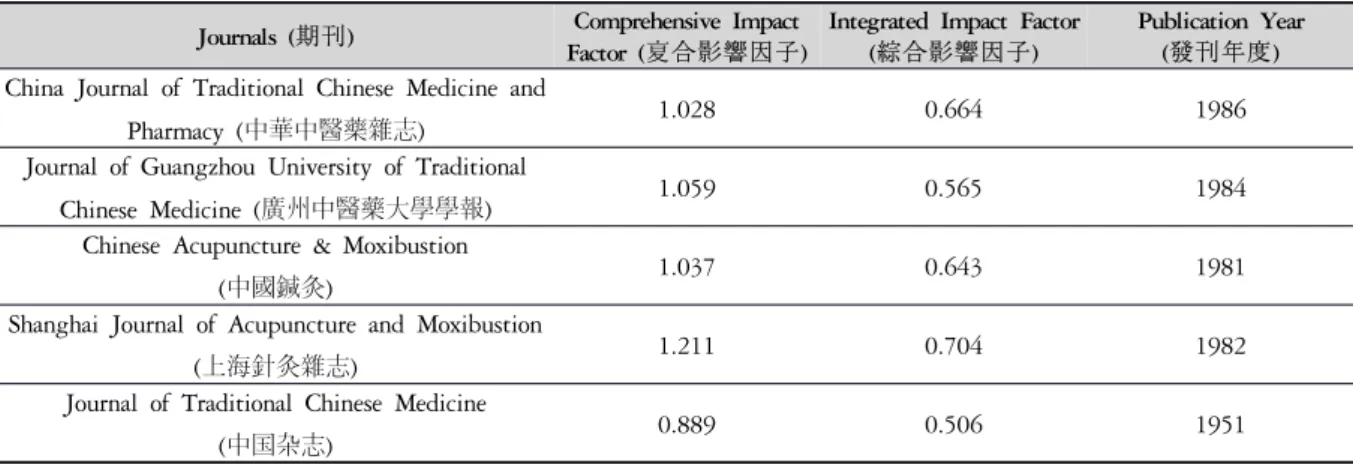
Table 1. Research Journals and Impact Factors
Journals (期刊) Comprehensive Impact
Factor (复合影响因子)
Integrated Impact Factor (综合影响因子)
Publication Year (發刊年度) China Journal of Traditional Chinese Medicine and
Pharmacy (中華中醫藥雜志) 1.028 0.664 1986
Journal of Guangzhou University of Traditional
Chinese Medicine (廣州中醫藥大學學報) 1.059 0.565 1984
Chinese Acupuncture & Moxibustion
(中國鍼灸) 1.037 0.643 1981
Shanghai Journal of Acupuncture and Moxibustion
(上海針灸雜志) 1.211 0.704 1982
Journal of Traditional Chinese Medicine
(中国杂志) 0.889 0.506 1951
Ⅰ. Introduction
소아 거식증 (Infantile Anorexia)은 오랜 기간 동안 소아의 식욕부진이 지속되는 것을 뜻하며, 소아기에 일반적으로 발생하는 위장 질환 중 하나로 심할 경우 거식 증상을 동반하는 질환이다. 최소 한 달 이상 적당 한 음식 먹기를 거부하는 특징이 있으며, 스스로 음식 먹기를 시작하는 생후 6개월에서 3세 사이의 시기에 흔히 발생한다
1,2). 배고픔이나 음식을 먹는 것에 대한 관심이 적고, 놀거나 돌아다니는 것을 선호하며, 구강 인두나 소화 기관의 외상 혹은 기질적 질환이 발견되 지 않는 경우에 소아 거식증으로 진단할 수 있다
3,4). 가 장 흔한 증상은 지속적인 식욕부진, 음식 먹기 거부, 체중 감소 및 성장 결핍 등이며 장기적으로 지속될 경 우에는 혈액 생성의 부족 및 영양불량, 면역력의 감소 등을 야기하여 다양한 질병의 원인이 되므로 소아의 성장, 발달에 큰 영향을 미친다
7). 소아기는 성장을 해 야 하는 시기이기 때문에 소아의 체중 증가 실패는 성 인의 급격한 체중 감소와 유사한 결과를 초래하며, 소 아 거식증을 앓고 있는 소아는 매우 쇠약해진 상태로 병원을 찾아 극심한 탈수 현상으로 인해 위중한 상황 에 처하는 경우가 많다. 소아 거식증은 20여 년 전부터 몇 몇 보고들이 있었는데, Collins (1894)는 심리적인 요 인으로 음식 먹기를 거부한 7세 소녀에 대해 보고한 바 있고, Marshall (1895)은 금식으로 사망한 11세 소녀 에 대해 보고한 바 있다. 그러나 소아 거식증과 같은 섭식 장애를 가진 소아에 대해 관심을 갖기 시작한 것 은 얼마 되지 않았고, 그로 인해 이에 대한 연구는 아직 많이 미흡한 실정이다.
오늘날에는 소아 거식증에서 심리적 혹은 사회∙문 화적 요인들의 영향이 매우 중요해 진 것으로 보인다.
정신 분석적인 견해에서 소아 거식증은 구강기적 갈등 (Oral Conflict)과 관련된 것으로 해석되며, 주로 어머니 와 소아의 상호 작용 및 갈등에 초점을 두어 어머니와 의 분리 개별화 (Separation-Individuation) 과정에서 왜 곡된 식사 행동을 통해 소아 자신의 자율성을 표현한 것으로 여겨지기도 한다. 이처럼 서양 의학에서는 소 아 거식증의 원인을 심리적 요인에 의한 것으로만 보 고 있으며 소아 거식증에 대한 연구도 어머니와 소아 의 상호 작용 및 갈등에 한정되어서 진행되고 있다. 때 문에 서양 의학이 주를 이루는 국내에서도 소아 거식 증 치료에 대한 연구는 미미한 실정이다.
이에 중국은 이미 中醫學적 장점을 살려 소아 거식증 에 대한 여러 치료 증례를 보이고 있다. 따라서 저자는 中醫學 저널에 실린 논문의 분석을 통하여 그 치료법 에 대한 고찰과 분석으로 약간의 지견을 얻었기에 보 고하는 바이다.
Ⅱ. Materials and methods
www.cnki.net에 등록된 中醫學 저널 중 Impact factor 가 높은 상위 5개의 저널을 선정하여, 「小儿厌食症」,
「厌食患儿」, 「Children’s Anorexia」, 「Infantile Apositia」,
「Infantile Anorexia」, 「Anorexia Nervosa」, and 「child of anorexia」으로 검색하였다 (Table 1).
Ⅲ. Results
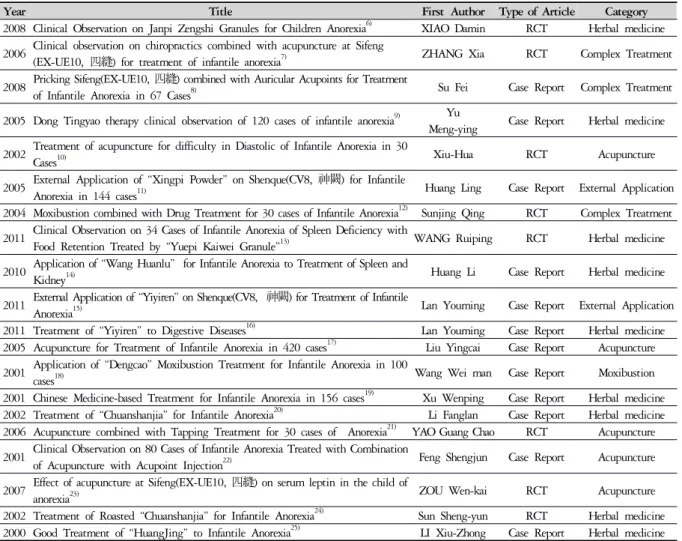
검색 결과, 소아 거식증 환아를 대상으로 한 침 치료
관련 논문이 5편, 처방 관련 논문이 9편, 복합 치료 관
Table 2. Studies on Effect of Treatment for Infantile Anorexia
Year Title First Author Type of Article Category
2008 Clinical Observation on Janpi Zengshi Granules for Children Anorexia6) XIAO Damin RCT Herbal medicine 2006 Clinical observation on chiropractics combined with acupuncture at Sifeng
(EX-UE10, 四縫) for treatment of infantile anorexia7) ZHANG Xia RCT Complex Treatment 2008 Pricking Sifeng(EX-UE10, 四縫) combined with Auricular Acupoints for Treatment
of Infantile Anorexia in 67 Cases8) Su Fei Case Report Complex Treatment
2005 Dong Tingyao therapy clinical observation of 120 cases of infantile anorexia9) Yu
Meng-ying Case Report Herbal medicine 2002 Treatment of acupuncture for difficulty in Diastolic of Infantile Anorexia in 30
Cases10) Xiu-Hua RCT Acupuncture
2005 External Application of “Xingpi Powder” on Shenque(CV8, 神闕) for Infantile
Anorexia in 144 cases11) Huang Ling Case Report External Application
2004 Moxibustion combined with Drug Treatment for 30 cases of Infantile Anorexia12) Sunjing Qing RCT Complex Treatment 2011 Clinical Observation on 34 Cases of Infantile Anorexia of Spleen Deficiency with
Food Retention Treated by “Yuepi Kaiwei Granule”13) WANG Ruiping RCT Herbal medicine 2010 Application of “Wang Huanlu” for Infantile Anorexia to Treatment of Spleen and
Kidney14) Huang Li Case Report Herbal medicine
2011 External Application of “Yiyiren” on Shenque(CV8, 神闕) for Treatment of Infantile
Anorexia15) Lan Youming Case Report External Application
2011 Treatment of “Yiyiren” to Digestive Diseases16) Lan Youming Case Report Herbal medicine 2005 Acupuncture for Treatment of Infantile Anorexia in 420 cases17) Liu Yingcai Case Report Acupuncture 2001 Application of “Dengcao” Moxibustion Treatment for Infantile Anorexia in 100
cases18) Wang Wei man Case Report Moxibustion
2001 Chinese Medicine-based Treatment for Infantile Anorexia in 156 cases19) Xu Wenping Case Report Herbal medicine 2002 Treatment of “Chuanshanjia” for Infantile Anorexia20) Li Fanglan Case Report Herbal medicine 2006 Acupuncture combined with Tapping Treatment for 30 cases of Anorexia21) YAO Guang Chao RCT Acupuncture 2001 Clinical Observation on 80 Cases of Infantile Anorexia Treated with Combination
of Acupuncture with Acupoint Injection22) Feng Shengjun Case Report Acupuncture
2007 Effect of acupuncture at Sifeng(EX-UE10, 四縫) on serum leptin in the child of
anorexia23) ZOU Wen-kai RCT Acupuncture
2002 Treatment of Roasted “Chuanshanjia” for Infantile Anorexia24) Sun Sheng-yun RCT Herbal medicine 2000 Good Treatment of “HuangJing” to Infantile Anorexia25) LI Xiu-Zhong Case Report Herbal medicine
련 논문이 3편, 외용제 관련 논문이 2편, 뜸 관련 논문 이 1편 있었다 (Table 2).
1. 침 치료 관련 논문
침 치료에 관련된 논문은 총 5편으로, 四縫 (EX-UE10) 의 효과를 나타낸 논문이 1편, 四縫 (EX-UE10)과 다른 穴位를 배합한 논문이 3편, 四縫 (EX-UE10) 이외의 穴位 를 배합한 논문이 1편으로, 환아의 증상 호전 정도를 파악하여 치료 효과를 밝히고 있었다 (Table 3).
1) 四縫 (EX-UE10)만 사용한 논문
ZOU Wen-kai
23)등은 소아 거식증 환아 42명을 대 상으로 四縫 (EX-UE10)의 자침 치료를 시행한 치료군 A, B와 Lactein tablets를 구강 복용한 약물군C의 비교 를 통해 자침 치료의 효과를 밝히는 실험을 하였다. 또 한 치료군A. B를 나누어 四縫 (EX-UE10)의 자침 빈도 를 다르게 실험을 시행하여 식욕 조절 호르몬인 혈장
의 렙틴 농도의 차이를 밝힘으로써 식욕 억제의 정도 를 평가하였다.
2) 四縫 (EX-UE10)과 다른 穴位를 배합한 논문 四縫 (EX-UE10)과 다른 穴位를 배합하여 치료를 시 행한 논문은 3편 있었다 (Table 4).
YAO Guang Chao
21)등은 소아 거식증 환아 60명을 대상으로 무작위로 실험군, 대조군으로 나누어 실험군 은 四縫 (EX-UE10)의 자침과 특정 穴位를 고자 (叩刺) 하는 방법으로 치료하였고, 대조군은 Multienzyme과 Domperidone의 복용으로 치료하였다. 치료 후 증상의 호전 정도를 치유, 호전, 유효, 무효의 4단계로 파악하 였고, 그 결과 실험군의 치료율이 대조군에 비해 높게 나타났다.
Liu Yingcai
17)등은 소아 거식증 환아 420명을 대상
으로 四縫 (EX-UE10)의 자침과 특정 穴位를 배합하여
치료하였고, 그 결과 치료 횟수의 차이는 있었지만
100.0% 치유된 것으로 나타났다.
Title (Year)
Method (E: experimental group/C:
control group/T: treatment group/M: medication group)
Experi0mental Period
Results and Conclusion
Consideration
Acupoints on Treatment
① Acupuncture combined with Tapping Treatment for 30 cases of Anorexia (2006)21)
- 60 cases of infantile anorexia - 1~11 years
- E: 30/C: 30
- The Experimental groups were treated with acupuncture at Sifeng (EX-UE10, 四縫), with Tapping at Piyu (BL20, 脾俞), Weiyu (BL21, 胃俞), Ganyu (BL18, 肝兪), Zusanli (ST36, 足三里) - Control group with oral administration of Multienzyme and domperidone.
E: 1 time / 5~7days 25~35 days C: 3 times / day
1~2 months
- The effective rate was 96.6%
in the treatment group, which was better than 90.0% in the control group.
- Experimental groups accord- ing to the setting of the control group is not valid.
- Studies were con- ducted in small scale.
Main Acupoint (主穴) :Sifeng (EX-UE10, 四縫), Distribution Acupoint (配 穴): Piyu (BL20, 脾俞), Weiyu (BL21, 胃俞), Ganyu (BL18, 肝兪), Zusanli (ST36, 足三里)
② Acupuncture for Treatment of Infantile Anorexia in 420 cases (2005)17)
- 420 cases of infantile anorexia - 1~10 years
- Treated with acupuncture treatment at Sifeng (EX-UE10, 四縫) and Tapping the Zhongwan (CV12, 中脘), Zusanli (ST36, 足三里), Sanyinjiao (SP6, 三陰交), Neiguan (PC6, 內關), Tianshu (ST25, 天樞) and then at the last chiropractic method from health- iness point to Datui (GV14, 大推).
1 time/week 3~5 weeks
- The effective rate was 100.0%.
Effective rate is un- clear what treat- ments indicate.
Main Acupoint (主穴) :Sifeng (EX-UE10, 四縫), Distribution Acupoint (配 穴):Zhongwan (CV12, 中 脘), Neiguan (PC6, 內關), Zusanli (ST36, 足三里), Sanyinjiao (SP6, 三陰交), Tianshu (ST25, 天樞), Datui (GV14, 大推)
③ Treatment of acupuncture for difficulty in Diastolic of Infantile Anorexia in 30 Cases (2002)10)
- 60 cases of infantile anorexia.
- 5~9 years - E: 30, C: 30
- The Experimental groups were treated with acupuncture treatment, and hair zinc values measured by diastolic men- tion pinching needle method on spec- trophotometer for observation of clin- ical efficacy and hair zinc content changes.
- Control group with oral administration zinc gluconate.
1 time/day 12 days (after 20days con- duct again)
- The effective rate was 93.0%
in the treatment group, which was better than 70.0% in the control group.
This studies show that acupuncture is an effective way to treat anorexia by significantly im- proving the hair zinc content.
Main Acupoint (主穴) :Zusanli (ST36, 足三里), Zhongwan (CV12, 中脘), Guanyuan (CV4, 關元), Tianshu (ST25, 天樞), Neiguan (PC6, 內關), Huaroumen (ST24, 滑肉門) Distribution Acupoint (配 穴):Weiyu (BL21, 胃俞), Taiyi (ST23, 太乙), Shenyu (BL23, 腎俞), Mingmen (GV4, 命門), Datui (GV14, 大推)
④ Clinical Observation on 80 Cases of Infantile Anorexia Treated with Combination of Acupuncture with Acupoint Injection (2001)22)
- 80 cases of infantile anorexia - Experimental groups were treated with
acupuncture at Sifeng (EX-UE10, 四 縫) combined with injection of vita- mins B1 into Zusanli (ST36, 足三里).
- Control group 30 cases were treated by acupuncture at Sifeng (EX-UE10, 四縫).
E:
- acupuncture: 1 time/5 days 25 days
- acupoint Injec- tion: 25~50 mg of Vitamin B1 1 time/5 days 25 days C: only acu-
puncture 1 time/5 days
- The effective rate being 100.0%, which was com- pared with that of the control group in which 30 cases were treated by acupuncture at Sifeng (EX-UE10, 四縫) with a significant difference.
- The combined treatment has a better therapeutic effect than that of simple acu- puncture of Sifeng point (EX-UE10, 四縫).
This studies con- ducted in small scale, So experi- mental studies of Large number of samples is needed.
Main Acupoint (主穴) :Sifeng (EX-UE10, 四縫), Distribution Acupoint (配 穴): Zusanli (ST36, 足三 里)
⑤ Effect of acupuncture at Sifeng (EX- UE10, 四縫) on serum leptin in the child of anorexia (2007)23)
- 42 cases of infantile anorexia - TA: 15/TB: 15/M:12
- Treatment group A and Treatment group B were treated with acupuncture at Sifeng (EX-UE10, 四縫).
- Medication group were treated with oral administration of Lactein tablets.
TA: 1 time/week 3 weeks TB: 1 time/2
weeks 6 weeks M: 1~2 tablets
3 times/day 4 weeks
- The effective rate was 93.3%
in the TA and 93.3% in the TB, which were higher than that in the M.
- The improvement of serum leptin levels in the TA and TB were better than that in the M.
- Acupuncture at Sifeng (EX- UE10, 四縫) can promote secretion of serum leptin in the child of anorexia, and improve anorexia.
Studies were con- ducted in small scale.
Main Acupoint (主穴) :Sifeng (EX-UE10, 四縫) Table 3. Key Data of Acupuncture Studies
Table 4. Distribution Acupoints (配穴)
First Author Main Acupoint (主穴) Distribution Acupoints (配穴)
⓵ YAO Guang Chao
Sifeng (EX-UE10, 四縫)
Piyu (BL20, 脾俞), Weiyu (BL21, 胃俞), Ganyu (BL18, 肝兪), Zusanli (ST36, 足三里)
⓶ Liu Yingcai Zhongwan (CV12, 中脘), Neiguan (PC6, 內關), Zusanli (ST36, 足三里),
Sanyinjiao (SP6, 三陰交), Tianshu (ST25, 天樞), Datui (GV14, 大推)
⓷ Feng Shengjun Zusanli (ST36, 足三里)
Table 5. Acupoints on Treatment (治療穴位)
Main Acupoint (主穴) Zusanli (ST36, 足三里), Zhongwan (CV12, 中脘), Guanyuan (CV4, 關元), Tianshu (ST25, 天樞), Neiguan (PC6, 內關), Huaroumen (ST24, 滑肉門)
Adding Acupoint 1. Spleen and Stomach Qi-Deficiency type (脾胃氣虛): Weiyu (BL21, 胃俞), Taiyi (ST23, 太乙)
2. Renal Yang-Deficiency type (腎陽虛): Shenyu (BL23, 腎俞), Mingmen (GV4, 命門), Datui (GV14, 大推)
Feng Shengjun
22)등은 소아 거식증 환아 110명을 대 상으로 실험군은 四縫 (EX-UE10)의 자침과 足三里 (ST36)에 Vitamin B1을 주입하는 방법으로 치료하였 고, 대조군은 四縫 (EX-UE10)의 자침만으로 치료하였 다. 치료 후 호전 정도를 치유, 유효, 무효의 3단계로 파악하였고, 그 결과 실험군의 유효율이 대조군에 비 해 높게 나타났다.
3) 四縫 (EX-UE10)이외의 혈위를 배합한 논문 Xiu-Hua
10)등은 소아 거식증 환아 60명을 대상으로 실험군, 대조군으로 나누어 실험군은 특정 穴位와 추 가 穴位의 배합으로 치료하였고 (Table 5), 대조군은 포 도당산을 복용하는 것으로 치료하였다. 모발의 아연 함량 변화가 주된 outcome이었으며, 대조군에 비해 실 험군에서 크게 증가하는 것을 확인하였다.
2. 처방 관련 논문
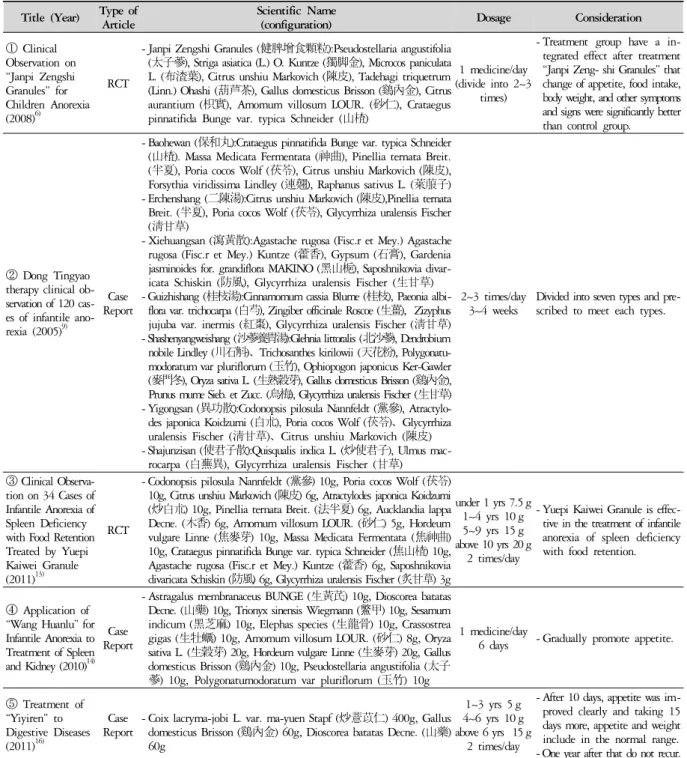
처방에 관련된 논문은 총 9편으로, RCT 논문이 3편, Case Report가 6편 있었다 (Table 6).
1) RCT 관련 논문
RCT에 관련된 논문은 총 3편으로, 건비증식과립 (健脾增食颗粒), 비개위과립 (脾开胃颗粒) 및 산갑과 립제 (山甲顆粒劑) 등의 처방으로 약물 치료를 한 환 아군의 증상 호전 정도를 파악하여 치료 효과를 밝히 고 있었다.
XIAO Damin
6)등은 소아 거식증 환아 60명을 대상으 로 실험군과 대조군으로 나누어 실험군은 건비증식과립 (健脾增食颗粒)을, 대조군은 건위소식편 (健胃消食片) 을 이용하여 약물 치료를 시행하였다. 주된 Outcome은
식욕 조절에 관련된 펩타이드인 Neuropeptide Y, Leptin, Orexin의 혈장 농도 및 키, 몸무게, 가슴둘레와 같은 신체 발달 지표였으며, 그 결과 실험군의 신체 발달율이 대조 군에 비해 높게 나타났다.
WANG Ruiping
13)등은 소아 거식증 환아 65명을 대상으로 무작위로 실험군 (34명)과 대조군 (31명)으로 나누어 실험군은 비개위과립 (脾開胃颗粒)을, 대조군 은 계비구복액 (启脾口服液)을 이용하여 14일간 약물 치료를 시행하였다. 치료 후 호전 정도를 치유, 뚜렷한 효과, 유효, 무효의 4단계로 파악하였고, 그 결과 실험 군의 유효율이 대조군에 비해 높게 나타났다.
Sun Sheng-yun
24)등은 소아 거식증 환아 209명을 대 상으로 실험군과 대조군으로 나누어 실험군은 산갑과 립제 (山甲顆粒劑)를, 대조군은 삼갑산 (三甲散)을 이 용하여 약물 치료를 시행하였다. 치료 후 호전 정도를 체중 증가를 통해 확인하였으며, 그 결과 실험군의 체 중 증가율이 대조군에 비해 높게 나타났다.
2) Case Report
Case Report에 관련된 논문은 총 5편 있었다.
Yu Meng-ying
9)등은 2000년 4월부터 12월까지 수
집한 120명의 소아 거식증 환아를 대상으로 비위허약
(脾胃虛弱), 위음부족 (胃陰不足), 유식적체 (乳食積
滯), 담습내조 (痰濕內阻), 비위습열 (脾胃濕熱), 영위
불화 (營衛不和), 충적내생 (虫積內生)의 7개 유형으로
나누어 유식적체의 유형에는 보화환 (保和丸), 담습내
조의 유형에는 이진탕 (二陳湯), 비위습열의 유형에는
사황산 (瀉黃散), 영위불화의 유형에는 계지탕 (桂枝
湯), 위음부족의 유형에는 사삼양위탕 (沙蔘養胃湯),
비위허약의 유형에는 이공산 (異功散), 충적내생의 유
형에는 사군자산 (使君子散)을 처방하여 3~4주 간 치
Title (Year) Type of Article
Scientific Name
(configuration) Dosage Consideration
① Clinical Observation on
“Janpi Zengshi Granules” for Children Anorexia (2008)6)
RCT
- Janpi Zengshi Granules (健脾增食颗粒):Pseudostellaria angustifolia (太子蔘), Striga asiatica (L.) O. Kuntze (獨脚金), Microcos paniculata L. (布渣葉), Citrus unshiu Markovich (陳皮), Tadehagi triquetrum (Linn.) Ohashi (葫芦茶), Gallus domesticus Brisson (鷄內金), Citrus aurantium (枳實), Amomum villosum LOUR. (砂仁), Crataegus pinnatifida Bunge var. typica Schneider (山楂)
1 medicine/day (divide into 2~3
times)
- Treatment group have a in- tegrated effect after treatment
“Janpi Zeng- shi Granules” that change of appetite, food intake, body weight, and other symptoms and signs were significantly better than control group.
② Dong Tingyao therapy clinical ob- servation of 120 cas- es of infantile ano- rexia (2005)9)
Case Report
- Baohewan (保和丸):Crataegus pinnatifida Bunge var. typica Schneider (山楂). Massa Medicata Fermentata (神曲), Pinellia ternata Breit.
(半夏), Poria cocos Wolf (茯苓), Citrus unshiu Markovich (陳皮), Forsythia viridissima Lindley (連翹), Raphanus sativus L. (萊菔子) - Erchenshang (二陳湯):Citrus unshiu Markovich (陳皮),Pinellia ternata
Breit. (半夏), Poria cocos Wolf (茯苓), Glycyrrhiza uralensis Fischer (清甘草)
- Xiehuangsan (瀉黃散):Agastache rugosa (Fisc.r et Mey.) Agastache rugosa (Fisc.r et Mey.) Kuntze (藿香), Gypsum (石膏), Gardenia jasminoides for. grandiflora MAKINO (黑山栀), Saposhnikovia divar- icata Schiskin (防風), Glycyrrhiza uralensis Fischer (生甘草) - Guizhishang (桂枝湯):Cinnamomum cassia Blume (桂枝), Paeonia albi-
flora var. trichocarpa (白芍), Zingiber officinale Roscoe (生薑), Zizyphus jujuba var. inermis (紅棗), Glycyrrhiza uralensis Fischer (清甘草) - Shashenyangweishang (沙蔘養胃湯):Glehnia littoralis (北沙蔘), Dendrobium
nobile Lindley (川石斛)、Trichosanthes kirilowii (天花粉), Polygonatu- modoratum var pluriflorum (玉竹), Ophiopogon japonicus Ker-Gawler (麥門冬), Oryza sativa L. (生熟穀芽), Gallus domesticus Brisson (鷄內金), Prunus mume Sieb. et Zucc. (烏梅), Glycyrrhiza uralensis Fischer (生甘草) - Yigongsan (異功散):Codonopsis pilosula Nannfeldt (黨參), Atractylo-
des japonica Koidzumi (白朮), Poria cocos Wolf (茯苓)、Glycyrrhiza uralensis Fischer (清甘草)、Citrus unshiu Markovich (陳皮) - Shajunzisan (使君子散):Quisqualis indica L. (炒使君子), Ulmus mac-
rocarpa (白蕪異), Glycyrrhiza uralensis Fischer (甘草)
2~3 times/day 3~4 weeks
Divided into seven types and pre- scribed to meet each types.
③ Clinical Observa- tion on 34 Cases of Infantile Anorexia of Spleen Deficiency with Food Retention Treated by Yuepi Kaiwei Granule (2011)13)
RCT
- Codonopsis pilosula Nannfeldt (黨參) 10g, Poria cocos Wolf (茯苓) 10g, Citrus unshiu Markovich (陳皮) 6g, Atractylodes japonica Koidzumi (炒白朮) 10g, Pinellia ternata Breit. (法半夏) 6g, Aucklandia lappa Decne. (木香) 6g, Amomum villosum LOUR. (砂仁) 5g, Hordeum vulgare Linne (焦麥芽) 10g, Massa Medicata Fermentata (焦神曲) 10g, Crataegus pinnatifida Bunge var. typica Schneider (焦山楂) 10g, Agastache rugosa (Fisc.r et Mey.) Kuntze (藿香) 6g, Saposhnikovia divaricata Schiskin (防風) 6g, Glycyrrhiza uralensis Fischer (炙甘草) 3g
under 1 yrs 7.5 g 1~4 yrs 10 g 5~9 yrs 15 g above 10 yrs 20 g
2 times/day
- Yuepi Kaiwei Granule is effec- tive in the treatment of infantile anorexia of spleen deficiency with food retention.
④ Application of
“Wang Huanlu” for Infantile Anorexia to Treatment of Spleen and Kidney (2010)14)
Case Report
- Astragalus membranaceus BUNGE (生黃芪) 10g, Dioscorea batatas Decne. (山藥) 10g, Trionyx sinensis Wiegmann (鱉甲) 10g, Sesamum indicum (黑芝麻) 10g, Elephas species (生龍骨) 10g, Crassostrea gigas (生牡蠣) 10g, Amomum villosum LOUR. (砂仁) 8g, Oryza sativa L. (生穀芽) 20g, Hordeum vulgare Linne (生麥芽) 20g, Gallus domesticus Brisson (鷄內金) 10g, Pseudostellaria angustifolia (太子 蔘) 10g, Polygonatumodoratum var pluriflorum (玉竹) 10g
1 medicine/day
6 days - Gradually promote appetite.
⑤ Treatment of
“Yiyiren” to Digestive Diseases (2011)16)
Case Report
- Coix lacryma-jobi L. var. ma-yuen Stapf (炒薏苡仁) 400g, Gallus domesticus Brisson (鷄內金) 60g, Dioscorea batatas Decne. (山藥) 60g
1~3 yrs 5 g 4~6 yrs 10 g above 6 yrs 15 g
2 times/day
- After 10 days, appetite was im- proved clearly and taking 15 days more, appetite and weight include in the normal range.
- One year after that do not recur.
⑥ Chinese Medicine-based Treatment for Infantile Anorexia in 156 cases (2001)19)
Case Report
- Canlingbaishusan (蔘苓白朮散):Panax ginseng C. A. Meyer (人蔘), Atractylodes japonica Koidzumi (白朮), Poria cocos Wolf (茯苓), Dioscorea batatas Decne. (山藥), Dolichos lablab (扁豆), Nelumbo nucifera Gaertner (蓮子), Coix lacryma-jobi L. var. ma-yuen Stapf (薏苡仁), Amomum villosum LOUR. (砂仁), Platycodon grandiflorum A. De Candolle (桔梗), Glycyrrhiza uralensis Fischer (甘草) - Yangweizengyeshang (養胃增液湯):Dendrobium nobile Lindley (石
斛), Adenophora triphylla var. japonica Hara (沙參), Polygonatumodo- ratum var pluriflorum (玉竹), Lindera strychnifolia Vill. (烏藥), Paeonia lactiflora Pallas (白芍), Glycyrrhiza uralensis Fischer (甘草) -曲麥枳朮丸:Citrus aurantium (枳實), Atractylodes japonica Koidzumi
(白朮), Massa Medicata Fermentata (神曲), Hordeum vulgare Linne (麥芽)
take 2 times is one course three courses
- Divided into three types and pre- scribed to meet each types.
- After three courses, effective rate is 100%.
⑦ Treatment of
“Chuanshanjia” for Infantile Anorexia (2002)20)
Case
Report - Manis pentadactyla L. (穿山甲), Gallus domesticus Brisson (鷄內金)
1~3 yrs 10~15 g 4~7 yrs 20~30 g
10 days
- Depending on children's con- dition add salt or sugar to food.
Table 6. Key Data of Herbal Medicine Studies
Title (Year) Type of Article
Scientific Name
(configuration) Dosage Consideration
⑧ Treatment of Roasted
“Chuanshanjia” for Infantile Anorexia (2002)24)
RCT
Sanjiakeliji (山甲颗粒剂):Manis pentadactyla L. (炮穿山甲), Gallus domesticus Brisson (鷄內金), Pseudostellaria angustifolia (太子蔘), Citrus unshiu Markovich (陳皮), Citrus aurantium (枳實), Amomum villosum LOUR.(砂仁), Striga asiatica (L.) O. Kuntze. (獨脚金)
1~2 yrs 1~3 g 3~5 yrs 3~5 g 6~8 yrs 5~10 g 9~12 yrs 10~15 g 3~4 times/day
- The treatment group were treat- ed with Roasted Chuanshanjia (炮穿山甲).
- Control group were treated with Sanjiasan (三甲散).
⑨ Good Treatment of “HuangJing” to Infantile Anorexia (2000)25)
Case Report
- Polygonatum falcatum A. Gray (黃精) 10 g, Atractylodes japonica Koidzumi (焦白朮) 6 g, Amomum villosum LOUR. (砂仁) 6 g, Alpinia katsumadai Hayata (草豆蔲) 6 g, Lonicera japonica Thunb (建曲) 6 g, Homalomena occulta (Lour.) Schott (千年健) 10 g
1 medicine/day 12 days
- After consecutively take 12 medicines, gradually promote appetite and increase weight.
료하였으며, 치료 후 호전 정도를 치유, 호전, 무효의 3단계로 파악하였고, 그 결과 실험군의 유효율이 대조 군에 비해 높게 나타났다.
Huang Li
14)등은 5세의 소아 거식증 환아를 대상으 로 약물 치료를 시행한 후 경과 관찰을 보고하였다. 그 결과 면색이 윤택해지고, 체중이 증가하는 등 증상이 눈에 띄게 호전되었다.
Xu Wenping
19)등은 소아 거식증 환아 156례를 대상 으로 비위허약 (脾胃虛弱), 위음부족 (胃陰不足) 및 식 체내조 (食滯內阻)의 유형으로 나누어 각각 삼령백출 산 (蔘笭白朮散), 양위증약탕 (養胃增藥湯), 곡맥지출 환 (曲麥枳朮丸)을 처방하여 6주 간 경과를 관찰하였 다. 치료 후 호전 정도를 뚜렷한 효과, 유효, 무효의 3 단계로 파악하였으며 그 결과 총 유효율은 100%로 나 타났다.
Lan Youming
16)등은 병정이 1년 정도 지속된 6세의 소아 거식증 환아를 대상으로 의이내금산 (薏苡內金 散)을 처방하여 경과를 관찰한 결과 10일 후 식욕에 뚜 렷한 호전이 있었고, 15일 더 복용한 결과 식욕과 체중 이 정상 범위에 들어왔으며 그 후로 1년간 재발하지 않았음을 확인하였다.
LI Xiu-Zhong
25)등은 12세의 소아 거식증 환아를 대 상으로 약물 치료를 시행한 후 경과 관찰을 보고하였 다. 12제를 연속하여 복용한 후 체중이 눈에 띄게 증가 하였고, 식욕도 뚜렷이 증가하여 병정이 호전되었음을 확인하였다.
Sun Sheng-yun
24)등은 구운 천산갑 (穿山甲)과 계내 금 (鷄內金)을 1:2의 비율로 배합하여 밀가루와 섞어 10일간 복용하는 것을 하나의 치료 과정으로 하여 1~3회를 시행하면 소아 거식증이 호전된다는 처방을 보고하였다. 하지만 치료 대상에 대한 구체적인 언급 은 없었다.
3. 복합 치료 관련 논문
복합 치료에 관련된 논문은 총 3편으로, 침 치료와
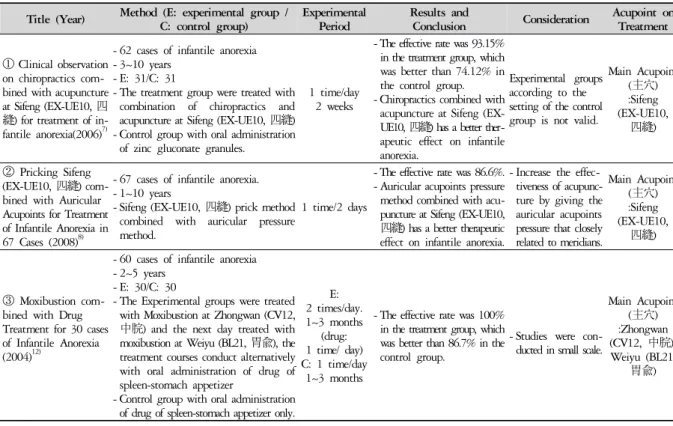
지압 치료를 병행한 논문이 2편, 뜸 치료와 약물 치료 를 병행한 논문이 1편으로 소아 거식증 환아의 증상 호전 정도를 파악하여 치료 효과를 밝히고 있었다 (Table 7).
1) 침 치료와 지압 치료를 병행한 논문
ZHANG Xia
7)등은 四縫 (EX-UE10)의 자침 치료와 척추 지압법을 병행한 소아 거식증 환아군과 포도당산 과립을 구강 복용한 환아군과의 비교를 통해 그 치료 효과를 밝혔다. 3~10세 환아 62명을 대상으로 실험군, 대조군으로 나누어 치료를 하였고, 주된 Outcome은 혈 청 아연 농도 및 소변 아밀라아제 농도였다.
Su Fei
8)등은 소아 거식증 환아 67명을 대상으로 四 縫 (EX-UE10)의 자침 치료와 귀 지압법을 시행하여 그 효능을 밝히는 실험을 하였고, 식욕의 개선 정도를 치 유, 호전, 미유 (未愈)의 세 단계로 파악하였다.
2) 뜸 치료와 약물 치료를 병행한 논문
Sunjing Qing
12)등은 소아 거식증 환아 실험군과 대 조군으로 나누어 치료군은 中脘 (CV12)과 胃俞 (BL21) 의 뜸 치료와 건비개위 (建脾開胃) 약제와 성비화위 (醒脾和胃) 약제를 배합한 약물 치료를 병행하였고, 대 조군은 약물 치료만 시행하여 그 효능을 밝히는 실험 을 하였다. 치료 후 식욕의 개선 정도를 치유, 뚜렷한 효과, 유효, 무효의 네 단계로 파악하였으며, 그 결과 실험군의 유효율이 대조군에 비해 높게 나타났다.
4. 외용제 관련 논문
외용제 관련 논문은 2편 있었다 (Table 8).
Huang Ling
14)등은 소아 거식증 환아 144명을 대상 으로 성비산 (醒脾散)에 식초에 섞어 제조한 외용제를 神厥 (CV8)에 고정시켜 치료를 진행한 결과 식욕이 뚜 렷하게 증가하였음을 보고하였다.
Lan Youming
15)등은 병정이 2년 된 7세 소아 거식증
Table 8. Main Acupoints (主穴)
First Author Method Configuration of External Application
⓵ Huang Ling 1 time/day 5 days
Xingpisan (醒脾散):Aucklandia lappa Decne. (廣木香), Amomum villosum LOUR. (砂仁), Raphanus sativus L. (萊菔子), Massa Medicata Fermentata (神曲), Citrus aurantium (枳實)
⓶ Lan Youming 1 time/day 7 days
Coix lacryma-jobi L. var. ma-yuen Stapf (薏苡仁) 100 g, Alpinia officinarum Hance (高良薑) 50 g
Table 7. Key Data of Complex Treatment Studies Title (Year) Method (E: experimental group /
C: control group)
Experimental Period
Results and
Conclusion Consideration Acupoint on Treatment
① Clinical observation on chiropractics com- bined with acupuncture at Sifeng (EX-UE10, 四 縫) for treatment of in- fantile anorexia(2006)7)
- 62 cases of infantile anorexia - 3~10 years
- E: 31/C: 31
- The treatment group were treated with combination of chiropractics and acupuncture at Sifeng (EX-UE10, 四縫) - Control group with oral administration
of zinc gluconate granules.
1 time/day 2 weeks
- The effective rate was 93.15%
in the treatment group, which was better than 74.12% in the control group.
- Chiropractics combined with acupuncture at Sifeng (EX- UE10, 四縫) has a better ther- apeutic effect on infantile anorexia.
Experimental groups according to the setting of the control group is not valid.
Main Acupoint (主穴) :Sifeng (EX-UE10,
四縫)
② Pricking Sifeng (EX-UE10, 四縫) com- bined with Auricular Acupoints for Treatment of Infantile Anorexia in 67 Cases (2008)8)
- 67 cases of infantile anorexia.
- 1~10 years
- Sifeng (EX-UE10, 四縫) prick method combined with auricular pressure method.
1 time/2 days
- The effective rate was 86.6%.
- Auricular acupoints pressure method combined with acu- puncture at Sifeng (EX-UE10, 四縫) has a better therapeutic effect on infantile anorexia.
- Increase the effec- tiveness of acupunc- ture by giving the auricular acupoints pressure that closely related to meridians.
Main Acupoint (主穴) :Sifeng (EX-UE10,
四縫)
③ Moxibustion com- bined with Drug Treatment for 30 cases of Infantile Anorexia (2004)12)
- 60 cases of infantile anorexia - 2~5 years
- E: 30/C: 30
- The Experimental groups were treated with Moxibustion at Zhongwan (CV12, 中脘) and the next day treated with moxibustion at Weiyu (BL21, 胃俞), the treatment courses conduct alternatively with oral administration of drug of spleen-stomach appetizer
- Control group with oral administration of drug of spleen-stomach appetizer only.
E:
2 times/day.
1~3 months (drug:
1 time/ day) C: 1 time/day
1~3 months
- The effective rate was 100%
in the treatment group, which was better than 86.7% in the control group.
- Studies were con- ducted in small scale.
Main Acupoint (主穴) :Zhongwan (CV12, 中脘), Weiyu (BL21,
胃俞)
환아에게 의이인 (薏苡仁)과 고량강 (高良薑)을 2:1의 비율로 곱게 갈아 제조한 외용제를 神厥 (CV8)에 고정 시켜 치료를 시행한 결과 2주 후 식욕이 정상으로 돌아 왔으며 향후 1년간 재발하지 않았음을 보고하였다.
4. 뜸 치료 관련 논문
뜸 치료 관련 논문은 1편 있었다.
Wang Wei man
18)등은 100명의 소아 거식증 환아를 대상으로 중이의 비 (脾)의 장기 대응점에 뜸 시술을 시행하여 증상 개선 정도를 파악한 결과 유효율은 98%
로 나타났다.
Ⅵ. Discussion
거식증과 폭식증은 오늘날 점차 그 발병의 증가를 보이고 있는 섭식 장애이다. 먹는 행동에서의 장애를
보이는 것이 주된 증상으로 두 장애 모두에서 체중과 체형이 스스로에 대한 평가에 끼치는 영향이 과도하다 는 공통적인 특성이 있다. 전형적인 거식증의 형태를 살펴보면 사춘기를 전후로 한 여아에서 특히 많이 나 타나며, 몹시 말랐는데도 불구하고 자신이 뚱뚱하다고 생각하는 등의 왜곡된 신체상을 가지고 있고, 거울을 자주 보며 체중 측정을 자주하는 등의 행동을 보이는 특징이 있다. 거식증은 종종 소아에서 나타나기도 하 는데, 장기적으로 지속되면 체중 감소, 정신 권태 및 질병에 대한 면역력 저하를 야기하여 다른 질병의 발 생을 야기할 뿐 아니라 질병의 악화에 이르게 하는 신 체 조건을 형성하여 때때로 위중한 영양불량을 초래하 며, 정상적인 성숙 발육을 저해하고 신경 정신계의 이 상에 이르게 하는 등의 심각한 상황을 초래하게 된다
30)
. 중국에서는 이미 오래 전부터 소아 거식증을 치료
할 수 있는 하나의 질병으로 보고 그 원인을 中醫學적
으로 접근하여 해석하고 있다. 즉, 비위기능실조 (脾胃
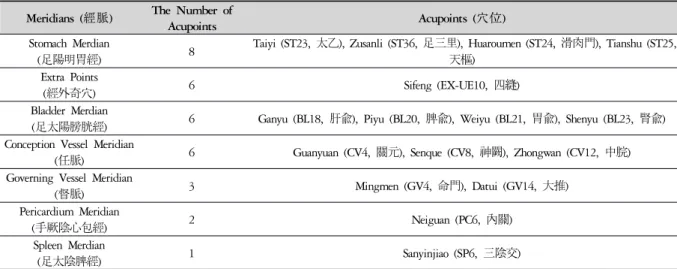
Table 9. The Frequency of Meridians to Treatment Meridians (經脈) The Number of
Acupoints Acupoints (穴位)
Stomach Merdian
(足陽明胃經) 8 Taiyi (ST23, 太乙), Zusanli (ST36, 足三里), Huaroumen (ST24, 滑肉門), Tianshu (ST25, 天樞)
Extra Points
(經外奇穴) 6 Sifeng (EX-UE10, 四縫)
Bladder Merdian
(足太陽膀胱經) 6 Ganyu (BL18, 肝俞), Piyu (BL20, 脾俞), Weiyu (BL21, 胃俞), Shenyu (BL23, 腎俞)
Conception Vessel Meridian
(任脈) 6 Guanyuan (CV4, 關元), Senque (CV8, 神闕), Zhongwan (CV12, 中脘)
Governing Vessel Meridian
(督脈) 3 Mingmen (GV4, 命門), Datui (GV14, 大推)
Pericardium Meridian
(手厥陰心包經) 2 Neiguan (PC6, 內關)
Spleen Merdian
(足太陰脾經) 1 Sanyinjiao (SP6, 三陰交)
機能失調), 숙식불화 (宿食不化), 간강비약 (肝强脾弱), 허소실다 (虛少實多), 어혈 (瘀血) 등을 원인으로 보고 유식정체 (乳食停滯), 비위허약 (脾胃虛弱), 위음부족 (胃陰不足), 비위허한 (脾胃虛寒), 간울승비 (肝鬱乘 脾), 경공소상 (驚恐所傷), 비신양허 (脾腎陽虛) 등으로 진단하여 건비익기 (健脾益氣), 화위소식 (和胃消食), 성위운비 (醒胃運脾), 소간화적 (疏肝化積), 활혈화어 (活血化瘀) 등의 치료 방법을 이용하여 각각의 치료를 시행하고 있다
29).
본 연구에서는 소아 거식증 환아에 나타나는 증상 인 식욕부진 및 체중 감소의 경우 침 치료, 약물 치료, 복합 치료, 외용제 치료 및 뜸 치료를 통해 식욕 개선 및 체중 증가를 관찰한 결과 치료 전과 비교해 봤을 때 유의하게 향상되었음을 볼 수 있었다.
침 치료에서 ZOU Wen-kai
23)등은 四縫 (EX-UE10) 의 자침 치료와 Lactein tablets를 구강 복용한 약물 치 료의 비교를 통해 혈장 렙틴 농도의 차이로 식욕 억제 의 정도를 평가하여 자침 치료의 효과를 밝혔고, YAO Guang Chao
21)등은 四縫 (EX-UE10)의 자침과 脾兪 (BL20), 胃兪 (BL21), 肝兪 (BL18), 足三里 (ST36)를 피 부에 약간의 피가 나도록 고자 (叩刺)하는 방법으로 치 료하여 증상 개선의 효과를 나타냈으며, Liu Yingcai
17)등은 四縫 (EX-UE10)의 자침과 中脘 (CV12), 內關 (PC6), 足三里 (ST36), 三陰交 (SP6), 天樞 (ST25), 大推 (GV14)를 배합하여 치료한 결과 100.0% 치유되었음을 보고하였다. 또 Feng Shengjun
22)등은 四縫 (EX-UE10) 의 자침과 足三里 (ST36)에 Vitamin B1을 주입하여 치 료한 결과 한 결과 四縫 (EX-UE10)의 자침 치료의 효 과를 증강시키는 결과를 나타내었다.
사용된 穴位를 경락별로 나누어 보자면, 足陽明胃
經이 8건으로 가장 많았고, 經外奇穴, 足太陽膀胱經
및 任脈이 6건으로 그 뒤를 이었다 (Table 9). 이는 足陽
明胃經의 순행이 入缺盆, 下膈 屬胃絡脾...라 하여
缺盆으로 들어온 다음 횡격막을 꿰뚫고 내려가 胃에
屬하고 脾에 絡하는 성질이 있으므로 위장의 소화기
계통 질환에 사용되는 본래 성질을 이용한 것이라 할
수 있다. 足陽明胃經에서는 足三里 (ST36)와 天樞
(ST25)가 사용되었는데, 足三里 (ST36)는 足陽明胃經
의 原穴로서 위장의 기능을 튼튼하게 하는 효과가 있
으며 기운을 아래로 향하게 하여 氣 순환을 돕는 기능
을 하고, 天樞 (ST25)는 手陽明大腸經의 募穴로서 대
장의 기가 모여드는 경혈로 대장의 기운을 원활히 하
고 조리장위 (調理腸胃)의 효능으로 장위병 (腸胃病)을
치료하기 때문에 사용된 것으로 보인다. 經外奇穴은
四縫 (EX-UE10)이 많이 사용되었는데, 둘째, 셋째, 넷
째, 다섯째 손가락의 중간 마디와 끝마디 손가락 사이
관절의 바닥 쪽 중앙 지점에 위치하는 穴位로 소식화
적 (消食化積)의 효능이 있다. 四縫 (EX-UE10)은 전체
穴位 중 단일 穴位로는 가장 많이 사용되었다. 다음으
로 많이 쓰인 경락은 足太陽膀胱經이었다. 足太陽膀
胱經은 인체의 등부위 (背部) 경혈의 대부분을 차지하
고 있으며 오장육부의 背兪穴이 모두 足太陽膀胱經에
배속되어 있다. 背兪穴은 해당 장부의 질병을 치료하
고 기능을 조절할 뿐만 아니라 해당 장부와 관련 있는
전신 질환 및 오관 질환도 치료할 수 있다. 따라서 肝,
脾, 胃, 腎의 背兪穴로서 肝兪 (BL18), 脾兪 (BL20), 胃
兪 (BL21), 腎兪 (BL23)를 배혈한 것으로 보인다. 다음
으로 많이 쓰인 경맥은 任脈이었다. 그 순행 부위가
Table 10. The Frequency of Herbs to Treatment
Type The Number of
configuration Herb (藥材)
Qi-supplementing
(補氣藥) 24 Glycyrrhiza uralensis Fischer (甘草), Pseudostellaria angustifolia (太子蔘), Dioscorea batatas Decne. (山藥), Atractylodes japonica Koidzumi (白朮) etc.
Dispersing food accumulation
(消食藥) 21 Crataegus pinnatifida Bunge var. typica Schneider (山楂), Massa Medicata Fermentata (神曲), Gallus domesticus Brisson (鷄內金), Hordeum vulgare Linne (麥芽) etc.
Qi-regulating
(理氣藥) 11 Citrus unshiu Markovich (陳皮), Citrus aurantium (枳實) etc.
Dampness-transforming
(芳香化濕藥) 10 Citrus aurantium (砂仁), Agastache rugosa (Fisc.r et Mey.) Kuntze (藿香) etc.
Yin-enriching
(補陰藥) 9 Polygonatumodoratum var pluriflorum (玉竹), Glehnia littoralis (北沙蔘),Ophiopogon japonicus Ker-Gawler (麥門冬) etc.
promoting the movement of water and
percolating dampness (利水滲濕藥) 7 Poria cocos Wolf (茯苓), Coix lacryma-jobi L. var. ma-yuen Stapf (薏苡仁) etc.