Copyright ⓒ 2012, The Microbiological Society of Korea
Biosynthesis of Copolyesters Consisting of 3-Hydroxyvalerate and Medium-chain-length 3-hydroxyalkanoates
by the Pseudomonas aeruginosa P-5 Strain
Sang Hee Woo, Jae Hee Kim, Yu-Yang Ni, and Young Ha Rhee*
Department of Microbiology and Molecular Biology, Chungnam National University, Daejeon 305-764, Republic of Korea
Pseudomonas aeruginosa P-5
균주로부터
3-Hydroxyvalerate와
Medium-chain-length 3-hydroxyalkanoates로 구성된
공중합체의 생합성
우상희․김재희․예우양․이영하*
충남대학교 미생물·분자생명과학과 (Received July 31, 2012 / Accepted September 13, 2012)
A bacterial strain capable of synthesizing polyhydroxyalkanoates (PHAs) with an unusual pattern of monomer units was isolated from activated sludge using the enrichment culture technique. The organism, identified as Pseudomonas aeruginosa P-5, produced polyesters consisting of 3-hydroxyvalerate and medium-chain-length (MCL) 3-hydroxyalkanoate monomer units when C-odd alkanoic acids such as nonanoic acid and heptanoic acid were fed as the sole carbon source.
Solvent fractionation experiments using chloroform and hexane revealed that the 3-hydroxyalkanoate monomer units in these polyesters were copolymerized. The molar concentration of 3-hydroxyvalerate in the polyesters produced were significantly elevated up to 26 mol% by adding 1.0 g/L valeric acid as the cosubstrate. These copolyesters were sticky with low degrees of crystallinity. The PHA synthase genes were cloned, and the deduced amino acid sequences were determined. P. aeruginosa P-5 possessed genes encoding MCL-PHA synthases (PhaC1 and PhaC2) but lacked the short-chain-length PHA synthase gene, suggesting that the MCL-PHA synthases from P. aeruginosa P-5 are uniquely active for polymerizing (R)-3-hydroxyvaleryl-CoA as well as MCL (R)-3-hydroxyacyl-CoAs.
Keywords: Pseudomonas aeruginosa, 3-hydroxyvalerate, MCL-PHA synthase, polyhydroxyalkanoate
*For correspondence. E-mail: [email protected]; Tel.: +82-42-821-6413;
Fax: +82-42-822-7367
Polyhydroxyalkanoates (PHAs) are a class of naturally occurring polyesters that are synthesized by a wide range of bacteria as an intracellular carbon and energy storage compound usually under unbalanced growth conditions. These polyesters have attracted a great deal of industrial attention as promising biomaterials capable of replacing synthetic polymers due to their excellent biodegradability, biocompatibility, and capability of being produced from renewable resources (Chanprateep, 2010). Based on the carbon-chain length of the monomer units, PHAs are generally classified as short-chain- length (SCL) PHAs and medium-chain-length (MCL) PHAs.
SCL-PHAs, consisting of 3-hydroxyalkanoates (3HAs) of C3–
C5, are thermoplastics with a high degree of crystallinity, whereas MCL-PHAs are comprised of 3HAs of C6–C14 and are elastic or tacky materials with a low degree of crystallinity and a low melting temperature.
The great majority of PHA-synthesizing bacteria possess either SCL-PHA synthase (PhbC) or MCL-PHA synthase (PhaC), and, thus, accumulate either SCL-PHAs or MCL-PHAs.
In contrast, a few strains belonging to the genera of Pseudomonas (Kato et al., 1996; Kang et al., 2001; Hang et al., 2002) and Aeromonas (Chen et al., 2001) accumulate copolyesters consisting of both SCL and MCL 3HAs as monomer units. The monomeric composition of SCL-MCL-PHA copolyesters varies according to the bacterial species as well as the nature of carbon sources supplied. These SCL-MCL-PHAs are of special interest, because they are expected to exhibit a considerable
range of thermomechanical properties that might be superior to those of PHAs containing only SCL or MCL monomer units (Chen and Wu, 2005; Hazer and Steinbüchel, 2007). However, organisms that are able to synthesize SCL-MCL-PHA copolyesters are rare in comparison to organisms that are able to synthesize only SCL-PHAs or MCL-PHAs (Kim et al., 2007). Therefore, finding novel bacterial strains capable of producing SCL-MCL- PHA copolyesters is necessary to enable production of various biomaterials with different monomeric compositions that can be used for a wide range of target-specific applications.
In this study, we describe biosynthesis of the copolyesters of 3-hydroxyvalerate (3HV) and MCL 3HA monomer units by newly isolated Pseudomonas aeruginosa P-5 and discuss the molecular structure of its PHA synthase genes. Additionally, the behavior of the organism during biosynthesis of the copolyesters is also described.
Materials and Methods
Isolation and identification of a PHA-producing microorganism A PHA-producing bacterial strain, P-5, was isolated from a waste-activated sludge sample that was enriched by periodic feeding with nonanoic acid in a sequencing batch reactor (SBR) (Lee et al., 2011). The phenotypic characteristics of the isolate were analyzed using VITEK® 2 Compact (bioMérieux, France).
The nearly complete sequence of the 16S rDNA was determined using the Silver Sequence DNA Sequencing System (Promega Co., USA), as previously described (Vendan et al., 2010). The 16S rDNA sequence of the isolate was aligned with members of the genus Pseudomonas based on similarities in the primary and secondary RNA structures using MEGA 4.0 software (<http://www.megasoftware.net>). The 16S rDNA sequence of the P-5 strain has been deposited in the GenBank database under accession number JN969044.
Cultivation of the isolate
The organism was grown on a mineral medium in which the concentrations of various carbon substrates were changed to evaluate their effect on growth and PHA biosynthesis. Each liter of mineral medium contained 0.2 g NH4NO3, 5.8 g K2HPO4, 3.7 g KH2PO4, 0.37 g MgSO4·7H2O, and 3 ml trace element stock solution. The trace element solution contained 0.29 g ZnSO4·7H2O, 1.98 g MnCl2·4H2O, 1.67 g CaCl2·2H2O, 2.78 g FeSO4·7H2O, 2.81 g CoSO4·7H2O, and 0.17 g CuCl2·2H2O per L of 1 N HCl.
The organism was grown aerobically in 500 ml Erlenmeyer flasks containing 200 ml of mineral medium. Cultures were performed on a rotary shaker (180 rpm) at 30℃. All shake flask experiments were repeated at least three times. Batch fermentation was conducted in a 7 L jar fermentor (Biotron Co., Korea) containing 4 L of mineral medium. The medium was inoculated with a 5% (v/v)
inoculum of an overnight culture developed in nutrient broth. The temperature and pH in the fermentor were automatically controlled at 30℃ and 7.5, respectively. The airflow rate and stirring speed were 1.0 vvm and 200 rpm, respectively. Cell growth was monitored spectrophotometrically at 660 nm. Cell cultivation was stopped approximately 2 h after growth reached the stationary phase. Cells were harvested by centrifugation followed by washing with distilled water and lyophilization.
Isolation and analysis of PHAs
PHAs were extracted from lyophilized cells by hot chloroform extraction using a Soxhlet apparatus and purified by precipitation with methanol (Lee et al., 2011). The relative amounts of PHA monomer units were calculated from the area of the peaks of the methyl-esters of each monomer unit on gas chromatograms of the methanolyzed samples. An Agilent 6890 gas chromatograph equipped with a 5973 mass select detector and an HP-5MS capillary column were used for gas chromatography analysis (Agilent Technologies, USA). The oven temperature was initially maintained at 60℃ for 4 min and then increased at a rate of 8℃/min to 280℃. PHA monomer units were identified by gas chromatography/mass spectroscopy analysis. The thermal properties of the PHAs were determined by differential scanning calorimetry (DSC) analysis, as described elsewhere (Kim et al., 1999). The PHAs were fractionated using n-hexane based on the solubility of MCL-PHAs in n-hexane (Tanadchangsaeng et al., 2010).
Approximately 1 g of the polymer was dissolved into 20 mL of chloroform, and this solution was then added dropwise to 300 ml of n-hexane with vigorous stirring. The n-hexane insoluble fraction was recovered by centrifugation, and the n-hexane soluble fraction was recovered after evaporating the n-hexane.
Molecular analysis of PHA synthase genes
The polymerase chain reaction (PCR) was conducted using two sets of primers to detect SCL- and MCL-PHA synthase genes (phbC and phaC, respectively) of the isolate. The phbC-F and phbC-R primers (Lee et al., 2011) and the I-179L and I-179R primers (Solaiman et al., 2000) were used to amplify the phbC and phaC genes, respectively. PCR was performed using two sets of primers to clone complete genes encoding PhaC1 and PhaC2 from P. aeruginosa P-5 genomic DNA. The phaC1-F (5′-GGAGCGTTGCCGATGAGTCA-3′) and phaC1-R (5′-CGGTCGCTGTTCATCGTTCGT-3′) primers were used to amplify the phaC1 gene. The primers for phaC2 were phaC2-F (5′-CGGAGTGTGGTCCATGCGAGAA-3′) and phaC2-R (5′
-CGGTCGCGTGTCTTCATCCGTGCTT-3′). These primers were based on highly conserved sequences deduced from multiple alignment analysis of the pseudomonad phaC1 and
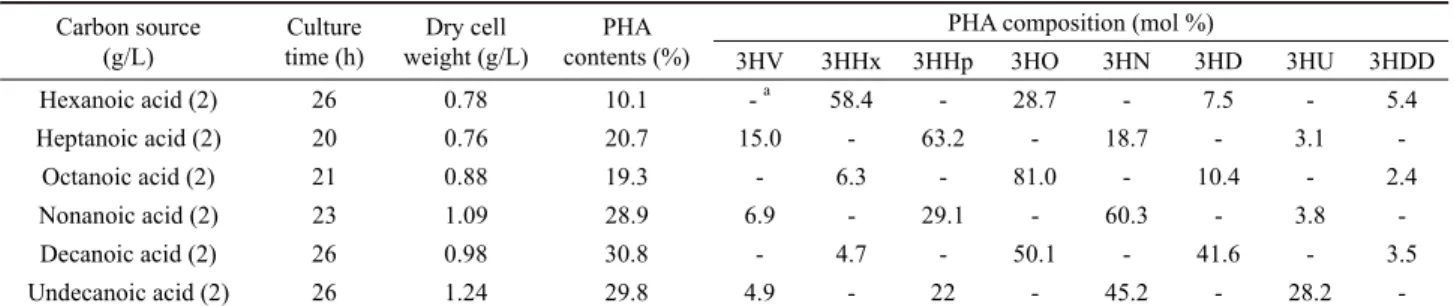
Carbon source (g/L)
Culture time (h)
Dry cell weight (g/L)
PHA contents (%)
PHA composition (mol %)
3HV 3HHx 3HHp 3HO 3HN 3HD 3HU 3HDD
Hexanoic acid (2) 26 0.78 10.1 - a 58.4 - 28.7 - 7.5 - 5.4
Heptanoic acid (2) 20 0.76 20.7 15.0 - 63.2 - 18.7 - 3.1 -
Octanoic acid (2) 21 0.88 19.3 - 6.3 - 81.0 - 10.4 - 2.4
Nonanoic acid (2) 23 1.09 28.9 6.9 - 29.1 - 60.3 - 3.8 -
Decanoic acid (2) 26 0.98 30.8 - 4.7 - 50.1 - 41.6 - 3.5
Undecanoic acid (2) 26 1.24 29.8 4.9 - 22 - 45.2 - 28.2 -
3HV, 3-hydroxyvalerate; 3HHx, 3-hydroxyhexanoate; 3HHp, 3-hydroxyheptanoate; 3HO, 3-hydroxyoctanoate; 3HN, 3-hydroxynonanoate; 3HD, 3-hydroxydecanoate;
3HU, 3-hydroxyundecanoate; 3HDD, 3-hydroxydodecanoate.
a Not detected.
Table 1. Biosynthesis of PHA by P. aeruginosa P-5 from various alkanoic acids
phaC2 genes. The PCR consisted of a 95℃ hold for 5 min, followed by 30 cycles of 1 min at 95℃, 1 min at 50℃, 1.5 min at 72℃, and a final extension for 7 min at 72℃. The amplified PCR products were purified with a StraPrep PCR Cleanup kit (Stratagene, USA) and ligated into pGEM-T Easy TA Cloning Vector according to the manufacturer’s instructions and then transformed into Escherichia coli DH5α. The nucleotide sequences were compared with those in GenBank by a BLAST search. Phylogenetic analyses were performed using MEGA 4.0 software (Tamura et al., 2007). The neighbor-joining method was employed to infer the tree topology. The reliability of the trees was tested by bootstrapping 1000 replicates generated with a random seed. The nucleotide sequences of phaC1 and phaC2 were deposited in the GenBank database under accession nos. JN969045 and JN969046, respectively.
Results and Discussion
Isolation and identification of the P-5 strain
Periodic supplementation of a SBR with external substrate creates alternating excess and lack of external substrate (so called “feast and famine” conditions), which allows indigenous microorganisms to store an internal carbon reservoir, such as PHAs, during the feast phase (Serafim et al., 2008). It has recently been reported that MCL-PHA-accumulating organisms can be enriched by periodic feeding of nonanoic acid in a SBR (Lee et al., 2011). In this study, several microorganisms that were predominant in the bacterial community under these dynamic conditions were isolated and screened for MCL-PHA production. Among these isolates, one strain, designated P-5, was selected for further study.
Isolate P-5 was a Gram-negative, aerobic, motile, and nonspore- forming short rod bacterium that was able to utilize various fatty acids as well as a wide range of carbohydrates as carbon substrates. A total of 1419 nucleotides of the strain P-5 16S rDNA was determined and aligned with those of reference
strains from GenBank. Phylogenetic analyses of the P-5 16S rDNA sequences revealed that the isolate clearly grouped to Pseudomonas species, which was consistent with the result of the phenotypic analysis. Specifically, the 16S rDNA sequence of P-5 was 100% similar to that of P. aeruginosa FJ907193.
Thus, the isolated P-5 strain was identified as P. aeruginosa based on the 16S rDNA sequence analysis.
Biosynthesis of PHAs from alkanoic acids
Table 1 shows the monomeric composition of the PHAs biosynthesized by P. aeruginosa P-5 grown with various alkanoic acids ranging from hexanoic acid (C6) to undecanoic acid (C11). The organism accumulated MCL-PHAs from these substrates with PHA yields of 10.1–30.8% of dry cell weight (DCW). The major monomer unit in the polymer had the same chain length as the alkanoic acid used for growth, except that the PHA from decanoic acid and undecanoic acid had 3-hydroxyoctanoate and 3-hydroxynonanoate (3HN), respectively, as the major constituents, which was shorter than the substrate by two carbon atoms. The P-5 PHA synthesis trend of C6 to C11 fatty acids suggests that the fatty acid oxidation and chain elongation pathways are primarily responsible for PHA formation, as reported in many pseudomonads (Kim et al., 2007). In contrast, P. aeruginosa P-5 produced copolyesters consisting of 3-hydroxydecanoate and 3-hydroxydodecanoate with PHA contents of <5% DCW when grown with carbohydrates, such as glucose and gluconate, as the sole carbon substrate (data not shown), suggesting that these monomer units were derived from the de novo fatty acid biosynthesis pathway (Nitschke et al., 2011).
The most attractive characteristic of P. aeruginosa P-5 was that this organism accumulated unusual polyesters containing 3HV as well as MCL 3HAs when C-odd alkanoic acids such as heptanoic acid, nonanoic acid, and undecanoic acid, were fed as the sole carbon source (Table 1). The proportions of 3HV in the PHAs produced varied depending on the carbon sources
Carbon source
(g/L) Culture time (h)
Dry Cell Weight (g/L)
PHA contents (%)
PHA composition (mol%) Thermal properties
NA VA 3HV 3HHp 3HO 3HN 3HD 3HU 3HDD Tg (℃) Tm (℃)
2
0 28 1.10 30.2 10.7 33.9 - a 53.1 1.2 1.1 - -38.2 43.4
0.2 32 1.02 25.6 14.1 35.7 - 49.1 1.0 - - -40.6 44.1
0.6 52 0.89 25.4 20.1 27.7 1.0 44.8 3.2 1.5 1.7 -37.8 39.8
1.0 52 0.86 25.3 26.0 24.1 1.9 40.6 4.3 1.5 1.5 -38.6 39.2
3HV, 3-hydroxyvalerate; 3HHp, 3-hydroxyheptanoate; 3HO, 3-hydroxyoctanoate; 3HN, 3-hydroxynonanoate; 3HD, 3-hydroxydecanoate; 3HU, 3-hydroxyundecanoate;
3HDD, 3-hydroxydodecanoate.
a Not detected.
Table 2. Monomeric compositions and thermal properties of copolyesters produced by batch fermentations of P. aeruginosa P-5 using various mixtures of nonanoic acid (NA) and valeric acid (VA) in a fermentor
and ranged from 4.9 to 15.0 mol%. Solvent fractionation using n-hexane was carried out to determine whether 3HV and MCL monomer units in these polyesters were copolymerized or not.
As a result, the polyesters from nonanoic acid and undecanoic acid were fractionated into a hexane-soluble fraction (data not shown). The recovered polyesters from the hexane-soluble fraction had the same monomer compositions as the original polyesters. As it is known that SCL-PHAs are hexane-insoluble and that MCL-PHAs are hexane-soluble (Chung et al., 1999), these findings indicate that the polyesters biosynthesized in this study were most likely copolyesters of 3HV and MCL 3HA monomers rather than a physical mixture of different polyesters.
Additionally, the capability of P. aeruginosa P-5 to accumulate copolyesters containing both SCL and MCL monomer units suggests that the PHA synthase of strain P-5 has substrate specificity toward 3HV-CoA and MCL (R)-3-hydroxyacyl-CoAs.
Effect of valerate as the 3HV precursor
Production of SCL-PHAs containing 3HV as a constituent is usually achieved by providing bacteria with a cosubstrate such as propionic acid, valeric acid, or levulinic acid along with a main carbon source. Although these cosubstrates are toxic to bacterial cells even at relatively low concentrations, the 3HV fraction in the copolyester increases generally as the concentration of the cosubstrate in the culture medium increases (Choi et al., 2003; Kim et al., 2009). In the present study, the effect of cosubstrates on PHA production and its monomeric composition was investigated. Of the cosubstrates evaluated, valeric acid was most suitable for use as the 3HV precursor molecule (data not shown). Based on these results, a fermentation strategy that employed various mixtures of nonanoic acid and valeric acid to produce SCL-MCL-PHA copolyesters with a high molar fraction of 3HV was designed and applied to polyester production by P. aeruginosa P-5.
Batch fermentation results in a 7 L jar fermentor demonstrated that the molar fraction of 3HV in the resulting polyesters
produced from mixtures of valeric acid and nonanoic acid rose with increasing concentration of valeric acid in given mixtures (Table 2). When cultivated with a mixture of 2 g/L nonanoic acid and 1 g/L valeric acid, the 3HV fraction in the polyester increased up to 26.0 mol%. However, relatively long culture times were required, depending on the valeric acid concentration in the mixed carbon substrates. These results suggest that the 3HV content in the copolyesters being biosynthesized by P. aeruginosa P-5 could be easily controlled, to some extent, by altering the proportion of valeric acid to nonanoic acid in the carbon substrate mixture.
Copolyesters with high 3HV content are not necessarily more useful, but the ability to alter the 3HV content in SCL-MCL-PHA copolyesters is desirable from an industrial viewpoint, as this offers the possibility of producing various biopolymers with different material properties. Actually, the DSC thermograms in Table 2 revealed that the melting temperature (Tm) values of the SCL-MCL-PHA copolyesters synthesized from mixtures of valeric acid and nonanoic acid were 39.2–44.1℃.
These values were much lower than those of MCL-PHAs (50.8 –54.0℃) produced by other Pseudomonas spp. using nonanoic acid as the sole carbon source (Kang et al., 2001; Rai et al., 2011), suggesting lower degrees of copolyester crystallization synthesized by P. aeruginosa P-5. This observation is in agreement with a study performed by Kang et al. (2001) who found that incorporating an additional monomer unit (3HV) into MCL-PHA results in decreased crystallinity by somehow preventing a crystalline arrangement in the polymeric chains.
However, no significant differences in the glass transition temperature (Tg) values were observed between both types of polyesters. Notably, the SCL-MCL-PHA copolyesters synthesized from a mixed carbon substrate were somewhat sticky, whereas MCL-PHAs synthesized from nonanoic acid by other organisms are not. This phenomenon was also presumably attributed to the different degree of crystallization (Rai et al., 2011).
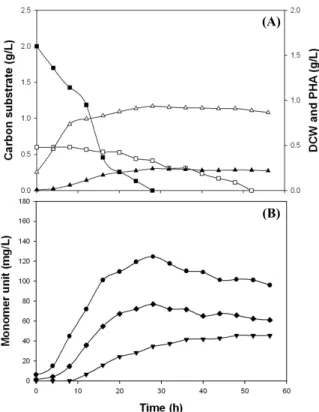
Figure 1 shows the time course of PHA production and its
(A)
(B)
Fig. 1. Time course of cell growth and PHA accumulation (A) and monomeric composition of the PHA (B) during the batch fermentation of P. aeruginosa P-5 with a mixture of 0.6 g/L valeric acid and 2 g/L nonanoic acid. Symbols: (□) residual concentration of valeric acid; (■) residual concentration of nonanoic acid; (△) dry cell weight (DCW); (▲) PHA yield; (▼) 3HV; (◆) 3HHp; ( ) 3HN.
monomeric composition during batch fermentation of the P-5 isolate with a mixture of 0.6 g/L valeric acid and 2 g/L nonanoic acid. The two carbon substrates were not simultaneously consumed by the organism; there was slight consumption of valeric acid until the nonanoic acid was completely depleted (Fig. 1A). Apparently valeric acid was utilized for cell growth and PHA production immediately following the depletion of nonanoic acid in the growth medium. This might be attributable to the difference in carbon availability of the P-5 isolate for nonanoic acid and valeric acid. Among various alkanoic acids, nonanoic acid and octanoic acid are well-known carbon substrates for the efficient production of PHAs by many pseudomonads (Kim et al., 2007; Lee et al., 2011). However, the consumption rate of valeric acid was much lower than that of nonanoic acid, which resulted in no noticeable increase in DCW or PHA content after the depletion of nonanoic acid. Moreover, the molar fractions of the main MCL 3HA monomers (3HN and 3HHp) in the copolyesters decreased slightly while the organism utilized valeric acid for growth and PHA production (Fig. 1B).
In contrast, the molar fractions of 3HV in the copolyesters increased gradually until the valeric acid was depleted completely.
The most plausible explanation for this biosynthetic pattern is
that P. aeruginosa P-5 degraded pre-existing PHA and rebuilt the copolyester by incorporating 3HV monomer units from valeric acid. The simultaneous degradation and incorporation of PHA monomer units in bacterial cells is also observed in other PHA producers (Doi et al., 1992; Kang et al., 2001), although the mechanism is still unclear. Moreover, if 3HV monomer units produced from valeric acid were added to the pre-existing PHA (synthesized from nonanoic acid) chain ends, the resulting PHA produced should be a block copolyester rather than a random copolyester. Thus, it remains to be determined whether the polymer from P. aeruginosa P-5 is randomly copolymerized or has a block structure.
PHA synthase system of P-5 strain
Some Pseudomonas strains including P. aeruginosa possess both SCL- and MCL-PHA synthases; thus, they can accumulate both SCL- and MCL-PHAs from octanoic acid and nonanoic acid as the sole carbon substrate (Kato et al., 1996;
Rho et al., 2007; Lee et al., 2011; Chung and Rhee, 2012).
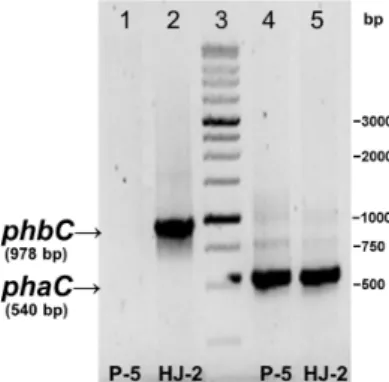
PCR was conducted to detect SCL- and MCL-PHA synthase genes in the P-5 isolate to clarify possession of PHA synthase genes. The isolate was detected in the 540-bp band of the phaC gene but lacked the phbC gene band (Fig. 2). Several attempts to detect the phbC gene by using various primers revealed same results. In addition, the isolate could not biosynthesize polyhydroxybutyrate, a representative SCL-PHA, when it was grown with various types of sugars and fatty acids, which are well known to serve as the precursor substrates of 3-hydroxybuytrate (data not shown). These results showed that P. aeruginosa P-5 only possesses the MCL-PHA synthase system with unique substrate chain-length specificity;
therefore, allowing for the incorporation of 3HV and a variety of MCL monomer units into the polyester.
The most representative MCL-PHA producers are pseudomonads belonging to the ribosomal RNA homology group I. Recent advances in molecular genetics and biochemistry of MCL-PHA biosynthesis have shown that there are two types of MCL-PHA synthase genes, phaC1 and phaC2, in various Pseudomonas spp. (Kim et al., 2007; Rai et al., 2011). In this study, the complete genes encoding PhaC1P-5 and PhaC2P-5 from P. aeruginosa P-5 were cloned by PCR. The PhaC1P-5 gene contained an 1,680 bp open reading frame, which encoded a polypeptide of 559 amino acids with a deduced molecular mass of 62,582 Da, whereas the cloned PhaC2P-5 gene (1,683 bp) was predicted to encode a polypeptide of 560 amino acids with a deduced molecular mass of 62,711 Da. The sizes of PhaC1P-5
(559 amino acids) and PhaC2P-5 (560 amino acids) were identical with those of all available PhaC1 and PhaC2 polypeptides, respectively, which are deposited in the GenBank database. A
Fig. 2. PCR analysis of the MCL-PHA synthase gene (phaC) and SCL-PHA synthase gene (phbC) in P. aeruginosa P-5 and Pseudomonas sp. HJ-2 (a positive control strain possessing both phbC and phaC). Lanes 1 and 2, primers for phbC amplication were used; lanes 4 and 5, primers for phaC amplication were used; lane 3, moleculer size marker (1 kb ladder). Molecular marker sizes are given in base pairs.
Fig. 3. A phylogenetic tree based on PHA synthase (PhaC1 and PhaC2) amino acid sequences of P. aeruginosa P-5 and other related pseudomonads using neighbor-joining method. Bootstrap values of 700 or more (from 1,000 replicates) are indicated at the node. Scale bar, 0.05 substitutions per base position.
BLAST similarity search showed that the amino acid sequences of PhaC1P-5 and PhaC2P-5 had identities exceeding 77% and 71%, respectively, with the corresponding polypeptides of other pseudomonads. PhaC1P-5 was most similar with the putative PhaC1 of P. aeruginosa PAO1, with the highest sequence identity of 99.6%. It also showed high sequence similarities of 86.3% and 90.5% with the PhaC1 enzymes of Pseudomonas sp. 61-3 and P. stutzeri 1317, respectively, which are responsible for biosynthesis of the SCL-MCL-PHA copolyester (Matsusaki et al., 1998; Chen et al., 2004). PhaC2P-5
commonly exhibited the highest homology percentage (99.3%) with PhaC2 polypeptides of P. aeruginosa PAO1, P. aeruginosa M18, and P. aeruginosa LESB58. These results strongly suggest high conservation of MCL-PHA synthase genes in MCL-PHA-producing bacteria.
However, a phylogenetic tree constructed based on amino acid sequences of representative MCL-PHA synthases revealed clearly that PhaC1 polypeptides from pseudomonads were
distinguished from PhaC2 polypeptides (Fig. 3). Actually, the amino acid sequence homology between PhaC1P-5 and PhaC2P-5
was only 58.1%. In contrast to experimental results showing that both PhaC1 and PhaC2 exhibited very similar substrate specificities (Qi et al., 1997; Chung and Rhee, 2012), some studies have revealed that PhaC1 and PhaC2 from the same Pseudomonas strain have obvious differences in substrate specificity. PhaC1 in Pseudomonas sp. 61-3 has broader substrate specificity, ranging from 3HB to MCL 3HAs, whereas PhaC2 only polymerizes MCL 3HAs to PHA products (Matsusaki et al., 1998). In contrast, PhaC2 of P. stutzeri incorporates both 3HB and MCL 3HAs into PHA, whereas PhaC1 favors only MCL 3HAs for polymerization (Chen et al., 2004). Interestingly, amino acid substitutions at specific positions in PhaC1 of Pseudomonas sp. 61-3 (Takase et al., 2004) and PhaC2 of P. stutzeri (Shen et al., 2011) are very effective for synthesizing PHA copolyesters with higher 3HB fractions. In this study, the differences in substrate specificity between PhaC1P-5 and PhaC2P-5 were unclear. Further study is in progress to evaluate the substrate chain-length specificity of each PHA synthase by heterologous expression of PhaC1P-5 and PhaC2P-5 genes in PHA-negative mutants.
적 요
활성슬러지로부터 특이한 조성의 polyhydroxyalkanoates (PHAs)를 생합성하는 Pseudomonas aeruginosa P-5를 분리하였 다. 이 균주는 nonanoic acid나 heptanoic acid와 같은 홀수개의 탄소수를 가지는 지방산을 단일 탄소원으로 공급해주었을 경우, 3-hydroxyvalerate (3HV)와 medium-chain-length (MCL) 3- hydroxyalkanoates 단위체로 이루어진 공중합체를 생산하였다.
공중합체 내 3HV의 함량은 valeric acid와 같은 보조기질을 공급 함으로써 증가시킬 수 있었으며, 2 g/L nonanoic acid와 1 g/L valeric acid로 이루어진 혼합기질로부터 3HV의 함량이 26 mol%에 달하 는 공중합체를 얻을 수 있었다. 이러한 공중합체는 결정성이 매우
낮아 점착성 고분자로서의 성질을 보였다. P. aeruginosa P-5 균주 는 MCL-PHA synthase 유전자(phaC1, phaC2)를 가지고 있는 반 면에 SCL-PHA synthase 유전자는 결여되어 있는 것으로 나타났 다. 따라서 P. aeruginosa P-5 균주의 MCL-PHA synthase는 MCL (R)-3-hydroxyacyl-CoAs 뿐만 아니라 (R)-3-hydroxyvaleryl-CoA 를 기질로 인지하는 특이한 기질특이성을 갖는 것으로 사료된다.
Acknowledgements
This work was supported by a research grant from Chungnam National University (Grant No. CNU-2011-1553).
References
Chanprateep, S. 2010. Current trends in biodegradable polyhydro- xyalkanoates. J. Biosci. Bioeng. 110, 621–632.
Chen, J.Y., Liu, T., Zheng, Z., Chen, J.C., and Chen, G.Q. 2004.
Polyhydroxyalkanoate synthases PhaC1 and PhaC2 from Pseudomonas stutzeri 1317 had different substrate specificities.
FEMS Microbiol. Lett. 234, 231–237.
Chen, G.Q. and Wu, Q. 2005. The application of polyhydroxyalkanoates as tissue engineering materials. Biomaterials 26, 6565–6578.
Chen, G.Q., Zhang, G., Park, S.J., and Lee, S.Y. 2001. Industrial scale production of poly(3-hydroxybutyrate-co-3-hydroxyhexanoate).
Appl. Microbiol. Biotechnol. 57, 50–55.
Choi, G.G., Kim, M.W., Kim, J.Y., and Rhee, Y.H. 2003. Production of poly(3-hydroxybutyrate-co-3-hydroxyvalerate) with high molar fractions of 3-hydroxyvalerate by a threonine overproducing mutant of Alcaligenes sp. SH-69. Biotechnol. Lett. 25, 665–670.
Chung, C.W., Kim, Y.S., Kim, Y.B., Bae, K.S., and Rhee, Y.H. 1999.
Isolation of a Pseudomonas sp. strain exhibiting unusual behavior of poly(3-hydroxyalkanoates) biosynthesis and characterization of synthesized polyesters. J. Microbiol. Biotechnol. 9, 847–853.
Chung, M.G. and Rhee, Y.H. 2012. Overexpression of the (R)-specific enoyl-CoA hydratase gene from Pseudomonas chlororaphis HS21 in Pseudomonas strains for the biosynthesis of polyhydroxyalkanoates of altered monomer composition. Biosci. Biotechnol. Biochem. 76, 613–616.
Doi, Y., Kawaguchi, Y., Koyama, N., Nakamura, S., Hiramitsu, M., Yoshida, Y., and Kimura, H. 1992. Synthesis and degradation of polyhydroxyalkanoates in Alcaligenes eutrophus. FEMS Microbiol.
Rev. 103, 103–108.
Hang, X., Lin, Z., Chen, J., Wang, G., Hong, K., and Chen, G.-Q. 2002.
Polyhydroxyalkanoate biosynthesis in Pseudomonas pseudo- alcaligenes YS1. FEMS Microbiol. Lett. 212, 71–75.
Hazer, B. and Steinbüchel, A. 2007. Increased diversification of polyhydroxyalkanoates by modification reactions for industrial and medical applications. Appl. Microbiol. Biotechnol. 74, 1–12.
Kang, H.O., Chung, C.W., Kim, H.W., Kim, Y.B., and Rhee, Y.H. 2001.
Cometabolic biosynthesis of copolyesters consisting of 3- hydroxyvalerate and medium-chain-length 3-hydroxyalkanoates by Pseudomonas sp. DSY-82. Antonie van Leeuwenhoek 80, 185–191.
Kato, M., Fukui, T., and Doi, Y. 1996. Biosynthesis of polyester blends by Pseudomonas sp. 61-3 from alkanoic acids. Bull. Chem. Soc. Jpn.
69, 515–520.
Kim, D.Y., Kim, H.W., Chung, M.G., and Rhee, Y.H. 2007. Biosynthesis, modification, and biodegradation of bacterial medium-chain-length
polyhydroxyalkanoates. J. Microbiol. 45, 87–97.
Kim, Y.B., Kim, D.Y., and Rhee, Y.H. 1999. PHAs produced by Pseudomonas putida and Pseudomonas oleovorans grown with n-alkanoic acids containing aromatic groups. Macromolecules 32, 6058–6064.
Kim, D.Y., Park, D.S., Kwon, S.B., Chung, M.G., Bae, K.S., Park, H.-Y., and Rhee, Y.H. 2009. Biosynthesis of poly(3-hydroxybutyrate-co-3- hydroxyvalerate) copolyesters with a high molar fraction of 3- hydroxyvalerate by an insect-symbiotic Burkholderia sp. IS-01. J.
Microbiol. 47, 651–656.
Lee, S.H., Kim, J.H., Mishra, D., Ni, Y.-Y., and Rhee, Y.H. 2011.
Production of medium-chain-length polyhydroxyalkanoates by activated sludge enriched under periodic feeding with nonanoic acid.
Bioresour. Technol. 102, 6159–6166.
Matsusaki, H., Manji, S., Taguchi, K., Kato, M., Fukui, T., and Doi, Y.
1998. Cloning and molecular analysis of the poly(3-hydroxybutyrate) and poly(3-hydroxybutyrate-co-3-hydroxyalkanoate) biosynthesis genes in Pseudomonas sp. strain 61-3. J. Bacteriol. 180, 6459–6467.
Nitschke, M., Costa, S.G.V.A.O, and Contiero, J. 2011. Rhamnolipids and PHAs: Recent reports on Pseudomonas-derived molecules of increasing industrial interest. Process Biochem. 46, 621–630.
Qi, Q.S., Rehm, B.H.A., and Steinbüchel, A. 1997. Synthesis of poly(3-hydroxyalkanoates) in Escherichia coli expressing the PHA synthase gene phaC2 from Pseudomonas aeruginosa: comparison of PhaC1 and PhaC2. FEMS Microbiol. Lett. 157, 155–162.
Rai, R., Keshavarz, T., Roether, J.A., Boccaccini, A.R., and Roy, I. 2011.
Medium chain length polyhydroxyalkanoates, promising new biomedical materials for the future. Mat. Sci. Eng. R. 72, 29–47.
Rho, J.K., Choi, M.H., Shim, J.H., Lee, S.Y., Woo, M.J., Ko, B.S., Chi, K.W., and Yoon, S.C. 2007. Swinging effect of salicylic acid on the accumulation of polyhydroxyalkanoic acid (PHA) in Pseudomonas aeruginosa BM114 synthesizing both MCL and SCL-PHA. J.
Microbiol. Biotechnol. 17, 2018–2026.
Serafim, L.S., Lemos, P.C., Albuquerque, M.G.E., and Reis, M.A.M.
2008. Strategies for PHA production by mixed cultures and renewable waste materials. Appl. Microbiol. Biotechnol. 81, 615–628.
Shen, X.W., Shi, Z.Y., Song, G., Li, Z.J., and Chen, G.Q. 2011. Engineering of polyhydroxyalkanoate (PHA) synthase PhaC2Ps of Pseudomonas stutzeri via site-specific mutation for efficient production of PHA copolymers. Appl. Microbiol. Biotechnol. 91, 655–665.
Solaiman, D.K.Y., Ashby, R.D., and Foglia, T.A. 2000. Rapid and specific identification of medium-chain-length polyhydroxyalkanoate synthase gene by polymerase chain reaction. Appl. Microbiol.
Biotechnol. 53, 690–694.
Takase, K., Matsumoto, K., Taguchi, S., and Doi, Y. 2004. Alteration of substrate chain-length specificity of type II synthase for polyhydroxyalkanoate biosynthesis by in vitro evolution: in vivo and in vitro enzyme assays. Biomacromolecules 5, 480–485.
Tamura, K., Dudley, J., Nei, M., and Kumar, M. 2007. MEGA4:
Molecular Evolutionary Genetics Analysis (MEGA) software version 4.0. Mol. Biol. Evol. 24, 1596–1599.
Tanadchangsaeng, N., Tsuge, T., and Abe, H. 2010. Comonomer compositional distribution, physical properties, and enzymatic degradability of bacterial poly(3-hydroxybutyrate-co-3-hydroxy-4- methylvalerate) copolyesters. Biomacromolecules 11, 1615–1622.
Vendan, R.T., Yu, Y.J., Lee, S.H., and Rhee, Y.H. 2010. Diversity of endophytic bacteria in ginseng and their potential for plant growth promotion. J. Microbiol. 48, 559–565.