Journal of the Korean Chemical Society 2015, Vol. 59, No. 3
Printed in the Republic of Korea
http://dx.doi.org/10.5012/jkcs.2015.59.3.205
-205-
속보 (Communications)
Enantioselective Synthesis of Spirooxindolopyrrolizidines via Catalytic 1,3-dipolar Cycloaddition of Azomethine Ylides and 3-(2-Alkenoyl)-1,3-oxazolidin-2-ones
Mohammad Javad Taghizadeh†,*, Abdollah Javidan†, and Khosrow Jadidi‡
†Department of Chemistry, School of Sciences University of Imam Hossein, Tehran, Iran.
*E-mail: [email protected]
‡Department of Chemistry, Shahid Beheshti University, G.C. Tehran 1983963113, Iran (Received March 12, 2015; Accepted April 13, 2015)
Key words: Asymmetric 1,3-dipolar, Chiral auxiliaries, Chiral spiro-oxindolopyrrolizidines, Three-component reaction, Azomethineylide
INTRODUCTION
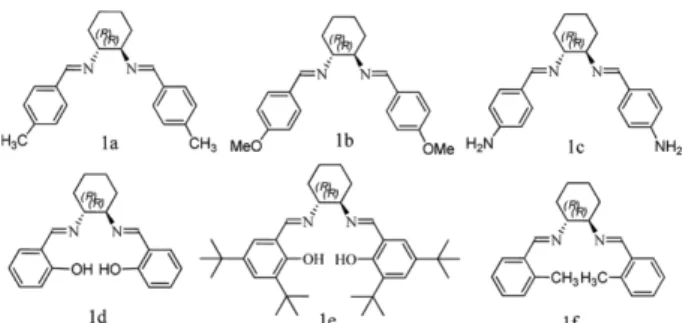
The ability of controlling the selectivity is an important aspect in organic synthesis. Compounds that differ in the position of a substituent are known as regioisomers. Although the regioisomers look very alike, they might possess dif- ferent properties. Since Padwa and co-workers performed the first diastereoselectivity of 1,3-dipolar cycloaddition reaction in 1985, by applying a chiral non-racemic azome- thine ylide,1 their applications has been developed as a cornerstone in organic synthesis.2 One of today’s challenges in this field is to control the regio-, diastereo- and enantioselectiv- ities of these reactions. Asymmetric 1,3-dipolar cycload- dition reactions of azomethine ylides offer an effective means to access chiral pyrrolidines substructures containing up to four new stereogenic centres that found in many biologically active compounds.3 Asymmetric multicomponent 1,3-dipolar cycloaddition of azomethine ylides with alkenes can be a great interest and useful strategies for stereoselective syn- thesis and develop of these class of molecules and compounds having similar structure.4 We reported the enantiomerically pure novel spirooxindolpyrrolizidinesby applying opti- cally active cinnamoyloxazolidinone as chiral auxiliary and the enantioselectivities were exceptionally high.5 However, it requires the use of at least one equivalent of enantiopure auxiliary. To resolve this problem and in continuation of our previous work on the synthesis of spirooxindoles, 6 we applied copper complex of cyclohexane-1,2-bis(arylmethylene- amine) ligands (Fig. 1) as a catalyst to synthesis of a small library of this important class of spirooxindols.7 In this paper, we wish to report a highly endo- and enantioselective 1,3- dipolar cycloaddition reaction of azomethine ylides, derived from isatin, with electron-deficient dipolarophile by using bidendate bis(imine)-Cu(II) complex 1, that can be readily
assembled from commercially available trans 1,2-cyclo- hexanediamine and a variety of suitable aldehyde precur- sors, in optimized reaction condition. Based on experiences in our previous works and literature survey,8 Initially, the effects of substituents of bis(imines) ligands 1(a-f) were examined using 10 mol% [Cu(OTf)2] as catalyst in a typ- ical reaction of azomethine ylide 2a with dipolarophile 3a at room temperature in aqueous ethanol as a solvent (Scheme 1). Results are summarized in Table 1.
EXPERIMENTAL
General Procedure
At the first, a mixture containing (10% mol) aimin base ligand and transition metal salts (10% mol) was prepared in 10 ml dichloromethan. Then a mixture of isatin deriv- atives (1 mmol) and (S)-proline (1.1 mmol), in 10 mL ethanol was added to mixture. After completion of the reaction (monitored by TLC), the reaction mixture was extracted with dichloromethane (15 mL). The combined organic layer dried over anhydrous MgSO4. The organic layer was concentrated in vacuum to furnish the products, which were recrystallized from ethanol.
Figure 1. Cyclohexane-1,2-bis(arylmethyleneamine) ligands 1(a-f).
Journal of the Korean Chemical Society 206 Mohammad Javad Taghizadeh, Abdollah Javidan, and Khosrow Jadidi
Selected Characterization Data
3-((1'S,2'S,3R,7a'R)-1'-methyl-2-oxo-1',2',5',6',7',7a' hexahydrospiro[indoline-3,3'-pyrrolizine]-2'-ylcarbonyl) oxazolidin-2-one (4a): white powder, mp 137−140oC, yield 93%, [α]D+240.5 (c 0.01, CH2Cl2), IR(KBr)(υmax, cm−1): 1694(C=O), 1745(C=O), 1800(C=O), 3420(NH);
1H NMR (300.1 MHz, CDCl3); 1.17 (3H, d, 3JHH=6.3 Hz, CH3), 1.73−1.93 (4H, m, 2CH2), 2.07−2.16 (1H, m, CH), 2.56 (1H, m, CH), 2.83−3.00 (2H, m, CH2), 3.53−3.62 (1H, m, CH), 3.87−3.96 (3H, m, CH and CH2), 4.13−4.21 (1H, m, CH), 4.31 (1H, d, 3JHH=9.6 Hz, CH), 6.83−7.23 (4H, m, Ar-H), 7.55 (1H, s, NH); 13C NMR (300.1 MHz, CDCl3); 15.9(1C, CH3), 24.8, 27.6, 41.3, 42.7, 62.1 (5C, 5CH2), 49.3, 59.9, 69.4 (3C, 3CH), 71.9(1C), 110.5, 121.1, 126.0, 129.8 (4C, 4CH), 125.6, 142.7 (2C) 153.0, 172.3, 179.7 (3C, 3C=O); MS, 355 (M++2, 30), 69 (100), 131 (45).
RESULTS AND DISCUSSION
The ligand 1e bearing the relatively bulky tert-butyl substituents at the 2- and 4-positions of the benzene ring
resulted in considerably higher yields and enantioselec- tivities in comparison with the other ligands.9 The highest enantioselectivity (92%) and yield in high selectivity were achieved by employing ligand 1e. The yields and enan- tiomeric rations of the products showed the temperature dependence of this process. A decrease in the reaction temperature from 25oC to −20oC greatly decreased the reaction yield and enantioselectivity (entries 5, 7 and 8).
Considering the 1e as the best ligand, we tested the effect of Cu salts (Table 2). In all cases, Cu(OTf)2 proved to be the best copper source while other Cu salts led to a decrease in the ee by 34–90% and longer reaction times (entries 3-4 vs.2).
The use of Zn(OTf)2 instead of Cu(OTf)2 gave worse result in term of enantioselectivity (entry 1). The effects of catalyst loading were also investigated and the best results were obtained when 10 mol% catalyst loading was used in the reaction. The ligand-to-metal ratio of 1.1:1 using 20 mol% of ligand was investigated under the similar con- ditions and the isolated yields and enantioselectivity remained the same at 92% respectively. Lowering the catalyst loading to less than 10 mol% led to a sharp decrease in the results.
Considering the optimized reaction conditions, we next examined the scope and generality of this reaction with various types of azomethineylides and synthesized a small Scheme 1. Asymmetric synthesis of new chiral spirooxindolopyrrolizidines 4 with ligand of 1.
Table 1. Asymmetric synthesis of new chiral spirooxindolopyr- rolizidines with ligand of 1(a-f)
Entry Ligand T(oC) Time(h) Yield (%)a ee(%)b
1 1a 25 32 88 63
2 1b 25 28 90 55
3 1c 25 32 85 83
4 1d 25 28 93 74
5 1e 25 16 90 92
6 1f 25 32 85 rac
7 1e 0 48 25 rac
8 1e -20 48 <15 n.d
aTemperature in the presence of 10% catalyst [Cu(OTf)2-1=1.0: 1.1], unless otherwise noted.
bDetermined by chiral HPLC analysis.
Table 2. Dependence of reaction with Lewis acid
Entry Lewis acid Time(h) Yield (%)a ee (%)b
1 Zn(OAc)2 12 >99 Race
2 Cu(OTf)2 16 90 92
3 Cu(OAc)2 23 92 55
4 Cu(Cl)2 28 76 Race
5 Cu(OTf)2c 22 96 65
aIsolated yield.
bDetermined by chiral HPLC analysis.
c20% catalyst is used.
Enantioselective Synthesis of Spirooxindolopyrrolizidines 207
2015, Vol. 59, No. 3
library of new chiral spirooxindolopyrrolizidines 4a–j (Table 3). We also were able to obtain suitable crystals of the 4g for crystallography to confirm the assigned ste- reochemistry of products 4 that was carried out here using several NMR spectroscopy techniques. According to the stereochemistry of the cycloadducts, it can be suggested that the pathway of this reaction would be through the endo transition state. The absolute configuration of enan- tiomer of endo-4g can be assigned on the basis of our pre- vious investigation and X-ray crystallographic analysis of compound 4g. On the basis of X-ray structure of 4, we can now assign the four chiral centers in spiropyrrolizidine- oxindole 4g to be 5R (spiro carbon C7), 6S (C21), 7R (C14), 8R (C13). X-ray crystallographic analysis of com- pound 4g also confirmed this absolute configuration (Fig.
2).6
As described in our previous work, upon treatment of chiral spirooxindolopyrrolizidine 5 with hydrogen perox- ide in the presence of lithium hydroxide produced prod- uct 6 with an optical rotation of +282.8.5 In the othere work procedure was performed with endo-4i (89% ee) to give compound 7i with an optical rotation of +250.9.6 The same procedure was performed with endo-4i (86% ee) to give compound 7i with an optical rotation of +242.5. The reaction sequences are outlined in Scheme 2. The prod- ucts 4 are identical in all respects (IR, NMR and mass spectral data) except in amount of optical rotation.
In conclusion, Simple Salen ligand with copper (II) triflate catalyzed 1,3-dipolar cycloaddition reaction of azomethiney- lides with electron-deficient dipolarophile to give spiro- pyrrolizidineoxindoles in good yield with high regio-, diastereo-, and enantioselectivity (up to 92% ee) in opti- mized condition.
Acknowledgments. Publication cost of this paper was supported by the Korean Chemical Society.
Supporting Information. Supplementary data (included are general procedures and IR, Mass, 1H and 13C NMR spectra of all compounds) associated with this article can be found, in the online version.
Table 3. Asymmetric synthesis of new chiral spiro-oxindolo pyr- rolizidines derivaitives 4
Entry X R1 R2 Product Yield ee
1 H H Me 4a 93 82
2 H H Ph 4b 90 92
3 H Me Me 4c 93 88
4 H Et Ph 4d 86 89
5 H Bn Me 4e 88 90
6 Br H Me 4f 98 83
7 Br Me Me 4g 92 91
8 Br Et Me 4h 94 85
10 Br Me Ph 4i 85 86
11 NO2 H Me 4j 88 91
Figure 2. ORTEP diagram of one of the four crystallographic independent molecules in the asymmetric unit of 4g thermal ellipsoids are at 30% probability level.
Scheme 2. Determination of the absolute configuration endo-4i.
Journal of the Korean Chemical Society 208 Mohammad Javad Taghizadeh, Abdollah Javidan, and Khosrow Jadidi
REFERENCES
1. Daly, J. W.; Spande, T. W.; Whittaker, N.; Highet, R. J.;
Feigl, D.; Noshimori, N.; Tokuyama, T.; Meyers C. W. J.
Nat. Prod. 1986, 46, 210.
2. Carroll, W. A., Grieco, P.; Biomimetic, O. J. Am. Chem.
Soc. 1993, 115, 1164.
3. Shi, F.; Mancuso, R.; Larock, R. C. Tetrahedron Lett. 2009, 50, 4067.
4. Ding, K.; et al. J. Am. Chem. Soc. 2005, 127, 10130.
5. Taghizadeh, M. J.;Arvinnezhad, H.; Samadi, S.; Jadidi, K.;
Javidan, A.; Notash, B. Tetrahedron Lett. 2012, 53, 5148.
6. Salahi, F.; Taghizadeh, M. J.; Arvinnezhad, H.; Moemeni, M.; Jadidi, K.; Notash, B. Tetrahedron Lett. 2014, 55, 1515.
7. Mehrdad, M.; Faraji, L.; Jadidi, K.; Eslami, P.; Sureni, H.
Monatsh. Chem. 2001, 142, 917.
8. Evans, D. A.; Lectkata, T.; Miller, S. Tetrahedron Lett. 1993, 34, 7027.
9. Brandes, B. D.; Jacobsen, E. N. Tetrahedron: Asymmetry 1997, 8, 3927.