• 검색 결과가 없습니다.

Current Status and Future Perspectives on Minimally Invasive Esophagectomy

N/A
N/A
Protected

Academic year: 2021

Share "Current Status and Future Perspectives on Minimally Invasive Esophagectomy"

Copied!
8
0
0

로드 중.... (전체 텍스트 보기)

전체 글

(1)

http://dx.doi.org/10.5090/kjtcs.2013.46.4.241 ISSN: 2233-601X (Print) ISSN: 2093-6516 (Online)

Department of Surgery, Keio University School of Medicine

Received: May 26, 2013, Revised: July 8, 2013, Accepted: July 8, 2013

Corresponding author: Yuko Kitagawa, Department of Surgery, Keio University School of Medicine, 35 Shinanomachi, Shinjuku-ku, 160-8582, Tokyo, Japan

(Tel) 81-3-3353-1211 (Fax) 81-3-3355-4707 (E-mail) [email protected]

C

The Korean Society for Thoracic and Cardiovascular Surgery. 2013. All right reserved.

CC

This is an open access article distributed under the terms of the Creative Commons Attribution Non-Commercial License (http://creative- commons.org/licenses/by-nc/3.0) which permits unrestricted non-commercial use, distribution, and reproduction in any medium, provided the original work is properly cited.

Current Status and Future Perspectives on Minimally Invasive Esophagectomy

Hirofumi Kawakubo, M.D., Hiryoya Takeuchi, M.D., Yuko Kitagawa, M.D.

Esophageal cancer has one of the highest malignant potentials of any type of tumor. The 3-field lymph node dissection is the standard procedure in Japan for surgically curable esophageal cancer in the middle or upper thoracic esophagus.

Minimally invasive esophagectomy is being increasingly performed in many countries, and several studies report its fea- sibility and curability; further, the magnifying effect of the thoracoscope is another distinct advantage. However, few stud- ies have reported that minimally invasive esophagectomy is more beneficial than open esophagectomy. A recent meta-analysis revealed that minimally invasive esophagectomy reduces blood loss, respiratory complications, the total morbidity rate, and hospitalization duration. A randomized study reported that the pulmonary infection rate, pain score, intraoperative blood loss, hospitalization duration, and postoperative 6-week quality of life were significantly better with the minimally invasive procedure than with other procedures. In the future, sentinel lymph node mapping might play a significant role by obtaining individualized information to customize the surgical procedure for individual patients’ specific needs.

Key words: 1. Esophageal neoplasms

2. Minimally invasive surgical procedures 3. Video-assisted thoracic surgery 4. Sentinel node navigation surgery 5. Lymph node dissection

INTRODUCTION

The global incidence of esophageal cancer has increased in the past decades [1,2], and it has one of the highest malignant potentials of any type of tumor. As per the data of the American Joint Committee on Cancer, the postoperative 5-year survival rate of stage I esophageal cancer is about 90%, and decreases to 45% for stage II, 20% for stage III, and only 10% for stage IV patients [3]. Although the effec- tiveness of extended lympadenectomy for esophageal cancer remains to be demonstrated by randomized prospective stud-

ies, better survival was obtained after 3-field lymph node dis- section than 2-field lymph node dissection in Japan [4,5].

Three-field lymph node dissection, including dissection of cer- vical, mediastinal, and abdominal lymph nodes, is the standard procedure employed for surgically curable esophageal cancer located in the middle or upper thoracic esophagus in Japan.

The majority of Western surgical groups differ with Japanese

groups on their strategy for surgical management of esoph-

ageal carcinoma. Many investigators in Europe and the United

States have reported that the results of concurrent chemo-

radiotherapy are comparable to those of surgery [6,7]; how-

(2)

Table 1. Contraindication of minimally invasive esophagectomy

No. Contraindication

1 2 3 4 5 6

Extensive pleural adhesions

Tumor infiltrating adjacent structures

Impaired circulatory or pulmonary function prohibiting single-lung ventilation

A concomitant serious medical condition, such as sever diabetes mellitus, chronic renal failure, or liver cirrhosis Patients refusal to undergo thoracoscopic surgery

Patients who received radiation (controversial)

ever, most of the surgical procedures in such studies are not as radical as the Japanese standard procedures, and the overall survival rate after surgery is lower than that of the Japanese standard. Nevertheless, some Western surgeons have asserted the importance of radical lymph node dissection [8,9].

Extended lympadenectomy is extremely invasive and leads to high operative morbidity, particularly because of pulmonary complications [5]. Since the first report of thoracoscopic esoph- agectomy by Cuschieri et al. [10] in 1992, the adoption of mini- mally invasive esophagectomy has increased in many countries [11]. Minimally invasive esophagectomy might minimize injury to the chest wall and is believed to reduce surgical invasiveness. Moreover, several reports have indicated its feasi- bility and curative efficacy [12-15]. Although the incidence of minimally invasive surgery is increasing in Japan, only 20%

of esophagectomies performed in 2009 were conducted using a minimally invasive approach [16]. Three-field lymphadenec- tomy is the standard surgical method employed in Japan; the same degree of lymph node dissection must be performed even for a minimally invasive esophagectomy. Minimally invasive surgery is used less often for esophagectomy, considering the technical challenges of esophagectomy accompanied by ex- tensive lymphadenectomy, which is the Japanese standard sur- gical method.

Although thoracoscopic esophagectomy has been promoted due to its minimal invasiveness, another distinctive advantage of minimally invasive esophagectomy is the magnifying effect of the thoracoscope, as very small structures can be clearly identified. Thus, the surgery can be performed with more pre- cision, preserving the nerves and vessels.

It has still not been clearly demonstrated whether mini- mally invasive surgery is associated with lower morbidity and mortality. Furthermore, the oncologic outcomes after mini-

mally invasive surgery are still controversial. Hence, a pro- spective randomized study of open versus minimally invasive surgery is needed. However, although the incidence of esoph- ageal cancer is increasing, and it is among the 10 most com- mon cancers worldwide, few patients are candidates for po- tentially curative resection. In addition, a prospective random- ized study would be difficult to complete within a reasonable timeframe. Because the technique of minimally invasive sur- gery is not standardized, even in high volume centers, it is very difficult to set up multi-institutional studies.

INDICATIONS FOR MINIMALLY INVASIVE ESOPHAGECTOMY

Minimally invasive esophagectomy was initially used for

T1 and T2 esophageal tumors without neoadjuvant therapy

[12,16]. However, the indications for minimally invasive

esophagectomy have been expanded to include more ad-

vanced cancers. Now, the indications for minimally invasive

esophagectomy are almost the same as those for open

surgery. The right lung should be deflated during the thoraco-

scopic procedure to provide a good operative field. Patients

must be able to tolerate single-lung ventilation for a sufficient

time period. The following are the contraindications for mini-

mally invasive esophagectomy (Table 1): extensive pleural

adhesions; a tumor infiltrating adjacent structures; impaired

circulatory or pulmonary function prohibiting single-lung ven-

tilation; presence of concomitant serious medical conditions

such as severe diabetes mellitus, chronic renal failure, or liver

cirrhosis; and patients’ refusal to undergo thoracoscopic

surgery. Moreover, in our institution, patients who have re-

ceived radiation in the mediastinum are also contraindicated

for minimally invasive esophagectomy because the radiation

(3)

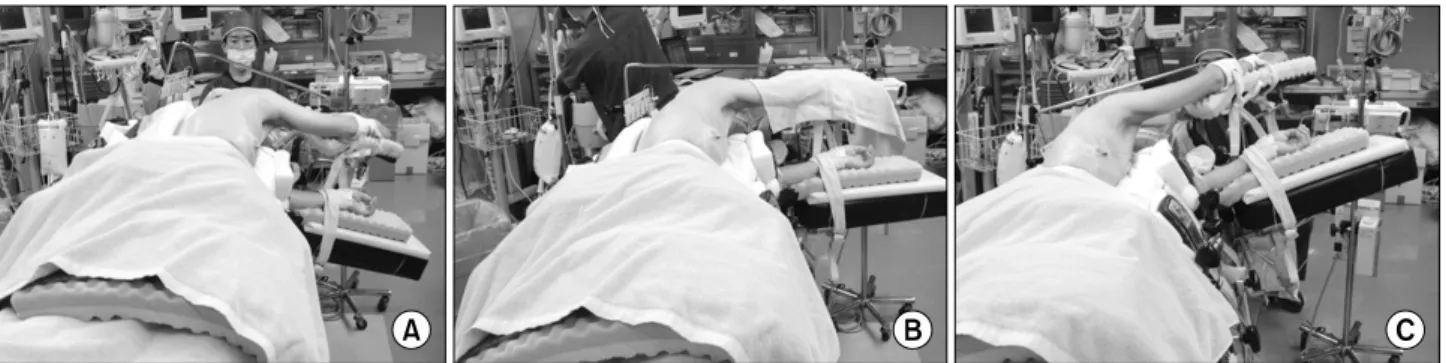
Fig. 1. Hybrid position. (A) Prone position. (B) Left semiprone position. (C) Left lateral decubitus position.

might have destroyed the layered structure and have caused tissue adhesions such that the layers cannot be recognized to cut and divide. However, in some institutions, patients are still indicated for minimally invasive surgery after undergoing radiation in the mediastinum [17,18].

APPROACH FOR MINIMALLY INVASIVE ESOPHAGECTOMY

The two approaches for minimally invasive esophagectomy are the prone position and the left lateral decubitus position.

Cushieri [19] reported on performing minimally invasive esophagectomy in the prone position for 6 patients in 1994.

However, minimally invasive esophagectomy has been most commonly performed in the left lateral decubitus position;

nevertheless, since the advantages of this surgery in the prone position have been reported, this position has recently been widely adopted. In the prone position, the mediastinum lies in its usual middle position, and the chest and abdomen are free of compression. During surgery in the prone position, the right lung is partially collapsed by gravity, and the thoracic cavity is insufflated with carbon dioxide up to 8 mmHg.

Cuschieri et al. [10] performed the first minimally invasive esophagectomy in the prone position to reduce the incidence of pulmonary infections noted following lateral thoracoscopy.

Opening and exposing the mediastinum by gravity and artifi- cial pneumothorax in the prone position allows for optimum visualization of the mediastinum, particularly the middle and lower mediastinum. However, it is easier to explore the surgi- cal field in the upper mediastinum in the left lateral decubitus position, particularly around the left recurrent laryngeal nerve.

The left paratracheal lymph node, which must be dissected, is located anterior to the left recurrent laryngeal nerve. An as- sistant must skillfully rotate the trachea to expose the surgical field. To achieve constant exposure of the anterior side of the left recurrent laryngeal nerve is very difficult in the prone po- sition; thus, we perform the upper mediastinal procedure in the left lateral decubitus position. The patient is positioned in the left semiprone position during the procedure; this position enables optimal positioning, and the left lateral decubitus po- sition and prone position can be achieved by rotating the sur- gical table (Fig. 1A, B). Our approach for minimally invasive surgery is a hybrid position: the left lateral decubitus position was selected for the upper mediastinum procedure and the prone position for the middle and lower mediastinum procedure. This hybrid position enables us to immediately convert to from thoracoscopic to open surgery in the event of an emergency, which is an obvious disadvantage of the prone position.

Recently, the advantages of minimally invasive esoph-

agectomy in the prone position have been reported in a large

series of nonrandomized historical control studies. Better oper-

ative exposure, improved surgeon ergonomics, shorter oper-

ative time, less blood loss, and reduced pulmonary infection

were observed in the prone position than in the left lateral de-

cubitus position [20-22]. In their historical control study,

Noshiro et al. [23] reported the potential benefits of the prone

position for thoracoscopic esophagectomy even when accom-

panied by extensive lymphadenectomy. However, no random-

ized prospective studies have compared the two approaches,

which might be difficult because of the learning curve for both

the techniques and because the advantages of each technique

(4)

Fig. 2. Position for a minithoracotomy and the ports used in our method. (A) Third intercostal space on the midaxillary line; 12-mm trocar. (B) Fifth intercostal space on the posterior axillary line; 5-mm trocar. (C) Seventh intercostal space on the midaxillary line; 12-mm trocar. (D) Seventh intercostal space on the midaxillary line; 12-mm trocar. (E) Tenth intercostal space; 12-mm trocar.

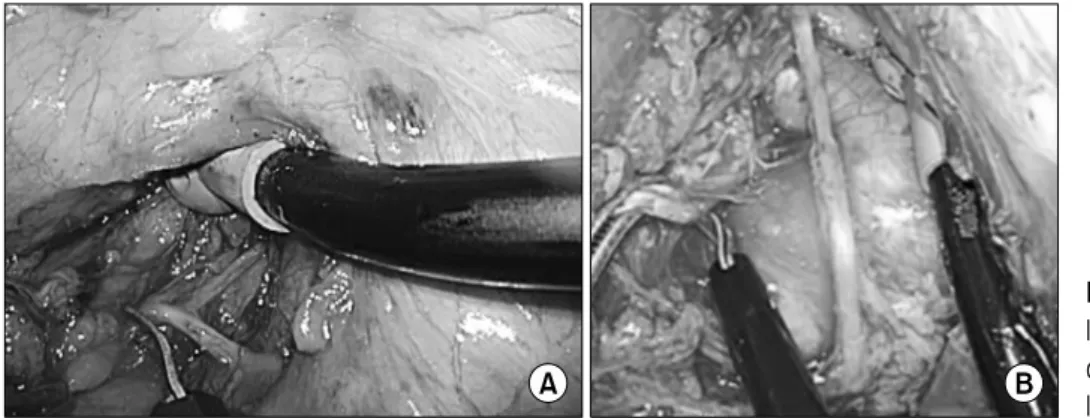
Fig. 3. Dissection of paratracheal lymph nodes. (A) Along the right re- current laryngeal nerve. (B) Along the left recurrent laryngeal nerve.

are influenced by the patients and the surgical staff at each institution. Thus, a standard approach cannot be determined.

SURGICAL PROCEDURE 1) Thoracoscopic procedures

The patient is positioned in the left semiprone position.

This position is optimal because the left lateral decubitus and prone positions can be achieved by rotating the surgical table.

First, the patient is positioned in the left lateral decubitus

position. Five thoracic trocars and a small incision (4 cm) in the fifth intercostal space are introduced into the right chest (Fig. 2). After the azygos vein arch is divided using the Endo GIA Universal system, the upper thoracic esophagus is mobi- lized circumferentially, and the paraesophageal and para- tracheal lymph nodes along the right and left recurrent lar- yngeal nerves are dissected (Fig. 3). The thoracic duct is al- ways resected. The right bronchial artery is divided, and the left bronchial artery is always preserved to prevent bronchial ischemia. Subsequently, the patient’s bed is rotated to the prone position, and the thoracic cavity is insufflated with 7 mmHg of carbon dioxide to maintain right lung collapse dur- ing thoracoscopy. The middle and lower esophagus is mobi- lized, and the middle and lower paraesophageal, trans- bronchial, and subcarinal nodes are dissected. The cervical esophagus is divided using the Endo GIA Universal system.

The stumps of the esophagus are connected using a string to deliver a gastric conduit to the neck through the posterior mediastinal route.

2) Abdominal and cervical procedures

The patient is placed in the supine position. We perform

hand-assisted laparoscopic surgery to dissect the abdominal

lymph nodes and create a gastric conduit. A 7.5-cm horizontal

minilaparotomy incision is made in the upper right abdomen,

and 3 trocars are introduced under laparoscopic guidance. After

the left hand of the operator is inserted, the greater omentum

is divided 3 to 4 cm from the arcade of the gastroepiploic ves-

sels with the use of a vessel sealing system under an 8-mmHg

pneumoperitoneum (Ligasure Blunt chip; Covidien, Mansfield,

MA, USA). The left gastroepiploic and short gastric vessels are

(5)

divided along the splenic hilum, and the gastric fornix is mobilized. The lesser omentum is divided along with preserva- tion of the right gastric vessels. The abdominal esophagus is isolated along the hiatus of the diaphragm, and the thoracic esophagus is pulled into the abdominal space. After the lymph node around the celiac axis is dissected, the left gastric artery and vein are divided. The esophagus and stomach are pulled out from the abdominal incision, creating a gastric conduit.

A collar incision is made above the suprasternal notch.

After dissecting the paraesophageal lymph node along the re- current laryngeal nerves and supraclavicular lymph node, the gastric conduit is pulled out from the cervical incision through the posterior mediastinal route. An esophagogastrostomy is performed with a circular stapler.

3) Postoperative management

All of the patients are admitted to the intensive care unit for stabilization and overnight intubation following surgery.

Thereafter, patients are detubated the next day and discharged to the general surgical unit on postoperative day 3. Patients are administered epidural analgesia during the first 5 post- operative days and are encouraged to move out of bed after being detubated in order to regain early mobilization from the first day after surgery. Subsequently, patients are discharged when they can consume solid food without aspiration.

CURRENT EVIDENCE FOR MINIMALLY INVASIVE SURGERY

1) Learning curve

Esophagectomy necessitates a certain amount of learning;

extensive mediastinal lymph node dissection might require ad- ditional experience; and minimally invasive surgery requires much more experience. The benefits of minimally invasive esophagectomy tend to relate to the number of cases experienced. On the basis of patient experience, Leketich et al. [24] concluded that minimally invasive esophagectomy was not beneficial for 8 patients, of uncertain value for 77 patients, and beneficial for 222 patients. Osugi et al. [25] re- ported that basic skills seem to be acquired during the first 17 cases, and the most remarkable difference was observed between the first 36 cases and the others. According to a re-

port by Ninomiya et al. [26], they safely mastered the basic skills of minimally invasive surgery in a relatively short peri- od of time after only 10 cases of esophageal cancer under the direction of an experienced surgeon and a regular surgical team. Although the surgeon had little experience with esoph- ageal surgery at the beginning, supervision and instruction from another fully trained surgeon allowed the surgeon to safely perform minimally invasive esophagectomy during the induction period. The primary education of the regular surgi- cal team by post-accreditation supervision is essential for safe and rapid to start minimally invasive esophagectomy.

2) Surgical data

A few large comparable studies have reported that mini- mally invasive esophagectomy is more beneficial than open esophagectomy. Two recent studies have been published: one was a meta-analysis and the other a multicenter, open-label, randomized control trial of minimally invasive surgery versus open surgery.

Nagpal et al. [27] reported a meta-analysis of 12 studies. The studies included a total of 672 patients undergoing minimally invasive surgery and 612 undergoing open esophagectomy. The primary outcomes of their study were 30-day mortality and anastomotic leaks. The secondary outcomes included surgical outcomes, other postoperative outcomes, and oncological out- comes in terms of lymph nodes retrieved. Minimally invasive esophagectomy reduced blood loss, respiratory complications, total morbidity rates, and duration of hospitalization.

Biere et al. [28] from the Netherlands published the TIME trial (traditional invasive vs. minimally invasive esophagectomy) data in the Lancet. This was the first report of a multicenter, open-label, randomized control trial to compare minimally in- vasive esophagectomy and open esophagectomy. They pre- sented evidence of short-term benefits of the minimally in- vasive technique for patients with resectable cancer of the esophagus or gastroesophageal junction. They randomly as- signed 56 patients to the open esophagectomy group and 59 to the minimally invasive esophagectomy group at 5 study cen- ters in 3 countries between June 1, 2009 and March 31, 2011.

Sixteen patients (29%) in the open esophagectomy group devel-

oped pulmonary infection in the first 2 weeks compared with

5 patients (9%) in the minimally invasive group (relative risk

(6)

[RR], 0.30; 95% confidence interval [CI], 0.12 to 0.76;

p=0.005). Nineteen (34%) of 56 patients in the open esoph- agectomy group developed a pulmonary infection during hospi- talization compared with 7 (12%) of 59 patients in the mini- mally invasive esophagectomy group (RR, 0.35; 95% CI, 0.16 to 0.78; p=0.005). Furthermore, secondary endpoints, including pain score, intraoperative blood loss, duration of hospitalization, and quality of life at 6 weeks after surgery, were significantly better following the minimally invasive procedure than in the open group. However, the pathological parameters, number of lymph nodes retrieved, and postoperative mortality rate did not differ significantly between the two treatment groups. Inhospital mortality rates were low in both the minimally invasive and open groups (2 [3%] of 59 patients vs. 1 [2%] of 56 patients).

3) Oncological results

Few reports are available regarding the long-term outcomes following minimally invasive esophagectomy. In many of the reports, the number of patients and follow-up periods are in- sufficient [13,16,29,30]. Luketich et al. [14] observed that pa- tient survival at 40 months after surgery was about 70% for stage I patients, but it was as low as 30% and 20% for stage II and III patients, respectively. On the other hand, Smithers et al. [31] analyzed patients who underwent resection using one of three esophagectomy techniques, including open, thor- acoscopic-assisted, or a thoracoscopic/laparoscopic approach (total minimally invasive esophagectomy), to assess post- operative variables, adequacy of cancer clearance, and patient survival from a prospective database of all the patients treated for cancer of the esophagus or the esophagogastric junction [31]. The number of patients undergoing each procedure was as follows: open, 114; thoracoscopic-assisted, 309; and total minimally invasive esophagectomy, 23. The nodal harvest for each of the defined regions dissected was not significantly different when the approaches were compared. Further, no difference was observed in the time to recurrence among the 3 groups for patients with invasive cancer, and no difference in patient survival was observed among the groups either.

CONCLUSION

The concepts regarding the sentinel lymph node (SLN), in-

traoperative lymphatic mapping, and sentinel lymphadenec- tomy appear promising. We have performed radio-guided SLN mapping for cT1aN0 or cT2N0 esophageal cancer to verify the feasibility of SLN mapping. An SLN is defined as the lymph node that is first to receive lymphatic drainage from a tumor site [32]. The SLN is believed to be likely to be the first micrometastasis site along the lymphatic drainage route from the primary lesion. If the SLN is recognized and is negative for metastasis, there might be no metastasis to other lymph nodes. The pathologic status of the SLN is con- sidered to predict the status of all of the regional lymph no- des and might thus avoid unnecessary radical lymph node dissection.

SLN mapping and biopsy were first applied to melanoma and subsequently extended to breast cancer and many other solid tumors [33-36]. These techniques can benefit patients by avoiding various complications that might result from un- necessary radical lymph node dissection in cases wherein the SLN is negative for metastasis. We developed a radio-guided method to detect SLN in esophageal cancer [37] rather than the conventional blue-dye method. One day (within 16 hours) before surgery, a 2.0-mL volume of technetium-99 m tin col- loid solution (150 MBq) is injected into the submucosal layer at 4 quadrants around the primary tumor using an endoscopic puncture needle. Preoperative lymphoscintigraphy is usually obtained 3 to 4 hours after injection. The distribution of SLNs in esophageal cancers extends broadly from the cervical to abdominal areas. Takeuchi et al. [38] reported our results of a radio-guided SLN navigation validation study of esoph- ageal cancer; 75 consecutive patients who were diagnosed preoperatively with T1N0M0 or T2N0M0 primary esophageal cancer were enrolled. SLNs were identified in 71 (95%) of 75 patients. The mean number of identified SLNs per case was 4.7; further, 29 (88%) of the 33 patients with LN meta- stasis revealed positive SLNs, and the diagnostic accuracy on the basis of SLN status was 94%.

Intraoperative SLN (i.e., radio-labeled lymph node) sam-

pling is performed using a handheld gamma probe (GPS

Navigator; Covidien, Tokyo, Japan). In addition, gamma

probing is feasible for thoracoscopic or laparoscopic sampling

of the SLN using a special gamma detector, which is in-

troducible from trocar ports. An SLN located in the cervical

(7)

area can be identified by percutaneous gamma probing. All SLNs were sent for an intraoperative pathology examination.

SLN mapping was successful during thoracoscopic esoph- agectomy as well as during a conventional surgical procedure.

In the future, SLN mapping might play a significant role in eliminating the necessity of uniform application of a highly in- vasive surgery by obtaining individual information to permit adjustments and modifications to the surgical procedure for patients. If SLN is recognized and is negative for metastasis, unnecessary extended lymph node dissection could be avoided.

Thus, thoracoscopic surgery with SLN mapping and navigation might become a promising strategy for minimally invasive in- dividualized surgery for early stage esophageal cancer.

CONFLICT OF INTEREST

No potential conflict of interest relevant to this article was reported.

REFERENCES

1. Parkin DM, Pisani P, Ferlay J. Global cancer statistics. CA Cancer J Clin 1999;49:33-64.

2. Jemal A, Bray F, Center MM, Ferlay J, Ward E, Forman D.

Global cancer statistics. CA Cancer J Clin 2011;61:69-90.

3. Ando N, Ozawa S, Kitagawa Y, Shinozawa Y, Kitajima M.

Improvement in the results of surgical treatment of advanced squamous esophageal carcinoma during 15 consecutive years.

Ann Surg 2000;232:225-32.

4. Akiyama H, Tsurumaru M, Udagawa H, Kajiyama Y. Radical lymph node dissection for cancer of the thoracic esophagus.

Ann Surg 1994;220:364-72.

5. Fujita H, Kakegawa T, Yamana H, et al. Mortality and morbidity rates, postoperative course, quality of life, and prognosis after extended radical lymphadenectomy for esophageal cancer.

Comparison of three-field lymphadenectomy with two-field lymphadenectomy. Ann Surg 1995;222:654-62.

6. Bedenne L, Michel P, Bouche O, et al. Chemoradiation fol- lowed by surgery compared with chemoradiation alone in squ- amous cancer of the esophagus: FFCD 9102. J Clin Oncol 2007;25:1160-8.

7. Suntharalingam M. Definitive chemoradiation in the manage- ment of locally advanced esophageal cancer. Semin Radiat Oncol 2007;17:22-8.

8. Altorki N, Kent M, Ferrara C, Port J. Three-field lymph node dissection for squamous cell and adenocarcinoma of the esophagus. Ann Surg 2002;236:177-83.

9. Lerut T, Nafteux P, Moons J, et al. Three-field lymphadenec- tomy for carcinoma of the esophagus and gastroesophageal junction in 174 R0 resections: impact on staging, disease-free survival, and outcome: a plea for adaptation of TNM classi- fication in upper-half esophageal carcinoma. Ann Surg 2004;

240:962-72.

10. Cuschieri A, Shimi S, Banting S. Endoscopic oesophagectomy through a right thoracoscopic approach. J R Coll Surg Edinb 1992;37:7-11.

11. Lazzarino AI, Nagpal K, Bottle A, Faiz O, Moorthy K, Aylin P. Open versus minimally invasive esophagectomy: trends of utilization and associated outcomes in England. Ann Surg 2010;252:292-8.

12. Akaishi T, Kaneda I, Higuchi N, et al. Thoracoscopic en bloc total esophagectomy with radical mediastinal lymphadenectomy.

J Thorac Cardiovasc Surg 1996;112:1533-40.

13. Osugi H, Takemura M, Higashino M, Takada N, Lee S, Kinoshita H. A comparison of video-assisted thoracoscopic oe- sophagectomy and radical lymph node dissection for squamous cell cancer of the oesophagus with open operation. Br J Surg 2003;90:108-13.

14. Luketich JD, Alvelo-Rivera M, Buenaventura PO, et al.

Minimally invasive esophagectomy: outcomes in 222 patients.

Ann Surg 2003;238:486-94.

15. Committee for Scientific Affairs, Sakata R, Fujii Y, Kuwano H. Thoracic and cardiovascular surgery in Japan during 2009: annual report by the Japanese Association for Thoracic Surgery. Gen Thorac Cardiovasc Surg 2011;59:636-67.

16. Kawahara K, Maekawa T, Okabayashi K, et al. Video-assisted thoracoscopic esophagectomy for esophageal cancer. Surg Endosc 1999;13:218-23.

17. Shiraishi T, Kawahara K, Shirakusa T, Yamamoto S, Maekawa T. Risk analysis in resection of thoracic esophageal cancer in the era of endoscopic surgery. Ann Thorac Surg 2006;81:1083-9.

18. Bizekis C, Kent MS, Luketich JD, et al. Initial experience with minimally invasive Ivor Lewis esophagectomy. Ann Thorac Surg 2006;82:402-6.

19. Cuschieri A. Thoracoscopic subtotal oesophagectomy. Endosc Surg Allied Technol 1994;2:21-5.

20. Palanivelu C, Prakash A, Senthilkumar R, et al. Minimally in- vasive esophagectomy: thoracoscopic mobilization of the esoph- agus and mediastinal lymphadenectomy in prone position: expe- rience of 130 patients. J Am Coll Surg 2006;203:7-16.

21. Cadiere GB, Torres R, Dapri G, Capelluto E, Hainaux B, Himpens J. Thoracoscopic and laparoscopic oesophagectomy improves the quality of extended lymphadenectomy. Surg Endosc 2006;20:1308-9.

22. Fabian T, Martin J, Katigbak M, McKelvey AA, Federico JA.

Thoracoscopic esophageal mobilization during minimally in- vasive esophagectomy: a head-to-head comparison of prone versus decubitus positions. Surg Endosc 2008;22:2485-91.

23. Noshiro H, Iwasaki H, Kobayashi K, et al. Lymphadenectomy

(8)

along the left recurrent laryngeal nerve by a minimally in- vasive esophagectomy in the prone position for thoracic esophageal cancer. Surg Endosc 2010;24:2965-73.

24. Luketich JD, Nguyen NT, Weigel T, Ferson P, Keenan R, Schauer P. Minimally invasive approach to esophagectomy.

JSLS 1998;2:243-7.

25. Osugi H, Takemura M, Higashino M, et al. Learning curve of video-assisted thoracoscopic esophagectomy and extensive lymphadenectomy for squamous cell cancer of the thoracic esophagus and results. Surg Endosc 2003;17:515-9.

26. Ninomiya I, Osugi H, Fujimura T, et al. Results of video-as- sisted thoracoscopic surgery for esophageal cancer during the induction period. Gen Thorac Cardiovasc Surg 2008;56:119-25.

27. Nagpal K, Ahmed K, Vats A, et al. Is minimally invasive sur- gery beneficial in the management of esophageal cancer?: a meta-analysis. Surg Endosc 2010;24:1621-9.

28. Biere SS, van Berge Henegouwen MI, Maas KW, et al.

Minimally invasive versus open oesophagectomy for patients with oesophageal cancer: a multicentre, open-label, rando- mised controlled trial. Lancet 2012;379:1887-92.

29. Law S, Fok M, Chu KM, Wong J. Thoracoscopic esoph- agectomy for esophageal cancer. Surgery 1997;122:8-14.

30. Nguyen NT, Roberts P, Follette DM, Rivers R, Wolfe BM.

Thoracoscopic and laparoscopic esophagectomy for benign and malignant disease: lessons learned from 46 consecutive procedures. J Am Coll Surg 2003;197:902-13.

31. Smithers BM, Gotley DC, Martin I, Thomas JM. Comparison of the outcomes between open and minimally invasive esophagectomy. Ann Surg 2007;245:232-40.

32. Morton DL, Wen DR, Wong JH, et al. Technical details of intraoperative lymphatic mapping for early stage melanoma.

Arch Surg 1992;127:392-9.

33. Morton DL, Thompson JF, Essner R, et al. Validation of the accuracy of intraoperative lymphatic mapping and sentinel lym- phadenectomy for early-stage melanoma: a multicenter trial.

Multicenter Selective Lymphadenectomy Trial Group. Ann Surg 1999;230:453-63.

34. Krag D, Weaver D, Ashikaga T, et al. The sentinel node in breast cancer: a multicenter validation study. N Engl J Med 1998;339:941-6.

35. Bilchik AJ, Saha S, Wiese D, et al. Molecular staging of early colon cancer on the basis of sentinel node analysis: a multi- center phase II trial. J Clin Oncol 2001;19:1128-36.

36. Kitagawa Y, Fujii H, Mukai M, et al. The role of the sentinel lymph node in gastrointestinal cancer. Surg Clin North Am 2000;80:1799-809.

37. Kitagawa Y, Fujii H, Mukai M, et al. Intraoperative lymphatic mapping and sentinel lymph node sampling in esophageal and gastric cancer. Surg Oncol Clin N Am 2002;11:293-304.

38. Takeuchi H, Fujii H, Ando N, et al. Validation study of ra-

dio-guided sentinel lymph node navigation in esophageal

cancer. Ann Surg 2009;249:757-63.

수치

Table 1. Contraindication of minimally invasive esophagectomy No. Contraindication 1 2 3 4 5 6
Fig. 1. Hybrid position. (A) Prone position. (B) Left semiprone position. (C) Left lateral decubitus position.
Fig. 3. Dissection of paratracheal  lymph nodes. (A) Along the right  re-current laryngeal nerve

참조

관련 문서

Modern Physics for Scientists and Engineers International Edition,

In 1883, Renoir completed two paintings that look very similar, The Dance in the City and The Dance in the Country.. Both paintings show a couple who

③ A student who attended Korean course at KNU Korean Language Program and holds TOPIK Level 3 or a student who completed Korean course Level 4 at the KNU Korean Language

· 50% exemption from tuition fee Ⅱ for the student with a TOPIK score of level 3 or higher or completion of level 4 or higher class of the Korean language program at the

If the volume of the system is increased at constant temperature, there should be no change in internal energy: since temperature remains constant, the kinetic

The index is calculated with the latest 5-year auction data of 400 selected Classic, Modern, and Contemporary Chinese painting artists from major auction houses..

Long-term outcome after an early invasive versus selective invasive treatment strategy in patients with non.ST-elevation acute coronary syndrome and elevated

1 John Owen, Justification by Faith Alone, in The Works of John Owen, ed. John Bolt, trans. Scott Clark, "Do This and Live: Christ's Active Obedience as the