Accepted: 2017.09.06 Published: 2017.10.27
Survey Regarding Attitude of Family About Organ Donation After Brain Death in Korea
CE 1
Hyun Ji Lee
B 2
Myung Jae Jin
B 3
Sang Youb Han
B 3
Kum Hyun Han
B 3
Se Won Oh
BCD 4
Hye-Yeon Jang
DF 5
Ui Jun Park
DF 5
Hyoung Tae Kim
ABCDEFG 5
Young-Nam Roh
Corresponding Author: Young-Nam Roh, e-mail: [email protected] Source of support: Departmental sources
Background: This study examined the attitude of patients’ relatives in South Korea toward organ donation after brain death.
Material/Methods: A structured questionnaire was used to obtain the information on the attitude toward organ donation for rel- atives of patients who were admitted to the surgical intensive care unit (SICU) between March 1, 2014 and September 30, 2016. In total, 92 persons participated voluntarily. The investigation included general opinion about organ donation; and additional categorical analysis was performed.
Results: In this study, 75% of participants agreed that they had positive thoughts on organ donation; however, fewer participants (60.9%) showed a positive attitude towards donating their own body, while only a third of partici- pants (38.1%) agreed that they would donate relatives’ body. We could confirm specifically concerns about ex- cessive physical damage during organ recovery (34.7%) and ignorance or disrespect by hospital staff (15.2%), as well as consideration of being sacrificed for the benefit of others (26.0%). The participants who agreed to donate relatives’ body showed significantly different responses in each categories of the questionnaire com- pared to the participants who disagreed or were undecided.
Conclusions: Despite positive perceptions concerning organ donation after brain death, there were nonetheless several prej- udices and misunderstandings to overcome. The findings of this study can be used to establish evidence-based strategies.
MeSH Keywords: Attitude • Family • Tissue and Organ Procurement
Full-text PDF: https://www.annalsoftransplantation.com/abstract/index/idArt/906485
Authors’ Contribution:
Study Design A Data Collection B Statistical Analysis C Data Interpretation D Manuscript Preparation E Literature Search F Funds Collection G
1 Department of Surgery, Keimyung University Dongsan Medical Center, Daegu, South Korea
2 Department of Surgery, Inje University, College of Medicine, Ilsan Paik Hospital, Gimhae, South Korea
3 Department of Nephrology, Inje University, College of medicine, Ilsan Paik Hospital, Gimhae, South Korea
4 Transplantation Center, Inje University, College of Medicine, Ilsan Paik Hospital, Gimhae, South Korea
5 Division of Transplantation and Vascular Surgery, Department of Surgery, Keimyung University Dongsan Medical Center, Daegu, South Korea
2842 4 1 27
Background
The shortage of organs remains a serious problem world- wide [1–3]. The number of patients awaiting organ transplant has rapidly increased, but the number of organ donors are much less than those on the waiting list [4]. In South Korea, the waiting list for organ transplant in 2015 included 27,444 people while there were only 2,565 (9.8%) organ donors [4]. In order to promote organ donation, strategic efforts by the gov- ernment or the local authorities as well as individual efforts by the medical personal are necessary. The strategic efforts include the revision of laws, simplifying the required procedures for receiving consent, expansion of the donor card system, adop- tion of a “presumed consent” concept known as an “opt-out”
system and the establishment of a “donation after circulatory death” system. The strategic processes put in place in Europe and the United State have resulted in a progressive and grad- ual increase of organ donation until now [5–8]. However, de- spite the effectiveness of the current advanced strategies of Europe and the United State for promoting organ donation, public acceptance is essential before such measures can be implemented in other countries.
In order to increase organ donation, it is important to identify potential cases of brain deaths and obtain informed consent for organ donation from the families of the patients. Because most countries have the “opt-in” system except for sever- al European countries, voluntary consent is considered the most important factor for organ donation. The consent rate for organ donation in Europe has been reported as 50–80%, with approximately 85% of families of potential donors receiv- ing requests to donate, but only 50% provide consent [9–13].
Most of the reports regarding consent for organ donation after brain death have been largely based on findings from Western populations [9–13]. In Asian countries, the current opinion about organ donation after brain death is unclear. Traditionally, in Asian cultures, especially in Korean, Japanese, and Chinese cultures, the body of a loved one should not be tampered with after death, a belief that originates from the Confucian tradi- tion. Thus, it is believed that this tradition may be the main reason behind the low consent rate for organ donation ob- served in Asian countries. In addition to cultural differences, it is thought that widely differing opinions, perceptions, and concerns may be related to organ donation. However, these factors are not well studied in Asian countries.
To bridge the gap in a lack of data on the public opinion on organ donation in South Korea, two large scale studies were conducted among physicians and the general public [14,15].
However, these were conducted in early 2000 (right after the es- tablishment of a law on organ transplantation in South Korea).
Several studies were performed thereafter on the knowledge
and opinion about brain death and organ donation in Korea, but the participants of these studies were mainly health pro- fessionals, nursing students or middle or high school stu- dents [16–20]. The family decision is the most important fac- tor for organ donation after brain death, and therefore there is a need to study this subject more closely.
This study was aimed at evaluating the attitude toward organ donation among relatives of patients in South Korea.
Material and Methods
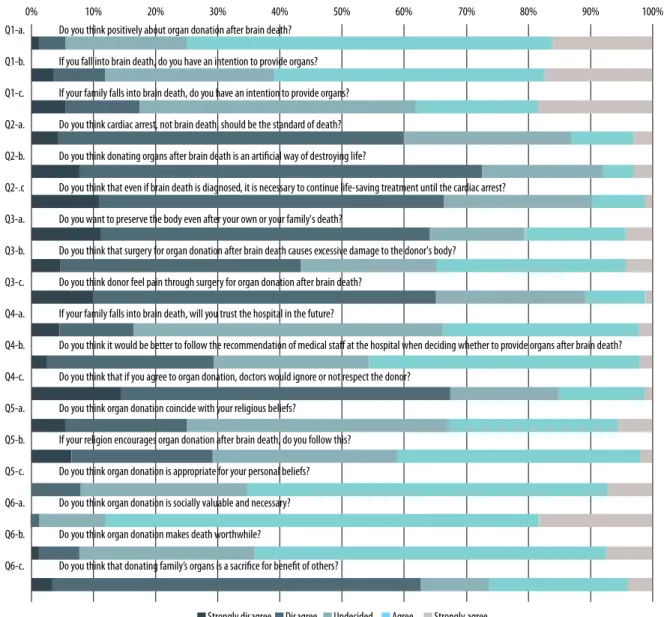
A structured questionnaire was used to investigate the opin- ion of 92 relatives of patients admitted into the surgical inten- sive care unit (SICU) at a single institution about organ dona- tion after brain death (Figure 1). Medical staff or nurses asked the relatives if they were willing to participate in this survey, regardless of the cause and severity of the patients’ illness, and only the relatives who participated voluntarily were en- rolled in this survey. After enrollment, a transplantation coor- dinator conducted the survey in face-to-face interviews. The study was conducted between March 1, 2014 and September 30, 2016. The questionnaire consisted of 18 questions pertain- ing to brain death and organ donation. Three questions were used to assess the general opinion of participants concerning positive thoughts about organ donation, willingness to donate their own body and willingness to donate their relatives’ body.
Next, to understand factors influencing the general opinion of participants, five detailed categories of evaluation were per- formed. These include attitude about the acceptance of the definition of brain death as a “real death,” opinion about the physical damage during organ recovery, reliability of hospital staff, religious or personal belief related to organ donation, and perception of the social significance of organ donation.
Each of these categories had three other related questions.
The detailed questionnaire is shown in Appendix 1. During the survey, the transplantation coordinator provided answers to questions from participants based on the Korean organ trans- plantation law [21].
For reliability analysis, we scored the responses to the 18 items in the questionnaire unidimensionally favoring organ dona- tion. The 18 items were analyzed using item-to-total correla- tions and Cronbach’s coefficient alpha to determine scale uni- dimensionality and internal consistency reliability. Item-to-total analysis shows the correlation between the respective items and summated score (without the respective item), and the coefficient alpha if the respective item was deleted. For com- parison of the characteristics and responses to questionnaire according to willingness to donate their relatives’ organ, the univariate analysis of categorical variables was performed with the chi-square test or Fisher’s exact test. Statistical analyses
were performed using IBM SPSS Statistics for Windows, ver- sion 21.0 (IBM Co., Armonk, NY, USA).
Only voluntary participants’ between the ages of 18–80 years were enrolled in this survey. This study was reviewed and ap- proved by the institutional review board of Ilsan-Paik Hospital (No. IB-1310-038).
Results
Ninety-two persons participated voluntarily in this survey dur- ing the study period. All participants completed the survey without dropping out. Mean age was 36.1 years (standard de- viation [SD], 13.4), and the majority of the participants were
women (88%). Table 1 summarizes the characteristics of the participants including religion, family relationship, education, marriage, and the preferred funeral arrangements.
Table 2 displays the correlation between the respective item and total sum score (without the respective item), and the in- ternal consistency of the scale if the respective item was de- leted. The item-to-total correlation in Q2a and Q5c were under 0.3. However, the items in the questionnaire demonstrated a high correlation with each other, and the total Cronbach’s al- pha of 0.827 indicated an acceptable level of internal reliability.
The responses for each question (Q1a to Q6c) are summarized and reported in Table 3 as percentages. The majority of the participants (75.0%) agreed that they had positive thoughts Figure 1. The schematization of responses to questionnaire.
70%
60%
50%
40%
30%
20%
10%
Strongly disagree 0%
Q1-a. Do you think positively about organ donation after brain death?
Q1-b. If you fall into brain death, do you have an intention to provide organs?
Q1-c. If your family falls into brain death, do you have an intention to provide organs?
Q2-a. Do you think cardiac arrest, not brain death, should be the standard of death?
Q2-b. Do you think donating organs after brain death is an artificial way of destroying life?
Q2-.c Do you think that even if brain death is diagnosed, it is necessary to continue life-saving treatment until the cardiac arrest?
Q3-a. Do you want to preserve the body even after your own or your family's death?
Q3-b. Do you think that surgery for organ donation after brain death causes excessive damage to the donor's body?
Q3-c. Do you think donor feel pain through surgery for organ donation after brain death?
Q4-a. If your family falls into brain death, will you trust the hospital in the future?
Q4-b. Do you think it would be better to follow the recommendation of medical staff at the hospital when deciding whether to provide organs after brain death?
Q4-c. Do you think that if you agree to organ donation, doctors would ignore or not respect the donor?
Q5-a. Do you think organ donation coincide with your religious beliefs?
Q5-b. If your religion encourages organ donation after brain death, do you follow this?
Q5-c. Do you think organ donation is appropriate for your personal beliefs?
Q6-a. Do you think organ donation is socially valuable and necessary?
Q6-b. Do you think organ donation makes death worthwhile?
Q6-c. Do you think that donating family’s organs is a sacrifice for benefit of others?
80% 90% 100%
Disagree Undecided Agree Strongly agree
on organ donation (Q1a); however, fewer participants (60.9%) showed a positive attitude towards donating their own body (Q1b), while only a third of participants (38.1%) agreed that they would donate relatives’ body in the event of occurrence of brain death (Q1c). Participants’ attitude on the definition of brain death as a “real death” was identified in Q2a–c. In Q2a–c, attitudes toward not accepting brain death as a “real death”
were minor. Three levels of questions were asked to identify the opinion on the physical damage during organ recovery in Q3a–c. Excessive damage to the donor’s body was a concern for about a third of participants (34.7%). However, concerns about the desire to preserve one’s own or family member’s dead body (20.6%) as well as concerns that the donor may feel pain during surgical procedure for organ recovery (10.9%) were minor. About the reliability of medical staff involved in the decision making over organ donation (Q4a–c), 45.7% of
participants showed positive attitudes towards agreeing with the medical personnel recommendation. Generally, very few participants (15.2%) considered the medical personnel might either ignore or disrespect the donor. The influence of religion or personal belief on organ donation was assessed in Q5a–c.
More than half of participants (65.2%) agreed that organ do- nation coincided with their personal beliefs. In 41.3% of par- ticipants, the influence of religion was an important factor in decision-making. Most participants were aware of the so- cial need and significance of organ donation (Q6a, b), howev- er, about one fourth of participants (26.0%) thought of organ donation as a sacrifice to benefit others (Q6c).
Group differences between those willing and those unwilling to donate their relatives’ organ were compared using the charac- teristics and opinions related to organ donation (Table 4). The
Variables Number (%)
Age, year 36.1±13.4
Sex Male Female
11 (12.0%) 81 (88.0%) Religion
Catholic Christian Buddhism None
21 (22.8%) 24 (26.1%) 11 (12.0%) 36 (39.1%) Relationship (family)
Parents Spouse Descendant
Not immediate family
2 (2.2%) 12 (13.0%) 26 (28.3%) 52 (56.5%) Education
College graduate Non-college graduate
77 (83.7%) 15 (16.3%) Marriage
Yes No
42 (45.7%) 50 (54.3%) Trust about hospital staff
Yes No Unknown
69 (75.0%) 5 (5.4%) 18 (19.6%) Preference about funeral manner
Cremation Burial
81 (88.0%) 11 (12.0%)
“I know the meaning of brain death.” (Knowing about brain death) Yes
No
60 (65.2%) 32 (34.8%) Previous exposure to promotion materials for organ donation
Yes No
55 (59.8%) 37 (40.2%) Table 1. The characteristics of participants (n=92).
group who were willing to donate their relatives’ organ, were more likely to be aged >50 years (p=0.028) and more likely to have trust for hospital personnel (p=0.063). In addition, the preference for cremation was higher in this group (p=0.047).
They are also more likely to think positively about organ do- nation (Q1a, p=0.025), to have an intention of providing their own organs (Q1b, p<0.001), to have less interest in preserving their own or family’s body at death (Q3a, p<0.007), to trust the hospital staff although a family member develop brain death (Q4a, p=0.005) or to follow the recommendation of medical staff at the hospital when deciding whether to provide or- gans or not (Q4b, p=0.030). Moreover, they were more likely to indicate that organ donation coincided with their religious beliefs (Q5a, p=0.003), to agree to organ donation if their re- ligion encourages (Q5b, p<0.001), to think that organ dona- tion is appropriate for their personal beliefs (Q5c, p=0.020), to think that organ donation makes death worthwhile (Q6b, p=0.013) and to think that donating family’s organ is not a
sacrifice (Q6c, p=0.043). In particular, there were significant differences in the response to all questions regarding the in- fluence of religion or personal belief between the two groups.
Discussion
This study was conducted to evaluate the opinion of relatives’
of patients regarding organ donation in South Korea. There was a need for such an updated study because of the steady increase in the number of organ donation from brain death donors in the past decades, the growing rate of access to cur- rent information by society, and the psychosocial maturity of society. The small number of participants and dominance of woman in this study impose limitation on generalization. In addition, more than half of the participants (56.5%) were not immediate family members. This distribution of the study pop- ulation seems to be due to the difference of accessibility by
Item Content Item-total
correlation
a if item deleted Q1-a Do you think positively about organ donation after brain death? 0.614 0.809 Q1-b If you fall into brain death, do you have an intention to provide organs? 0.655 0.804 Q1-c If your family falls into brain death, do you have an intention to provide organs? 0.563 0.809 Q2-a Do you think cardiac arrest, not brain death, should be the standard of death? 0.003 0.839 Q2-b Do you think donating organs after brain death is an artificial way of destroying life? 0.429 0.818 Q2-c Do you think that even if brain death is diagnosed, it is necessary to continue life-
saving treatment until the cardiac arrest? 0.424 0.818
Q3-a Do you want to preserve the body even after your own or your family’s death? 0.405 0.819 Q3-b Do you think that surgery for organ donation after brain death causes excessive
damage to the donor’s body? 0.488 0.814
Q3-c Do you think donor feel pain through surgery for organ donation after brain death? 0.384 0.820 Q4-a If your family falls into brain death, will you trust the hospital in the future? 0.173 0.830 Q4-b Do you think it would be better to follow the recommendation of medical staff at the
hospital when deciding whether to provide organs after brain death? 0.343 0.822 Q4-c Do you think that if you agree to organ donation, doctors would ignore or not respect
the donor? 0.479 0.815
Q5-a Do you think organ donation coincide with your religious beliefs? 0.424 0.818 Q5-b If your religion encourages organ donation after brain death, do you follow this? 0.630 0.805 Q5-c Do you think organ donation is appropriate for your personal beliefs? 0.269 0.825 Q6-a Do you think organ donation is socially valuable and necessary? 0.439 0.819
Q6-b Do you think organ donation makes death worthwhile? 0.426 0.818
Q6-c Do you think that donating family’s organ organs is a sacrifice for benefit of others? 0.342 0.823 Table 2. Item-to-total reliability analysis.
n=92; alpha=0.827; standardized item alpha=0.826.
nurses and the sexual difference of preference to voluntary to join this type of survey. Despite of the limitations, the specific distribution of responses to the questions in various categories and the difference in responses between groups according to willingness to donate their relatives’ organs is informative. The results of this study could be used in policy decision-making regarding the promotion of organ donation and the enhanced public health benefit of organ transplantation.
The findings of this study showed that the participants were most favorable to organ donation, but a significant portion of them showed contrary opinions regarding decisions involving either their own body versus their relatives’ body. Interestingly, about half of participants (44.6%) had an “undecided” atti- tude towards the intention to provide family members’ organs.
This is expected because of the burden of making decisions
concerning a beloved one’s body. Considering the general pos- itive thoughts concerning organ donation and the favorable attitude towards their own organ donation, the burden of re- sponsibility for family decisions seemed to cause this “unde- cided” attitude. When we consider this significant percentage (44.6%) of “undecided” participants in their attitude toward family organ donation decisions, aggressive strategies, includ- ing expansion of donor card or adoption of “opt-out” system, may be very effective strategy to promote organ donation.
The finding of accepting brain death as a “real death” predom- inated in this study. It is believed that inadequate understand- ing regarding brain death is common in the public, and that inadequate understanding is one of main causes for refusing organ donation. However, only a small percentage of survey participants refused to accept brain death as “real death”. The Strongly disagree (%) Disagree (%) Undecided (%) Agree (%) Strongly agree (%) General attitude for organ donation
Q1-a 1 (1.1%) 4 (4.3%) 18 (19.6%) 54 (58.7%) 15 (16.3%)
Q1-b 3 (3.3%) 8 (8.7%) 25 (27.2%) 40 (43.5%) 16 (17.4%)
Q1-c 5 (5.4%) 11 (12.0%) 41 (44.6%) 18 (19.6%) 17 (18.5%)
Attitude for brain death as a definition of “real” death
Q2-a 4 (4.3%) 51 (55.4%) 25 (27.2%) 9 (9.8%) 3 (3.3%)
Q2-b 7 (7.6%) 60 (65.2%) 18 (19.6%) 4 (4.3%) 3 (3.3%)
Q2-c 10 (10.9%) 51 (55.4%) 22 (23.9%) 8 (8.7%) 1 (1.1%)
Opinion about the physical damage during organ recovery
Q3-a 10 (10.9%) 49 (53.3%) 14 (15.2%) 15 (16.3%) 4 (4.3%)
Q3-b 4 (4.3%) 36 (39.1%) 20 (21.7%) 28 (30.4%) 4 (4.3%)
Q3-c 9 (9.8%) 51 (55.4%) 22 (23.9%) 9 (9.8%) 1 (1.1%)
Reliability of hospital staff in considering organ donation
Q4-a 4 (4.3%) 11 (12.0%) 46 (50.0%) 29 (31.5%) 2 (2.2%)
Q4-b 2 (2.2%) 25 (27.2%) 23 (25.0%) 40 (43.5%) 2 (2.2%)
Q4-c 13 (14.1%) 49 (53.3%) 16 (17.4%) 13 (14.1%) 1 (1.1%)
Influence of religion or personal belief
Q5-a 5 (5.4%) 18 (19.6%) 39 (42.4%) 25 (27.2%) 5 (5.4%)
Q5-b 6 (6.5%) 21 (22.8%) 27 (29.3%) 36 (39.1%) 2 (2.2%)
Q5-c – (0%) 7 (7.6%) 25 (27.2%) 53 (57.6%) 7 (7.6%)
Awareness of social need and significance of organ donation
Q6-a – (0%) 1 (1.1%) 10 (10.9%) 64 (69.6%) 17 (18.5%)
Q6-b 1 (1.1%) 6 (6.5%) 26 (28.3%) 52 (56.5%) 7 (7.6%)
Q6-c 3 (3.3%) 55 (59.8%) 10 (10.9%) 20 (21.7%) 4 (4.3%)
Table 3. The responses to questionnaire.
percentage accepting brain death as a “real death” was much higher compared with the findings from a previous study in South Korea [15].
There were concerns regarding physical damage and pain sen- sation related to wanting to preserve their bodies (20.6%) or thinking that the donors would feel the pain (10.9%). In addi- tion, 34.7% of participants thought that the surgery for organ recovery can cause excessive physical damage. These concerns were major issues with families in decision-making. Therefore, it is important that medical staff or transplantation coordina- tors offer specialized information about this subject during
counseling. Efforts to relieve the families of these concerns would be an important step towards gaining consent to donate.
Based on the assessment of the reliability of hospital staff in considering organ donation after brain death, the findings of this study seem to suggest that most relatives accept the medical staff’s recommendation positively about organ do- nation. Moreover, concerns over the possibility of the body being ignored or disrespected were expressed by only a few participants. These findings thus show the importance of the physicians’ role in the process of organ donation. A previous study reported on the role of physicians in emphasizing the Willingness to donate families’ organ
P-value Disagree or undecided Agree
Age >50 years 5 (8.8%) 9 (25.7%) 0.028*
Male 8 (14.0%) 3 (8.6%) 0.523**
Religion, yes 32 (56.1%) 24 (68.6%) 0.236*
Marriage, yes 15 (43.9%) 17 (48.6%) 0.660*
Trust for hospital, yes 39 (68.4%) 30 (85.7%) 0.063*
Knowing about brain death, yes 36 (63.2%) 24 (68.6%) 0.597*
Experience of promotion materials, yes 37 (64.9%) 18 (51.4%) 0.200*
Preference of cremation to burial, yes 47 (82.5%) 34 (97.1%) 0.047**
Q1-a, agree 38 (66.7%) 31 (88.6%) 0.025**
Q1-b, agree 25 (43.9%) 31 (88.6%) <0.001**
Q2-a, agree 6 (10.5%) 6 (17.1%) 0.360*
Q2-b, agree 5 (8.8%) 2 (5.7%) 0.705**
Q2-c, agree 7 (12.3%) 2 (5.7%) 0.474**
Q3-a, agree 17 (29.8%) 2 (5.7%) 0.007**
Q3-b, agree 22 (38.6%) 10 (28.6%) 0.327*
Q3-c, agree 7 (12.3%) 3 (8.6%) 0.736**
Q4-a, agree 13 (22.8%) 18 (51.4%) 0.005*
Q4-b, agree 21 (36.8%) 21 (60.0%) 0.030*
Q4-c, agree 10 (17.5%) 4 (11.4%) 0.555**
Q5-a, agree 12 (21.1%) 18 (51.4%) 0.003*
Q5-b, agree 14 (24.6%) 24 (68.6%) <0.001*
Q5-c, agree 32 (56.1%) 28 (80.0%) 0.020*
Q6-a, agree 49 (86.0%) 32 (91.4%) 0.523**
Q6-b, agree 31 (54.4%) 28 (80.0%) 0.013*
Q6-c, agree 19 (33.3%) 5 (14.3%) 0.043*
Table 4. Comparison of the characteristics and opinions related with organ donation after brain death according to willingness to donate their families’ organ (Q1c).
* Chi-square test; ** Fisher’s exact test.
importance of organ donation and the need to convince family members to provide their consent [14]. However, recommend- ing organ donation to families was considered an uncomfort- able task by physicians [14]. Despite the importance of the role of medical staff in recommending organ donation to families, imposing the burden of the task of recommending organ do- nation on only physicians may not be adequate. If we, includ- ing local authorities and the general population, agree about the importance of organ donation, its’ promotion must not be a responsibility of only individual medical staff. We believe that it is time to consider the establishment of an advanced system linking potential donors to organ donation, known as an “opt-out” system. We can learn many lessons from the ef- forts of European countries to adopt an “opt-out” system [6].
Religious beliefs were found to be important in this study, and organ donation was usually appropriate based on personal be- liefs. Officially, nearly all religious groups support organ trans- plantation as long as it does not impede the life or hasten the death of the donor [22]. However, only 32.6% of participants answered that organ donation coincide with their religious be- lief. It was also interesting that 41.3% of participants answered that they will accept organ donation if it was encouraged by their religion. This suggests that more active involvement of religions in encouraging organ donation or the participation of religious societies in public campaign would be helpful in promoting organ donation.
Most participants agreed with the social value and significance of organ donation. However, 7.6% of participants disagreed and 28.3% of participants were undecided on questions ask- ing whether organ donation makes death worthwhile, and 26.0% of participants considered organ donation as a sacrifice to others. It is therefore essential that public campaigns focus on ensuring that organ donation after brain death is not seen as a sacrifice but rather as a respectable and noble behavior.
There have been many recent studies regarding decision-mak- ing for organ donation by family members [23–27]. In this study, the findings between groups, according to their willingness to donate relatives’ body, showed differences with respect to the general perception of organ donation, the desire to preserve their relative’s dead body, trust of the medical staff, influence of religion or personal beliefs, and the awareness of social
significance. However, the rate of acceptance of brain death as a “real death” was overwhelmingly high without any dif- ference between the two groups. Accepting brain death as a
“real death” depends mainly on the level of knowledge about brain death. Thus, the relatives’ attitude on brain death ap- pears to be at a very mature stage in South Korea, and most- ly the decision to donate organs of relatives is not being in- fluenced by this factor. In addition, the significant difference in responses to all questions regarding the influence of reli- gion or personal belief means that this fundamental perspec- tive is the most important factor in the relatives’ decisions.
This study has several limitations. First, the sample size was small with only 92 participants and most participants were women. Hence, it is difficult to generalize the finding of this study to the general Korean population. Second, there could be bias when the participants were enrolled. The participants of the study were relatives of the patients who were admit- ted to the SICU. They were asked to participate in this survey by either the nurses or physicians, and their decision to par- ticipate was made voluntarily. During this process of enroll- ing participants, selection bias may have occurred. Third, the questionnaire used in this study was not validated. This ques- tionnaire might not be adequate to reflect all the perceptions related to organ donation.
Conclusions
Although the number of participants was small, this study was conducted most recently and the participants represented the relatives of patients. We believe that the findings of this study are a significant reflection of the perception and opinion of rel- atives about organ donation. In this survey, despite the wide agreement of brain death as “real death”, we could specifical- ly identify several perceptional barriers against organ dona- tion. Further study based on the opinion of the general pop- ulation is needed and evidence-based strategies focused on perceptional barriers should be established to increase organ donation rate effectively.
Conflicts of interest None.
References:
1. Muralidharan A, White S: The need for kidney transplantation in low- and middle-income countries in 2012: An epidemiological perspective.
Transplantation, 2015; 99: 476–81
2. Wolfe RA, Roys EC, Merion RM: Trends in organ donation and transplanta- tion in the United States, 1999–2008. Am J Transplant, 2010; 10: 961–72 3. Wynn JJ, Alexander CE: Increasing organ donation and transplantation: The
U.S. experience over the past decade. Transpl Int, 2011; 24: 324–32 4. KONOS (Korean Network for Organ Sharing). Annual data on organ dona-
tion and transplantation. Available from: https://www.konos.go.kr/konosis/
common/bizlogic.jsp. Accessed June 11, 2017
5. Evenson AR: Utilization of kidneys from donation after circulatory deter- mination of death. Curr Opin Organ Transplant, 2011; 16: 385–89 6. Rieu R: The potential impact of an opt-out system for organ donation in
the UK. J Med Ethics, 2010; 36: 534–38 Baseline characteristics
Age: Gender:
Religion: Education:
Relationship with the patient: Marriage:
Do you trust hospital staff now? (Yes/No)
What is your preferred funeral manner? (Cremation/Burial)
Do you know the meaning of brain death? (Yes / No)
Have you had any experience with promotional materials on organ donation previously? (Yes/No) Q1. General attitude for organ donation (Part 1: Q1)
a. Do you think positively about organ donation after brain death?
b. If you fall into brain death, do you have an intention to provide organs?
c. If your family falls into brain death, do you have an intention to provide organs?
Specific investigation for the categories (Part 2: Q2 to Q6) Q2. Attitude for brain death as a definition of “real” death
a. Do you think cardiac arrest, not brain death, should be the standard of death?
b. Do you think donating organs after brain death is an artificial way of destroying life?
c. Do you think that even if brain death is diagnosed, it is necessary to continue life-saving treatment until the cardiac arrest?
Q3. Opinion about the physical impairment during organ recovery
a. Do you want to preserve the body even after your own or your family’s death?
b. Do you think that surgery for organ donation after brain death causes excessive damage to the donor’s body?
c. Do you think donor feel pain through surgery for organ donation after brain death?
Q4. Reliability of hospital staff in considering organ donation
a. If your family falls into brain death, will you trust the hospital in the future?
b. Do you think it would be better to follow the recommendation of medical staff at the hospital when deciding whether to provide organs after brain death?
c. Do you think that if you agree to organ donation, doctors would ignore or not respect the donor?
Q5. Influence of religion or personal belief
a. Do you think organ donation coincide with your religious beliefs?
b. If your religion encourages organ donation after brain death, do you follow this?
c. Do you think organ donation is appropriate for your personal beliefs?
Q6. Awareness of social need and significance of organ donation a. Do you think organ donation is socially valuable and necessary?
b. Do you think organ donation makes death worthwhile?
c. Do you think that donating family’s organs is a sacrifice for benefit of others?
Appendix 1. The questionnaire regarding attitude about organ donation.
Appendix
7. Rithalia A, McDaid C, Suekarran S et al: Impact of presumed consent for organ donation on donation rates: A systematic review. BMJ, 2009; 338:
a3162
8. Summers DM, Watson CJ, Pettigrew GJ et al: Kidney donation after circu- latory death (DCD): State of the art. Kidney Int, 2015; 88: 241–49 9. Beasley CL, Capossela CL, Brigham LE et al: The impact of a comprehen-
sive, hospital-focused intervention to increase organ donation. J Transpl Coord, 1997; 7: 6–13
10. Gortmaker SL, Beasley CL, Sheehy E et al: Improving the request process to increase family consent for organ donation. J Transpl Coord, 1998; 8:
210–17
11. Hulme W, Allen J, Manara AR et al: Factors influencing the family consent rate for organ donation in the UK. Anaesthesia, 2016; 71: 1053–63
12. Siminoff LA, Arnold RM, Caplan AL et al: Public policy governing organ and tissue procurement in the United States. Results from the National Organ and Tissue Procurement Study. Ann Intern Med, 1995; 123: 10–17 13. Simpkin AL, Robertson LC, Barber VS, Young JD: Modifiable factors influ-
encing relatives’ decision to offer organ donation: systematic review. BMJ, 2009; 338: b991
14. Hong JJ KS, Lee SG, Song MG et al: Study on physician’s perceptions and attitudes on organ donation in brain dead donors. J Korean Soc Tranplant, 2001; 15: 51–57
15. Lee SM LY, Kim SH, Kim SY: Study on perceptions and attitudes of Koreans on organ donation. J Korean Soc Transplant, 2003; 17: 227–33
16. Kim JR, Fisher MJ, Elliott D: Attitudes of intensive care nurses towards brain death and organ transplantation: Instrument development and testing. J Adv Nurs, 2006; 53: 571–82
17. Kim JR, Fisher MJ, Elliott D: Undergraduate nursing students’ knowledge and attitudes towards organ donation in Korea: Implications for education.
Nurse Educ Today, 2006; 26: 465–74
18. Kim JR, Fisher M, Elliott D: Knowledge levels of Korean intensive care nurs- es towards brain death and organ transplantation. J Clin Nurs, 2006; 15:
574–80
19. Jeon KO, Kim BN, Kim HS et al: A study on knowledge and attitude toward brain death and organ retrieval among health care professionals in Korea.
Transplant Proc, 2012; 44: 859–61
20. Chung J, Choi D, Park Y: Knowledge and opinions of deceased organ do- nation among middle and high school students in Korea. Transplant Proc, 2015; 47: 2805–9
21. http://www.law.go.kr/lsInfoP.do?lsiSeq=142393&efYd=20140131#0000.
Accessed August 20, 2017
22. Religious View on Organ Donation. Available from: http://donatelifecalifor- nia.org/education/faqs/religious-views-on-organ-donation. Accessed June 11, 2017
23. de Groot J, van Hoek M, Hoedemaekers C et al: Request for organ dona- tion without donor registration: A qualitative study of the perspectives of bereaved relatives. BMC Med Ethics, 2016; 17: 38
24. de Groot J, van Hoek M, Hoedemaekers C et al: Decision making on organ donation: The dilemmas of relatives of potential brain dead do- nors. BMC Med Ethics, 2015; 16: 64
25. Dicks SG, Ranse K, van Haren FM, Boer DP: In-hospital experiences of fam- ilies of potential organ donors: A systematic review and qualitative syn- thesis. Health Psychol Open, 2017; 4: 2055102917709375
26. dos Santos MJ, Massarollo MC, de Moraes EL: The family interview in the process of donating organs and tissues for transplantation: Perceptions of potential donors’ relatives. Transplant Proc, 2014; 46: 1674–77 27. Lenzi JA, Sarlo R, Assis A et al: Family informed consent to organ donation
– who performs better: Organ procurement organizations, in-hospital co- ordinators, or intensive care unit professionals? Transplant Proc, 2014; 46:
1672–73