Environmental Science
Vol. 36, No. 4, pp. 274-280, December, 2020 https://doi.org/10.7747/JFES.2020.36.4.274
Optimization Conditions for Cryopreservation of Deutzia paniculata Nakai, Endangered Plant
Yuwon Seol1, Seong Hyeon Yong1, Eunji Choi1, Mi Jin Jeong2, Gang Uk Suh2, Cheul Ho Lee3 and Myung Suk Choi1,*
1Division of Environmental Forest Science, Gyeongsang National University (Institute of Agriculture of Life Science), Jinju 52828, Republic of Korea
2Division of Plant Resources, Korea National Arboretum, Yangpyeong 12519, Republic of Korea
3DMZ Botanic Garden, Korea National Arboretum, Yanggu 24564, Republic of Korea
Abstract
As the importance of biological resources increases, the conservation technology is becoming important for rarities.
This study was conducted to establish an efficient cryopreservation conditions for the Deutzia paniculata, endangered plant species, by using both cryopreservation methods of vitrification and encapsulation. As a result, the sucrose pretreatment seed viability showed up to 30.7% in the treatments. The cryoprotectant treatment improved the viability of the seeds, and was found to be excellent in the vitrification method using PVS3. The vitrification method had over 10% higher germination rate than the seeds preserved by encapsulation. In addition, the germination rate showed a significant difference according to the cryopreservation treatment time, and the germination rate of seeds decreased very much as the long time became longer. Plants germinated from preserved seed in liquid nitrogen showed poor growth compared to untreated, and good growth in PVS3 120 minutes. In addition, the growth of germinated plants by liquid nitrogen treatment time was better in the vitrification method. These results are expected to be useful for long-term preservation of D. paniculata, endangered plants.
Key Words: cryopreservation, endangered plants, vitrification, encapsulation
Received: April 20, 2020. Revised: June 29, 2020. Accepted: July 15, 2020.
Corresponding author: Myung Suk Choi
Division of Environmental Forest Science, Gyeongsang National University (Institute of Agriculture of Life Science), Jinju 52828, Republic of Korea Tel: 82-55-772-1856, Fax: 82-55-772-1859, E-mail: [email protected]
Introduction
The impact of climate change has led to loss of bio- diversity and reduction in species diversity (Peter 1994;
Davis et al. 1998), and it is important to secure biological resources to solve future food shortages, environmental crisis. A method of conserving resources, in situ and ex situ conservation are used, but ex situ conservation is especially essential for endangered plant species.
D. paniculata is an endemic species of Korea, has a mor- phological characteristic with a deciduous broad-leaved
shrub. The height reaches 2 m and the annual branch is hairless, reddish brown, gradually splits vertically (Park 2016). White flowers bloom in April, bears fruits in May. It grows on rocky gaps in valleys, Gyeongsangbuk-do and Gyeongsangnam-do, is considered an endangered species with very few native places and populations (Chang et al.
2001). It is necessary to preserve well from risk of ex- tinction through ex situ conservation.
The cryopreservation method is one of the ex situ con- servation and is safe and effective for long-term preservation of seeds (Engelmann 2004). The cryopreservation of genetic
resources has been found to be permanently preserved and genetically stable because the physiological metabolic func- tions of organisms are almost stationary (Ahn 2002; Lee et al. 2017). In addition, cryopreservation method is innovative in preserving bio-resources because it requires only relative smaller room, low cost of liquid nitrogen, and reasonable for managing (Ahn 2001). The principle of cryopreservation is to prevent the destruction of cells by removing moisture be- tween cell membranes (Lee 2011). The cryopreservation is the only way to preserve seeds sensitive to temperature and moisture condition by stopping temporarily physiological metabolism of the seeds (Normah et al. 2019).
Research on the cryopreservation of living organisms has been conducted since the early 1950s, and studies on cry- opreservation of human, animal, insect cells and micro- organisms have been actively conducted (Kartha and Engelmann 1994). Long-term preservation was studied using liquid nitrogen for preservation of genetic resources such as tobacco and tropical plants (Bajaj 1976;
Engelmann 1991). In the case of tree, it was the first report that mulberry branches in the winter dormant state were kept at -30 degrees or below for a low temperature for 16 hours after slow freezing, and then stored in liquid nitro- gen, which was regenerated as a plant. It is based on an ex- isting survival strategy (Paek 2016). Among the species that have been successfully preserved by the cryopreservation of seeds, there were Maackia amurensis Rupr. & Maxim.
var. amurensis, Mulberry, and Catalpa ovata (Choi et al.
2000; Han et al. 2004; Park and Chung 2009), but the studies on cryopreservation of endangered plant species were poorly reported. As the genetic resources of each spe- cies are different, it is necessary to study how it is best to preserve the genetic resources for each species.
Cryopreservation is suitable for continuous and long-term preservation of native species to maintain genetic diversity.
Therefore, this study was conducted to find the optimum cryopreservation conditions by pretreatment conditions of cryoprotection, vitrification and encapsulation for cry- opreservation of D. paniculata, an endangered plant species.
Materials and Methods
Plant materials and cultivation
D. paniculata seeds provided from the Korea National
Arboretum were stored in a cold storage at 4°C for a month, and then used for experiments. For in vitro germination, the seeds were sterilized using 70% ethyl alcohol for 3 minutes, 2% sodium hypochlorite for 1 minute, and washed 5 times with steriled water. The surface-sterilized seeds were each treated with cryoprotectants before being stored in liquid nitrogen (-196°C). For germination medium, MS (Murashige and Skoog 1962) basal media was used, con- taining 3% sucrose, solified 0.2% gelrite, adjusted pH 5.6.
The culture was conducted under 25±1°C with photo- period of 16 hrs/8 hrs (light/dark).
Sucrose pretreatment
The sucrose pretreatment concentration was fixed at 0.7M, which concentration was proved to be the optimum pretreatment concentration was proved to be the optimum pretreatment concentration in plant species such as Artemisia sieversiana (Yong et al. 2019). The surface-sterilized seeds were put in the jar containing 25 mL of MS liquid media composed with 0.7M sucrose for pretreatment and stirred well, and then incubated for 1, 2, 6, and 12 hours.
The seeds were then cultured on MS.
Encapsulation method
The sterilized seeds were placed in a 3% alginate and 0.1M sucrose MS basal medium, stirred for 30 minutes, and then dropped into MS medium containing 0.1M CaCl2 and 0.1M sucrose to form a bead with a diameter of about 3-5 mm. The beads containing seeds was washed with distilled water and incubated by 0, 1, 2, 6, 12 hours in MS medium containing 0.75M sucrose. The pre-treated beads were naturally dried for 24 hours, placed in a cryovial and placed in -196°C liquid nitrogen for 30 minutes. The bead extracted from liquid nitrogen was rapidly thawed at 37-40°C, and then seeded in petri-dish (∅9 cm) contain- ing MS medium (Paulet et al. 1993; Gonzalez-Arnao and Engelmann 2006).
In addition, the seed viability, germination rate and fresh weight were observed according to the storage time in liq- uid nitrogen. The treatments were 0 minute, 30 minutes, 1 hour, 3 hours, 3 days, and 1 week in liquid nitrogen after 2 hours of pretreatment in MS medium containing 0.75M sucrose.
Fig. 1. Viability of seeds following sucrose pretreatment.
Vitrification method
The surface-sterilized seeds were immersed in a loading solution (2M glycerol+0.4M sucrose+MS) for 30 minutes.
After removing the loading solution, it was divided into PVS2 (30% glycerol+15% ethylene glycol+5% DMSO+
0.4M sucrose MS) and PVS3 (50% glycerol+50% ethyl- ene glycol+MS) and treated for 0, 10, 30, 60 and 120 mi- nutes (Sakai et al. 1990; Nishizawa et al. 1993). Then, liq- uid nitrogen was treated for 30 minutes to rapidly thaw to remove the cryoprotectant, followed by treatment with un- loading solution (1.2M sucrose+MS) for 10 minutes.
After removing the unloading solution, seeds were placed in MS basal medium.
To find out the difference according to the storage time of liquid nitrogen, PVS3 is treated for 60 minutes, and then stored in liquid nitrogen at intervals of 0 minute, 30 mi- nutes, 1 hour, 3 hours, 3 days, and 1 week, and then the seed viability, germination rate, and raw weight It was observed.
At this time, culture conditions were incubated at 3000 lux light, 25°C temperature, 16 hours light, 8 hours dark.
Subculture was performed in the same medium every 4 weeks.
Thawing and plant formation
The vial treated with LN for 60 minutes was thawed in a 40 degree water bath for 1 minute. In the cryogenic storage, germination rates were calculated as a percentage of the to- tal number of seeds after the seeds treated as above were transferred to MS basal medium and cultured for 7 days.
Measurement of seed viability
The viability of seeds was carried out by TTC (2,3,5-tri- phenyltetrazolium chloride) (Cottrell 1947) method. After removing the unloading solution and washing with distilled water, the cryopreserved seeds were added to the recycled medium without adding TTC (2,3,5-triphenyltetrazolium chloride) solution, and reacted darkly at 30-40°C for 3 days. Viability was expressed as the percentage (%) of red stained seeds in the total number of seeds.
Measurement of germination rate
The seeds treated as above were transferred to MS me-
dium and cultured for 7 days, and the germination rate was calculated as a percentage of the total number of seeds.
Germination rates were calculated according to the Association of Official Seed Analysts Handbook (AOSA 1983).
Germination percentage (GP)=(Germination seed/Total seeds) 100
Growth and acclimation of the in vitro seedlings In the in vitro plant, the stem was stretched for about 3 months in MS basal medium. For acclimatization, the in vi- tro seedlings were removed from the culture bottle, and the gelrite on the root was washed and removed. It was then transferred to a plastic pot containing commercial bed soil (Bioplug, Hungnong Seeds, Korea) to purify in the greenhouse. The plants were raised under 25°C with pho- toperiod of 16 hrs/8 hrs (light/dark).
Statistical analysis
All experiments were performed in 3 replicates. All ex- perimental data of this study were tested for significance of difference between means at 5% significance level through Duncan's multiple test method. The above statistical analy- sis was performed using SPSS version 25 (IBM SPSS Statistics Inc., Armonk, NY, USA).
Results
Seed viability by sucrose pretreatment
The viability of seeds following sucrose pretreatment was
Fig. 4. Germination rate by PVS2 and PVS3 cryoprotectant treatment time.
Fig. 3. Comparison of viability of seeds by vitrification method and encap- sulation method.
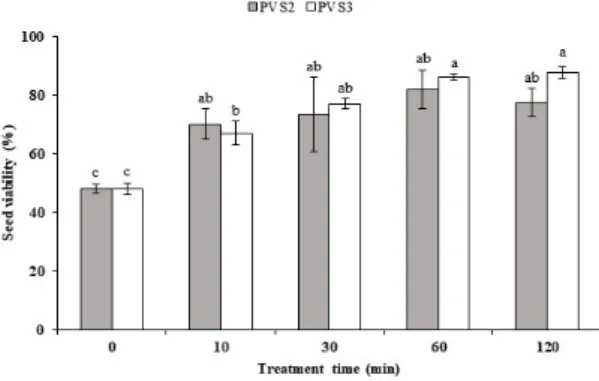
Fig. 2. Viability by PVS2 and PVS3 cryoprotectant treatment time.
investigated (Fig. 1). 1% sucrose treatment showed less vi- tality of seeds except to no treatment. However, sucrose treatment for 1 hour showed better seed vitality than the un- treated group, and more than sucrose treatment for 2 hours significantly reduced the vitality of seeds. In addition, the seed survival rate was the highest at about 30% in 1 hour treatment, and survivability was significantly decreased in the treatment over 1 hour (Data not shown).
The viability of D. paniculata seed was different accord- ing to the type of cryoprotectant (Fig. 2). In the control, which is non-treated with cryoprotectant, the lowest via- bility was shown to be less than about 60%, whereas seed vi- abilities were higher than 60% in the treatments. These re- sults showed that the treatment with the cryoprotectant helps to increase seed viability. In the case of PVS3, the via- bility was all over 85% from 60 to 120 minutes. On the oth- er hand, PVS2 showed 70 to 82% viability across all treatments. In the overall average, PVS3 showed higher vi-
ability than PVS2.
Differences in the seed viabilities between vitrification and encapsulation was investigated (Fig. 3). Both methods showed the highest vigor in the control without liquid nitro- gen treatment. Vitrification method of D. paniculata seed showed higher viability than encapsulation method by 10%
or more. In the case of the vitrification method, as the liquid nitrogen treatment time increased, the viability of seeds gradually decreased. Seed viability decreased until 3 hours of liquid nitrogen treatment, and then tended to be similar or slightly increased. However, the encapsulation method decreased to less than half the control viability from 30 mi- nutes after treatment, gradually increased until 3 days thereafter, and thereafter tended to repeat the increase and decrease again.
Germination rate by cryopreservation method In the vitrification method, germination rates were also different according to PVS2 and PVS3 compositions (Fig.
4). D. paniculata showed the highest germination rate at about 60% or more at 30 minutes of treatment. PVS2 showed the lowest germination rate at about 20% in the 120-minute treatments and PVS3 at about 40% in the 60-minute treatments. When the cryoprotectant treatment was 30 minutes or longer, the germination rate was lower than that of the control, and it seemed that cryoprotectant treatments for 30 minutes or longer affect adversely seed germination. On the other hand, germination of seeds pre- served by the encapsulation method was not achieved (Data not shown).
The D. paniculata seed, which was preserved in liquid
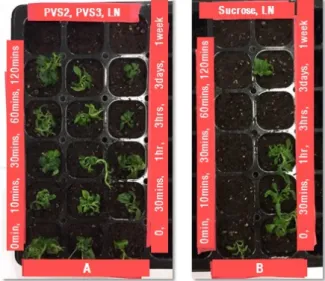
Fig. 6. Germination and plantlet growth pattern of cryopreserved D. pan- iculata seed by encapsulation and vitrification methods. (A) Germination and plant growth after 4 weeks of encapsulation. (B) Germination and plant growth after 4 weeks of vitrification.
Fig. 8. Growth of germinated plants according to PVS2 and PVS3 cry- oprotectant treatment time.
Fig. 5. Seed germination rate according to vitrification and encapsulation cryopreservation method and liquid nitrogen treatment time.
Fig. 7. Acclimatation of in vitro plants germinated cryopreserved seed. (A) Acclimatation plants after vitrification. (B) Acclimatation plants after encapsulation.
nitrogen, began to germinate two weeks after culture. The germination rate of the seeds of the D. paniculata was sig- nificantly different according to the vitrification method and the encapsulation method. The germination rate of D.
paniculata seeds stored by vitrification was much higher than that of seeds cryopreserved by encapsulation. In addi- tion, the germination rate was significantly different ac- cording to the liquid nitrogen treatment time. The germi- nation rate of seeds decreased significantly with longer cry- opreservation time (Fig. 5).
The germination and growth of the seed by treatment with liquid nitrogen time was significantly better than the encapsulation method (Fig. 6). In the case of PVS2 and PVS3, it was shown that PVS2 treatments are more effec-
tive for germination and growth.
Acclimatization and growth of seedlings cryopreserved using LN
In vitro plants germinated from seeds stored in liquid ni- trogen were successfully acclimatized in artificial soil (Fig.
7). After 12 hours of in vitro fertilization, some plants with- ered, but afterwards, they successfully acclimatized on the bed soil.
The growth of seedlings cryopreserved by vitrification method was measured after 4 weeks of acclimation (Fig. 8).
Seedlings treated with PVS2 were better than those treated with PVS3. In addition, the control group without treat-
ment with a cryoprotectant showed the highest fresh weight at about 0.38g. On the other hand, all treatments treated with the cryoprotectant showed lower values than the control. Among them, the PVS3 120-minute treatment group was about 0.3g, and the PVS2 10-minute treatment group was about 0.2g or less, showing the highest value among the treatment groups. However, in each treatment, there was no significant difference in raw weight except for the PVS3 and PVS2 120-minute treatment groups. On the other hand, germination of seeds that were cryopreserved by the encapsulation method did not occur, so no inves- tigation was made.
Discussion
D. paniculata grows as a small population around the slopes of the valley, and is an endangered species which needs the environmental condition with fertile land and ac- cumulation of organic matter in soil (Park 2016). This spe- cies with limited distribution in some areas has very im- portant value in terms of Korean special plant, and at great risk of extinction due to natural and anthropogenic factors, such as environmental pollution, forest destruction for de- velopment, and global warming. As a way to prevent the loss of genetic resources, this study was conducted to estab- lish an cryopreservation method that can be efficiently and economically preserved by using an cryopreservation meth- od capable of long-term preservation.
As a result of investigating the viability of seeds follow- ing sucrose pretreatment, 0.7M sucrose treatment im- proved the vitality of seeds compared to no treatment.
There were many reports that pre-treatment of sucrose in- creases the survival rates of plants after cryopreservation by preventing from freezing (Seo 2005; Lee 2011; Jeon and Kim 2014; Yong et al. 2019). In this study, the pre-treat- ment of sucrose had poor viability than the untreated group.
It seemd that the pretreatment of sucrose induces osmotic stress, and it has been reported in previous studies (Kim 2010; Lee et al. 2011). According to previous studies (Kim et al. 1995; Kim et al. 1998), it was shown that the pretreat- ment process is not necessary when the osmotic solution is at a high concentration, the necessity of the pretreatment process is different depending on the species. However, the 1% sucrose treatment may have contributed to increase the
vitality of the seed due to the short-time treatment, so fur- ther study is required.
By cryoprotectant, PVS3 showed higher viability than PVS2. DMSO and EG concentrations of PVS2 are higher than PVS3, so it is resulted that the D. paniculata is a sus- ceptible species to toxicity. In previous studies, there was al- so a species that was susceptible to toxicity (Kim et al.
2010). Vitrification method showed over 10% higher via- bility than encapsulation method exclusive of 3days. In the case of the vitrification method, the longer the liquid nitro- gen treatment time, the lower the viability, so it can be seen that the species is sensitive to cryogenic temperatures (Yang et al. 2018).
The germination rate of D. paniculata seeds stored by vitrification and encapsulation was confirmed by 6 treatments. It was judged that the liquid nitrogen did not significantly affect the growth of germinated plants accord- ing to the treatment time. This is consistent with research results (Kim et al. 1999; Jeon and Kim 2014) that do not af- fect plant organ growth and DNA when plants grow nor- mally after LN treatment. However, the genetic variation of germinated plants should be investigated further.
The results of this study would be helpful not only in D.
paniculata, but also in the study of cryopreservation of Deutzia spp.
Acknowledgement
This study was carried out by the Forest Service's Forest Convergence Specialist Training Project (Support for Forest Industry Characterization Research, FTIS Assignment No. 2020186A00-2022-AA02).
References
Ahn YH. 2001. Cryopreservation and Germination of Native Aquilegia Species Seeds by Predehydration Treatment. Korean J Plant Res 14: 251-258.
Ahn YH. 2002. Cryopreservation of winter vegetation buds of Betula platyphylla var. japonica in liquid nitrogen. Korean J Plant Res 15: 89-95.
Association of Official Seed Analysts. Seed Vigor Test Committee.
1983. Seed Vigor Testing Handbook: Contribution no. 32 to the Handbook on Seed Testing. Association of Official Seed Analysts, Boise, 88 pp.
Bajaj YPS. 1976. Regeneration of Plants from Cell Suspensions Frozen at -20, -70 and -196°C. Physiol Plant 37: 263-268.
Chang CS, Kim H, Kim YS. 2001. Reconsideration of rare and en- dangered plant species in Korea based on the IUCN Red List Categories. Korean J Plant Tax 31: 107-142.
Choi YC, Ryu KS, Bang HS. 2000. Cryopreservation of Mulberry(Morus) Seeds in Liquid Nitrogen(LN2). Korean J Seric Sci 42: 1-5.
Cottrell HJ. 1947. Tetrazolium salt as a seed germination indicator.
Nature 159: 748.
Davis AJ, Jenkinson LS, Lawton JH, Shorrocks B, Wood S. 1998.
Making mistakes when predicting shifts in species range in re- sponse to global warming. Nature 391: 783-786.
Engelmann F. 1991. In vitro conservation of tropical plant germ- plasm- a review. Euphytica 57: 227-243.
Engelmann F. 2004. Plant cryopreservation: progress and prospects. In Vitro Cell Dev Biol 40: 427-433.
Gonzalez-Arnao MT, Engelmann F. 2006. Cryopreservation of plant germplasm using the encapsulation-dehydration techni- que: review and case study on sugarcane. Cryo Letters 27:
155-168.
Han SH, Kim CS, Jang SS, Lee HJ. 2004. Effects of Cryopreservation on the Seed Germination and Growth Properties of Seedlings of Maackia amurensis. Korean J Plant Res 17: 75-81.
Jeon SM, Kim CK. 2014. Cryopreservation of Chrysanthemum morifolium cv. ‘White ND’ Shoot Tips using Encapsulation- Dehydration-Vitrification Method. Curr Res Agric Life Sci 32:
99-103.
Kartha KK, Engelmann F. 1994. Cryopreservation and Germplasm Storage. In: Plant Cell and Tissue Culture (Vasil IK, Thorpe TA, eds). Kluwer Academic, Dordrecht, pp 195-230.
Kim HH, Yi JY, No NY, Cho GT, Yoon MS, Baek HJ, Kim CK.
2010. Development of cryopreservation protocols through droplet-vitrification and its application to vegetatively propa- gated crop germplasm. Proceedings of Korean J of Plant Res 14:
12-12.
Kim KY. 2010. Cryopreservation of Cultivated Lily Bulblets by Droplet-Vitrification Procedure. MS thesis. Kyungpook National University, Daegu, Korea. (in English)
Kim SW, In DS, Jeong WJ, Woo JW, Jung M, Liu JR. 1998. Plant Regeneration from Cryopreserved Embryogenic Cell Suspension Cultures of Cucumber. Korean J Plant Tissue Cult 25: 501-505.
Kim SW, Jeong WJ, Min SR, Bae KS, Liu JR. 1995. Plant re- generation from cryopreserved embryogenic cell suspension cul- tured of Korean rice (Oriza sativa L.) cultures. Korean J Plant Tissue Cult 22: 115-119.
Kim YW, Kim JC, Yun Y, Noh ER, Son SH. 1999. Cryopreservation of Embryogenic Tissue and Plant Regeneration in Larix
leptolepis. Korean J Plant Tissue Cult 26: 229-233.
Lee JY. 2011. Permanent preservation of genetic resources through cryopreservation technology. The Science & Technology 501:
87-89.
Lee YK, Park SU, Kim HH. 2011. Cryopreservation of chrys- anthemum shoot tips using the droplet-vitrification technique.
Korean J Agric Sci 38: 227-233.
Lee YY, Lee MH, Yi JY, Lee TY, Son EH, Park HJ. 2017.
Response of germination rate and ascorbate peroxidase activity to cryopreservation of Perilla (Perilla frutescens) seeds with vari- able initial viabilities. Korean J Environ Agric 36: 256-262.
Murashige T, Skoog F. 1962. A Revised Medium for Rapid Growth and Bio Assays with Tobacco Tissue Cultures. Physiol Plant 15: 473-497.
Nishizawa S, Sakai A, Amano Y, Matsuzawa T. 1993.
Cryopreservation of asparagus (Asparagus officinalis L.) em- bryogenic suspension cells and subsequent plant regeneration by vitrification. Plant Sci 91: 67-73.
Normah MN, Sulong N, Reed BM. 2019. Cryopreservation of shoot tips of recalcitrant and tropical species: advances and strategies. Cryobiology 87: 1-14.
Paek KY, Ko JA, Gwak SS, Kim JY, Kim CG, Kim HH, Park KI, Park SY, Park SC, Liu JR, Yoo CY, Yun JG, Lee GJ, Jeon SI, Jung M, Jeong BR, Han BH, Han JH, Hyung NI. 2016.
Plant Biotechnology. Hyangmunsa, Seoul, 363 pp.
Park JI, Chung WS. 2009. Cryopreservation of Catalpa ovata G.Don seeds. J Agr Sci 25: 30-34.
Park JS. 2016. Growth Environmental Characteristics of Paniculate Korean Deutzia Populations in Korea. MS thesis. Yeungnam University, Gyeongsan, Korea. (in Korean)
Paulet F, Engelmann F, Glaszmann JC. 1993. Cryopreservation of apices of in vitro plantlets of sugarcane (Saccharum sp. hybrids) using encapsulation/dehydration. Plant Cell Rep 12: 525-529.
Peter MV. 1994. Beyond Global Warming: Ecology and Global Change. Ecology 75: 1861-76.
Sakai A, Kobayashi S, Oiyama I. 1990. Cryopreservation of nu- cellar cells of navel orange (Citrus sinensis Osb. var. brasiliensis Tanaka) by vitrification. Plant Cell Rep 9: 30-33.
Seo MJ. 2005. Cryopreservation of Herbaceous Peony (Paeonia lactiflora Pall.) by Encapsulation-dehydration of Dormant Shoot Tips. MS thesis. Kyungpook National University, Daegu, Korea. (in Korean)
Yang WH, Yong SH, Park DJ, Seol YW, Choi EJ, Jeong MJ, Suh GU, Lee CH, Choi MS. 2018. Optimization Conditions for Cryopreservation of Potentilla Discolor Bunge. J Korean Soc For Sci 107: 258-265.
Yong SH, Park DJ, Yang WH, Seol YW, Choi EJ, Jeong MJ, Suh GU, Lee CH, Choi MS. 2019. Cryopreservation of Sievers Wormwood (Artemisia sieversiana Ehrh. Ex Willd.) Seeds by Vitrification and Encapsulation. For Sci Technol 15: 180-186.