http://crossmark.crossref.org/dialog/?doi=10.4111/kju.2014.55.4.276&domain=pdf&date_stamp=2014-04-17
Original Article - Infection/Inflammation
Clinical Significance of National Institutes of Health Classification in Patients With Chronic Prostatitis/Chronic Pelvic Pain Syndrome
Yun Hsien Sung, Jae Hung Jung, Seung Hoon Ryang, Sung Jin Kim, Kwang Jin Kim
Department of Urology, Yonsei University Wonju College of Medicine, Wonju, Korea
Purpose: We determined the effects of alpha-blockers and quinolone in patients with chronic prostatitis/chronic pelvic pain syndrome (CP/CPPS) classified by National Institute of Health (NIH) consensus group.
Materials and Methods: Data from a total of 111 patients who were diagnosed with CP/CPPS between June 2010 and June 2012 were analyzed retrospectively. The pa- tients were classified into group 1 (category IIIA, n=40) and group 2 (category IIIB, n=71). Treatment using alfuzosin and levofloxacin was given to both groups for 6 weeks.
International Prostate Symptom Score (IPSS) and NIH Chronic Prostatitis Symptom Index were measured before and after therapy.
Results: Group 1 had a significant decrease in total IPSS score, CPSI pain score, CPSI quality of life (QoL) score, and total CPSI score (p=0.043, p=0.006, p=0.015, and p=0.006, respectively). Group 2 had a significant decrease in IPSS voiding symptom score, IPSS storage symptom score, total IPSS, CPSI pain score, CPSI voiding score, CPSI QoL score, and total CPSI score (p=0.002, p=0.004, p=0.001, p=0.001, p=0.006, p=0.001, and p=0.001, respectively). The CPSI score was reduced by 6 points or more in 50.0% of patients (n=18) in group 1 and in 51.6% of patients (n=32) in group 2.
However, there was no statistically significant difference between the changes in IPSS and CPSI scores across the 2 groups.
Conclusions: Although combination treatment reduced the CPSI score in both groups, there was no significant difference between the groups after combination treatment.
We suggest that factors other than inflammation also contribute to symptoms asso- ciated with CP/CPPS.
Keywords: Adrenergic alpha-antagonist; Anti-bacterial agents; Leukocytes; Prostatitis
This is an Open Access article distributed under the terms of the Creative Commons Attribution Non-Commercial License (http://creativecommons.org/licenses/by-nc/3.0) which permits unrestricted non-commercial use, distribution, and reproduction in any medium, provided the original work is properly cited.
Article History:
received 13 August, 2013 accepted 21 October, 2013
Corresponding Author:
Kwang Jin Kim
Department of Urology, Wonju Severance Christian Hospital, Yonsei University Wonju College of Medicine, 20 Ilsan-ro, Wonju 220-701, Korea
TEL: +82-33-741-0651 FAX: +82-33-741-1930 E-mail: [email protected]
INTRODUCTION
Chronic prostatitis/chronic pelvic pain syndrome (CP/CPPS) represents one of the most commonly encountered disease entities. About 25% of patients who come to a urology clinic are thought to belong to the chronic prostatitis group [1].
Currently, the National Institutes of Health (NIH) clas- sifies prostatitis into 4 categories depending on urine and prostatic fluid analysis, which includes microscopic exami- nation and cultures. Of all cases, more than 90% of sympto- matic prostatitis is categorized as NIH category type III, which is defined by the presence of chronic pelvic pain and
possibly voiding symptoms without uropathogenic bac- teria. The new NIH classification for category III further defined these men as either category IIIA (inflammatory) or IIIB (noninflammatory) on the basis of the presence of significant white blood cells (WBCs) in prostatic-specific specimens (i.e., expressed prostatic secretion [EPS], urine specimen after prostatic massage [VB3], and semen) [2,3], However, although some research has confirmed the effec- tiveness of various treatments according to the NIH classi- fication, no difference in outcome was shown in the two groups. Therefore, this study was conducted to evaluate clinical outcomes in the treatment of CP/CPPS according
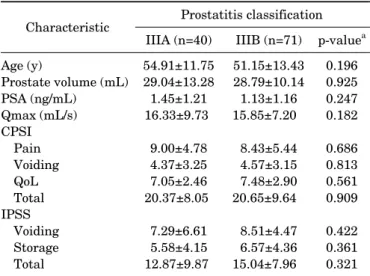
TABLE 1. Baseline characteristics of patients with CP/CPPS Characteristic Prostatitis classification
IIIA (n=40) IIIB (n=71) p-valuea Age (y)
Prostate volume (mL) PSA (ng/mL)
Qmax (mL/s) CPSI
Pain Voiding QoL Total IPSS
Voiding Storage Total
54.91±11.75 29.04±13.28 1.45±1.21 16.33±9.73 9.00±4.78 4.37±3.25 7.05±2.46 20.37±8.05 7.29±6.61 5.58±4.15 12.87±9.87
51.15±13.43 28.79±10.14 1.13±1.16 15.85±7.20 8.43±5.44 4.57±3.15 7.48±2.90 20.65±9.64 8.51±4.47 6.57±4.36 15.04±7.96
0.196 0.925 0.247 0.182 0.686 0.813 0.561 0.909 0.422 0.361 0.321 Values are presented as mean±standard deviation.
CP/CPPS, chronic prostatitis/chronic pelvic pain syndrome; PSA, prostate-specific antigen; CPSI, Chronic Prostatitis Symptom Index; QoL, quality of life; IPSS, International Prostate Symptom Score.
a:Independent t-test.
to NIH classification.
MATERIALS AND METHODS
A retrospective review was performed of 111 patients with a diagnosis of CP/CPPS who were managed at Yonsei University Wonju Severance Christian Hospital between June 2010 and June 2012. The diagnosis of CP/CPPS was made by physical examination, microscopic analysis of urine and standard microbiological cultures, transrectal ultrasonography, and serum prostate-specific antigen (PSA) measurements. Patients were included in the study if they had experienced pain or discomfort in the pelvic re- gion for at least 3 months [4]. We excluded patients with urinary tract infection, hypoechoic lesions on transrectal prostate ultrasound, serum PSA levels greater than or equal to 4 ng/dL, a history of antibiotic treatment in the 6 months preceding the initial visit, invasive prostate-re- lated procedures (transurethral resection of the prostate, transurethral incision of the prostate, or transurethral needle ablation), genitourinary cancer, inflammatory bow- el disease, active urethral stricture, prostate or bladder surgery, or neurologic diseases affecting the bladder.
Depending on the number of WBCs in the EPS or VB3, each patient was designated into the 2 NIH subgroups dis- cussed above. A patient was assigned to the NIH category IIIA group if the WBC count in the EPS was equal to or greater than 10 per high power field (HPF) or the WBC count in the VB3 was equal to or greater than 5 per HPF.
Conversely, a patient was assigned to IIIB if the WBC count in the EPS was less than 10 per HPF or the WBC count in the VB3 was less than 5 per HPF [2]. Both groups were eval- uated before the treatment and 6 weeks after the treatment by using NIH Chronic Prostatitis Symptom Index (NIH-CPSI) scores and the International Prostate Symp- tom Score (IPSS). Determination of the presence or ab- sence of the therapeutic effect was defined as when the CPSI score fell 6 points or more [5]. All the patients were treated with once-daily alpha-blockers (alfuzosin 10 g) and quinolone (levofloxacin 500 mg) for 6 weeks.
PASW ver. 18.0 (SPSS Inc., Chicago, IL, USA) was used for all statistical analyses. The Wilcoxon signed-rank test was used to compare the baseline scores with posttreat- ment scores. Paired t-test and chi-square test were used to analyze the efficacy of treatment between groups. Trea- tment outcome was analyzed by logistic regression, ad- justed for age, prostate volume, IPSS, and category of CP/CPPS. A p-value of less than 0.05 was considered stat- istically significant.
RESULTS
Of the 111 patients, 41 were classified into group 1 (cate- gory IIIA) and 71 patients into group 2 (category IIIB) on the basis of WBCs and culture results. The patients’ mean age was 54.91±11.75 years in group 1 and 51.15±13.43 years in group 2. The total IPSS was 12.87±9.87 for group
1 and 15.04±7.96 for group 2. The total CPSI was 20.29±7.72 in group 1 and 20.48±9.66 in group 2. Baseline characteristics including age, prostate volume, PSA, mean maximal urine flow rate on uroflowmetry, CPSI score, and IPSS were not significantly different between the two groups (Table 1).
Table 2 lists the mean IPSS and NIH-CPSI before and after the combination therapy. The total IPSS was sig- nificantly decreased in group 1 (from 16.00±10.86 to 12.14±9.02, p=0.043) and group 2 (from 17.93±5.19 to 17.00±7.32, p=0.001). The IPSS voiding symptom subscore was significantly decreased in group 2 (from 9.93±3.14 to 10.79±5.14, p=0.002). The IPSS storage symptom subscore was significantly decreased in group 2 (from 8.14±3.99 to 6.21±3.57, p=0.004). The CPSI pain score was significantly decreased in group 1 (from 8.28±4.68 to 5.33±3.64, p=0.006) and group 2 (from 8.52±5.13 to 5.94±4.32, p=0.001). The CPSI voiding symptom score was sig- nificantly decreased in Group 2 (from 5.00±3.35 to 3.65±2.72, p=0.006). The CPSI QoL symptom score was sig- nificantly decreased in group 1 (from 7.33±2.35 to 6.06±2.07, p=0.015) and group 2 (from 7.71±2.74 to 5.81±2.75, p=0.001). The total CPSI score was significantly decreased in group 1 (from 20.11±7.63 to 15.11±6.93, p=0.006) and group 2 (from 21.23±9.38 to 15.39±7.87, p=0.001). The CPSI total score was reduced by 6 points or more in 50% of the patients in group 1 (n=18) and 51.6%
of the patients in group 2 (n=32). No significant differences (p=0.913) in treatment outcomes were observed between the two groups. As shown in Table 3, there were no statisti- cally significant differences in treatment outcomes after adjustment for age, prostate volume, and IPSS.
TABLE 2. IPSS and CPSI among 2 groups before and after the α-blocker and quinolone treatment
IIIA (n=40) IIIB (n=71)
Pretreatment Posttreatment Difference Pretreatment Posttreatment Difference IPSS
Voiding symptom 8.57±6.52 7.14±4.88 –1.43±2.63 9.93±3.14 10.79±5.14 –2.57±4.83a Storage symptom 7.43±4.86 5.00±4.39 –2.43±3.10 8.14±3.99 6.21±3.57 –2.64±2.76a
Total 16.00±10.86 12.14±9.02 –3.86±4.10a 17.93±5.19 17.00±7.32 –5.43±5.18a
CPSI
Pain 8.28±4.68 5.33±3.64 –2.94±4.08a 8.52±5.13 5.94±4.32 –2.58±3.88a
Voiding symptom 4.56±3.14 3.72±3.19 –0.83±1.68 5.00±3.35 3.65±2.72 –1.35±2.53a
QoL 7.33±2.35 6.06±2.07 –1.28±1.93a 7.71±2.74 5.81±2.75 –1.90±1.90a
Total 20.11±7.63 15.11±6.93 –5.00±6.30a 21.23±9.38 15.39±7.87 –5.84±6.48a
Values are presented as mean±standard deviation.
IPSS, International Prostate Symptom Score; CPSI, Chronic Prostatitis Symptom Index; QoL, quality of life.
a:p<0.05 between baseline and after treatment.
TABLE 3. Treatment outcome odds ratios, adjusted for age, prostate volume, IPSS, and category of CP/CPPS
Variable Treatment outcome, OR (95% CI)a Age≥50 y
Prostate volume≥30 mL IPSS
<8 8–20
≥21 Category IIIB
0.260 (0.034–1.978) 2.753 (0.546–13.883)
1
3.181 (0.222–45.580) 2.151 (0.122–37.886) 1.825 (0.377–8.833)
IPSS, International Prostate Symptom Score; CP/CPPS, chronic prostatitis/chronic pelvic pain syndrome; OR, odds ratio; CI, con- fidence interval.
a:Logistic regression.
DISCUSSION
CP/CPPS is a common disorder that is typically accom- panied by pain with ejaculation or discomfort in the pelvic or perineal region with prominent lower urinary tract symptoms [6-8]. Although prostatic inflammation has been identified in many patients with this syndrome, the etiology and pathophysiology of CP/CPPS remain un- known [4-7].
The NIH consensus group identifies CP/CPPS on the ba- sis of WBCs in the EPS, VB3, or semen without any evi- dence of uropathogenic bacteria detected by standard mi- crobiological methodology [7,8]. The Meares-Stamey 4-glass test or simpler 2-glass test has been used to diagnosis CP [7]. Since Mobley reported the usefulness of a semen cul- ture in combination with urine culture, the new NIH con- sensus classification is broader than the traditional ap- proach, which was limited to the examination of EPS [6-9].
Krieger et al. [8] reported an increase in inflammation from 52% to 93% when the diagnosis was based on the addition VB3 and seminal fluid analysis (SFA) to EPS. In contrast, the NIH-CPCRN case-control study determined that semi-
nal evaluation had little clinical value in differentiating prostatitis patients from normal controls [10]. In the pres- ent study, we did not perform SFA. In fact, most urologists rarely perform the 4-glass test and SFA in clinical practice.
Potential reasons are that the test is not sensitive nor spe- cific, the therapeutic predictive value is poor, and the test is relatively expensive, time-consuming, and quite un- comfortable for the patients [11,12].
Traditionally, patients with CP/CPPS receive empirical treatment. The most common treatments in clinical prac- tice are antimicrobial agents and alpha-adrenergic re- ceptor antagonists [13-15]. A European consensus report suggested that antibiotics are recommended for NIH cat- egory IIIA but not for NIH category IIIB [13]. However, Nickel et al. [2] found no significant differences between NIH category II, IIIA, and IIIB after antibiotic treatment.
A recent prospective study showed that levofloxacin ther- apy was effective for CP/CPPS [14]. There are three reason- able explanations, as follows. First, the antimicrobial agent may have a placebo effect; second, the antimicrobial agent may eradicate noncultured microorganisms; and third, the antimicrobial agents may have immunosu- ppressive or anti-inflammatory effects [16]. Also, the treat- ment outcome was checked after 6 weeks, because this is the usual interval of treatment with an antimicrobial agent and it is generally believed that the bacterial organisms re- sponsible for symptoms should be eradicated within this time [17].
Alpha-adrenergic receptor blockers are proven to be an effective treatment for benign prostatic hypertrophy. They inhibit the smooth muscle tone within the prostate gland and in the region of the bladder neck [3-5]. Presumably, these drugs are used empirically in the management of CP/CPPS because of overlapping pathogenesis, such as sympathetic over-activation [5,17]. A recent systemic re- view showed that alpha-adrenergic receptor blocker ther- apy was associated with significant improvement in CP/CPPS symptoms [18]. Moreover, antibiotics and al- pha-blocker combination therapy was more effective than
monotherapy in treating CP/CPPS [14,18]. In this study, the combination alfuzosin and levofloxacin therapy re- sulted in significant improvements in both IPSS and NIH-CPSI scores. However, no significant difference in treatment outcome (improvements of at least 6 points or more on the NIH-CPSI total and domain scores) was ob- served between NIH category IIIA and IIIB. This suggests that a systemic approach other than NIH classification by the WBC count may be necessary.
In fact, our understanding of CP/CPPS has evolved with the development of the NIH classification. In our con- temporary concept, CP/CPPS is not prostate-specific but incorporates other extraprostatic factors including pelvic muscle dysfunction, neurological disease, and psychiatric conditions [6-8]. Recently, Shoskes et al. [19] developed the clinical phenotyping system with six domain: urinary, psy- chosocial, organ specific, infection, neurologic/systemic, and tenderness (UPOINT), and a European study modified the clinical phenotyping system with an additional sexual dysfunction domain (UPOINTS) [20]. They showed that the number of positive domains correlated with symptom severity, and UPOINT-directed multimodal therapy im- proved symptoms and quality of life [21,22]. Therefore, be- cause leukocytosis on EPS or VB3 and voiding symptoms only reveal organ-specific domains according to the UPOINT system, each patient should be assessed for not only laboratory findings such as a lower urinary tract local- ization test, but also the nature of symptoms. Although 51% of the patients showed clinical improvement in our study, there was no significant difference between NIH cat- egory IIIA and IIIB. This may reflect the heterogeneous as- pect of CP/CPPS rather than the laboratory results.
As a result, we think that the NIH classification for CP/CPPS based on the presence or absence of WBCs in EPS, VB3, or semen is necessary as an initial diagnostic approach. However, from a therapeutic viewpoint, it has a limited role because of the multiple pathophysiologic fac- tors that affect CP/CPPS.
There were limitations to this study. First, we used only EPS- and VB3-based classification. Krieger et al. [8] noted that semen analysis will increase the rate of detection of category IIIA. Therefore, if the semen analysis had been en- forced in our study, more patients would have been diag- nosed with IIIA. Second, the treatment outcome was meas- ured only after 6 weeks. It may take a longer period of treat- ment before an improved symptom score is seen.
Long-term follow-up is needed to support our results.
Third, our study was designed as a retrospective review and had too small a number of cases to properly evaluate the impact of NIH classification on the outcomes of CP/CPPS. As such, a prospective randomized trial and long-term follow-up are needed.
CONCLUSIONS
CP/CPPS is a highly prevalent, multifactorial condition that affects men of all ages. The NIH classification provided
useful information regarding potential etiologies and treatment in patients with CP/CPPS. However, the treat- ment response rate between NIH classification IIIA and IIIB was not significantly different after antibiotics and al- pha-blockers combination treatment. Therefore, we think that factors other than inflammation also contribute to symptoms associated with CP/CPPS, and consideration of multiple phenotypes by use of UPOINT will help in the treatment of CP/CPPS.
CONFLICTS OF INTEREST
The authors have nothing to disclose.
REFERENCES
1. Collins MM, Stafford RS, O'Leary MP, Barry MJ. How common is prostatitis? A national survey of physician visits. J Urol 1998;159:1224-8.
2. Nickel JC, Downey J, Johnston B, Clark J; Canadian Prostatitis Research Group. Predictors of patient response to antibiotic ther- apy for the chronic prostatitis/chronic pelvic pain syndrome: a pro- spective multicenter clinical trial. J Urol 2001;165:1539-44.
3. Kim TH, Lee KS, Kim JH, Jee JY, Seo YE, Choi DW, et al.
Tamsulosin monotherapy versus combination therapy with anti- biotics or anti-inflammatory agents in the treatment of chronic pelvic pain syndrome. Int Neurourol J 2011;15:92-6.
4. Fall M, Baranowski AP, Elneil S, Engeler D, Hughes J, Messelink EJ, et al. EAU guidelines on chronic pelvic pain. Eur Urol 2010;57:35-48.
5. Nickel JC. The three as of chronic prostatitis therapy: antibiotics, alpha-blockers and anti-inflammatories. What is the evidence?
BJU Int 2004;94:1230-3.
6. Krieger JN, Nyberg L Jr, Nickel JC. NIH consensus definition and classification of prostatitis. JAMA 1999;282:236-7.
7. Schaeffer AJ. Clinical practice. Chronic prostatitis and the chron- ic pelvic pain syndrome. N Engl J Med 2006;355:1690-8.
8. Krieger JN, Ross SO, Deutsch L, Riley DE. The NIH Consensus concept of chronic prostatitis/chronic pelvic pain syndrome com- pared with traditional concepts of nonbacterial prostatitis and prostatodynia. Curr Urol Rep 2002;3:301-6.
9. Mobley DF. Semen cultures in the diagnosis of bacterial prostatitis. J Urol 1975;114:83-5.
10. Nickel JC, Alexander RB, Schaeffer AJ, Landis JR, Knauss JS, Propert KJ, et al. Leukocytes and bacteria in men with chronic prostatitis/chronic pelvic pain syndrome compared to asympto- matic controls. J Urol 2003;170:818-22.
11. Nickel JC. Classification and diagnosis of prostatitis: a gold standard? Andrologia 2003;35:160-7.
12. McNaughton Collins M, Fowler FJ Jr, Elliott DB, Albertsen PC, Barry MJ. Diagnosing and treating chronic prostatitis: do urolo- gists use the four-glass test? Urology 2000;55:403-7.
13. Bjerklund Johansen TE, Gruneberg RN, Guibert J, Hofstetter A, Lobel B, Naber KG, et al. The role of antibiotics in the treatment of chronic prostatitis: a consensus statement. Eur Urol 1998;34:457-66.
14. Jeong CW, Lim DJ, Son H, Lee SE, Jeong H. Treatment for chronic prostatitis/chronic pelvic pain syndrome: levofloxacin, doxazosin and their combination. Urol Int 2008;80:157-61.
15. Youn CW, Son KC, Choi HS, Kwon DD, Park K, Ryu SB.
Comparison of the efficacy of antibiotic monotherapy and anti- biotic plus alpha-blocker combination therapy for patients with
inflammatory chronic prostatitis/chronic pelvic pain syndrome.
Korean J Urol 2008;49:72-6.
16. Schaeffer AJ, Knauss JS, Landis JR, Propert KJ, Alexander RB, Litwin MS, et al. Leukocyte and bacterial counts do not correlate with severity of symptoms in men with chronic prostatitis: the National Institutes of Health Chronic Prostatitis Cohort Study.
J Urol 2002;168:1048-53.
17. Alexander RB, Propert KJ, Schaeffer AJ, Landis JR, Nickel JC, O'Leary MP, et al. Ciprofloxacin or tamsulosin in men with chron- ic prostatitis/chronic pelvic pain syndrome: a randomized, dou- ble-blind trial. Ann Intern Med 2004;141:581-9.
18. Thakkinstian A, Attia J, Anothaisintawee T, Nickel JC. α-block- ers, antibiotics and anti-inflammatories have a role in the man- agement of chronic prostatitis/chronic pelvic pain syndrome. BJU Int 2012;110:1014-22.
19. Shoskes DA, Nickel JC, Rackley RR, Pontari MA. Clinical pheno-
typing in chronic prostatitis/chronic pelvic pain syndrome and in- terstitial cystitis: a management strategy for urologic chronic pel- vic pain syndromes. Prostate Cancer Prostatic Dis 2009;12:
177-83.
20. Magri V, Wagenlehner F, Perletti G, Schneider S, Marras E, Naber KG, et al. Use of the UPOINT chronic prostatitis/chronic pelvic pain syndrome classification in European patient cohorts:
sexual function domain improves correlations. J Urol 2010;184:
2339-45.
21. Shoskes DA, Nickel JC, Dolinga R, Prots D. Clinical phenotyping of patients with chronic prostatitis/chronic pelvic pain syndrome and correlation with symptom severity. Urology 2009;73:538-42.
22. Shoskes DA, Nickel JC, Kattan MW. Phenotypically directed multimodal therapy for chronic prostatitis/chronic pelvic pain syndrome: a prospective study using UPOINT. Urology 2010;
75:1249-53.