https://doi.org/10.4174/astr.2021.100.5.298 Annals of Surgical Treatment and Research
A surgical hospitalist system in Korea: a preliminary study of the effects on hospital costs and postoperative outcomes
Yoon Bin Jung, Eun-Joo Jung, Kang Young Lee
Department of Surgery, Yonsei University College of Medicine, Seoul, Korea
INTRODUCTION
Since the concept of hospitalists was first introduced in the United States in 1996, hospitalists were defined as specialists in inpatient medicine who would be responsible for managing the care of hospitalized patients in the same way that primary care physicians are responsible for managing the care of outpatients [1]. The hospitalist system, with its emphasis on the safety of patients and improvement of the quality of healthcare, was rapidly adopted, and the number of hospitalists in the United
States soon exceeded 50,000 [2].
In Korea, there is also an increasing demand for inpatient safety and improvement of healthcare quality. In addition, the Act on the Improvement of Training Conditions and Status of Medical Residents was enacted to improve the training environment by limiting the resident’s working hours to less than 80 hours per week in December 2015. As a result, it became impossible to provide quality medical care to inpatients using only residents or surgical house staff. With these changes in the medical environment, the hospitalist
Received October 22, 2020, Revised December 9, 2020, Accepted January 23, 2021
Corresponding Author: Kang Young Lee
Department of Surgery, Yonsei University College of Medicine, 50-1 Yonsei-ro, Seodaemun-gu, Seoul 03722, Korea
Tel: +82-2-2228-2096, Fax: +82-2-313-8289 E-mail: [email protected]
ORCID: https://orcid.org/0000-0001-5944-2063
Copyright ⓒ 2021, the Korean Surgical Society
cc Annals of Surgical Treatment and Research is an Open Access Journal. All articles are distributed under the terms of the Creative Commons Attribution Non- Commercial License (http://creativecommons.org/licenses/by-nc/4.0/) which permits unrestricted non-commercial use, distribution, and reproduction in any medium, provided the original work is properly cited.
Purpose: The aim of this study is to investigate the effect of the surgical hospitalist system on postoperative outcomes and hospital costs for surgical patients.
Methods: We reviewed the medical records of 522 patients who were admitted to the divisions of colorectal and gastrointestinal surgery for operation from September to December 2017 at Severance Hospital, Yonsei University College of Medicine in Seoul, Korea. All patients were divided into 2 groups; one that was managed by surgical hospitalists group (HG) and another that was managed by non-hospitalist residents group (NHG) after elective surgery. Postoperative outcomes and hospital costs were analyzed for each group.
Results: Two hundred ninety-eight patients were managed by HG and 189 patients were managed by NHG after surgery.
The length of hospital stay in the first group was shorter (9.6 ± 5.8 days vs. 12.2 ± 7.9 days, P < 0.001), the incidence of complications was lower (44.6% vs. 55.6%, P = 0.019), and the readmission rate was lower (3.0% vs. 6.9%, P = 0.046) in the HG than in the NHG. The difference in total hospital costs was not significant between the HG and the NHG (₩8,381,304 vs. ₩9,242,493, P = 0.559), but surgery-independent hospital costs were lower in the HG than in the NHG (₩3,020,873 vs.
₩3,923,308, P = 0.001).
Conclusion: The surgical hospitalist system reduced the length of hospital stay, the incidence of postoperative complications, and the readmission rates of surgical patients. This led to the effect of a reduction in total hospital costs.
[Ann Surg Treat Res 2021;100(5):298-304]
Key Words: Hospital costs, Hospitalists, Korea, Perioperative care, Surgery
system was introduced in Korea as a pilot program in 2016. In May 2019, the number of hospitalists in Korea increased to 124 [3]. Interestingly, Korean hospitalists are not only limited to internists but also include many physicians with other medical specialties as well. Based on this diversity of medical specialties among Korean hospitalists, the hospitalist system in surgery is directly operated by board-certified surgeons. For this reason, the surgical hospitalist system launched and became a novel model for the management of postoperative patients in Korea.
The aim of this study is to investigate the effect of the surgical hospitalist system on the postoperative outcomes and hospital costs for surgical patients.
METHODS
Patients
We reviewed the medical records of 522 patients who were admitted to the divisions of colorectal and gastrointestinal surgery for operation from September to December 2017 at Severance Hospital, Yonsei University College of Medicine in Seoul, Korea. The Charlson comorbidity index (CCI) and the American Society of Anesthesiologists (ASA) physical status (PS) classification were used to analyze the preoperative severity of the patients [4,5]. The patients’ diagnoses were classified into colon cancer, rectal cancer, stomach cancer, benign disease (acute appendicitis, groin hernia, and perianal disease), and other diagnoses. Other diagnosis does not refer to patients who underwent emergency surgery but refers to patients who underwent major operation for diseases such as intraabdominal small bowel cancer, retroperitoneal tumor, or gastrointestinal stromal tumor. All patients were divided into 2 groups: one that was managed by surgical hospitalists group (HG) and another that was managed by non-hospitalist residents group (NHG) after elective surgery. The length of hospital stay, length of postoperative stay, and in-hospital mortality rates were analyzed for each group. The postoperative complication grade was classified according to the Clavien-Dindo classification [6].
Readmission was defined as hospitalization within 30 days of discharge. This study was approved by the Institutional Review Board of Severance Hospital (No. 4-2019-1081). Informed consent was waived because of the retrospective nature of the study and the analysis used anonymous clinical data.
The surgical hospitalist system
The surgical hospitalist system at Severance Hospital, Yonsei University College of Medicine in Seoul, Korea was observed to be different from the surgical comanagement (SCM) system.
All surgical hospitalists were board-certified surgeons and did not participate directly in surgery, but managed the patients, together with surgical house staff, in the perioperative period.
The surgical hospitalists only treated the surgical patients in
the designated ward, and the number of patients per doctor was limited to less than 20 patients to ensure high-quality treatment. All surgical hospitalists performed the tasks of filling prescriptions, maintaining medical records, performing bedside procedures, and undertaking rounds every day from 7 AM to 7 PM. The handover of patients occurred after 7 PM to the on-duty resident. No residents were assigned to surgical hospitalists. Non-hospitalists were residents and managed patients under the supervision of surgical house staff.
Hospital cost analysis
The hospital cost analysis was performed by reviewing data from claims for reimbursement. The total hospital cost per patient was calculated as the total amount of payment for reimbursement that occurred during hospitalization. The claims data were categorized into general, examination, anesthesia, operation, and medication costs. Since the hospitalist does not participate in the operation but only participates in the perioperative process, the surgery-independent hospital cost analysis was performed to analyze accurately the cost effect of the treatment process for HG and NHG. The surgery- independent hospital cost was calculated by excluding the operation, anesthesia, and postanesthesia care costs from the total hospital cost. All the hospital cost data were calculated in Korean currency, won (₩).
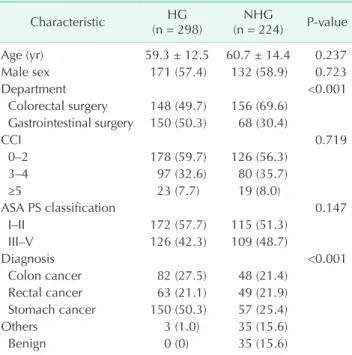
Table 1. Demographics of the study population
Characteristic HG
(n = 298) NHG
(n = 224) P-value
Age (yr) 59.3 ± 12.5 60.7 ± 14.4 0.237
Male sex 171 (57.4) 132 (58.9) 0.723
Department <0.001
Colorectal surgery 148 (49.7) 156 (69.6) Gastrointestinal surgery 150 (50.3) 68 (30.4)
CCI 0.719
0–2 178 (59.7) 126 (56.3)
3–4 97 (32.6) 80 (35.7)
≥5 23 (7.7) 19 (8.0)
ASA PS classification 0.147
I–II 172 (57.7) 115 (51.3)
III–V 126 (42.3) 109 (48.7)
Diagnosis <0.001
Colon cancer 82 (27.5) 48 (21.4) Rectal cancer 63 (21.1) 49 (21.9) Stomach cancer 150 (50.3) 57 (25.4)
Others 3 (1.0) 35 (15.6)
Benign 0 (0) 35 (15.6)
HG, surgical hospitalist group; NHG, non-hospitalist group; CCI, Charlson comorbidity index; ASA, American Society of Anesthesiologists; PS, physical status.
Statistical analysis
After testing for normal distribution using the Kolmogorov- Smirnov test, continuous variables were expressed as mean and standard deviations. Categorical variables were expressed as the numbers of patients and proportions. Two-sided t-test, chi-square test, or Fisher exact test were performed to compare continuous variables and categorical variables. A 2-tailed P-value of <0.05 indicated statistical significance. All statistical analyses were performed using IBM SPSS Statistics for Windows, ver. 25.0 (IBM Corp., Armonk, NY, USA).
RESULTS
Two hundred ninety-eight patients were managed by HG and 224 were managed by NHG after surgery. The mean age between the HG and NHG was similar (59.3 ± 12.5 years vs.
60.7 ± 14.4 years, P = 0.237). The preoperative severity of the patients according to CCI and ASA PS classification did not show a significant difference (Table 1). In the HG, the proportion of patients admitted to the department of gastrointestinal surgery was higher than the NHG (50.3% vs. 30.4%, P < 0.001).
The proportion of patients with benign surgery was higher in the NHG (0% vs. 15.6%). The length of hospital stay in the HG was shorter than that of the NHG (9.6 ± 5.8 days vs. 12.2 ± 7.9 days, P < 0.001), but the length of postoperative stay was not different between the 2 groups (7.5 ± 5.7 days vs. 8.3 ± 6.5 days, P = 0.168). There were no differences in in-hospital mortality rate (0.3% vs. 0.9%, P = 0.579) and postoperative complications (44.6% vs. 52.2%, P = 0.085), but the readmission rate within 30 days of discharge was significantly lower in the HG than in the NHG (3.0% vs. 7.1%, P = 0.029).
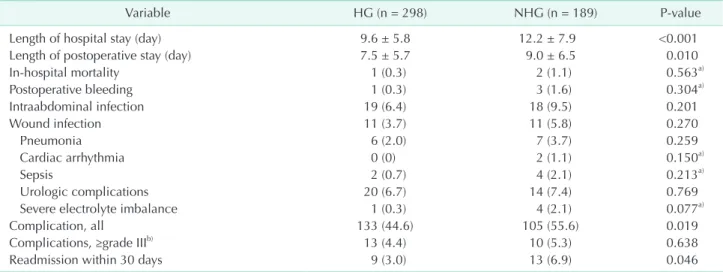
Because the NHG included patients with minor surgery for benign disease, the length of hospital stay was relatively short, and postoperative complications were less likely to occur compared to HG. Therefore, a comparison was performed between the 2 groups after excluding 35 patients with minor surgery from the NHG (Table 2). Both lengths of hospital stay and postoperative stay were significantly shorter in the HG than in the NHG (9.6 ± 5.8 days vs. 12.2 ± 7.9 days, P < 0.001 and 7.5 ± 5.7 days vs. 9.0 ± 6.5 days, P = 0.010, respectively).
The incidence of all complications was lower in the HG than in the NHG (44.6% vs. 55.6%, P = 0.019), but the incidence of grade III or higher complications was not different between the 2 groups (4.4% vs. 5.3%, P = 0.638). The readmission rate was significantly lower in HG than in NHG (3.0 vs. 6.9%, P = 0.046).
Total hospital cost was not significantly different between the HG and the NHG (₩8,381,304 vs. ₩9,242,493, P = 0.559), but the surgery-independent hospital cost was lower in the HG than in the NHG (₩3,020,873 vs. ₩3,923,308, P = 0.001). The general cost including room and board was lower in the HG than in the NHG (₩1,076,196 vs. ₩1,264,838, P = 0.029). The operation cost was similar between the 2 groups, but examination and intravenous medication costs were significantly lower in the HG than in the NHG (₩1,359,804 vs. ₩1,701,959, P = 0.002 and
₩395,607 vs. ₩677,752, P < 0.001, respectively) (Table 3).
Since the length of hospital stay in the HG was shorter than that of the NHG, this could affect the total hospital cost reduction. Therefore, a cost analysis per day was performed by dividing each cost by the length of hospital stay (Table 4).
Hospital cost per day was higher in the HG than in the NHG (₩934,802 vs. ₩824,282, P = 0.001), but surgery-independent hospital cost per day was not significantly different between 2
Table 2. Comparison of perioperative outcomes managed by HG or NHG (excluding patients who underwent minor surgery for benign disease)
Variable HG (n = 298) NHG (n = 189) P-value
Length of hospital stay (day) 9.6 ± 5.8 12.2 ± 7.9 <0.001
Length of postoperative stay (day) 7.5 ± 5.7 9.0 ± 6.5 0.010
In-hospital mortality 1 (0.3) 2 (1.1) 0.563a)
Postoperative bleeding 1 (0.3) 3 (1.6) 0.304a)
Intraabdominal infection 19 (6.4) 18 (9.5) 0.201
Wound infection 11 (3.7) 11 (5.8) 0.270
Pneumonia 6 (2.0) 7 (3.7) 0.259
Cardiac arrhythmia 0 (0) 2 (1.1) 0.150a)
Sepsis 2 (0.7) 4 (2.1) 0.213a)
Urologic complications 20 (6.7) 14 (7.4) 0.769
Severe electrolyte imbalance 1 (0.3) 4 (2.1) 0.077a)
Complication, all 133 (44.6) 105 (55.6) 0.019
Complications, ≥grade IIIb) 13 (4.4) 10 (5.3) 0.638
Readmission within 30 days 9 (3.0) 13 (6.9) 0.046
Values are presented as mean ± standard deviation or number (%).
HG, surgical hospitalist group; NHG, non-hospitalist group.
a)Fisher exact test, b)Clavien-Dindo classification.
groups (₩308,258 vs. ₩297,738, P = 0.165). Examination cost was slightly higher in the HG than in the NHG (₩145,977 vs.
₩135,460, P = 0.029), but the fee for radiologic examination was lower in the HG than in the NHG (₩10,453 vs. ₩20,577, P
< 0.001). The intravenous medication cost was lower in the HG than in the NHG (₩48,187 vs. ₩60,402, P < 0.001), but the oral medication cost was similar between the 2 groups.
DISCUSSION
This is the first study on the effect of the implementation of a surgical hospitalist system on postoperative patient management in Korea. It is also the first study to analyze changes in-hospital costs after the implementation of hospitalists in Korea. The Korean government introduced national health insurance in 1977 and adopted a fee-for-service (FFS) system for health care services rather than diagnosis- related groups [7]. The FFS system refers to a payment system that ensures that the healthcare provider is paid for each service rendered. Because the hospital cost is related to the amount of medical service delivered under the FFS system, changes in medical service through the implementation of a surgical hospitalist system can lead to changes in-hospital costs. All
Korean citizens are essentially enrolled in a universal national health insurance system, so it was possible to analyze hospital costs through the review of inpatient FFS claims data.
Previous studies have examined the impact of hospitalist systems on the length of hospital stay and the hospital costs of inpatients. A study by Meltzer et al. [8] reported that the average adjusted length of hospital stay was 0.49 days shorter for patients cared for by hospitalists (P = 0.010) and that hospital cost was significantly reduced by $782 (P = 0.010) for patients cared for by hospitalists compared with those treated by non-hospitalists. Another study that analyzed data from Medicare beneficiaries also found that the reduction in length of hospital stay was associated with hospitalist care [9]. A multi- centered retrospective cohort study in the United States showed that patients cared for by hospitalists had a moderately shorter hospital stay and lower costs compared with patients cared for by general internists [10].
Until recently, 3 Korean studies on the effects of inpatient management by hospitalists were reported from the field of internal medicine. Ohn et al. [11] reported that the median length of hospital stay significantly decreased from 10.0 days to 9.1 days (P < 0.001) in acute medical units and median waiting time shortened by 40% in the emergency department (P < 0.001) Table 3. Comparison of hospital cost (Korean won) between patients managed by HG and NHG
Hospital cost HG (n = 298) NHG (n = 189) P-value
Total 8,381,304 ± 3,803,297 9,242,493 ± 5,626,785 0.559
Surgery-independent 3,020,873 ± 2,188,323 3,923,308 ± 3,844,688 0.001
General cost 1,076,196 ± 802,166 1,264,838 ± 1,099,460 0.029
Room and board 607,867 ± 537,065 914,230 ± 851,128 <0.001
Hospitalist care 190,211 ± 113,289 0 <0.001
Consultation 17,782 ± 36,277 46,200 ± 68,516 <0.001
Infection prevention and control 23,480 ± 14,343 29,591 ± 18,830 <0.001
Patient education and counsel 19,878 ± 19,937 14,187 ± 20,833 0.003
Medication keeping 11,633 ± 3,600 13,348 ± 4,598 <0.001
Healthcare quality assessment 166,132 ± 109,936 201,616 ± 150,653 0.003
Inpatient safety management 14,895 ± 11,427 18,287 ± 14,428 0.004
Blood management 1,714 ± 6,301 6,159 ± 27,660 0.008
Postanesthesia care 21,215 ± 6,413 18,823 ± 9,139 0.001
Examination cost 1,359,804 ± 800,290 1,701,959 ± 1,587,612 0.002
Laboratory test 712,491 ± 455,425 866,890 ± 893,699 0.012
Radiological examination 130,953 ± 241,886 336,442 ± 539,816 <0.001
Functional examination 60,756 ± 72,193 107,849 ± 160,149 <0.001
Endoscopy, puncture, or biopsy 61,776 ± 66,528 53,072 ± 94,434 0.234
Pathologic examination 381,692 ± 259,550 312,109 ± 301,152 0.007
Ultrasonography 12,133 ± 47,911 25,595 ± 81,035 0.022
Anesthesia cost 596,054 ± 202,865 589,722 ± 253,345 0.761
Operation and treatment cost 4,827,952 ± 2,586,866 4,795,153 ± 2,614,656 0.892
Medication cost
Intravenous 395,607 ± 540,719 677,752 ± 1,067,201 <0.001
Oral 48,660 ± 72,062 59,628 ± 83,198 0.124
Values are presented as mean ± standard deviation.
HG, surgical hospitalist group; NHG, non-hospitalist group.
after the implementation of a hospitalist system. A study by Lee et al. [12] in patients hospitalized with pneumonia or urinary tract infections also showed that the median length of hospital stay was shorter in the HG than in the NHG (8 days vs. 10 days, P < 0.001). A recent study reported that a full-time coverage hospitalist model was associated with lower rates of unplanned intensive care unit admission and in-ward mortality compared to weekday coverage hospitalist model [13].
Studies on the effectiveness of hospitalists for surgical patients are limited to SCM models or acute care surgery. SCM model refers to share the responsibility of care for surgical patients between surgeons and hospitalists. SCM model is different from the consultation model, in which a group of rotating hospitalists, internists, or geriatricians care for the surgical patients, often after medical complications may have occurred [14]. Rohatgi et al. [15,16] reported that SCM model by hospitalists was associated with a decrease in transfers to the intensive care unit, the length of hospital stay, and the direct costs of care in colorectal surgery. In orthopedic and neurosurgery, SCM was also associated with a decreased risk of medical complications, length of hospital stay, rapid response team calls, and direct costs [14].
A surgical hospitalist system in which postoperative patients are managed by a surgical hospitalist has several advantages. Surgical hospitalists can better understand surgical basic principles and the patient’s physiological changes after surgery. Since many postoperative medical complications are caused by disruption of normal physiology after surgery, understanding of physiological changes related to surgery is essential. Also, surgical hospitalists can predict the risk of postoperative complications that may occur based on details during surgery. Accurate physical examination is also possible based on the changed anatomical structure after surgery, and surgical hospitalists can determine the condition of postoperative patients immediately without the need for other diagnostic modalities. In addition, surgical hospitalists can directly manage the postoperative wound, ostomy, or surgical drain. Based on this understanding of postoperative patients, it is possible for surgical hospitalists to communicate more efficiently with their surgeons and make rapid decisions about the need for surgical or other interventions.
This study showed that the surgical hospitalist system was associated with reduced duration of hospital stay, as well as decreased incidents of postoperative complications or Table 4. Comparison of hospital cost per day (Korean won) between patients managed by surgical hospitalists and non- hospitalists
Hospital cost HG (n = 298) NHG (n = 189) P-value
Total 934,802 ± 338,568 824,282 ± 342,895 0.001
Surgery-independent 308,258 ± 63,168 297,738 ± 103,806 0.165
General cost 108,505 ± 21,722 96,102 ± 25,513 <0.001
Room and board 59,591 ± 20,234 67,758 ± 23,651 <0.001
Hospitalist care 20,102 ± 3,751 0 <0.001
Consultation 1,408 ± 2,072 3,033 ± 3,187 <0.001
Infection prevention and control 2,448 ± 98 2,440 ± 108 0.363
Patient education and counsel 2,132 ± 2,024 1,289 ± 1,947 <0.001
Medication keeping 1,292 ± 160 1,233 ± 234 0.001
Healthcare quality assessment 17,187 ± 1,536 16,368 ± 3,892 0.001
Inpatient safety management 1,527 ± 579 1,502 ± 579 0.637
Blood management 114 ± 360 275 ± 798 0.002
Postanesthesia care 2,576 ± 1,006 2,104 ± 1,423 <0.001
Examination cost 145,977 ± 41,619 135,460 ± 64,284 0.029
Laboratory test 76,625 ± 25,806 69,562 ± 35,199 0.011
Radiological examination 10,453 ± 13,685 20,577 ± 24,674 <0.001
Functional examination 6,518 ± 5,112 8,805 ± 8,104 <0.001
Endoscopy, puncture, or biopsy 7,645 ± 8,455 4,185 ± 7,220 <0.001
Pathologic examination 43,681 ± 30,738 30,722 ± 32,508 <0.001
Ultrasonography 1,052 ± 4,738 1,607 ± 5,239 0.228
Anesthesia cost 67,933 ± 20,002 58,129 ± 25,460 <0.001
Operation and treatment cost 556,034 ± 317,329 466,310 ± 295,503 0.002
Medication cost
Intravenous 48,187 ± 22,490 60,402 ± 35,750 <0.001
Oral 6,018 ± 3,685 5,875 ± 4,359 0.698
Values are presented as mean ± standard deviation.
HG, surgical hospitalist group; NHG, non-hospitalist group.
readmission within 30 days of discharge. Although there was no significant reduction in total hospital costs, the total hospital costs not directly related to surgery (surgery-independent) were lower in the HG than in the NHG. To adjust for the effect of the reduction in total hospital costs due to the reduction in the length of hospital stay, the hospitalization cost per day was analyzed. There was no difference in the surgery-independent total hospital cost per day between the 2 groups, but the fees for consultation, radiologic examinations, and intravenous medication cost per day, were reduced in the HG compared to the NHG. This suggests that the reduction in the total hospital cost is due to the reduction in the length of hospital stay, while the HG showed a reduced need to make use of other specialty consultants, radiologic examinations and intravenous medication, compared to NHG.
Our study has several limitations. This is a retrospective study, using data collected over a short period. In addition, all hospital cost data analyzed in this study were limited to the claims data for reimbursement coverage. The claims data for non-reimbursement were not included because they were not available. However, the effect of this is not expected to be significant because most of the inpatient hospital costs are covered by reimbursement. The medical environment in Korea is undergoing a significant paradigm shift with the implementation of the hospitalist system, and long- term research is needed in the future to assess the success
of surgical hospitalist system. In conclusion, the surgical hospitalist system reduced the length of hospital stay, the incidence of postoperative complications, and the readmission rate of surgical patients. This led to the effect of reducing total hospital costs. The cost reduction effect evident in the surgical hospitalist system was remarkable in the case of radiologic examination and intravenous medication costs.
ACKNOWLEDGEMENTS
Conflict of Interest
No potential conflict of interest relevant to this article was reported.
ORCID iD
Yoon Bin Jung: https://orcid.org/0000-0001-9829-1931 Eun-Joo Jung: https://orcid.org/0000-0002-8297-0611 Kang Young Lee: https://orcid.org/0000-0001-5944-2063
Author Contribution
Conceptualization: YBJ, KYL Formal Analysis: YBJ Investigation: YBJ, EJJ Writing – Original Draft: YBJ Writing – Review & Editing: EJJ, KYL
REFERENCES
1. Wachter RM, Goldman L. The emerging role of "hospitalists" in the American health care system. N Engl J Med 1996;
335:514-7.
2. Wachter RM, Goldman L. Zero to 50,000:
the 20th anniversary of the Hospitalist. N Engl J Med 2016;375:1009-11.
3. Kim J. The impact of hospitalist care in Korea. J Korean Med Sci 2019;34:e177.
4. Charlson ME, Pompei P, A les K L, MacKenzie CR. A new method of classifying prognostic comorbidity in longitudinal studies: development and validation. J Chronic Dis 1987;40:373-83.
5. American Society of Anesthesiologists (ASA). ASA physical status classification system [Internet]. Schaumburg (IL):
ASA; 2014 [cited 2021 Jun 22]. Available from: https://www.asahq.org/resources/
clinical-information/asa-physical-status- classification-system.
6. Dindo D, Demartines N, Clavien PA.
Classification of surgical complications: a new proposal with evaluation in a cohort of 6,336 patients and results of a survey.
Ann Surg 2004;240:205-13.
7. Jang SI, Nam CM, Lee SG, Kim TH, Park S, Park EC. Impact of payment system change from per-case to per-diem on high severity patient’s length of stay. Medicine (Baltimore) 2016;95:e4839.
8. Meltzer D, Manning WG, Morrison J, Shah MN, Jin L, Guth T, et al. Effects of physician experience on costs and outcomes on an academic general medicine service: results of a trial of hospitalists. Ann Intern Med 2002;137:866-74.
9. Kuo YF, Goodwin JS. Effect of hospitalists
on length of stay in the medicare population: variation according to hospital and patient characteristics. J Am Geriatr Soc 2010;58:1649-57.
10. Lindenauer PK, Rothberg MB, Pekow PS, Kenwood C, Benjamin EM, Auerbach AD.
Outcomes of care by hospitalists, general internists, and family physicians. N Engl J Med 2007;357:2589-600.
11. Ohn JH, Kim NH, Kim ES, Baek SH, Lim Y, Hur J, et al. An acute medical unit in a Korean tertiary care hospital reduces the length of stay and waiting time in the emergency department. J Korean Med Sci 2017;32:1917-20.
12. Lee JH, Kim AJ, Kyong TY, Jang JH, Park J, Lee JH, et al. Evaluating the outcome of multi-morbid patients cared for by hospitalists: a report of integrated
medical model in Korea. J Korean Med Sci 2019;34:e179.
13. Han SJ, Jung HW, Oh DY, Lee JH, Moon SD, Lee S, et al. Comparisons of clinical outcomes between weekday-only and full- time, 24-hour/7-day coverage hospitalist systems. J Korean Med Sci 2020;35:e117.
14. Rohatgi N, Weng Y, Ahuja N. Surgical comanagement by hospitalists: continued improvement over 5 years. J Hosp Med 2020;15:232-5.
15. Rohatgi N, Wei PH, Grujic O, Ahuja N.
Surgical comanagement by hospitalists in colorectal surgery. J Am Coll Surg
2018;227:404-10.
16. Rohatgi N, Loftus P, Grujic O, Cullen M, Hopk i ns J, A huja N. Surg ic a l comanagement by hospitalists improves patient outcomes: a propensity score analysis. Ann Surg 2016;264:275-82.