Special feature: Natural Water Purification Technology ORIGINAL ARTICLE
Adphos 여재의 인 흡착특성과 식생 매트와 결합한 여과실험에 의한 효율 Phosphate Adsorption Characteristics of a Filter Medium, Adphos, and Its Efficiency by the Filtration Experiment Combined with the Vegetation Mat
김지아1ㆍ주광진1ㆍ최이송2ㆍ장광현2ㆍ오종민2*
1경희대학교 환경응용과학과, 2경희대학교 환경학 및 환경공학과
Ji Ah Kim1, Gwang Jin Joo1, I Song Choi2, Kwang Hyeon Chang2 and Jong Min Oh2*
1Department of Applied Environmental Science, Kyung Hee University, Yongin 17104, Korea
2Department of Environmental Science and Engineering, Kyung Hee University, Yongin 17104, Korea
Received 28 November 2016, revised 9 December 2016, accepted 20 December 2016, published online 31 December 2016
ABSTRACT: The purpose of this study is to analyze phosphate adsorption characteristic of the filter media applied in water purification technology. And it is also to observe the removal efficiency of the technology that was developed by combining the purification abilities of filter media and the vegetation mat. The filter media, Adphos, is the subject of this study. The result of adsorption test shows that PO43-
-P adsorption characteristics of Adphos is determined by the Langmuir isotherm model fitting and the qm (maximum adsorption amount) value is calculated as 1.162 mg/g. To verify the removal efficiency of the purification technology, a lab-scale reactor, including a 400 mm depth of filter bed filled by Adphos, was manufactured.
Yellow flag Iris (Iris pseudacours L.) was planted on the vegetation bed and the coir-roll was used to fix the root of vegetation.
The reactor ran 8 hours per day over 71 days, and the results of filtration experiment show that average removal efficiency of SS, T-N and T-P were calculated as 94%, 41% and 64% respectively. With these results, it was proved that the purification technology is highly effective. And for the long-time use, a maintenance guide is also required.
KEYWORDS: Adphos, Filtration experiment, Langmuir isotherm model, Phosphate adsorption characteristic, Water purification technology
요 약: 본 연구에서는 여재와 식생을 결합한 수질정화기술에 적용된 여재의 흡착특성을 파악하고, 장기 여과실험에 따른 제거효율의 추이를 관찰하였다. 연구대상 여재는 Adphos이며 인산염 인 (PO43--P) 흡착특성 분석결과 Adphos는 Langmuir 흡착모델에 적합한 것으로 분석되었고 이 모델에 적용 시 인산염 최대흡착량 (qm)은 1.162 mg/g 으로 산출되었다. 정화기술의 효율을 검증하기 위하여 Adphos의 두께를 400 mm로 충진한 실험실 규모 반응기를 제작하였다. 식생부는 노랑꽃창포 (Iris pseudacours L.)를 식재하였고 식물의 활착을 위한 기반재는 야자섬유 롤 (coir roll)을 사용하였다. 일일 8시간씩 71일간 여과실험을 지속한 결과 융복합형 반응기의 평균 제거효율은 SS, T-N, T-P 각각 94%, 41%, 64%로 나타났다. 실험 결과에 따라 정화기술의 성능이 우수한 것으로 사료되며, 부도기술의 장기 적용을 위한 유지관리방안 마련이 요구된다.
핵심어: Adphos, 여과실험, Langmuir 등온흡착 모델, 인 흡착특성, 수질정화기술
*Corresponding author: [email protected], ORCID 0000-0002-1104-5867
ⓒ Korean Society of Ecology and Infrastructure Engineering. All rights reserved.
This is an open-access article distributed under the terms of the Creative Commons Attribution Non-Commercial License (http://creativecommons.org/licenses/by-nc/3.0/), which permits unrestricted non-commercial use, distribution, and reproduction in any medium, provided the original work is properly cited.
231
(a) (b) (c)
Fig. 1. Photographs of filter media, Adphos (a), vegetation bed, coir roll (b) and vegetation, yellow flag Iris (Iris pseudacours L.) used in this study.
1. 서 론
담수, 기수, 염수 지역을 포함하여 소택지, 하천 및 호소 등이 포함되는 습지는 전 세계 육지 면적의 약 6%를 차지 하며 육상생태계와 수계생태계를 연결하는 위치에 있다 (Richardson 1995). 이러한 습지는 육상생태계와 수생태 계의 중간에서 전이대 역할을 하며, 수질관리 측면에서 습 지생태계의 중요성은 나날이 강조되고 있다 (Ahn 1994).
그러나 새로운 습지의 형성은 인공적인 관개와 조경을 요 하므로 많은 비용이 소요된다. 그에 따라 미국과 일본의 생 물학자와 기술학자들은 호수로 유입되는 상류에 보를 설 치하거나 부체 (floating platforms)를 건조하고, 그 위에 정수식물을 식재하여 수표면에서 습지의 역할을 대체하는 방안을 고안하였다 (Lee et al. 1992, Kim et al. 1996, Park et al. 1996). 이러한 수질정화공법을 국내에서는 농 림부 ․ 농업기반공사가 “인공식물섬”이라 용어를 정의하 였고 수질개선 시험사업을 운영 중에 있다 (Kwon 1999).
인공습지의 정수식물은 주로 부들, 고랭이, 줄, 갈대 등 이 사용되며 오염물질 제거효율과 꽃이 피었을 때 시각적 으로 아름다운 효과를 고려한 식생이 주로 활용된다 (Vymazal 1998). 수생식물은 많은 유기물질을 흡수하 는 능력을 가지고 있고 수중으로 산소를 공급하여 수생미생 물의 수질정화능력을 증가시키는 활동을 한다. 부도에 수 생식물을 식재함으로써 수체 내 오염물질 정화에 기여하는 한편, 조경 효과로 인하여 수변 공간의 경관 가치를 향상시 켜 단순한 수처리시설보다 지역 주민과의 친수성을 강조한 공간 조성이 가능한 장점이 있다.
본 연구에서 다룬 융복합형 기술은 식물을 식재하여 조 성한 인공부도 내에 별도의 여재를 충진함으로써, 생물학 적 공정만이 아닌 물리화학적 공정을 추가하여 정화기술 의 효율을 증대시키고자 하였다. 이러한 여재 및 수생식물, 미생물 등을 결합한 융복합형 공법에는 다양한 물리적, 화
학적, 생물학적 공정이 포함되는데 각 분야의 공정이 원활 하게 이루어져 최적의 수질정화 효능을 얻을 수 있도록 여 러 구성인자의 조건을 규명하려는 연구가 활발히 진행 중 이다 (Seo 2005, Kim 2007, Shen 2013). 본 연구에서 융 복합형 수질정화기술에 적용된 여재는 Adphos로, 기존 red mud의 단점을 보완하여 내구성을 높인 여재이다. 이 에 본 연구에서는 Adphos 여재의 흡착특성을 파악하고, 장기 여과실험에 따른 제거효율의 추이를 관찰하여 정화 기술의 성능을 검증하는 것을 목표로 하였다.
2. 재료 및 방법
2.1 실험 재료
본 연구의 대상 여재는 국내에서 제조된 Adphos이다 (Fig. 1). Hematite, boehmite, gibbsite, quartz 등의 광 물로 구성된 Adphos는 Red mud를 보완하여 pellet 형태 로 가공한 여재이며, 전체 구성의 70% 이상이 Fe2O3, Al2O3, CaO등의 성분으로 되어 있어 (Table 1) 인의 흡착 이 매우 용이한 특성이 있다 (Kim et al. 2016). 여재는 수 돗물로 세척한 후 체를 이용하여 직경 2.36 mm 이상의 입 자를 사용하였고, 여과 실험에 적용하기 전 등온흡착실험 을 선행하여 여재의 흡착특성을 분석하였다.
식물의 활착을 위한 기반재는 야자섬유 롤 (coir roll)이 며 식생은 노랑꽃창포 (Iris pseudacours L.)이다 (Fig.
1). 노랑꽃창포는 붓꽃과 (Iridaceae)의 여러해살이풀로 수염뿌리가 땅속 약 30-40 cm까지 자라고 뿌리부에서 새 줄기가 나오는 특징이 있다 (Reed et al. 1995, Thunhorst 1997). 또한 고농도의 가용성 유기물질 환경에서도 생육 가능할 뿐만 아니라 중금속 제거능 및 질소와 인의 흡착능 을 나타내 정수식물로서의 기능을 한다 (Barbolani et al.
1986, Ansola et al. 1995, Asai et al. 2006).
Table 1. Chemical composition of the filter media, Adphos, used in this study (Kim et al. 2016).
Component Proportion (%)
Fe2O3 31.0
Al2O3 35.8
SiO2 18.7
Cl 7.6
CaO 4.3
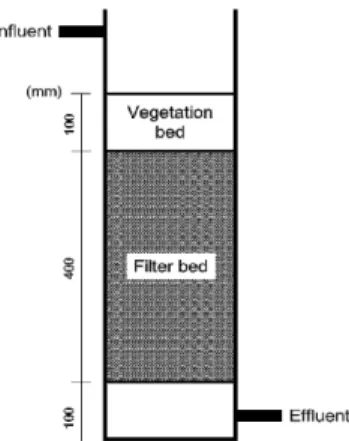
Fig. 2. Diagram of the reactor used for the filtration experiment.
2.2 실험 방법 2.2.1 등온흡착실험
여과 실험을 수행하기 전 Adphos의 인 (P) 흡착 특성을 파악하기 위하여 등온흡착실험을 선행하였다. 흡착실험 은 용액에 여재를 넣어 농도변화를 측정하는 회분식 흡착- 탈착방법으로 진행하였으며 이는 유체가 흐르지 않는 조건 하에서 충분한 시간 동안 물질과 흡착제 간에 물질전달이 일어나는 정적인 방법이다 (Pak 2016).
흡착실험에 사용한 용액은 증류수에 KH2PO4 (분자량 136.09, 순도 99.0%)를 용해하여 초기 인산염 인 (PO43--P) 농도 각각 0, 1, 2.5, 5, 10, 20, 50, 100 및 150 mg/L로 제조 하였고 이 실험용액에 약 5 g 의 여재를 침지한 후 상온조 건에 24시간 방치하였다. 방치 후 용액에 잔류한 PO43--P 농도를 측정하여 여재에 흡착된 물질의 양 q (mg/g)을 Eq. 1과 같이 산출하고 (Volesky 1990), 초기 농도와 평 형농도를 등온흡착모델인 Langmuir 모델 (Eq. 2, 3)과 Freundlich 모델 (Eq. 4)에 적용하여 상관계수 (R2) 값이 높은 것으로 평가된 모델을 최적의 모델로 선정하였다 (Lee et al. 2009, Hong et al. 2010).
q V × s
Ci Ce
(Eq. 1)
여기에서 V는 용매의 부피 (L), Ci는 초기 PO43--P농도 (mg/L), Ce는 잔류 PO43--P 농도 (mg/L), S는 여재 (adphos) 질량 (g), q는 흡착량 (mg/g)이다.
qm
q b× Ce b× Ce
(Eq. 2)
여기에서 q는 흡착량 (mg/g), qm는 최대 흡착량 (mg/g), b 는 흡착 강도 (L/mg) 및 Ce는 평형에 도달한 후 PO43--P의
잔류 농도 (mg/L)이다.
Ce
bqmq
b (Eq. 3)
여기에서 q는 흡착량 (mg/g), qm는 최대 흡착량 (mg/g), b 는 흡착 강도 (L/mg) 및 Ce는 평형에 도달한 후 PO43--P의 잔류 농도 (mg/L)이다.
q KF× Cen (Eq. 4)
여기에서 q는 흡착량 (mg/g), Ce는 평형에 도달한 후 PO43--P 의 잔류 농도 (mg/L), KF및 1/n Freundlich 계수이다.
PO43--P농도 측정방법은 환경부 고시 수질오염공정시 험기준에 의거하여 자외선분광법 (아스코르빈산 환원법) 을 적용하였다 (Ministry of Environment 2015).
2.2.2 여과실험
융복합형 여과 실험을 위하여 실험실 수준의 반응기를 제작하였다. 반응기는 가로, 세로, 높이 200 mm × 200 cm × 750 mm 규격으로 총 용적 30 L로 제작하였으며 칼 럼의 하단 100 mm 지점에 여재의 유출을 막고 유출수의 채취를 위한 정류벽을 설치하였다. 여재부는 정류벽의 위 인 하부 100 mm 지점부터 500 mm 지점까지, 여층 두께 400 mm로 Adphos를 충진하였다. 또한 여재부의 상부에 기반재인 야자섬유 롤을 100 mm 두께로 깔고 식물을 식 재하여 식생부를 구성하였다. 반응기의 구조를 Fig. 2에 모식도로 나타내었다.
Table 2. Water quality of influent used in this experiment.
SS (mg/L) 39 2 – 110
BOD (mg/L) 8.0 4.0 – 16.2
T-N (mg/L) 3.69 1.16 – 7.25 T-P (mg/L) 1.24 0.15 – 4.86
(a)
(b)
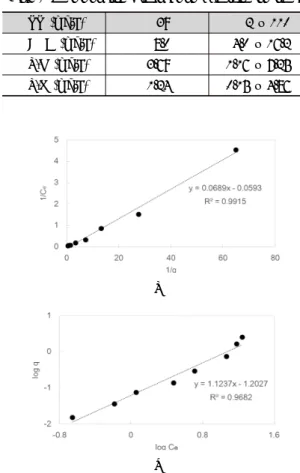
Fig. 3. Langmuir (a) and Freundlich (b) isotherm model fitting for adsorption of phosphate (P) by the filter media, Adphos.
Table 3. Comparisons of maximum adsorption amount of various adsorbents.
Adsorbent qm (mg/g) Reference
Adphos 1.162 This study
Ca-impregnated activated alumina 2.457 – 2.747 Kang (2013)
Biochar derived from oak tree 0.1 Choi (2016)
Lanthanum (Ⅲ) loaded granular ceramic 1.047 Chen et al. (2012)
Oyster shell 0.833 Lee et al. (2003)
Olivine 1.029 – 1.507 Lee and Yim (2011)
Pinus rigida powder 0.216 – 2.980 Jeong (2015)
원수는 정량펌프 (제조사 Shenchen Pump, 모델 YZ35) 를 이용하여 유입선속도 60 m/day를 유지하였고, 일반적 인 하향류 방식으로 식생부에 분사하였다. 유입수는 K 대 학교 하수처리수를 희석하여 사용하였으며 유입수의 수질 자료를 Table 2에 제시하였다. 반응기는 일일 8 시간 가동 하였고, 유입수 및 유출수의 채수는 1일 2회 1 L씩 수행하
였으며 총 71일 동안 실험을 지속하였다. 여과에 의한 제 거효율은 유입수 대비 유출수의 농도 비교를 통하여 측정 하였다. 측정항목은 부유물질 (SS), 총 질소 (T-N), 총 인 (T-P) 3가지 항목이며 각각 환경부 고시 수질오염공정시 험기준 에 의거하여 SS는 유리섬유여과법, T-N은 자외선 분광법 (산화법), T-P는 자외선분광법 (아스코르빈산 환 원법)을 적용하여 분석하였다 (Ministry of Environment 2015).
3. 결과 및 고찰
3.1 등온흡착실험
Adphos의 인 흡착실험 결과를 Langmuir 및 Freundlich 의 등온흡착 모델에 적용하였다 (Fig. 3). Langmuir 모델 에 적용 시의 상관계수 (R2) 값은 0.9915이며 Freundlich 모델에 적용 시의 상관계수 (R2) 값은 0.9682이었다. 따라 서 Adphos의 인 흡착동특성은 Langmuir, Freundlich 모 델 양쪽에 높은 유의성을 보이나 상대적으로 R2 값이 높은 Langmuir 흡착모델에 더 적합한 것으로 분석되었다.
Langmuir 등온흡착 모델은 흡착표면의 에너지 분포가 균 일한 비기능성 고분자 흡착제에 의한 흡착에 적합하다고 알려져 있으며 (Ruthven 1984), 일반적으로 흡착제의 흡 착 사이트에 대해 용매와 흡착질 간의 경쟁이 강하지 않고 흡착질이 흡착제의 표면에 단층 (monolayer)으로 흡착하 는 경우로 해석된다 (Na et al. 2011). Langmuir 등온흡 착식 (Eq. 2)를 선형화하여 얻은 Eq. 3 중 qm값은 단분자 층을 형성하는 포화흡착량을 나타내는 값으로 최대흡착량 을 의미하며, 이에 따라 Adphos 여재의 인산염 최대흡착 량은 1.162 mg/g으로 산출되었고 b 값에 따른 흡착강도 는 0.0593 L/mg로 산출되었다. 타 여재의 최대흡착량을 참조한 바 (Table 3), Adphos는 양호한 인 흡착능을 가진
(a)
(b)
(c)
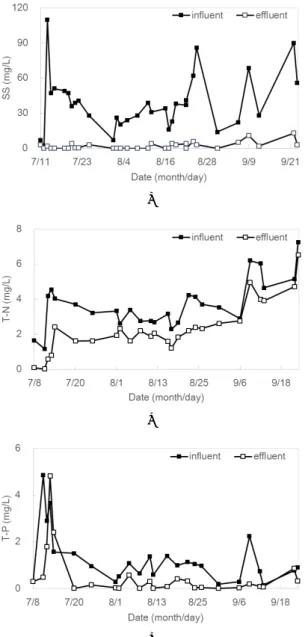
Fig. 4. Removal of suspended solids (SS), total nitrogen (T-N) and total phosphate (T-P) by filtration experiment using the filter media, Adphos.
것으로 판단되며 흡착특성은 여재 표면의 단분자층에서 이루어진다고 판단된다.
3.2 여과실험
71일 동안 유입수 대비 유출수의 SS, T-N, T-P 농도 변 화를 관찰한 결과를 각각 Fig. 4에 나타내었다. SS 항목의 경우 유입수 농도는 2-110 mg/L의 범위로 평균 39 mg/L 로 나타났고 유출수 농도는 0-13 mg/L의 범위로 평균 2
mg/L였다. 제거효율은 57-100% 범위로 나타났으며 평 균 94%로 대부분의 부유물질이 저감되었다. 실험 종료 시 까지 SS 제거효율의 감소가 뚜렷하게 관찰되지 않았으므 로, Adphos의 SS 제거기작은 대부분 공극에 의한 부유고 형물의 단순 포집으로 판단된다. 따라서 SS 유입농도가 낮 은 하천 또는 호소에 시설을 설치할 경우 여과기의 운전가 능시간을 증대시킬 수 있을 것으로 사료되나 (Lee et al.
2015), 여재 폐색 및 여과층 내에 포획된 오염물 재유출 등 의 문제점 해결이 요구된다 (Park et al. 2008, Kim et al.
2009).
T-N 항목의 경우 유입수 농도는 1.164-7.254 mg/L의 범위로 평균 3.689 mg/L로 나타났고 유출수 농도는 0.024- 6.534 mg/L의 범위로 평균 2.313 mg/L이었다. 제거효율 은 5-98% 범위로 나타났으며 평균 41%로 나타났다. 그러 나 총 71일간의 여과실험 중 초기인 7월의 제거효율이 평 균 72%를 기록한 것에 비하여 여과실험 후기인 9월의 제 거효율은 16%로 하락하여 장기 운전에 따른 여재의 성능 저하가 뚜렷하게 관찰되었다.
T-P 항목의 경우 유입수 농도는 0.150-4.860 mg/L의 범위로 평균 1.243 mg/L로 나타났고 유출수 농도는 0.012-4.812 mg/L의 범위로 평균 0.538 mg/L이었다. 제 거효율은 -53-99% 범위이며 평균 64%를 나타냈다. 실험 초기인 7월에 단기적으로 인의 용출이 일어나 평균 제거효 율 32%를 나타냈으나 실험 중기인 8월에는 평균 84%로 우수하며 안정적인 인 제거효율을 보였고, 실험 후기인 9 월에 다시 제거능이 평균 62%로 저하되는 현상을 보였다.
여과실험 지속에 따른 제거효율의 저하가 비교적 뚜렷하 게 관찰되었으므로 Adphos에 의한 인 제거기작은 화학적 침전에 의한 제거로 판단된다. 인의 화학적 침전에 많이 이 용되는 금속이온은 Al3+, Fe3+ 등이 대표적인데, 이러한 알 루미늄 이온과 철 이온이 수체 내의 인산염 이온과 결합하 여 침전을 유발하고 수산화이온을 방출하는 기작이다 (Choi 2012). Adphos 주요 성분의 60% 이상이 Fe2O3, Al2O3 등으로 구성되어 있으므로 여재 표면에서 화학적 침전이 활발하게 일어나 수체 내의 인을 효과적으로 제거 하였을 것으로 분석되나, 이러한 ligand exchange는 pH 환경에 큰 영향을 받으므로 향후 실제 환경에 적용 시 유입 수의 pH 조건을 고려해야 할 것으로 사료된다 (Kim et al.
2016).
4. 결 론
본 연구에서는 여재와 식생이 결합된 수질정화기술 개 발을 위하여 여재 Adphos의 인 흡착특성을 파악하고, 실 험실 규모 반응기를 제작하여 장기 운전에 따른 SS, T-N, T-P 제거효율을 검토하였다. Adphos의 인산염 흡착특성 은 Langmuir 등온 흡착 모델에 적합한 것으로 나타났으 며 이에 따른 최대흡착량은 1.162 mg/g으로 산출되었다.
반응기를 통하여 71일 간의 여과실험을 지속한 결과 SS 제거효율은 평균 94%로 대부분의 부유물질이 저감되었 다. T-N 제거효율은 평균 41%, T-P 제거효율은 평균 64%를 나타내 우수한 저감효율을 보였으나 반응기를 장 기간 운전하며 실험 후기에 제거효율의 하락이 관찰되었 다. 실험실 수준 실험 결과에 따라 식생 및 여재의 융복합 형 정화기술의 성능이 우수한 것으로 사료되며, 인공부도 의 장기 운영에 따른 제거효율의 저하를 극복할 여재의 교 체 또는 역세척 등의 유지관리 방안이 요구된다.
감사의 글
본 연구는 국토교통부 물관리연구사업, 자연과 인간이 공존하는 생태하천 조성기술개발 연구단 (GREEN RIVER) (12기술혁신C02)의 연구비 지원에 의해 수행되었습니다.
References
Ahn, C.W., Lee, D.W., Lee, S.I. and Kim, J.W. 1994.
Effect of watercress (Oenanthe Javanica), loach (Misgurunus anguillicaudaius), and sediment on water quality in wetland microcosm. Korean Society of Water Quality 1994: 122-127. (in Korean) Ansola, G., Fernfindez, C. and deLuis, E. 1995. Removal
of organic matter and nutrients from urban wastewater by using an experimental emergent aquatic macrophyte system. Ecological Engineering 5: 13-19.
Asai, T., Rei, M., Mizuniwa, C. and Kondo, M. 2006.
A study of phytoaccumulation for Cd by Iris.
Randosukepu Kenkyu 69(5): 451-454. (in Japanese) Barbolani, E., Clauser, M., Pantani, F. and Gellini, R.
1986. Residual heavy metal (Cu and Cd) removal by Iris
pseudacarus. Water, Air, & Soil Pollution 28: 277-282.
Chen, N., Feng, C., Zhang, Z., Liu, R., Gao, Y., Li, M. and Sugiura, N. 2012. Preparation and characterization of
lanthanum (III) loaded granular ceramic for phosphorus adsorption from aqueous solution. Journal of the Taiwan Institute of Chemical Engineers 43: 783-789. (in Chinese) Choi, D.H. 2012. The Study of Adsorbent Development
for Removal of Low Phosphorus Concentration. Master Thesis, Ulsan University, Ulsan, Korea. (in Korean) Choi, Y.S. 2016. Adsorption Characteristics of Nitrogen
and Phosphate Using Biochar Derived from Rice Hull and Oak Tree. Master Thesis, Chungnam National University, Daejeon, Korea. (in Korean)
Hong, K.C., Lee, S.S., Yang, J.E. and Ok, Y.S. 2010.
Development of precious metal recovery process using agricultural by-product: immobilization method and maximum adsorption capacity for gold by chestnut shell. Journal of Agriculture and Life Sciences 22:
9-17. (in Korean)
Jeong, M.S. 2015. Nitrogen and phosphate removal from wastewater by surface-modified Pinus rigida powder.
Journal of Water Treatment 23(2): 27-38. (in Korean) Kang, S.C. 2013. Removal of Phosphate by Adsorption
Using Ca-impregnated Activated Alumina. Doctor Thesis, Ulsan University, Ulsan, Korea. (in Korean) Kim, B.C., Kim, D.S., Lee, C.G. and Ahn, T.S. 1996.
Comparative Study on Ecological Engineering for Lake Water Improvement Between Kangwon-Do and Nagano- Ken. Final Report, Environmental Research Institute of Kangweon National University, Chuncheon, Korea. (in Korean)
Kim, G.Y. 2007. A Study on Treatment of Low Concentration Waste Water Using a Polyethylene Media. Master Thesis, Hanbat National University, Daejeon, Korea. (in Korean)
Kim, J.A., Choi I.S., Oh J.M, Kim W.J. and Park J.R.
2016. Comparisons of regeneration methods using physical and chemical treatment for phosphate removal restoration of filter media. Ecology and Resilient Infrastructure 3: 200-206. (in Korean) Kim, J.G., Kang, Y.T., Song, K.K. and Han, S.Y. 2009.
A Study on the removal characteristics of non-point pollutants using the inclined sedimentation and high-rate filtration. Korean Society on Water Environment and Korean Society of Water and Wastewater. pp. 379-380. (in Korean)
Kwon, O.B. 1999. A Study on the Improvement of Water Quality and Restoration of Ecosystem in the Lakes and Marshes with Vegetated Artificial Floating Island. Master Thesis, Hanyang University, Seoul, Korea. (in Korean)
Lee, B.Y., Lee, J.W., Kim, K.D., Yi, S.K. and Jung, S.B.
1992. A study on the efficient utilization of aquaculture greenhouse by paralleling vegetable nutrient culture systems. Journal of Bio-Environment Control 1(2):
123-134. (in Korean)
Lee, H.J., Seo, D.C., Cho, J.S. and Heo, J.S. 2003. Screening of the optimum filter media in the constructed wetland systems through phosphorus adsorption capacities.
Korean Journal of Environmental Agriculture 22(2):
148-152. (in Korean)
Lee, H.Y., Hong, K.C., Lim, J.E., Joo, J.H., Yang, J.E. and Ok, Y.S. 2009. Adsorption of heavy metal ions from aqueous solution by chestnut shell. Korean Journal of Environmental Agriculture 28(1): 69-74. (in Korean) Lee, J.H., Yang, S.H. and Bang, K.W. 2015. The
performance of pollutant removal using nonpoint treatment filtration device and analysis of the filter backwashing effect. Journal of Korean Society on Water Environment 31(5): 523-532. (in Korean)
Lee, Y.H. and Yim, S.B. 2011. Adsorption removal of phosphate from aqueous solution by Olivine. Journal of Korean Society on Water Quality 27(4): 516-522. (in Korean)
Ministry of Environment. 2015. Standard Method for Water Pollution. Ministry of Environment, Sejong, Korea. (in Korean)
Na, C.K., Jeong, J.H. and Park, H.J. 2011. Applicability of theoretical adsorption models for studies on adsorption properties of adsorbents (I). Journal of Korea Society Environmental Engineering 34(4): 260-269. (in Korean) Pak, H.J. 2016. Evaluation of Langmuir Adsorption Isotherm
Measurement Method for SMB Chromatography Process of Sugar Separation. Master Thesis, Inha University, Incheon, Korea. (in Korean)
Park, H.J., Baek, H.O. and Kim, B.G. 2008. Experimental study on the fouling of up flow non-point source filtering
system. Korean Society on Water Environment and Korean Society of Water and Wastewater. pp. 486-487. (in Korean)
Park, Y.I., Kim, H.G. and Kim, Y.Y. 1996. Uptake of heavy metal ions by water dropwort (Oenanthe stolonifera DC.) and identification of its heavy metal binding protein. Journal of the Korean Society for Applied Biological Chemistry 39(6): 494-500. (in Korean) Reed, S.C., Middlebrooks, E.J. and Crites, R.W.
1995. Natural Systems for Waste Management and Treatment. McGraw-Hill, New York, USA.
Richardson, C.J. 1995. Wetlands ecology. In, Nierenberg, W.A. (ed.), Encyclopedia of Environmental Biology.
Academic Press, San Diego, USA. pp. 535-550.
Ruthven, D.W. 1984. Principles of Adsorption and Adsorption Process. John Wiley & Sons, New York, USA.
Seo, D.C. 2005. Development of Treatment Process of Biological Nitrogen and Phosphorus in Sewage Treatment Plant by Natural Purification System.
Doctor Thesis, Gyeongsang National University, Jinju, Korea. (in Korean)
Shen, D.H. 2013. A Study on Removal of Low NBD COD Using Coagulants. Master Thesis, Daejeon University, Daejeon, Korea. (in Korean)
Thunhorst, G.A. 1997. Wetland Planning Guide for the Northeastern United States: Plants for Wetland Creation.
Environmental Concern, Inc., St. Michaels, Maryland, USA.
Volesky, B. 1990. Biosorption of Heavy Metals. CRC Press, Boca Raton, USA.
Vymazal, J. 1998. Removal mechanisms and types of constructed wetlands. In Vymazal, J. (ed.), Natural and Constructed Wetlands: Nutrients, Metals and Management. Backhuys Publishers, Leiden, The Netherlands. pp. 17-66.