Brain & NeuroRehabilitationVol. 8, No. 2, September, 2015
http://dx.doi.org/10.12786/bn.2015.8.2.81
Review Article
경두개 직류전기자극을 이용한 운동 학습 증진
1부산대학교병원 재활의학과, 2부산대학교 의학전문대학원 재활의학교실 및 양산부산대학교병원 의생명융합연구소
고성화1ㆍ신용일2
Enhancing Motor Learning with Transcranial Direct Current Stimulation
Sung-Hwa Ko, M.D.1 and Yong-Il Shin, M.D., Ph.D.2
1Department of Rehabilitation Medicine, Pusan National University Hospital, 2Department of Rehabilitation Medicine, Pusan National University School of Medicine and Research Institute for Convergence of Biomedical Science and Technology, Pusan National University Yangsan Hospital
Motor learning is a relatively permanent change of improving motor skills, resulting from repetitive training and an im- portant process of motor recovery in neurorehabilitation. There are various methods of physical therapies, medications, stem cell therapy, invasive and non-invasive neuromodulation techniques for recovery of motor function after stroke. In this review, we describe motor learning and transcranial direct current stimulation among noninvasive neuromodulation techniques to enhance the motor learning. (Brain & NeuroRehabilitation 2015; 8: 81-85)
Key Words: motor learning, neurorehabilitation, plasticity, transcranial direct current stimulation
Correspondence to: Yong-Il Shin, Department of Rehabilitation Medicine, Pusan National University School of Medicine, 20 Geumo-ro, Mulgeum-eup, Yangsan 50612, Korea
Tel: 055-360-2872, Fax: 055-360-4251 E-mail: [email protected]
This work was supported by a 2-Year Research Grant of Pusan National University.
서 론
운동 학습(motor learning)이란 훈련을 통해 향상된 운 동 능력이 상대적으로 영속적인 변화를 보이는 것으로 정 의할 수 있다. 훈련을 통해 학습이 일어나기 위해서는 부 호화(encoding), 강화(consolidation) 저장(storage), 인출 (retrieval)과 같은 일련의 과정이 필요하다. 즉, 무수히 반 복된 훈련을 통해 운동에 대한 기억이 형성되고, 강화의 단계를 거치면서 이전 연습에서 부호화되었던 불안정한 운동 수행 능력이 영구적이고 안정된 형태로 변화되어 나 타나는 것이다.1,2 이는 특히 뇌졸중과 같이 중추신경계 손 상으로 인한 운동 기능 저하를 보이는 환자에서 운동 기능 을 회복시키는 중요한 방법의 하나이다. 운동 학습을 강화 시키기 위한 방법으로는 다양한 운동 훈련 기법, 약물 치 료, 침습적 및 비침습적 뇌신경조절 기술 등이 있다. 본 종설에서는 운동 학습과 이를 강화하기 위한 비침습적 뇌 신 조절 기술 중 주로 경두개 직류전기자극(transcranial
direct current stimulation, tDCS)이 운동 학습에 미치는 영 향에 대해 기술하고자 한다.
본 론
운동 학습은 반복된 훈련을 통해 오류(error)를 수정하 는 기술을 습득하는 것으로, 운동 수행(motor perfor- mance)과는 다르다.3 감정의 변화나 동기(motivation) 등 의 여러 내외적인 조건이나 환경적 인자들의 영향을 받아 일시적으로 나타나는 행동이거나 수 차례의 반복 훈련을 하였지만 다시 재현하지 못하는 경우는 운동 학습이 아닌 단순한 운동 수행의 단계라고 할 수 있다. 즉, 운동 학습은 운동 수행과 구분하여 효과가 지속되는 특징을 가지고 있 어야 한다. 운동 학습은 반복되는 훈련과 경험을 통해 향 상되는 기술이라는 점에서 ‘기억(memory)’의 과정과 같은 맥락을 가진다.
일반적으로 학습(learning)과 기억의 형성과정은 외현 기억(explicit memory)과 내현 기억(implicit memory)으로 구분된다.4 외현 기억 또는 학습은 사실과 상황에 따른 의 식적인 기억 반응으로 감각 연합 피질과 내측두엽, 해마 등에서 일어난다. 이에 반해 내현 기억 또는 학습은 많은 반복적 자극과 훈련에 의해 형성된 무의식적이고 반사적 인 반응으로, 비연합 학습(non-associative learning), 연합
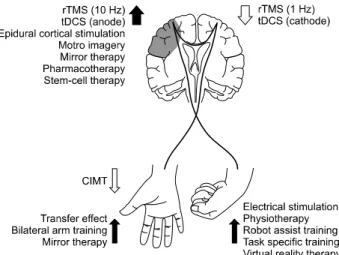
Fig. 1. Neuromodulation techniques for improving motor function after stroke.
학습(associative learning)과 절차 학습(procedural learning) 을 통해 향상된 수행 능력이 습관화되는 것이라 할 수 있 다. 이는 주로 편도체, 소뇌, 기저핵, 보조 운동 영역 등에 서 관장된다. 대부분의 운동 학습은 이러한 외현 학습과 내현 학습의 연합작용을 통해 나타난다. 자전거 타기를 처 음 배울 때, 순차적 또는 인위적으로 체중 이동 방법과 체 간 조절 방법을 배우고 조정간과 페달의 작동법을 배워서 넘어지지 않고 앞으로 나아가는 것을 습득하는 것과 같이 특정하게 제공된 훈련에 대해 기억하고 학습하는 것이 외 현 학습이다. 반면에 이러한 과정이 지속적이고 반복적인 훈련을 통해 몸에 배이게 되면 본인도 모르게 반사적으로 자전거를 탈 수 있게 되고 배울 때와 똑같은 환경이 아닌 상황에서도 자전거 타기가 가능하게 되는데, 이것은 외현 학습에서 내현 학습의 단계로 전환됨으로써 더 이상의 훈 련이 없이도 운동 기술을 수행할 수 있게 되는 것이다.5 재활의 측면에서 볼 때 운동 학습은 뇌손상 등으로 인하 여 운동 능력이 저하된 환자들에게 있어 운동 기능을 다시 획득하기 위한 중요한 방법이다. 외현 학습을 이용해 치료 실에서 환자로 하여금 주의 집중을 한 상태로 동작의 순차 적인 단계를 의도적으로 기억하게 하고, 이를 반복함으로 써 내현 학습이 일어나도록 할 수 있다. 이를 통해 운동 기능 수행 능력이 습관화되고 다른 환경에서도 수행이 가 능하도록 전이가 이루어진다. 이와 같이 운동 기능이 치료 실이 아닌 병실에서나, 치료 당일이 아닌 다음 날에도 지 속적이고 일정하게 나타날 수 있게 되는 것이 재활 치료를 통한 운동 학습의 효과라 할 수 있다. 기억의 습득 과정과 같이 재활 치료의 효과가 지속되기 위해서는 외현 학습에 의해 습득된 기억이 부호화-강화-저장-인출과 같은 일련 의 과정을 통해 내현 학습 또는 기억으로 전환되어야 한 다. 이때 수면이 강화의 단계에서 중요한 역할을 하며 특 히 rapid eye movement (REM) 수면, non-rapid eye move- ment (NREM) 수면 2단계, 서파 수면(slow-wave sleep)과 깊은 연관성을 보인다.6,7 그러므로 운동 기능 장애가 있는 환자에서 재활 치료를 통한 운동 학습의 효과를 유지, 증 진시키기 위해서는 수면의 조절과 같은 환경적 측면의 조 절도 중요한 영역이라 할 수 있다.
반복된 재활 치료에 의한 운동 학습은 운동 피질 활성 영역의 확대 및 신경회로망의 재조직 등과 뇌신경계에 직 접적인 변화를 동반한 기능 회복으로 알려져 있으며, 뇌 가소성(brain plasticity)과 연관지어 설명할 수 있다.8-10 즉, 다람쥐원숭이의 손에 해당하는 일차 운동 피질 영역 (primary motor cortex, M1)에 손상을 주고 3∼4개월 이 후 재활 훈련을 한 집단과 하지 않은 대조군 집단의 비교 했을 때 재활 훈련을 실시한 집단에서 손 기능과 관련된
피질영역(cortical map)이 팔꿈치와 어깨에 해당하는 영역 으로 확장됨과 더불어 손의 기능적 회복을 보이는 재생 가소성(restorative plasticity)과 같은 현상이 나타난다.11
뇌졸중 후 상실된 운동 기능과 관련된 뇌 영역의 활성화 와 가소성을 증진시키기 위해서 다양한 방법이 이용되고 있다. 말초신경계의 자극을 통한 기능 회복과 관련된 뇌 영역의 가소성 증진을 위해 기능적 전기자극치료, 반복적 인 중추신경계 발달 치료, 로봇 치료, 건측억제유도 운동 치료, 과제지향적 반복 훈련, 가상현실 치료 등이 이용된 다 운동 기능 회복과 연관된 뇌 영역의 활성화를 위해 운 동연상, 거울 치료, 약물 치료, 줄기세포 치료와 같은 방법 을 사용할 수 있으며, 직접적으로 뇌 영역의 전기생리학적 변화를 유도하기 위하여 경두개 자기자극(transcranial mag- netic stimulation, TMS) 치료, 경두개 직류전기자극(tran- scranial direct current stimulation, tDCS) 치료, 경막외 뇌 피질 전기자극(epidural cortical stimulation) 치료 등을 사 용할 수 있다(Fig. 1). 뇌졸중 후 운동 기능의 회복을 강화 하기 위한 다양한 시도가 이루어지고 있으며, 특히 최근 수 년간 경두개 자기자극치료와 경두개 직류전기자극치 료 같은 비침습적 뇌자극법을 이용한 연구가 활발히 이루 어지고 있다. 이중에서 경두개 직류전기자극치료와 관련 된 기초적인 배경을 보았을 때, 기억과 학습을 위해서는 뇌 신경세포의 분자적 수준에서의 변화가 필요하며, 헤비 안 학습(Hebbian learning)의 법칙에 따라 일어나는 장기 상승 작용(long term potentiation, LTP)과 장기 하강 작용 (long term depression, LTD)의 시냅스 전/후 신경세포의 활동이 기억과 학습의 중요한 기전으로 알려져 있다.12,13 경두개 직류전기자극은 N-methyl-D-aspartic acid (NMDA) 수용체의 조절을 통해 LTP과 LTD 유사 반응을 이끌어내
고, Brain-derived neurotrophic factor (BDNF) 의존적 시 냅스 가소성(synaptic plasticity)과 관련된 messenger ribonucleic acid (mRNA)의 발현을 증가시킨다고 알려져 있어 운동 학습의 강화에 효과적일 수 있다.14-17
임상적으로 비침습적 뇌신경조절 기술의 운동 학습의 효과에 대해서 Reis 등18의 여러 전문가들은 기존 연구들 을 종합하여 건강한 성인뿐 아니라 신경학적, 정신적 질환 을 가진 환자에게서도 경두개 자기자극치료와 경두개 직 류전기자극치료가 운동 기억 형성(motor memory formation) 과 운동 학습을 향상시킬 수 있다고 발표하였다. 정상인에 게 tDCS를 M1에 적용하여 운동 속도와 기민성(dexterity) 향상 및 내현 운동 학습을 호전시킬 수 있다는 연구는 약 10여 년 전부터 이루어져 왔고,19 정상인에서의 운동 학습 과 습관화에 대한 다양한 연구는 최근까지도 계속되고 있
다.20-22 Boggio 등20은 우성수와 비우성수에서 양극의
tDCS를 각각 우성반구와 비우성반구의 M1에 적용하여 손 운동 기능의 호전에 대해 비교하였는데, 비우성수에서 의미 있는 호전을 보임으로써 비우세반구의 M1에 적용한 양극 tDCS가 운동 기능 증진을 보인 것은 tDCS가 피질의 가소성(cortical plasticity)을 일으켜 행동을 변화시킬 수 있기 때문이라고 설명된다. Kuo 등21의 연구에서는 tDCS 의 오프라인 강화 효과는 확인할 수 없었다고 하였지만 이후, 이와 다른 결과의 연구들도 발표되고 있다. Reis 등22 의 연구에서는 건강한 성인을 대상으로 순차 시각 등척성 집기 과제(sequential visual isometric pinch task)를 시행하 는 중 tDCS를 좌측 M1에 1 mA의 강도로 5일간 20분간 적용하고, 자극을 하는 5일간 매일 1회씩과 자극 시작 8일 부터 85일까지 5회, 총 10회의 속도-정확성 상관관계 (speed-accuracy trade off function)를 확인한 결과 대조군 에 비해 양극 tDCS군에서 5일간 훈련 중 매일 평가한 수 행 능력과 일 간의 훈련과 훈련 사이에 평가한 수행 능력 이 통계적으로 유의한 향상을 보였다. 5일간의 훈련 이후 85일까지 망각 속도는 두 군간에 차이가 없었으나 85일째 의 운동 기술은 양극 tDCS군에서 대조군보다 우월한 결과 를 보였다. 이를 통해 tDCS가 정상인에서 운동 학습의 장 기 유지(long-term retention)는 유의하게 향상시키지 못하 지만 온라인 기술 습득과 특히 오프라인 강화로 운동 기술 의 습득을 증진시킴을 알 수 있었다. 자극의 극성과 시간- 의존효과를 확인하고자 한 또 다른 연구에서는 tDCS를 15분간 1 mA의 강도로 양극 tDCS군과 음극 tDCS군, sham tDCS군으로 나누어 적용하였을 때에는 운동 반응 시간은 각 군간에서 차이가 나지 않았지만, tDCS자극과 훈련 시간에 따라 다르게 시행한 결과, 자극과 훈련을 동 시에 수행하였을 때에는 양극 tDCS및 sham tDCS군에서
음극 tDCS군보다 외현 순서 학습 과제(implicit sequence learning task)에서 운동 학습이 더 빨리 나타났지만 훈련 전 tDCS자극을 적용하였을 때에는 오히려 양극 tDCS와 음극 tDCS가 sham군보다 학습속도가 더 느려졌다.23 이와 같은 결과는 Lang 등24의 연구에서 정상인을 10명에게 전 처치 음극 tDCS 후에 5 Hz rTMS를 시행하였을 때, 피질 흥분도가 의미 있게 증가하였고 반대로 양극 tDCS후 5 Hz rTMS를 시행하였을 때, 피질 흥분도가 감소하는 양상 을 나타냈으며 sham TMS를 시행하였을 때에는 피질흥분 도의 변화가 나타나지 않았던 결과와 같은 의미로, 메타가 소성 메커니즘의 항상성 가소성(homeostatic plasticity)이 라는 개념으로 설명할 수 있다.25
이와 같이 정상인의 운동 학습과 관련된 tDCS 적용에 대한 연구는 많이 이루어져 온 것에 비해, 뇌손상 환자에 서의 tDCS 적용은 주로 인지기능 또는 상하지 운동 기능 에 주로 초점이 맞추어져 있었다.26-29 그러나 최근에는 뇌 졸중 환자에서 운동 학습과 관련된 tDCS의 연구가 활발히 이루어지고 있다.30-32 12명의 만성 피질하 뇌졸중 환자들 에게 병변 반대측 M1에 음극 tDCS를 20분간 적용한 뒤, 90분 이후와 24시간 이후의 평가에서 모두 sham군에 비 해 실험군에서 운동 수행 능력이 향상되어, 운동 학습이 이루어졌음을 추정할 수 있었고, tDCS를 적용하는 중의 5회 추적 평가에서도 sham 군에 비해 운동 수행 능력이 유의하게 증가되어 tDCS가 운동 학습의 온라인 효과 또한 가진다고 할 수 있다.30 Lefebvre 등31은 만성 뇌졸중 환자 에서 dual-tDCS를 적용하여 마비측 손으로 복합적 시지각 기술에 해당하는 회로 게임을 tDCS 적용 중, tDCS 적용 30분 후, 60분 후, 그리고 1주일 후까지 시행하게 하였다.
그 결과 모든 시기에서 sham 군과 비교하여 유의한 향상 을 보여 tDCS가 뇌졸중 환자에게 온라인 운동 학습에서부 터 초기 회상 및 장기간 유지까지, 모든 시기에서 운동 학 습을 증진시킨다고 보고하였다. 같은 연구팀의 최근 연구 에서는 다른 만성 뇌졸중 환자를 대상으로 이전 연구와 동일하게 tDCS를 적용하여 운동 학습 향상시킴을 재차 확 인하고 이와 더불어 tDCS 적용 1주일 뒤 functional mag- netic resonance imaging (fMRI)를 촬영하여 tDCS군이 sham 군에 비해 좀 더 국소적 영역에 피질 흥분을 보임으로써 반복적인 훈련과 함께 tDCS를 적용할 경우 더 효과적인 신경 회복 기전으로 운동 학습을 증진시킴을 알 수 있었 다.32 최근 tDCS의 운동 학습 효과 증진을 위한 연구로는 M1에 자극하는 방법뿐만 아니라 학습과 연관이 있는 소 뇌의 자극에 대한 연구도 진행되고 있다.33,34
결 론
기억 및 학습은 재활의학 영역에서 기능 회복의 중요한 과정이다. 뇌졸중을 비롯한 신경계 문제를 가진 환자의 운 동 학습은 단순하고 일회적인 운동 수행이 아닌, 반복되는 수행 또는 훈련으로 외현 운동 학습을 내현 운동 학습으로 전환시켜 영구적 변화를 유도하는 것을 목적으로 한다. 본 종설을 통하여 tDCS와 같은 비침습적 뇌신경조절 방법이 여러 운동 훈련 방법들과 더불어 신경 가소성의 향상을 통해 운동 학습을 강화시키는 역할을 할 수 있음을 확인하 였다. 향후 tDCS의 자극 위치, 극성, 시간 의존적 효과 등 에 대한 동물 및 임상 연구를 통해 뇌손상 후 기능 회복과 관련된 근거의학 중심의 최적의 치료 프로토콜의 개발이 필요하다.
References
1) Winters BD, Saksida LM, Bussey TJ. Object recognition memory:
neurobiological mechanisms of encoding, consolidation and re- trieval. Neurosci Biobehav Rev. 2008;32:1055-1070
2) McGaugh JL. Memory--a century of consolidation. Science. 2000;
287:248-251
3) Schmidt RA. A schema theory of discrete motor skill learning.
Psychological review. 1975;82:225-260
4) Green RE, Shanks DR. On the existence of independent explicit and implicit learning systems: an examination of some evidence. Mem Cognit. 1993;21:304-317
5) Doyon J, Benali H. Reorganization and plasticity in the adult brain during learning of motor skills. Curr Opin Neurobiol. 2005;15:
161-167
6) Walker MP, Stickgold R. Sleep-dependent learning and memory consolidation. Neuron. 2004;44:121-133
7) Stickgold R. Sleep-dependent memory consolidation. Nature. 2005;
437:1272-1278
8) Karni A, Meyer G, Jezzard P, Adams MM, Turner R, Ungerleider LG.
Functional MRI evidence for adult motor cortex plasticity during mo- tor skill learning. Nature. 1995;377:155-158
9) Doyon J, Song A, Lalonde F, Karni A, Adams M, Ungerleider L.
Plastic changes within the cerebellum associated with motor sequence learning: A fMRI study. NeuroImage. 1999;9:S506-S506
10) Kim YH. Mechanism of neurolasticity after brain injury and neurorehabilitation. Brain NeuroRehabil. 2008;1:6-11
11) Nudo RJ. Remodeling of cortical motor representations after stroke:
implications for recovery from brain damage. Mol Psychiatry.
1997;2:188-191
12) Stanton PK, Sejnowski TJ. Associative long-term depression in the hippocampus induced by hebbian covariance. Nature. 1989;339:
215-218
13) Bliss TV, Collingridge GL. A synaptic model of memory: long-term potentiation in the hippocampus. Nature. 1993;361:31-39 14) Islam N, Aftabuddin M, Moriwaki A, Hattori Y, Hori Y. Increase in
the calcium level following anodal polarization in the rat brain. Brain Res. 1995;684:206-208
15) Nitsche MA, Paulus W. Excitability changes induced in the human motor cortex by weak transcranial direct current stimulation. J Physiol. 2000;527 Pt 3:633-639
16) Nitsche MA, Fricke K, Henschke U, Schlitterlau A, Liebetanz D, Lang N, Henning S, Tergau F, Paulus W. Pharmacological modulation of cortical excitability shifts induced by transcranial direct current stim- ulation in humans. J Physiol. 2003;553:293-301
17) Fritsch B, Reis J, Martinowich K, Schambra HM, Ji Y, Cohen LG, Lu B. Direct current stimulation promotes BDNF-dependent synaptic plasticity: potential implications for motor learning. Neuron.
2010;66:198-204
18) Reis J, Robertson EM, Krakauer JW, Rothwell J, Marshall L, Gerloff C, Wassermann EM, Pascual-Leone A, Hummel F, Celnik PA, Classen J, Floel A, Ziemann U, Paulus W, Siebner HR, Born J, Cohen LG. Consensus: Can transcranial direct current stimulation and trans- cranial magnetic stimulation enhance motor learning and memory formation? Brain Stimul. 2008;1:363-369
19) Nitsche MA, Schauenburg A, Lang N, Liebetanz D, Exner C, Paulus W, Tergau F. Facilitation of implicit motor learning by weak trans- cranial direct current stimulation of the primary motor cortex in the human. J Cogn Neurosci. 2003;15:619-626
20) Boggio PS, Castro LO, Savagim EA, Braite R, Cruz VC, Rocha RR, Rigonatti SP, Silva MT, Fregni F. Enhancement of non-dominant hand motor function by anodal transcranial direct current stimulation.
Neurosci Lett. 2006;404:232-236
21) Kuo M-F, Unger M, Liebetanz D, Lang N, Tergau F, Paulus W, Nitsche MA. Limited impact of homeostatic plasticity on motor learning in humans. Neuropsychologia. 2008;46:2122-2128
22) Reis J, Schambra HM, Cohen LG, Buch ER, Fritsch B, Zarahn E, Celnik PA, Krakauer JW. Noninvasive cortical stimulation enhances
motor skill acquisition over multiple days through an effect on consolidation. Proc Natl Acad Sci U S A. 2009;106:1590-1595 23) Stagg CJ, Jayaram G, Pastor D, Kincses ZT, Matthews PM,
Johansen-Berg H. Polarity and timing-dependent effects of trans- cranial direct current stimulation in explicit motor learning. Neu- ropsychologia. 2011;49:800-804
24) Lang N, Siebner HR, Ernst D, Nitsche MA, Paulus W, Lemon RN, Rothwell JC. Preconditioning with transcranial direct current stim- ulation sensitizes the motor cortex to rapid-rate transcranial magnetic stimulation and controls the direction of after-effects. Biol Psychiatry.
2004;56:634-639
25) Yoo WK. The Concept of Metaplasticity. Brain NeuroRehabil.
2014;7:1-4
26) Hummel FC, Cohen LG. Non-invasive brain stimulation: a new strat- egy to improve neurorehabilitation after stroke? Lancet Neurol.
2006;5:708-712
27) Miniussi C, Cappa SF, Cohen LG, Floel A, Fregni F, Nitsche MA, Oliveri M, Pascual-Leone A, Paulus W, Priori A, Walsh V. Efficacy of repetitive transcranial magnetic stimulation/transcranial direct current stimulation in cognitive neurorehabilitation. Brain Stimul.
2008;1:326-336
28) Madhavan S, Weber KA, 2nd, Stinear JW. Non-invasive brain stim- ulation enhances fine motor control of the hemiparetic ankle: im-
plications for rehabilitation. Exp Brain Res. 2011;209:9-17 29) Boggio PS, Nunes A, Rigonatti SP, Nitsche MA, Pascual-Leone A,
Fregni F. Repeated sessions of noninvasive brain DC stimulation is associated with motor function improvement in stroke patients.
Restor Neurol Neurosci. 2007;25:123-129
30) Zimerman M, Heise KF, Hoppe J, Cohen LG, Gerloff C, Hummel FC.
Modulation of training by single-session transcranial direct current stimulation to the intact motor cortex enhances motor skill acquisition of the paretic hand. Stroke. 2012;43:2185-2191
31) Lefebvre S, Laloux P, Peeters A, Desfontaines P, Jamart J, Vandermee- ren Y. Dual-tDCS Enhances Online Motor Skill Learning and Long-Term Retention in Chronic Stroke Patients. Front Hum Neurosci. 2012;6:343
32) Lefebvre S, Dricot L, Laloux P, Gradkowski W, Desfontaines P, Evrard F, Peeters A, Jamart J, Vandermeeren Y. Neural substrates un- derlying stimulation-enhanced motor skill learning after stroke.
Brain. 2015;138:149-163
33) Celnik P. Understanding and modulating motor learning with cer- ebellar stimulation. Cerebellum. 2015;14:171-174
34) Wessel MJ, Zimerman M, Timmermann JE, Heise KF, Gerloff C, Hummel FC. Enhancing Consolidation of a New Temporal Motor Skill by Cerebellar Noninvasive Stimulation. Cerebral Cortex. 2015.
pii: bhu335. [Epub ahead of print]