• 검색 결과가 없습니다.

S100 expression in dendritic cells is inversely correlated with tumor grade in endometrial carcinoma

N/A
N/A
Protected

Academic year: 2022

Share "S100 expression in dendritic cells is inversely correlated with tumor grade in endometrial carcinoma"

Copied!
7
0
0

로드 중.... (전체 텍스트 보기)

전체 글

(1)

Received: 2013.8.22. Revised: 2013.10.18. Accepted: 2013.11.25.

Corresponding author: Ki Hyung Kim

Department of Obstetrics and Gynecology, Pusan National University School of Medicine, 179 Gudeok-ro, Seo-gu, Busan 602-739, Korea

Tel: +82-51-240-7287 Fax: +82-51-248-2384 E-mail: [email protected]

Articles published in Obstet Gynecol Sci are open-access, distributed under the terms of the Creative Commons Attribution Non-Commercial License (http://creativecommons.

org/licenses/by-nc/3.0/) which permits unrestricted non-commercial use, distribution, and reproduction in any medium, provided the original work is properly cited.

Copyright © 2014 Korean Society of Obstetrics and Gynecology

Introduction

Endometrial carcinoma is the most common malignancy of the female genital tract in the United States. In Korea, the incidence of endometrial cancer has been increasing in recent years; the age standardized incidence rate per 100,000 dur- ing 2010 was 5.0 [1]. The recent increasing prevalence of risk factors such as obesity and diabetes will result in further increases in the incidence of endometrial carcinoma.

Patients with endometrial cancer generally have a good prognosis due to early presentation with postmenopausal bleeding. In addition, early stage cancer does not spread be- yond the uterus. However, recurrent or metastatic endometrial cancers still have a poor prognosis. The improvement of clini- cal outcomes will require a much better understanding of the

processes that inhibit and stimulate cancer progression [2].

Several investigations have assessed different biological

S100 expression in dendritic cells is inversely correlated with tumor grade in endometrial carcinoma

Young Joo Lee 1 , Sun Young Kang 1 , Moo Sung Jo 1 , Dong Soo Suh 1,2 , Ki Hyung Kim 1,2 , Man Soo Yoon 1,2

1

Department of Obstetrics and Gynecology, Pusan National University School of Medicine,

2

Biomedical Research Institute and Pusan Cancer Center, Pusan National University Hospital, Busan, Korea

Objective

The aim of this study was to determine the expression of S100 positive dendritic cells (DCs) and the relationship with clinicopathologic factors in endometrial carcinoma.

Methods

Samples were collected from 89 patients with endometrial endometrioid adenocarcinoma treated in Pusan National University Hospital from 2004 to 2011. Normal endometrial tissues were obtained from 30 hysterectomized women with benign adnexal masses and served as controls. Paraffin-embedded sections were immunohistochemically stained for S100 was performed, and the number of positive DCs was counted. The relationship of these cells to the stage, histological grade, myometrial invasion, and lymph node metastasis was analyzed.

Results

The proportion of S100-positive DCs in the endometrial endometrioid adenocarcinoma was 31.5% (28/89), which was significantly higher (P<0.05) than in the control group. The proportion of S100-positive DC expression was negatively correlated with the histologic grade, but was not associated with the stage, myometrial invasion, or lymph node metastasis.

Conclusion

High DC density was inversely correlated with histologic grade in endometrial carcinoma. Tumor-infiltrating S100+ DCs may be used as pathologic marker in endometrial carcinoma.

Keywords: Dendritic cells; Endometrial neoplasms; S100 http://dx.doi.org/10.5468/ogs.2014.57.3.201

pISSN 2287-8572 · eISSN 2287-8580

(2)

variables in tissue and serum from endometrial carcinoma patients to detect biomarkers predicting the clinical outcome.

These biomarkers could be used for the stratification of pa- tients for better tailored treatment [3].

Recently, an influencing factor in the clinical outcome in human cancers has been found to be linked with the fight between host immunity and the tumor. One component in the tumor microenvironment that plays central role in antitumor immunity is the dendritic cells (DCs). DCs are recognized as the strongest antigen-presenting cells and are potent in the ability to activate initial T-lymphocytes to initiate immune re- sponses [4]. The presence of a large number of DCs in tumor tissues may therefore suggest a favorable prognosis.

A positive association between tumor-infiltrating DCs and clinical prognosis has been reported in a variety of human solid tumors [5]. The S100+ DCs, in particular, represent one of the important factors reflecting the immune system’s ability to in- hibit tumor growth. Available evidence indicates that high num- bers of infiltrating immune cells in the tumor microenvironment correlate with an improved prognosis for cancer patients [6].

In the present study, we analyzed the tumor infiltration of S100+ DCs to determine whether the presence of DCs was associated with known prognostic factors in endometrial car- cinoma. Our data demonstrated that a high rate of infiltration of S100+ DCs was negatively correlated with histologic grade.

Materials and methods

1. Patients and tissue samples

A total of 89 patients with endometrial endometrioid car- cinoma who underwent surgery and were diagnosed from 2004 to 2011 were selected from the archives of the Pusan National University Hospital in this study. All patients under- went a total abdominal hysterectomy and a bilateral salpingo- oophorectomy. More extensive treatment with pelvic and/

or para-aortic lymph node dissection was performed in case of more advanced disease (stage II and higher) or unfavor- able features (grade 2 and higher). H&E stained sections were reviewed and reclassified by World Health Organization guidelines [7]. The following parameters had been evaluated in the tissue materials: histologic type, grade of differentiation, stage, depth of myometrial invasion. This retrospective study was approved by the Ethical Review Committee of Pusan Na- tional University Hospital.

2. Immunohistochemistry

The tissue specimens were fixed in 10% formalin and embed- ded in paraffin. Sections, 4 μm in thickness, were deparaf- finized in xylene and rehydrated through a series of graded ethanol. Endogenous peroxidase activity was blocked by incubation with 3% hydrogen peroxide in methanol for 10 minutes. Antigen retrieval was performed by microwaving the slides in citrate buffer (pH 6.0). The sections were then incu- bated at 4°C overnight with anti-S100 antibody (rabbit poly- clonal, Z0311, 1:400; Dako-Cytomation, Glostrup, Denmark).

Immunoreactivity was visualized using 3,3’-diaminobenzidine (Dako-Cytomation). Slides were counterstained with Meyer’s hematoxylin. Human Schwannoma tissue was used as a posi- tive control and phosphate-buffered saline without the pri- mary antibody served as a negative control.

3. Evaluation of staining

Each slide was evaluated independently by two pathologists who were blinded to clinical and outcome data. Condensed staining areas in the tumor tissue were selected for observa- tion. Areas with maximally positive cells were observed under a microscope at high magnification (×400) and the numbers of S100-positive DCs were counted. Five fields were selected for every section, and the cell numbers were averaged. The patients were divided into 2 groups based on the median S100+ cell counts. DC numbers 10 or greater per high power fields (HPF) were considered a positive group, whereas the one less than 10/HPF was considered a negative group [8].

4. Statistical analysis

For statistical analysis, SPSS ver. 15.0 (SPSS Inc., Chicago, IL, USA) was used. The χ

2

test and Fisher’s exact test were used to evaluate the correlation between the expression of S100 and the clinicopathologic parameters. P-values of <0.05 were considered statistically significant.

Results

1. Patients’ characteristics

The clinicopathological characteristics of the 89 patients are

presented in Table 1. The mean age of the patients was 61

years (range, 40–78 years). Patients with endometrial cancer

included 12 with premenopausal status and 77 with post-

menopausal status. Clinical follow-up was available for all

(3)

cases. The median follow-up period was 64 months (range, 8–84 months). Overall, 86.5% of the patients had early-stage disease (I and II) and 13.5% had advanced-stage disease. In addition, 40.4% had well-differentiated cancer (G1), 32.65%

had moderately differentiated cancer (G2), and 26.9% had poorly differentiated cancer (G3). None of the patients had undergone radiation or chemotherapy before surgery. A to- tal of 30.3% underwent total hysterectomy and a bilateral salpingo-oophorectomy (BSO) alone, while 69.7% underwent total hysterectomy and BSO and pelvic and/or para-aortic lymph node dissection. No patients had remaining macro- scopic tumors at the time of surgery.

2. S100+ dendritic cell infiltration into endometrial carcinoma tissues

S100 antigens were stained in endometrial carcinoma tissues.

Expression of S100 protein was noted in the nucleus and/or in the cytoplasm of DCs, appearing as brown granules. Based on the analysis of the DCs, samples were divided into groups;

one with less than 10 DCs per mm

2

and the other with 10 or more DCs per mm

2

.

Positive DCs were sparse in normal endometrial tissue.

S100+ DCs were observed more frequently in the stroma sur- rounding tumors than within the tumors. The proportion of S100+ DCs in the endometrial adenocarcinoma was 31.5%

(28/89), which was significantly higher (P<0.001) than in the normal endometrial tissues.

3. S100+ dendritic cells infiltration and clinicopathological factors

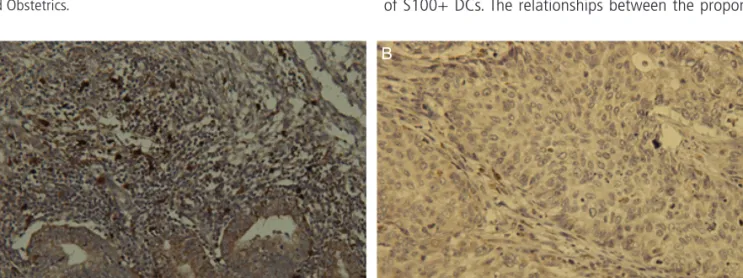
Fig. 1 shows a representative case of endometrioid endo- metrial carcinoma that illustrates the distribution pattern of S100+ DCs. The relationships between the proportion of

Fig. 1. Immunohistochemical staining of dendritic cell infiltration in endometrial carcinoma. Representative patient tissues were highly stained for S100 (A). (B) was patient tissues with low S100 cell count (×400).

A B

Table 1. Clinicopathological characteristics of the patients with endometrial carcinoma

No. of patients (%) Age

≤60 57 (64.0)

>60 32 (36.0)

Menopause

Pre 12 (13.5)

Post 77 (86.5)

BMI

≤25 27 (30.3)

>25 62 (69.7)

FIGO grade

G1 36 (40.0)

G2 29 (32.6)

G3 24 (27.4)

FIGO stage

I 64 (71.9)

II 13 (14.6)

III 10 (11.2)

IV 2 (2.3)

BMI, body mass index; FIGO, International Federation of Gynaecol-

ogy and Obstetrics.

(4)

S100+ DCs and clinicopathological variables are assessed and summarized in Table 2. Tumor grade (P<0.001) was significantly associated with the rate of S100+ DCs. Stage (P=0.094), myometrial invasion (P=0.879), and lymph node metastasis ( P=0.427) were not significantly associated with the proportion of S100+ DCs. Lymph node positive group

are biopsy proven positive cases while lymph node negative group include biopsy proven negative cases and cases with no lymphadenectomy and no significant lymphadenopathy on magnetic resonance imaging.

4. Correlation with survival rate

The correlation between the number of S100+ cells and survival rate is shown in Fig. 2. In the Kaplan-Meier plot for progression free survival and overall survival, a slight tendency towards a higher progression free and overall survival rates for endometrial carcinoma patients with S100 positive DCs, although these were not statistically significant ( P=0.092, P=0.151, respectively).

Discussion

This study examined the prognostic significance of the tumor infiltrating DCs in endometrial carcinoma patients. The present study showed that the proportion of S100-positive DCs was negatively correlated with the histologic grade.

DCs are recognized as the most potent antigen-presenting cells and are useful markers for immune responses because they are capable of inducing cytotoxic T lymphocytes from native T cells. T and B cell’ activation by DCs occurs by pre- sentation of antigens on major histocompatibility complex class I and II molecules. Thus, DCs play a central role in the Table 2. Association of tumor-infiltrating dendritic cells with clini-

copathological parameters

S100 P-value

a)

Positive Negative LN metastasis

Negative 27 (33.3) 54 (66.7) 0.427

b)

Positive 1 (1.3) 7 (98.7)

Myometrial invasion

<1/2 20 (32.8) 41 (67.2) 0.879

>1/2 8 (28.6) 20 (71.4)

FIGO grade

G1 24 (66.7) 12 (33.3) <0.001

G2, G3 4 (8.2) 49 (91.8)

FIGO stage

I–II 27 (35.1) 50 (64.9) 0.094

b)

III–IV 1 (8.3) 11 (91.7)

Values are presented as number (%).

FIGO, International Federation of Gynecology and Obstetrics.

a)
P-values were calculated using the chi-square test. Bold signifies P<0.05;

b)

Fisher’s exact test.

Fig. 2. Kaplan-Meier plot of survival rate. Significant progression free survival (A) and overall survival (B) rate for patients with S100 posi- tive endometrial carcinoma are not demonstrated.

Progression free surviv al r ate (%) Cumulative surviv al r ate (%)

1.0

0.8

0.6

0.4

0.2

0.0

1.0

0.8

0.6

0.4

0.2

0.0

P = 0.151

Time (mo)

0 20 40 60 80 100 0 20 40 60 80 100 Time (mo)

P = 0.092

S100 positive S100 negative

S100 positive S100 negative

A B

(5)

regulation and maintenance of the cellular immune response against cancer. Their presence within the tumors is close relat- ed to favorable prognosis in patients [9]. Immunohistochemi- cal studies have demonstrated that an increased number of S100 positive DCs correlates with a better prognosis in vari- ous types of tumors [10].

The tumor cells secret the pro-inflammatory cytokines, which promotes the infiltration of leukocytes of the innate and adaptive immune system, including macrophages, neutrophils, NK cells, DCs, mast cells, T and B lymphocytes, into the tumor microenvironment. The tumor microen¬vironment in the stro- ma is involved in the neoangiogenesis and in the proliferation and invasion of carcinoma cells. In endometrial carcinoma, higher numbers of stromal macrophages, neutrophils, B and T lymphocytes and DCs were infiltrated when compared with normal endometrial tissue [11].

Kara et al. [12] analyzed the number of S100 DCs in sen- tinel lymph nodes (SLNs) in early-stage endometrial cancer patients and demonstrated that the mean numbers of the S100+ DCs in the tumor-free SLNs were significantly higher than in the tumor-free non-SLNs. A similar result was found in the comparison of metastatic SLNs and metastatic non-SLNs.

The underlying factor for the metastatic involvement of SLNs may be immunosuppression. The number of mature DCs in metastatic SLNs was significantly decreased when compared with tumor-free SLNs.

Similar results have also been were reported for other tumor types. Oka et al. [13] investigated the prognostic significance of S100-positive cells in patients with adenocarcinoma of the cervix and showed that patients with S100-positive cells had significantly better outcomes than women who were negative for S100. Nagorsen et al. [14] found a better survival for both high stromal and epithelial DC infiltration in colorectal carci- noma.

We showed that the proportion of S100+ DCs was signifi- cantly associated with the tumor grade (P<0.001), in agree- ment with previous studies. Honig et al. [8] reported that a higher DC infiltration was correlated with better tumor dif- ferentiation. Coppola et al. [9] demonstrated that high-grade tumors in endometrial adenocarcinoma were essentially DC- depleted. On the contrary, a higher degree of DC infiltration was associated with better prognosis, suggesting that DC infiltration might be a favorable prognostic factor in endome- trial cancer. Elagoz et al. [15] investigated the distribution of DCs in endometrial carcinoma and correlated the results with

FIGO (International Federation of Gynecology and Obstetrics) grades, and found a statistically significant difference between S100-positive DCs and grades, with higher numbers of posi- tive DC cells found in grade 1 than in grade 2 and 3 tumors.

The authors suggested that DC infiltration may be considered to be a reliable marker that correlated with prognosis in en- dometrial cancer.

Our present study results differ from some reported for uterine cervix, larynx, and colorectal carcinomas. For example, no significant association was found previously between the degree of S100-positive DC infiltration and tumor differentia- tion in cervical cancers [16]. The S100 results for laryngeal squamous cell carcinoma showed no association with grade, tumor stage, or survival [17]. The S100 positivity for colorectal cancers was not a significant prognostic factor for overall sur- vival [18].

In some reports, S100 overexpression was associated with poor prognosis. The evidence showed that DCs might lose their ability to activate T cells following exposure to cancer cells. A high number of DCs in the tumor tissues might imply their accumulation due to inhibited migration, which could in turn be associated with poor prognosis [19]. In addition, S100 overexpression is linked with high tumor grade, advanced stage, metastasis and worse survival [5].

Recent data has suggested that S100 may play both positive and negative roles. Further research is therefore required in order to distinguish the complex expression pat- terns of S100 in tumor and stromal cells and to better un- derstand their pro-tumorigenic and anti-tumorigenic actions [5].

Patients with unfavorable prognostic factors currently undergo a more radical surgery plus systemic lymphadenec- tomy and/or adjuvant radiotherapy. Further optimization and therapeutic strategy are required for patients with unfavor- able prognostic factors in order to improve their clinical outcomes. In addition to the traditional prognostic variables, immunohistochemical staining for tumor infiltrating immune cells could be used a predictor of prognosis. Therefore, fur- ther exploration through immunohistochemical evaluation of tumor infiltrating immune cells should be conducted with the aim of developing novel therapeutic strategies for endo- metrial carcinoma [20].

Our study revealed that the proportion of S100-positive

DC expression was negatively correlated with the histologic

grade, but was not associated with the stage, myometrial

(6)

invasion, or lymph node metastasis. However, Lijun et al. [21]

reported that the proportion of invasion of the S100-positive DCs was negatively correlated with the clinical stage and lymph node metastasis but was not correlated with the grade and myometrial invasion. Discrepancy may be from some limiting factors in the studies. Our study has some lim- itations. First, demographic data include the limited number of patients, and unintended skewed patient distributions, especially in terms of stage and lymph node metastasis. Sec- ond, although S100 protein has been studied as functional DCs in many conditions, its functional implication is confus- ing. S100 protein is a nonspecific marker of DCs. CD83 an- tigen is a specific marker of mature human DCs and is likely to be a more reliable DC marker that reflects host antitumor immunity [22].

In conclusion, our results indicate that the proportion of stromal infiltration of S100+ DCs was correlated with his- tologic grade as a conventional prognostic marker in endo- metrial carcinoma. However, to define DCs as a pathologic prognostic marker, additional larger studies are required.

Conflict of interest

No potential conflict of interest relevant to this article was reported.

Acknowledgments

This study was supported by a grant of the Korea Healthcare Technology R&D Project, Ministry for Health, Welfare and Family Affairs, Republic of Korea (A100557).

References

1. Jung KW, Won YJ, Kong HJ, Oh CM, Seo HG, Lee JS. Can- cer statistics in Korea: incidence, mortality, survival and prevalence in 2010. Cancer Res Treat 2013;45:1-14.

2. Van der Horst PH, Wang Y, Vandenput I, Kuhne LC, Ewing PC, van Ijcken WF, et al. Progesterone inhibits epithelial- to-mesenchymal transition in endometrial cancer. PLoS One 2012;7:e30840.

3. Gadducci A, Cosio S, Genazzani AR. Tissue and serum

biomarkers as prognostic variables in endometrioid- type endometrial cancer. Crit Rev Oncol Hematol 2011;80:181-92.

4. Movassagh M, Spatz A, Davoust J, Lebecque S, Romero P, Pittet M, et al. Selective accumulation of mature DC- Lamp+ dendritic cells in tumor sites is associated with efficient T-cell-mediated antitumor response and control of metastatic dissemination in melanoma. Cancer Res 2004;64:2192-8.

5. Maletzki C, Bodammer P, Breitruck A, Kerkhoff C.

S100 proteins as diagnostic and prognostic markers in colorectal and hepatocellular carcinoma. Hepat Mon 2012;12(10 HCC):e7240.

6. Stojanovic A, Cerwenka A. Natural killer cells and solid tumors. J Innate Immun 2011;3:355-64.

7. Tavassoli FA, Devilee P; International Agency for Re- search on Cancer; World Health Organization. Pathology and genetics of tumours of the breast and female geni- tal organs. Lyon: IAPS Press; 2003.

8. Honig A, Schaller N, Dietl J, Backe J, Kammerer U. S100 as an immunohistochemically-detected marker with prognostic significance in endometrial carcinoma. Anti- cancer Res 2005;25:1747-53.

9. Coppola D, Fu L, Nicosia SV, Kounelis S, Jones M. Prog- nostic significance of p53, bcl-2, vimentin, and S100 protein-positive Langerhans cells in endometrial carci- noma. Hum Pathol 1998;29:455-62.

10. Coventry B, Heinzel S. CD1a in human cancers: a new role for an old molecule. Trends Immunol 2004;25:242-8.

11. Wallace AE, Gibson DA, Saunders PT, Jabbour HN. In- flammatory events in endometrial adenocarcinoma. J Endocrinol 2010;206:141-57.

12. Kara PP, Ayhan A, Caner B, Gultekin M, Ugur O, Bozkurt MF, et al. Analysis of dendritic cells in sentinel lymph nodes of patients with endometrial and patients with cervical cancers. Int J Gynecol Cancer 2009;19:1239-43.

13. Oka K, Nakano T, Arai T. Adenocarcinoma of the cervix treated with radiation alone: prognostic significance of S-100 protein and vimentin immunostaining. Obstet Gy- necol 1992;79:347-50.

14. Nagorsen D, Voigt S, Berg E, Stein H, Thiel E, Lodden-

kemper C. Tumor-infiltrating macrophages and dendritic

cells in human colorectal cancer: relation to local regula-

tory T cells, systemic T-cell response against tumor-asso-

ciated antigens and survival. J Transl Med 2007;5:62.

(7)

15. Elagoz S, Arici DS, Aker H. Relationship between FIGO grade and AgNOR, S100-positive langerhans cells in en- dometrial adenocarcinoma. Pathol Int 2000;50:616-9.

16. Bethwaite PB, Holloway LJ, Thornton A, Delahunt B. Infil- tration by immunocompetent cells in early stage invasive carcinoma of the uterine cervix: a prognostic study. Pa- thology 1996;28:321-7.

17. Karakok M, Bayazit YA, Ucak R, Ozer E, Kanlikama M, Mumbuc S, et al. Langerhans cell related inflammatory reaction in laryngeal squamous cell carcinoma. Auris Nasus Larynx 2003;30:81-4.

18. Liska V, Vycital O, Daum O, Novak P, Treska V, Bruha J, et al. Infiltration of colorectal carcinoma by S100+ dendrit- ic cells and CD57+ lymphocytes as independent prog- nostic factors after radical surgical treatment. Anticancer Res 2012;32:2129-32.

19. Nestle FO, Burg G, Fah J, Wrone-Smith T, Nickoloff BJ.

Human sunlight-induced basal-cell-carcinoma-associ- ated dendritic cells are deficient in T cell co-stimulatory molecules and are impaired as antigen-presenting cells.

Am J Pathol 1997;150:641-51.

20. De Jong RA, Leffers N, Boezen HM, ten Hoor KA, van der Zee AG, Hollema H, et al. Presence of tumor- infiltrating lymphocytes is an independent prognostic factor in type I and II endometrial cancer. Gynecol Oncol 2009;114:105-10.

21. Lijun Z, Xin Z, Danhua S, Xiaoping L, Jianliu W, Huilan W, et al. Tumor-infiltrating dendritic cells may be used as clinicopathologic prognostic factors in endometrial carci- noma. Int J Gynecol Cancer 2012;22:836-41.

22. Zhou LJ, Tedder TF. Human blood dendritic cells selec-

tively express CD83, a member of the immunoglobulin

superfamily. J Immunol 1995;154:3821-35.

수치

Fig. 1. Immunohistochemical staining of dendritic cell infiltration in endometrial carcinoma
Fig. 2. Kaplan-Meier plot of survival rate. Significant progression free survival (A) and overall survival (B) rate for patients with S100 posi- posi-tive endometrial carcinoma are not demonstrated

참조

관련 문서

Ki-67 was directly correlated with EGFR, TOP II-α, lymph node involvement, high tumor grade, lymphovascular invasion, high tumor stage, and high TNM stage in the

with high-grade and low-grade EC, elevated CA-125 was significantly associated with poor prognostic features including advanced FIGO stage, deep MI and lymph node metastasis, as

Conclusion: Elevated levels of Cox-2 expression were associated with large tumor size, presence of axillary lymph node metastasis, high TNM stage and high histologic grade, and

Conclusion: Our study confirmed that some factors, including central lymph node metastasis, capsular invasion and extrathyroidal extension, were frequently observed in patients

Second, the technique detected no MAGE ex- pression in benign breast disease, and the rate of detection was correlated significantly with tumor size, lymph node status,