INTRODUCTION
Hepatocellular carcinoma (HCC) is the second leading cause of cancer-related deaths worldwide, with increasing
Transcatheter Arterial Chemoembolization Plus
131 I-Labelled Metuximab versus Transcatheter Arterial Chemoembolization Alone in Intermediate/Advanced Stage Hepatocellular Carcinoma: A Systematic Review and Meta-Analysis
Ze-xin Zhu, MD
1, Ming-heng Liao, MD
1, Xiao-xue Wang, MD
2, Ji-wei Huang, PhD
11Department of Liver Surgery, Liver Transplantation Division, West China Hospital, Sichuan University, Chengdu 610041, China; 2Department of Dermatovenereology, West China Hospital, Sichuan University, Chengdu 610041, China
Objective: The aim of the study was to compare transcatheter arterial chemoembolization (TACE) plus 131I-labelled metuximab with TACE alone for hepatocellular carcinoma (HCC).
Materials and Methods: A comprehensive search was conducted in PubMed, Embase, Cochrane Central Register of Controlled Trials, Cochrane Database of Systematic Reviews, and Chinese BioMedical Literature Database with published date from the earliest to February 29th, 2016. No language restrictions were applied, but only prospective randomized controlled trials (RCTs) or non-RCTs were eligible for a full-text review. The primary outcome was the overall survival (OS) and effective rate (the rate of partial atrophy or complete clearance of the tumor lesion). The odds ratios (ORs) were combined using either the fixed-effects model or random-effects model.
Results: Eight trials (3 RCTs and 5 non-RCTs) were included, involving a total of 1121 patients. Patients receiving combined therapy of TACE plus 131I-labelled metuximab showed significant improvement in effective rate {OR = 4.00, (95% confidence interval [CI]: 2.40–6.66), p < 0.001}, 1-year OS (OR = 2.03 [95% CI: 1.55–2.67], p < 0.001) and 2-year OS (OR = 2.57 [95%
CI: 1.41–4.66], p = 0.002].
Conclusion: TACE plus 131I-labelled metuximab is more beneficial for treating advanced HCCs than TACE alone in terms of tumor response and OS. Large, multi-center, and blinded randomized trials are required to confirm these findings.
Keywords: 131I-labelled metuximab; Hepatocellular carcinoma; Meta-analysis; Transcatheter arterial chemoembolization;
Radioimmunotherapy
Received March 3, 2016; accepted after revision July 7, 2016.
Corresponding author: Ji-wei Huang, PhD, Department of Liver Surgery, Liver Transplantation Division, West China Hospital, Sichuan University, No. 37, Guoxue Alley, Chengdu 610041, China.
• Tel: (86) 13980438880 • Fax: (86) 02885422656
• E-mail: [email protected]
This is an Open Access article distributed under the terms of the Creative Commons Attribution Non-Commercial License (http://creativecommons.org/licenses/by-nc/3.0) which permits unrestricted non-commercial use, distribution, and reproduction in any medium, provided the original work is properly cited.
Korean J Radiol 2016;17(6):882-892
incidence over the past years (1). Liver transplantation and partial resection are still the curative treatments for HCC patients. Although the improvements in surgical technology has resulted in higher numbers of resectable HCC tumor, the “resectability” has remained as low as 25 to 40% (2). Thus, for advanced HCC patients staged B to C under the Barcelona Clinic Liver Cancer system, treatment options such as surgical resection, liver transplantation, and percutaneous ablation are not suggested (1, 2).
Transarterial chemoembolization (TACE) is recommended as the most effective treatment in advanced HCC patients when compared with symptomatic treatment, which improves survival in both cirrhotic or non-cirrhotic patients
pISSN 1229-6929 · eISSN 2005-8330
(3). Although the TACE protocol has been updated several times (4), the optimal strategy, best anti-tumor agent and adjuvant treatments on TACE are still improving (5-6).
Since the 1980s, radioimmunotherapy (RIT), a
combination of antigen-targeting and localized radiotherapy (RT), has attracted interest for clinical application (7).
Duan et al. (8) reported that RIT with 131I-labeled anti- ENG monoclonal antibody (mAb) resulted in significant suppression on HCC hyperplasia and remarkably decreased tumor volume in animal models. Fujiwara et al. (9) also revealed that RIT with 90Y-labeled anti-ROBO1 mAb is a promising treatment for ROBO1-positive HCC in mice. In 2005, 131I-metuximab (Licartin, Chengdu Hoist Hitech Co. Ltd., Chengdu, China; and the Fourth Military Medical University, Xi’an, China), a 131I-labeled murine mAb derived from HAb18G/CD147, was approved for the clinical treatment of HCC by the China State Food and Drug Administration (Registration No. S20050039) (10). Initially,
131I-metuximab monotherapy has reported to be effective in preventing the tumor recurrence after orthotopic liver transplantation (11), but conversely, He et al. (12) and Wang et al. (13) reported that 131I-metuximab treatment showed no significant difference in 1-year overall survival (OS). 131I-metuximab has been used as an adjuvant therapy to TACE in some of the clinical studies, however, these trials were usually small and their results were inconsistent.
Thus, we conducted this meta-analysis to evaluate the efficacy and safety of TACE plus 131I-metuximab compared with TACE alone in advanced HCC patients.
MATERIALS AND METHODS
The process of the meta-analysis was carried out according to the Cochrane Collaboration recommendations (14). The analysis results were reported according to the Preferred Reporting Items for Systematic Reviews and Meta- Analyses statement (15).
Search Strategy
A comprehensive search of the PubMed, Embase, Cochrane Central Register of Controlled Trials, Cochrane Database of Systematic Reviews, and Chinese BioMedical Literature Database was conducted with following: “(((((transcatheter arterial chemoembolization) OR chemoembolization) OR TACE) OR TAE) AND ((131I metuximab) OR licartin)) AND (((hepatocellular carcinoma) OR HCC) OR liver tumor)”.
The search for clinical trials was based on Cochrane’s
recommendation (14). The search included literature published until February 29th, 2016 with no lower date limit. No language restrictions were applied, but only prospective randomized controlled trials (RCTs) or non-RCTs were eligible for a full-text review.
Selection
Process and Data Abstraction
Two investigators independently performed the eligibility evaluation, data extraction, and quality assessment. For the study selection, article titles and abstracts were screened first, then full-text were obtained to assess study eligibility.
Each study was evaluated and classified. Any disagreement among reviewers was settled by discussion. Data extraction was independently conducted by using standardized methods, with any disagreements settled by discussion of the relevant study data and adjudicated by an experienced reviewer. Data extracted from each study were as follows:
publication details (name of the first author, year of publication and country), and study characteristics (range for follow-up, hepatitis status, OS rate).
Including and Excluding Criteria
Publications with the following criteria were accepted:
1) unresectable or advanced HCC diagnosed by computed tomography (CT) or magnetic resonance imaging (MRI);
2) prospective RCTs or non-RCTs; 3) published trials that included a treatment group receiving TACE plus
131I-metuximab and a control group receiving TACE alone;
and 4) reported survival rate or tumor response rate on at least 1-year follow-up, with clearly described criteria for tumor response. Abstracts, letters, case reports, and studies without control groups were excluded. The most recent and/
or largest publication among multiple publications from treatment centers was included.
Data Extraction
Data extraction was performed using a standardized form, collecting information on the study design, baseline characteristics, treatments and outcomes. End-points were considered as survival, tumor response, and adverse events.
Survival data were collected either from the Table reported in the trials or derived from the survival curves. Tumor response was evaluated by the change in tumor size on abdominal CT and MRI before and after treatment. Tumor response rates were recorded according to the modified
Response Evaluation Criteria in Solid Tumors (RECIST) guidelines for HCC (16). Complete response (CR) is defined as complete clearance of the lesion after treatment;
partial response (PR) is defined as ≥ 30% decrease in the diameters of target lesions; progressive disease (PD) is ≥ 20% increase in the summed diameters of target lesions, taking the smallest summed value recorded since treatment as reference; stable disease is the summed value between PD and PR. The effective rate was the sum of CR and PR.
Quality Assessment
The risk of bias in RCTs was assessed based on Cochrane recommendations, considering random sequence generation, allocation concealment, blinding of participants and personnel, blinding of outcome assessment, incomplete outcome data and selective reporting. Each category was assessed as low, unclear or high risk of bias and summarized in a Table with a plus, question mark or minus, respectively (17).
For non-RCTs, we utilized the Newcastle-Ottawa Scale for risk of bias assessment (18). This scale assesses risk of bias in three domains: 1) selection of the study groups (including representativeness of exposed cohort, selection of non- exposed, ascertainment of exposure, outcome not present at start); 2) comparability of groups; and 3) determination of exposure and outcome (including assessment of outcome, adequate follow-up length, adequacy of follow-up). A study was rated 0–9 stars based on these criteria. Studies with scores > 7 were considered as having a low risk of bias, scores of 4–6 as having a moderate risk of bias, and scores
< 4 as having a high risk of bias. We assessed that follow- up was adequate if the median or mean follow-up was in excess of 2-year.
Publication bias was evaluated by funnel plots and Egger’s regression (14).
Statistical Analyses
The primary outcome was the OS and effective rate (the rate of partial atrophy or complete clearance of the tumor lesion). Pooled odds ratios (ORs) with 95% confidence interval (CI) were calculated using either the fixed- effects model or random-effects model. For each meta- analysis, the χ2 and I2 statistics were first calculated to assess the heterogeneity of the included studies. p < 0.1 and I2 > 50% were considered significant. For p < 0.1 and I2 > 50%, the random-effects model was used; otherwise, data were assessed using the fixed-effects model. The
risk of publication bias in this study was assessed by visual inspection of the symmetry of the funnel plot. The significance of the pooled ORs was assessed by the Z-test. p
< 0.05 was considered statistically significant. All statistical analyses were performed using the Stata 12.0 (Stata Corporation, College Station, TX, USA).
RESULTS
Description of the Studies
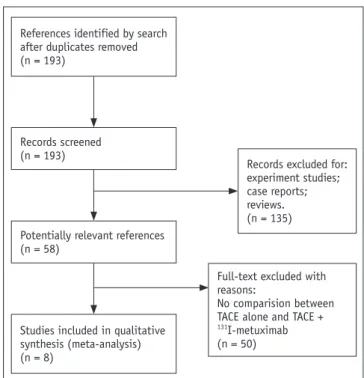
We searched a total of 193 studies, and 8 remaining studies were excluded. The full-texts were carefully evaluated. They were published from 2007 to 2015, and all had investigated TACE plus 131I-metuximab therapy (11-13, 19-23). Totally 1121 patients were included in these studies. All the patients suffered from intermediate-advanced HCC not suitable for surgical methods. Among those, 546 patients underwent TACE plus 131I-metuximab therapy, as compared with 575 patients who received TACE alone. There were: 3 RCTs (11, 22, 23), and 5 non-RCTs (12, 13, 19-21) (Fig.
1). The number of patients in each control ranged from 46 to 341. All the studies described the mean age of their patients; 7 studies (11-13, 19-21, 23) described severity of liver disease by Child-Pugh score. The anticancer drugs used were cyclosporin A (11), cisplatin (22), fluorouracil (12, 13, 22), mitomycin-C (13), and adriamycin (12, 22, 23), and
Fig. 1. Identification of eligible studies from databases. TACE = transcatheter arterial chemoembolization
Records excluded for:
experiment studies;
case reports;
reviews.
(n = 135)
Full-text excluded with reasons:
No comparision between TACE alone and TACE +
131I-metuximab (n = 50) Studies included in qualitative
synthesis (meta-analysis) (n = 8)
References identified by search after duplicates removed (n = 193)
Records screened (n = 193)
Potentially relevant references (n = 58)
Table 1. Characteristics of Studies Included in Meta-Analysis Study (Year)DesignArmsCountry of OriginStudy PeriodNo. of Patients.Sex (Male)
Age (Mean ± SD, Years)
Child-Pugh Class (A/B/C) Tumor Size (Mean ± SD, cm)
AFP (Mean ± SD, μg/L)
Dosage of 131 I-Metuximab
1-Year Survival2-Year Survival Xu et al. 2007 (11)RCTExperimentChina2004302744.9 ± 7.7714/13/322 > 5 cm22 > 20 μg/L15.4 MBq/Kg86.7%NA Control302745.07 ± 8.5716/16/221 > 5 cm22 > 20 μg/L63.3%NA Wang et al. 2009 (13)Control trailExperimentChina2005– 2006211750 ± 147/14/0NANA27.75 MBq/Kg (tumor > 8 cm,37MBq/Kg)
61.9%47.6% Control252051 ± 1511/14/0NANA64.0%16.0% Wu et al. 2010 (19)Control trailExperimentChina2008– 2009110764876/34/031 > 5 cm54 > 200 μg/L27.75 MBq /Kg791%22.7% Control1321035286/46/0NANA68.2%15.9% Guo et al. 2011 (22)RCTExperimentChina2008– 2009312049.1 ± 4.9NANANA30 MBq/KgNANA Control311847.6 ± 3.8NANANANANA Wu et al. 2012 (20)Control trailExperimentChina2009– 201068545154/14/0NA35 > 200 μg/L27.75 MBq/Kg80.9%52.9% Control70564657/13/0NA33 > 200 μg/L72.9%38.6% He et al. 2013 (12)Control trailExperimentChina2009– 2011958350.291/4/080 > 5 cmNA27.75 MBq/Kg60.0%46.3% Control907651.482/8/081 > 5 cmNA34.4%15.6% Li et al. 2013 (23)RCTExperimentChina2009– 2010242062.42 ± 13.713/7/46.60 ± 0.87 cmNA27.75 MBq/Kg45.8%NA Control231957.48 ± 10.6916/6/16.51 ± 0.88 cmNA30.4%NA Ma et al. 2015 (21)Control trailExperimentChina2007– 200916714152.19 ± 11.828146/21/0NA581.55 ± 342.18 μg/L27.75 MBq/Kg79.6%NA Control17417251.32 ± 12.887152/22/0NA539.32 ± 301.90 μg/L65.5%NA AFP = alpha fetoprotein, NA = not applicable, RCT = randomized controlled trial
epirubicin (19, 20). Usually, lipiodol was mixed with the drugs at a uniform dosage or a dosage calculated according to tumor size before the procedure. The dosage of lipiodol ranged from 2 to 20 mL. 131I-metuximab injections were performed through the femoral artery using the Seldinger technique with local anesthesia. Patients in the test group underwent 131I-metuximab therapy immediately after TACE.
At each injection, 131I-metuximab ranging from 15.4–37 MBq/kg was administered and the intra-arterial injection usually lasted 1–2 minutes. These characteristics were listed in Table 1.
Quality Assessment
The quality assessment of RCTs was performed using the Cochrane Collaboration’s tool. Only one trial reported the blinding procedure (11). Moreover, the tumor feature was hardly comparable, introducing an unclear risk of selection bias. Risk of attrition bias was not presented across studies.
The overall risk of all types of bias in the RCTs was generally low to unclear (Fig. 2).
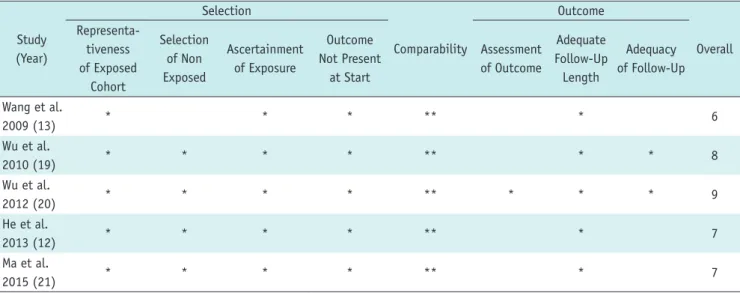
Non-randomized controlled trials were assessed by the Newcastle-Ottawa Quality Assessment Scale and studies included in this review were all 6 stars or above (Table 2).
We compared the 1-year, 2-year survival, and the effective
Fig. 2. Assessment of risk of bias in this meta-analysis. Risk of bias graph of individual risk of bias items presented as percentages across all included trails. Risk of bias for 3 RCTs are: Xu et al. (11), low risk; Guo et al. (22), unclear risk; Li et al. (23), unclear risk. Adapted from Xu J et al. Hepatology 2007;45:269-276, with permission of Wiley (11). Adapted from Guo XD et al. China J Mod Med 2011;21:1206-1208, with permis- sion of China Academic Journal Electronic Publishing House (22). Adapted from Li Z et al. Zhonghua Gan Zang Bing Za Zhi 2013;21:728-733, with permission of Chinese Medical Association (23).
Low risk of bias Unclear risk of bias High risk of bias Random sequence generation (selection bias)
Allocation concealment (selection bias) Blinding of participants and personnel (performance bias)
Blinding of outcome assessment (detection bias) Incomplete outcome data (attrition bias) Selective reporting (reporting bias) Other bias
0% 25% 50% 75% 100%
Table 2. Newcastle-Ottawa Scale for Risk of Bias Assessment of Studies Included in Meta-Analysis
Study (Year)
Selection
Comparability
Outcome
Overall Representa-
tiveness of Exposed
Cohort
Selection of Non Exposed
Ascertainment of Exposure
Outcome Not Present
at Start
Assessment of Outcome
Adequate Follow-Up Length
Adequacy of Follow-Up
Wang et al.
2009 (13) * * * ** * 6
Wu et al.
2010 (19) * * * * ** * * 8
Wu et al.
2012 (20) * * * * ** * * * 9
He et al.
2013 (12) * * * * ** * 7
Ma et al.
2015 (21) * * * * ** * 7
*represents one star, **represents two stars.
rate (CR + PR, according to the RECIST).
Survival Rates One-Year Survival
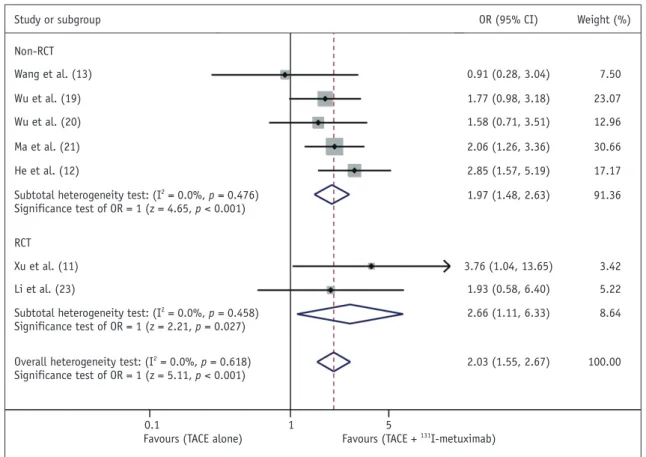
In meta-analysis of these controlled trials, there were 7 studies; 2 RCTs (11, 23) and 5 non-RCTs (12, 13, 19- 21). Subgroup analysis was performed depending on study design. The results of tests for heterogeneity between trials were p = 0.618, I2 = 0%. Data showed that TACE plus
131I-labelled metuximab (515 patients) was associated with a higher one-year survival rate, as compared with TACE alone (544 patients) (OR: 2.03, 95% CI: 1.55–2.67;
p < 0.001), while the total survival benefit of 131I-labelled metuximab therapy was significant (Fig. 3).
Two-Year Survival
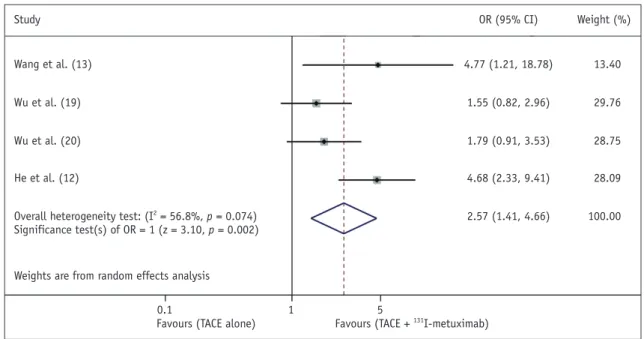
Data for two-year survival rate were reported in 4 studies (12, 13, 19, 20) of no RCT. The result of tests for heterogeneity between trials was p = 0.074, I2 = 56.8%, so the random-effects model was used. TACE plus 131I-labelled metuximab (294 patients) had a higher two-year survival rate, as compared with TACE alone (317 patients) (OR:
2.57, 95% CI: 1.41–4.66; p = 0.002). TACE Plus 131I-labelled metuximab significantly improved the two-year survival, as compared with monotherapy (Fig. 4).
Sources of heterogeneity were explored by subgroup analysis. Subgroup analysis was conducted by the patients’
liver functions. As expected, low heterogeneity was detected among the 3 studies (13, 19, 20) in the same group (p = 0.345, I2 = 6.0%) (Supplementary Fig. 1 in the online-only Data Supplement), suggestive of highest contribution of the liver function to study heterogeneity.
Effective Rate (CR + PR)
Three studies (12, 22, 23) compared the effective rate, with 394 patients included. Two RCTs (22, 23), subgroup analysis was made according to the study design. They all followed the RECIST after treatment. Heterogeneity between trials was not significant p = 0.903, I2 = 0%. Effective rate (CR + PR) for the 131I-labelled metuximab therapy was higher than TACE alone (OR: 4.00, 95% CI: 2.40–6.66; p <
0.001) (Fig. 5).
Side Effect
In 131I-metuximab group, no serious adverse events or
Fig. 3. Meta-analysis of trials. Comparison of combined therapy with TACE alone for HCC in terms of one-year survival rate. CI = confidence interval, HCC = hepatocellular carcinoma, OR = odds ratio, RCT = randomized controlled trial, TACE = transcatheter arterial chemoembolization
Study or subgroup OR (95% CI)
0.1 1 5
Favours (TACE alone) Favours (TACE + 131I-metuximab)
Weight (%)
Wang et al. (13)
Xu et al. (11) Li et al. (23) Non-RCT
RCT Wu et al. (19) Wu et al. (20)
He et al. (12) Ma et al. (21)
Subtotal heterogeneity test: (I2 = 0.0%, p = 0.476) Significance test of OR = 1 (z = 4.65, p < 0.001)
Subtotal heterogeneity test: (I2 = 0.0%, p = 0.458) Significance test of OR = 1 (z = 2.21, p = 0.027)
Overall heterogeneity test: (I2 = 0.0%, p = 0.618) Significance test of OR = 1 (z = 5.11, p < 0.001)
0.91 (0.28, 3.04)
3.76 (1.04, 13.65) 1.93 (0.58, 6.40) 1.77 (0.98, 3.18) 1.58 (0.71, 3.51)
2.85 (1.57, 5.19) 2.06 (1.26, 3.36)
1.97 (1.48, 2.63)
2.66 (1.11, 6.33)
2.03 (1.55, 2.67)
7.50
3.42 5.22 23.07 12.96
17.17 30.66
91.36
8.64
100.00
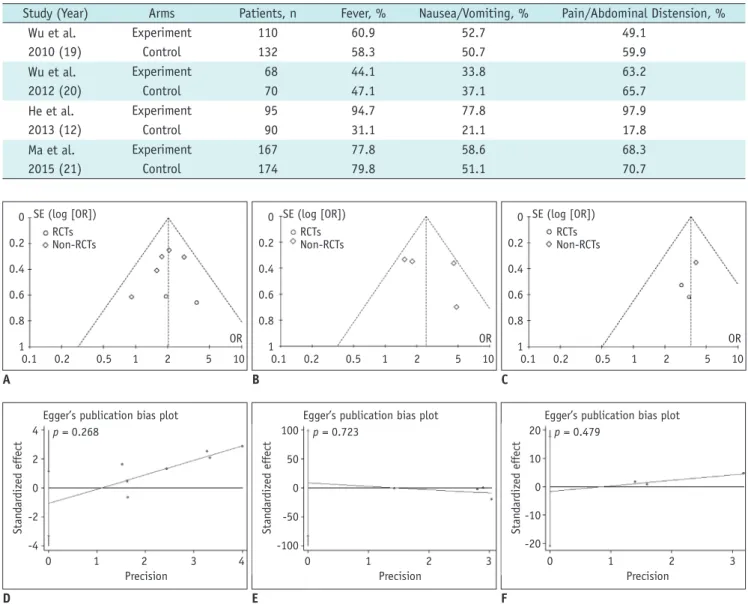
treatment-related deaths were reported. The most common adverse effects were the postembolization syndrome including fever, mild nausea and mild abdominal pain, and were usually self-limited (Table 3).
Assessment of Publication Bias
In our study, the Egger regression test and Begg funnel plot was used for the risk of publication bias. The high symmetry level of the funnel plots suggested no obvious publication bias in the trials included in our study (Fig. 6A- C). Further confirmation of no publication bias was by use
Fig. 4. Meta-analysis of trials. Comparison of combined therapy with TACE alone for HCC in terms of two-year survival rate. CI = confidence interval, HCC = hepatocellular carcinoma, OR = odds ratio, TACE = transcatheter arterial chemoembolization
Study OR (95% CI)
0.1 1 5
Favours (TACE alone) Favours (TACE + 131I-metuximab)
Weight (%)
Wang et al. (13)
Wu et al. (19)
Wu et al. (20)
He et al. (12)
Overall heterogeneity test: (I2 = 56.8%, p = 0.074) Significance test(s) of OR = 1 (z = 3.10, p = 0.002)
4.77 (1.21, 18.78)
1.55 (0.82, 2.96)
1.79 (0.91, 3.53)
4.68 (2.33, 9.41)
2.57 (1.41, 4.66)
13.40
29.76
28.75
28.09
100.00
Weights are from random effects analysis
Fig. 5. Meta-analysis of trials. Comparison of combined therapy with TACE alone for HCC in terms of effective rates. CI = confidence interval, HCC = hepatocellular carcinoma, OR = odds ratio, RCT = randomized controlled trial, TACE = transcatheter arterial chemoembolization
Study or subgroup OR (95% CI)
0.1 1 5
Favours (TACE alone) Favours (TACE + 131I-metuximab)
Weight (%)
Non-RCT He et al. (12)
Subtotal heterogeneity test: not applicable Significance test of OR = 1 (z = 4.38, p < 0.001)
RCT
Subtotal heterogeneity test: (I2 = 0.0%, p = 0.653) Significance test of OR = 1 (z = 3.00, p = 0.003)
Overall heterogeneity test: (I2 = 0.0%, p = 0.903) Significance test of OR = 1 (z = 5.31, p < 0.001)
3.96 (2.14, 7.32) 3.96 (2.14, 7.32)
5.13 (1.27, 20.81) 3.35 (0.98, 11.45) 4.08 (1.63, 10.22)
4.00 (2.40, 6.66)
68.29 68.29
12.94 18.77 31.71
100.00 Guo et al. (22)
Li et al. (23)
of Egger regression test p ≥ 0.268 (Fig. 6D-F).
DISCUSSION
This meta-analysis provides evidence that TACE plus
131I-labelled metuximab significantly improved 1- and 2-year survival, as well as tumor CR and PR in patients with HCC compared with TACE alone. In regard to adverse events, TACE plus 131I-metuximab had similar incidences of nausea and/or vomiting, and fever, as compared with TACE alone.
Slight or no differences were seen between study types, or embolization type.
Transarterial chemoembolization, as a palliative treatment for HCC, has become one of the most common interventional
therapies; however, it still has some limitations, and the outcomes are poor (24, 25). RT for HCC has traditionally not been used because older techniques fail to adequately localize the radiation to the tumor. However, recent improvements in RT have allowed increased intra-tumor radiation and decreased radiation to the adjacent normal liver and organs, thereby reducing the rate of adverse events (26).
A phase 1/2 trials demonstrated that 131I-labelled metuximab can accumulate in HCC lesions and is safe and effective in the treatment of HCC (11). The target antigen for 131I-metuximab, HAb18G/CD147, a member of the CD147 family, is highly expressed on HCC cells. The binding rate of HAb18 to human 7721 hepatoma cells, determined by Table 3. Adverse Events in Studies Reported
Study (Year) Arms Patients, n Fever, % Nausea/Vomiting, % Pain/Abdominal Distension, % Wu et al.
2010 (19)
Experiment 110 60.9 52.7 49.1
Control 132 58.3 50.7 59.9
Wu et al.
2012 (20)
Experiment 68 44.1 33.8 63.2
Control 70 47.1 37.1 65.7
He et al.
2013 (12)
Experiment 95 94.7 77.8 97.9
Control 90 31.1 21.1 17.8
Ma et al.
2015 (21)
Experiment 167 77.8 58.6 68.3
Control 174 79.8 51.1 70.7
Fig. 6. Begg’s and Egger’s test for one-year, two-survival and effective rates show no evidence of publication bias.
A. Funnel plot of one-year survival. B. Funnel plot of two-year survival. C. Funnel plot of effective rates. D. Egger’s test of one-year survival. E.
Egger’s test two-year survival. F. Egger’s test of effective rates. OR = odds ratio, RCT = randomized controlled trial A
0 0.2 0.4 0.6 0.8 1
SE (log [OR])
0.1 0.2 0.5 1 2 5 10
OR RCTsNon-RCTs
D 4 2 0 -2 -4
Egger’s publication bias plot
0 1 2 3 4 Precision
p = 0.268
Standardized effect
F 20 10 0 -10 -20
Egger’s publication bias plot
0 1 2 3 Precision
p = 0.479
Standardized effect
E 100
50 0 -50 -100
Egger’s publication bias plot
0 1 2 3 Precision
p = 0.723
Standardized effect
B 0 0.2 0.4 0.6 0.8 1
SE (log [OR])
0.1 0.2 0.5 1 2 5 10
OR RCTsNon-RCTs
C 0 0.2 0.4 0.6 0.8 1
SE (log [OR])
0.1 0.2 0.5 1 2 5 10
OR RCTsNon-RCTs
flow cytometry, is up to 99.6% (27-29). The mechanism by which 131I-metuximab may benefit patients with HCC has been investigated both in vitro and in vivo, as well as in clinical trials (29, 30). Injection of 131I-metuximab into HCC cells inhibits oncogenesis and metastasis within and outside the liver, blocking and destroying cells carrying HAb18G/CD147 and inhibiting HCC metastasis (31).
Thus, the improvement of survival and tumor response rates for combination treatments compared with TACE alone is due to the following reasons: a potential synergistic effect of the combination of 131I-metuximab and TACE in the treatment of HCC. First, TACE can reduce blood flow to the HCC, and may enhance the efficacy of 131I-metuximab due to its arterial embolization effect and prolonged retention of 131I-metuximab in the tumor. Second, the anticancer drug in the tumor may have a radio-sensitizing effect on
131I-metuximab, and can kill cancer cells after TACE for its continuous radiation. These mechanisms may explain the ability of combination therapy to enhance survival, as compared with conventional TACE alone, especially in patients with advanced HCC (19, 20).
For studies included in our meta-analysis, 3 articles (13, 20, 23) reported that the 1-year survival rate in combination therapy group shows no significantly difference compared with TACE alone. An RCT (11) reported that the survival rate increased by 20.6% in the combination group, as compared with those in the TACE alone group, indicating that 131I-metuximab is a promising drug for advanced HCC patients excluded by surgical methods. These different conclusions may be derived from different baselines of characteristics included in these studies i.e., age, tumor size, alpha fetoprotein levels or the techniques of TACE.
No previous meta-analysis reported on the efficacy of TACE combined with 131I-labelled metuximab, or other RIT.
One meta-analysis (31) reported that survival could be prolonged with adjuvant iodine-131 lipiodol in patients with resected HCC, as compared with surgery alone. Huo and Eslick (32) also reported that TACE plus RT was more therapeutically beneficial than TACE alone for treating HCC, and should be recommended for suitable patients with unresectable HCC.
All the studies used 131I-metuximab after TACE, and the general process of using 131I-metuximab was similar in these included studies: Lugol’s liquid was administered before and after treatment to block thyroid uptake of
131I; following confirmation of a negative response to a subcutaneous injection of metuximab, the appropriate dose
of 131I-metuximab was administered through the femoral artery into the proper hepatic artery using the Seldinger technique with local anesthesia.
One study showed that patients in the test group obviously suffered more frequent adverse events than those in the control group (12) (Table 3). Only two studies showed the comparative data of clinical and laboratory toxicities observed during the trial, serum aminotransferase level (alanine aminotransferase or aspartate transaminase) or total bilirubin, leukocyte count, indicative of no statistical significance of the combination subgroup as compared with TACE alone (11, 20). None of these studies reported a significant difference in major complications between the combination group and TACE alone.
To our knowledge, there is no multi-center, large sample size published study on 131I-metuximab, and this meta- analysis is the first to compare the efficiency and safety of TACE plus 131I-metuximab. This study may have several possible limitations: first, both RCTs and non-RCTs were included, which may have introduced selection bias and heterogeneity in outcomes reported. However, no evidence of high level of heterogeneity was found in each subgroups.
In fact, a considerable number of patients enrolled in the included trials were in Child-Pugh class A, while two studies (11, 23) included even Child-Pugh C patients. Meanwhile, the heterogeneity for the analysis of 2-year survival rate was high (p = 0.074, I2 = 56.8%). Sources of heterogeneity were explored by means of subgroup analysis, the percentage of patients in Child-Pugh class A reported by He et al. (12) was 93.5%, which was much higher than the other 3 trials (< 80%) (13, 19, 20). Subgroup analysis conducted by the patients’ liver functions indicated that the heterogeneity decreased and become more acceptable (Supplementary Fig. 1 in the online-only Data Supplement), suggestive of the role of liver function to study heterogeneity. The meta-analysis by stratifying the outcomes according to the characteristics of the tumor or the liver function was not possible due to the lack of data. Second, only two studies showed the specific data of the adverse effect; third, no article shows 3-year survival rate and the etiological factors of HCC (alcoholic hepatic disease, autoimmune liver disease, virus hepatitis, etc.) were not well considered in the included trials. Besides, only 3 RCTs were included.
Although a meta-analysis has traditionally been applied and is best confined to RCTs, meta-analytical techniques using non-RCTs might be a valid method in clinical settings in which either the number or the sample size of the RCTs
is insufficient (33). In the future, more RCTs should be enrolled to provide further evidence.
Thus, multimodal therapies have more survival benefit than TACE therapy alone. HCC patients with countable nodules often have more treatment choices, better treatment efficacy, and longer lifespan than those with countless nodules. TACE plus 131I-metuximab had an extensive range of therapeutic function, especially for advanced liver cancer with wide metastasis and multiple lesions. The combination of 131I-metuximab and TACE may greatly improve the treatment efficacy in these patients and extend their poor life expectancy.
In conclusion, the treatment of TACE plus 131I-metuximab (Licartin) could offer a more effective treatment for intermediate or advanced, especially unresectable HCC patients than TACE alone.
Supplementary Materials
The online-only Data Supplement is available with this article at https://doi.org/10.3348/kjr.2016.17.6.882.
REFERENCES
1. Maluccio M, Covey A. Recent progress in understanding, diagnosing, and treating hepatocellular carcinoma. CA Cancer J Clin 2012;62:394-399
2. Bruix J, Sherman M; American Association for the Study of Liver Diseases. Management of hepatocellular carcinoma: an update. Hepatology 2011;53:1020-1022
3. Llovet JM, Bruix J. Systematic review of randomized trials for unresectable hepatocellular carcinoma: chemoembolization improves survival. Hepatology 2003;37:429-442
4. Llovet JM. Updated treatment approach to hepatocellular carcinoma. J Gastroenterol 2005;40:225-235
5. Kamran AU, Liu Y, Li FE, Liu S, Wu JL, Zhang YW.
Transcatheter Arterial Chemoembolization with gelatin sponge microparticles treated for BCLC stage B hepatocellular carcinoma: a Single Center Retrospective Study. Medicine (Baltimore) 2015;94:e2154
6. Imai Y, Chikayama T, Nakazawa M, Watanabe K, Ando S, Mizuno Y, et al. Usefulness of miriplatin as an anticancer agent for transcatheter arterial chemoembolization in patients with unresectable hepatocellular carcinoma. J Gastroenterol 2012;47:179-186
7. Liu KD, Tang ZY, Bao YM, Lu JZ, Qian F, Yuan AN, et al.
Radioimmunotherapy for hepatocellular carcinoma (HCC) using 131I-anti HCC isoferritin IgG: preliminary results of experimental and clinical studies. Int J Radiat Oncol Biol Phys 1989;16:319-323
8. Duan CL, Hou GH, Liu YP, Liang T, Song J, Han JK, et al.
Tumor vascular homing endgolin-targeted radioimmunotherapy in hepatocellular carcinoma. Tumour Biol 2014;35:12205- 12215
9. Fujiwara K, Koyama K, Suga K, Ikemura M, Saito Y, Hino A, et al. A (90)Y-labelled anti-ROBO1 monoclonal antibody exhibits antitumour activity against hepatocellular carcinoma xenografts during ROBO1-targeted radioimmunotherapy.
EJNMMI Res 2014;4:29
10. Chen ZN, Mi L, Xu J, Song F, Zhang Q, Zhang Z, et al.
Targeting radioimmunotherapy of hepatocellular carcinoma with iodine (131I) metuximab injection: clinical phase I/II trials. Int J Radiat Oncol Biol Phys 2006;65:435-444 11. Xu J, Shen ZY, Chen XG, Zhang Q, Bian HJ, Zhu P, et al.
A randomized controlled trial of Licartin for preventing hepatoma recurrence after liver transplantation. Hepatology 2007;45:269-276
12. He Q, Lu WS, Liu Y, Guan YS, Kuang AR. 131I-labeled metuximab combined with chemoembolization for
unresectable hepatocellular carcinoma. World J Gastroenterol 2013;19:9104-9110
13. Wang GP, Feng XS, Shan TY, Sun JT. Clinical study of transcatheter arterial chemoembolization and hepatic perfusion with 131I metuximad injection in treatment of hepatocellular carcinoma [abstract in English]. Chin J Cancer Prev Treat 2009;16:1022-1024
14. Higgins JPT, Green S. Cochrane Handbook for Systematic Reviews of Interventions Version 5.1.0 [updated March 2011].
The Cochrane Collaboration, 2011. Available at: http://www.
handbook.cochrane.org. Accessed January 30, 2016 15. Moher D, Liberati A, Tetzlaff J, Altman DG; PRISMA Group.
Preferred reporting items for systematic reviews and meta- analyses: the PRISMA statement. Int J Surg 2010;8:336-341 16. Lencioni R, Llovet JM. Modified RECIST (mRECIST) assessment
for hepatocellular carcinoma. Semin Liver Dis 2010;30:52-60 17. Higgins JP, Altman DG, Gøtzsche PC, Jüni P, Moher D, Oxman
AD, et al. The Cochrane Collaboration's tool for assessing risk of bias in randomised trials. BMJ 2011;343:d5928
18. Wells GA, Shea B, O’Connell D, Peterson J, Welch V, Losos M, et al. The Newcastle-Ottawa Scale (NOS) for assessing the quality of nonrandomised studies in meta-analyses. Available at: http://www.ohri.ca/programs/clinical_epidemiology/
oxford.asp. Accessed December 20, 2015
19. Wu L, Yang YF, Ge NJ, Shen SQ, Liang J, Wang Y, et al. Hepatic arterial iodine-131-labeled metuximab injection combined with chemoembolization for unresectable hepatocellular carcinoma: interim safety and survival data from 110 patients.
Cancer Biother Radiopharm 2010;25:657-663
20. Wu L, Yang YF, Ge NJ, Shen SQ, Liang J, Wang Y, et al.
Hepatic artery injection of ¹³¹I-labelled metuximab combined with chemoembolization for intermediate hepatocellular carcinoma: a prospective nonrandomized study. Eur J Nucl Med Mol Imaging 2012;39:1306-1315
21. Ma J, Wang JH. 131I-labeled-metuximab plus transarterial chemoembolization in combination therapy for unresectable hepatocellular carcinoma: results from a multicenter phase IV
clinical study. Asian Pac J Cancer Prev 2015;16:7441-7447 22. Guo XD, Sun T, Li SS. The effect of iodine[131I] metuximab
injection combined with TACE on primary liver cancer [abstract in English]. China J Mod Med 2011;21:1206-1208
23. Li Z, Zhou JX, Ren JZ, Zhang WJ, Han XW. [Clinical value of iodine [131I] metuximab infusion combined with TACE for treatment of patients with post-intervention relapse of mid or advanced stage hepatocellular carcinoma]. Zhonghua Gan Zang Bing Za Zhi 2013;21:728-733
24. Llovet JM, Real MI, Montaña X, Planas R, Coll S, Aponte J, et al. Arterial embolisation or chemoembolisation versus symptomatic treatment in patients with unresectable hepatocellular carcinoma: a randomised controlled trial.
Lancet 2002;359:1734-1739
25. Bruix J, Llovet JM. Major achievements in hepatocellular carcinoma. Lancet 2009;373:614-616
26. Kuo YC, Chiu YM, Shih WP, Yu HW, Chen CW, Wong PF, et al.
Volumetric intensity-modulated Arc (RapidArc) therapy for primary hepatocellular carcinoma: comparison with intensity- modulated radiotherapy and 3-D conformal radiotherapy.
Radiat Oncol 2011;6:76
27. Zhang Z, Bian H, Feng Q, Mi L, Mo T, Kuang A, et al.
Biodistribution and localization of iodine-131-labeled metuximab in patients with hepatocellular carcinoma. Cancer
Biol Ther 2006;5:318-322
28. Toole BP. Emmprin (CD147), a cell surface regulator of matrix metalloproteinase production and function. Curr Top Dev Biol 2003;54:371-389
29. Li J, Huang Q, Long X, Zhang J, Huang X, Aa J, et al. CD147 reprograms fatty acid metabolism in hepatocellular carcinoma cells through Akt/mTOR/SREBP1c and P38/PPARα pathways. J Hepatol 2015;63:1378-1389
30. Dai D, Xu W, Liu J, Zhu L, Zhu X, Ma X. Safety and efficacy of a peripheral intravenous bolus of Licartin for the treatment of advanced hepatocellular carcinoma. Exp Ther Med 2013;6:1417-1422
31. Furtado R, Crawford M, Sandroussi C. Systematic review and meta-analysis of adjuvant i(131) lipiodol after excision of hepatocellular carcinoma. Ann Surg Oncol 2014;21:2700-2707 32. Huo YR, Eslick GD. Transcatheter arterial chemoembolization
plus radiotherapy compared with chemoembolization alone for hepatocellular carcinoma: a systematic review and meta- analysis. JAMA Oncol 2015;1:756-765
33. Mathurin P, Raynard B, Dharancy S, Kirzin S, Fallik D, Pruvot FR, et al. Meta-analysis: evaluation of adjuvant therapy after curative liver resection for hepatocellular carcinoma. Aliment Pharmacol Ther 2003;17:1247-1261