• 검색 결과가 없습니다.

The Impact of Ischemic Time on the Predictive Value of High-Sensitivity C-Reactive Protein in ST-Segment Elevation Myocardial Infarction Patients Treated by Primary Percutaneous Coronary Intervention

N/A
N/A
Protected

Academic year: 2022

Share "The Impact of Ischemic Time on the Predictive Value of High-Sensitivity C-Reactive Protein in ST-Segment Elevation Myocardial Infarction Patients Treated by Primary Percutaneous Coronary Intervention"

Copied!
10
0
0

로드 중.... (전체 텍스트 보기)

전체 글

(1)

Korean Circulation Journal

Introduction

Since 1990, a number of studies have reported that the inflam- matory process is an important contributor to atherosclerosis and the vulnerability of atherosclerotic plaque. Among many inflamma-

Print ISSN 1738-5520 • On-line ISSN 1738-5555

The Impact of Ischemic Time on the Predictive Value

of High-Sensitivity C-Reactive Protein in ST-Segment Elevation Myocardial Infarction Patients Treated by Primary Percutaneous Coronary Intervention

Kyung Hwan Kim, MD 1 , Wan Kim, MD 1 , Won Yu Kang, MD 1 , Sun Ho Hwang, MD 1 , Sang Cheol Cho, MD 1 ,

Weon Kim, MD 2 , Myung Ho Jeong, MD 3 , and Other Korean Working Group in Myocardial Infarction Investigators

1

Division of Cardiology, Department of Internal Medicine, Gwangju Veterans Hospital, Gwangju,

2

Department of Cardiovascular Medicine, Kyung Hee University College of Medicine, Seoul,

3
Department of Cardiovascular Medicine, Chonnam National College of Medicine, Gwangju, Korea Other Korean Working Group in Myocardial Infarction Investigating Hospitals

Background and Objectives: The high-sensitivity C-reactive protein (hs-CRP), a marker of inflammation, has been known to be elevated in patients with coronary artery disease. However, there is controversy about the predictive value of hs-CRP after acute myocardial in- farction (MI). Therefore, we evaluated the impact of ischemic time on the predictive value of hs-CRP in ST-segment elevation myocardial infarction (STEMI) patients who were treated by primary percutaneous coronary intervention (PCI).

Subjects and Methods: We enrolled 5123 STEMI patients treated by primary PCI from the Korean Working Group in Myocardial Infarction and divided enrolled patients into four groups by symptom-to-balloon time (SBT) and level of hs-CRP (Group I: SBT <6 hours and hs-CRP

<3 mg/L, Group II: SBT <6 hours and hs-CRP ≥3 mg/L, Group III: SBT ≥6 hours and hs-CRP <3 mg/L, and Group IV: SBT ≥6 hours and hs- CRP ≥3 mg/L). To evaluate the impact of ischemic time on the predictive value of hs-CRP in STEMI patients, we compared the cumulative cardiac event-free survival rate between these four groups.

Results: The sum of the cumulative incidence of all-cause mortality and recurrence of MI was higher in Group IV than in the other groups.

However, there was no significant difference among Group I, Group II, and Group III. The Cox-regression analyses showed that an elevated level of hs-CRP (≥3 mg/L) was an independent predictor of long-term cardiovascular outcomes only among late-presenting STEMI patients (p=0.017, hazard ratio=2.462).

Conclusion: For STEMI patients with a long ischemic time (≥6 hours), an elevated level of hs-CRP is a poor prognostic factor of long-term cardiovascular outcomes. (Korean Circ J 2013;43:664-673)

KEY WORDS: C-reactive protein; Myocardial infarction; Myocardial reperfusion.

Received: June 6, 2013 / Revision Received: August 1, 2013 / Accepted: August 29, 2013

Correspondence: Wan Kim, MD, Division of Cardiology, Department of Internal Medicine, Gwangju Veterans Hospital, 99 Cheomdanwolbong-ro, Gwangsan-gu, Gwangju 506-705, Korea

Tel: 82-62-602-6100, Fax: 82-62-602-6931, E-mail: [email protected]

• The authors have no financial conflicts of interest.

This is an Open Access article distributed under the terms of the Creative Commons Attribution Non-Commercial License (http://creativecommons.org/licenses/

by-nc/3.0) which permits unrestricted non-commercial use, distribution, and reproduction in any medium, provided the original work is properly cited.

tory markers, high-sensitivity C-reactive protein (hs-CRP) is the most

extensively studied biomarker of inflammation in cardiovascular dise-

ase.

1)

The results from many studies have shown a significant asso-

ciation between the elevated plasma level of hs-CRP and the sever-

ity of atherosclerosis, the incidence of cardiovascular events in in-

(2)

dividuals with risk factors, and the risk of recurrent cardiovascular events among patients with established coronary heart disease.

2)3)

The role of hs-CRP as a predictor of the prognosis of cardiovas- cular disease has also been studied by many investigators. Many studies have found a strong positive correlation between the base- line level of hs-CRP and the incidence of future acute coronary events among stable angina pectoris patients.

4-7)

The Prevention of Events with Angiotensin-Converting Enzyme inhibitor trial divided 3771 stable angina pectoris patients according to the level of hs- CRP and evaluated the outcomes of cardiovascular death, myocar- dial infarction (MI), or stroke over a mean follow-up period of 4.8 years. The results showed that a higher level of hs-CRP was closely associated with a higher rate of cardiovascular events.

8)

Contrary to the definite predictive value of hs-CRP in stable an- gina pectoris patients, there remains controversy about the predic- tive role of hs-CRP after acute MI. A study evaluated 448 acute MI patients and showed that the baseline level of hs-CRP measured 12-24 hours after the onset of symptoms had a significant associ- ation with 30-day mortality, larger infarct size, and more frequent heart failure.

9)

However, there were conflicting results observed between the two studies. A study enrolled 483 patients and reve- aled no definitive association between the level of hs-CRP measur- ed within 6 hours from symptom onset and death and non-fatal MI in the following 30 days.

10)

The other study reported that an ele- vated level of hs-CRP measured within 6 hours from symptom on- set had no significant impact on mortality at three years.

11)

The main difference between these studies was the interval from the onset of symptoms to the measurement of hs-CRP. Therefore, we hypothesized that the different time interval was the cause of these different results and evaluated the impact of ischemic time on the predictive value of hs-CRP in ST-segment elevation myocar- dial infarction (STEMI) patients to investigate the reason for these conflicting results.

Subjects and Methods

Study population

Our study enrolled 5123 STEMI patients treated by primary per- cutaneous coronary intervention (PCI) from August 2008 to July 2011, consecutively. All enrolled patients were transported imme- diately to hospital for coronary angioplasty, where indicated. Angio- plasty was performed according to the local standard protocol with the intention of restoring blood flow in the infarct-related artery as soon as possible. The data was derived from Korean Working Group in Myocardial Infarction (KORMI), which is a multi-centered and on- going observational study designed to collect demographic, clini- cal, treatment, and outcome data on patients with acute MI. Be-

cause the KORMI is an anonymous observational study, no inform- ed consent is required from participating patients by the institu- tional boards at any of the participating institutions.

This study included patients with a diagnosis of STEMI: a rise and fall of serum cardiac biomarkers such as creatine kinase-MB and cardiac specific troponin, chest pain episodes lasting >20 minutes and ST-segment elevation >0.1 mV in more than two adjacent limb leads or >0.2 mV in more than two contiguous precordial leads or new pathologic Q waves on the surface electrocardiogram. Pati- ents who received thrombolytic therapy or elective PCI and those tr- eated by medical methods were excluded from this study. Non STE- MI patients were not included in this study.

Study protocol

We divided the total STEMI patients into four groups according to symptom-to-balloon time (SBT) and level of hs-CRP CRP (Group I, n=2512: SBT <6 hours and hs-CRP <3 mg/L, Group II, n=660: SBT

<6 hours and hs-CRP ≥3 mg/L, Group III, n=1347: SBT ≥6 hours and hs-CRP <3 mg/L, and Group IV, n=604: SBT ≥6 hours and hs- CRP ≥3 mg/L). Several studies suggested that cardiovascular dis- ease patients with hs-CRP ≥3 mg/L are a high-risk group. Therefore, we divided groups by this level.

2)12)

As previously mentioned, al- though several studies showed a positive correlation between the level of hs-CRP and cardiovascular outcomes, some other studies failed to verify this relationship. The important difference between these studies was the duration from symptom onset to the measu- rement of hs-CRP. From the results of these studies, we adopted 6 hours as the criteria to divide patients into relevant groups. More- over, because the blood level of hs-CRP ≥3 mg/L is considered a high-risk group for cardiovascular disease, we divided STEMI pa- tients by this level of hs-CRP.

We analyzed retrospectively and compared the long-term clini- cal outcomes between these four groups. In order to evaluate the impact of ischemic time on the predictive value of hs-CRP, we con- ducted multivariate Cox-regression analyses in an early-presenting patient group (SBT <6 hours), a late-presenting patient group (SBT

≥6 hours), and total STEMI patients. Because the levels of hs-CRP were mostly measured at presentation to the hospital, SBT is nearly equal to the time from the onset of the symptoms to the measure- ment of hs-CRP. We defined the primary end point as the cumula- tive incidence of the sum of all-cause mortality and MI during a 2-year period. Additionally, we compared the incidence of cardiac death and non-cardiac death, the recurrence of MI, and the fre- quency of repeat PCIs between the four groups.

Statistical analysis

All analyses were performed using Statistical Package for the So-

(3)

cial Sciences (SPSS) Version 18 (SPSS Inc., Chicago, IL, USA). Cate- gorical baseline variables are presented as counts and percentages, and continuous variables are expressed as average value±standard

deviation. Differences in baseline characteristics between STEMI patients with a high level of hs-CRP and those with a low level of hs-CRP were evaluated by a Student t-test for continuous variables Table 1. Comparison of epidemiologic, clinical, laboratory, and medical baseline characteristics between STEMI patients with a low hs-CRP level (<3 mg/L) and those with high hs-CRP level (≥3 mg/L)

Total STEMI patients (n=5123)

hs-CRP <3 mg/L (n=3859) hs-CRP ≥3 mg/L (n=1264) p

Age 62.1±13.4 65.5±13.3 <0.001

Sex (male, %) 2920 (75.7) 877 (69.7) <0.001

SBP 127.7±29.0 120.3±31.6 <0.001

DBP 79.0±24.1 74.1±27.6 <0.001

HR 74.7±18.5 79.2±23.3 <0.001

LVEF 52.4±11.3 49.1±11.4 <0.001

Shock (%) 229 (6.3) 123 (10.4) <0.001

Anterior MI (%) 1991 (56.6) 659 (56.6) 0.990

Multivessel disease (%) 1835 (48.7) 684 (56.1) <0.001

Pre-TIMI flow ≥I (%) 1279 (36.0) 426 (37.4) 0.377

Post-TIMI flow III (%) 3261 (92.5) 1003 (90.3) 0.016

Lesion length 23.7±10.7 23.6±13.3 0.857

Glucose 175.2±75.8 183.9±89.9 0.002

Creatinine 1.0±0.8 1.3±3.2 0.004

Maximal CK-MB 167.2±245.1 178.2±369.8 0.230

Maximal Tro-I 53.1±90.1 60.4±220.2 0.125

Total cholesterol 187.5±43.7 173.4±48.1 <0.001

Triglyceride 134.2±110.8 116.8±76.8 <0.001

HDL-C 43.9±15.0 41.4±12.2 <0.001

LDL-C 119.2±39.2 109.5±38.4 <0.001

NT pro-BNP 1147±3369 3669±6675 <0.001

hs-CRP 0.6±0.6 21.9±37.2 <0.001

HbA1c 6.5±1.7 6.7±1.5 0.010

Killip class ≥II (%) 1040 (28.7) 423 (35.9) <0.001

Previous IHD (%) 418 (10.9) 122 (9.7) 0.236

Hypertension (%) 1752 (46.1) 651 (52.1) <0.001

Diabetes mellitus (%) 886 (23.3) 374 (30.1) <0.001

Dyslipidemia (%) 459 (12.6) 116 (9.8) 0.009

Smoking (%) 2390 (62.7) 703 (56.2) <0.001

Aspirin (%) 3826 (99.4) 1249 (98.9) 0.082

Clopidogrel (%) 3815 (99.1) 1242 (98.4) 0.054

Cilostazol (%) 992 (26.6) 304 (25.0) 0.272

Beta blocker (%) 3227 (84.5) 1013 (81.7) 0.018

RAAS blocker (%) 3128 (84.7) 979 (81.9) 0.020

Statin (%) 3676 (78.4) 1205 (77.2) 0.358

Abciximab (%) 688 (18.6) 264 (21.9) 0.012

Nitrate (%) 2196 (58.2) 751 (61.5) 0.047

hs-CRP: high-sensitivity C-reactive protein, SBP: systolic blood pressure, DBP: diastolic blood pressure, HR: heart rate, LVEF: left ventricular ejection fraction,

HDL-C: high density lipoprotein-cholesterol, LDL-C: low density lipoprotein-cholesterol, NT pro-BNP: N-terminal pro brain natriuretic peptide, HbA1c: glycated

hemoglobin A1c, IHD: ischemic heart disease, RAAS blocker: rennin-angiotensine-aldosterone system blocker (angiotensine converting enzyme blocker and

angiotensine receptor blocker), STEMI: ST-segment elevation myocardial infarction, TIMI: Thrombolysis in Myocardial Infarction, CK-MB: creatine kinase-MB

(4)

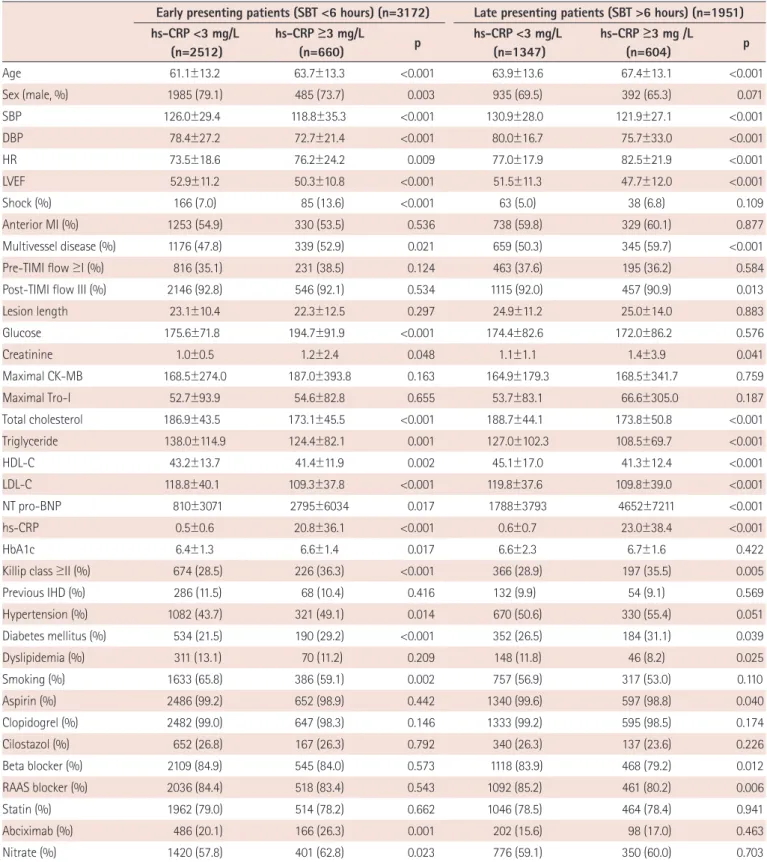
Table 2. Comparison of baseline characteristics between the low hs-CRP group (<3 mg/L) and high hs-CRP group (≥3 mg/L) in early-presenting (SBT <6 hours) and late-presenting (SBT ≥6 hours) STEMI patients treated by primary PCI

Early presenting patients (SBT <6 hours) (n=3172) Late presenting patients (SBT >6 hours) (n=1951) hs-CRP <3 mg/L

(n=2512)

hs-CRP ≥3 mg/L

(n=660) p hs-CRP <3 mg/L

(n=1347)

hs-CRP ≥3 mg /L

(n=604) p

Age 61.1±13.2 63.7±13.3 <0.001 63.9±13.6 67.4±13.1 <0.001

Sex (male, %) 1985 (79.1) 485 (73.7) 0.003 935 (69.5) 392 (65.3) 0.071

SBP 126.0±29.4 118.8±35.3 <0.001 130.9±28.0 121.9±27.1 <0.001

DBP 78.4±27.2 72.7±21.4 <0.001 80.0±16.7 75.7±33.0 <0.001

HR 73.5±18.6 76.2±24.2 0.009 77.0±17.9 82.5±21.9 <0.001

LVEF 52.9±11.2 50.3±10.8 <0.001 51.5±11.3 47.7±12.0 <0.001

Shock (%) 166 (7.0) 85 (13.6) <0.001 63 (5.0) 38 (6.8) 0.109

Anterior MI (%) 1253 (54.9) 330 (53.5) 0.536 738 (59.8) 329 (60.1) 0.877

Multivessel disease (%) 1176 (47.8) 339 (52.9) 0.021 659 (50.3) 345 (59.7) <0.001

Pre-TIMI flow ≥I (%) 816 (35.1) 231 (38.5) 0.124 463 (37.6) 195 (36.2) 0.584

Post-TIMI flow III (%) 2146 (92.8) 546 (92.1) 0.534 1115 (92.0) 457 (90.9) 0.013

Lesion length 23.1±10.4 22.3±12.5 0.297 24.9±11.2 25.0±14.0 0.883

Glucose 175.6±71.8 194.7±91.9 <0.001 174.4±82.6 172.0±86.2 0.576

Creatinine 1.0±0.5 1.2±2.4 0.048 1.1±1.1 1.4±3.9 0.041

Maximal CK-MB 168.5±274.0 187.0±393.8 0.163 164.9±179.3 168.5±341.7 0.759

Maximal Tro-I 52.7±93.9 54.6±82.8 0.655 53.7±83.1 66.6±305.0 0.187

Total cholesterol 186.9±43.5 173.1±45.5 <0.001 188.7±44.1 173.8±50.8 <0.001

Triglyceride 138.0±114.9 124.4±82.1 0.001 127.0±102.3 108.5±69.7 <0.001

HDL-C 43.2±13.7 41.4±11.9 0.002 45.1±17.0 41.3±12.4 <0.001

LDL-C 118.8±40.1 109.3±37.8 <0.001 119.8±37.6 109.8±39.0 <0.001

NT pro-BNP 810±3071 2795±6034 0.017 1788±3793 4652±7211 <0.001

hs-CRP 0.5±0.6 20.8±36.1 <0.001 0.6±0.7 23.0±38.4 <0.001

HbA1c 6.4±1.3 6.6±1.4 0.017 6.6±2.3 6.7±1.6 0.422

Killip class ≥II (%) 674 (28.5) 226 (36.3) <0.001 366 (28.9) 197 (35.5) 0.005

Previous IHD (%) 286 (11.5) 68 (10.4) 0.416 132 (9.9) 54 (9.1) 0.569

Hypertension (%) 1082 (43.7) 321 (49.1) 0.014 670 (50.6) 330 (55.4) 0.051

Diabetes mellitus (%) 534 (21.5) 190 (29.2) <0.001 352 (26.5) 184 (31.1) 0.039

Dyslipidemia (%) 311 (13.1) 70 (11.2) 0.209 148 (11.8) 46 (8.2) 0.025

Smoking (%) 1633 (65.8) 386 (59.1) 0.002 757 (56.9) 317 (53.0) 0.110

Aspirin (%) 2486 (99.2) 652 (98.9) 0.442 1340 (99.6) 597 (98.8) 0.040

Clopidogrel (%) 2482 (99.0) 647 (98.3) 0.146 1333 (99.2) 595 (98.5) 0.174

Cilostazol (%) 652 (26.8) 167 (26.3) 0.792 340 (26.3) 137 (23.6) 0.226

Beta blocker (%) 2109 (84.9) 545 (84.0) 0.573 1118 (83.9) 468 (79.2) 0.012

RAAS blocker (%) 2036 (84.4) 518 (83.4) 0.543 1092 (85.2) 461 (80.2) 0.006

Statin (%) 1962 (79.0) 514 (78.2) 0.662 1046 (78.5) 464 (78.4) 0.941

Abciximab (%) 486 (20.1) 166 (26.3) 0.001 202 (15.6) 98 (17.0) 0.463

Nitrate (%) 1420 (57.8) 401 (62.8) 0.023 776 (59.1) 350 (60.0) 0.703

SBT: symptom-to-balloon time, hs-CRP: high-sensitivity C-reactive protein, SBP: systolic blood pressure, DBP: diastolic blood pressure, HR: heart rate, LVEF:

left ventricular ejection fraction, HDL-C: high density lipoprotein-cholesterol, LDL-C: low density lipoprotein-cholesterol, NT pro-BNP: N-terminal pro brain

natriuretic peptide, HbA1c: glycated hemoglobin A1c, IHD: ischemic heart disease, RAAS blocker: rennin-angiotensine-aldosterone system blocker (angio-

tensine converting enzyme blocker and angiotensine receptor blocker), STEMI: ST-segment elevation myocardial infarction, PCI: percutaneous coronary in-

tervention, TIMI: Thrombolysis in Myocardial Infarction, CK-MB: creatine kinase-MB

(5)

and the Pearson chi-square test for categorical variables. Cumula- tive cardiac event-free survivals were evaluated on the Kaplan- Meier scale and compared by the log-rank method between each group. In addition, to evaluate the predicative value of hs-CRP for clinical outcomes, we used multivariate Cox-regression analysis.

The co-variants for these analyses were age over 65 years, hyper- tension, diabetes mellitus, left ventricular ejection fraction, Killip classification, anterior wall MI, pre-Thrombolysis in Myocardial In- farction (TIMI) flow, and the use of beta-blockers and renin-angio- tensine-aldosterone system (RAAS) blockers. Hazard ratios (HRs) and 95% confidence intervals were calculated, and all tests were two-tailed: p<0.05 was considered significant.

Results

Baseline characteristics

For all STEMI patients who underwent primary PCI, many baseline characteristics significantly differed between the low hs-CRP gr- oup and high hs-CRP group. The patients in the high hs-CRP group were older than those in the low hs-CRP group, and the proportion of males was lower in the high hs-CRP group. The systolic and dia- stolic blood pressures were lower and heart rate on presentation to the emergency room was faster among those in the high hs-CRP group. The hemodynamic state of patients was significantly differ- ent between the two groups. The left ventricular ejection fractions were lower and the percentage of patients of Killip class ≥II was higher in the high hs-CRP group. The lesion length estimated by an- giography was similar between the two groups (Table 1).

Several laboratory values were also different between the high hs-CRP group and low hs-CRP group. Although the maximal levels of cardiac enzymes did not differ between the two groups, the level of N-terminal pro-brain natriuretic peptide was higher in the high hs-CRP group. The lipid profile, including total cholesterol, triglyc- eride, high-density lipoprotein cholesterol, and low-density lipopro- tein cholesterol, were lower in the high hs-CRP group. Although the difference in blood glucose on presentation to the hospital was significant, the level of glycated hemoglobin did not differ signifi- cantly (Table 1).

Past medical history was also significantly different between these two groups. The percentage of patients with diabetes mellitus and hypertension was higher in the high hs-CRP group. However, the proportion of patients with hyperlipidemia was lower in the high hs-CRP group (Table 1).

The medications taken after primary PCI were surveyed and com- pared. There was no significant difference in the use of aspirin, clop- idogrel, cilostazol, or statin. However, a higher percentage of pati- ents in the low hs-CRP group took beta-blockers and RAAS blo- ckers (Table 1).

For early presenting STEMI patients (SBT <6 hours), the differences in most baseline characteristics were similar to the differences in total STEMI patients, except in several variables. The percentages of patients who had taken beta-blockers and RAAS blockers did not significantly differ. The baseline characteristics’ comparison in the late-presenting patients group is similar to that in the early-pre- senting STEMI patients (Table 2).

Clinical outcomes

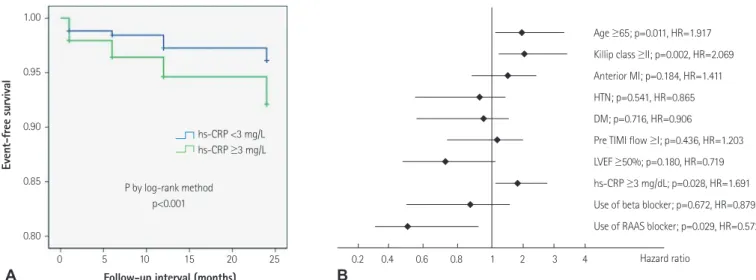
The sum of all-cause mortality and recurrence of MI was compar- ed among Group I, Group II, Group III, and Group IV. There was a sig- nificant difference in the cardiovascular outcome among the four groups at 1, 6, 12, and 24 months (Table 3). We also evaluated the cumulative incidence of the sum of all-cause mortality and non-fa- tal MI and compared the event-free survival rate during 2 years. In total, for the STEMI patients who had undergone primary PCI, the patients with a lower level of hs-CRP (<3 mg/L) had a lower cumu- lative incidence of all-cause mortality and MI (p<0.001) than those with a higher level of hs-CRP (≥3 mg/L) (Fig. 1A). To evaluate the impact of ischemic time on the predictive value of hs-CRP, we com- pared the cumulative incidence of the cardiovascular event between Group I, Group II, Group III, and Group IV. Group IV had a higher cu- mulative incidence of cardiovascular events than the other groups (Group IV vs. Group I; p<0.001, Group IV vs. Group II; p=0.005, Group IV vs. Group III; p<0.001). However, there was no significant differ- ence in cardiovascular events among Group I, Group II, and Group III (Fig. 2).

Detailed cardiovascular events such as cardiac death, non-cardiac Table 3. The comparison of the sum of all-cause mortality and the recurrence of myocardial infarction among 4 groups (Group I: SBT <6 hours and hs- CRP <3 mg/L, Group II: SBT <6 hours and hs-CRP ≥3 mg/L, Group III: SBT ≥6 hours and hs-CRP <3 mg/L, and Group IV: SBT ≥6 hours and hs-CRP ≥3 mg/L) at 1, 6, 12, and 24 months after myocardial infarction

Group I Group II Group III Group IV p

Cardiac event at 1 month (%) 1.4 (29/2095) 1.1 (6/530) 0.8 (9/1158) 3.1 (15/489) 0.004

Cardiac event at 6 months (%) 2.5 (32/1291) 3.2 (11/341) 1.9 (14/754) 6.3 (20/320) 0.001

Cardiac event at 12 months (%) 4.9 (45/914) 5.1 (13/257) 3.3 (18/542) 10.5 (27/257) <0.001

Cardiac event at 24 months (%) 11.8 (50/424) 12.3 (14/114) 8.4 (20/239) 21.1 (32/152) 0.003

SBT: symptom-to-balloon time, hs-CRP: high-sensitivity C-reactive protein

(6)

death, MI, and the repeat of PCI were also compared between the four groups. The cumulative incidence of cardiac death was higher in Group IV than in the other three groups (Group IV vs. Group I;

p<0.001, Group IV vs. Group II; p=0.014, Group IV vs. Group III; p<

0.001). The differences in cardiac death between Group I and Gr-

oup II (p=0.382), Group I and Group III (p=0.808), and Group II and Group III (p=0.329) were not significant (Fig. 3A). The incidence of non-cardiac death was higher in Group IV than in Group III (p=

0.004). However, there were no significant differences in non-car- diac death in other comparisons (Fig. 3B). The recurrence rate of MI was similar between the four groups (Fig. 3C). The frequency of the repetition of PCI was higher in Group II and Group IV compared with Group I and Group III (Group II vs. Group I; p=0.001, Group II vs. Gr- oup III; p=0.001, Group IV vs. Group I; p<0.001, Group IV vs. Group III; p<0.001). However, the difference in the frequency of the repe- tition of PCI was not significant between Group II and Group IV (p=0.840) (Fig. 3D).

Multivariate analyses

Because many baseline characteristics that can affect clinical out- comes are significantly different between the high hs-CRP group and the low hs-CRP group, we evaluated the predictive value of hs- CRP via the Cox regression multivariate analysis. The co-variants evaluated were age over 65 years, Killip classification ≥II, anterior wall MI, hypertension, diabetes mellitus, pre-TIMI flow left ventric- ular ejection fraction, and the use of beta-blockers and renin-an- giotensin-aldosterone system blockers. After adjusting for these co- variants, hs-CRP of >3 mg/L was an independent predictor for the cumulative incidence of all-cause mortality and MI (p=0.028, HR=

1.691) (Fig. 1B). This multivariate analysis showed that age over 65 years (p=0.011, HR=1.917), Killip class over II (p=0.002, HR=2.069), and the use of renin-angiotensin-aldosterone system blockers (p=

0.029, HR=0.572) were also independent prognostic factors in ST- EMI patients.

Fig. 1. Comparison of the sum of the cumulative incidence of all-cause mortality and myocardial infarction in total STEMI patients treated by primary PCI (A) and Cox regression multivariate regression analysis showed that a high level of hs-CRP is an independent predictor of the sum of all-cause mortality and myocardial infarction in total STEMI patients treated by primary PCI (B). STEMI: ST-segment elevation myocardial infarction, DM: diabetes mellitus, HTN: hypertension, TIMI: Thrombolysis in Myocardial Infarction, LVEF: left ventricular ejection fraction, hs-CRP: high-sensitivity C-reactive protein, RAAS:

rennin-angiotensin-aldosterone system blockers, PCI: percutaneous coronary intervention, HR: hazard ratio.

1.00

0.95

0.90

0.85

0.80

Follow-up interval (months)

Event-free survival

0 5 10 15 20 25 0.2 0.4 0.6 0.8 1 2 3 4 Hazard ratio P by log-rank method

p<0.001

Age ≥65; p=0.011, HR=1.917 Killip class ≥II; p=0.002, HR=2.069 Anterior MI; p=0.184, HR=1.411 HTN; p=0.541, HR=0.865 DM; p=0.716, HR=0.906

Pre TIMI flow ≥I; p=0.436, HR=1.203 LVEF ≥50%; p=0.180, HR=0.719 hs-CRP ≥3 mg/dL; p=0.028, HR=1.691 Use of beta blocker; p=0.672, HR=0.879 Use of RAAS blocker; p=0.029, HR=0.572 hs-CRP <3 mg/L

hs-CRP ≥3 mg/L

A B

Fig. 2. Comparison of the sum of the cumulative incidence of all-cause mortality and myocardial infarction among the four groups, which were divided by SBT and blood level of the hs-CRP (Group I: SBT <6 hours and hs-CRP <3 mg/L, Group II: SBT <6 hours and hs-CRP ≥3 mg/L, Group III:

SBT ≥6 hours and hs-CRP <3 mg/L, and Group IV: SBT ≥6 hours and hs- CRP ≥3 mg/L). SBT: symptom-to-balloon time, hs-CRP: high-sensitivity C- reactive protein.

1.00

0.95

0.90

0.85

0.80

Follow-up interval (months)

Event-free survival

0 5 10 15 20 25 Group I

Group II Group III Group IV

P by log-rank method

Group I Group II Group III Group IV

Group I - 0.823 0.174 <0.001

Group II 0.823 - 0.215 0.005

Group III 0.174 0.215 - <0.001

Group IV <0.001 0.005 <0.001 -

(7)

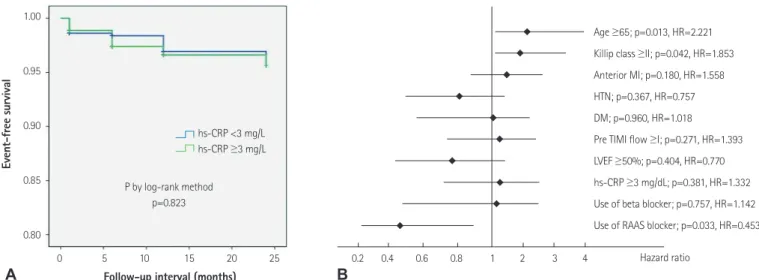
To clarify the effect of ischemic time on the prognostic value of hs-CRP, we compared the cumulative incidence of cardiovascular events and performed a Cox regression multivariate analysis in ear- ly and late presenting patients, respectively. In early-presenting ST- EMI patients (Group I and Group II) with SBT <6 hours, the cumula- tive incidence of the sum of all-cause mortality and MI was not dif- ferent (p=0.823) between the high hs-CRP group and low hs-CRP group (Fig. 4A), and the predictive value of hs-CRP for the long-term clinical outcome was not significant (p=0.381, HR=1.323) (Fig. 4B).

However, the cumulative incidence of a cardiovascular event was higher in the high hs-CRP group than in the low hs-CRP group for

late-presenting STEMI patients with SBT ≥6 hours (p<0.001) (Fig.

5A), and hs-CRP was an independent predictor of the long-term cli- nical outcome (p=0.017, HR=2.462) after adjusting for confound- ing variables (Fig. 5B).

Discussion

Although the high level of hs-CRP is closely associated with poor clinical outcomes among stable angina pectoris patients, th- ere is no definite conclusion about the prognostic value of hs-CRP for long-term clinical outcomes after MI. Similarly, the predictive Fig. 3. Comparison of detailed cardiovascular outcomes (A: cardiac death, B: non-cardiac death, C: myocardial infarction, D: repetition of PCI) among the four groups, which were divided by SBT and the blood level of the hs-CRP (Group I: SBT <6 hours and hs-CRP <3 mg/L, Group II: SBT <6 hours and hs-CRP

≥3 mg/L, Group III: SBT ≥6 hours and hs-CRP <3 mg/L, and Group IV: SBT ≥6 hours and hs-CRP ≥3 mg/L). PCI: percutaneous coronary intervention, SBT:

symptom-to-balloon time, hs-CRP: high-sensitivity C-reactive protein.

1.00

0.95

0.90

0.85

0.80

1.00

0.95

0.90

0.85

0.80

1.00

0.95

0.90

0.85

0.80

1.00

0.95

0.90

0.85

0.80 Follow-up interval (months)

Follow-up interval (months)

Follow-up interval (months)

Follow-up interval (months)

Event-free survival Event-free survival Event-free survival Event-free survival

0 5 10 15 20 25

0 5 10 15 20 25

0 5 10 15 20 25

0 5 10 15 20 25 Group I

Group II Group III Group IV

Group I Group II Group III Group IV

Group I Group II Group III Group IV

Group I Group II Group III Group IV P by log-rank method

Group I Group II Group III Group IV

Group I - 0.382 0.808 <0.001

Group II 0.382 - 0.329 0.014

Group III 0.808 0.329 - <0.001

Group IV <0.001 0.014 <0.001 -

P by log-rank method

Group I Group II Group III Group IV

Group I - 0.926 0.412 0.714

Group II 0.926 - 0.600 0.724

Group III 0.412 0.600 - 0.357

Group IV 0.714 0.724 0.357 -

P by log-rank method

Group I Group II Group III Group IV

Group I - 0.907 0.201 0.043

Group II 0.907 - 0.259 0.160

Group III 0.201 0.259 - 0.004

Group IV 0.043 0.160 0.004 -

P by log-rank method

Group I Group II Group III Group IV

Group I - 0.001 0.699 <0.001

Group II 0.001 - 0.001 0.840

Group III 0.699 0.001 - <0.001

Group IV <0.001 0.840 <0.001 -

A

C

B

D

(8)

value of hs-CRP for long-term clinical outcomes was not conclu- sive for the total group of STEMI patients who were treated by pri- mary PCI in our study. Previous studies provided a clue to a hypoth- esis that ischemic time plays an important role in determining the prognostic value of hs-CRP after MI. Therefore, we performed a subgroup analysis according to SBT, and the results revealed that a higher level of hs-CRP (≥3 mg/L) is an independent predictor of long-term clinical outcomes in late-presenting STEMI patients (SBT

≥6 hours). However, this is not the case for early-presenting STEMI patients (SBT <6 hours).

The long-term cardiovascular outcome of late-presenting STEMI patients with a low level of hs-CRP (Group II) was not different from that of the early-presenting patients who had undergone PCI within 6 hours from the onset of symptoms. In other words, SBT was not an important contributor to long-term clinical outcomes when the blood level of hs-CRP on admission was lower than 3 mg/L.

We defined the sum of all-cause mortality and recurrence of MI as the primary end point. Although the cumulative incidence of cardiac death was significantly higher in late-presenting STEMI pa- tients with a higher level of hs-CRP than in other groups, the rate Fig. 4. Comparison of the sum of the cumulative incidence of all-cause mortality and myocardial infarction in early-presenting STEMI patients (SBT <6 hours) (A) and Cox regression multivariate regression analysis showed that a high level of hs-CRP is not an independent predictor of the sum of all-cause mortality and myocardial infarction in early-presenting STEMI patients treated by primary PCI (B). STEMI: ST-segment elevation myocardial infarction, DM:

diabetes mellitus, HTN: hypertension, TIMI: Thrombolysis in Myocardial Infarction, LVEF: left ventricular ejection fraction, hs-CRP: high-sensitivity C-reac- tive protein, RAAS: rennin-angiotensin-aldosterone system blockers, SBT: symptom-to-balloon time, HR: hazard ratio.

1.00

0.95

0.90

0.85

0.80

Follow-up interval (months)

Event-free survival

0 5 10 15 20 25 0.2 0.4 0.6 0.8 1 2 3 4 Hazard ratio P by log-rank method

p=0.823

hs-CRP <3 mg/L hs-CRP ≥3 mg/L

A B

Age ≥65; p=0.013, HR=2.221 Killip class ≥II; p=0.042, HR=1.853 Anterior MI; p=0.180, HR=1.558 HTN; p=0.367, HR=0.757 DM; p=0.960, HR=1.018

Pre TIMI flow ≥I; p=0.271, HR=1.393 LVEF ≥50%; p=0.404, HR=0.770 hs-CRP ≥3 mg/dL; p=0.381, HR=1.332 Use of beta blocker; p=0.757, HR=1.142 Use of RAAS blocker; p=0.033, HR=0.453

Fig. 5. Comparison of the sum of the cumulative incidence of all-cause mortality and myocardial infarction in late-presenting STEMI patients (SBT ≥6 hours) (A) and Cox regression multivariate regression analysis showed that a high level of hs-CRP is an independent predictor of the sum of all-cause mortality and myocardial infarction in late-presenting STEMI patients treated by primary PCI (B). STEMI: ST-segment elevation myocardial infarction, DM: diabetes melli- tus, HTN: hypertension, TIMI: Thrombolysis in Myocardial Infarction, LVEF: left ventricular ejection fraction, hs-CRP: high-sensitivity C-reactive protein, RAAS:

rennin-angiotensin-aldosterone system blockers, SBT: symptom-to-balloon time, PCI: percutaneous coronary intervention, HR: hazard ratio.

1.00

0.95

0.90

0.85

0.80

Follow-up interval (months)

Event-free survival

0 5 10 15 20 25 0.2 0.4 0.6 0.8 1 2 3 4 Hazard ratio P by log-rank method

p<0.001

hs-CRP <3 mg/L hs-CRP ≥3 mg/L

A B

Age ≥65; p=0.373, HR=1.474 Killip class ≥II; p=0.014, HR=2.568 Anterior MI; p=0.687, HR=1.185 HTN; p=0.807, HR=1.098 DM; p=0.545, HR=0.775

Pre TIMI flow ≥I; p=0.895, HR=0.950

LVEF ≥50%; p=0.287, HR=0.651

hs-CRP ≥3 mg/dL; p=0.017, HR=2.462

Use of beta blocker; p=0.270, HR=0.615

Use of RAAS blocker; p=0.511, HR=0.731

(9)

of non-cardiac death and recurrence rate of MI was not significant- ly different among the four groups. The frequency of repetition of PCI is determined by the level of hs-CRP, rather than ischemic time.

Although the pathogenic role of hs-CRP in acute coronary syn- drome is not well established, some studies have suggested that the chronic inflammation of the arterial wall may play an important role in plaque rupture and following thrombus formation, and th- ese results revealed an association between hs-CRP and the incid- ence of acute coronary syndrome.

13-16)

Hong et al.

17)

demonstrated that acute coronary syndrome patients with an elevated level of hs- CRP have more vulnerable plaque and a higher frequency of culprit lesions than acute coronary syndrome patients with a normal hs- CPR level. Additionally, other studies have found that hs-CRP had an adverse effect on patients with MI via the mechanism mediated by the interaction with a complement.

18)19)

In a rat model of MI, the results revealed that infused human CRP increased the infarction size and treatment with the CRP inhibitor decreasing the effect of human CRP.

20)

From these results, we can hypothesize that there is too short of a time for hs-CRP to increase the infarction size in pa- tients with a short ischemic time. As a result, the prognostic role of hs-CRP is not significant in these patients.

There have been several other studies on the prognostic value of hs-CRP in MI. Ahmed et al.

21)

reported that a higher baseline hs- CRP in overweight and obese acute MI patients who were treated by PCI showed a significant association with 12-month all-cause mortality, independent of other prognostic markers. Vrsalovic et al.

22)

have evaluated anemia, C-reactive protein, and mean platelet vol- ume as prognostic markers in STEMI patients, and reported that the level of C-reactive protein on admission is a significant indepen- dent predictor of short-term mortality. Mouridsen et al.

23)

have studied the relationship between the level of hs-CRP and the prog- nosis in silent MI, and reported that silent MI patients with an ele- vated level of hs-CRP (≥3 mg/L) had worse outcomes compared with those with a low level of hs-CRP (<3 mg/L). Raposeiras-Roubín et al.

24)

evaluated the prognostic value of hs-CRP, Killip class, left ventricular ejection fraction, and the Global Registry of Acute Coro- nary Event (GRACE) risk score, finding that a higher level of hs-CRP is a predictor of an in-hospital cardiac event in acute MI, indepen- dently of the GRACE risk score. This study also reported that a high level of hs-CRP is associated with the development of contrast-in- duced nephropathy. Schoos et al.

25)

have evaluated the higher level of hs-CRP (>2 mg/L) and type of stent as predictors of long-term prognosis. The results of this study indicate that a higher level of hs-CRP is a more important predictor in STEMI patients treated by a bare-metal stent than in those treated by a drug-eluting stent, and a bare-metal stent should then be preferred when hs-CRP <2 mg/L, and a drug-eluting stent when hs-CRP >2 mg/L, in order to decre-

ase long-term adverse outcomes, including stent thrombosis. How- ever, there has been no study to evaluate the impact of ischemic time on the prognostic value of hs-CRP in STEMI patients who are treated by primary PCI, as in our study.

Our study has several limitations. Although many patients were enrolled, it is a retrospective study. It is necessary to perform a pro- spective cohort study to evaluate the prognostic role of hs-CRP more accurately. The second limitation of our study is that many ba- seline characteristics are different between the high hs-CRP group and low hs-CRP group. Despite employing a multivariate analysis to overcome this shortcoming, we are not certain that all variables that can affect the clinical outcomes were adjusted completely. Ad- ditionally, to evaluate the impact of hs-CRP on the long-term out- come, it is necessary to follow-up on the level of hs-CRP. However, in our study, there was no follow-up data on the level of hs-CRP.

Despite these limitations, it is meaningful to suggest the impact of ischemic time on the prognostic role of hs-CRP for the long- term incidence of cardiovascular adverse events. From the results of this study, we assume that STEMI patients with a higher level of hs-CRP have worsened outcomes than those with a lower level of hs-CRP when the SBT is over 6 hours. However, the impact of high hs-CRP on clinical outcomes may not be significant when ischemic time is short (<6 hours). Therefore, we suggest that the treatment strategy targeting hs-CRP can be applied differently according to the ischemic time of the STEMI patient.

References

1. Roberts WL, Moulton L, Law TC, et al. Evaluation of nine automated high-sensitivity C-reactive protein methods: implications for clinical and epidemiological applications. Part 2. Clin Chem 2001;47:418-25.

2. Pearson TA, Mensah GA, Alexander RW, et al. Markers of inflammation and cardiovascular disease: application to clinical and public health practice: A statement for healthcare professionals from the Centers for Disease Control and Prevention and the American Heart Associa- tion. Circulation 2003;107:499-511.

3. Zacho J, Tybjaerg-Hansen A, Jensen JS, Grande P, Sillesen H, Nordest- gaard BG. Genetically elevated C-reactive protein and ischemic vascu- lar disease. N Engl J Med 2008;359:1897-908.

4. Zebrack JS, Muhlestein JB, Horne BD, Anderson JL; Intermountain Heart Collaboration Study Group. C-reactive protein and angiographic cor- onary artery disease: independent and additive predictors of risk in subjects with angina. J Am Coll Cardiol 2002;39:632-7.

5. Bogaty P, Poirier P, Simard S, Boyer L, Solymoss S, Dagenais GR. Bio- logical profiles in subjects with recurrent acute coronary events com- pared with subjects with long-standing stable angina. Circulation 2001;103:3062-8.

6. Haverkate F, Thompson SG, Pyke SD, Gallimore JR, Pepys MB. Produc-

tion of C-reactive protein and risk of coronary events in stable and un-

stable angina. European Concerted Action on Thrombosis and Disabili-

(10)

ties Angina Pectoris Study Group. Lancet 1997;349:462-6.

7. Tomoda H, Aoki N. Prognostic value of C-reactive protein levels within six hours after the onset of acute myocardial infarction. Am Heart J 2000;140:324-8.

8. Thompson SG, Kienast J, Pyke SD, Haverkate F, van de Loo JC. Hemo- static factors and the risk of myocardial infarction or sudden death in patients with angina pectoris. European Concerted Action on Throm- bosis and Disabilities Angina Pectoris Study Group. N Engl J Med 1995;

332:635-41.

9. Sabatine MS, Morrow DA, Jablonski KA, et al. Prognostic significance of the Centers for Disease Control/American Heart Association high-sen- sitivity C-reactive protein cut points for cardiovascular and other out- comes in patients with stable coronary artery disease. Circulation 2007;

115:1528-36.

10. Mega JL, Morrow DA, De Lemos JA, et al. B-type natriuretic peptide at presentation and prognosis in patients with ST-segment elevation myocardial infarction: an ENTIRE-TIMI-23 substudy. J Am Coll Cardiol 2004;44:335-9.

11. Nikfardjam M, Müllner M, Schreiber W, et al. The association between C-reactive protein on admission and mortality in patients with acute myocardial infarction. J Intern Med 2000;247:341-5.

12. Greenland P, Alpert JS, Beller GA, et al. 2010 ACCF/AHA guideline for assessment of cardiovascular risk in asymptomatic adults: executive summary: a report of the American College of Cardiology Foundation/

American Heart Association Task Force on Practice Guidelines. Circu- lation 2010;122:2748-64.

13. Berk BC, Weintraub WS, Alexander RW. Elevation of C-reactive protein in “active” coronary artery disease. Am J Cardiol 1990;65:168-72.

14. Tomoda H, Aoki N. Prognostic value of C-reactive protein levels within six hours after the onset of acute myocardial infarction. Am Heart J 2000;140:324-8.

15. Liuzzo G, Biasucci LM, Gallimore JR, et al. The prognostic value of C- reactive protein and serum amyloid a protein in severe unstable angi- na. N Engl J Med 1994;331:417-24.

16. Liuzzo G, Biasucci LM, Gallimore JR, et al. Enhanced inflammatory re- sponse in patients with preinfarction unstable angina. J Am Coll Car-

diol 1999;34:1696-703.

17. Hong YJ, Jeong MH, Choi YH, et al. Relation between high-sensitivity C-reactive protein and coronary plaque components in patients with acute coronary syndrome: virtual histology-intravascular ultrasound analysis. Korean Circ J 2011;41:440-6.

18. Lagrand WK, Niessen HW, Wolbink GJ, et al. C-reactive protein colocal- izes with complement in human hearts during acute myocardial in- farction. Circulation 1997;95:97-103.

19. Griselli M, Herbert J, Hutchinson WL, et al. C-reactive protein and com- plement are important mediators of tissue damage in acute myocardial infarction. J Exp Med 1999;190:1733-40.

20. Pepys MB, Hirschfield GM, Tennent GA, et al. Targeting C-reactive pro- tein for the treatment of cardiovascular disease. Nature 2006;440:

1217-21.

21. Ahmed K, Jeong MH, Chakraborty R, et al. Prognostic impact of base- line high-sensitivity C-reactive protein in patients with acute myocar- dial infarction undergoing percutaneous coronary intervention based on body mass index. Korean Circ J 2012;42:164-72.

22. Vrsalovic M, Pintaric H, Babic Z, et al. Impact of admission anemia, C- reactive protein and mean platelet volume on short term mortality in patients with acute ST-elevation myocardial infarction treated with primary angioplasty. Clin Biochem 2012;45:1506-9.

23. Mouridsen MR, Intzilakis T, Binici Z, Nielsen OW, Sajadieh A. Prognos- tic value of high sensitive C-reactive protein in subjects with silent myocardial ischemia. J Electrocardiol 2012;45:260-4.

24. Raposeiras-Roubín S, Barreiro Pardal C, Rodiño Janeiro B, Abu-Assi E, García-Acuña JM, González-Juanatey JR. High-sensitivity C-reactive protein is a predictor of in-hospital cardiac events in acute myocar- dial infarction independently of GRACE risk score. Angiology 2012;

63:30-4.

25. Schoos MM, Kelbæk H, Kofoed KF, et al. Usefulness of preprocedure

high-sensitivity C-reactive protein to predict death, recurrent myocar-

dial infarction, and stent thrombosis according to stent type in pa-

tients with ST-segment elevation myocardial infarction randomized

to bare metal or drug-eluting stenting during primary percutaneous

coronary intervention. Am J Cardiol 2011;107:1597-603.

수치

Table 2. Comparison of baseline characteristics between the low hs-CRP group (&lt;3 mg/L) and high hs-CRP group (≥3 mg/L) in early-presenting (SBT &lt;6  hours) and late-presenting (SBT ≥6 hours) STEMI patients treated by primary PCI
Fig. 1. Comparison of the sum of the cumulative incidence of all-cause mortality and myocardial infarction in total STEMI patients treated by primary PCI  (A) and Cox regression multivariate regression analysis showed that a high level of hs-CRP is an inde
Fig. 5. Comparison of the sum of the cumulative incidence of all-cause mortality and myocardial infarction in late-presenting STEMI patients (SBT ≥6  hours) (A) and Cox regression multivariate regression analysis showed that a high level of hs-CRP is an in

참조

관련 문서

In acute ST-segment elevation myocardial infarction (STEMI), it is vital to reduce the time delay to reperfusion, which is delivered mostly by primary percutaneous coronary

A Case of Anomalous Right Coronary Artery Infarction Mimicking ST-Segment Elevation Myocardial Infarction at the Left Anterior Descending Artery Jong Wook Beom , MD, Joon Hyouk Choi

The mortality rate of acute myocardial infarction (AMI) patients having a complication of cardiogenic shock is still high, despite advances in reperfusion therapy with mechanical

a staged PCI, and the ongoing trials and clinical guidelines do not specify a fully defined PCI strategy for STEMI patients with MVD. Many interventional cardiologists think

Multivariate analysis in the population with anterior STEMI revealed that low SBP (&lt;90 mmHg) is independently associated with the development of HAVB. In this analysis, old

hospital stay and the 30-day mortality and was an independent pre- dictor of mortality in patients with MI in several non-randomized registries. 14)15) However,

Major adverse cardiovascular events (MACE) free survival curves ac- cording to the tertiles of neutrophil to lymphocyte ratio.. to predict 12-month MACE in patients with STEMI

Sex differences in early mortality after acute myocardial infarction (the Minnesota Heart Sur- vey). Smok- ing status at the time of acute myocardial infarction and